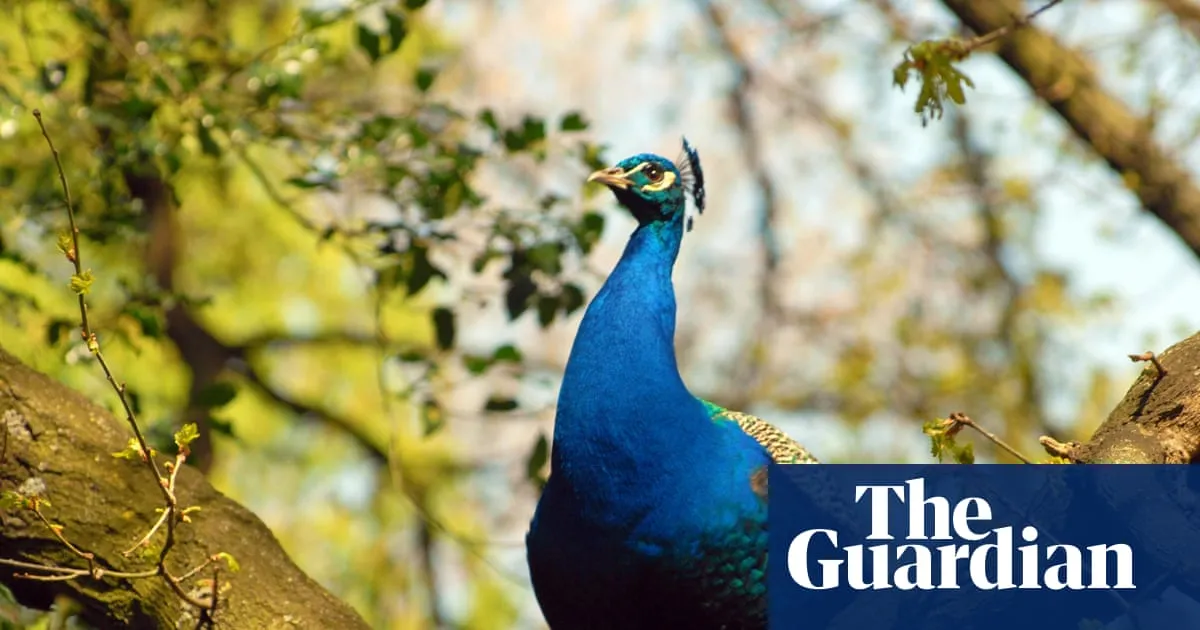
London is the only place in the UK where you can find scorpions, snakes, turtles, seals, peacocks, falcons all in one city – and not London zoo. Step outside and you will encounter a patchwork of writhing, buzzing, bubbling urban microclimates.Sam Davenport, the director of nature recovery at the London Wildlife Trust, emphasises the sheer variation in habitats that you find in UK cities, which creates an amazing “mosaic” of wildlife.“If you think of going out into the countryside where you have arable fields, it’s really homogeneous. But if you walk a mile in each direction of a city you’re going to get allotments, gardens, railway lines, bits of ancient woodland.”Animals also thrive in cities because urban winters are milder than in the countryside. “It’s not uncommon in cities to see queen bumblebees foraging over Christmas,” Davenport said. “When it’s cold, the city is warmer. We have a microclimate that invertebrates can make use of.”Beyond bees, species such as otters and herons benefit from waterways that are less likely to freeze, keeping food supplies more stable through the winter months.Many species also adapt their behaviour to urban life, altering where and how they hunt, the habitats they use, or the ways they move through the landscape. “Cities show that nature’s really good at being adaptable and finding a niche,” Davenport said.Here are some of the species that have found a way to thrive in the big smoke:LandA disused London Underground station, home to the eponymous mosquitoes that migrated from the Middle East. Photograph: Dan Kitwood/Getty ImagesAs it turns out, the “London Underground mosquito” (Culex pipiens f. molestus) is not aptly named. The insects became notorious during the second world war, when they would dine on Londoners seeking shelter from bombing in tube tunnels. But despite popular belief, they did not evolve underground. Their origins lie in the Middle East several thousand years ago, though they have since happily adapted to the temperate climate of the capital’s transport network.Mosquitoes are not the only emigres to have found a home in Britain’s urban jungle. More than 10,000 yellow-tailed scorpions (Tetratrichobothrius flavicaudis) are thought to live in the crevices of walls at Sheerness dockyard, Kent, and are believed to have spawned a second colony in the east London docklands. They arrived in the UK in the 1800s, nestled in shipments of Italian masonry.Meanwhile, Regent’s Park provides perfect woodland conditions for the UK’s main population of Aesculapian snakes (Zamenis longissimus). One of Europe’s largest snake species, these olive-coloured constrictors are thought to be escapers from a former research facility, surviving in the wild by preying on rodents and birds.WaterwaysOtters can be spotted playing in the water near Queen Elizabeth Olympic Park. Photograph: Kirsty Wigglesworth/PAIn 1957, the Natural History Museum declared the Thames biologically dead. Since then, improvements to sewage systems and industrial waste disposal have transformed the river into a habitable ecosystem. The wildlife now found in the Thames and its network of waterways is a striking environmental success story.Otters, once endangered, can be seen playing in the water near Queen Elizabeth Olympic Park. Downstream in the Thames estuary, hundreds of harbour seals sometimes wander inland to hunt fish that have returned to cleaner urban rivers.London’s waterways have also attracted more unexpected residents. These include the demon shrimp (Dikerogammarus haemobaphes), a worrisome species of aggressive omnivores from the Black Sea, and short-snouted seahorses (Hippocampus hippocampus), thought to have drifted in on the Gulf Stream – perhaps a more hopeful sign of the Thames’s biological recovery.Two aquatic creatures vie for the strangest origin story in the Thames. First are red-eared terrapins (Trachemys scripta elegans), imported to the UK from Mississippi and Mexico during the Teenage Mutant Ninja Turtle craze of the 1980s. Bought as pets and later abandoned, they have since thrived in urban ponds and canals. Some of the terrapins seen today are likely to be the same 1980s pets – just significantly older.Then there is the European eel (Anguilla anguilla), which has one of the strangest life cycles of any animal. After spawning in the Sargasso Sea near the Bahamas, the eels drift on Atlantic currents to rivers such as the Thames, where they can live for decades before making the long journey back to the Bahamas to die.SkyPeregrine falcon chicks in a nest atop a London tower block. Photograph: Nature Picture Library/AlamyPeregrine falcons (Falco peregrinus) are the fastest animals in the world – and they thrive in central London. Some of the city’s roughly 40 breeding pairs roost on the Barbican’s tower blocks, where residents report watching adults give flying lessons to their young.Swooping from the Barbican, the falcons often spend the day at Tate Modern, just across the river. Although they would not usually hunt at night, they have adapted to city life, preying on nocturnal migratory birds drawn to the glow of streetlights.Peregrine falcons loopBats, too, live comfortably alongside people. They are commonly found along canals, disused industrial buildings, in people’s homes – and even flying down Regent Street. Wildlife experts believe they navigate much like human commuters, using linear railway embankments as guides through the city.Other birds are legacies of Britain’s aristocratic past. Peacocks, for example, are known to strut through the Kyoto Garden in Holland Park, feral descendants of birds once kept by the gentry.Meanwhile, the ancestors of the pelicans that live in St James’s Park were a gift presented to King Charles II by the Russian ambassador in 1664.
SRCThe Guardian - World News
LANGEN
LEANCenter-Left
WORDS902
ENT6
SAT · 2026-01-24 · 06:00 GMTBRIEF NSR-2026-0124-10175
NSR-2026-0124-10175News Report·EN·Environmental
From scorpions to peacocks: the species thriving in London’s hidden microclimates
London's diverse urban environment creates unique microclimates that support a surprising array of wildlife. Unlike the homogeneous countryside, the city offers a mosaic of habitats like gardens, railways, and woodlands.
Isaaq TomkinsThe Guardian - World NewsFiled 2026-01-24 · 06:00 GMTLean · Center-LeftRead · 4 min
The Guardian - World NewsFIG 01
Reading time
4min
Word count
902words
Sources cited
1cited
Entities identified
6entities
Quality score
100%
§ 01
Briefing Summary
AI-generatedNEWSAR · AI
London's diverse urban environment creates unique microclimates that support a surprising array of wildlife. Unlike the homogeneous countryside, the city offers a mosaic of habitats like gardens, railways, and woodlands. Urban winters are milder, allowing species like bumblebees, otters, and herons to thrive due to unfrozen waterways and warmer temperatures. Many species adapt their behavior to city life, altering hunting patterns and habitat use. Examples include the London Underground mosquito, which originated in the Middle East, and yellow-tailed scorpions, which arrived in shipments of Italian masonry in the 1800s and now reside in dockyards. This adaptability demonstrates nature's ability to find niches within urban landscapes.
Confidence 0.90Sources 1Claims 5Entities 6
§ 02
Article analysis
Model · rule-basedFraming
Environmental
Human Interest
Tone
Measured
AI-assessed
CalmNeutralAlarmist
Factuality
0.80 / 1.00
Factual
LowHigh
Sources cited
1
Limited
FewMany
§ 03
Key claims
5 extracted01
The Thames was declared biologically dead in 1957 by the Natural History Museum.
factual
Confidence
1.00
02
Cities show that nature’s really good at being adaptable and finding a niche.
quoteSam Davenport
Confidence
0.90
03
Urban winters are milder than in the countryside, allowing some species to thrive.
quoteSam Davenport, the director of nature recovery at the London Wildlife Trust
Confidence
0.90
04
London is the only place in the UK where you can find scorpions, snakes, turtles, seals, peacocks, falcons all in one city.
factual
Confidence
0.90
05
More than 10,000 yellow-tailed scorpions are thought to live in the crevices of walls at Sheerness dockyard, Kent.
factual
Confidence
0.80
§ 04
Full report
4 min read · 902 words§ 05
Entities
6 identifiedKey playerOppositionContextPositiveNeutralNegative
§ 06
Keywords & salience
10 termsurban wildlife
0.90
urban microclimates
0.80
species adaptation
0.70
london
0.70
biodiversity
0.60
wildlife habitats
0.60
animal behavior
0.50
urban environment
0.50
london underground mosquito
0.40
yellow-tailed scorpions
0.40
§ 07
Topic connections
Interactive graph Network visualization showing 51 related topics
View Full Graph Person Organization Location Event|Click node to navigate|Edge numbers = shared articles