

News from Multiple Perspectives
AI-powered news aggregation showing different viewpoints on the same stories.
Top Trending Story
trendingChild among 4 killed in latest Russian missile and drone barrage: Ukraine
Latest from Each Source
Al Jazeera
CenterIran arrests prominent reformist politicians critical of the government
In a sweeping crackdown, Iranian security and judicial authorities have arrested several reformist politicians.
White House to make it harder for US federal workers to challenge firings
If the proposal is implemented, workers will not be able to seek remedy through an independent review board.
US seizes Venezuela-linked oil tanker in Indian Ocean
Pentagon says US will enforce Trump-ordered blockade against South American country even 'halfway around the world'.
Associated Press (AP)
CenterOfficials deny seeking quick end to asylum claims for the Minneapolis family of 5-year-old
Liam Conejo Ramos, 5, is detained by U.S. Immigration and Customs Enforcement officers after arriving home from preschool, Tuesday, Jan. 20, 2026, in a Minneapolis suburb. (Ali Daniels via AP) 2026-02-09T15:55:06Z MINNEAPOLIS (AP) — Federal authorities have denied attempting to expedite an end to asylum claims by the family of a 5-year-old boy who was detained with his father during the immigration crackdown that has shaken the Minneapolis area. Images of Liam Conejo Ramos wearing a bunny hat and Spider-Man backpack surrounded by immigration officers stirred outrage over the crackdown . Danielle Molliver, a lawyer for the boy and his father, told the New York Times that the government was attempting to speed up the deportation proceedings, calling the actions “extraordinary” and possibly “retaliatory.” The government denied that. “These are regular removal proceedings. They are not in expedited removal,” Department of Homeland Security official Tricia McLaughlin said in a statement, adding “there is nothing retaliatory about enforcing the nation’s immigration laws.” freestar.queue.push(function () { window.fsAdCount = window.fsAdCount + 1 || 0; let customChannel = '/dynamic_' + fsAdCount; let adList = document.querySelectorAll(".fs-feed-ad") let thisAd = adList[fsAdCount]; let randId = Math.random().toString(36).slice(2); thisAd.id = randId; let thisPlacement = fsAdCount == 0 ? "apnews_story_feed" : "apnews_story_feed_dynamic"; freestar.newAdSlots({ placementName: thisPlacement, slotId: randId }, customChannel); }); Molliver told the Times that an immigration judge, during a closed Friday hearing, gave her additional time to argue the family’s case. The boy and his father, Adrian Conejo Arias, who originally is from Ecuador, were detained in a Minneapolis suburb on Jan. 20. They were taken to a detention facility in Dilley, Texas. They were released following a judge’s order and returned to Minnesota on Feb. 1. Neighbors and school officials have accused federal immigration officers of using the preschooler as “bait” by telling him to knock on the door to his house so that his mother would come outside. DHS has called that description of events an “abject lie.” It said the father fled on foot and left the boy in a running vehicle in their driveway. The government said the boy’s father entered the U.S. illegally from Ecuador in December 2024. The family’s lawyer said he has an asylum claim pending that allows him to stay in the U.S.
Lindsey Vonn’s father tells AP her Olympic crash marks ‘the end of her career’ if he has any say
United States' Lindsey Vonn, right, poses for photographs with her father Alan Kildow at the end of an alpine ski, women's World Cup downhill race, in Cortina d'Ampezzo, Italy, Friday, Jan. 16, 2015. (AP Photo/Andrew Dampf, File) 2026-02-09T18:47:24Z CORTINA D’AMPEZZO, Italy (AP) — Lindsey Vonn’s father said Monday that the American superstar will no longer race if he has any influence over her decision and that she will not return to the Winter Olympics after breaking her leg in the downhill over the weekend. “She’s 41 years old and this is the end of her career,” Alan Kildow said in a telephone interview with The Associated Press. “There will be no more ski races for Lindsey Vonn, as long as I have anything to say about it.” Kildow and the rest of Vonn’s family — a brother and two sisters, too — have been with Vonn while she is being treated at a hospital in Treviso following her fall and helicopter evacuation from the course in Cortina on Sunday. The hospital late Sunday released a statement saying Vonn had undergone surgery on her left leg and the U.S. Ski Team said she was in stable condition. There have not been other updates since. freestar.queue.push(function () { window.fsAdCount = window.fsAdCount + 1 || 0; let customChannel = '/dynamic_' + fsAdCount; let adList = document.querySelectorAll(".fs-feed-ad") let thisAd = adList[fsAdCount]; let randId = Math.random().toString(36).slice(2); thisAd.id = randId; let thisPlacement = fsAdCount == 0 ? "apnews_story_feed" : "apnews_story_feed_dynamic"; freestar.newAdSlots({ placementName: thisPlacement, slotId: randId }, customChannel); }); Kildow declined to comment on details of Vonn’s injuries, but he did address how she was doing emotionally. “She’s a very strong individual,” Kildow said. “She knows physical pain and she understands the circumstances that she finds herself in. And she’s able to handle it. Better than I expected. She’s a very, very strong person. And so I think she’s handling it real well.” Kildow — a former ski racer himself who taught his daughter to race — said he slept in his daughter’s hospital room overnight. “She has somebody with her — or multiple people with her — at all times,” Kildow said. “We’ll have people here as long as she’s here.” Kildow and the rest of Vonn’s family watched the crash from the finish area with all of the other spectators. “First, the shock and the horror of the whole thing, seeing a crash like that,” Kildow said of what he felt watching the scene unfold. “It can be dramatic and traumatic. You’re just horrified at what those kinds of impacts have. freestar.queue.push(function () { window.fsAdCount = window.fsAdCount + 1 || 0; let customChannel = '/dynamic_' + fsAdCount; let adList = document.querySelectorAll(".fs-feed-ad") let thisAd = adList[fsAdCount]; let randId = Math.random().toString(36).slice(2); thisAd.id = randId; let thisPlacement = fsAdCount == 0 ? "apnews_story_feed" : "apnews_story_feed_dynamic"; freestar.newAdSlots({ placementName: thisPlacement, slotId: randId }, customChannel); }); “You can go into a shock an emotional psychological shock,” he added. “Because it’s difficult to just accept what’s happened. But she’s well cared for. … And the USOC and the U.S. Ski team have a very, very top-notch doctor with her and she is being very well cared for here in Italy.” Vonn raced the downhill despite tearing the ACL in her left knee nine days earlier in another crash. “What happened to her had nothing to do with the ACL issue on her left leg. Nothing,” Kildow said. “She had demonstrated that she was able to function at a very high level with the two downhill training runs. … And she had been cleared by high level physicians to ski.” Kildow said the crash was less a result of Vonn’s knee injury than the way she pushed the limits of her racing line to the point where she clipped a gate early in her run and got knocked out of control. “There are times sometimes in any race, but especially in downhill, where you have to take a little speed off,” he said. “You can give yourself a little bit more leeway on the line so you don’t put yourself in a questionable position.” Vonn, who holds the record of 12 World Cup victories in Cortina, returned to the circuit last season after nearly six years of retirement and after a partial titanium replacement surgery in her right knee. She won two downhills and finished on the podium in seven of the eight World Cup races that she finished this season — and came fourth in the other one. freestar.queue.push(function () { window.fsAdCount = window.fsAdCount + 1 || 0; let customChannel = '/dynamic_' + fsAdCount; let adList = document.querySelectorAll(".fs-feed-ad") let thisAd = adList[fsAdCount]; let randId = Math.random().toString(36).slice(2); thisAd.id = randId; let thisPlacement = fsAdCount == 0 ? "apnews_story_feed" : "apnews_story_feed_dynamic"; freestar.newAdSlots({ placementName: thisPlacement, slotId: randId }, customChannel); }); “She won 84 World Cup races. And not many people do that,” Kildow said, referring to Vonn’s victory total, which place her second on the all-time women’s list behind teammate Mikaela Shiffrin’s record 108 wins. “And there’s a hell of a lot of the difference between a speed race, a downhill especially, and a slalom,” Kildow added. Vonn will not return to the Olympics to cheer on teammates or for anything else, Kildow said. “No, she’s not that in kind of situation,” he said. “She will be going home at an appropriate point in time.” ___ AP Olympics: https://apnews.com/hub/milan-cortina-2026-winter-olympics ANDREW DAMPF Dampf has been a Rome-based sports writer at The AP for over 20 years, covering soccer, tennis, Alpine skiing and many other events in Italy and beyond, including five soccer World Cups. The Milan-Cortina Games will mark the 10th Olympics that he has reported from. twitter
Ghislaine Maxwell declined to answer questions from a House committee, citing 5th Amendment rights
House Oversight Committee Chairman James Comer, R-Ky., flanked by Rep. Andy Biggs, R-Ariz., left, and Rep. William Timmons, R-S.C., speaks to reporters after a closed-circuit deposition with Ghislaine Maxwell, the former girlfriend and confidante of sex trafficker Jeffrey Epstein, at the Capitol in Washington, Monday, Feb. 9, 2026. (AP Photo/J. Scott Applewhite) 2026-02-09T15:35:15Z WASHINGTON (AP) — Ghislaine Maxwell , the former girlfriend of Jeffrey Epstein, declined to answer questions from House lawmakers in a deposition Monday, but indicated that if President Donald Trump ended her prison sentence, she was willing to testify that neither he nor former President Bill Clinton had done anything wrong in their relationships with Epstein. The House Oversight Committee had wanted Maxwell to answer questions during a video call to the federal prison camp in Texas where she’s serving a 20-year sentence for sex trafficking, but she invoked her Fifth Amendment rights to avoid answering questions that would be self-incriminating. She’s come under new scrutiny as lawmakers try to investigate how Epstein, a well-connected financier, was able to sexually abuse underage girls for years. Amid a reckoning over Epstein’s abuse that has spilled into nations around the globe, lawmakers are searching for anyone who was connected to Epstein and may have facilitated his abuse. So far, the revelations have shown how both Trump and Clinton spent time with Epstein in the 1990s and early 2000s, but they have not been credibly accused of wrongdoing. freestar.queue.push(function () { window.fsAdCount = window.fsAdCount + 1 || 0; let customChannel = '/dynamic_' + fsAdCount; let adList = document.querySelectorAll(".fs-feed-ad") let thisAd = adList[fsAdCount]; let randId = Math.random().toString(36).slice(2); thisAd.id = randId; let thisPlacement = fsAdCount == 0 ? "apnews_story_feed" : "apnews_story_feed_dynamic"; freestar.newAdSlots({ placementName: thisPlacement, slotId: randId }, customChannel); }); During the closed-door deposition Monday, an attorney for Maxwell told lawmakers that if Trump granted her clemency, she would be willing to testify that neither Trump nor Clinton were culpable for wrongdoing in their relationships with Epstein, according to both Democratic and Republican lawmakers who exited the closed-door meeting. Democrats said that was a brazen effort by Maxwell to have Trump end her prison sentence. “It’s very clear she’s campaigning for clemency,” said Rep. Melanie Stansbury, a New Mexico Democrat. Another Democratic lawmaker, Rep. Suhas Subramanyam, described Maxwell’s demeanor during the short video call as “robotic” and “unrepentant.” Trump has not ruled out granting Maxwell clemency, but Republican pushback to that notion quickly rose after Maxwell made the appeal. freestar.queue.push(function () { window.fsAdCount = window.fsAdCount + 1 || 0; let customChannel = '/dynamic_' + fsAdCount; let adList = document.querySelectorAll(".fs-feed-ad") let thisAd = adList[fsAdCount]; let randId = Math.random().toString(36).slice(2); thisAd.id = randId; let thisPlacement = fsAdCount == 0 ? "apnews_story_feed" : "apnews_story_feed_dynamic"; freestar.newAdSlots({ placementName: thisPlacement, slotId: randId }, customChannel); }); “NO CLEMENCY. You comply or face punishment,” Republican Rep. Anna Paulina Luna, wrote on social media. “You deserve JUSTICE for what you did you monster.” Maxwell has been seeking to have her conviction overturned, arguing that she was wrongfully convicted. The Supreme Court rejected her appeal last year, but in December she requested that a federal judge in New York consider what her attorneys describe as “substantial new evidence” that her trial was spoiled by constitutional violations. Maxwell’s attorney cited that petition as he told lawmakers she would invoke her Fifth Amendment rights. The Republican chair of the committee, Rep. James Comer of Kentucky, told reporters that it was “very disappointing” that Maxwell declined to participate in the deposition. Family members of the late Virginia Giuffre , one of the most outspoken victims of Epstein, also released a letter to Maxwell making it clear they did not consider her “a bystander” to Epstein’s abuse. “You were a central, deliberate actor in a system built to find children, isolate them, groom them, and deliver them to abuse,” Sky and Amanda Roberts wrote in the letter addressed to Maxwell. freestar.queue.push(function () { window.fsAdCount = window.fsAdCount + 1 || 0; let customChannel = '/dynamic_' + fsAdCount; let adList = document.querySelectorAll(".fs-feed-ad") let thisAd = adList[fsAdCount]; let randId = Math.random().toString(36).slice(2); thisAd.id = randId; let thisPlacement = fsAdCount == 0 ? "apnews_story_feed" : "apnews_story_feed_dynamic"; freestar.newAdSlots({ placementName: thisPlacement, slotId: randId }, customChannel); }); Maxwell was moved from a federal prison in Florida to a low-security prison camp in Texas last summer after she participated in two-days of interviews with Deputy Attorney General Todd Blanche. Comer had also subpoenaed her at the time, but her attorneys have consistently told the committee that she wouldn’t answer questions. However, Comer came under pressure to hold the deposition as he pressed for the committee to enforce subpoenas on Bill Clinton and former Secretary of State Hillary Clinton. After Comer threatened them with contempt of Congress charges, they both agreed to sit for depositions later this month. Comer has been haggling with the Clintons over whether that testimony should be held in a public hearing, but Comer reiterated Monday that he would insist on holding closed-door depositions and later releasing transcripts and video. Meanwhile, several lawmakers also planned on Monday to look through unredacted versions of the files on Epstein that the Department of Justice has released to comply with a law passed by Congress last year. STEPHEN GROVES Groves covers Congress for The Associated Press. twitter mailto
BBC News - World
Center
Machine guns to machetes: Weapons that massacred thousands in Iran
BBC News Persian Forensic has been able to confirm the security forces' deployment of a wide array of lethal and non-lethal weaponry.

Palestinians say new Israeli measures in West Bank amount to de facto annexation
The measures aim to increase Israeli control over the occupied West Bank in terms of property law, planning, licensing and enforcement.

Celebrity appearances, controversial ads and other Super Bowl takeaways
Celebrities including Lady Gaga, Cardi B and Jessica Alba joined Bad Bunny's Super Bowl half time show.
Fox News - World
Center-Right
Venezuelan opposition leader seized by armed men after being released from jail
María Corina Machado said Monday that a Venezuelan opposition leader was seized in Caracas shortly after being released from jail. Machado wrote in a post on X that Juan Pablo Guanipa, a key ally, was kidnapped by heavily armed men in civilian clothing in the Los Chorros area of the capital. "We demand his immediate release," she said. Alfredo Romero, the president of the Venezuelan human rights group Foro Penal, said 35 political prisoners were released on Sunday, including Guanipa, who was initially arrested in May. US MOVES FAST TO REOPEN VENEZUELA EMBASSY AFTER YEARSLONG FREEZE Reuters reported that Venezuelan authorities were seeking court approval to place Guanipa under house arrest. The country’s Public Ministry alleged that he violated the terms of his release but provided no additional details and did not say whether he had been re-arrested. Guanipa’s Primero Justicia party said on X that he was forced into a silver Toyota Corolla during the incident. "We hold Delcy Rodríguez , Jorge Rodríguez, and Diosdado Cabello responsible for any harm to Juan Pablo's life," the party wrote. "We call on the international community for the immediate release of Juan Pablo Guanipa and for an immediate and unconditional end to the persecution of the opposition." The U.S. State Department did not immediately respond to Fox News Digital’s request for comment. TRUMP EMBRACES US INTERVENTION IN VENEZUELA, OPENS DOOR TO BROADER LATIN AMERICA PUSH Rodríguez has been serving as the interim president of Venezuela since the U.S. capture of Nicolás Maduro and his wife Cilia Flores earlier this year. In late January, President Donald Trump said Venezuela was releasing political prisoners at a "rapid rate," praising the move as a "powerful humanitarian gesture" by the country’s leadership. An estimated 687 political prisoners remain in custody in Venezuela as of Feb. 2, according to Foro Penal.

Japan's 'Iron Lady' thanks Trump as party secures historic supermajority
Japan’s Prime Minister Sanae Takaichi’s ruling Liberal Democratic Party secured a sweeping win in Sunday’s parliamentary elections , capturing about 316 seats in the 465-member lower house and achieving a governing supermajority alongside allies. The result gives her a strong mandate to advance a conservative agenda focused on defense, immigration and economic reforms, the Associated Press reported. A heavy metal fan and drummer, Takaichi — who has long cited former British PM Margaret Thatcher as a personal and political inspiration — expressed gratitude for President Trump’s support, thanking him for his congratulatory message following the victory and signaling continued alignment with Washington. Trump praised her leadership in a post after the results were announced. "Congratulations to Prime Minister Sanae Takaichi and her Coalition on a LANDSLIDE Victory in today’s very important Vote," Trump wrote on social media, "Sanae’s bold and wise decision to call for an election paid off big time. Her Party now runs the Legislature, holding a HISTORIC TWO THIRDS SUPERMAJORITY — The first time since World War II. Sanae: It was my Honor to Endorse you and your Coalition. I wish you Great Success in passing your Conservative, Peace Through Strength Agenda. The wonderful people of Japan, who voted with such enthusiasm, will always have my strong support." SANAE TAKAICHI BECOMES JAPAN’S FIRST FEMALE PRIME MINISTER, CITING THATCHER INSPIRATION The election outcome represents one of the strongest performances for the ruling party in years and solidifies Takaichi’s position only months after taking office as Japan’s first female prime minister. Following the results, Takaichi said she was prepared to move forward with policies aimed at making Japan "strong and prosperous," as she seeks to implement reforms and bolster national security , the Associated Press reported. Her agenda includes boosting defense spending, revising security policies and stimulating economic growth, while maintaining a tougher posture toward regional threats such as China. Known for her hawkish stance on Beijing, Takaichi is expected to maintain Japan’s close alignment with the United States. "Takaichi's landslide win shows other leaders that defiance of China can be popular with voters. Nobody has to appease or please Xi Jinping anymore," Asia analyst Gordon Chang told Fox News Digital. JAPAN'S PRIME MINISTER TAKAICHI PLANS TO DISSOLVE PARLIAMENT AND CALL EARLY ELECTION TO STRENGTHEN COALITION U.S. officials also welcomed the outcome. Treasury Secretary Scott Bessent described aid on Fox News’ "Sunday Morning Futures With Maria Bartiromo" that Takaichi is a strong ally and emphasized that her leadership strengthens the strategic partnership between Washington and Tokyo. Takaichi’s victory is widely seen as a geopolitical signal as well as a domestic political triumph. Analysts say the strengthened mandate could deepen cooperation with the United States on security and economic policy at a time of rising tensions in the Indo-Pacific. The snap election , called just months into her premiership, was widely viewed as a referendum on her leadership. With the opposition fragmented, voters delivered a decisive result that now gives Takaichi political space to pursue her agenda through the remainder of the parliamentary term. Takaichi backs strengthening Japan’s defense posture and supports constitutional revision to expand the role of the military. Economically, she has praised the stimulus-driven policies associated with former Prime Minister Shinzo Abe. Her public thanks to Trump underscores how central the U.S. alliance remains to Tokyo’s strategy moving forward, experts say, as she prepares to translate electoral momentum into legislative and security action at home and abroad. Reuters and the Associated Press contributed to this report.

As Epstein-linked appointment sparks backlash, UK PM Starmer faces party revolt amid resignation calls
British Prime Minister Keir Starmer is facing one of the most serious crises of his premiership after a cascade of resignations, renewed scrutiny over his decision to appoint Peter Mandelson as Britain’s ambassador to Washington and mounting unrest inside the ruling Labor Party ahead of a critical meeting of members of Parliament Monday evening. On Monday, Scottish Labor leader Anas Sarwar became the most senior party figure to call for Starmer’s resignation, saying "the distraction needs to end and the leadership in Downing Street has to change," according to the Associated Press. His intervention piles fresh pressure on the prime minister. At the center of the crisis are newly publicized materials detailing Mandelson’s links to Jeffrey Epstein , revelations that have reshaped the political stakes and triggered questions about vetting at the highest levels of government. Documents cited by Fox News Digital report Mandelson maintained contact with Epstein after his 2008 conviction, and that Epstein transferred about $75,000 in 2003 and 2004 to accounts connected to Mandelson or his husband. KEIR STARMER’S CHIEF OF STAFF RESIGNS AFTER RECOMMENDING EPSTEIN-CONNECTED AMBASSADOR Morgan McSweeney, Starmer’s chief of staff and one of the most influential figures inside Downing Street, stepped down on Sunday after acknowledging his role in recommending Mandelson for the diplomatic post . In a resignation statement obtained by The Guardian, McSweeney said the decision was "wrong" and he accepted responsibility, calling his departure the "only honorable course." The pressure intensified hours later when Tim Allan, the prime minister’s director of communications, also resigned, according to GB News . Allan, a veteran New Labor strategist, became the second senior aide to exit as the political fallout deepened. Dr. John Hemmings, director of the National Security Center at the Henry Jackson Society, told Fox News Digital the prime minister is now under escalating political pressure and that "it’s unclear as to whether he’ll survive." "Prime Minister Starmer is coming under ever-increasing political pressure to resign here in London in the wake of the scandal around Lord Mandelson — his appointed ambassador to the United States — and his connection to Jeffrey Epstein. He has lost two close aides and is under attack for his China foreign policy. The Chagos Deal is under scrutiny and his trip to Beijing was largely viewed as devoid of real results," Hemmings said. Alan Mendoza, executive director of the Henry Jackson Society, added: "It is extraordinary to be in a situation where a prime minister who won a landslide general election victory only 20 months ago is now on the verge of being forced to resign. We are here as a result of a series of policy U-turns and bad judgment calls culminating in the Lord Mandelson debacle. His fate is now ultimately in the hands of the Parliamentary Labor Party tonight. If he feels he no longer has their confidence, then there is every chance that this will be the end of Keir Starmer." STARMER CALLS ON EX-PRINCE ANDREW TO TESTIFY BEFORE CONGRESS AFTER LATEST EPSTEIN RELEASE Starmer has sought to contain the damage, saying he regrets the appointment. In remarks reported by GB News on Monday, the prime minister said: "I have been absolutely clear that I regret the decision that I made to appoint Peter Mandelson. And I’ve apologized to the victims, which is the right thing to do." He added that scandals of this kind risk undermining public faith in politics. The prime minister now faces a showdown with Labor lawmakers, with backbench MPs expected to challenge his leadership at a party meeting Monday evening U.K. time. A senior Labor MP told GB News the "clock is ticking" and called for decisive action to "cleanse politics." Downing Street has insisted Starmer will not resign despite the double departure. A spokesperson told journalists that the prime minister is "getting on with the job in hand and delivering change across the country," and he remains "upbeat and confident," and retains cabinet support. The political damage, however, extends beyond staffing turmoil. Mandelson was withdrawn from the ambassador role after additional details about his relationship with Epstein emerged, and he resigned from the Labor Party earlier this month, leaving Starmer confronting what experts describe as the most acute test of his leadership since taking office. Fox News Digital's Ashley Carnahan and The Associated Press contributed to this report.
New York Times - World
Center-LeftIsrael Gives Itself More Control Over Occupied West Bank
The security cabinet took actions that make it easier for Jews to buy land in the territory. Critics say the changes violate the Oslo Accords and international law and accelerate attempts to annex the land.
Ilia Malinin, Who Led the U.S. to Gold, Is Bringing Ice Skating Back Into the Limelight
Ilia Malinin, who led the United States to a team gold medal at the Winter Olympics and will now vie for his own, is testing the physical limits of what is possible on the ice.
Trump Is a Global ‘Wrecking Ball,’ European Security Experts Say
The organizers of the Munich Security Conference, Europe’s main defense-related forum, said in a report that President Trump is helping destroy the postwar international order.
ProPublica
Center-Left
The Children of Dilley
Fourteen-year-old Ariana Velasquez had been held at the immigrant detention center in Dilley, Texas, with her mother for some 45 days when I managed to get inside to meet her. The staff brought everyone in the visiting room a boxed lunch from the cafeteria: a cup of yellowish stew and a hamburger patty in a plain bun. Ariana’s long black curls hung loosely around her face and she was wearing a government-issued gray sweatsuit. At first, she sat looking blankly down at the table. She poked at her food with a plastic fork and let her mother do most of the talking. She perked up when I asked about home: Hicksville, New York. She and her mother had moved there from Honduras when she was 7. Her mother, Stephanie Valladares, had applied for asylum, married a neighbor from back home who was already living in the U.S., and had two more kids. Ariana took care of them after school. She was a freshman at Hicksville High, and being detained at the Dilley Immigration Processing Center meant that she was falling behind in her classes. She told me how much she missed her favorite sign language teacher, but most of all she missed her siblings. I had previously met them in Hicksville: Gianna, a toddler who everyone calls Gigi, and Jacob, a kindergartener with wide brown eyes. I told Ariana that they missed her too. Jacob had shown me a security camera that their mom had installed in the kitchen so she could peek in on them from her job, sometimes saying “Hello” through the speaker. I told Ariana that Jacob tried talking to the camera, hoping his mom would answer. Stephanie burst into tears. So did Ariana. After my visit, Ariana wrote me a letter. “My younger siblings haven’t been able to see their mom in more than a month,” she wrote. “They are very young and you need both of your parents when you are growing up.” Then, referring to Dilley, she added, “Since I got to this Center all you will feel is sadness and mostly depression.” Ariana Velasquez’s 5-year-old brother, Jacob, and 2-year-old sister, Gianna, at their home in New York. Anna Connors for ProPublica Dilley, run by private prison firm CoreCivic, is located some 72 miles south of San Antonio and nearly 2,000 miles away from Ariana’s home. It is a sprawling collection of trailers and dormitories, almost the same color as the dusty landscape, surrounded by a tall fence. It first opened during the Obama administration to hold an influx of families crossing the border. Former President Joe Biden stopped holding families there in 2021, arguing America shouldn’t be in the business of detaining children. But quickly after returning to office, President Donald Trump resumed family detentions as part of his mass deportation campaign. Federal courts and overwhelming public outrage had put an end to Trump’s first-term policy of separating children from parents when immigrant families were detained crossing the border . Trump officials said Dilley was a place where immigrant families would be detained together. As the second Trump administration’s crackdown both slowed border crossings to record lows and ramped up a blitz of immigration arrests all across the country, the population inside Dilley shifted. The administration began sending parents and children who had been living in the country long enough to lay down roots and to build networks of relatives, friends and supporters willing to speak up against their detention. If the administration believed that putting children in Dilley wouldn’t stir the same outcry as separating them from their parents, it was mistaken. The photo of 5-year-old Liam Conejo Ramos from Ecuador, who was detained with his father in Minneapolis while wearing a Spider-Man backpack and a blue bunny hat, went viral on social media and triggered widespread condemnation and a protest by the detainees . Weeks before that, I had begun speaking to parents and children at Dilley, along with their relatives on the outside. I also spoke to people who worked inside the center or visited it regularly to give religious or legal services. I had asked Immigration and Customs Enforcement officials for permission to visit but got a range of responses. One spokesperson denied my request, another said he doubted I could get formal approval and suggested I could try showing up there as a visitor. So I did. Since early December, I’ve spoken, in person and via phone and video calls, to more than two dozen detainees, half of them kids detained at Dilley — all of whose parents gave me their’ consent. I asked parents whether their children would be open to writing to me about their experiences . More than three dozen kids responded; some just drew pictures, others wrote in perfect cursive. Some letters were full of age-appropriate misspellings. Among them was a letter from a 9-year-old Venezuelan girl, named Susej Fernández, who had been living in Houston when she and her mother were detained. “I have been 50 days in Dilley Immigration Processing Center,” she wrote. “Seen how people like me, immigrants are been treated changes my perspective about the U.S. My mom and I came to The U.S looking for a good and safe place to live.” Susej Fernández, 9, Shares Her Daily Struggles in Detention Mica Rosenberg/ProPublica A 14-year-old Colombian girl, who signed her name Gaby M.M. and who a fellow detainee said had been living in Houston, wrote a letter about how the guards at Dilley “have bad manner of speaking to residents.” She wrote, “The workers treat the residents unhumanly, verbally and I don’t want to imging how they would act if they where unsupervised.” Nine-year-old Maria Antonia Guerra, from Colombia, drew a portrait of herself and her mother wearing their detainee ID badges. A note on the side said, “I am not happy, please get me out of here.” Some of the kids I met spoke English as well as they did Spanish. When I asked the kids to tell me about the things they missed most from their lives outside Dilley, they almost always talked about their teachers and friends at school. Then they’d get to things like missing a beloved dog, McDonald’s Happy Meals, their favorite stuffed animal or a pair of new UGGs that had been waiting for them under the Christmas tree. They told me they feared what might happen to them if they returned to their home countries and what might happen to them if they remained here. Thirteen-year-old Gustavo Santiago said he didn’t want to go back to Tamaulipas, Mexico. “I have friends, school, and family here in the United States,” he said of his home in San Antonio, Texas. “To this day, I don’t know what we did wrong to be detained.” He ended with a plea, “I feel like I’ll never get out of here. I just ask that you don’t forget about us.” An excerpt of the letter Ariana wrote from inside the Dilley Immigration Processing Center. She also wrote a wish list on New Year’s Eve, which included seeing her siblings and returning to her home in Hicksville, New York. Obtained by ProPublica Around 3,500 detainees, more than half of them minors, have cycled through the center since it reopened, more than the population of the town of Dilley itself. Although a long-standing legal settlement generally limits the time children can be held in detention to 20 days, a data analysis by ProPublica found that about 300 kids sent to Dilley by the Trump administration were there for more than a month. The administration in legal filings has said the agreement from 1997 is outdated and should be terminated because there are new statutes, regulations and policies that ensure good conditions for immigrant minors in detention. Habiba Soliman, 18, told me she had been detained for more than eight months with her mom and four siblings, ranging in age from 16 to 5-year-old twins, after her father was charged for an alleged antisemitic attack in June at rally in Boulder, Colorado, supporting the Jewish hostages who were being held in Gaza. Their father, Mohamed Soliman, pleaded not guilty to federal and state charges. Authorities have said they are investigating whether his wife and her children provided support for the attack. They deny knowing anything about it and an arrest warrant reports that he told an officer he never talked to his wife or family about his plans . Despite Trump’s promise to go after violent criminals, the vast majority of adults detained at Dilley over the last year had no criminal record in the United States. Some of the parents I spoke to had overstayed visas. Many had filed applications for asylum, had married U.S. citizens or had been granted humanitarian parole and were detained when they voluntarily showed up for appointments at ICE offices. They said that it was unfair to arrest them, and that detaining their children was just plain cruel. There were children in Dilley who were so distraught they cut themselves or talked about suicide, several mothers told me. Recently, two cases of measles were discovered in the center. Federal officials said they quarantined some immigrants, and attorneys said ICE cancelled in-person legal visits until Feb. 14 as a safety precaution. Read More Letters From Kids Detained at Dilley “I Have Been Here Too Long”: Read Letters from the Children Detained at ICE’s Dilley Facility The Department of Homeland Security, which oversees ICE, said in a statement that all detainees at Dilley are “being provided with proper medical care.” DHS did not respond to questions about individual detainees but said that all “are provided with 3 meals a day, clean water, clothing, bedding, showers, soap, and toiletries” and that “certified dieticians evaluate meals.” Detained parents are given the option for their families to be deported together, or they can have their children placed with another caregiver, the statement said. CoreCivic said that Dilley, like its other facilities, is subject to multiple layers of oversight to ensure full compliance with policies and procedures, including any applicable detention standards. Moms told me that their kids had lost their appetites after finding worms and mold on their food, had trouble sleeping on the facility’s hard metal bunk beds in rooms shared by at least a dozen other people, and were constantly sick. “The shock for my daughter was devastating,” Maria Alejandra Montoya from Colombia wrote in an email to me about her daughter Maria Antonia. “Watching her adapt is like watching her wings being clipped. Hearing other children fight over card games at the tables makes me feel like we are not mothers and children, but inmates.” Life Inside Alexander Perez, a 15-year-old from the Dominican Republic, told me about going to school at Dilley. He said classes included kids from mixed age groups, and each class allowed only 12 students and lasted for just one hour. Slots were assigned on a first-come-first-served basis. Children would line up, hoping to get in. The staff leading the class would distribute handouts and worksheets to those who made it inside. Alexander Perez complained that the lessons were usually meant for kids who were younger than him, so he found them boring. But because there wasn’t much else to do, he used to go whenever he could, until an instructor turned a social studies lesson into what felt like an interrogation about immigration policy. “If we have recreational activities and classes designed to help us disconnect from what we’re experiencing here, why the need to ask ourselves these questions?” he said during a video call with me. “I didn’t think that was right.” Alexander Perez, 15, Shares His Advice for Other Dilley Detainees Mica Rosenberg/ProPublica He, his mother and his 14-year-old brother, Jorge, said they had been detained while traveling from Los Angeles to Houston when the bus they were on was stopped by immigration agents who checked everyone’s status. They’d been in Dilley for four months by the time we spoke. His mother, Teresa, told me she was in the process of appealing a judge’s denial of her asylum petition, which might explain why it was a touchy subject for Alexander when it came up in class. He told me that after he gave up on attending classes at Dilley, he played basketball in the recreation area and watched a lot of Spanish soap operas on TV. Jorge, who celebrated his birthday in December at Dilley with a tiny cake made from vanilla commissary cookies, spent most of the day sleeping. DHS said in its statement that “children have access to teachers, classrooms, and curriculum booklets for math, reading, and spelling.” Boredom was a theme that ran through many of the letters from children at Dilley. “They told me I could only be here 21 days but I have already spent more than 60 days waking up eating the same repeated meals,” wrote a 12-year-old Venezuelan girl who signed her letter Ender, and who a fellow detainee said had settled with her mother in Austin, Texas. She wrote that when she felt sick and went to the doctor, “the only thing they tell you is to drink more water and the worst thing is that it seems like the water is what makes people sick here.” Ariana expressed similar concerns in her letter. She wrote, “If you need medical attention the longest you have to wait is 3 hours, but to get any medicine, pill, anything it takes a while, there are various viruses people are always sick. Serious situations happen and the officers can’t take them serious enough there are no consecuenses, they don’t care.” Stephanie Valladares’ home in Hicksville, New York, where she lives with her three children, Ariana, Jacob and Gianna Anna Connors for ProPublica Bad Food, Insufficient Medicine The lack of reliable medical care was perhaps the most serious concern parents and children spoke about in their interviews with me. The Texas-based nonprofit advocacy organization RAICES, which provides legal representation to many families at Dilley, said in a recent court declaration that its clients had raised concerns about insufficient medical care on at least 700 occasions since August 2025. The organization reported, “Children with medical complaints frequently experience delays, dismissals, or lack of follow-up.” Kheilin Valero from Venezuela, who was being held with her 18-month-old, Amalia Arrieta, said shortly after they were detained following an ICE appointment on Dec. 11 in El Paso, Texas, the baby fell ill. For two weeks, she said, medical staff gave her ibuprofen and eventually antibiotics, but Amalia’s breathing worsened to the point that she was hospitalized in San Antonio for 10 days. She was diagnosed with COVID-19 and RSV. “Because she went so many days without treatment, and because it’s so cold here, she developed pneumonia and bronchitis,” Kheilin said. “She was malnourished, too, because she was vomiting everything.” Do you work or have you worked at an immigration detention facility? Get in touch with ProPublica reporters on Signal at 917-512-0201 to share your experience. If you or someone you know is or was in an immigration detention facility , you can also reach us over email at immigration@propublica.org . We take your privacy seriously. Gustavo Santiago, the 13-year-old boy who’d been living in Texas, said he has been sick several times since he and his mom were detained on Oct. 5 of last year at a Border Patrol checkpoint. His mom, Christian Hinojosa, said that when Gustavo had a fever, the medical staff told her he was old enough for his body to fight it off without medication, so she sat up with him all night, draping him in cold compresses. She had to take him to the infirmary for a skin rash that she believed was caused by poor water quality at the center. She said he has also experienced stomach pain and nausea, which she blamed on unsanitary food preparation. Among logs we obtained of calls made to 911 and law enforcement about the facility since it began accepting families again last spring, I found pleas for help for toddlers having trouble breathing, a pregnant woman who passed out and an elementary-school-aged girl having seizures. Local authorities were also called in for three cases of alleged sexual assault between detainees. DHS said in its statement, “No one is denied medical care.” CoreCivic said that health and safety is a top priority for the company and that detainees at Dilley are provided with a continuum of health care services, including preventative care and mental health services. The company said its medical staff “meet the highest standards of care” and said the facility works closely with local hospitals for any specialized medical needs. The Kids of Dilley Reporter Mica Rosenberg talked with dozens of detainees at Dilley, who shared their experiences in letters, videos, phone calls and voice memos. Diana Crespo, 7, said she missed going to McDonald’s. Amalia Arrietta, 18 months old, blew kisses and waved at the screen. In her time detained at Dilley, Amalia was hospitalized with a respiratory infection. Gustavo Santiago, 13, worried that he’d be forgotten inside Dilley. Mica Rosenberg/ProPublica Torn From Their Lives Ariana and her mother, Stephanie, were detained on Dec. 1, when they went for one of their regular check-ins at an ICE office in New York City’s Federal Plaza, which are required as they wait for a decision on their asylum case. Stephanie had come to the U.S. with experience working as an accountant and, after securing her work permit, she had finally found a job at a local import business where she could put that experience to use. They had been regularly checking in with ICE for years without incident. But after mom and daughter showed up for their 8 a.m. ICE appointment, they were told they couldn’t leave this time and were on a plane to Dilley by 6 that evening, without being given a chance to call their family. “Since the day my mom and I get detained in Manhattan NY, my life was instanly paused,” Ariana wrote in her letter from detention after our meeting. “All kids are being damage mentally, they witness how the’ve been treated.” A 7-year-old Honduran girl named Diana Crespo was living in Portland, Oregon, when she and her parents, Darianny Gonzalez and Yohendry Crespo, were detained outside a hospital where they’d taken Diana for emergency care. The family had been granted humanitarian parole after entering the United States in 2024 and then applied for asylum when Trump revoked the parole program, saying that Biden had used it to allow immigrants to pour into the country at record levels. She said their active asylum case didn’t stop the immigration agents who intercepted them outside the emergency room from detaining them. Maria Alejandra Montoya and her daughter Maria Antonia Guerra during an August 2025 vacation at Disney World. Three months later, when they were on their way to another Disney trip, agents detained them and sent them to Dilley. Courtesy of Maria Alejandra Montoya Maria Antonia Guerra, the 9-year-old from Colombia, told me that the 10-day vacation to Disney World that she had planned with her mother and stepdad turned into more than 100 days at Dilley. She’d flown into Florida from Medellin, Colombia, where she lived with her grandmother, with a Cruella de Vil costume in her suitcase. Her mother, Maria Alejandra Montoya, was living in New York and had overstayed her visa, but had since married a U.S. citizen and was just waiting for her green card to be approved. Maria Antonia traveled regularly back and forth to the U.S. on a tourist visa, and Maria Alejandra had flown down to meet her at the airport. Immigration agents intercepted them and flew them to Texas. They both told me that it felt like a kidnapping. “I am in a jail and I am sad and I have fainted 2 times here inside, when I arrived every night I cried and now I don’t sleep well,” Maria Antonia, who wears thick glasses, wrote to me. “I felt that being here was my fault and I only wanted to be on vacation like a normal family.” Released but Still Afraid In January, shortly after my visit to Dilley, ICE released some 200 people all at once, without explanation. Among them were Ariana and her mom. Ariana at a McDonald’s hours after her release from detention Courtesy of Stephanie Valladares The releases came as such a surprise that Stephanie said another woman began screaming and refused to let go of her bunk, fearing she was about to be deported back to Ecuador. Stephanie was fitted with an ankle monitor, and she and Ariana were dropped off in Laredo, Texas, where they scrambled to buy a plane ticket to LaGuardia in New York. On Jan. 22, two days after her release, I met Stephanie again, this time holding Gigi as she showed up for her first ICE check in at an office near her home. She had been so nervous that she got lost on the way to the appointment. She was given a series of instructions and shown videos that explained the purpose and cadence of her regular check-ins. She’d have one every month at the office, and every two months she would be visited at her home. Jacob had initially refused to go to school because he was afraid his mother and sister wouldn’t be there when he came home, but she’d finally gotten him to go by promising every morning that she’s not leaving again. Stephanie embraces her son, Jacob, at their home in New York after her release from detention. Anna Connors for ProPublica Ariana went back to school a few days later. Her English teacher immediately hugged her and sobbed, “We really missed you.” I called Ariana last Wednesday to check in on her. She was helping Jacob with his homework, but she took a break to give me an update. There are a lot of other immigrants at her school, but she had only told her close friends, who she sits with at lunch, about the reason for her prolonged absence. When other people asked, she just said, “I had to go to Texas for something.” She says she’s trying to put the ordeal behind her, but the toll is real. Her mother lost her job because her boss is uncomfortable employing someone with an ankle monitor. And Ariana worries about her. She also worries about the people she met back at Dilley. Days after I asked DHS about several families mentioned in this story, five of them were released: Gustavo and his mom, Christian; Teresa and her sons, Alexander and Jorge; Kheilin and her baby, Amalia; Darianny and her daughter, Diana. Maria Antonia and her mom, Maria Alejandra, were returned to Colombia. Others are still detained. Ariana said, “I wish they got out because they shouldn’t be there any longer.” Before we hung up, Ariana said something that suggested her youthful optimism hadn’t been entirely broken. She’d found that she’d gotten better at playing volleyball at Dilley and now plans to try out for her school team. Ariana sits alongside her siblings back at her home in New York. Anna Connors for ProPublica For this story, ProPublica analyzed federal data on ICE detentions released through the Deportation Data Project. The data contains records for immigrant arrests and detentions going through October of 2025. ProPublica plans to continue reporting on conditions inside immigration detention facilities. Please get in touch with our reporters through Signal at 917-512-0201 if you or someone you know: Has worked at a detention facility housing immigrants. Has been detained at such a facility. Knows information about companies that have been contracted to build and provide services at such facilities. Can share other insight or information about immigration detention facilities. We are also interested in any letters, images, videos or other documentation that you can share. Check out these tips for contacting us securely. We take your privacy seriously. The post The Children of Dilley appeared first on ProPublica .

“I Have Been Here Too Long”: Read Letters from the Children Detained at ICE’s Dilley Facility
A rainbow, a family portrait, a heart. These are the drawings found in handwritten letters from children detained at the Dilley Immigration Processing Center in South Texas. In early February there were more than 750 families, nearly half of them including children, as well as some 370 single adult women being held at this facility. It is just one of many immigration centers across the country, but the only one holding families. Since the start of the Trump administration, the number of children in Immigration and Customs Enforcement detention has skyrocketed, increasing sixfold . ProPublica received letters in mid-January from several children at Dilley. All but two of them had been living in the United States when they were detained. In their words and drawings, they convey how much they ache for creature comforts and describe the anguish of being trapped. They write about missing their friends and teachers, falling behind at school, having unreliable access to medical care when they’re sick — some say they’re sick a lot — and feeling scared about what comes next. Read More The Children of Dilley The Department of Homeland Security, which oversees ICE, said in a statement that all detainees at Dilley are “being provided with proper medical care.” DHS did not respond to questions about individual detainees but said all “are provided with 3 meals a day, clean water, clothing, bedding, showers, soap, and toiletries” and that “certified dieticians evaluate meals.” DHS also said “children have access to teachers, classrooms, and curriculum booklets for math, reading, and spelling.” Detained parents are given the option for their families to be deported together, or they can have their children placed with another caregiver, the statement said. CoreCivic, which operates the facility, said it is subject to multiple layers of oversight and that health and safety are a top priority. The public is rarely given an opportunity to glimpse inside Dilley and get a look at how the kids there are doing. Here, we let the children speak for themselves. Susej F A 9-year-old from Venezuela who was living in Houston, Texas Detained for 50 days Letter transcript: Read the full transcript “Hello, my name is Susej F and I’am 9 years old. I’am from Venezuela. I have been 50 days in Dilley Immigration Processing Center. And I want to go to my Country. But I miss my school and my friends I feel bad since when I came here to this Place, because I have been here too long. I have been 2 years and 6 months in united states, and I was happy with my friends in The school but now I need to leave. I miss my family in my country so now I want To go to Venezuela. But my mom do not want to leave because she wants a better future for me. Seen how people like me, immigrants are been treated changes my perspective about the U.S. My mom and I came to The U.S looking for a good and safe place to live, and my mom was looking for a Good job.” Listen to Ariana read her letter Ariana V. V . A 14-year-old from Honduras who was living in Hicksville, New York Detained for 45 days Letter transcript: Read the full transcript “Hello, my name is Ariana V.V. im 14 years old and im from Honduras, ive been detained for 45 days and I have never felt so much fear to go to a place as I feel here everytime I remind myself that once I go back to Honduras a lot of dangerous things could happen to my mom and my younger siblings haven’t been able to see their mom in more than a month. They are very young and you need both of your parents when you are growing up. Since I got to this Center all you will feel is sadness and mostly depression. When people have their courts the longest they will last is 15 minutes, our rights are not being provided, arrest are happening when people don’t even have any type of order, arrests are happening illegally. Its sad to hear that peoples case are being denied and are getting send back to their country places where they are escaping from and are looking for protection and want to feel safe. Not a lot of people know what is happening in the Centers where immigrants are placed at. I haven’t been getting any school time. Every single person in here had their jobs they had their lifes, they aren’t any danger for this Country. Ive been in this country for almost 7 years and in those 7 years my mom and I found a home and made a bigger family. I have never been separated from my siblings and its honestly sad because they are little and they need their mom and sister, yeah they are with their dad but its still different for them and my mom and I. Since the day my mom and I get detained in Manhattan NY, my life was instanly paused, from my knowledge you can’t be under custody for more than 15 or 20 days, well here in Dilley Immigration Processing Center people have been in this place for 7 months, 5 months, 4-2 months, its not fair that the ICE officers are not following the laws. All kids are being damage mentally, they witness how the’ve been treated. They don’t have schools, doctor, all they have are nurses, if you need medical attention the longest you have to wait is 3 hours, but to get any medicine, pill, anything it takes a while, there are various viruses people are always sick. Serious situations happen and the officers can’t take them serious enough there are no consecuenses, they don’t care.” Luisanney Toloza A 5-year-old from Venezuela who had recently crossed the U.S.-Mexico border Mia Valentina Paz Faria A 7-year-old from Venezuela who was living in Austin, Texas Detained for 70 days Letter transcript: Read the full transcript “Hello my name is Mia Valentina Paz Faria I am from Venezuela I have been living in the United States for 3 years, I am 7 years old, I have been here for 70 days in this place, I don’t want to be in this place I want to go to my school, I miss my grandparents, I miss my friends, I don’t like the food here, I miss my school, I don’t like being here, I am bored here, I don’t feel so good in this place, I already want to leave this place, I miss my uncles, I hope to leave here soon.” Scarlett Jaimes A 17-year-old from Venezuela who was living in El Paso, Texas Letter transcript: Read the full transcript “01/16/25 First of all I want to introduce myself my name is Scarlett Jaimes and I am writing this to express how I feel in this place, since they detained my mother and me I feel really, really bored and overwhelmed because even though I am someone who doesn’t do many productive things being locked up against my will is quite overwhelming, also I feel down about the idea that I couldn’t finish my school year and that I bet I’m going to end up in a worse school in my own country, in my opinion what I think about this place is not a big deal since it’s a normal and ordinary camp.One of the things that I could complain about is that they don’t have varied food and it’s almost the same and it bores me and I lose my appetite and I am not going to even mention the store food because some people don’t have enough money and also some food tastes like cardboard, also in the store it seems a little unfair to me that they buy things that are high priced and bad quality like for example the notebooks and also colored pencils. In my opinion this place has to change several things like the cleanliness and I know it’s not the workers’ fault but the people’s and I know that even if there are rules nobody is going to care about them and that is why people are against the workers here because it seems that there will always be conflict they should keep their word of keeping people a maximum 21 days because if this continues like this this camp is going to get worse for many people.” Gaby M.M A 14-year-old from Colombia who was living in Houston, Texas Detained for 20 days Letter transcript: Read the full transcript “Hola! my name is Gaby M.M im 14 years old im from Colombia I ve been detained in Dilley Immigration Processing Center for 20 days and I haven’t been getthing the rigth education due to being in here. I have’t been able to see my family and friends, since I got here I started to feel sad also I haven’t feelt happy since I got here. The officers have bad manner of speaking to residents when the are asking anithing the workers treat the residents unhumanly, verbally and I don’t want to imging how they would act if they where unsupervised. I really want to go home I don’t care if I have to go to Katy or Colombia because in both places I have a home and school I get bored a lot and I don’t know what to do, I made friends here and they told me how the been here for 7 months and I get really surprised because I can’t imaging how bad and sad and stessed being here. I want to tell you guys how I feel and is hell like I really want to go the food is bad im tired of almots the same thing. I feel so much sadness and depression of not being able to leave, its really sad to hear that peoples cases are being denied and getting send back to their countrys.” Ender A 12-year-old from Venezuela who was living in Austin, Texas Detained for 60 days Letter transcript: Read the full transcript “Hello I am Ender and I am 12 years old, I have been at this center for 2 months. I arrived here for an immigration appointment and I don’t think they should grab immigrants who are innocent, like instead of grabbing criminals because I mean they prefer to lock up children than look for people who really shouldn’t be in the U.S. They told me I could only be here 21 days but I have already spent more than 60 days waking up eating the same repetitive meals, going outside and that the majority of guards never pay attention to people, eating dinner always the same as the day before, seeing people cry every day for the same reasons, trying to sleep in that horrible uncomfortable bed, going to the doctor and that the only thing they tell you is to drink more water and the worst thing is that it seems like the water is what makes people sick here, going to wait for the bad answers from the judges, hearing the bad news from people who no longer have hope, having to share a room with minimum 3 families, and all that so they send us back to our countries.” Maria Antonia Guerra Montoya A 9-year-old from Colombia Detained for 113 days Letter transcript: Read the full transcript “Name Maria Antonia Guerra Montoya Country I am colombian Age 9 years Locked in custody how long 113 Days I am Maria Antonia Guerra Montoya and I have been 113 days in detention I miss my friends and I feel they are going to forget me. I am bored here. I already miss my country and my house, I came on vacation for 10 Days and they took me into an ice office an officer interrogated me 2 hours without my mom, I was traveling with flight attendant because my mom lives in new york, they only wanted to arrest my mom, because my mom didn’t have documents to live in U.S.A., I always traveled with my tourist visa but ice used me to catch my mom and now I am in a jail and I am sad and I have fainted 2 times here inside. When I arrived every night I cried and now I don’t sleep well, I felt that being here was my fault and I only wanted to be on vacation like a normal family. They don’t give me my diet I am vegetarian, I don’t eat well, there is no good education and I miss my best friend julieta and my grandmother and my school I already want to get to my house. Me in dilei [Dilley] am not happy please get me out of here to colombia. Antonia” About the Letters Reporter Mica Rosenberg asked detainees whether their children would be willing to write letters or draw pictures about their experiences. One detainee gathered the letters and brought them out of the center when they were released from Dilley on Jan. 20. The detainee said the parents whose children participated were aware that the letters would be shared with a journalist with the intention of making them public. Afterward we reached out to the detainee who shared the letters and obtained, when possible, additional details like the locations where the families were living before they were detained. The length of time the children say they have been detained is as of mid-January, when they wrote the letters. Some of the letter writers have since been released; the status of others is unclear. ProPublica plans to continue reporting on conditions inside immigration detention facilities. Please get in touch with our reporters through Signal at 917-512-0201 if you or someone you know: Has worked at a detention facility housing immigrants. Has been detained at such a facility. Knows information about companies that have been contracted to build and provide services at such facilities. Can share other insight or information about immigration detention facilities. We are also interested in any letters, images, videos or other documentation that you can share. Check out these tips for contacting us securely. We take your privacy seriously. The post “I Have Been Here Too Long”: Read Letters from the Children Detained at ICE’s Dilley Facility appeared first on ProPublica .

The Conservative Researcher Being Linked to the FBI’s Seizure of Election Records in Georgia
A conservative researcher whose theories have often been rejected by Georgia election overseers and who once pleaded guilty to a misdemeanor charge of voyeurism is emerging as a central figure in the investigation that culminated in the FBI’s shocking seizure of 2020 election records from Fulton County, Georgia, in late January. The researcher, Kevin Moncla, has tried repeatedly to prove that the 2020 vote in Fulton County was tainted by fraud. Although many of his claims have been discredited or debunked, they’ve continued to be cited by President Donald Trump and those connected to Cleta Mitchell, a lawyer who helped Trump try to overturn the 2020 election and publicly pressed his administration to reinvestigate it. Last week, Moncla told ProPublica he’d been interviewed twice by “investigators, attorneys of various offices, who work on behalf of the U.S. government” regarding his claims that proof of fraud could be found in Fulton County’s 2020 voting records. He said he provided them with data backing complaints he’s filed to Georgia’s State Election Board. Other conservative activists linked to Mitchell have also claimed that Moncla’s work helped fuel government investigations related to Fulton County. According to a recording of a December video conference call obtained by ProPublica, two activists associated with Mitchell’s Election Integrity Network alleged that the Justice Department had used files and exhibits from Moncla’s research in suing Fulton County for the same records seized by the FBI. The DOJ filed the suit the day after purportedly soliciting Moncla’s materials, the activists said. “They went to Kevin Moncla for that information,” Garland Favorito, a leader in the Election Integrity Network, said on the call. (Moncla denied speaking with Justice Department officials but wouldn’t say which agency he dealt with.) Favorito also claimed to have sent information to the DOJ himself. “The DOJ knows who to call to get the information that they need,” he said. “I’ll be honest with you, they rely on a lot of our stuff.” A spokesperson for the DOJ declined to answer questions related to the claims by Moncla, Favorito and Mitchell, instead referring ProPublica to televised comments from Deputy Attorney General Todd Blanche in which he said that the Trump administration is “investigating issues around elections to make sure we have completely fair and appropriate elections.” Blanche also said he could not comment on criminal investigations. Mitchell didn’t respond to a request for comment from ProPublica, but on the day of the FBI raid, she pointed to information in a report authored by Moncla as the basis for the action. Screenshot via X “This is THE answer to everyone’s question, ‘why did the FBI raid Fulton County’s election warehouse?’” Mitchell wrote on the social media platform X, linking to Moncla’s report. Favorito declined to answer specific questions, saying that he’d “had no contact with the FBI.” It is not known what evidence the federal government used to show probable cause for the raid because the underlying affidavit was sealed. Last week, Fulton County commissioners sued to unseal the affidavit, arguing that “debunked theories” from Moncla and Favorito had “supported the federal warrant.” Experts said that if the affidavit was based on information sourced from the activists, it would raise questions about the raid’s legitimacy. “If the underlying affidavit is based on thoroughly debunked assertions about unlawful activity, I think that is at least the basis for arguing that the probable cause does not exist,” said Danielle Lang, the vice president of voting rights at the Campaign Legal Center. Over the weekend, the judge ordered the affidavit to be unsealed by the close of business on Tuesday. The 263-page report by Moncla, published in early January, is part of a yearslong campaign by him, Mitchell and others to get access to Fulton County’s 2020 election records. He acknowledged that not much in the report is new, but rather a compilation of complaints he and the other contributors have filed to Georgia’s State Election Board over the past five years. Many of the complaints have been dismissed by the board, after investigations by Georgia’s Republican secretary of state. Even when investigators have validated aspects of complaints, they’ve found no evidence of malfeasance. In one high-profile instance, investigators reported that a small number of inconsistencies were “not due to the intentional misconduct by Fulton County’s election staff” but due to “human error in entering the data,” and that these “did not affect the result of the 2020 General Election Fulton County, which were confirmed as accurate.” Moncla said he didn’t trust the secretary of state’s conclusions, calling him “a politician who doesn’t have any fucking credibility,” and said his own research proved the issues with Fulton County’s 2020 vote went beyond human error. The secretary of state’s office didn’t respond to questions about Moncla’s criticism. Trump and his lawyers have continued to cite Moncla’s claims about election fraud in Fulton County even as unsavory incidents in his past have surfaced and other conservatives have called him untrustworthy. In 2004, Moncla pleaded guilty to a misdemeanor voyeurism charge and was subsequently ordered by a jury to pay $3.25 million in damages after secretly filming guests in his home bathroom. Moncla told ProPublica the matter had no bearing on his election-related research. “That has nothing to do with this,” he said. “That was 20 years ago in a divorce custody battle.” In a case stemming from the 2020 election, a lawyer for the conservative website The Gateway Pundit called Moncla “a goddamned fraud” and “a known fabricator,” according to a court filing . The messages were revealed in a defamation lawsuit against the website, which had accused two election workers in Fulton County of committing fraud. One of the site’s reporters had communicated with Moncla. The case ended in a settlement , the terms of which were not disclosed. Trump’s lawyer Rudy Giuliani was ordered to pay around $150 million for repeating related discredited claims against the two election workers. Moncla said people were free to examine his research and make up their own minds. “I don’t want people to trust me,” he said. “I want people to trust the county’s records and facts” and the report, which he described as “meticulously documented.” Moncla said he’d been surprised by the FBI’s raid on the Fulton County election center, which he found out about via Fox News. He also said he thought his report was being “exploited” for political gain and that what he’s found shouldn’t be the basis for a criminal action. “I’m not saying that Trump won the election. I’m saying that Georgia’s election system is broken and needs to be fixed,” he said. “I don’t want anyone to go to jail. I don’t want anyone to be hurt.” The post The Conservative Researcher Being Linked to the FBI’s Seizure of Election Records in Georgia appeared first on ProPublica .
South China Morning Post
Center-Right
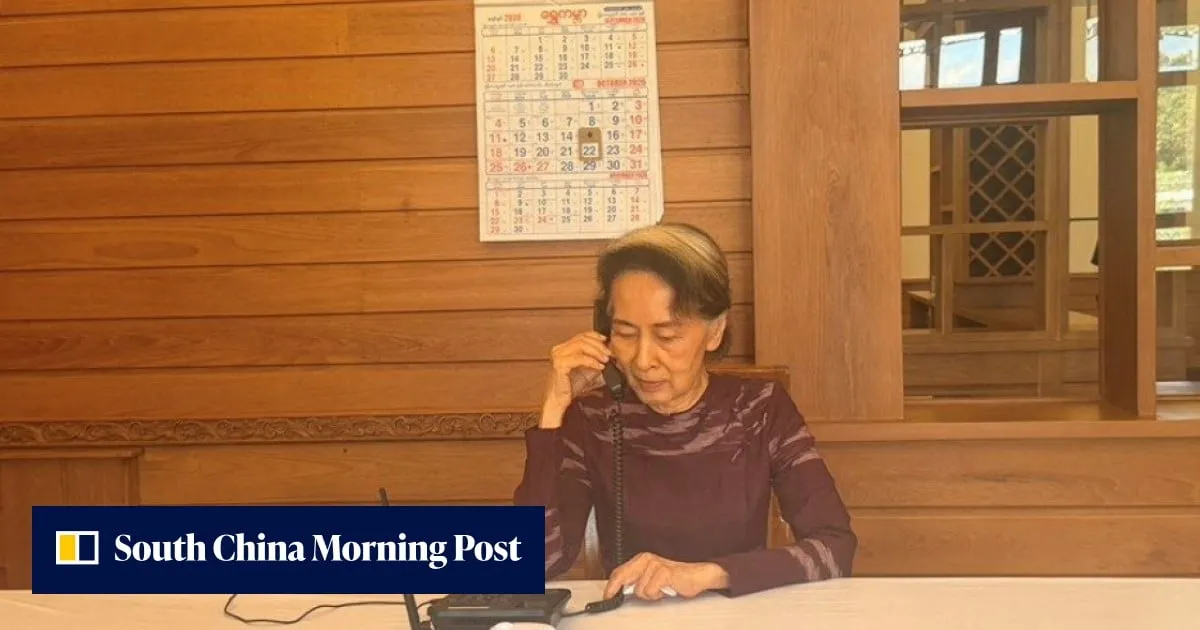
Epstein accomplice Ghislaine Maxwell seeks Trump clemency before testimony
Jeffrey Epstein’s accomplice Ghislaine Maxwell refused on Monday to answer questions from a congressional panel but said she was prepared to speak if granted clemency by US President Donald Trump. Maxwell, 64, who is serving a 20-year prison sentence for sex trafficking, was subpoenaed by the House Oversight Committee to discuss her relations with Epstein. Rather than answer the committee’s questions, however, the former British socialite invoked her Fifth Amendment right to not incriminate...

Russian oil tankers list Singapore as destination amid sanctions and shift to China
Russian oil tankers are increasingly listing Singapore as their official destination, signalling a shift in export flows from India to China and growing concerns over Western sanctions, traders said and LSEG shipping data shows. LSEG (London Stock Exchange Group) data shows tankers carrying about 1.4 million metric tons of Russian crude departed for Singapore in January, the highest monthly volume in recent years. Singapore does not import Russian oil amid sanction risks but its nearby waters...

UK’s Starmer refuses to heed calls to quit over fallout from Epstein scandal
British Prime Minister Keir Starmer refused on Monday to heed calls to quit, even by the leader of his party in Scotland, after a second aide resigned from a team in crisis over the appointment of Peter Mandelson as ambassador to Washington. Under pressure over the appointment of a man whose close ties to the late US sex offender Jeffrey Epstein have come into full focus, Starmer has attempted to change the narrative. But a demand from Anas Sarwar, leader of the Scottish Labour Party, for him...
The Guardian - World News
Center-LeftAustralia politics live: police under fire for handling of Sydney protests; chief says speakers ‘incited’ crowd to march
Fallout begins after violent scenes in Sydney. Follow the latest news live Get our breaking news email , free app or daily news podcast After chaotic scenes at a Sydney rally opposing Israeli president Isaac Herzog’s visit last night, assistant police commissioner Peter McKenna faced the media and accused the speakers at the rally of “inciting the crowd to march”. “It was really something that was quite inflammatory,” he told reporters last night. Those officers are in a very vulnerable, precarious position. Then when they have laws to enforce and violence is coming towards them, if that happens over a prolonged, sustained period of time, and then you take 30 seconds here or 30 seconds there of what looks like on its own merits … a violent confrontation. Well, you’re not judging the whole night … the whole situation of what those officers have just been through. Continue reading...
Reform-led Worcestershire set to issue England’s largest council tax rise
Cap-busting tax hike will be embarrassing for the party, which has made low council tax a priority Reform-led Worcestershire county council is likely to issue England’s largest council tax rise this April after it was given special permission by the government to increase it by up to 9%. Worcestershire is one of a handful of authorities whose requests to be allowed to increase local rates above the standard 5% cap from April have been accepted by ministers. Continue reading...
Troubles-rooted play Sapling wins Women’s prize for playwriting
Judges, including Guardian editor-in-chief Katharine Viner, praise Georgina Duncan’s play as the kind ‘producers dream of and audiences yearn to watch’ A work that explores what happens when trauma is left to fester, set in Troubles-era Belfast, has been named the winner of the Women’s prize for playwriting 2025. Judges praised what they described as unflinching and moving writing in Sapling by Georgina Duncan, a working-class playwright from Lancashire. Continue reading...
Trending Stories
Lebanese group accuses Israel of abducting its leader in raid
trendingIran defies Trump and US pressure over uranium enrichment
trendingHamas leader rejects disarmament while Israeli occupation of Gaza continues
trendingRussia-Ukraine war: List of key events, day 1,445
trendingSpanish train drivers to begin nationwide strike after fatal crashes
trendingMultiple Perspectives
See how different sources with different political leanings cover the same stories.
AI-Powered Analysis
Automatic classification, entity extraction, and sentiment analysis using local AI.
Source Transparency
Clear bias indicators and source information to help you evaluate credibility.