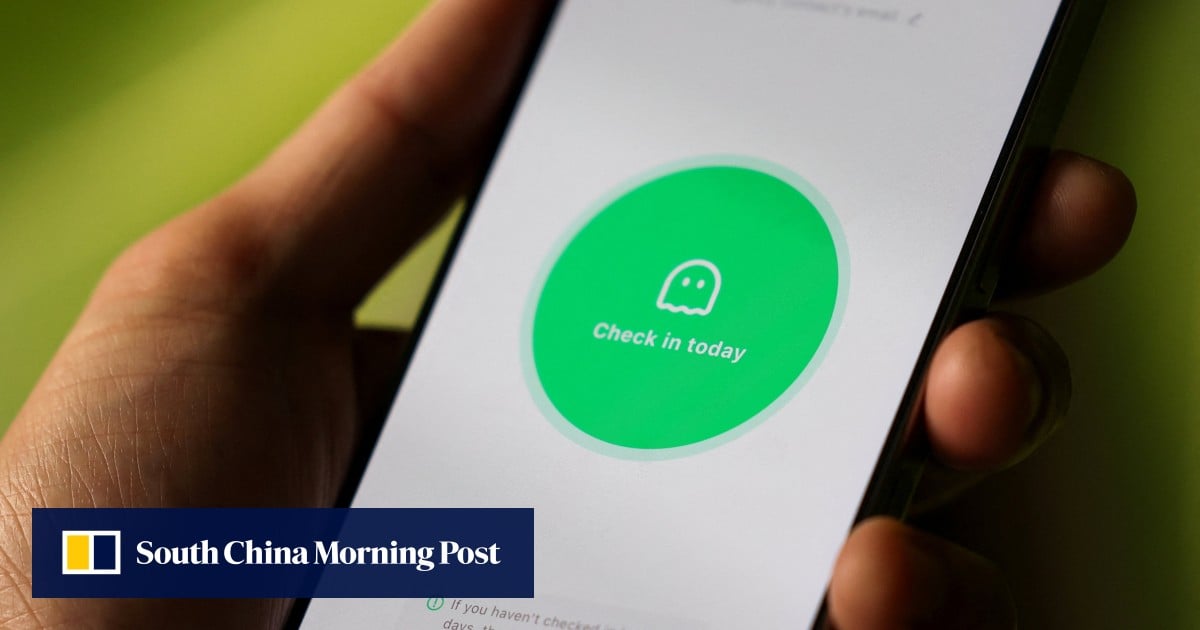
As the number of people living alone in China skyrockets, a wave of products and services is emerging to address the safety, social and mental health needs of the country’s solo-living population, analysts said.The issue was thrust into the public spotlight earlier this month, when a check-in app called Are You Dead? – or Sileme in Chinese – briefly surged to the top of paid app charts in mainland China and several other markets, revealing the scale of China’s vast and rapidly expanding solo economy.The app – which has since been removed from Apple’s AppStore in mainland China, but remains available elsewhere under its global brand name, Demumu – asks users to confirm their safety by tapping a button. If they fail to do so for over 48 hours, it sends an alert to a designated emergency contact.Beyond a viral debate about its provocative name, the popularity of Are You Dead? has underscored a deeper structural shift in Chinese society: millions more people are living by themselves, often far from family networks, in an environment marked by economic pressure and weakening social ties.For analysts, the app’s significance ultimately lies in how it revealed the scale of that market, which has long been underserved.“This is a manifestation of collective loneliness turning into structural demand,” said Zhao Zhijiang, a researcher at the Beijing-based think tank Anbound. “Both the public and the market are confronting the loneliness-related safety risks that may sound niche, but are increasingly real.”Nearly 20 per cent of China’s population were living in a single-person household in 2024, according to the National Bureau of Statistics. By the end of the decade, that figure will have climbed to more than 30 per cent – or between 150 million and 200 million people – according to a report by the Beike Research Institute.
SRCSouth China Morning Post
LANGEN
LEANCenter-Right
WORDS301
ENT5
SUN · 2026-01-25 · 03:00 GMTBRIEF NSR-2026-0125-10348
NSR-2026-0125-10348News Report·EN·Economic Impact
From solo dining to safety apps, China’s ‘loneliness economy’ is booming
China's "loneliness economy" is growing rapidly due to a surge in the number of people living alone. In 2024, nearly 20% of China's population lived in single-person households, and projections estimate this will rise to over 30% by the end of the decade.
Luna SunSouth China Morning PostFiled 2026-01-25 · 03:00 GMTLean · Center-RightRead · 2 min
South China Morning PostFIG 01
Reading time
2min
Word count
301words
Sources cited
2cited
Entities identified
5entities
Quality score
100%
§ 01
Briefing Summary
AI-generatedNEWSAR · AI
China's "loneliness economy" is growing rapidly due to a surge in the number of people living alone. In 2024, nearly 20% of China's population lived in single-person households, and projections estimate this will rise to over 30% by the end of the decade. This trend has spurred demand for products and services addressing safety, social, and mental health needs. The popularity of apps like "Are You Dead?" (Sileme/Demumu), which allows users to check in and alert emergency contacts if they fail to do so, highlights this growing market. Analysts attribute this trend to economic pressures, weakening social ties, and the increasing number of individuals living far from family networks. The app's success demonstrates a significant, previously underserved need within Chinese society.
Confidence 0.90Sources 2Claims 5Entities 5
§ 02
Article analysis
Model · rule-basedFraming
Economic Impact
Human Interest
Tone
Mixed Tone
AI-assessed
CalmNeutralAlarmist
Factuality
0.70 / 1.00
Factual
LowHigh
Sources cited
2
Limited
FewMany
§ 03
Key claims
5 extracted01
Nearly 20 per cent of China’s population were living in a single-person household in 2024.
statisticNational Bureau of Statistics
Confidence
1.00
02
A check-in app called Are You Dead? briefly surged to the top of paid app charts in mainland China.
factual
Confidence
1.00
03
This is a manifestation of collective loneliness turning into structural demand.
quoteZhao Zhijiang, a researcher at Anbound
Confidence
0.90
04
A wave of products and services is emerging to address the needs of China’s solo-living population.
factualanalysts
Confidence
0.80
05
By the end of the decade, that figure will have climbed to more than 30 per cent.
predictionBeike Research Institute
Confidence
0.70
§ 04
Full report
2 min read · 301 words§ 05
Entities
5 identifiedKey playerOppositionContextPositiveNeutralNegative
Organizations3
§ 06
Keywords & salience
10 termsloneliness economy
1.00
solo living
0.90
china
0.80
safety
0.70
mental health
0.70
check-in app
0.60
social isolation
0.60
economic pressure
0.50
single-person household
0.50
are you dead? app
0.40
§ 07
Topic connections
Interactive graph Network visualization showing 51 related topics
View Full Graph Person Organization Location Event|Click node to navigate|Edge numbers = shared articles