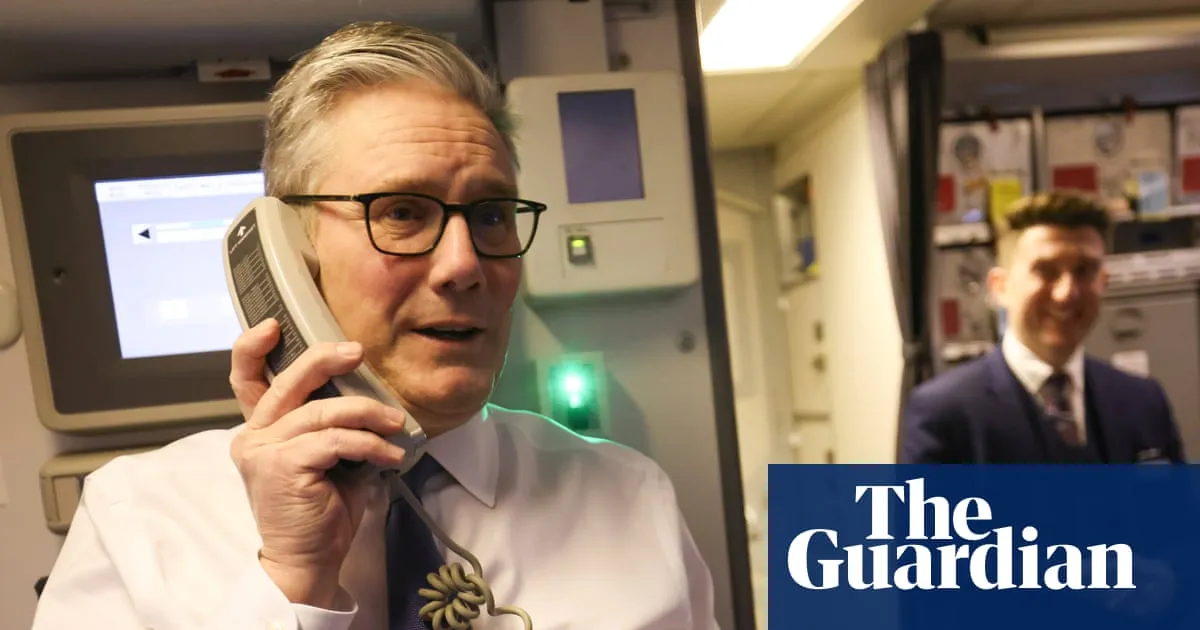
When prime ministers travel to China, heightened security arrangements are a given – as is the quiet game of cat and mouse that takes place behind the scenes as each country tests out each other’s tradecraft and capabilities.Keir Starmer’s team has been issued with burner phones and fresh sim cards, and is using temporary email addresses, to prevent devices being loaded with spyware or UK government servers being hacked into.The employment of such tactics may sound dramatic but they are par for the course in an age of digital espionage and information security. Burner phones, for example, are routinely used by No 10 on some trips abroad – at G20 the summits in Brazil in 2024 and South Africa in 2025, for example – though not on visits to allied nations or Five Eyes intelligence partners.For visits to China these precautions have been standard for at least a decade, such is the expectation that Beijing will eavesdrop and monitor.When she was prime minister, Theresa May was warned ahead of her trip to Beijing in 2018 to get dressed under the duvet to ensure that spy cameras would not film her without any clothes on. It was advice that was passed on generally by officials to all those travelling on the trip eight years ago.Theresa and Philip May with Xi Jinping and his wife, Peng Liyuan, at a tea ceremony in Beijing in 2018. Photograph: Dan Kitwood/EPAConcerns about peeping tom surveillance are particularly relevant to those in the official entourage or business and press delegations staying in hotels. “There was a well-worn routine in places like Shenzhen that foreigners from the west would be assigned the same rooms so they wouldn’t have to move the equipment,” a former senior British intelligence official said. Those with time on their hands would try to find the concealed bugging devices for fun.When Gordon Brown visited China in 2008, an aide was victim of a honey trap. The male aide met a Chinese woman at a lively hotel disco in Shanghai and left with her. The next day, he reported that his BlackBerry phone was missing. He was reprimanded, though No 10 said there had been no security compromise.Part of the standard security guidance given to ministers and their aides reflects this incident. “The rest of the advice,” the senior security official said, “was warning middle-aged men that if an attractive young Chinese woman appeared interested in you, she probably wasn’t”.Michael Gove, writing in the Mail last year, recalled being given similar warnings before being dispatched on a ministerial trip in 2010: “I was also told that if anyone from the opposite sex who approached me was out of my league they had only one thing on their mind – and it wasn’t comparing notes on Confucian philosophy.”Michael Gove, Vince Cable, George Osborne and David Cameron at the Great Hall of the People in Beijing during a two-day trip in 2010. Photograph: Stefan Rousseau/PADavid Cameron visited Beijing as prime minister in December 2013. A former aide recalled that China insisted on supplying a personal protection officer “over six-and-a-half-foot tall” to follow the British prime minister and his team as closely as reasonably possible.The practice, again, is relatively standard, but it offered an obvious possibility for low level information gathering. “At the end of the trip after pretending he couldn’t speak or understand, at the plane he said goodbye and safe travels in perfect English,” they recalled, presumably as a reminder they were being watched.General guidance, according to one British official who visited Beijing, “is that everything is bugged” and the only area for sensitive or secret conversations and debriefs is the secure compartment in the British embassy.Similar considerations apply when meeting Chinese leaders or officials – at international summits – or when visiting the country’s diplomatic premises in London or elsewhere.When James Cleverly was foreign secretary, a former adviser recalled that during the UN general assembly in New York, he and his team refused to take their mobiles into the Chinese consulate. The handsets were all stored in a lead-lined bag in the hands of officials who did not go inside the diplomatic building.One of the consequences of this abundance of caution is that ministers are out of ordinary contact in China, meaning their families cannot easily get in contact, having instead to communicate via a private secretary or other close aide.It can also cause other political issues, as happened to Vince Cable in 2014. The Lib Dem, who was then business secretary, was visiting China and did not have his mobile phone with him. Back in the UK, an old ally, Matthew Oakeshott, launched a coup attempt against the then party leader, Nick Clegg – but the plot struggled for momentum and quickly collapsed with Cable uncontactable.“I wasn’t part of this plot. It all broke in the middle of the night in China and not surprisingly we were not rushing to the phone,” Cable said.
SRCThe Guardian - World News
LANGEN
LEANCenter-Left
WORDS821
ENT10
WED · 2026-01-28 · 19:07 GMTBRIEF NSR-2026-0128-11398
NSR-2026-0128-11398News Report·EN·National Security
Burner phones and lead-lined bags: a history of UK security tactics in China
UK officials traveling to China, including Prime Ministers and their staff, routinely employ heightened security measures to counter potential espionage. These tactics, which have been standard for at least a decade, include using burner phones, temporary email addresses, and dressing under duvets to avoid surveillance.
Dan Sabbagh Defence and security editorThe Guardian - World NewsFiled 2026-01-28 · 19:07 GMTLean · Center-LeftRead · 4 min
The Guardian - World NewsFIG 01
Reading time
4min
Word count
821words
Sources cited
3cited
Entities identified
10entities
Quality score
100%
§ 01
Briefing Summary
AI-generatedNEWSAR · AI
UK officials traveling to China, including Prime Ministers and their staff, routinely employ heightened security measures to counter potential espionage. These tactics, which have been standard for at least a decade, include using burner phones, temporary email addresses, and dressing under duvets to avoid surveillance. Concerns stem from the expectation that the Chinese government will attempt to eavesdrop and monitor visitors. Past incidents include suspected bugging of hotel rooms, honey traps targeting aides, and warnings about potential spyware installation on devices. These precautions are taken to protect sensitive information and prevent security compromises during official visits.
Confidence 0.90Sources 3Claims 5Entities 10
§ 02
Article analysis
Model · rule-basedFraming
National Security
Diplomatic
Tone
Mixed Tone
AI-assessed
CalmNeutralAlarmist
Factuality
0.70 / 1.00
Factual
LowHigh
Sources cited
3
Well sourced
FewMany
§ 03
Key claims
5 extracted01
When Gordon Brown visited China in 2008, an aide was victim of a honey trap and his BlackBerry went missing.
factualnull
Confidence
1.00
02
Theresa May was warned ahead of her 2018 trip to Beijing to get dressed under the duvet.
factualnull
Confidence
1.00
03
Burner phones are routinely used by No 10 on some trips abroad.
factualnull
Confidence
1.00
04
Keir Starmer’s team has been issued with burner phones and fresh sim cards for a trip to China.
factualnull
Confidence
1.00
05
Foreigners from the west would be assigned the same rooms so they wouldn’t have to move the equipment.
quoteformer senior British intelligence official
Confidence
0.90
§ 04
Full report
4 min read · 821 words§ 05
Entities
10 identifiedKey playerOppositionContextPositiveNeutralNegative
People4
§ 06
Keywords & salience
10 termschina
0.90
security tactics
0.90
espionage
0.80
burner phones
0.80
information security
0.70
surveillance
0.70
honey trap
0.60
cybersecurity
0.60
uk government
0.50
tradecraft
0.40
§ 07
Topic connections
Interactive graph Network visualization showing 51 related topics
View Full Graph Person Organization Location Event|Click node to navigate|Edge numbers = shared articles