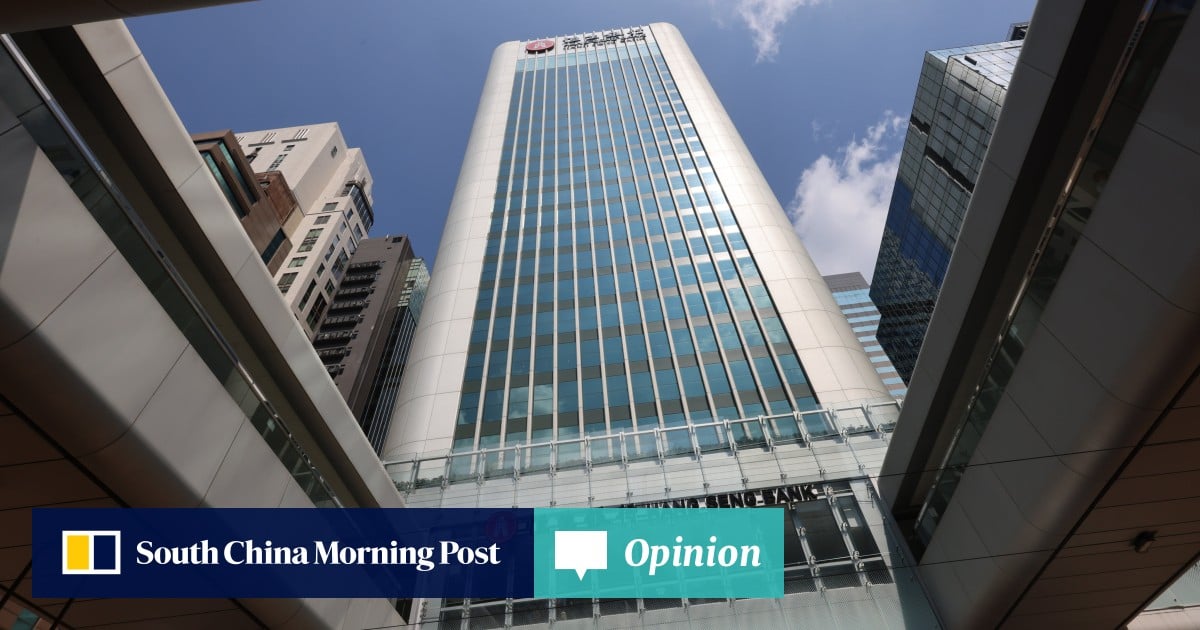
For generations of Hong Kong investors, Hang Seng Bank was never just a stock. It was a companion through decades of economic ascent, market turbulence and personal milestones. This is why the bank’s delisting on Tuesday after 53 years on the exchange has stirred something deeper than a routine corporate transaction would. It feels like the end of an era not because the numbers no longer add up but because the memories still do.Consider the irony of this moment. The Hang Seng Index, the city’s undisputed financial barometer, now no longer contains Hang Seng Bank. It carries the name and is quoted in every news cycle, yet it is increasingly detached, in public perception, from the institution that created it. This development raises the question: what happens when Hong Kong’s most enduring financial symbols outlive their own origins?To understand the weight of this departure, one must return to the bank’s roots. Founded in 1933 as a modest money-changing business in Sheung Wan, Hang Seng Bank grew alongside the city’s improbable rise. It survived war, occupation and the kind of existential crises that wiped out weaker houses. In 1965, a banking panic triggered a run on deposits, and Hang Seng Bank lost a sixth of its holdings in a single day. It was rescued through a landmark intervention by HSBC, which stabilised the system while preserving Hang Seng’s independent, local identity.That balance between global support and local autonomy became the bank’s DNA. Even after HSBC became its majority shareholder, Hang Seng Bank retained a distinct character. It focused on small businesses, middle-class households and a form of relationship banking that felt personal rather than imperial. For many customers, walking into a Hang Seng branch felt like coming home. Staff remembered names. Trust was built over decades.When the bank listed in 1972, it was among the earliest locally founded banks to do so. Over the next five decades, the stock code 0011 delivered returns that became the stuff of family lore. Some shareholders held it for a lifetime, treating the dividends as a private pension. Others spoke of passing shares down to the next generation. For them, the recent privatisation vote was less a financial decision than an emotional reckoning.And yet, the vote passed. The logic was framed as fair. HSBC’s offer of HK$155 (US$19.87) per share represented a significant premium, a rational exit in a world where banking has become capital-intensive, tightly regulated and unforgiving of sentiment. From a purely commercial standpoint, cashing out was a sensible farewell.
SRCSouth China Morning Post
LANGEN
LEANCenter-Right
WORDS417
ENT5
THU · 2026-01-29 · 01:30 GMTBRIEF NSR-2026-0129-11457
NSR-2026-0129-11457Analysis·EN·Economic Impact
Hang Seng Bank’s delisting from the index it created signals a shift
Hang Seng Bank, a Hong Kong financial institution, was delisted from the Hang Seng Index after 53 years. Founded in 1933, the bank played a significant role in Hong Kong's economic development and was listed on the stock exchange in 1972.
Ken IpSouth China Morning PostFiled 2026-01-29 · 01:30 GMTLean · Center-RightRead · 2 min
South China Morning PostFIG 01
Reading time
2min
Word count
417words
Sources cited
1cited
Entities identified
5entities
Quality score
100%
§ 01
Briefing Summary
AI-generatedNEWSAR · AI
Hang Seng Bank, a Hong Kong financial institution, was delisted from the Hang Seng Index after 53 years. Founded in 1933, the bank played a significant role in Hong Kong's economic development and was listed on the stock exchange in 1972. HSBC, which became a majority shareholder after a banking panic in 1965, privatized Hang Seng Bank with an offer of HK$155 per share. The delisting marks the end of an era for many Hong Kong investors who viewed the bank as a symbol of the city's financial history. The Hang Seng Index, which the bank created, will now exist without Hang Seng Bank as a component.
Confidence 0.90Sources 1Claims 5Entities 5
§ 02
Article analysis
Model · rule-basedFraming
Economic Impact
Human Interest
Tone
Measured
AI-assessed
CalmNeutralAlarmist
Factuality
0.60 / 1.00
Mixed
LowHigh
Sources cited
1
Limited
FewMany
§ 03
Key claims
5 extracted01
HSBC's offer was HK$155 (US$19.87) per share.
factual
Confidence
1.00
02
In 1965, a banking panic triggered a run on deposits at Hang Seng Bank.
factual
Confidence
1.00
03
Hang Seng Bank was founded in 1933 as a money-changing business.
factual
Confidence
1.00
04
Hang Seng Bank was delisted after 53 years on the exchange.
factual
Confidence
1.00
05
HSBC stabilised the system while preserving Hang Seng’s independent, local identity.
factual
Confidence
0.80
§ 04
Full report
2 min read · 417 words§ 05
Entities
5 identifiedKey playerOppositionContextPositiveNeutralNegative
Organizations3
§ 06
Keywords & salience
8 termshang seng bank
1.00
delisting
0.90
hang seng index
0.80
hong kong
0.70
hsbc
0.60
financial markets
0.50
banking
0.50
economic history
0.40
§ 07
Topic connections
Interactive graph Network visualization showing 2 related topics
View Full Graph Person Organization Location Event|Click node to navigate|Edge numbers = shared articles