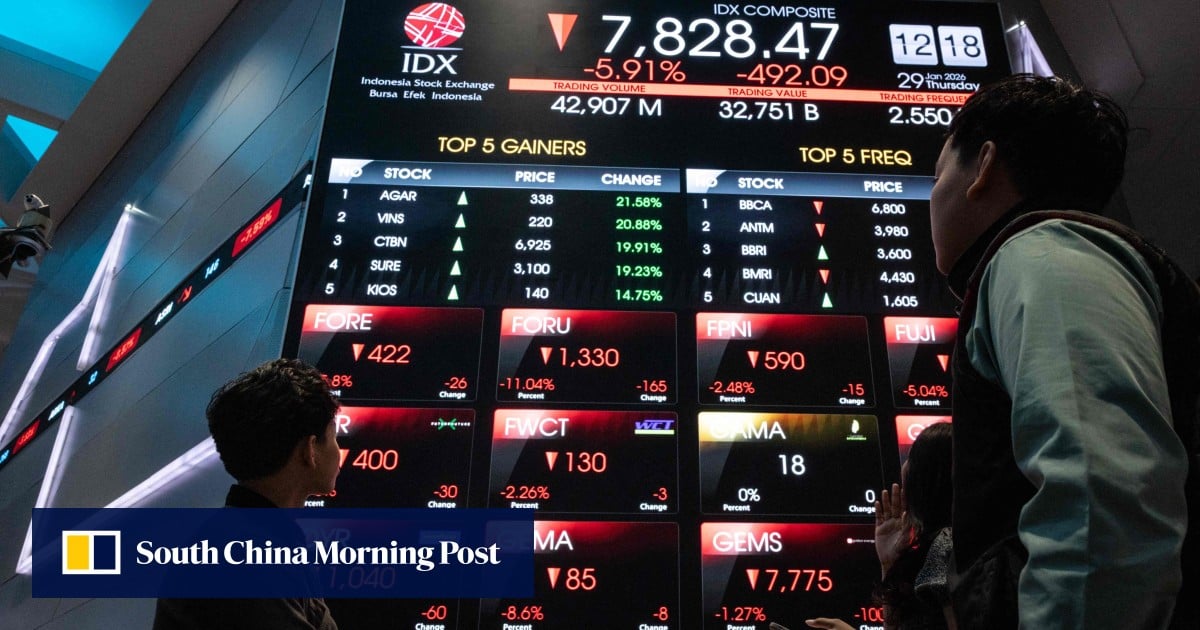
Indonesia is fighting to save its financial reputation after a disastrous two days saw stock prices plunge by 8 per cent. Authorities are racing to pass new rules to prevent a downgrade that has already scared investors into pulling billions of dollars out of the local market.The rout, which knocked off about US$80 billion in overall market value, came after index provider MSCI flagged concerns about ownership and trading transparency in Indonesian stocks, the latest setback for a market that is struggling to maintain investor confidence.Foreign capital has flowed out of Indonesia because of concerns about how President Prabowo Subianto is widening the fiscal deficit and ramping up the state’s involvement in financial markets.The appointment of his nephew, Thomas Djiwandono, to the central bank this month, after last year’s abrupt sacking of respected Finance Minister Sri Mulyani Indrawati, has shaken confidence in his fiscal stewardship and pushed the rupiah to record lows.Ignoring interference concerns, Indonesia on Tuesday appointed Thomas Djiwandono, President Prabowo’s nephew, to the central bank board, sparking fears of a loss of independence. Photo: AFPModest recovery after regulatory responseIndonesian stocks staged a modest recovery late on Thursday after the country’s regulators unveiled several measures, including doubling the free-float requirement for listed firms to 15 per cent, as part of their response to MSCI.
SRCSouth China Morning Post
LANGEN
LEANCenter-Right
WORDS215
ENT5
THU · 2026-01-29 · 11:13 GMTBRIEF NSR-2026-0129-11607
NSR-2026-0129-11607News Report·EN·Economic Impact
Indonesia scrambles to halt US$80 billion market crash as rupiah hits record low
Indonesia is attempting to stabilize its financial markets after a significant crash that erased approximately $80 billion in market value. The crisis was triggered by MSCI concerns regarding ownership and trading transparency in Indonesian stocks, coupled with investor anxieties about President Prabowo Subianto's fiscal policies, including a widening deficit and increased state intervention.
ReutersSouth China Morning PostFiled 2026-01-29 · 11:13 GMTLean · Center-RightRead · 1 min
South China Morning PostFIG 01
Reading time
1min
Word count
215words
Sources cited
1cited
Entities identified
5entities
Quality score
100%
§ 01
Briefing Summary
AI-generatedNEWSAR · AI
Indonesia is attempting to stabilize its financial markets after a significant crash that erased approximately $80 billion in market value. The crisis was triggered by MSCI concerns regarding ownership and trading transparency in Indonesian stocks, coupled with investor anxieties about President Prabowo Subianto's fiscal policies, including a widening deficit and increased state intervention. The rupiah has fallen to record lows, exacerbated by the appointment of President Subianto's nephew to the central bank, raising concerns about its independence. In response, Indonesian regulators have introduced measures, such as increasing the free-float requirement for listed firms, leading to a slight market recovery. The country is working to prevent further capital outflow and a potential market downgrade.
Confidence 0.90Sources 1Claims 5Entities 5
§ 02
Article analysis
Model · rule-basedFraming
Economic Impact
Political Strategy
Tone
Mixed Tone
AI-assessed
CalmNeutralAlarmist
Factuality
0.70 / 1.00
Factual
LowHigh
Sources cited
1
Limited
FewMany
§ 03
Key claims
5 extracted01
Indonesia appointed Thomas Djiwandono, President Prabowo’s nephew, to the central bank board.
factual
Confidence
1.00
02
MSCI flagged concerns about ownership and trading transparency in Indonesian stocks.
factualMSCI
Confidence
1.00
03
The rout knocked off about US$80 billion in overall market value.
statistic
Confidence
1.00
04
Indonesia is fighting to save its financial reputation after stock prices plunge by 8 per cent.
factual
Confidence
1.00
05
Foreign capital has flowed out of Indonesia because of concerns about how President Prabowo Subianto is widening the fiscal deficit.
factual
Confidence
0.80
§ 04
Full report
1 min read · 215 words§ 05
Entities
5 identified§ 06
Keywords & salience
10 termsmarket crash
0.90
indonesian stocks
0.80
rupiah
0.70
investor confidence
0.70
fiscal deficit
0.60
financial markets
0.60
central bank
0.50
regulatory response
0.50
market value
0.40
prabowo subianto
0.40
§ 07
Topic connections
Interactive graph Network visualization showing 51 related topics
View Full Graph Person Organization Location Event|Click node to navigate|Edge numbers = shared articles