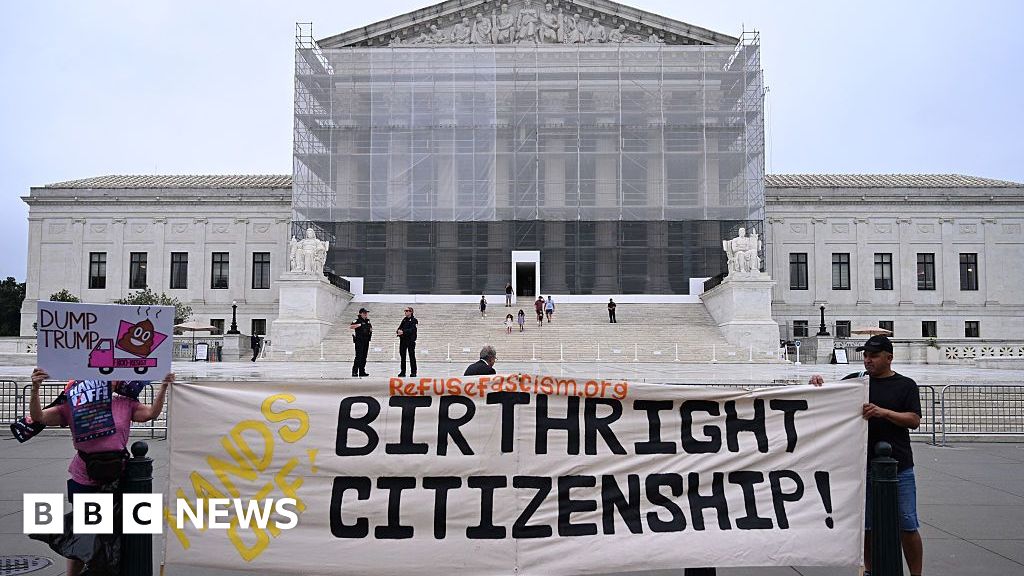
US Supreme Court agrees to hear case challenging birthright citizenship
AI Summary
The US Supreme Court has agreed to hear a case challenging birthright citizenship, stemming from President Trump's executive order seeking to deny citizenship to children born in the US to parents who are in the country illegally or on temporary visas. Trump's order, part of a broader effort to reform immigration, was blocked by lower courts who cited the 14th Amendment, which grants citizenship to anyone born in the US and subject to its jurisdiction. The administration argues that the "subject to jurisdiction" clause excludes children of non-permanent or unlawful residents. The ACLU, representing the plaintiffs, argues that the 14th Amendment guarantees citizenship to anyone born on US soil. The Supreme Court's decision could have major implications for immigration policy and the definition of US citizenship.
Key Entities & Roles
Keywords
Sentiment Analysis
Source Transparency
This article was automatically classified using rule-based analysis.
Topic Connections
Explore how the topics in this article connect to other news stories
Find Similar Articles
AI-PoweredDiscover articles with similar content using semantic similarity analysis.