In a new memoir No Borders: Journeys Across Islands And Continents, renowned historian Wang Gungwu traces his life across Malaya, London, Australia, Hong Kong and Singapore, sharing both personal anecdotes and perspectives on the changes in China and the modern world. In the excerpt below, Wang reflects on his impressions of Singapore after arriving from Hong Kong with his wife Margaret in the 1990s, the differences between the two cities, and his work on contemporary China with Singapore’s research institutes.Coming from Hong Kong, Margaret and I expected no dramatic change in perspectives. Hong Kong and Singapore were both modern cities serving as global ports facing the South China Sea. Put simply, the main difference came from what the cities saw as their future.For Hong Kong, it consisted mainly of Chinese people who spoke Cantonese and thought they knew how to deal with British officialdom. Mandarin speakers were still regarded with suspicion or condescension.The city had its own pluralist features, greatly divided along many different political lines. They were prepared for the city’s return to a China homeland, but there were many who hoped that a reformed People’s Republic of China might eventually grow a system more like that of Hong Kong’s.In contrast, Singapore was a republic with a Chinese majority committed to a multifaceted Chinese-Malay-Indian-Others (commonly abbreviated as CMIO) nationhood. What made the task of its leaders so challenging was that each of the four groups was diverse and pluralistic in its own way. From the start, the legacy of British democracy was to provide legitimacy to a strong government that could manage this successfully.Wang Gungwu specialises in the history of China and Southeast Asia. Photo: HandoutFounding prime minister, Lee Kuan Yew, believed that stable political power was essential to create the prosperity the port city desperately needed and that could only be achieved at a cost. His successor, Goh Chok Tong, looked out for new directions for the people to benefit more directly from what had been achieved. This was evident in the policies developed during the 1990s.
SRCSouth China Morning Post
LANGEN
LEANCenter-Right
WORDS339
ENT9
SUN · 2026-02-01 · 06:00 GMTBRIEF NSR-2026-0201-12327
NSR-2026-0201-12327Analysis·EN·Political Strategy
A tale of two cities: Singapore, Hong Kong and their contrasting paths
In his memoir, historian Wang Gungwu reflects on his move from Hong Kong to Singapore in the 1990s. He contrasts the two cities, noting that Hong Kong, primarily Cantonese-speaking, focused on its impending return to China, hoping for reforms within the mainland.
An excerptSouth China Morning PostFiled 2026-02-01 · 06:00 GMTLean · Center-RightRead · 2 min
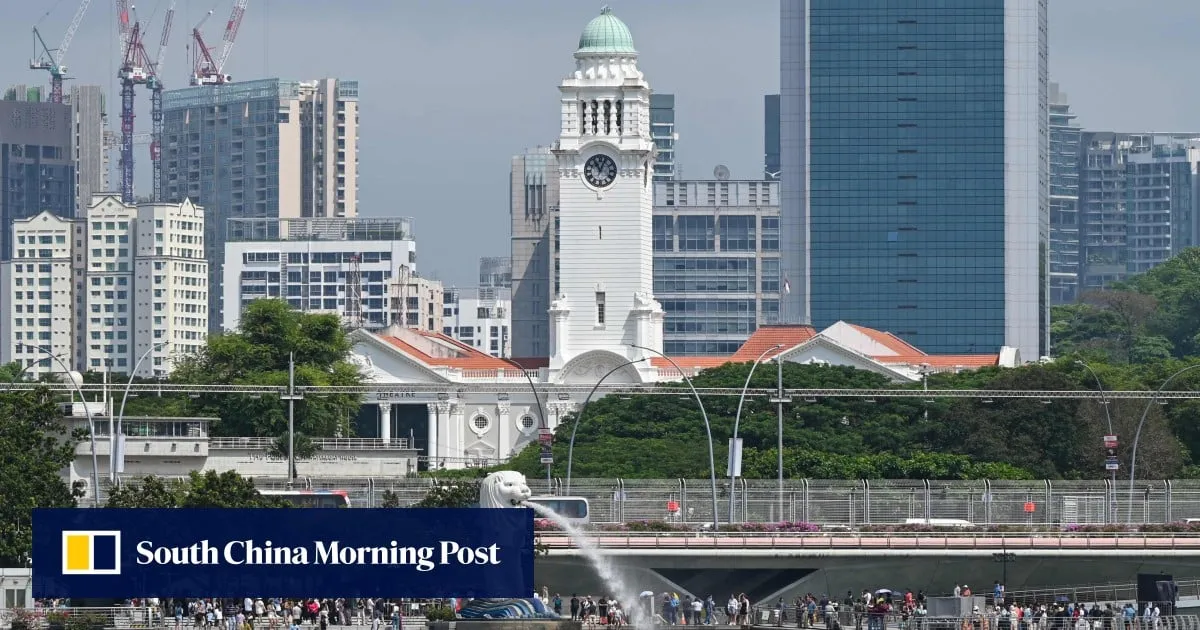
South China Morning PostFIG 01
Reading time
2min
Word count
339words
Sources cited
2cited
Entities identified
9entities
Quality score
100%
§ 01
Briefing Summary
AI-generatedNEWSAR · AI
In his memoir, historian Wang Gungwu reflects on his move from Hong Kong to Singapore in the 1990s. He contrasts the two cities, noting that Hong Kong, primarily Cantonese-speaking, focused on its impending return to China, hoping for reforms within the mainland. Singapore, on the other hand, was a republic committed to a CMIO (Chinese-Malay-Indian-Others) nationhood. Wang highlights that Singapore's leaders, including Lee Kuan Yew and Goh Chok Tong, prioritized stable political power to ensure prosperity for the port city. He also mentions his work on contemporary China with Singapore's research institutes. The memoir explores Wang's life across various locations and his perspectives on changes in China and the world.
Confidence 0.90Sources 2Claims 5Entities 9
§ 02
Article analysis
Model · rule-basedFraming
Political Strategy
Human Interest
Tone
Measured
AI-assessed
CalmNeutralAlarmist
Factuality
0.60 / 1.00
Mixed
LowHigh
Sources cited
2
Limited
FewMany
§ 03
Key claims
5 extracted01
Hong Kong and Singapore were both modern cities serving as global ports facing the South China Sea.
factualWang Gungwu
Confidence
0.90
02
Lee Kuan Yew believed stable political power was essential for Singapore's prosperity.
quoteWang Gungwu
Confidence
0.90
03
Singapore was a republic with a Chinese majority committed to a CMIO nationhood.
factualWang Gungwu
Confidence
0.90
04
Goh Chok Tong sought new directions for the people to benefit more from Singapore's achievements.
factualWang Gungwu
Confidence
0.80
05
Hong Kong consisted mainly of Cantonese-speaking Chinese people who dealt with British officialdom.
factualWang Gungwu
Confidence
0.80
§ 04
Full report
2 min read · 339 words§ 05
Entities
9 identifiedKey playerOppositionContextPositiveNeutralNegative
§ 06
Keywords & salience
10 termshong kong
1.00
singapore
1.00
city comparison
0.80
political systems
0.70
cultural identity
0.60
economic development
0.60
cmio
0.50
wang gungwu
0.50
lee kuan yew
0.40
goh chok tong
0.40
§ 07
Topic connections
Interactive graph Network visualization showing 51 related topics
View Full Graph Person Organization Location Event|Click node to navigate|Edge numbers = shared articles