Gaza’s Rafah border crossing with Egypt resumed limited operations Monday under the terms of the Israeli-Hamas ceasefire agreement, reopening a critical gateway that had been largely closed for nearly two years. The reopening comes with tight restrictions. Only a small number of people will be permitted to travel in either direction and commercial goods will not be allowed to pass through the crossing, officials said. Egyptian authorities said the first day of operations will allow up to 50 Palestinians to cross in each direction, a figure that reflects the narrow scope of the initial reopening rather than a full return to prewar travel. Health officials in Gaza say tens of thousands of residents with urgent medical needs are seeking evacuation through Rafah, underscoring the pressure on the crossing even as access remains tightly controlled. Thousands of Palestinians currently outside Gaza are also hoping to return. US MILITARY TO OVERSEE NEXT PHASE OF PEACE DEAL FROM COORDINATION BASE IN Israel Before the war, Rafah served as Gaza’s primary passage to the outside world. All other crossings into the territory are shared with Israel. Under the ceasefire framework that took effect in October, Israeli forces continue to control the corridor between the crossing and the areas where most Palestinians live. Israel and Egypt are vetting travelers , and the crossing is being overseen with international involvement, officials said, as part of efforts to prevent weapons smuggling while allowing limited humanitarian movement. Egypt has said the crossing must function in both directions and has pushed back against any use of Rafah as a mechanism to permanently displace Palestinians from Gaza . US ENVOY Witkoff SAYS HIGH-LEVEL Miami TALKS FOCUSED ON 'UNIFIED GAZAN AUTHORITY' AS Israel CEASEFIRE ADVANCES Elsewhere in the territory, fighting-related incidents continued despite the ceasefire. Gaza hospital officials accused an Israeli navy vessel of firing on a tent camp near the southern city of Khan Younis, killing a 3-year-old Palestinian boy. Israel’s military said it was reviewing the report. Egyptian authorities said roughly 150 hospitals across the country are prepared to receive patients evacuated from Gaza, while the Egyptian Red Crescent has set up support areas on the Egyptian side of the crossing. Israel seized control of the Rafah crossing in May 2024, describing the move as part of its campaign against Hamas smuggling routes. The crossing was briefly opened for medical evacuations during a short-lived ceasefire in early 2025. The U.S.-brokered ceasefire that took effect on Oct. 10 halted more than two years of fighting that began with the Hamas-led terror attacks on southern Israel on Oct. 7, 2023. The ceasefire's initial phase focused on hostage exchanges, increased humanitarian aid and a limited Israeli pullback. A second phase envisions a new Palestinian governing arrangement for Gaza, the deployment of an international security force, the disarmament of Hamas and steps toward reconstruction — goals that remain unresolved.
SRCFox News - World
LANGEN
LEANCenter-Right
WORDS476
ENT11
MON · 2026-02-02 · 11:34 GMTBRIEF NSR-2026-0202-12653
NSR-2026-0202-12653News Report·EN·Conflict
Gaza’s Rafah border crossing partially reopens under ceasefire deal
Under the terms of the Israeli-Hamas ceasefire agreement, the Rafah border crossing between Gaza and Egypt partially reopened on Monday after being largely closed for nearly two years. The reopening is limited, with only a small number of people, up to 50 Palestinians in each direction, permitted to travel, and no commercial goods allowed.
Bradford BetzFox News - WorldFiled 2026-02-02 · 11:34 GMTLean · Center-RightRead · 2 min
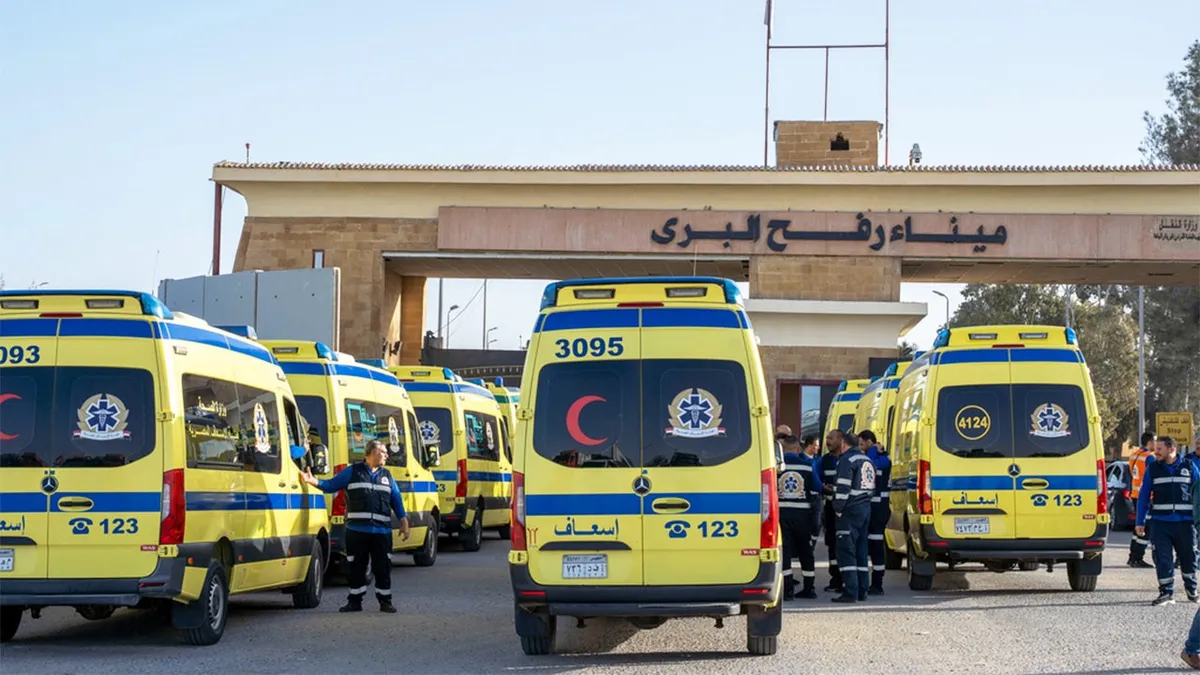
Fox News - WorldFIG 01
Reading time
2min
Word count
476words
Sources cited
5cited
Entities identified
11entities
Quality score
100%
§ 01
Briefing Summary
AI-generatedNEWSAR · AI
Under the terms of the Israeli-Hamas ceasefire agreement, the Rafah border crossing between Gaza and Egypt partially reopened on Monday after being largely closed for nearly two years. The reopening is limited, with only a small number of people, up to 50 Palestinians in each direction, permitted to travel, and no commercial goods allowed. The crossing, previously Gaza's primary passage to the outside world, is being overseen with international involvement, with Israel and Egypt vetting travelers to prevent weapons smuggling. Thousands of Palestinians with urgent medical needs are seeking evacuation, while others outside Gaza hope to return. Despite the ceasefire, fighting-related incidents continue, and Egypt has prepared hospitals to receive patients evacuated from Gaza. Israel seized control of the Rafah crossing in May 2024.
Confidence 0.90Sources 5Claims 5Entities 11
§ 02
Article analysis
Model · rule-basedFraming
Conflict
Human Interest
Tone
Measured
AI-assessed
CalmNeutralAlarmist
Factuality
0.80 / 1.00
Factual
LowHigh
Sources cited
5
Well sourced
FewMany
§ 03
Key claims
5 extracted01
Israel’s military said it was reviewing the report.
factualIsrael’s military
Confidence
1.00
02
Egyptian authorities said the first day of operations will allow up to 50 Palestinians to cross in each direction.
factualEgyptian authorities
Confidence
1.00
03
Only a small number of people will be permitted to travel in either direction and commercial goods will not be allowed to pass through the crossing.
factualofficials
Confidence
1.00
04
Gaza’s Rafah border crossing with Egypt resumed limited operations Monday under the terms of the Israeli-Hamas ceasefire agreement.
factual
Confidence
1.00
05
Gaza hospital officials accused an Israeli navy vessel of firing on a tent camp near the southern city of Khan Younis, killing a 3-year-old Palestinian boy.
factualGaza hospital officials
Confidence
0.90
§ 04
Full report
2 min read · 476 words§ 05
Entities
11 identifiedKey playerOppositionContextPositiveNeutralNegative
People1
Organizations1
Locations8
§ 06
Keywords & salience
9 termsrafah border crossing
1.00
ceasefire agreement
0.80
gaza
0.80
humanitarian movement
0.60
travel restrictions
0.60
egyptian authorities
0.50
medical evacuation
0.50
weapons smuggling
0.50
israeli forces
0.40
§ 07
Topic connections
Interactive graph No topic relationship data available yet. This graph will appear once topic relationships have been computed.