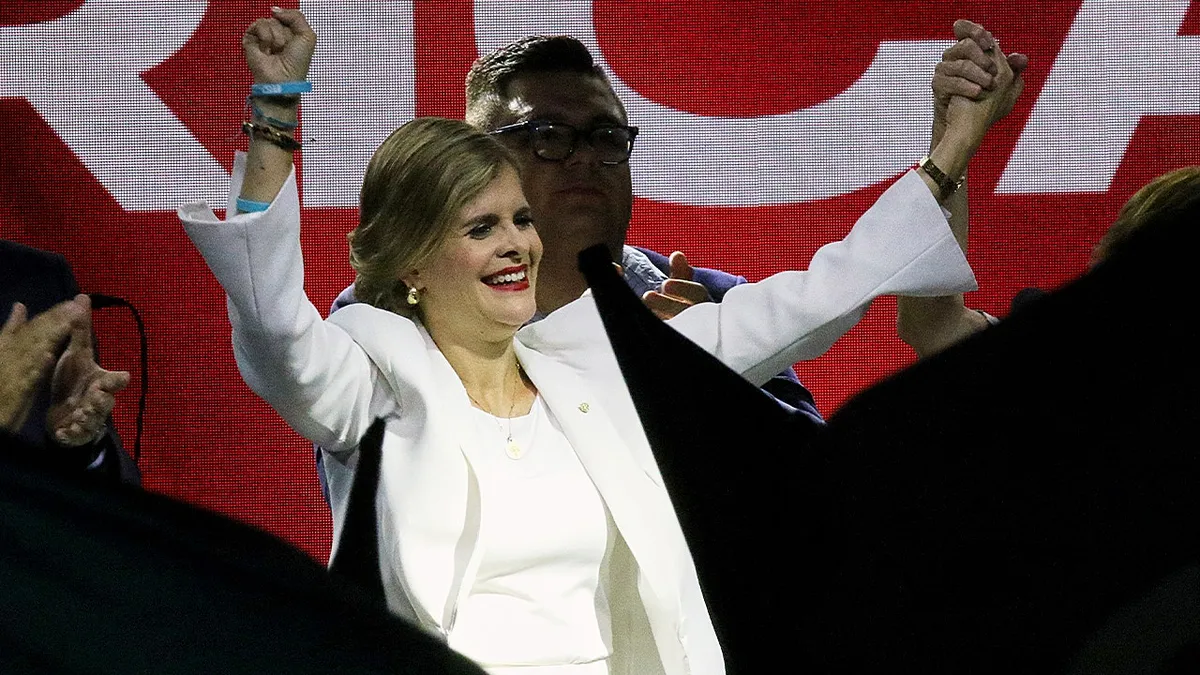
Costa Ricans have elected conservative populist Laura Fernández as their next president, according to preliminary results, making her the latest right-leaning leader to win office in Latin America. With results from 96.8% of polling places counted, Fernández of the Sovereign People’s Party won 48.3% of the vote, the Supreme Electoral Tribunal reported. Her closest challenger, economist Álvaro Ramos of the National Liberation Party, trailed with 33.4%, the Associated Press reported. Ramos conceded the race on election night, with Fernández, 39, to begin her four-year term in May. TRUMP-BACKED CANDIDATE ASFURA WINS HONDURAS PRESIDENTIAL ELECTION A former government minister, Fernández is the chosen successor of outgoing President Rodrigo Chaves, who is constitutionally prohibited from seeking re-election. She campaigned on continuing Chaves’ populist agenda , which reshaped Costa Rican politics by arguing against traditional parties and promising tougher action on crime. Fernández served as minister of national planning and later as minister of the presidency, giving her a central role in Chaves’ administration. LATIN AMERICA FRACTURES OVER TRUMP’S MADURO CAPTURE AS REGIONAL ALLIES SHIFT RIGHT Crime had dominated the campaign in Costa Rica amid sharp rises in homicides, gang activity and drug trafficking by cartels. The murder rate had increased by 50% over the last six years, according to reports . Fernández pledged a hard-line security strategy, including increased cooperation with the U.S. Drug Enforcement Administration and tougher measures against organized crime. She has also floated controversial proposals inspired by El Salvador’s President Nayib Bukele. This included construction of a special prison for gang leaders, the Associated Press reported. Marco Rubio EMERGES AS KEY TRUMP POWER PLAYER AFTER VENEZUELA OPERATION "My hand won’t shake when it comes to making the decisions we need to restore peace in Costa Rican homes," Fernández said during the campaign. U.S. Secretary of State Marco Rubio congratulated Fernández in a statement Monday. "Under her leadership, we are confident Costa Rica will continue to advance shared priorities to include combating narco-trafficking, ending illegal immigration to the United States, promoting cybersecurity and secure telecommunications, and strengthening economic ties," Rubio said. "I hope that we can immediately lower the flags of whichever political party and start working only in favor of the Costa Rican flag," Fernández said after the result. "I believe the Costa Rican people expect nothing less of us," she added.
SRCFox News - World
LANGEN
LEANCenter-Right
WORDS383
ENT12
MON · 2026-02-02 · 22:50 GMTBRIEF NSR-2026-0202-12801
NSR-2026-0202-12801News Report·EN·Political Strategy
Costa Rica swings right as voters embrace tough-on-crime leader amid surging violence
Laura Fernández of the Sovereign People's Party has been elected as Costa Rica's next president, marking a shift to the right in the country's politics. With nearly all votes counted, Fernández secured 48.3% of the vote, surpassing her closest competitor, Álvaro Ramos.
Emma BusseyFox News - WorldFiled 2026-02-02 · 22:50 GMTLean · Center-RightRead · 2 min
Fox News - WorldFIG 01
Reading time
2min
Word count
383words
Sources cited
4cited
Entities identified
12entities
Quality score
100%
§ 01
Briefing Summary
AI-generatedNEWSAR · AI
Laura Fernández of the Sovereign People's Party has been elected as Costa Rica's next president, marking a shift to the right in the country's politics. With nearly all votes counted, Fernández secured 48.3% of the vote, surpassing her closest competitor, Álvaro Ramos. Fernández, the successor to outgoing President Rodrigo Chaves, campaigned on a tough-on-crime platform amid rising homicides, gang activity, and drug trafficking in Costa Rica. Her proposed strategies include increased cooperation with the U.S. Drug Enforcement Administration and stricter measures against organized crime, even suggesting a special prison for gang leaders. Fernández's four-year term will begin in May. The U.S. Secretary of State Marco Rubio has already congratulated Fernández and expressed confidence in continued collaboration on shared priorities.
Confidence 0.90Sources 4Claims 5Entities 12
§ 02
Article analysis
Model · rule-basedFraming
Political Strategy
National Security
Tone
Measured
AI-assessed
CalmNeutralAlarmist
Factuality
0.80 / 1.00
Factual
LowHigh
Sources cited
4
Well sourced
FewMany
§ 03
Key claims
5 extracted01
My hand won’t shake when it comes to making the decisions we need to restore peace in Costa Rican homes.
quoteFernández
Confidence
1.00
02
Fernández pledged a hard-line security strategy.
factual
Confidence
1.00
03
Álvaro Ramos of the National Liberation Party trailed with 33.4%.
statisticAssociated Press
Confidence
1.00
04
Laura Fernández of the Sovereign People’s Party won 48.3% of the vote.
statisticSupreme Electoral Tribunal
Confidence
1.00
05
The murder rate had increased by 50% over the last six years.
statisticreports
Confidence
0.90
§ 04
Full report
2 min read · 383 words§ 05
Entities
12 identifiedKey playerOppositionContextPositiveNeutralNegative
People5
Organizations4
§ 06
Keywords & salience
10 termscosta rica
1.00
laura fernández
0.90
election
0.90
crime
0.80
right-leaning
0.70
drug trafficking
0.60
populist agenda
0.60
security strategy
0.50
organized crime
0.50
rodrigo chaves
0.40
§ 07
Topic connections
Interactive graph No topic relationship data available yet. This graph will appear once topic relationships have been computed.