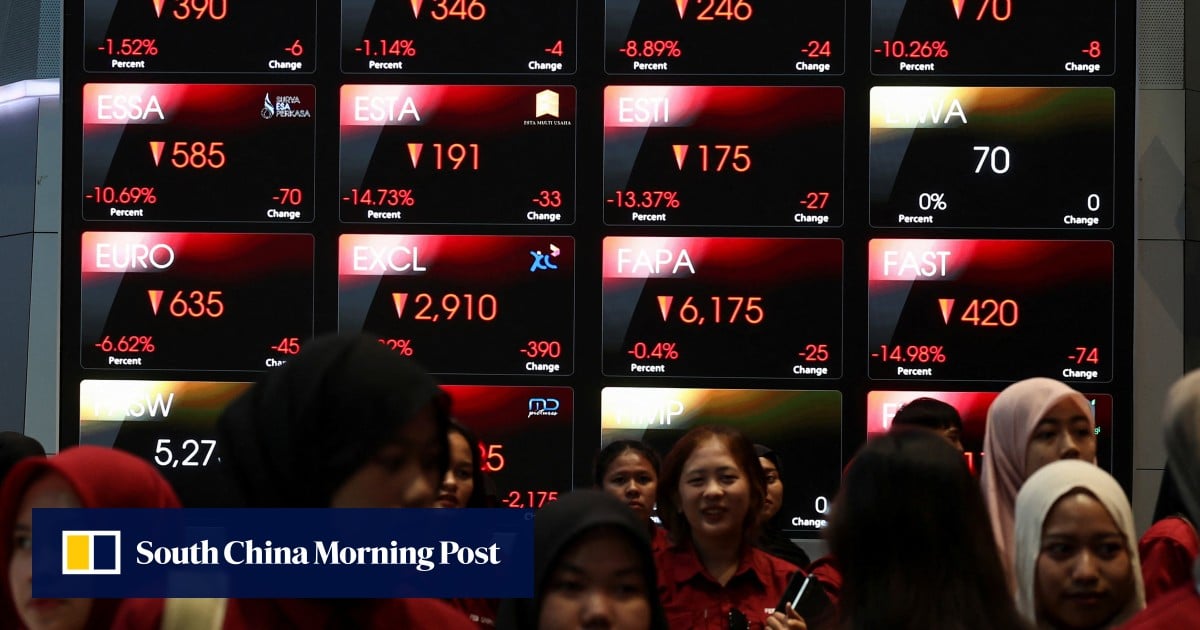
Indonesia’s stock market needed just two days of chaos to highlight what investors have long lamented: parts of the market are not trading freely.Last week’s worst tumble in nearly three decades drew attention to a major problem at the heart of Southeast Asia’s biggest equity market: a handful of billionaires own so much of their listed companies that barely any of those companies’ shares are left to trade.At least three billionaires directly control 85 per cent or more of three listed companies, based on recent filings. Southeast Asia’s richest person has a more than two-thirds indirect stake in Barito Renewables Energy, Indonesia’s largest listed firm. And about seven billionaires own more than 50 per cent of shares in at least 13 companies.That concentration is now colliding with regulatory reform. Indonesia’s market watchdog said newly listing firms will be required to double their minimum free float – the number of shares available for public trading – to 15 per cent. Companies already trading will have to follow eventually too.The regulator is responding to index compiler MSCI’s concerns about the investability of Indonesia’s US$870 billion market.Prajogo Pangestu is Indonesia’s richest person with a net worth of about US$35.2 billion. Photo: Barito PacificThe recent MSCI statement gave the market “a bloody nose”, said Hasnain Malik, head of emerging-markets equity and geopolitics strategy at Tellimer in Dubai. The announcement “highlighted investor concerns on low free float, opaque shareholding structures, and scope for share price manipulation by related parties”.
SRCSouth China Morning Post
LANGEN
LEANCenter-Right
WORDS244
ENT4
THU · 2026-02-05 · 05:04 GMTBRIEF NSR-2026-0205-13505
NSR-2026-0205-13505News Report·EN·Economic Impact
Indonesia to force billionaires to sell shares: loosen control or lose market status
Indonesia's stock market is facing regulatory reform due to concerns about low free float and concentrated ownership. The market watchdog will require newly listed firms to have a minimum free float of 15%, with existing companies eventually following suit.
BloombergSouth China Morning PostFiled 2026-02-05 · 05:04 GMTLean · Center-RightRead · 1 min
South China Morning PostFIG 01
Reading time
1min
Word count
244words
Sources cited
1cited
Entities identified
4entities
Quality score
100%
§ 01
Briefing Summary
AI-generatedNEWSAR · AI
Indonesia's stock market is facing regulatory reform due to concerns about low free float and concentrated ownership. The market watchdog will require newly listed firms to have a minimum free float of 15%, with existing companies eventually following suit. This change is a response to MSCI's concerns about the investability of Indonesia's $870 billion market, where billionaires often control a large percentage of listed companies, limiting the number of shares available for public trading. The new regulation aims to address issues like share price manipulation and opaque shareholding structures, highlighted by a recent market tumble and MSCI statement. The reforms will force billionaires to sell shares to increase public trading or potentially lose market status.
Confidence 0.90Sources 1Claims 5Entities 4
§ 02
Article analysis
Model · rule-basedFraming
Economic Impact
Political Strategy
Tone
Measured
AI-assessed
CalmNeutralAlarmist
Factuality
0.80 / 1.00
Factual
LowHigh
Sources cited
1
Limited
FewMany
§ 03
Key claims
5 extracted01
Indonesia’s richest person, Prajogo Pangestu, has a net worth of about US$35.2 billion.
factual
Confidence
1.00
02
The recent MSCI statement gave the market “a bloody nose”.
quoteHasnain Malik, head of emerging-markets equity and geopolitics strategy at Tellimer in Dubai
Confidence
1.00
03
Indonesia’s market watchdog said newly listing firms will be required to double their minimum free float to 15 per cent.
factual
Confidence
1.00
04
At least three billionaires directly control 85 per cent or more of three listed companies.
factual
Confidence
1.00
05
Indonesia’s stock market had its worst tumble in nearly three decades last week.
factual
Confidence
1.00
§ 04
Full report
1 min read · 244 words§ 05
Entities
4 identifiedKey playerOppositionContextPositiveNeutralNegative
Organizations1
§ 06
Keywords & salience
9 termsfree float
0.90
indonesia
0.80
stock market
0.80
billionaires
0.70
share ownership
0.60
regulatory reform
0.60
msci
0.50
market status
0.50
investability
0.40
§ 07
Topic connections
Interactive graph Network visualization showing 50 related topics
View Full Graph Person Organization Location Event|Click node to navigate|Edge numbers = shared articles