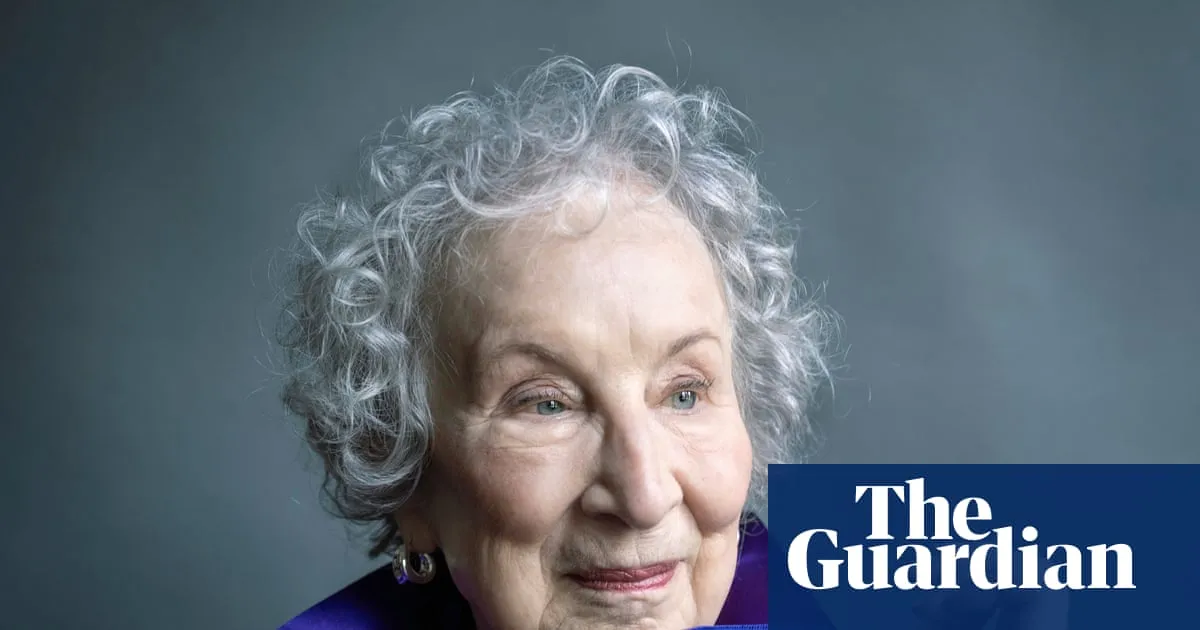
Margaret Atwood has said the plot of her book The Handmaid’s Tale, which tells a story of an authoritarian regime under which women are forced to reproduce, has become “more and more plausible” in recent years.Speaking on BBC Radio 4’s Desert Island Discs, Atwood said she believed the plot was “bonkers” when she first developed the concept for the novel because the US was the “democratic ideal” at the time.“It was the land of freedom … and people in Europe just didn’t believe that it could ever go like that,” she said.“I’ve always been somebody who has never believed it can’t happen here. It can happen anywhere, given the circumstances.”When asked about the book’s enduring popularity, Atwood told the show’s host, Lauren Laverne: “Well it’s a perennial possibility, right? Then in 2016 everything changed again, and we are now in that period where The Handmaid’s Tale has become much closer.“Not the outfits. I don’t think we’re going to get the outfits, but the rest of it seems more and more plausible.”The Handmaid’s Tale was published in 1985 and tells the story of a totalitarian and fundamentalist regime called the Republic of Gilead which takes over in the US and subjugates women who are forced to become slaves and bear children. The novel was dramatised in a TV series starring the US actor Elisabeth Moss in 2017.The red cloaks worn by the handmaids have become a symbol of US protest against Donald Trump and the decision to overturn the Roe v Wade ruling on abortion.skip past newsletter promotionafter newsletter promotion“These kinds of regimes don’t last, partly because they become unsustainable. This particular one seems quite chaotic,” Atwood said.“Also, let us not count America out. It’s first of all a lot more diverse than it might appear from a distance. Second, Americans are quite ornery.“They do not like people telling them all to line up and do what they’re told. They really don’t like that, but they don’t like being bossed around by anybody right or left.”Atwood’s follow-up story, The Testaments, was a joint winner of the 2019 Booker prize. In an interview with the Guardian in November, she said the very fact that filming for the first season of the novel had just finished was proof of hope for the US.“The States is not a totalitarianism – yet,” she said. “Though moving towards a concentrated-power structure. If it were a full totalitarianism we would not be filming The Testaments at all. We’d be in jail, in exile or dead.”
SRCThe Guardian - World News
LANGEN
LEANCenter-Left
WORDS418
ENT4
SUN · 2025-12-07 · 10:13 GMTBRIEF NSR-2025-1207-1354
NSR-2025-1207-1354News Report·EN·Political Strategy
Margaret Atwood: The Handmaid’s Tale has become ‘more and more plausible’
Margaret Atwood, author of "The Handmaid's Tale," stated in a recent BBC Radio 4 interview that the novel's dystopian themes have become increasingly plausible, particularly after 2016. Published in 1985, the book depicts a totalitarian regime in the US where women are subjugated and forced to reproduce.
Neha GohilThe Guardian - World NewsFiled 2025-12-07 · 10:13 GMTLean · Center-LeftRead · 2 min
The Guardian - World NewsFIG 01
Reading time
2min
Word count
418words
Sources cited
1cited
Entities identified
4entities
Quality score
100%
§ 01
Briefing Summary
AI-generatedNEWSAR · AI
Margaret Atwood, author of "The Handmaid's Tale," stated in a recent BBC Radio 4 interview that the novel's dystopian themes have become increasingly plausible, particularly after 2016. Published in 1985, the book depicts a totalitarian regime in the US where women are subjugated and forced to reproduce. Atwood noted that while she doesn't expect the handmaids' outfits to materialize, other aspects of the story feel more relevant today. She acknowledged the red cloaks worn by handmaids have become a symbol of protest in the US, especially concerning reproductive rights. Despite the concerning trends, Atwood remains cautiously optimistic, citing America's diversity and its citizens' aversion to being controlled as reasons for hope. She also pointed to the filming of "The Testaments" as evidence that the US is not yet a full totalitarian state.
Confidence 0.90Sources 1Claims 5Entities 4
§ 02
Article analysis
Model · rule-basedFraming
Political Strategy
Human Rights
Tone
Mixed Tone
AI-assessed
CalmNeutralAlarmist
Factuality
0.60 / 1.00
Mixed
LowHigh
Sources cited
1
Limited
FewMany
§ 03
Key claims
5 extracted01
The States is not a totalitarianism – yet.
quoteMargaret Atwood
Confidence
0.90
02
Atwood believed the plot was “bonkers” when she first developed the concept for the novel.
quoteMargaret Atwood
Confidence
0.90
03
The plot of The Handmaid's Tale has become “more and more plausible” in recent years.
quoteMargaret Atwood
Confidence
0.90
04
The red cloaks worn by the handmaids have become a symbol of US protest against Donald Trump and the decision to overturn Roe v Wade.
factual
Confidence
0.80
05
These kinds of regimes don’t last, partly because they become unsustainable.
quoteMargaret Atwood
Confidence
0.70
§ 04
Full report
2 min read · 418 words§ 05
Entities
4 identifiedKey playerOppositionContextPositiveNeutralNegative
People3
Locations1
§ 06
Keywords & salience
10 termsthe handmaid's tale
1.00
margaret atwood
0.90
authoritarian regime
0.80
totalitarianism
0.70
republic of gilead
0.60
women's rights
0.60
us politics
0.50
political plausibility
0.50
roe v wade
0.40
elisabeth moss
0.40
§ 07
Topic connections
Interactive graph No topic relationship data available yet. This graph will appear once topic relationships have been computed.