When unemployment is rising and inflation falling, the Bank of England would, under normal circumstances, cut the cost of borrowing.Add to the mix a faltering economy and the public might reasonably expect a reduction in interest rates to lift their spirits.Instead, a majority of the Bank’s monetary policy committee (MPC) chose to hold rates at 3.75%. If businesses and households were hoping for loans and mortgages to be a little cheaper this week, they were left disappointed.Businesses need loans to invest in new equipment. Households need to remortgage to keep a roof over their heads. Both face a financial squeeze that might have eased if the MPC had more closely followed the evidence.That’s the view of Prof Alan Taylor, one of the nine members of the MPC, who said in a personal note attached to the Bank’s main monetary policy report that the weakening of the economy has been obvious for at least a year.Taylor shows his obvious frustration when he says there was little evidence of persistent inflation and “this supports my previous outlook”.In line with Taylor’s outlook, the latest health check on the economy from Threadneedle Street ditches previous concerns that the labour market has undergone a structural shift – one that has permanently improved the power of workers to demand higher wages.It says wage growth will moderate from 3.4% last year to 3.25% by the end of the year as inflation tumbles.On inflation, the Bank will no longer consider the UK to be an outlier, with food and services inflation declining to levels seen in other European countries.Inflation in the UK rose for the first time in five months to 3.4% in December, up from 3.2% in November.In a dramatic overhaul of its previous view, the monetary report says inflation is going to tumble by one percentage point by April compared with a forecast in November. That means the Bank reaches its target of 2% earlier than expected, falling into line with France, Germany and the EU average.Some of the reduction can be attributed to Rachel Reeves and last November’s budget. She cut energy bills and froze regulated rail fares. The Bank says Reeves can take credit for half of the post-November revision.However, it is the underlying trend that is important and this is also weakening.The unemployment rate – which was 5.1% in December – will peak at 5.3%, the Bank said, above it previous estimate of 5% this year. The economy will expand by 0.9% this year rather than the estimate in November of 1.2%. Housing investment will be lower in 2026 and so will exports, the Bank’s experts believe.The Bank’s governor, Andrew Bailey, wielded the casting vote in a 5:4 split on the MPC in favour of holding rates, arguing that while he recognised the inflationary trend was weakening and there was a strong case for a cut in interest rates, he was minded to wait and see.As the chief waverer in the committee, he commands huge power. From his statements, it would appear that an interest rate cut at the next MPC meeting on 19 March is almost certain.For many it will be a long wait.
SRCThe Guardian - World News
LANGEN
LEANCenter-Left
WORDS522
ENT9
THU · 2026-02-05 · 13:18 GMTBRIEF NSR-2026-0205-13629
NSR-2026-0205-13629Analysis·EN·Economic Impact
Why the Bank of England is holding rates despite a weakening economy | Phillip Inman
Despite a weakening economy and falling inflation, the Bank of England's Monetary Policy Committee (MPC) voted to hold interest rates at 3.75%. This decision disappointed businesses and households hoping for cheaper loans and mortgages.
Phillip InmanThe Guardian - World NewsFiled 2026-02-05 · 13:18 GMTLean · Center-LeftRead · 3 min
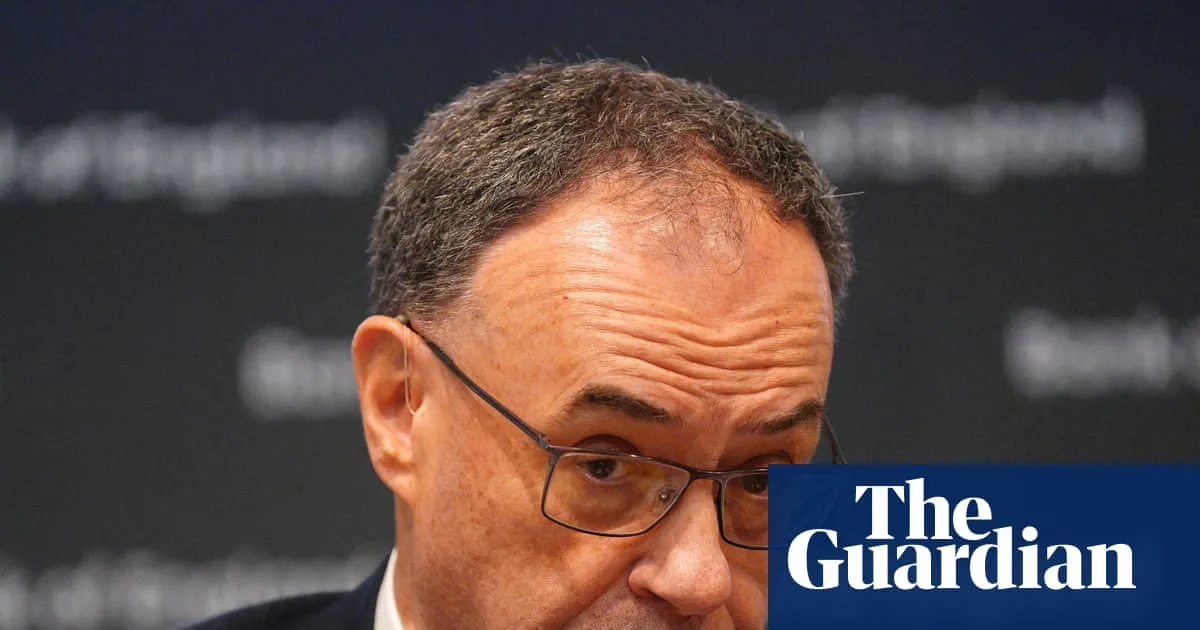
The Guardian - World NewsFIG 01
Reading time
3min
Word count
522words
Sources cited
2cited
Entities identified
9entities
Quality score
100%
§ 01
Briefing Summary
AI-generatedNEWSAR · AI
Despite a weakening economy and falling inflation, the Bank of England's Monetary Policy Committee (MPC) voted to hold interest rates at 3.75%. This decision disappointed businesses and households hoping for cheaper loans and mortgages. MPC member Prof. Alan Taylor expressed frustration, arguing that the economy's weakness has been evident for a year and there's little evidence of persistent inflation. The Bank's latest report indicates wage growth will moderate and inflation will tumble, reaching the 2% target earlier than expected, partly due to government measures. However, the unemployment rate is projected to peak higher than previously estimated, and economic expansion is expected to be slower.
Confidence 0.90Sources 2Claims 5Entities 9
§ 02
Article analysis
Model · rule-basedFraming
Economic Impact
Political Strategy
Tone
Measured
AI-assessed
CalmNeutralAlarmist
Factuality
0.70 / 1.00
Factual
LowHigh
Sources cited
2
Limited
FewMany
§ 03
Key claims
5 extracted01
Inflation in the UK rose for the first time in five months to 3.4% in December, up from 3.2% in November.
statistic
Confidence
1.00
02
Prof Alan Taylor said the weakening of the economy has been obvious for at least a year.
quoteProf Alan Taylor
Confidence
1.00
03
The Bank of England held rates at 3.75% despite a weakening economy and falling inflation.
factual
Confidence
1.00
04
The Bank says wage growth will moderate from 3.4% last year to 3.25% by the end of the year as inflation tumbles.
predictionThe Bank
Confidence
0.90
05
The Bank said the unemployment rate will peak at 5.3%, above its previous estimate of 5% this year.
predictionThe Bank
Confidence
0.90
§ 04
Full report
3 min read · 522 words§ 05
Entities
9 identifiedKey playerOppositionContextPositiveNeutralNegative
Organizations3
§ 06
Keywords & salience
10 termsinterest rates
0.90
inflation
0.80
bank of england
0.80
weakening economy
0.80
mpc
0.70
monetary policy
0.70
economic forecast
0.60
unemployment
0.60
loans and mortgages
0.50
wage growth
0.50
§ 07
Topic connections
Interactive graph Network visualization showing 51 related topics
View Full Graph Person Organization Location Event|Click node to navigate|Edge numbers = shared articles