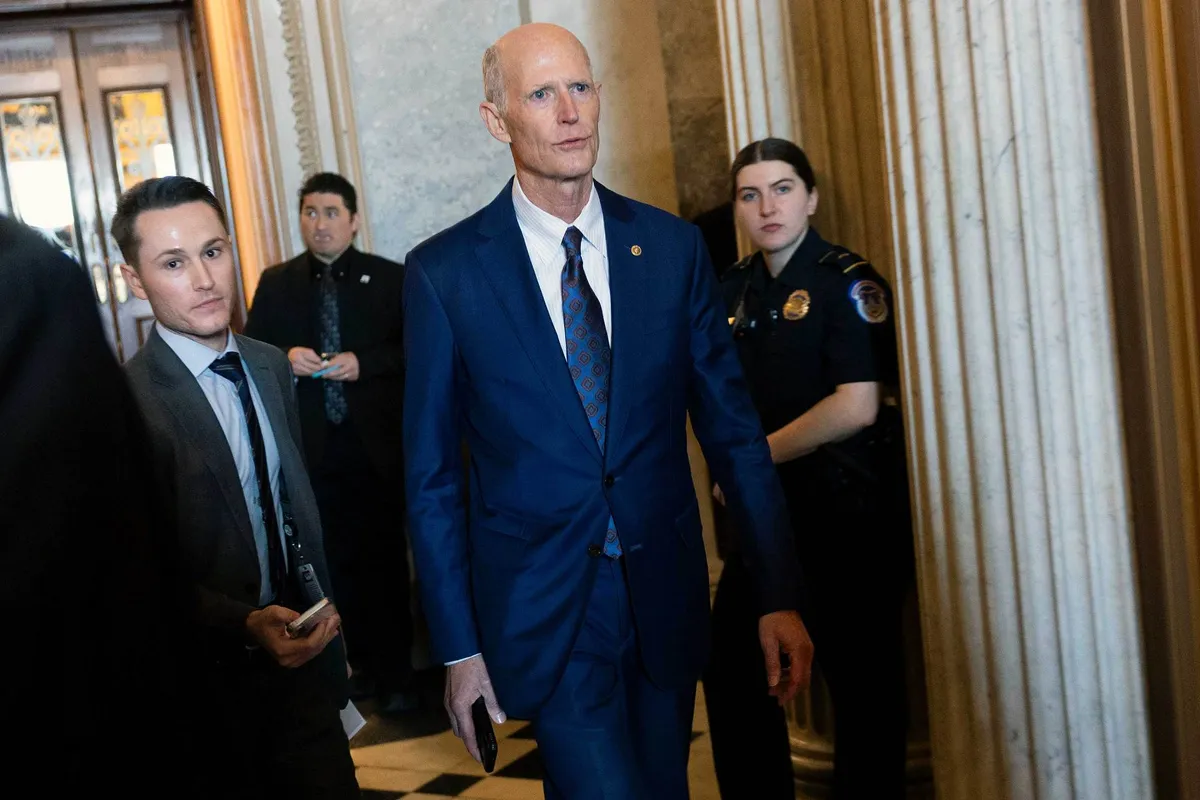
Senators introduced legislation on Thursday that would require prescription drug labels to identify where the medication was made, adding momentum to a yearslong campaign to bring more transparency to the often elusive generic drug industry. At a hearing last week, members of the Senate Special Committee on Aging criticized manufacturers for routinely concealing the locations of their drugmaking plants as well as the suppliers that provide key ingredients. ProPublica described this lack of transparency — and how it was enabled by the Food and Drug Administration — in a series of stories that found the agency had quietly allowed troubled foreign drugmakers to continue selling generic medication to unsuspecting Americans. The Clear Labels Act, introduced by committee chair Rick Scott, R-Fla., and ranking member Kirsten Gillibrand, D-N.Y., is meant to help patients, doctors and pharmacists know more about the drugs they use and prescribe. Current labels often list only a distributor or repackager of a medication and sometimes provide no information at all. The proposal calls for labels to disclose the original manufacturer as well as the suppliers that produced their key ingredients. Sens. Ron Johnson, R-Wis., Tommy Tuberville, R-Ala., and Katie Britt, R-Ala., also signed on to the proposed legislation. “Every American deserves honesty and transparency about what they are putting into their bodies,” Scott said. “It is wholly irresponsible that we’re living in the dark when it comes to where our medicines are made.” ProPublica had to file public records requests and sue the FDA in federal court to obtain information about where generic drugs are made and whether government inspectors had flagged those factories for safety or quality concerns. ProPublica ultimately created a first-of-its-kind tool that empowers consumers to find the information themselves. Ninety percent of the prescriptions in the United States are for generics, many of them manufactured overseas. For patients and their doctors, identifying where medication was made and the safety records of those factories had been nearly impossible until now. Rx Inspector, the tool ProPublica introduced late last year, includes factory location information and inspection histories when available for nearly 40,000 generic drug products. Doctors, patients and researchers say they are already using it to better understand where medication comes from and to find more information when a generic causes unexplained health problems. The Clear Labels Act would require manufacturing location information on packaging for brand-name drugs as well as generics. Ohio State University professor John Gray, who testified at the hearing, suggested that packaging could include a QR code linking to the data on a website. Gray is working to assign quality scores to specific versions of generic drugs and said the code would allow patients and doctors to easily find those scores while researching medication and their manufacturers. “Low-quality drugs have human consequences,” Gray said. Gray said he is using Rx Inspector to fuel his work, which is funded by the Department of Defense. The tool, he said, “allows you to find out where … your drug is made easily.” The push for more transparency comes on the heels of a bipartisan investigative report that Scott and Gillibrand released last year, calling for sweeping changes in the FDA’s oversight of the generic drug industry. Among other things, the senators asked the FDA to alert hospitals and other group purchasers when foreign drugmakers with serious safety and quality failures are given a special pass to send their products to the United States. Since 2013, ProPublica found, the FDA allowed more than 20 troubled overseas factories, mostly in India, to continue to send certain medications to the U.S. even after those facilities were banned because of concerns about contamination and other breaches. The agency didn’t actively track whether the imported drugs were harming users and kept the practice largely hidden from the public and Congress. The lawmakers also called on the FDA to conduct more drug testing. The agency doesn’t routinely assess generic drugs once they are on the market, even if they come from factories with quality and safety violations. ProPublica recently tested several versions of three of the most widely prescribed generics in the United States and found that two had irregularities that could risk the health of consumers. At the hearing last week, the committee’s fourth on generic drugs in recent months, lawmakers and witnesses said knowing more about where drugs are made is an essential first step to improving drug quality. For years, pharmacists and members of Congress have pushed for more transparency to help patients and doctors make informed decisions about health care. “Everyone deserves to know where their medications are coming from,” said University of Utah Hospital pharmacist Erin Fox, who has advocated for more information. Fox and others also said they support a drug-quality rating system, which would allow hospitals and government agencies to assess generic drugs based on quality and not just price. “You never go to the supermarket and buy the lowest price, most bruised fruit or go on Amazon and buy the one-star product because it’s cheaper,” said Dr. Kevin Schulman, a professor of medicine and health policy at Stanford University. “And yet that’s the generic drug market, and that’s 90% of the prescriptions that we write as physicians. And that’s just not tolerable.” A spokesperson for the trade group for brand-name drugmakers said in a statement to ProPublica that the industry would “welcome conversations about how to strengthen the biopharmaceutical supply chain.” The generic drug lobbying group said that additional labeling requirements would impose “significant costs in exchange for limited returns,” and that drug manufacturers already disclose country of origin information under U.S. Customs and Border Protection rules. We will continue to share our areas of interest as the news develops. I cover health and the environment and the agencies that govern them, including the Environmental Protection Agency. Contact me I cover justice and the rule of law, including the Justice Department, U.S. attorneys and the courts. Contact me I report on immigration and labor, and I am based in Chicago. Contact me I cover housing and transportation, including the companies working in those fields and the regulators overseeing them. Contact me to stay in touch. Slide 2 Slide 3 Slide 4 Slide 5 Slide 6
SRCProPublica
LANGEN
LEANCenter-Left
WORDS1 033
ENT10
FRI · 2026-02-06 · 10:00 GMTBRIEF NSR-2026-0206-13889
NSR-2026-0206-13889News Report·EN·Public Health
The Clear Labels Act Would Change What You Know About Your Prescription Medication
The Clear Labels Act, introduced by Senators Rick Scott and Kirsten Gillibrand, aims to increase transparency in the prescription drug industry. The bipartisan legislation would require drug labels to disclose the original manufacturer and suppliers of key ingredients.
Debbie CenziperProPublicaFiled 2026-02-06 · 10:00 GMTLean · Center-LeftRead · 5 min
ProPublicaFIG 01
Reading time
5min
Word count
1 033words
Sources cited
6cited
Entities identified
10entities
Quality score
100%
§ 01
Briefing Summary
AI-generatedNEWSAR · AI
The Clear Labels Act, introduced by Senators Rick Scott and Kirsten Gillibrand, aims to increase transparency in the prescription drug industry. The bipartisan legislation would require drug labels to disclose the original manufacturer and suppliers of key ingredients. This initiative follows criticism of manufacturers concealing drugmaking plant locations and suppliers, as well as reports of the FDA allowing troubled foreign drugmakers to continue selling generic medications. The Act seeks to empower patients, doctors, and pharmacists with more information about the drugs they use and prescribe, addressing the current lack of transparency where labels often only list distributors or repackagers. This push comes amid concerns that 90% of prescriptions in the U.S. are for generics, many manufactured overseas, with limited information available about their origins and safety records.
Confidence 0.90Sources 6Claims 5Entities 10
§ 02
Article analysis
Model · rule-basedFraming
Public Health
Political Strategy
Tone
Measured
AI-assessed
CalmNeutralAlarmist
Factuality
0.80 / 1.00
Factual
LowHigh
Sources cited
6
Well sourced
FewMany
§ 03
Key claims
5 extracted01
ProPublica had to file public records requests and sue the FDA to obtain information about where generic drugs are made.
factualArticle
Confidence
1.00
02
Every American deserves honesty and transparency about what they are putting into their bodies.
quoteRick Scott
Confidence
1.00
03
Ninety percent of the prescriptions in the United States are for generics, many of them manufactured overseas.
statisticArticle
Confidence
1.00
04
The Clear Labels Act would require prescription drug labels to identify where the medication was made.
factualArticle
Confidence
1.00
05
Current labels often list only a distributor or repackager of a medication and sometimes provide no information at all.
factualArticle
Confidence
0.90
§ 04
Full report
5 min read · 1 033 words§ 05
Entities
10 identifiedKey playerOppositionContextPositiveNeutralNegative
People5
Organizations3
Locations1
§ 06
Keywords & salience
9 termsprescription drugs
1.00
drug labels
0.90
clear labels act
0.90
transparency
0.80
generic drugs
0.70
drug manufacturing
0.60
patient safety
0.60
drug ingredients
0.50
fda
0.50
§ 07
Topic connections
Interactive graph No topic relationship data available yet. This graph will appear once topic relationships have been computed.