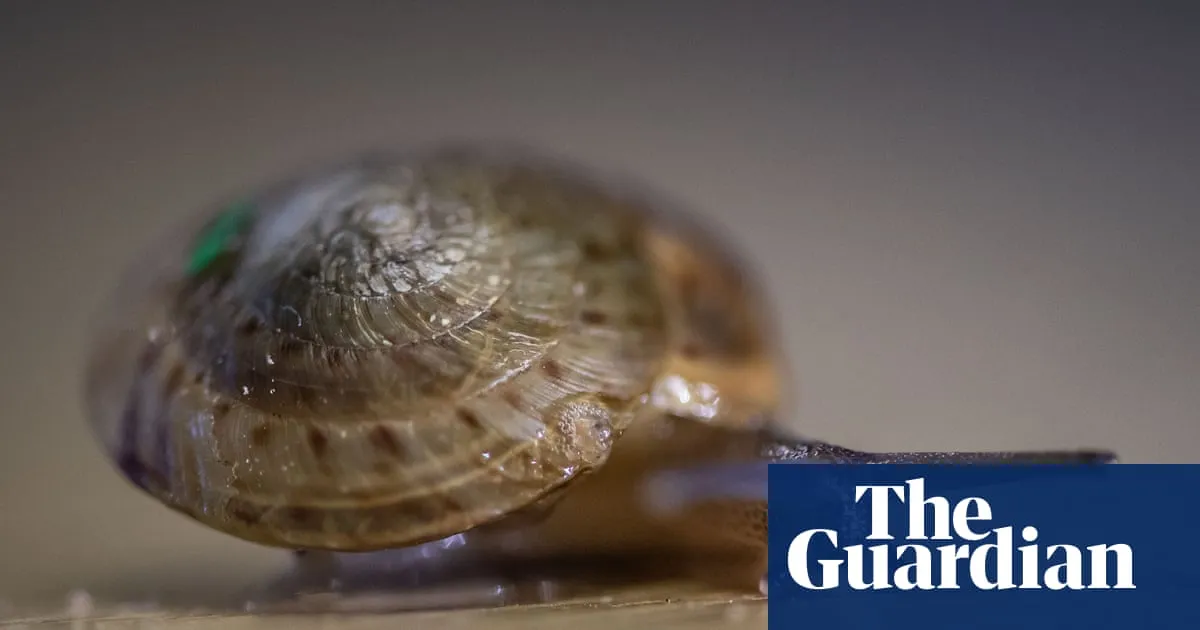
A button-sized snail once feared extinct in its Bermudian home is thriving again after conservationists bred and released more than 100,000 of the molluscs.The greater Bermuda snail (Poecilozonites bermudensis) was found in the fossil record but believed to have vanished from the North Atlantic archipelago, until a remnant population was discovered in a damp and overgrown alleyway in Hamilton, the island capital, in 2014.After a decade-long international effort by conservation scientists, the government of Bermuda and Chester zoo, where thousands of the snails were bred before being transported back to the islands, the species has been confirmed as safe from extinction.“It’s every conservationist’s dream to help save a whole species – and that’s exactly what we’ve done,” said Tamás Papp, the invertebrates assistant team manager at Chester zoo. “This scientific confirmation that we’ve saved them is testament to the role zoos can play in preventing extinction, and in the power of collaboration, and is something everyone involved will carry in their heart.”Islands of the Bermuda archipelago. Photograph: SuppliedThe snails, which are only found in Bermuda, had been hit by global heating and habitat loss, but their decline was accelerated by the introduction of predatory “wolf snails” and carnivorous flatworms, which ate the smaller native species.At Chester zoo, keepers adapted existing snail husbandry methods to create the best conditions for P bermudensis to multiply, keeping them in specially designed pods.The snails have now been found to be well established in six areas. Photograph: SuppliedSince 2019, generations of the captive-bred snails have been returned to islands where they have been placed in protected wooded habitats, with biosecurity measures shielding the species from invasive predators.The snails have now been found to be well established in six areas, according to a population assessment to be published in Oryx, the International Journal of Conservation, with the species’ recovery hailed on IUCN’s “reverse the red day”, which marks the global effort to repair biodiversity loss.Dr Mark Outerbridge, an ecologist for the government of Bermuda, said: “It has been extremely gratifying to be involved with this reintroduction programme and to see these snails back in Bermuda’s ecosystem again. It is remarkable to think we only began with less than 200 snails and have now released over 100,000.”Dr Kristiina Ovaska of the Canada-based partners Biolinx Environmental Research said the restoration of the snails was an important part of restoring degraded ecosystems. “The snails function both as prey for larger animals and as consumers of live and decaying vegetation, so they are vital for turning over nutrients within their habitat,” she said.The Chester zoo team is now focusing its efforts on breeding a second rare species of snail, the lesser Bermuda land snail (Poecilozonites circumfirmatus).
SRCThe Guardian - World News
LANGEN
LEANCenter-Left
WORDS446
ENT3
SAT · 2026-02-07 · 06:00 GMTBRIEF NSR-2026-0207-14146
NSR-2026-0207-14146News Report·EN·Environmental
Bermuda snail thought to be extinct now thrives after a decade’s effort
The greater Bermuda snail, once thought extinct, is now thriving due to a decade-long conservation effort. After a small population was discovered in Bermuda in 2014, conservationists, including Chester Zoo and the Bermudian government, initiated a breeding program.
Patrick BarkhamThe Guardian - World NewsFiled 2026-02-07 · 06:00 GMTLean · Center-LeftRead · 2 min
The Guardian - World NewsFIG 01
Reading time
2min
Word count
446words
Sources cited
4cited
Entities identified
3entities
Quality score
100%
§ 01
Briefing Summary
AI-generatedNEWSAR · AI
The greater Bermuda snail, once thought extinct, is now thriving due to a decade-long conservation effort. After a small population was discovered in Bermuda in 2014, conservationists, including Chester Zoo and the Bermudian government, initiated a breeding program. Over 100,000 snails were bred and reintroduced to protected habitats on the islands, starting in 2019. The snail population declined due to habitat loss, climate change, and invasive predators like wolf snails and flatworms. A recent population assessment confirmed the snails are now established in six areas, marking a successful recovery for the species unique to Bermuda.
Confidence 0.90Sources 4Claims 5Entities 3
§ 02
Article analysis
Model · rule-basedFraming
Environmental
Human Interest
Tone
Measured
AI-assessed
CalmNeutralAlarmist
Factuality
0.80 / 1.00
Factual
LowHigh
Sources cited
4
Well sourced
FewMany
§ 03
Key claims
5 extracted01
Since 2019, generations of the captive-bred snails have been returned to islands where they have been placed in protected wooded habitats.
factual
Confidence
1.00
02
It’s every conservationist’s dream to help save a whole species – and that’s exactly what we’ve done.
quoteTamás Papp, the invertebrates assistant team manager at Chester zoo
Confidence
1.00
03
The greater Bermuda snail (Poecilozonites bermudensis) was believed to have vanished until a remnant population was discovered in 2014.
factual
Confidence
1.00
04
A button-sized snail once feared extinct in Bermuda is thriving again after conservationists bred and released more than 100,000 of the molluscs.
factual
Confidence
1.00
05
The snails had been hit by global heating and habitat loss, but their decline was accelerated by the introduction of predatory snails and flatworms.
factual
Confidence
0.90
§ 04
Full report
2 min read · 446 words§ 05
Entities
3 identifiedKey playerOppositionContextPositiveNeutralNegative
§ 06
Keywords & salience
10 termsgreater bermuda snail
0.95
snail conservation
0.90
species recovery
0.80
extinction prevention
0.70
conservation effort
0.70
invasive predators
0.60
captive breeding
0.60
biosecurity measures
0.50
habitat loss
0.50
iucn reverse the red day
0.40
§ 07
Topic connections
Interactive graph No topic relationship data available yet. This graph will appear once topic relationships have been computed.