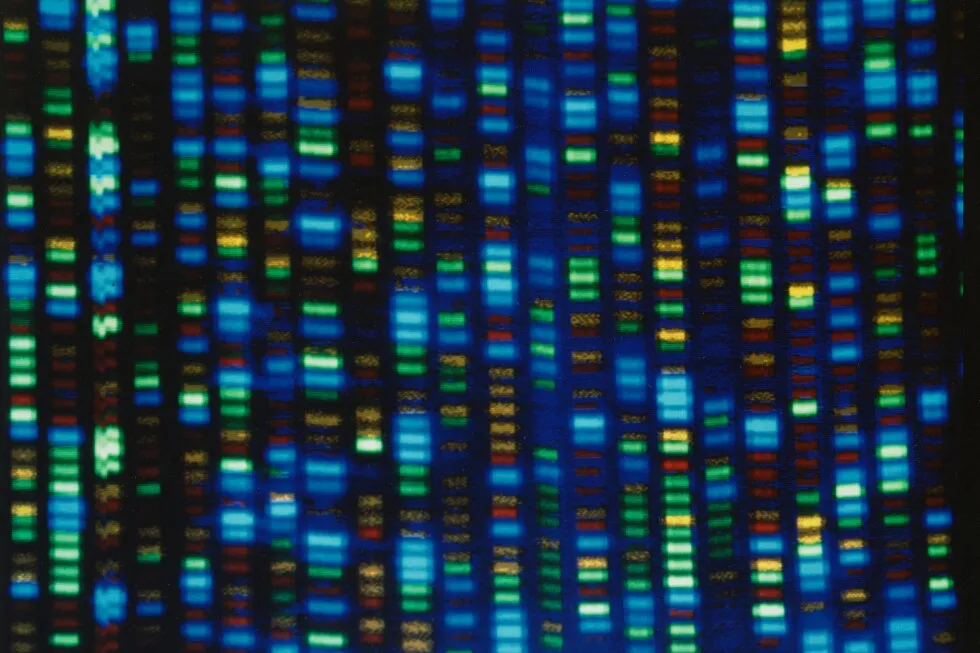
This undated image made available by the National Human Genome Research Institute shows the output from a DNA sequencer. (NHGRI via AP, File) Updated [hour]:[minute] [AMPM] [timezone], [monthFull] [day], [year] WASHINGTON (AP) — Scientists are testing an entirely new way to fight heart disease: a gene-editing treatment that might offer a one-time fix for high cholesterol.It’s very early stage research, tried in only a few dozen people so far. But gene-editing approaches being developed by two companies show hints that switching off certain genes could dramatically lower artery-clogging cholesterol, raising hopes of one day being able to prevent heart attacks without having to take pills.“People want a fix, not a bandage,” said Dr. Luke Laffin, a preventive cardiologist at the Cleveland Clinic. After co-authoring a promising study published in the New England Journal of Medicine, he said he was flooded with queries about how to participate in the next clinical trial.Everyone needs a certain amount of cholesterol. But too much, especially a “bad” kind called LDL cholesterol, builds plaque in the artery walls and is a main driver of heart attacks and strokes. Cardiovascular disease is the nation’s — and world’s — leading killer.Millions take cholesterol-lowering medicines such as statins, the cornerstone of treatment. But many still struggle to lower their cholesterol enough, and sticking with the drugs for life is difficult, with some quitting because of side effects. Why genes matter for cholesterolWhile your diet contributes, your liver produces the cholesterol your body needs, according to the American Heart Association, and genes play a role in how it’s managed. Some people inherit genes that trigger very high cholesterol. Others have cholesterol that’s naturally extremely low over their lifetime and seldom develop heart disease. Years ago, Dr. Kiran Musunuru, a cardiologist now at the University of Pennsylvania, reported some of those lucky people harbor a mutation that turns off a gene named ANGPTL3, lowering their levels of both LDL cholesterol and another bad fat, triglycerides. Separately, geneticists at UT Southwestern Medical Center found still other people’s extremely low LDL was due to loss of function of another gene named PCSK9.“It’s a natural experiment in what would happen if we actually changed the gene,” said the Cleveland Clinic’s Dr. Steven Nissen, who with Laffin oversaw an ANGPTL3 study funded by Swiss-based CRISPR Therapeutics. Boston’s Verve Therapeutics, a subsidiary of pharmaceutical giant Eli Lilly, earlier reported that its PCSK9-targeted editing infusion cut LDL cholesterol by a similar amount in a small study. Both companies’ initial studies were done in Australia, the U.K. and other countries. A Lilly spokesperson said U.S. study sites are opening. Nissen said a next-step study of CRISPR Therapeutics’ approach should start later this year, with sites yet to be announced. Each company is pursuing several gene targets. While people with naturally nonfunctioning ANGPTL3 or PCSK9 have no apparent bad consequences, longer studies of the gene-editing approach in far more people are needed, said Penn’s Musunuru, who co-founded Verve. He said some participants in an earlier Verve study have been tracked for two years, their cholesterol still lowered. Gene editing is considered permanent. If edited liver cells reproduce, their progeny contain the altered genes, and Musunuru said the edits have lasted a lifetime in mice.There are major safety questions to be answered, cautioned Dr. Joseph Wu of Stanford University, who wasn’t involved in either study. CRISPR-based therapies for any disease haven’t been used enough to know long-term safety — and the particles carrying the gene-editing tool can irritate or inflame the liver, he said. Another unknown is whether gene-editing hits only the intended target.That’s why for now, studies largely target people at very high risk. What to do now for better heart health Whether gene editing eventually pans out, the American Heart Association lists eight key factors for better heart health that everyone should work on now.Some involve lifestyle. Eat a heart-healthy diet with lots of fruits and vegetables, whole grains and healthy fats like those found in nuts. Saturated fats can increase cholesterol while healthier diets can lower LDL levels and raise levels of HDL, the so-called good cholesterol.Also, be physically active, as exercise can increase good HDL and help lower triglycerides. Maintain a healthy weight. If you smoke, quit. And get enough sleep.On the medical side, control your blood pressure — levels measuring less than 120 over 80 are optimal. Diabetes also harms the heart so control your blood sugar.As for cholesterol, keeping levels of that “bad” LDL kind at 100 is considered fine for healthy people. But once people develop high cholesterol or heart disease, guidelines recommend lowering it to at least 70, even lower for those at very high risk.When lifestyle changes aren’t enough, statin pills like Lipitor, Crestor or their cheap generic equivalents block some of the liver’s production of cholesterol and are highly effective at lowering LDL. There are a few other pill options for people who need additional help or can’t take statins, as well as some injected medicines.—-The Associated Press Health and Science Department receives support from the Howard Hughes Medical Institute’s Department of Science Education and the Robert Wood Johnson Foundation. The AP is solely responsible for all content. Neergaard is an Associated Press medical writer who covers research on brain health, infectious diseases, organ transplantation and more. She is based in Washington, D.C.
SRCAssociated Press (AP)
LANGEN
LEANCenter
WORDS884
ENT4
WED · 2026-02-11 · 18:53 GMTBRIEF NSR-2026-0211-15421
NSR-2026-0211-15421News Report·EN·Public Health
Studies test whether gene-editing can fix high cholesterol. For now, take your medicine
Scientists are exploring gene-editing as a potential one-time treatment for high cholesterol, a major risk factor for heart disease. Early research by companies like CRISPR Therapeutics focuses on "switching off" specific genes, such as ANGPTL3 and PCSK9, known to influence cholesterol levels.
By
LAURAN NEERGAARDAssociated Press (AP)Filed 2026-02-11 · 18:53 GMTLean · CenterRead · 4 min
Associated Press (AP)FIG 01
Reading time
4min
Word count
884words
Sources cited
6cited
Entities identified
4entities
Quality score
100%
§ 01
Briefing Summary
AI-generatedNEWSAR · AI
Scientists are exploring gene-editing as a potential one-time treatment for high cholesterol, a major risk factor for heart disease. Early research by companies like CRISPR Therapeutics focuses on "switching off" specific genes, such as ANGPTL3 and PCSK9, known to influence cholesterol levels. These genes were identified through studies of individuals with naturally low cholesterol. The goal is to offer an alternative to lifelong medication like statins, which can have side effects and adherence challenges. While promising, this research is in its early stages, with clinical trials underway to assess the safety and efficacy of these gene-editing approaches. For now, doctors recommend patients continue managing their cholesterol with existing medications.
Confidence 0.90Sources 6Claims 5Entities 4
§ 02
Article analysis
Model · rule-basedFraming
Public Health
Technology
Tone
Measured
AI-assessed
CalmNeutralAlarmist
Factuality
0.80 / 1.00
Factual
LowHigh
Sources cited
6
Well sourced
FewMany
§ 03
Key claims
5 extracted01
Some people inherit genes that trigger very high cholesterol.
factual
Confidence
1.00
02
Cardiovascular disease is the nation’s — and world’s — leading killer.
factual
Confidence
1.00
03
People want a fix, not a bandage.
quoteDr. Luke Laffin
Confidence
1.00
04
Scientists are testing a gene-editing treatment that might offer a one-time fix for high cholesterol.
factual
Confidence
0.80
05
Switching off certain genes could dramatically lower artery-clogging cholesterol.
factual
Confidence
0.70
§ 04
Full report
4 min read · 884 words§ 05
Entities
4 identifiedKey playerOppositionContextPositiveNeutralNegative
§ 06
Keywords & salience
9 termsgene editing
1.00
high cholesterol
0.90
heart disease
0.80
ldl cholesterol
0.70
clinical trial
0.60
angptl3
0.50
statins
0.50
pcsk9
0.40
cardiovascular disease
0.40
§ 07
Topic connections
Interactive graph No topic relationship data available yet. This graph will appear once topic relationships have been computed.