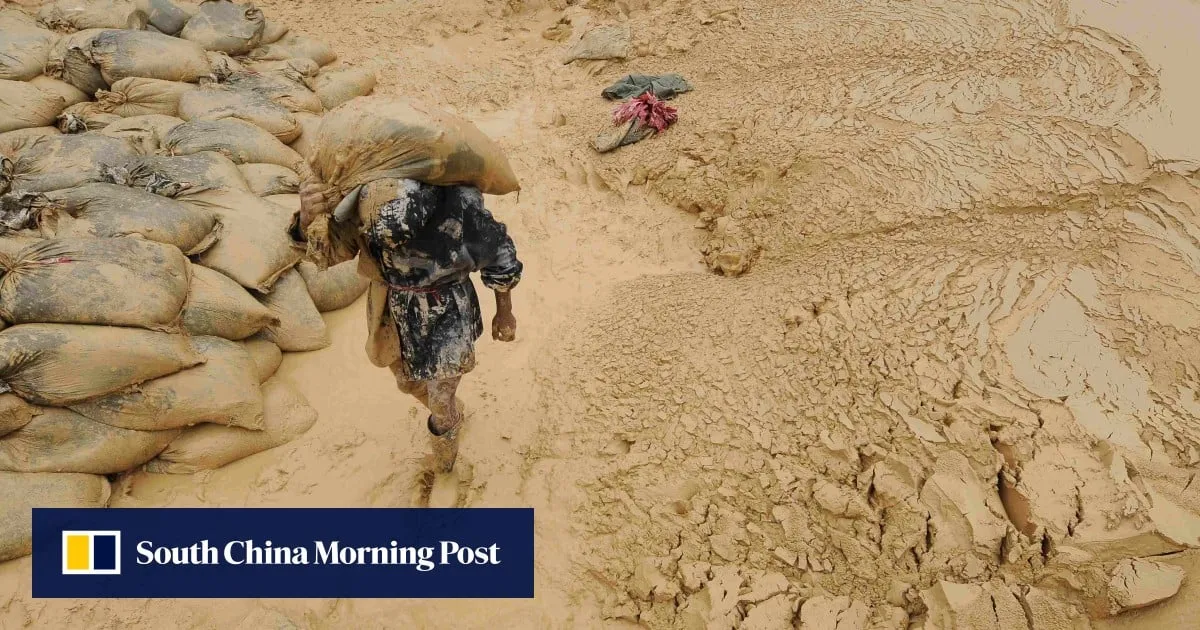
The route to challenging China’s supremacy in rare earth minerals lies in using artificial intelligence (AI) and quantum computing to create synthetic substitutes or alloys, according to a prominent American expert in AI.Jack Hidary, CEO of SandboxAQ, an AI and quantum technology Alphabet spin-off, said these technologies could cut the time required to secure critical materials to just a few years. This could bypass the traditional 10 to 20 years needed to bring a new mine online while also mitigating the geopolitical risks associated with concentrated supply chains.However, some analysts argue that China’s entrenched dominance in the sector will be difficult to dislodge. They cite the immense challenge of transitioning from laboratory breakthroughs in rare earth chemistry to the kind of large-scale industrial processing and manufacturing that Beijing has perfected over decades.China controls most of the world’s rare earth mining and nearly 90 per cent of all processing and refining capacity. Western governments are racing to build independent supply chains but have struggled to break this stranglehold.China captured the processing market by taking on significant environmental and health risks of a kind that Western nations shunned, allowing it to dominate the “dirty” and chemically hazardous end of the industry.Technical advances alone will not be enough to offset China’s structural advantages, according to one analyst. Photo: ReutersAs strategic tensions have grown in recent years, China has imposed various targeted export bans and restrictions on certain heavy rare earth elements.
SRCSouth China Morning Post
LANGEN
LEANCenter-Right
WORDS238
ENT7
SUN · 2026-02-15 · 10:00 GMTBRIEF NSR-2026-0215-16401
NSR-2026-0215-16401News Report·EN·Technology
Could the US unlock China’s rare earths grip with AI and quantum computing?
To challenge China's dominance in rare earth minerals, the U.S. is exploring the use of artificial intelligence (AI) and quantum computing to develop synthetic substitutes or alloys.
Jevans NyabiageSouth China Morning PostFiled 2026-02-15 · 10:00 GMTLean · Center-RightRead · 1 min
South China Morning PostFIG 01
Reading time
1min
Word count
238words
Sources cited
2cited
Entities identified
7entities
Quality score
100%
§ 01
Briefing Summary
AI-generatedNEWSAR · AI
To challenge China's dominance in rare earth minerals, the U.S. is exploring the use of artificial intelligence (AI) and quantum computing to develop synthetic substitutes or alloys. According to Jack Hidary, CEO of SandboxAQ, these technologies could drastically reduce the time needed to secure critical materials, potentially bypassing the lengthy process of opening new mines. While Western governments are attempting to build independent supply chains, China currently controls most of the world's rare earth mining and processing. Some analysts believe that China's established industrial processing and manufacturing capabilities, built over decades, will be difficult to overcome, even with technological advancements. China's dominance stems partly from its willingness to undertake environmentally hazardous processing that Western nations avoid.
Confidence 0.90Sources 2Claims 5Entities 7
§ 02
Article analysis
Model · rule-basedFraming
Technology
National Security
Tone
Measured
AI-assessed
CalmNeutralAlarmist
Factuality
0.70 / 1.00
Factual
LowHigh
Sources cited
2
Limited
FewMany
§ 03
Key claims
5 extracted01
China controls nearly 90 per cent of all rare earth processing and refining capacity.
statistic
Confidence
0.90
02
China controls most of the world’s rare earth mining.
factual
Confidence
0.90
03
Bringing a new mine online traditionally takes 10 to 20 years.
factual
Confidence
0.90
04
China captured the processing market by taking on significant environmental and health risks.
factual
Confidence
0.80
05
AI and quantum computing could cut the time required to secure critical materials to a few years.
predictionJack Hidary, CEO of SandboxAQ
Confidence
0.70
§ 04
Full report
1 min read · 238 words§ 05
Entities
7 identifiedKey playerOppositionContextPositiveNeutralNegative
Organizations3
§ 06
Keywords & salience
10 termsrare earth minerals
1.00
china
0.90
artificial intelligence
0.80
quantum computing
0.70
supply chains
0.70
synthetic substitutes
0.60
mining
0.50
processing
0.50
alloys
0.50
geopolitical risks
0.40
§ 07
Topic connections
Interactive graph Network visualization showing 51 related topics
View Full Graph Person Organization Location Event|Click node to navigate|Edge numbers = shared articles