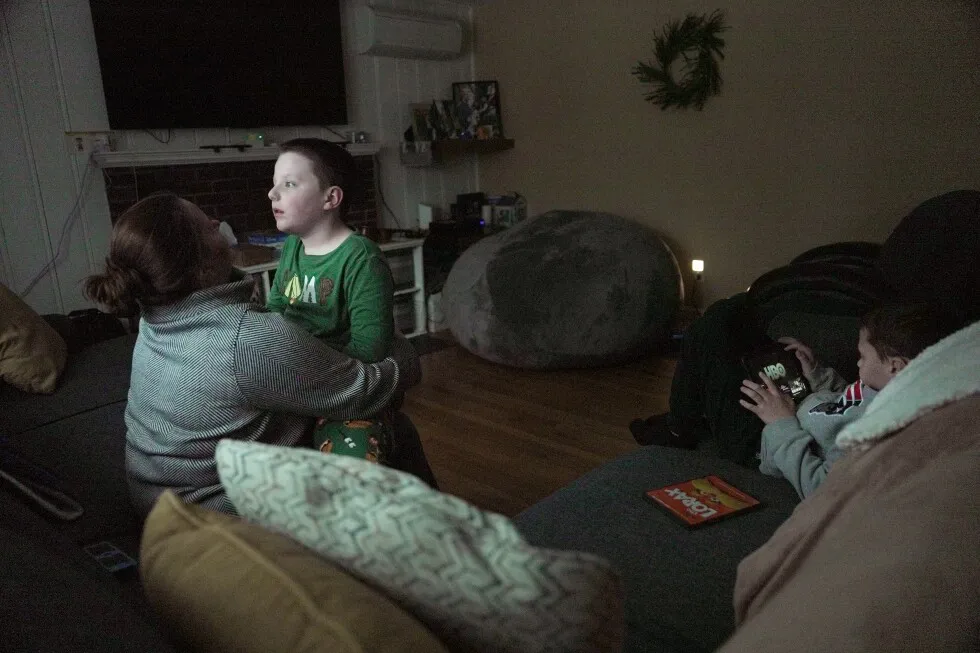
Ronan Murphy snuggles with his mom, Andrea, while looking at the snow falling outside his home while brother, Connor sits nearby in Ayer, Mass., on Saturday, Jan. 17, 2026. (AP Photo/Shelby Lum) Updated [hour]:[minute] [AMPM] [timezone], [monthFull] [day], [year] As the definition of autism has widened, there’s been a growing push to create a new diagnosis, called profound autism, for those who need constant and lifelong care.The reason? To ensure that they get the support and services they need.Judith Ursitti, president of the Profound Autism Alliance, said people in this category now lack appropriate treatments, support and enough providers trained to handle their level of care. And the vast majority of clinical research doesn’t include them.“If you don’t have research, you won’t have treatments. You won’t have achievable services and supports,” said Ursitti, whose adult son has profound autism. “There are people across the spectrum who have high support needs that are intermittent. The difference with our population is they’re constant.”Autism rates have been rising for decades, and two of the main reasons for the increase have, in a strange twist, taken some of the focus off of helping people with round-the-clock needs. The diagnosis of autism spectrum disorder is now very broad, including many people with low support needs. Also, better awareness of the condition has helped many more children get diagnosed than in the past — and most of those cases are relatively mild. At the same time, the Trump administration is promoting unproven and debunked claims about what causes autism, which experts say muddles efforts to understand the condition and fuels misinformation that threatens public health, even as officials funnel more money into research. Overall in the U.S., an estimated 1 in 31 children has autism spectrum disorder. Researchers estimate around a quarter have “profound autism,” a term introduced in 2021 by a group of experts, the Lancet Commission. It describes people who need constant care for life, have a certain level of intellectual disability and are nonverbal or minimally verbal. In the past, these people may have been diagnosed with autistic disorder – one of five subtypes, along with Asperger’s, of a diagnosis called pervasive developmental disorders. But in 2013, the American Psychiatric Association removed that diagnosis and created autism spectrum disorder.Some in the autism community worry that creating a separate diagnosis of profound autism would reduce attention on the broader spectrum and the individual needs of everyone on it.Dena Gassner, an autistic senior research scientist at Drexel University and mother of an autistic adult with moderate support needs, said she struggles with the idea of assigning someone the label of profound autism. She said it could be stigmatizing.She said there’s nothing wrong with being autistic; the problem lies in “the massive lack of supports and services” in our society. “We need to come together in a unified voice to talk about services for the entirety of the spectrum.”Andy Shih, chief science officer for Autism Speaks, said no matter where people fall on the debate about profound autism, “there’s absolutely no doubt that we need to elevate awareness about the needs of this group.”The Associated Press Health and Science Department receives support from the Howard Hughes Medical Institute’s Department of Science Education and the Robert Wood Johnson Foundation. The AP is solely responsible for all content.
SRCAssociated Press (AP)
LANGEN
LEANCenter
WORDS550
ENT3
SUN · 2026-02-15 · 17:53 GMTBRIEF NSR-2026-0215-16463
NSR-2026-0215-16463News Report·EN·Public Health
Should people with autism and very high needs have a separate diagnosis? Takeaways from AP’s report
A growing movement advocates for a new diagnosis, "profound autism," to better support individuals with autism who require constant, lifelong care. This push stems from concerns that the broad autism spectrum disorder diagnosis doesn't adequately address the specific needs of those with significant intellectual disabilities and limited verbal communication.
By
LAURA UNGARAssociated Press (AP)Filed 2026-02-15 · 17:53 GMTLean · CenterRead · 3 min
Associated Press (AP)FIG 01
Reading time
3min
Word count
550words
Sources cited
3cited
Entities identified
3entities
Quality score
100%
§ 01
Briefing Summary
AI-generatedNEWSAR · AI
A growing movement advocates for a new diagnosis, "profound autism," to better support individuals with autism who require constant, lifelong care. This push stems from concerns that the broad autism spectrum disorder diagnosis doesn't adequately address the specific needs of those with significant intellectual disabilities and limited verbal communication. Advocates argue that a separate diagnosis would improve access to appropriate treatments, support services, and research tailored to this population. While autism rates have risen, increased awareness and a wider diagnostic criteria have shifted focus away from individuals with the most intensive needs. Researchers estimate that about a quarter of those with autism meet the criteria for "profound autism," a term introduced in 2021. Some worry that creating a separate diagnosis of profound autism will further divide the autism community.
Confidence 0.90Sources 3Claims 5Entities 3
§ 02
Article analysis
Model · rule-basedFraming
Public Health
Social Justice
Tone
Measured
AI-assessed
CalmNeutralAlarmist
Factuality
0.70 / 1.00
Factual
LowHigh
Sources cited
3
Well sourced
FewMany
§ 03
Key claims
5 extracted01
An estimated 1 in 31 children in the U.S. has autism spectrum disorder.
statistic
Confidence
1.00
02
Researchers estimate around a quarter of autistic children have “profound autism”.
statistic
Confidence
0.90
03
There's a growing push to create a new diagnosis, called profound autism, for those who need constant and lifelong care.
factual
Confidence
0.90
04
People with profound autism lack appropriate treatments, support and enough providers trained to handle their level of care.
quoteJudith Ursitti, president of the Profound Autism Alliance
Confidence
0.80
05
Creating a separate diagnosis of profound autism would reduce attention on the broader spectrum.
factual
Confidence
0.70
§ 04
Full report
3 min read · 550 words§ 05
Entities
3 identifiedKey playerOppositionContextPositiveNeutralNegative
Organizations2
Locations1
§ 06
Keywords & salience
9 termsautism
1.00
profound autism
0.90
diagnosis
0.80
autism spectrum disorder
0.70
support needs
0.60
lifelong care
0.50
clinical research
0.50
intellectual disability
0.40
nonverbal
0.40
§ 07
Topic connections
Interactive graph Network visualization showing 51 related topics
View Full Graph Person Organization Location Event|Click node to navigate|Edge numbers = shared articles