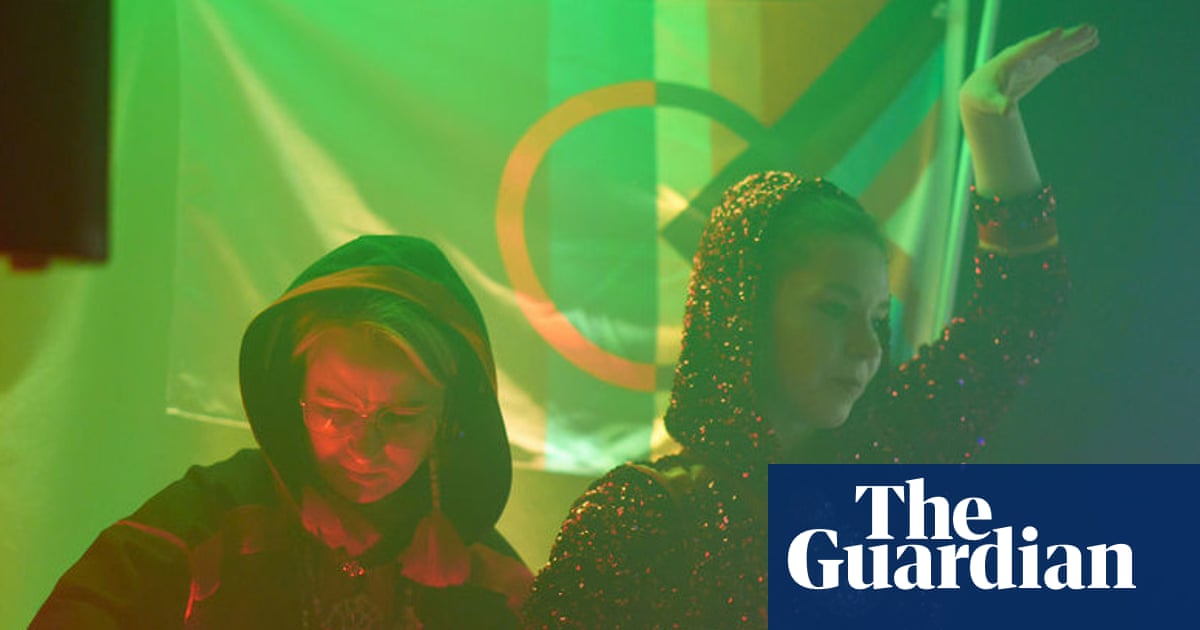
“We both live in maybe the most impractical place if you want to be a successful DJ,” laughs Alice Marie Jektevik, one half of Article 3, a Sámi female DJ collective. Jektevik, 36, and her collaborator, Petra Laiti, 30, reside in a rural village in the far north-east of Norway.But living in Sápmi – the region across northern parts of Sweden, Norway, Finland and Russia traditionally lived in by Sámi people – has proven to be central to their success, providing the inspiration for much of their work.Laiti says a discussion during a typical coffee meetup between the two goes from mixing and DJ gear to fishing, hunting and traditional handicrafts, and back to planning the visuals for a gig. “Everything is inspiring another area,” she says. “It is very holistic in that sense.”The Sami, with roots going back between 3,000 and 10,000 years and recognised as one of Sweden’s official national minorities, are the only recognised Indigenous people in the EU.Article 3, formed by Jektevik and Laiti’s predecessors in 2018, was thought to be the only female Sámi DJ group when the duo got together. Before then, there were a tiny number of Sámi DJs playing gigs, all of whom were male. Now, the culture has shifted dramatically: there are many other female DJs on the scene and a big and growing appetite for Indigenous music-focused club nights.Like much of their generation, Jektevik says they live in a mixture of old and new. “We want that traditional knowledge that we never got and we want that connection, but we also live in a world where you go and be hyper-modern or travel around a lot and DJ for money.”Article 3 mixes blend joik – a traditional Sámi vocal style – beats and throat singing. With the emergence of Sámi DJ culture, there are many more opportunities for DJs to perform. “Outdoor raves in a forest or out in the snow in the winter darkness, as well as dark indoor club spaces during summer festivals,” Laiti says.On Saturday the duo are bringing their night, which includes Sámi music and Indigenous music from around the world combined with live visuals, to Kirkenes, a Norwegian town close to the border with Russia, for the art festival Barents Spektakel. They are also like to feature some “guilty pleasure pop” – not least because it makes mixing tracks easier.“The main point of all of it is to promote this very Sámi-safe, Indigenous-safe club space that people can freely enjoy themselves and feel secure and confident in,” Laiti says. A well-known joik over a good beat can create an incredible feeling on the dancefloor, she says. “That usually gets people so overjoyed and wanting to enjoy themselves and that’s a very contagious atmosphere to be in. It’s one of the biggest sources of professional joy I’ve had, for sure.”The rise of Sámi DJ culture is in a large part driven by a wider newfound pride felt by younger Sámi people, Laiti says. “People our parents’ age were raised with shame and assimilation and other problems and social issues that made people suppress their identities.”At their nights, they find young people in their 20s talking about handicrafts and traditional Sámi garments in an aspirational way and as sources of pride. “You can really see in multiple levels of society that young people take pride in their identity and have a stronger sense of belonging and stronger understanding what their rights are, also put that work and passion into creating arts and culture,” Laiti says.The theme for this year’s Barents Spektakel, which runs 19-22 February, is “the border crossed us”, to mark the 200th anniversary of the northern border that today separates Finland, Russia and Norway.Laiti, who is from the Finnish side of Sápmi, and Jektevik, who is from the Norwegian side, are all too aware of the day-to-day complications caused by borders to Sámi people in the region, affecting everything from arts funding to choosing where to build a career.“You could call it forced mobility,” Laiti says. “That it causes artists to have to move between countries and strategise on which nation or nationality you want to build your career under because it gives you the best opportunity to make a living out of it.”
SRCThe Guardian - World News
LANGEN
LEANCenter-Left
WORDS709
ENT6
WED · 2026-02-18 · 05:00 GMTBRIEF NSR-2026-0218-17134
NSR-2026-0218-17134News Report·EN·Human Interest
Beats and throat singing: Sámi DJs tap into growing pride in Indigenous identity
Article 3, a Sámi female DJ collective based in northern Norway, is contributing to a growing pride in Indigenous identity through their music. The duo, Alice Marie Jektevik and Petra Laiti, draw inspiration from their Sámi heritage and culture, incorporating traditional elements like joik and throat singing into their DJ sets.
Miranda Bryant Nordic correspondentThe Guardian - World NewsFiled 2026-02-18 · 05:00 GMTLean · Center-LeftRead · 3 min
The Guardian - World NewsFIG 01
Reading time
3min
Word count
709words
Sources cited
2cited
Entities identified
6entities
Quality score
100%
§ 01
Briefing Summary
AI-generatedNEWSAR · AI
Article 3, a Sámi female DJ collective based in northern Norway, is contributing to a growing pride in Indigenous identity through their music. The duo, Alice Marie Jektevik and Petra Laiti, draw inspiration from their Sámi heritage and culture, incorporating traditional elements like joik and throat singing into their DJ sets. Formed in 2018, Article 3 was among the first female Sámi DJ groups, paving the way for other women in the scene and increasing the demand for Indigenous music-focused club nights. They perform at various venues, including outdoor raves and indoor club spaces, and aim to create a safe and inclusive space for people to enjoy Sámi and Indigenous music. They recently performed at the Barents Spektakel art festival in Kirkenes, Norway.
Confidence 0.90Sources 2Claims 5Entities 6
§ 02
Article analysis
Model · rule-basedFraming
Human Interest
Social Justice
Tone
Measured
AI-assessed
CalmNeutralAlarmist
Factuality
0.70 / 1.00
Factual
LowHigh
Sources cited
2
Limited
FewMany
§ 03
Key claims
5 extracted01
Article 3 was formed by Jektevik and Laiti’s predecessors in 2018.
factual
Confidence
1.00
02
Article 3 mixes blend joik – a traditional Sámi vocal style – beats and throat singing.
factual
Confidence
1.00
03
The Sámi are the only recognised Indigenous people in the EU.
factual
Confidence
1.00
04
Article 3 is a Sámi female DJ collective consisting of Alice Marie Jektevik and Petra Laiti.
factual
Confidence
1.00
05
People our parents’ age were raised with shame and assimilation.
quoteLaiti
Confidence
0.90
§ 04
Full report
3 min read · 709 words§ 05
Entities
6 identifiedKey playerOppositionContextPositiveNeutralNegative
Organizations1
§ 06
Keywords & salience
9 termssámi djs
1.00
indigenous identity
0.90
sápmi
0.80
joik
0.70
indigenous music
0.70
article 3
0.60
sámi culture
0.50
throat singing
0.50
female djs
0.40
§ 07
Topic connections
Interactive graph No topic relationship data available yet. This graph will appear once topic relationships have been computed.