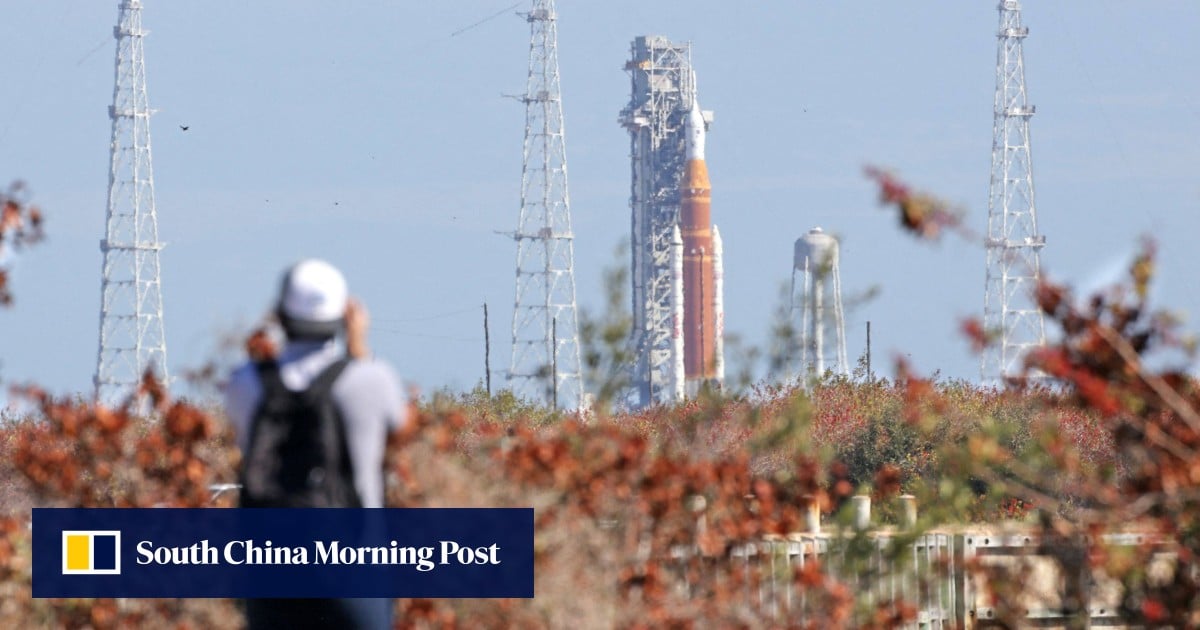
Nasa’s new moon rocket suffered another setback on Saturday, almost certain to bump astronauts’ first lunar trip in decades into spring.The space agency revealed the latest problem just one day after targeting March 6 for the Artemis II mission, humanity’s first flight to the moon in more than half a century.Overnight, the flow of helium to the rocket’s upper stage was interrupted, officials said. Solid helium flow is essential for purging the engines and pressurising the fuel tanks.This helium issue has nothing to do with the hydrogen fuel leaks that marred a countdown dress rehearsal of the Space Launch System rocket earlier this month and forced a repeat test.Nasa Administrator Jared Isaacman said a bad filter, valve or connection plate could be to blame for the stalled helium flow. Regardless of the cause, he noted, the only way to access the area and fix the problem is in the Vehicle Assembly Building at Kennedy Space Centre.“We will begin preparations for rollback, and this will take the March launch window out of consideration,” Isaacman said on social media. Nasa’s next opportunities would be at the beginning or end of April.06:25Will Musk’s moon pivot put SpaceX on a collision course with China’s lunar ambitions?Will Musk’s moon pivot put SpaceX on a collision course with China’s lunar ambitions?
SRCSouth China Morning Post
LANGEN
LEANCenter-Right
WORDS215
ENT7
SAT · 2026-02-21 · 17:20 GMTBRIEF NSR-2026-0221-18154
NSR-2026-0221-18154News Report·EN·Technology
Nasa moon rocket hit by new problem, pushing launch with astronauts into April
NASA's Artemis II mission, which aims to send astronauts to the moon for the first time in over 50 years, is facing another delay due to a helium flow issue in the rocket's upper stage. The problem, unrelated to previous hydrogen fuel leaks, interrupts the essential process of purging engines and pressurizing fuel tanks.
Associated PressSouth China Morning PostFiled 2026-02-21 · 17:20 GMTLean · Center-RightRead · 1 min
South China Morning PostFIG 01
Reading time
1min
Word count
215words
Sources cited
1cited
Entities identified
7entities
Quality score
100%
§ 01
Briefing Summary
AI-generatedNEWSAR · AI
NASA's Artemis II mission, which aims to send astronauts to the moon for the first time in over 50 years, is facing another delay due to a helium flow issue in the rocket's upper stage. The problem, unrelated to previous hydrogen fuel leaks, interrupts the essential process of purging engines and pressurizing fuel tanks. NASA Administrator Jared Isaacman stated that the rocket will need to be moved back to the Vehicle Assembly Building at Kennedy Space Centre for repairs, thus eliminating the targeted March 6 launch date. The next launch opportunities are now anticipated in early or late April. The cause of the helium flow interruption is suspected to be a faulty filter, valve, or connection plate.
Confidence 0.90Sources 1Claims 5Entities 7
§ 02
Article analysis
Model · rule-basedFraming
Technology
National Security
Tone
Measured
AI-assessed
CalmNeutralAlarmist
Factuality
0.80 / 1.00
Factual
LowHigh
Sources cited
1
Limited
FewMany
§ 03
Key claims
5 extracted01
Nasa’s next opportunities would be at the beginning or end of April.
factualJared Isaacman
Confidence
1.00
02
Overnight, the flow of helium to the rocket’s upper stage was interrupted.
factual
Confidence
1.00
03
Nasa’s new moon rocket suffered another setback on Saturday.
factual
Confidence
1.00
04
The Artemis II mission, humanity’s first flight to the moon in more than half a century, is almost certain to be bumped into spring.
prediction
Confidence
0.90
05
Nasa Administrator Jared Isaacman said a bad filter, valve or connection plate could be to blame for the stalled helium flow.
quoteJared Isaacman
Confidence
0.80
§ 04
Full report
1 min read · 215 words§ 05
Entities
7 identifiedKey playerOppositionContextPositiveNeutralNegative
Organizations3
§ 06
Keywords & salience
9 termsmoon rocket
0.90
artemis ii mission
0.80
nasa
0.80
launch delay
0.70
helium flow
0.70
space launch system
0.60
lunar trip
0.60
kennedy space centre
0.50
vehicle assembly building
0.50
§ 07
Topic connections
Interactive graph No topic relationship data available yet. This graph will appear once topic relationships have been computed.