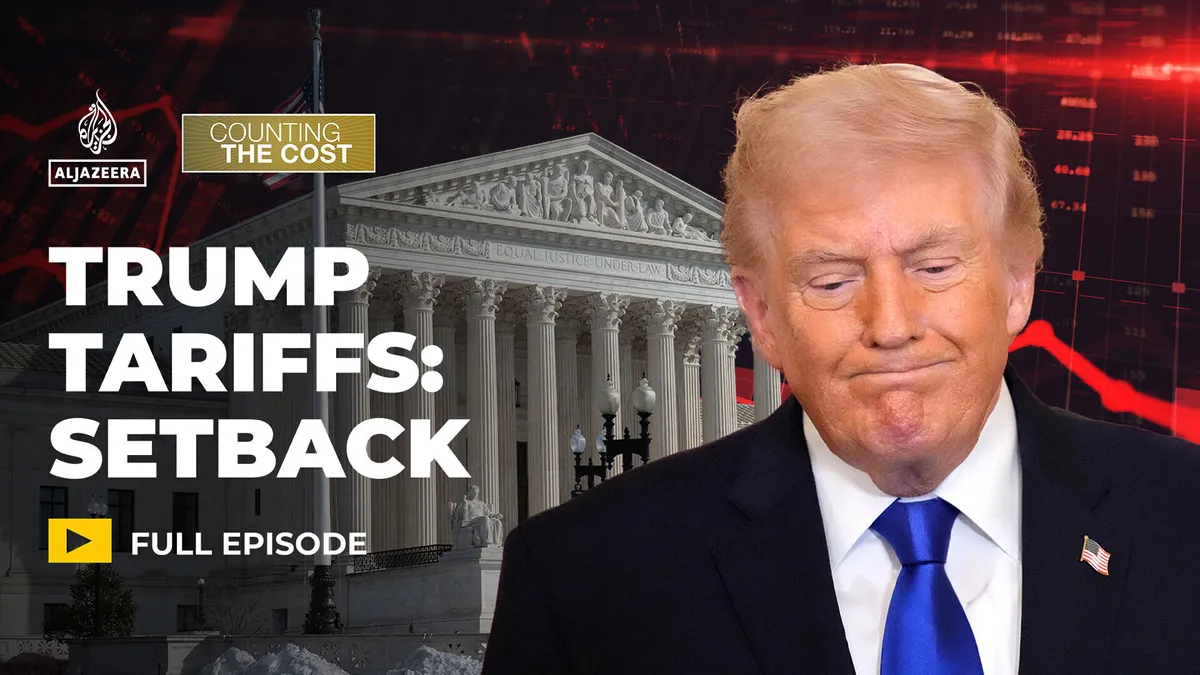
Counting the CostA Supreme Court setback on tariffs challenges Trump’s protectionist trade strategy.Tariffs: The most beautiful word in the dictionary, as Donald Trump says, or unlawful?The Supreme Court has ruled that the president cannot use emergency powers to impose them.It’s a significant check on his power and a major setback to his second-term agenda.But despite the ruling, Trump has already found new ways to keep his trade barriers in place. Tariffs remain central to his economic policy, both to boost US manufacturing and generate revenue.The court may have disarmed one of Trump’s trade weapons, but the turn towards protectionism is far from over.Published On 27 Feb 2026
SRCAl Jazeera
LANGEN
LEANCenter
WORDS107
ENT3
FRI · 2026-02-27 · 18:00 GMTBRIEF NSR-2026-0227-19893
NSR-2026-0227-19893News Report·EN·Legal & Judicial
Has Trump’s trade strategy lost leverage?
In February 2026, the U.S. Supreme Court ruled against President Trump's use of emergency powers to impose tariffs, challenging his protectionist trade strategy.
Al JazeeraFiled 2026-02-27 · 18:00 GMTLean · CenterRead · 1 min
Al JazeeraFIG 01
Reading time
1min
Word count
107words
Sources cited
0cited
Entities identified
3entities
Quality score
100%
§ 01
Briefing Summary
AI-generatedNEWSAR · AI
In February 2026, the U.S. Supreme Court ruled against President Trump's use of emergency powers to impose tariffs, challenging his protectionist trade strategy. This decision limits the president's power and impacts his economic agenda. Despite the setback, Trump has found alternative methods to maintain existing trade barriers, keeping tariffs central to his policy. These tariffs aim to boost U.S. manufacturing and generate revenue. While the ruling restricts one of Trump's trade tools, the broader shift towards protectionism in U.S. trade policy continues.
Confidence 0.85Claims 5Entities 3
§ 02
Article analysis
Model · rule-basedFraming
Legal & Judicial
Political Strategy
Tone
Measured
AI-assessed
CalmNeutralAlarmist
Factuality
0.60 / 1.00
Mixed
LowHigh
Sources cited
0
No named sources
FewMany
§ 03
Key claims
5 extracted01
The Supreme Court has ruled that the president cannot use emergency powers to impose tariffs.
factual
Confidence
1.00
02
Tariffs remain central to his economic policy, both to boost US manufacturing and generate revenue.
factual
Confidence
0.90
03
It’s a significant check on his power and a major setback to his second-term agenda.
factual
Confidence
0.80
04
Trump has already found new ways to keep his trade barriers in place.
factual
Confidence
0.70
05
The court may have disarmed one of Trump’s trade weapons, but the turn towards protectionism is far from over.
prediction
Confidence
0.60
§ 04
Full report
1 min read · 107 words§ 05
Entities
3 identifiedKey playerOppositionContextPositiveNeutralNegative
Organizations1
Locations1
§ 06
Keywords & salience
8 termstariffs
1.00
trade strategy
0.90
protectionism
0.80
supreme court
0.70
trade barriers
0.70
economic policy
0.60
us manufacturing
0.50
emergency powers
0.50
§ 07
Topic connections
Interactive graph No topic relationship data available yet. This graph will appear once topic relationships have been computed.