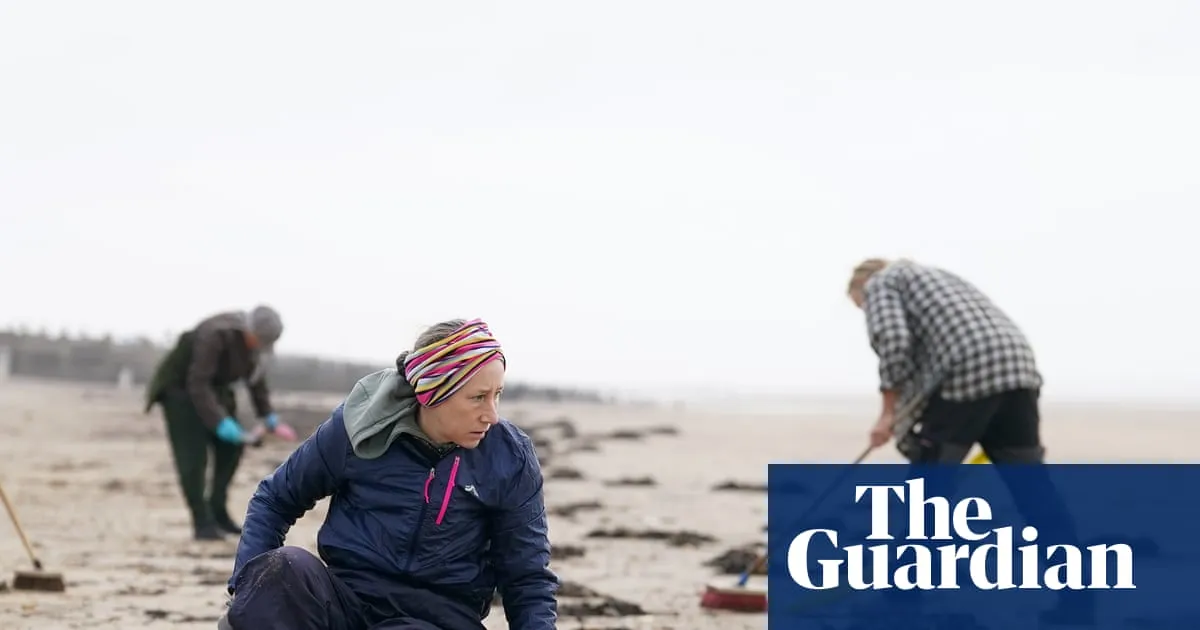
The use of tiny, toxic plastic beads at sewage works should be banned nationwide, an MP and wildlife experts have said after a devastating spill at an internationally important nature reserve.Hundreds of millions of “biobeads” washed up on Camber Sands beach in East Sussex last month, after a failure at a Southern Water sewage treatment works caused a catastrophic spill. It has distressed and alarmed local people and conservationists, as not only are the beads unsightly but they pose a deadly threat to wildlife.Scientists at Kings’ College London tested the beads and found they contained heavy metals including lead and arsenic.The local Labour MP, Helena Dollimore, is on Thursday launching a campaign with the Wildlife Trusts to get the use of these beads banned for good. There is no record held by the government or the regulator of how many water plants use these beads, the condition of the containers holding them, or the risk posed to the beaches near where they are kept.Campaigners will gather at Rye Harbour nature reserve, an internationally important habitat for rare wading birds, to call for the beads to be banned.Research by the Guardian found at least 15 treatment works using these beads, all situated around the south and south-west coast of England. These plants are older, mostly built in the 1990s and early 2000s. They use billions of floating plastic beads to create layers of biofilm, bacteria that purify water, which are separated from the environment by a mesh screen. Recent technological advances mean water can now be purified using electric currents, and using fixed surfaces made of ceramic or concrete. There are similar but more costly products made of glass, which is less harmful to the environment.Dollimore, the MP for Hastings and Rye, said: “A month ago I wasn’t aware that these plastic beads were used in local wastewater plants until 320m washed up on our beaches and nature reserve, causing an environmental catastrophe. The use of beads is an outdated technology and better modern methods exist. So why are water companies still using them in coastal plants – the very place they could do most damage? We’re calling for them to bin the beads.”A spade-full of biobeads collected on Camber Sands. Photograph: Anna McGrath/The GuardianThe beads contain a high number of polycyclic aromatic hydrocarbons, which have been linked to cancer. They often contain toxins including lead, antimony and bromine. Once in the sea they attract algae, making them smell like food to sea creatures, which then ingest them and can be poisoned.The local Wildlife Trust has been struggling to deal with the spillage. Conservationists have been working tirelessly to remove the beads, which has been difficult as they are embedded in fragile habitats including the saltmarsh and in the shingle. The trust said it would be ordering autopsies of dead birds found, to see if the beads were a cause of death. The nature reserve is loved by birds such as wigeon ducks because of the plentiful seeds found in the muddy flats; but these are identical in size to the biobeads, so it is likely they will be ingested.Henri Brocklebank, the director of conservation at the Sussex Wildlife Trust, said: “Rye Harbour nature reserve is internationally important for its birds, with species travelling thousands of miles to feed and breed here. Biobeads are small and buoyant, not dissimilar to many of the food items these birds are searching for. The impact of bioplastics accumulating in the digestive systems is well documented, but the effects of any contaminants that could be released in the acidic gut systems of these birds are far less understood. The removal of the biobeads from the environment is paramount, but I fear that our grandchildren will still be finding them in years to come.“There is only one way to guarantee that we never have a spill of biobeads again. That is to stop our wastewater treatment works from using them. They are an old and redundant technology and we must see their use ended swiftly.”The water minister, Emma Hardy, has written to water companies to find out the extent of their use of beads. The Environment Agency continues to investigate Southern Water after the spillage on Camber Sands.Southern Water apologised for the spill and said it was unable to comment on third-party testing.Defra has been contacted for comment.
SRCThe Guardian - World News
LANGEN
LEANCenter-Left
WORDS722
ENT3
THU · 2025-12-11 · 09:16 GMTBRIEF NSR-2025-1211-2073
NSR-2025-1211-2073News Report·EN·Environmental
MP calls for ban on ‘biobeads’ at sewage works after devastating Camber Sands spillage
Following a recent spill of "biobeads" at Camber Sands beach in East Sussex, MP Helena Dollimore and the Wildlife Trusts are launching a campaign to ban the use of these plastic beads at sewage works nationwide. The spill, caused by a failure at a Southern Water treatment plant, resulted in hundreds of millions of beads washing ashore, posing a threat to wildlife and containing heavy metals like lead and arsenic.
Helena Horton Environment reporterThe Guardian - World NewsFiled 2025-12-11 · 09:16 GMTLean · Center-LeftRead · 3 min
The Guardian - World NewsFIG 01
Reading time
3min
Word count
722words
Sources cited
4cited
Entities identified
3entities
Quality score
100%
§ 01
Briefing Summary
AI-generatedNEWSAR · AI
Following a recent spill of "biobeads" at Camber Sands beach in East Sussex, MP Helena Dollimore and the Wildlife Trusts are launching a campaign to ban the use of these plastic beads at sewage works nationwide. The spill, caused by a failure at a Southern Water treatment plant, resulted in hundreds of millions of beads washing ashore, posing a threat to wildlife and containing heavy metals like lead and arsenic. The campaign highlights the outdated technology of using these beads for water purification, especially in coastal plants, when safer alternatives like electric currents or ceramic surfaces exist. Research indicates at least 15 treatment works, primarily older plants along the south and southwest coast of England, still utilize these potentially harmful beads. The campaign aims to eliminate the risk of future spills and environmental damage.
Confidence 0.90Sources 4Claims 5Entities 3
§ 02
Article analysis
Model · rule-basedFraming
Environmental
Political Strategy
Tone
Mixed Tone
AI-assessed
CalmNeutralAlarmist
Factuality
0.70 / 1.00
Factual
LowHigh
Sources cited
4
Well sourced
FewMany
§ 03
Key claims
5 extracted01
A month ago I wasn’t aware that these plastic beads were used in local wastewater plants until 320m washed up on our beaches.
quoteHelena Dollimore, MP for Hastings and Rye
Confidence
1.00
02
Research by the Guardian found at least 15 treatment works using these beads, all situated around the south and south-west coast of England.
factualThe Guardian
Confidence
1.00
03
There is no record held by the government or the regulator of how many water plants use these beads.
factualThe Guardian
Confidence
1.00
04
Scientists at Kings’ College London tested the beads and found they contained heavy metals including lead and arsenic.
factualThe Guardian
Confidence
1.00
05
Hundreds of millions of “biobeads” washed up on Camber Sands beach after a failure at a Southern Water sewage treatment works.
factualThe Guardian
Confidence
1.00
§ 04
Full report
3 min read · 722 words§ 05
Entities
3 identifiedKey playerOppositionContextPositiveNeutralNegative
Organizations1
Locations1
§ 06
Keywords & salience
10 termsbiobeads
1.00
sewage works
0.80
plastic beads
0.70
water pollution
0.70
environmental catastrophe
0.60
camber sands
0.60
wastewater treatment
0.50
southern water
0.50
toxic chemicals
0.40
wildlife
0.40
§ 07
Topic connections
Interactive graph No topic relationship data available yet. This graph will appear once topic relationships have been computed.