Last year’s protests reflected popular disenchantment with established political parties, which are again seeking power in Thursday’s vote.Demonstrators outside the parliament complex during a protest in Kathmandu, Nepal, September 9, 2025 [File: Adnan Abidi/Reuters]Published On 3 Mar 2026Kathmandu, Nepal – As Nepal heads for a crucial parliamentary election on March 5, the Himalayan country’s established parties are fighting not just for votes, but also for legitimacy.That legitimacy was challenged in September last year when thousands of young Nepalis hit the streets, demanding that an ageing old guard, which has dominated Nepal’s politics for two decades, step down.Recommended Stories list of 4 itemslist 1 of 4Nepal rivals rally on final day of poll campaign, PM urges citizens to votelist 2 of 4Balen Shah: Rapper, mayor, Nepal’s next prime minister?list 3 of 4‘More egalitarian’: How Nepal’s Gen Z used gaming app Discord to pick PMlist 4 of 4Nepal’s leaderless Gen-Z revolution has changed the rules of powerend of listTriggered by a social media ban, the Gen Z-led protests soon turned into a wider uprising over a stagnant economy and corruption among the governing elite, forcing 74-year-old Prime Minister KP Sharma Oli to resign and an interim government to be formed.The protests, in which at least 77 people were killed, reflected a popular disenchantment with the established political parties, including Oli’s Communist Party of Nepal-Unified Marxist Leninist (CPN-UML), the Nepali Communist Party, comprising former Maoist rebels, and the centrist Nepali Congress party.Many young Nepalis see these parties as an entitled and unresponsive political class, prone to corruption.In the run-up to Thursday’s vote, these parties claimed they had learned their lesson from last year’s uprising and promised to do more to tackle corruption.But young activists are not convinced.‘We will be watching’For 27-year-old Rajesh Chand, a business student in the capital, Kathmandu, the vote is no longer about party labels.“I am not really interested in old or new parties,” he told Al Jazeera.“I’m interested in how we can bring this country forward in the right direction. We have witnessed the old political establishment for many years, and no one did anything. The country is sinking. We need to stop corruption. That’s the start.”Rakshya Bam, 26, one of the central figures of the protests, said the debate should not be framed simply as old versus new.“Even if an old party endorses our agenda of reform and governs accordingly, we don’t have a problem,” she said. “And for newcomers, they should not forget the essence of the Gen Z revolution.”She noted that many parties have incorporated the movement’s language into their manifestos. “We welcome that,” she said. “But we will be watching.”Few parties were more shaken by the uprising than the Nepali Congress (NC), the country’s oldest political party, which had been in coalition with the Oli government.Minendra Rijal, a senior NC leader and former information minister, told Al Jazeera that Oli’s “hubris” during the uprising severely dented his party’s image. “NC should have never been in coalition with the Oli government,” he told Al Jazeera.But Rijal insisted that the party has changed. The leadership that presided during the protests, including former Prime Minister Sher Bahadur Deuba, is no longer contesting the election.In January, the party elected Gagan Kumar Thapa, 49, as its new president and prime ministerial candidate.“We have admitted mistakes were made,” Rijal said. “We are asking for a second chance. We have apologised loudly and clearly.”But he conceded that voters – 30 percent of them aged under 40 – remain sceptical.“When I returned to my constituency, I could sense immense frustration,” he said. “People are demanding clear explanations about our agenda and about what went wrong.”Oli seeks power, againFor Oli’s CPN-UML, however, the March 5 election is as much about survival as it is about renewal.Prithivi Subba Gurung, a former communications minister under the Oli government, framed the contest as a battle to protect democracy.“Our elected prime minister was deposed,” he said. “We disagree with how this election came about, but as a democratic party, we cannot denounce it. We must fight to protect democratic values.”Gurung argued that the party has incorporated younger leaders into its ranks, including dozens from Gen Z. He insisted that the CPN-UML has “always stood for Gen Z sentiments of anticorruption and good governance”.Yet Oli, whose social media ban ignited the protests, was re-elected as the party’s president and remains its prime ministerial candidate. While some within the CPN-UML called for his resignation after the unrest, the dissent was ineffective.Gurung maintained that regulating social media was necessary. “Companies operating in Nepal must comply with our laws and pay taxes,” he said. “The enforcement was right, perhaps the timing was not.”A protester shouts slogans outside the parliament in Kathmandu, September 8, 2025 [Prabin Ranabhat/AFP)Political scientist Sucheta Pyakurel said the uprising was caused by “recklessness” within the political establishment. For frustration to escalate to that level, she said, mainstream parties must have repeatedly ignored public concerns and made irresponsible decisions.“Democracy is usually a tolerant system,” she told Al Jazeera. “For citizens to become this angry, those in power must have failed them in serious ways.”While some factions within the political parties now appear introspective, others remain resistant to change, she argued.“Some old parties have been self-critical,” she told Al Jazeera. “They may be reconsidering their old ways. But there are too many moving pieces to predict outcomes. It’s too early to tell.”Nepal uses a mixed electoral system – the first-past-the-post as well as proportional representation – which ends up dividing seats among the multiple parties, thereby making single-party majorities difficult.As a result, coalition governments, and the “musical chairs” of power-sharing, have fuelled public disillusionment. Since 2008, when it became a republic, Nepal has seen 14 governments and nine prime ministers, including the incumbent interim leader, Sushila Karki.That is why fears of a return to political instability are at the heart of Gen Z anxieties.“We are scared of another coalition that fails to deliver,” Bam said. “Even if it’s a coalition, they must work together and not fail people’s aspirations again.”‘Repack and resell’Nearly 19 million Nepalis will vote to elect a 275-member parliament on Thursday – 165 through first-past-the-post and 110 through proportional representation. About 800,000 people are first-time voters.These young voters have not gone unnoticed, as parties have tailored their messages and incentives to appeal to them.Oli’s social media ban, which sparked the Gen Z protests, has given way to pledges of digital access and entrepreneurial support, including a 10-gigabytes-per-month mobile internet package for young people and $10,000 cards for young business owners.Manifestos have been rebranded as “commitment papers” and “promise papers” – an effort, critics say, to repackage politics in Gen Z-friendly language.Political scientist Pyakurel described the shift as “political consumerism”.“They are trying to repack and resell themselves,” she said. “The policies sound ambitious, but many do not address the structural roots of the crisis.”For former protest leader Bam said electoral politics is not the only arena of change.“I’m happy to see friends contest elections,” she told Al Jazeera. “But we will constantly question them. They will be under our vigilance.”For now, she said, she remains committed to activism outside parliament. “I believe in strengthening the streets.”This tension between institutional reforms and outside pressure may define Nepal’s political future.Meanwhile, traditional parties also dismiss new entrants as lacking in ideology, specifically the rapper and former Kathmandu mayor, Balen Shah, who is a frontrunner for prime minister.Relatively new to mainstream politics, Shah, 35, joined the Rastriya Swatantra Party (RSP) and is contesting against Oli in Jhapa-5, a CPN-UML stronghold some 300km (186 miles) southeast of Kathmandu.Shah is immensely popular among Gen Z, despite his disdain for public speeches. “I don’t know how to talk; I know how to work,” he once said, projecting it as a satire on the existing political establishment.For the establishment, though, he comes across as a politician without an ideology. “Ideologies do not come in waves of popularity. Voters should not fall for it,” Gurung told Al Jazeera. “A party needs robust ideologies, vision and mission. His [Balen] party has none.”Pyakurel also warned that parties without coherent ideological foundations are vulnerable to fragmentation. But she also asked: Have established parties truly lived up to the ideologies they claim?“We must ask old parties whether their actions mirror their principles,” she told Al Jazeera.“And we must ask new parties what they stand for. Without these questions, the voting process is incomplete.”
SRCAl Jazeera
LANGEN
LEANCenter
WORDS1 391
ENT3
TUE · 2026-03-03 · 05:29 GMTBRIEF NSR-2026-0303-20856
NSR-2026-0303-20856News Report·EN·Political Strategy
Nepal’s Gen Z threw out old parties. Will it vote for them in key election?
Nepal is set to hold a crucial parliamentary election on March 5, with established parties fighting for votes and legitimacy. Last year's protests, led by Nepal's Gen Z, challenged the old guard of politicians who have dominated the country's politics for two decades.
Samik KharelAl JazeeraFiled 2026-03-03 · 05:29 GMTLean · CenterRead · 6 min
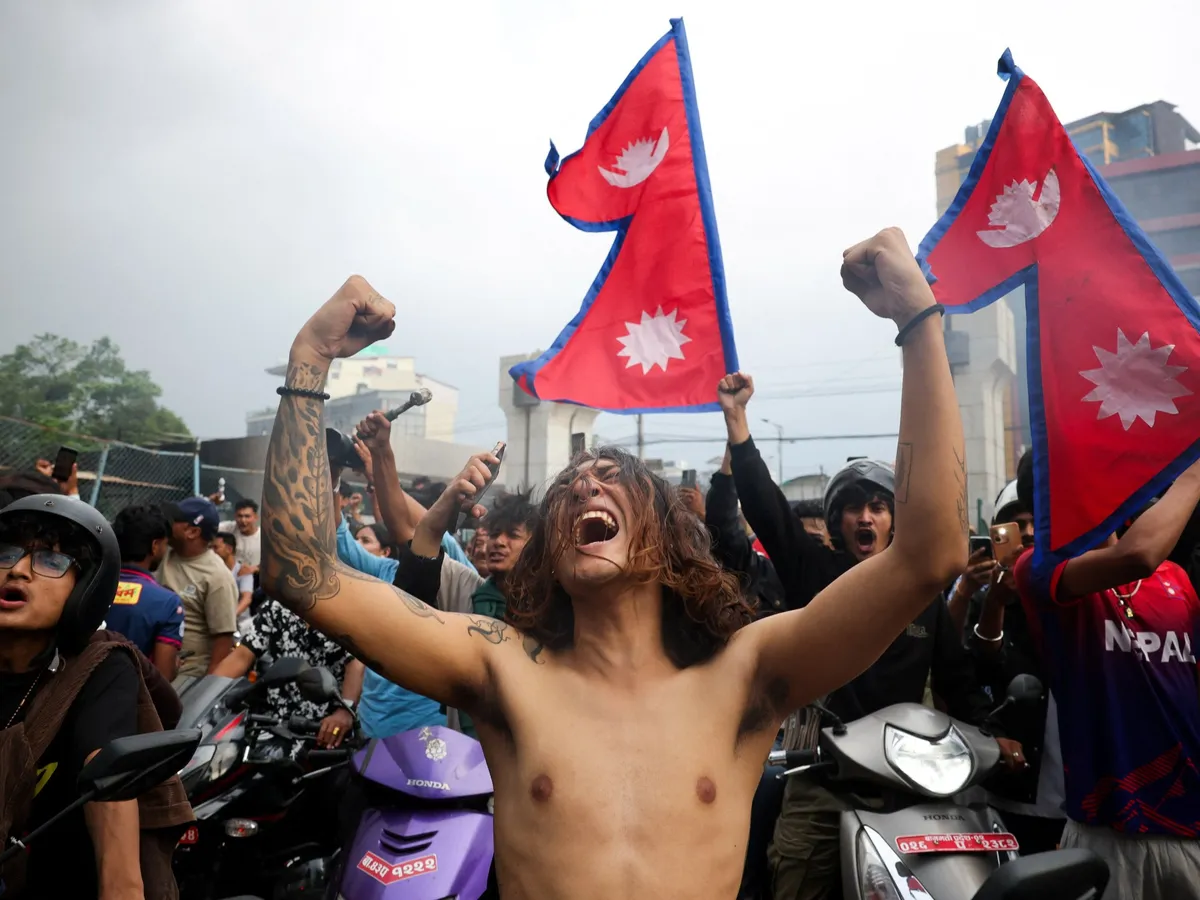
Al JazeeraFIG 01
Reading time
6min
Word count
1 391words
Sources cited
3cited
Entities identified
3entities
Quality score
100%
§ 01
Briefing Summary
AI-generatedNEWSAR · AI
Nepal is set to hold a crucial parliamentary election on March 5, with established parties fighting for votes and legitimacy. Last year's protests, led by Nepal's Gen Z, challenged the old guard of politicians who have dominated the country's politics for two decades. The protests, sparked by a social media ban, turned into a wider uprising over a stagnant economy and corruption, forcing Prime Minister KP Sharma Oli to resign and an interim government to be formed. Young activists remain skeptical about the parties' promises to tackle corruption, with many seeing them as entitled and unresponsive. The election will determine whether these parties can regain power and legitimacy. The outcome is uncertain, with young voters demanding change and a more equitable direction for the country.
Confidence 0.90Sources 3Claims 5Entities 3
§ 02
Article analysis
Model · rule-basedFraming
Political Strategy
Social Justice
Tone
Measured
AI-assessed
CalmNeutralAlarmist
Factuality
0.70 / 1.00
Factual
LowHigh
Sources cited
3
Well sourced
FewMany
§ 03
Key claims
5 extracted01
At least 77 people were killed during the protests.
statisticAl Jazeera
Confidence
0.90
02
Thousands of young Nepalis protested, demanding the old guard step down.
factualAl Jazeera
Confidence
0.90
03
Many parties have incorporated the movement’s language into their manifestos.
factualRakshya Bam
Confidence
0.80
04
The Gen Z-led protests turned into a wider uprising over a stagnant economy and corruption.
factualAl Jazeera
Confidence
0.80
05
The vote is no longer about party labels.
quoteRajesh Chand, business student
Confidence
0.70
§ 04
Full report
6 min read · 1 391 words§ 05
Entities
3 identifiedKey playerOppositionContextPositiveNeutralNegative
§ 06
Keywords & salience
8 termsnepal election
0.90
gen z
0.80
corruption
0.70
political parties
0.70
youth vote
0.60
protests
0.60
political establishment
0.50
social media
0.40
§ 07
Topic connections
Interactive graph Network visualization showing 29 related topics
View Full Graph Person Organization Location Event|Click node to navigate|Edge numbers = shared articles