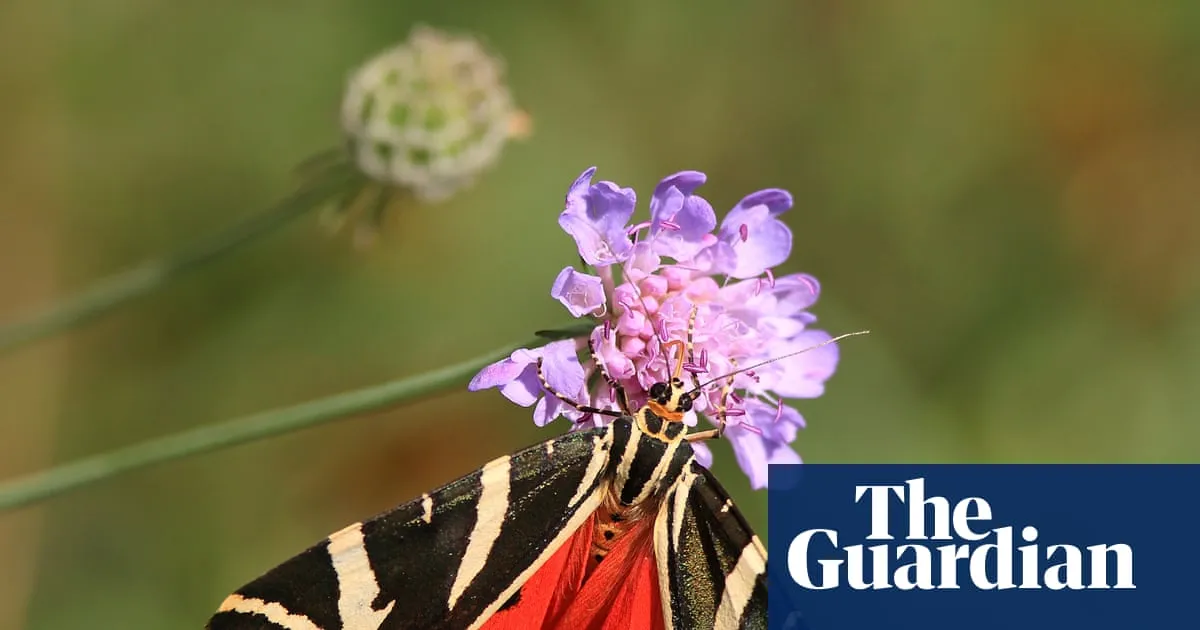
As spring unfolds and plants come to life, gardeners often fight a losing battle against the caterpillars who munch their cabbages.Traditionally, advice for gardeners regarding caterpillars would be about how to get rid of them and stop unsightly holes in plants. But the Royal Horticultural Society (RHS) and the Wildlife Trusts are asking Britons to take a relaxed attitude to caterpillar carnage in order to support the moths many of them grow into.For particularly treasured plants, the RHS recommends a pesticide-free approach, including manual removal, physical barriers and pruning.Moth populations are plummeting, the charities have warned, and many of the 2,500 species in the UK are at risk, with numbers having fallen by 33% since the 1960s. This is due to factors including habitat loss, climate breakdown and pollution.Helen Bostock, a senior wildlife expert at the RHS, said: “Moths have long played second fiddle to butterflies in the garden but understanding their value and needs, and that of their very hungry caterpillars, can support their recovery and help in creating a garden rich in biodiversity.”They are not only important in their own right, but are also an important food source for other at-risk garden wildlife including birds, mammals and larger insects.Some species of caterpillar maraud around the garden, eating everything in sight, while others are specialists. The RHS has encouraged gardeners to appreciate the caterpillars in their garden. While some are large, green and easy to spot, others are camouflaged and resemble twigs, bark or even bird droppings.They transform into striking moths, including the pink and green elephant hawk moth, lunar hornet moth disguised as a wasp, and contrasting Jersey tiger moth in red, cream and black, which is becoming more common in the UK as the climate heats.Caterpillars need a lot of energy to transform into a moth. The RHS has asked gardeners to “allow for nibbling on ornamentals and vegetable crops”.The charity also suggested planting native trees and shrubs enjoyed by a broad range of caterpillars including willow, honeysuckle, foxgloves, verbascum, comfrey, marjoram, bedstraw, sweet william, sweet rocket, tobacco plant, jasmine and white campion.Vicki Hird, an insect expert at The Wildlife Trusts, said: “Moths are stunning in name and beautiful by nature. The green, black and white merveille du jour looks as if it’s been exquisitely painted by an artist, and the white ermine appears to be causally draped in a black-spotted cloak with a warm fur ruff.“It’s no wonder the French call moths ‘butterflies of the night’. Even little brown moths can have wonderful, intricate markings. Making a simple moth trap is a wonderful way of enjoying these incredible creatures up close before releasing it back into the wild.”Caterpillar-friendly planting Foxgloves: These pretty plants are food for several moths, including the lesser yellow underwing (Noctua comes), angle shades moth (Phlogophora meticulosa) and setaceous Hebrew character (Xestia c-nigrum). Lady’s bedstraw: This native wildflower with frothy yellow blooms provides food for the hummingbird hawk-moth (Macroglossum stellatarum), elephant hawk-moth (Deilephila elpenor) and bedstraw hawk-moth (Hyles gallii). Mullein: These tall, drought-resistant yellow plants are enjoyed by the brightly striped caterpillars of the mullein moth (Cucullia verbasci). Mint: This provides food for the mint moth and beautiful plume moth. It is also loved by bees. Hedges: If you have space, a mixed native hedge planted with hawthorn (Crataegus monogyna), blackthorn (Prunus spinosa), hazel (Coryllus avellana) and dog rose (Rosa canina) provides food for a multitude of caterpillars.
SRCThe Guardian - World News
LANGEN
LEANCenter-Left
WORDS565
ENT2
WED · 2026-03-04 · 06:00 GMTBRIEF NSR-2026-0304-21233
NSR-2026-0304-21233News Report·EN·Environmental
Protect caterpillars as UK’s moth population plummets, urge charities
The Royal Horticultural Society (RHS) and the Wildlife Trusts are urging UK gardeners to tolerate caterpillars in their gardens to help reverse the decline in moth populations. Moth numbers in the UK have fallen by 33% since the 1960s due to habitat loss, climate change, and pollution.
Helena Horton Environment reporterThe Guardian - World NewsFiled 2026-03-04 · 06:00 GMTLean · Center-LeftRead · 3 min
The Guardian - World NewsFIG 01
Reading time
3min
Word count
565words
Sources cited
2cited
Entities identified
2entities
Quality score
100%
§ 01
Briefing Summary
AI-generatedNEWSAR · AI
The Royal Horticultural Society (RHS) and the Wildlife Trusts are urging UK gardeners to tolerate caterpillars in their gardens to help reverse the decline in moth populations. Moth numbers in the UK have fallen by 33% since the 1960s due to habitat loss, climate change, and pollution. The charities emphasize the importance of moths as a food source for other wildlife and encourage gardeners to appreciate caterpillars, even if they nibble on plants. Instead of pesticides, the RHS recommends physical barriers, manual removal, and pruning to protect prized plants. Gardeners are also encouraged to plant native trees and shrubs that caterpillars enjoy, such as willow, honeysuckle, and foxgloves, to support moth populations.
Confidence 0.90Sources 2Claims 5Entities 2
§ 02
Article analysis
Model · rule-basedFraming
Environmental
Human Interest
Tone
Measured
AI-assessed
CalmNeutralAlarmist
Factuality
0.70 / 1.00
Factual
LowHigh
Sources cited
2
Limited
FewMany
§ 03
Key claims
5 extracted01
The RHS recommends a pesticide-free approach, including manual removal, physical barriers and pruning.
factualRHS
Confidence
1.00
02
Moths have long played second fiddle to butterflies in the garden.
quoteHelen Bostock, RHS
Confidence
1.00
03
Moth numbers have fallen by 33% since the 1960s.
statisticthe charities
Confidence
0.90
04
Moth populations are plummeting, and many of the 2,500 species in the UK are at risk.
factualthe charities
Confidence
0.90
05
This is due to factors including habitat loss, climate breakdown and pollution.
factualthe charities
Confidence
0.80
§ 04
Full report
3 min read · 565 words§ 05
Entities
2 identifiedKey playerOppositionContextPositiveNeutralNegative
Organizations1
Locations1
§ 06
Keywords & salience
9 termscaterpillars
1.00
moth population
0.90
gardeners
0.70
climate breakdown
0.60
biodiversity
0.60
habitat loss
0.60
native trees
0.50
pesticide-free
0.50
garden wildlife
0.50
§ 07
Topic connections
Interactive graph Network visualization showing 2 related topics
View Full Graph Person Organization Location Event|Click node to navigate|Edge numbers = shared articles