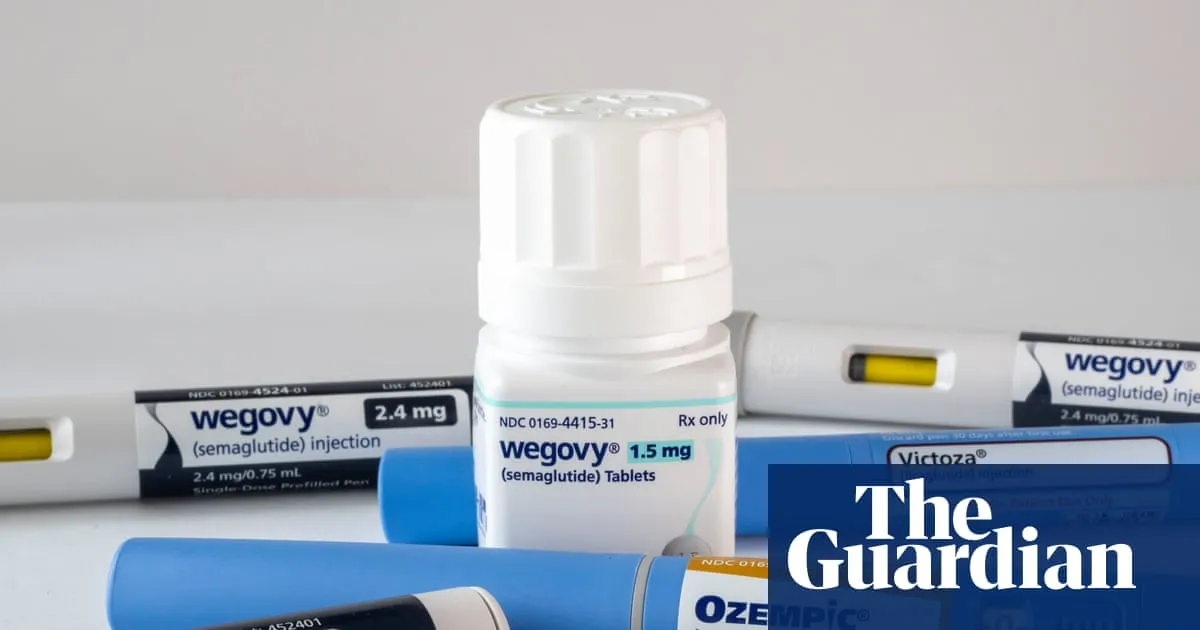
Weight-loss jabs such as Wegovy and Ozempic could be made for just $3 a month, according to new analysis, potentially making the treatment available to millions in poorer countries as patents expire.More than a billion people live with obesity worldwide, with rates rising fast in lower-income nations as they shift to westernised diets and more sedentary lifestyles.The World Health Organization designated semaglutide – sold to treat obesity under the brand name Wegovy, and diabetes under the brand name Ozempic – as an essential medicine in September last year.But global health leaders warned at the time that high prices were limiting access.New research, published as a pre-print, suggests that semaglutide could be mass produced for $3 (about £2.35) for a monthly dose in its injectable form.Newer formulations, taken as a pill rather than an injection, could be made for about $16 a month.One of the authors, Dr Andrew Hill of Liverpool University’s pharmacology department, said: “These low prices open the door to worldwide access to an essential medicine.”The researchers also found that core patents on semaglutide were due to expire in 10 countries this year, including Brazil, China, India, South Africa, Turkey, Mexico and Canada from 21 March, opening the way to generic competition.They identified another 150 countries where patents had not been filed, including most of Africa. Those 160 countries are home to 69% of people with type 2 diabetes and 84% of those living with obesity.Another author, Prof François Venter from Witwatersrand University in Johannesburg, said: “Drugs to treat HIV, TB, malaria and hepatitis are available in low- and middle-income countries for prices close to the cost of production, saving millions of lives while allowing generic companies to make sufficient profit to ensure sustainable supply. We can repeat this medical success story for semaglutide.”The researchers warned that cheaper treatments would not address the structural drivers of obesity, “including food insecurity, poverty, urbanisation and commercial food environments”, and said that coordinated policies and procurement planning would be needed to realise the benefits.Dr Nomathemba Chandiwana, chief scientific officer at South Africa’s Desmond Tutu Health Foundation, and a specialist in obesity, who was not involved in the study, said: “This could be very significant for South Africa and many African countries and low and middle-income countries [LMICs] at large where cost has been one of the main barriers to access.”She said analysis suggested about 27% of adults worldwide met the criteria for drugs such as semaglutide “and importantly, most of those live in LMICs where access to these medicines is extremely limited”.Chandiwana said the key question now was how health systems integrated the drugs responsibly into broader obesity and diabetes care.Obesity is linked to a host of other health conditions, including heart disease, diabetes, stroke and cancer. There are 3.7 million deaths attributed to excess weight each year.The number of people living with diabetes rose from 200 million in 1990 to 830 million in 2022, with the steepest rises in low- and middle-income countries.Semaglutide was first approved by US regulators in 2017, and costs about $200 a month in the US and £120 a month in the UK. Patents in Britain continental Europe and the US do not expire for another five years.The research is based on shipment records of key ingredients from 2024 and 2025, and uses the same methodology that has been used in the past to accurately predict the prices of generic medicines for HIV, hepatitis C and some cancer drugs.Its findings follow research by Médecins Sans Frontières in 2024, which found that diabetes drugs including semaglutide could be made and sold much more cheaply.
SRCThe Guardian - World News
LANGEN
LEANCenter-Left
WORDS596
ENT11
FRI · 2026-03-06 · 09:00 GMTBRIEF NSR-2026-0306-21976
NSR-2026-0306-21976News Report·EN·Public Health
Weight-loss jab could be made for $3 a month, study finds
A new study suggests that weight-loss drugs like Wegovy and Ozempic, containing semaglutide, could be manufactured for approximately $3 per month, potentially increasing accessibility in lower-income countries. Researchers found that core patents for semaglutide are expiring in several countries this year, opening the door for generic competition.
Kat Lay, Global health corespondentThe Guardian - World NewsFiled 2026-03-06 · 09:00 GMTLean · Center-LeftRead · 3 min
The Guardian - World NewsFIG 01
Reading time
3min
Word count
596words
Sources cited
4cited
Entities identified
11entities
Quality score
100%
§ 01
Briefing Summary
AI-generatedNEWSAR · AI
A new study suggests that weight-loss drugs like Wegovy and Ozempic, containing semaglutide, could be manufactured for approximately $3 per month, potentially increasing accessibility in lower-income countries. Researchers found that core patents for semaglutide are expiring in several countries this year, opening the door for generic competition. They also identified 150 countries, largely in Africa, where patents were never filed. This could significantly impact access, as these countries are home to a large percentage of people with type 2 diabetes and obesity. While cheaper treatments are promising, researchers emphasize that broader policies addressing structural drivers of obesity are still needed to realize the full benefit.
Confidence 0.90Sources 4Claims 5Entities 11
§ 02
Article analysis
Model · rule-basedFraming
Public Health
Economic Impact
Tone
Measured
AI-assessed
CalmNeutralAlarmist
Factuality
0.80 / 1.00
Factual
LowHigh
Sources cited
4
Well sourced
FewMany
§ 03
Key claims
5 extracted01
Semaglutide was designated as an essential medicine by the World Health Organization in September last year.
factualWorld Health Organization
Confidence
1.00
02
About 27% of adults worldwide meet the criteria for drugs such as semaglutide.
statisticDr Nomathemba Chandiwana
Confidence
0.90
03
Weight-loss jabs such as Wegovy and Ozempic could be made for just $3 a month.
factualNew analysis
Confidence
0.90
04
Core patents on semaglutide were due to expire in 10 countries this year.
factualResearchers
Confidence
0.80
05
These low prices open the door to worldwide access to an essential medicine.
quoteDr Andrew Hill
Confidence
0.70
§ 04
Full report
3 min read · 596 words§ 05
Entities
11 identifiedKey playerOppositionContextPositiveNeutralNegative
Organizations3
§ 06
Keywords & salience
10 termsweight-loss jab
0.90
semaglutide
0.80
obesity
0.70
ozempic
0.70
wegovy
0.70
low-income countries
0.60
patent expiration
0.60
generic competition
0.60
essential medicine
0.50
type 2 diabetes
0.40
§ 07
Topic connections
Interactive graph Network visualization showing 6 related topics
View Full Graph Person Organization Location Event|Click node to navigate|Edge numbers = shared articles