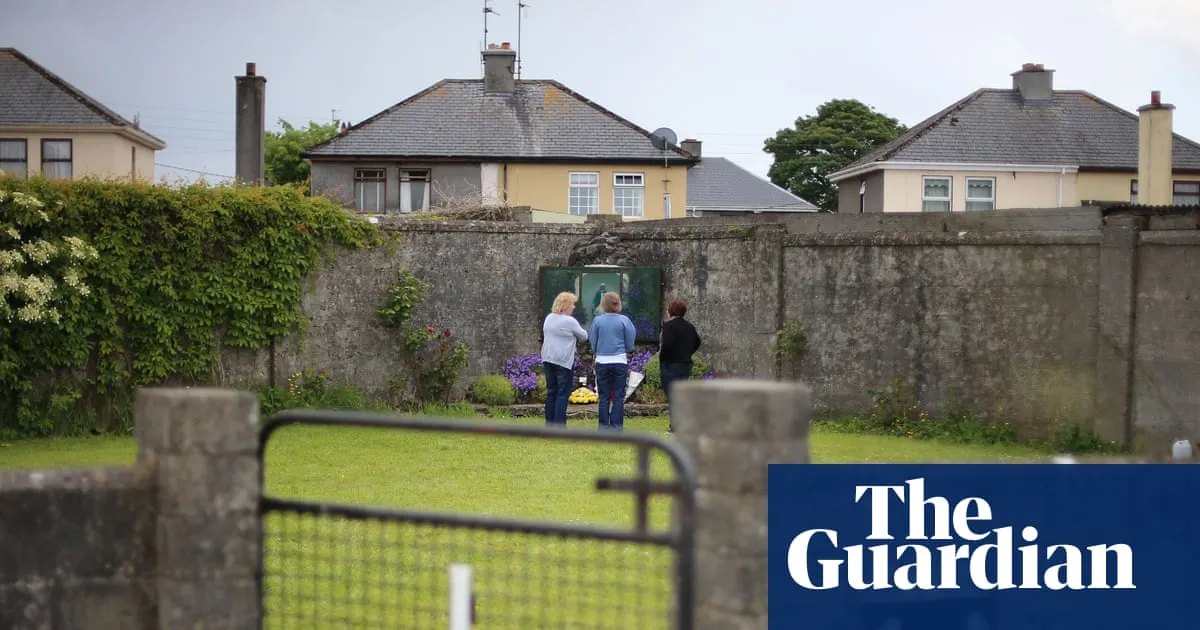
Survivors of Ireland’s mother and baby homes have started to have benefits cut in Britain because they accepted compensation from the Irish government.The cuts to the means-tested benefits of survivors in Britain come as campaigners including the actors Siobhán McSweeney and Steve Coogan called on Keir Starmer to back a bill known as Philomena’s Law, which would ringfence survivors’ benefits.Up to 13,000 of the survivors who are living in Britain risk losing access to essential means-tested benefits if they accept compensation, which can range from €5,000 to €125,000 (£4,230 to £105,000) depending on the length of time people were resident.The Irish government’s redress scheme was introduced after an inquiry detailed the horrific experiences of about 56,000 women and about 57,000 children who were placed or born in homes, mostly run by nuns, between 1922 and 1998.A 2021 report detailed an alarming number of deaths of babies in the homes and documented cruelty and neglect. Women were forced to take part in work and were separated from their babies, who were fostered or adopted.The Irish government’s Mother and Baby Institutions Payment Scheme started making payments in 2024. But because it is considered a recipient’s savings it can result in losing means-tested benefits in Britain, such as universal credit or pension credit, and have an impact on financial support for social care.As feared, councils have begun sending letters to notify people who received payments that they will lose support such as housing benefit.Some survivors of the homes have decided not to accept offers of compensation because of fears of losing benefits. After a period of six months this is considered a rejection, while some have since died.One woman in her late 70s – who had experienced physical and psychological abuse from nuns in a mother and baby home – said she had initially been delighted when her eligibility for a payment was confirmed and she had hoped to use the money to visit a recently discovered half-brother in the US.However, should she receive payment, she would face losing her pension credit and housing benefit, which she relies on for day-to-day expenses and rent.“He had been born less than 16 miles away, but I did not know that he or his other brothers and sister existed until we did some family tracing,” she said.“It would have been lovely to meet him, but I do not feel that I can use the money for this as my benefits would be affected. The payment was meant to be a token of an apology from the Irish government for all the misery of the institutions, but now it’s become a rope around my neck.”A bill known as Philomena’s Law has been introduced in parliament by Labour MP Liam Conlon and is due for a second reading on 28 March, but he and others are hoping the government will back the bill as it will struggle to get time as the clock runs out on the current parliament.“Sometimes the system at Whitehall says no, and this has come about because a blanket rule has been applied. What Whitehall often misses is the human-sized picture. In this case, that is thousands and thousands of survivors of these cruel institutions living in Britain today, who are being denied the compensation they’re entitled to,” said Conlon, the MP for Beckenham and Penge.The bill is named after Philomena Lee, whose story of forced separation from, and her later search for, her lost son inspired the Oscar-nominated film Philomena starring Coogan and Judi Dench.Survivors living in Britain were being forced to revisit their most traumatic experiences and faced a financial penalty for doing so, according to an open letter to the British and Irish governments. Signatories of the letter include Coogan and McSweeney, an actor known for her role in Derry Girls and as host of the Great Pottery Throwdown, comedian Dara Ó Briain and broadcaster Emma Dabiri.“We’re backing Philomena’s Law to stand with survivors and help ensure that redress does not bring more hardship,” it reads. “It is a practical change that would make a profound difference in survivors’ lives. We are asking the British and Irish governments to find a way to pass Philomena’s Law.”While a ringfencing approach has been taken for other compensation schemes in the past, including to support Windrush families, the bill would mark the first time in history that the same approach has been applied to a foreign compensation scheme.The Department for Work and Pensions has been approached for comment.
SRCThe Guardian - World News
LANGEN
LEANCenter-Left
WORDS744
ENT6
SUN · 2026-03-08 · 06:00 GMTBRIEF NSR-2026-0308-22482
NSR-2026-0308-22482News Report·EN·Social Justice
Survivors of Ireland’s mother and baby homes face benefit cuts in UK after accepting compensation
Survivors of Ireland's mother and baby homes, now living in Britain, are facing cuts to their UK benefits after accepting compensation from the Irish government. The Irish redress scheme, initiated after an inquiry detailed abuse and neglect in the homes between 1922 and 1998, provides payments ranging from €5,000 to €125,000.
Ben Quinn Political CorrespondentThe Guardian - World NewsFiled 2026-03-08 · 06:00 GMTLean · Center-LeftRead · 3 min
The Guardian - World NewsFIG 01
Reading time
3min
Word count
744words
Sources cited
4cited
Entities identified
6entities
Quality score
100%
§ 01
Briefing Summary
AI-generatedNEWSAR · AI
Survivors of Ireland's mother and baby homes, now living in Britain, are facing cuts to their UK benefits after accepting compensation from the Irish government. The Irish redress scheme, initiated after an inquiry detailed abuse and neglect in the homes between 1922 and 1998, provides payments ranging from €5,000 to €125,000. However, the UK government considers this compensation as savings, impacting eligibility for means-tested benefits like universal credit and pension credit. This has led to some survivors declining compensation offers to avoid losing essential support, while campaigners are urging the UK government to protect survivors' benefits through legislation. Councils have already begun notifying recipients of benefit reductions, leaving many in a precarious financial situation.
Confidence 0.90Sources 4Claims 5Entities 6
§ 02
Article analysis
Model · rule-basedFraming
Social Justice
Economic Impact
Tone
Mixed Tone
AI-assessed
CalmNeutralAlarmist
Factuality
0.80 / 1.00
Factual
LowHigh
Sources cited
4
Well sourced
FewMany
§ 03
Key claims
5 extracted01
The payment was meant to be a token of an apology from the Irish government...but now it’s become a rope around my neck.
quoteOne woman in her late 70s
Confidence
1.00
02
A bill known as Philomena’s Law has been introduced in parliament by Labour MP Liam Conlon.
factual
Confidence
1.00
03
The Irish government’s redress scheme was introduced after an inquiry detailed the experiences of about 56,000 women and 57,000 children.
factual
Confidence
1.00
04
Survivors of Ireland’s mother and baby homes in Britain are having benefits cut after accepting compensation from the Irish government.
factual
Confidence
1.00
05
Up to 13,000 survivors in Britain risk losing access to means-tested benefits if they accept compensation.
statistic
Confidence
0.90
§ 04
Full report
3 min read · 744 words§ 05
Entities
6 identifiedKey playerOppositionContextPositiveNeutralNegative
People3
§ 06
Keywords & salience
10 termsmother and baby homes
1.00
compensation
0.90
benefit cuts
0.90
means-tested benefits
0.80
irish government
0.70
survivors
0.70
housing benefit
0.50
redress scheme
0.50
pension credit
0.50
philomena's law
0.40
§ 07
Topic connections
Interactive graph Network visualization showing 51 related topics
View Full Graph Person Organization Location Event|Click node to navigate|Edge numbers = shared articles