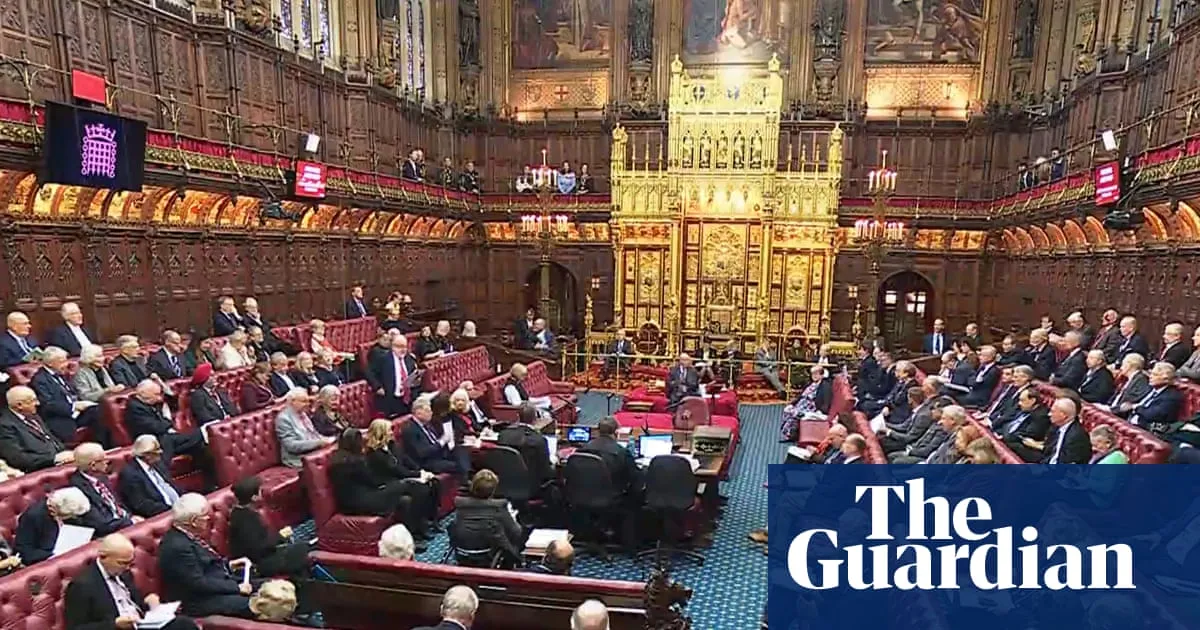
Hereditary peerages will be abolished before the next king’s speech after a deal was struck granting life peerages to some Conservatives and cross-benchers losing their seats.On Tuesday evening the upper chamber accepted a final draft of the House of Lords (hereditary peers) bill, marking the end of its passage through Parliament and clearing the way for it to be added to the statute book.The Lords leader, Angela Smith, confirmed the government would offer life peerages to some of those who would otherwise lose their seats. As a result, the Tories withdrew their opposition to the bill.Since 1999, up to 92 hereditary peers have been able to sit in the upper house and cast their votes in the lobbies but the bill effectively reduces this quota to zero.Hereditary peers who have not been made life peers will no longer have a right to sit in the Lords once the current parliamentary session ends, expected later this spring.Lady Smith said: “This has never been about the contribution of individuals but the underlying principle that was agreed by Parliament over 25 years ago that no one should sit in our Parliament by way of an inherited title.“Over a quarter of a century later, hereditary peers remain while meaningful reform has stagnated. We have a duty to find a way forward.”The lord speaker, Michael Forsyth, offered his thanks to hereditary peers for their service in the upper chamber.Lord Forsyth of Drumlean said: “I would like to thank hereditary peers from all parties and none for their work in the House of Lords over many years.“Whatever views people may have of this constitutional change, it is sad to say goodbye to friends, who in many cases have contributed significantly to debate and scrutiny and to our institutional memory.“Recognising their contribution is not about party politics but acknowledging the value of service and commitment, and I am proud to do so and to thank them.”The king’s speech is expected to take place in the second week of May, days after elections across Britain on 7 May.
SRCThe Guardian - World News
LANGEN
LEANCenter-Left
WORDS340
ENT8
TUE · 2026-03-10 · 23:19 GMTBRIEF NSR-2026-0311-23326
NSR-2026-0311-23326News Report·EN·Political Strategy
Hereditary peers to lose their seats in the House of Lords
A bill abolishing hereditary peerages in the House of Lords has passed, ending the right of hereditary peers to sit and vote in the upper chamber. The House of Lords (hereditary peers) bill, finalized on Tuesday evening, reduces the quota of 92 hereditary peers to zero.
Nadeem BadshahThe Guardian - World NewsFiled 2026-03-10 · 23:19 GMTLean · Center-LeftRead · 2 min
The Guardian - World NewsFIG 01
Reading time
2min
Word count
340words
Sources cited
4cited
Entities identified
8entities
Quality score
100%
§ 01
Briefing Summary
AI-generatedNEWSAR · AI
A bill abolishing hereditary peerages in the House of Lords has passed, ending the right of hereditary peers to sit and vote in the upper chamber. The House of Lords (hereditary peers) bill, finalized on Tuesday evening, reduces the quota of 92 hereditary peers to zero. The change comes after a deal was struck where the government will offer life peerages to some Conservative and cross-bench peers who would otherwise lose their seats. The reform fulfills an agreement made by parliament over 25 years ago that no one should sit in parliament by way of an inherited title. The change will take effect after the current parliamentary session ends, expected later this spring, before the King's speech in May.
Confidence 0.90Sources 4Claims 5Entities 8
§ 02
Article analysis
Model · rule-basedFraming
Political Strategy
Legal & Judicial
Tone
Measured
AI-assessed
CalmNeutralAlarmist
Factuality
0.80 / 1.00
Factual
LowHigh
Sources cited
4
Well sourced
FewMany
§ 03
Key claims
5 extracted01
No one should sit in our parliament by way of an inherited title.
quoteLady Smith
Confidence
1.00
02
Since 1999, up to 92 hereditary peers have been able to sit in the upper house.
factualArticle
Confidence
1.00
03
The government will offer life peerages to some of those who would otherwise lose their seats.
factualAngela Smith
Confidence
1.00
04
Hereditary peerages will be abolished before the next king’s speech.
factualArticle
Confidence
1.00
05
The king’s speech is expected to take place in the second week of May.
predictionArticle
Confidence
0.90
§ 04
Full report
2 min read · 340 words§ 05
Entities
8 identifiedKey playerOppositionContextPositiveNeutralNegative
People3
Organizations3
Locations1
§ 06
Keywords & salience
8 termshereditary peers
1.00
house of lords
0.90
life peerages
0.80
parliamentary reform
0.70
king's speech
0.60
upper chamber
0.50
constitutional change
0.50
angela smith
0.40
§ 07
Topic connections
Interactive graph Network visualization showing 24 related topics
View Full Graph Person Organization Location Event|Click node to navigate|Edge numbers = shared articles