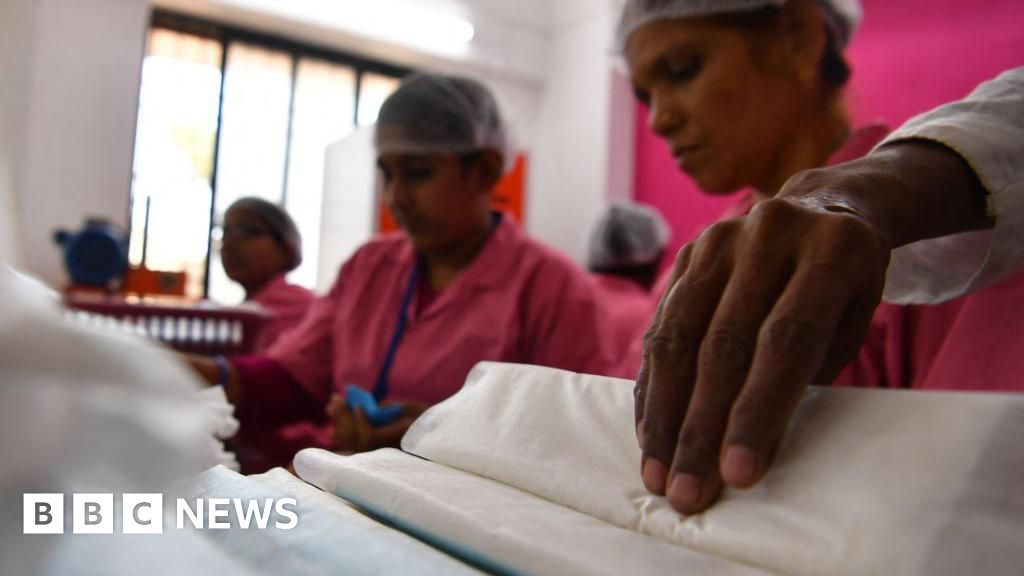
3 hours agoGeeta PandeyandNikita YadavAFP via Getty ImagesMenstruation is still a taboo subject in IndiaIndia's top court has rejected a petition seeking menstrual leave for working women and female students with the judges saying if they were to make such a law, "no-one will hire women".The two-judge bench headed by Chief Justice Surya Kant said mandatory leave would make young women think they were "not at par" with their male colleagues and would be "harmful for their growth". The subject of menstrual leave has long polarised Indian society - while many agree with the justices' views, others argue that a day or two off can help women deal with painful periods. Some states and a number of large private companies have introduced menstrual leaves for employees over the years.The top court's comments came while hearing a petition filed by lawyer Shailendra Mani Tripathi, seeking a national menstrual leave policy, legal website LiveLaw reported.Tripathi later told news agency IANS that he had hoped that working women would receive "two-to-three days of leave" to account for menstrual difficulties. The judges, however, said that introducing such a policy would not benefit women - instead, it would harm them by reinforcing gender stereotypes and affecting their employability.They said this could make private-sector employers hesitant to hire women and might ultimately discourage their recruitment. They added that "the government could come up with a menstrual leave policy in consultation with all stakeholders", LiveLaw reported. The comments by the top court have once again spotlighted a topic that has long divided opinion in India and led to debates around whether it was a progressive move or encouraged stereotypes that women are weaker and unfit for the work space.By saying that menstrual leave would make women "unattractive" as employees, the judges "reiterate the taboo around menstruation and rights that we have failed to address", public health expert and lawyer Sukriti Chauhan told the BBC.She said there were laws in India that spoke of "workplace dignity, gender equality, and safe working conditions" for women and that "denying menstrual leave violates these principles by forcing women into uncomfortable, undignified or hazardous work environments"."Providing menstrual leave not only supports women's health and well-being, but also promotes productivity and efficiency in the workplace," she added.Why are menstruating women in India removing their wombs?India teachers' fight for period leave gathers steamSome argue that giving women extra leave would be discriminatory to men and in a country where periods are often a taboo subject - with women barred from temples or isolated at home as "unclean" - menstruating women may even be too shy to claim it. But campaigners point out that many countries like Spain, Japan, South Korea and Indonesia already offer menstrual leave and that studies have shown this time off can be beneficial to women. Some Indian states also offer limited menstrual leave: Bihar and Odisha give two days per month to government employees, while Kerala provides it to university and industrial training institute staff. And last year the southern state of Karnataka introduced a law approving one day off a month for all menstruating women. In the past few years, several companies have also introduced similar policies for female staff. In 2025, the industrial and services conglomerate RPG Group announced a two-days-a-month period leave policy for employees in its subsidiary CEAT. Engineering giant L&T also introduced a similar policy, offering a one-day leave in a month, while food delivery company Zomato offers up to 10 days of period leave a year.
SRCBBC News - World
LANGEN
LEANCenter
WORDS582
ENT6
FRI · 2026-03-13 · 11:47 GMTBRIEF NSR-2026-0313-24247
NSR-2026-0313-24247News Report·EN·Legal & Judicial
'No-one will hire women' - India's top court rejects menstrual leave petition
India's Supreme Court rejected a petition seeking a national menstrual leave policy for working women and students. The court stated that mandatory leave could reinforce gender stereotypes, harm women's career growth, and make them less attractive to employers.
BBC News - WorldFiled 2026-03-13 · 11:47 GMTLean · CenterRead · 3 min
BBC News - WorldFIG 01
Reading time
3min
Word count
582words
Sources cited
4cited
Entities identified
6entities
Quality score
100%
§ 01
Briefing Summary
AI-generatedNEWSAR · AI
India's Supreme Court rejected a petition seeking a national menstrual leave policy for working women and students. The court stated that mandatory leave could reinforce gender stereotypes, harm women's career growth, and make them less attractive to employers. The judges suggested the government could develop a policy through consultation with stakeholders. The petition, filed by lawyer Shailendra Mani Tripathi, requested two to three days of leave for women experiencing menstrual difficulties. The court's decision has reignited debate in India about menstrual leave, with some arguing it supports women's health and workplace productivity, while others believe it perpetuates harmful stereotypes. Public health experts argue denying menstrual leave violates principles of workplace dignity and gender equality.
Confidence 0.90Sources 4Claims 5Entities 6
§ 02
Article analysis
Model · rule-basedFraming
Legal & Judicial
Economic Impact
Tone
Measured
AI-assessed
CalmNeutralAlarmist
Factuality
0.70 / 1.00
Factual
LowHigh
Sources cited
4
Well sourced
FewMany
§ 03
Key claims
5 extracted01
Some states and a number of large private companies have introduced menstrual leaves for employees.
factualArticle
Confidence
1.00
02
Mandatory leave would make young women think they were "not at par" with their male colleagues.
quoteChief Justice Surya Kant
Confidence
1.00
03
India's top court rejected a petition seeking menstrual leave for working women and female students.
factualArticle
Confidence
1.00
04
Denying menstrual leave violates principles of workplace dignity, gender equality, and safe working conditions.
quoteSukriti Chauhan
Confidence
0.90
05
Introducing a menstrual leave policy would harm women by reinforcing gender stereotypes and affecting their employability.
predictionJudges
Confidence
0.80
§ 04
Full report
3 min read · 582 words§ 05
Entities
6 identifiedKey playerOppositionContextPositiveNeutralNegative
People3
Locations1
§ 06
Keywords & salience
9 termsmenstrual leave
1.00
india
0.80
gender equality
0.70
gender stereotypes
0.70
employability
0.60
women's health
0.60
menstruation taboo
0.60
top court
0.50
workplace dignity
0.50
§ 07
Topic connections
Interactive graph Network visualization showing 51 related topics
View Full Graph Person Organization Location Event|Click node to navigate|Edge numbers = shared articles