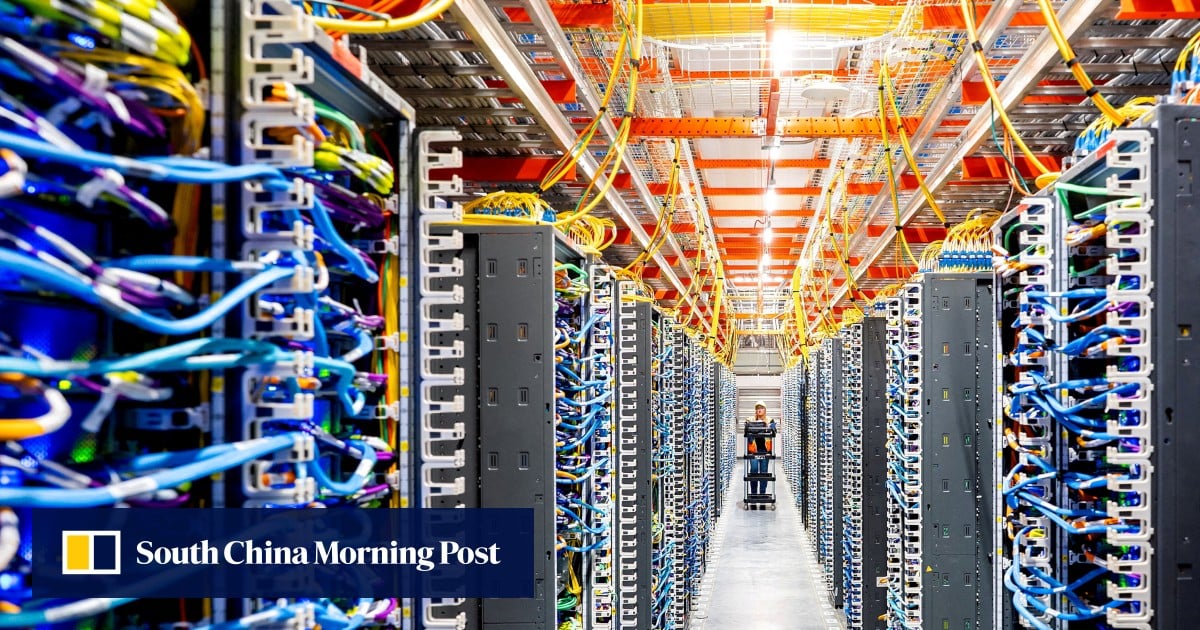
Singapore sits just one degree north of the equator, where the air rarely drops below 25 degrees Celsius (77 degrees Fahrenheit) and humidity clings year round.It is, by most measures, one of the worst places on Earth to cool a data centre. Yet the city state crams more into its small footprint than almost anywhere else.Home to more than 70 facilities and over 1.4 gigawatts of capacity, Singapore has one of the highest densities of data-centre infrastructure per capita on the planet – a testament both to its lofty AI ambitions and a booming regional industry.Data centres have mushroomed across tropical Southeast Asia in recent years amid surging demand for processing power. These power-guzzling facilities play a central role in the ongoing artificial intelligence revolution, but are increasingly being put under the microscope for their energy efficiency – or lack thereof – in the equatorial heat.The International Energy Agency estimated in 2024 that data-centre electricity demand would then double by 2030 if current trends continued. In some markets, that consumption is projected to account for as much as 30 per cent of total national electricity demand – raising serious concerns about the strain it places on the power grid.In some markets, data-centre power consumption is projected to account for over one-fifth of total power demand by the end of the decade. Photo: ShutterstockModern data centres need to maintain operating temperatures in the range of 18 degrees to 27 degrees, according to the American Society of Heating, Refrigerating and Air-Conditioning Engineers’ guidelines. That is cooler than the typical ambient temperatures in Singapore, Johor or Jakarta.
Southeast Asia’s AI data centre gold rush tests power grids in the tropical heat
South China Morning PostCenter-RightEN 2 min read 50% complete by Jean IauMarch 18, 2026 at 10:00 AM
Article Content
short article 2 min
Key Entities & Roles
Sentiment Analysis
Negative Score: -0.20
Source Transparency
Source
South China Morning Post
Political Lean
Center-Right (0.50)
Far LeftCenterFar Right
Classification Confidence
90%
Geographic Perspective
Singapore
This article was automatically classified using rule-based analysis. The political bias score ranges from -1 (far left) to +1 (far right).