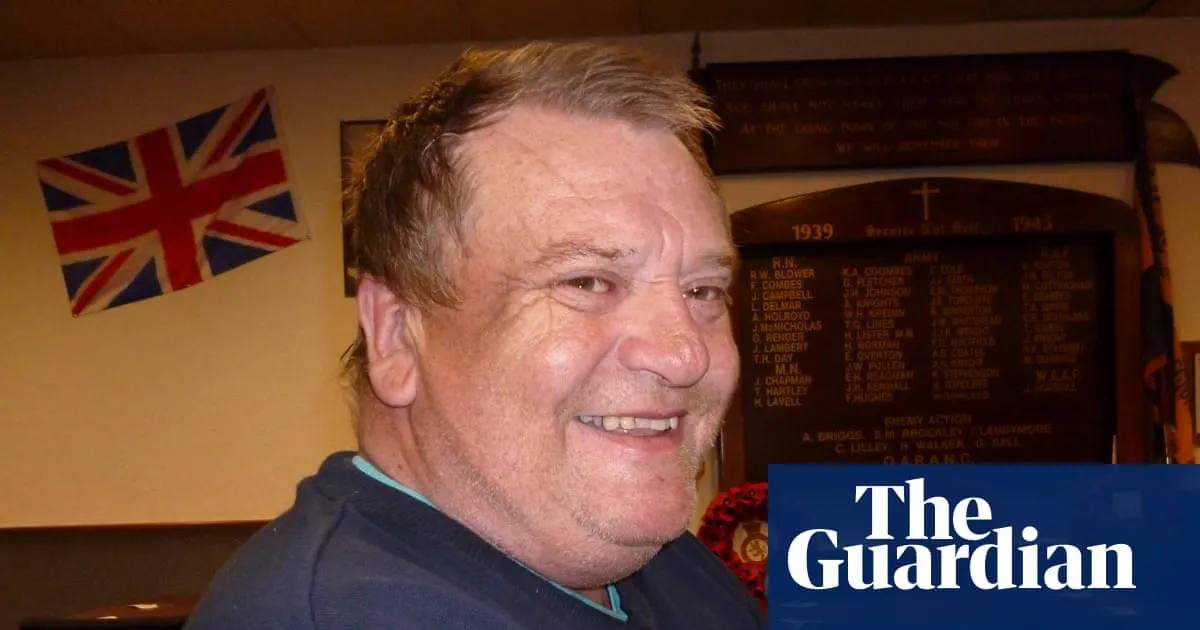
A family has welcomed a coroner’s conclusion that ambulance delays possibly contributed to their father’s death in 2019 after enduring “years of distress trying to pursue answers”.The family of Peter Coates said they had been met with “delays and resistance” from a regional ambulance service as they tried to discover the full circumstances of his final minutes.Kellie Coates, the daughter of Peter, said: “This process for us has not just been about managing grief it has been about challenging a system that seems to be more focused on protecting itself than it is on acknowledging and learning from mistakes in its processes.”Coates died, aged 62, in the early hours of 14 March 2019 after a power cut stopped the mains-operated breathing equipment he needed to live his life.An inquest in Middlesbrough heard that Coates, of Redcar, rang 999 and an ambulance was dispatched by the North East ambulance service (NEAS).But the same power cut prevented the emergency vehicle from getting through electric gates at the station. A second ambulance stopped to refuel while on its way to the job. When they got there, the ambulance crew could not quickly find the key safe to gain entry, even though Coates had provided details when he rang.In a narrative conclusion on Friday, the coroner, Paul Appleton said ambulance delays had “possibly” contributed to Coates’s death.The incident had been treated as a category two ambulance call, the second highest priority, because Coates was able to speak. There is a target of 90% of incidents being reached in 40 minutes for category two. The 90% target is 15 minutes for category one calls.Appleton said he would be sending a Prevent Future Deaths report to NHS England expressing concern about there being a gap between category one and two, in that “patients who require an immediate response but who are not in cardiac or respiratory arrest” cannot be judged category one.Coates, who worked at Redcar-british-steel" class="entity-link entity-organization" data-entity-id="47080" data-entity-type="organization">Redcar British Steel all of his working life, had developed lung cancer later on. Although he went into remission, he never regained his full health and soon after was diagnosed with chronic obstructive pulmonary disease (COPD).He relied on a Cpap machine in his bedroom and portable oxygen bottles to help him breathe.The inquest heard that Coates was unable to reach his portable oxygen in the minutes after the power cut on 14 March 2019. In an audio recording of his 999 call, played to the court, Coates said: “I’m breathing, but only just. You’d better get someone quick.”Although he lived only minutes away from the ambulance station, the automatic gates would not open because of the same power cut and station staff did not know how to manually override them.Paul Elstob, of the NEAS operational leadership team, told the inquest in January that ambulance staff had now been given information on how to manually use the gate controls.A second ambulance was dispatched to Coates’s house from a station further away, but was given permission to stop at a petrol station on the way, despite having almost half a tank of fuel.The coroner said that it took the crew four minutes to refuel and fuel was the only thing bought.By the time paramedics gained entry to the house, 47 minutes after Coates had called for help, he had already died.Coates’s family only found out the circumstances of the death when a whistleblower provided a dossier of information to the Sunday Times three years later, which revealed the ambulance service had been covering up its failings.Karen O’Brien, deputy chief executive at NEAS, said the service had made changes to its processes.She said: “This is a tragic incident which we understand has deeply affected the family and those staff at NEAS who were involved. We are truly sorry that we were not quicker in responding to Mr Coates’ call.“We recognise that the time it’s taken to reach this conclusion has impacted Mr Coates’s loved ones and we wish to once again pass on our sincere condolences to his family for their very sad loss.”
SRCThe Guardian - World News
LANGEN
LEANCenter-Left
WORDS670
ENT8
FRI · 2026-03-20 · 15:41 GMTBRIEF NSR-2026-0320-26417
NSR-2026-0320-26417News Report·EN·Human Interest
Ambulance delays during power cut possibly contributed to father’s death, coroner rules
A coroner ruled that ambulance delays possibly contributed to the death of Peter Coates, 62, in Redcar, England, in March 2019. Coates, who suffered from COPD and relied on breathing equipment, called 999 after a power cut stopped his mains-operated machine.
Hannah Al-Othman Mark BrownThe Guardian - World NewsFiled 2026-03-20 · 15:41 GMTLean · Center-LeftRead · 3 min
The Guardian - World NewsFIG 01
Reading time
3min
Word count
670words
Sources cited
4cited
Entities identified
8entities
Quality score
100%
§ 01
Briefing Summary
AI-generatedNEWSAR · AI
A coroner ruled that ambulance delays possibly contributed to the death of Peter Coates, 62, in Redcar, England, in March 2019. Coates, who suffered from COPD and relied on breathing equipment, called 999 after a power cut stopped his mains-operated machine. The North East Ambulance Service (NEAS) dispatched an ambulance, but delays occurred due to electric gates at the station being inoperable because of the power cut and a second ambulance stopping to refuel. Upon arrival, the crew struggled to locate the key safe to gain entry. The coroner expressed concern about the gap between category one and two ambulance call classifications and will send a report to NHS England. Coates' family expressed distress over the delays in receiving answers from NEAS regarding the circumstances of his death.
Confidence 0.90Sources 4Claims 5Entities 8
§ 02
Article analysis
Model · rule-basedFraming
Human Interest
Legal & Judicial
Tone
Measured
AI-assessed
CalmNeutralAlarmist
Factuality
0.80 / 1.00
Factual
LowHigh
Sources cited
4
Well sourced
FewMany
§ 03
Key claims
5 extracted01
This process has been about challenging a system focused on protecting itself.
quoteKellie Coates
Confidence
1.00
02
Ambulance staff have now been given information on how to manually use the gate controls.
factualPaul Elstob, of the NEAS
Confidence
1.00
03
The incident was treated as a category two ambulance call.
factualArticle
Confidence
1.00
04
Coates died after a power cut stopped his mains-operated breathing equipment.
factualArticle
Confidence
1.00
05
Ambulance delays possibly contributed to Peter Coates’s death in 2019.
factualPaul Appleton, coroner
Confidence
0.80
§ 04
Full report
3 min read · 670 words§ 05
Entities
8 identifiedKey playerOppositionContextPositiveNeutralNegative
Organizations3
§ 06
Keywords & salience
8 termsambulance delays
1.00
power cut
0.80
coroner's conclusion
0.70
inquest
0.60
emergency response
0.60
prevent future deaths report
0.50
category two ambulance call
0.50
chronic obstructive pulmonary disease (copd)
0.40
§ 07
Topic connections
Interactive graph No topic relationship data available yet. This graph will appear once topic relationships have been computed.