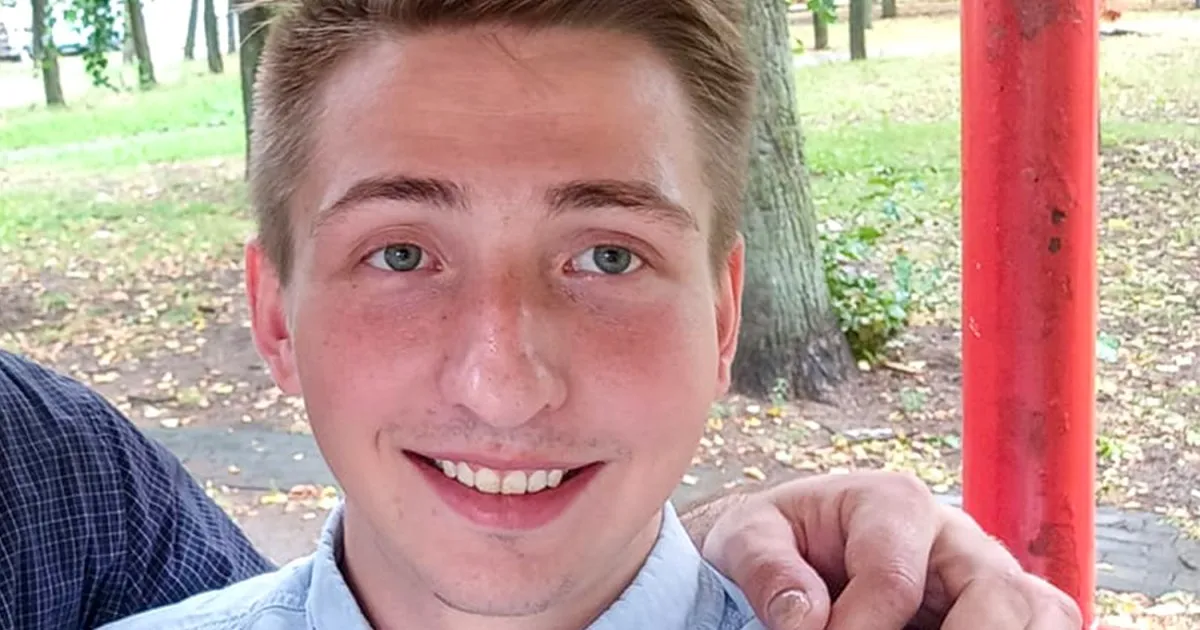
Igor Rogov, who lives in Poland, has reportedly admitted some allegations in a case that may impact Russian visa rules.Igor Rogov has been accused of spying on the Russian opposition movement [Image courtesy of Artem Vazhenkov]Published On 16 Dec 2025In 2020, two Russians, Igor Rogov and Artem Vazhenkov, were in Minsk to witness the mass protests rocking the Belarusian capital after a contested election allegedly rigged in favour of President Alexander Lukashenko.They were members of Open Russia, a Russian opposition group founded by exiled tycoon Mikhail Khodorkovsky. On the afternoon of August 11, they walked past a riot squad on the streets of Minsk when helmeted officers suddenly jumped out of a bush. The pair said they were thrown to the ground and hauled off in a van, where they were beaten en route to a detention centre.Recommended Stories list of 4 itemslist 1 of 4Belarus frees 123 prisoners including Ales Bialiatski as US lifts sanctionslist 2 of 4“Extremely unlikely” Russia and Ukraine will reach ceasefirelist 3 of 4Ukraine drops NATO bid: Will Kyiv get security guarantees from the West?list 4 of 4Russian court designates punk band Pussy Riot as ‘extremist’ groupend of listAt the detention centre, they were beaten again and forced to kneel in stress positions, they said. Eventually, they were released without charge after the Russian embassy intervened.So after all they had endured together, Vazhenkov was shocked to hear Rogov had been arrested in Poland for espionage.“When I read the posts of some of our acquaintances, who write ‘I knew everything as soon as I saw him,’ this is, of course, complete b******t,” Vazhenkov told Al Jazeera from Germany. “I had a pleasant impression [of Igor], so I was shocked, surprised and upset with these thoughts.”According to an indictment seen by The Guardian, 30-year-old Rogov has admitted to Polish investigators that he had been working for Russian intelligence for years. He has also been accused of involvement in a plot to detonate incendiary devices across Europe.The first hearing in the case was held on December 8. If found guilty, he would be the first known Kremlin asset within the opposition movement granted shelter in Europe.His case comes at a sensitive time, as Europe suffers a wave of sabotage, arson attacks, drone incursions and other forms of hybrid warfare blamed on Russia, while Russian passport holders fall under heightened suspicion.But neither the Rogov case, nor the apparent dangers of allowing Russians into Europe, are straightforward.‘I am very sceptical’Rogov was born and raised in Saransk, a city 630 kilometres (390 miles) east of Moscow. There, he spent some time working at the regional headquarters of the late opposition leader Alexey Navalny, before becoming a local coordinator for Open Russia.“He was a nice, sociable, kind-hearted young man,” Vazhenkov recounted.“He liked to hang out, to go for a walk, to drink, and so on. He didn’t seem to have any distrust or antipathy towards me.”After the Minsk incident, Rogov ran for office in his hometown. After that political bid failed, he applied for a computer science scholarship in Poland. Russia’s full-scale invasion of Ukraine in February 2022 and the subsequent suppression of dissent that followed hastened those plans, and he rushed into exile. In Poland, his wife reportedly outed him in a WhatsApp chat with fellow Russian exiles after an argument, before hastily deleting the messages and trying to laugh it off as a joke.Then, in July 2024, Rogov’s flatmate texted him with a warning. The police had come looking for him after a package filled with explosive material addressed to him was found in a shipping warehouse. But Rogov was on holiday in Montenegro at the time. He was immediately arrested on his return. Rogov’s wife was arrested, too, as well as a Ukrainian woman.He reportedly admitted to investigators that he had been passing information to the FSB – Russia’s successor to the KGB – for years. After moving to Poland, he tried leaving that life behind, but his old handlers threatened to have his father conscripted and sent to fight in Ukraine, he said.As far as Vazhenkov knew, if Igor was indeed a spy, he was not privy to much sensitive information.“If we talk about the hierarchy of Open Russia, I know what Igor was allowed to do, and by and large, there wasn’t anything that wasn’t in the public domain,” he said.“That is, he could say who [slept with] whom, who got drunk with whom at what conference, and that’s it. Maybe some internal squabbles, as well, since every organisation has those, but this is hardly valuable information.”It’s not clear why Rogov returned to Poland from Montenegro if he knew police were seeking him. Another co-accused in the explosives case, Emil Garayev, fled back to Russia.“There was information that he confessed to working for the FSB, that he was an informant, a spy – I do not rule out that this is true,” Vazhenkov said. “[But] I am very sceptical about the accusation of preparing a terrorist attack in Poland.”The apparent bomb plot fits in with a pattern of attacks blamed on Russia since before the war: for example, a deadly explosion at a Czech arms depot in 2014 pinned on Russia’s military intelligence agency, the GRU. These attacks have escalated since the invasion of Ukraine.In November, the EU announced it was tightening visa restrictions for Russians, citing security risks. Russian citizens are no longer allowed multi-entry visas. Antiwar Russians abroad criticised the step as unfairly prejudicial and counterproductive to building a movement against the Kremlin.“Travelling to the EU is a privilege, not a given,” said the bloc’s foreign policy chief, Kaja Kallas.Gamifying espionageElena Grossfeld, a researcher into Russian and Soviet spycraft at King’s College London, told Al Jazeera that Russian spies have historically operated within the diaspora.“Anyone is a potential security threat, including Ukrainian refugees or whoever else, can be collaborating with Russian intelligence,” she said. “But if you’re running counterintelligence in a European country, you have to look at the propensity or the likelihood. And Soviet intelligence and Russian intelligence have been known to recruit emigres.“It’s been their mode of operation after the 1917 revolution and beyond … I don’t want to paint everybody in black-and-white, but I understand the concern.”But relatively few Russian nationals have been arrested over hybrid warfare attacks. Rather than the old Cold War strategy of deploying long-term sleeper agents, the focus now seems to be on hiring inexperienced local operatives for one-off jobs for cash, usually between a few hundred to a few thousand dollars in cryptocurrency. Teenagers, especially, are easily manipulated into becoming saboteurs-for-hire.“A lot of people have been recruited on Telegram when they go to those channels that advertise all kinds of occasional jobs,” Grossfeld explained.“One teenager goes to a Russian-speaking Telegram channel, and then he brings on friends. And when the assignment is gamified – ‘You have to take this item from this place to that location, photograph it and send it’ – and there’s [an element of] competition, it is enticing to teenagers and others, as well.”The youngest such suspect was an 11-year-old girl arrested by Ukrainian police in Odesa. Ukrainian intelligence has been accused of similar tactics for hiring saboteurs in Russia.Individuals linked to the criminal underworld, particularly from the former USSR, have also been sought after, though Grossfeld pointed out that organised crime and Russian communities might be monitored by the authorities already.“If you look at the trials in the UK, British people have been recruited, as well as Bulgarians,” she said.Earlier this year, a group of minor league criminals were convicted of setting fire to a London warehouse containing communication supplies for Ukraine on behalf of a Telegram account linked to the Russian mercenary firm Wagner, although they never got paid for the arson since they rushed into it without getting their handler’s green light.
SRCAl Jazeera
LANGEN
LEANCenter
WORDS1 301
ENT5
TUE · 2025-12-16 · 13:51 GMTBRIEF NSR-2025-1216-2891
NSR-2025-1216-2891News Report·EN·National Security
Exiled Russian accused of spying on opposition, including Navalny movement
Igor Rogov, an exiled Russian living in Poland, has been accused of spying for Russian intelligence on opposition groups, including the Navalny movement. Rogov and Artem Vazhenkov, both members of the Open Russia opposition group, were arrested and beaten in Minsk in 2020 during Belarusian protests.
Niko VorobyovAl JazeeraFiled 2025-12-16 · 13:51 GMTLean · CenterRead · 6 min
Al JazeeraFIG 01
Reading time
6min
Word count
1 301words
Sources cited
2cited
Entities identified
5entities
Quality score
100%
§ 01
Briefing Summary
AI-generatedNEWSAR · AI
Igor Rogov, an exiled Russian living in Poland, has been accused of spying for Russian intelligence on opposition groups, including the Navalny movement. Rogov and Artem Vazhenkov, both members of the Open Russia opposition group, were arrested and beaten in Minsk in 2020 during Belarusian protests. Vazhenkov expressed shock at Rogov's subsequent arrest in Poland for espionage, where he reportedly admitted to working for Russian intelligence for years. Rogov is also accused of involvement in a plot to detonate incendiary devices across Europe. His case, which began on December 8th, occurs amidst heightened suspicion of Russian passport holders and a wave of sabotage attributed to Russia. If found guilty, Rogov would be the first known Kremlin asset within the opposition movement granted shelter in Europe.
Confidence 0.90Sources 2Claims 5Entities 5
§ 02
Article analysis
Model · rule-basedFraming
National Security
Political Strategy
Tone
Mixed Tone
AI-assessed
CalmNeutralAlarmist
Factuality
0.70 / 1.00
Factual
LowHigh
Sources cited
2
Limited
FewMany
§ 03
Key claims
5 extracted01
Vazhenkov was shocked to hear Rogov had been arrested in Poland for espionage.
quoteArtem Vazhenkov
Confidence
1.00
02
Rogov was a local coordinator for Open Russia.
factualAl Jazeera
Confidence
0.90
03
Igor Rogov has been accused of spying on the Russian opposition movement.
factualAl Jazeera
Confidence
0.90
04
Rogov has also been accused of involvement in a plot to detonate incendiary devices across Europe.
factualThe Guardian
Confidence
0.80
05
Rogov has admitted to Polish investigators that he had been working for Russian intelligence for years.
factualThe Guardian
Confidence
0.80
§ 04
Full report
6 min read · 1 301 words§ 05
Entities
5 identifiedKey playerOppositionContextPositiveNeutralNegative
People3
§ 06
Keywords & salience
10 termsigor rogov
1.00
espionage
0.90
russian opposition
0.80
russian intelligence
0.70
belarus protests
0.60
poland
0.60
hybrid warfare
0.50
open russia
0.50
mikhail khodorkovsky
0.50
sabotage
0.40
§ 07
Topic connections
Interactive graph No topic relationship data available yet. This graph will appear once topic relationships have been computed.