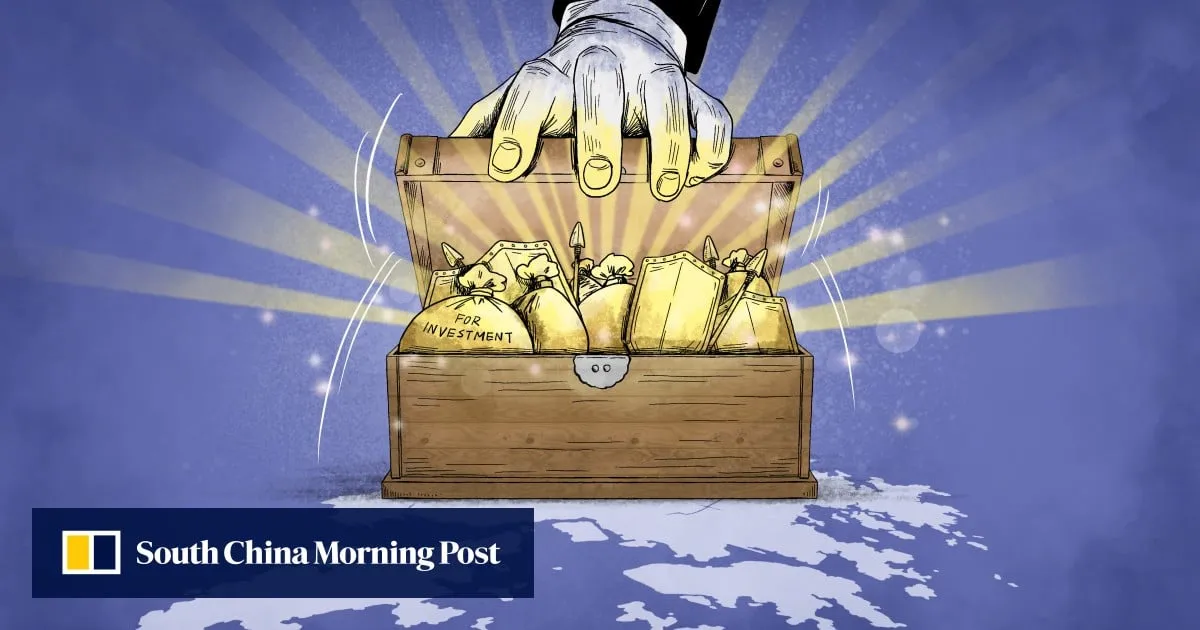
In the summer of 1998, the usually placid air at the Hong Kong Monetary Authority’s headquarters in Citibank Tower suddenly evaporated as regional currencies collapsed like dominoes.Rapacious speculators had shorted currencies such as the Thai baht, the Indonesian rupiah and the Korean won and had profited handsomely. The contagion looked like it would also bring the Hong Kong dollar to its knees. As storytellers from the era have recalled, that sweltering month of August, the wolves were at the gates.International hedge funds had launched a lethal double play – simultaneously shorting the Hang Seng Index and dumping the Hong Kong dollar. They were betting that the de facto Central bank’s rigid rules would force interest rates to stay so high that the stock market would collapse, handing them a billion-dollar payday.For two weeks, the city’s financial leadership sat cloistered in a high-stakes war room. The decision they faced was an ideological heresy: should a laissez-faire government intervene directly in the stock market?With absolute secrecy and the firepower of the Exchange Fund, they orchestrated a defensive manoeuvre. Three of the largest stockbrokers were invited to breakfast at the China Club in Central and sworn to secrecy as they were tasked to buy on the authority’s behalf.The HKMA unleashed its spending power over 10 days. Finally, on a single Friday, it absorbed an avalanche of sell orders, spending HK$79 billion (US$10.1 billion) in five hours to break the speculators’ backs.That “August war” cost HK$118 billion in total, but it bought something more valuable – a reputation for the Exchange Fund as the city’s ultimate, untouchable “war chest”.
SRCSouth China Morning Post
LANGEN
LEANCenter-Right
WORDS265
ENT12
FRI · 2026-03-27 · 00:30 GMTBRIEF NSR-2026-0327-38121
NSR-2026-0327-38121Analysis·EN·Economic Impact
Should Hong Kong be using ‘war chest’ firepower for Northern Metropolis?
In August 1998, Hong Kong faced a financial crisis as international hedge funds shorted the Hang Seng Index and the Hong Kong dollar, betting on the market's collapse due to high interest rates. The Hong Kong Monetary Authority (HKMA) intervened in the stock market, a move considered ideologically unorthodox for the laissez-faire government.
Kevin LiSouth China Morning PostFiled 2026-03-27 · 00:30 GMTLean · Center-RightRead · 2 min
South China Morning PostFIG 01
Reading time
2min
Word count
265words
Sources cited
0cited
Entities identified
12entities
Quality score
100%
§ 01
Briefing Summary
AI-generatedNEWSAR · AI
In August 1998, Hong Kong faced a financial crisis as international hedge funds shorted the Hang Seng Index and the Hong Kong dollar, betting on the market's collapse due to high interest rates. The Hong Kong Monetary Authority (HKMA) intervened in the stock market, a move considered ideologically unorthodox for the laissez-faire government. Over ten days, the HKMA secretly tasked stockbrokers to buy shares on its behalf, utilizing the Exchange Fund. On one Friday, it spent HK$79 billion in five hours to counter the speculators' actions. The intervention, costing HK$118 billion in total, successfully defended the Hong Kong dollar and established the Exchange Fund's reputation as an untouchable "war chest" for future crises.
Confidence 0.90Claims 4Entities 12
§ 02
Article analysis
Model · rule-basedFraming
Economic Impact
Political Strategy
Tone
Mixed Tone
AI-assessed
CalmNeutralAlarmist
Factuality
0.70 / 1.00
Factual
LowHigh
Sources cited
0
No named sources
FewMany
§ 03
Key claims
4 extracted01
That “August war” cost HK$118 billion in total.
statistic
Confidence
1.00
02
The HKMA spent HK$79 billion in five hours to break the speculators’ backs.
factual
Confidence
1.00
03
International hedge funds shorted the Hang Seng Index and dumped the Hong Kong dollar.
factual
Confidence
1.00
04
In 1998, speculators shorted currencies like the Thai baht, Indonesian rupiah, and Korean won.
factual
Confidence
1.00
§ 04
Full report
2 min read · 265 words§ 05
Entities
12 identifiedKey playerOppositionContextPositiveNeutralNegative
Organizations7
Locations4
§ 06
Keywords & salience
9 termswar chest
0.90
exchange fund
0.80
hong kong monetary authority
0.70
currency speculation
0.70
financial intervention
0.60
short selling
0.60
stock market
0.60
hang seng index
0.50
financial crisis
0.50
§ 07
Topic connections
Interactive graph Network visualization showing 16 related topics
View Full Graph Person Organization Location Event|Click node to navigate|Edge numbers = shared articles