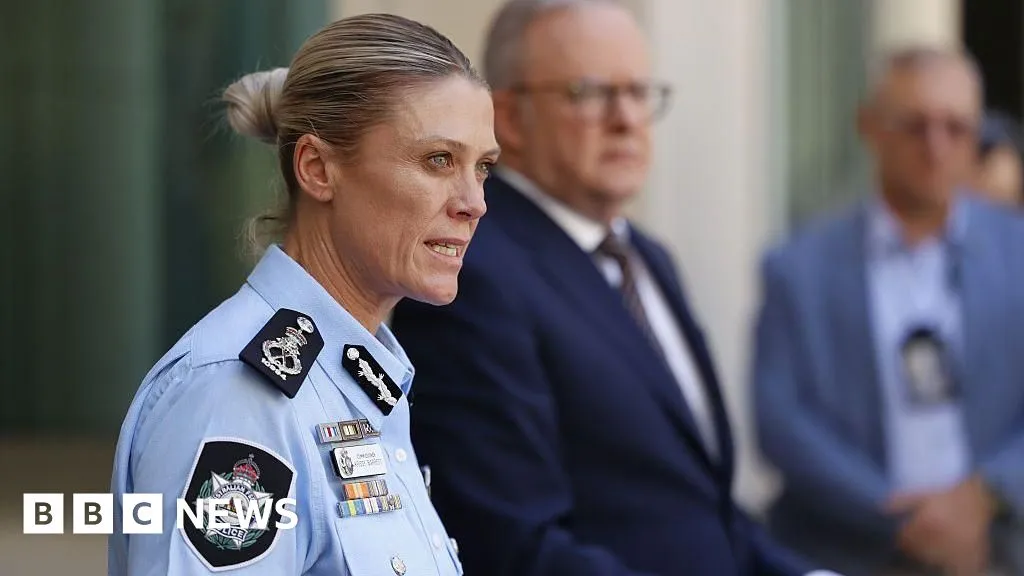
The two alleged gunmen who killed 15 people at a Jewish event on Bondi Beach were not part of a wider terror cell and acted alone, Australian police have said.Police also confirmed Sajid Akram, 50, and his son Naveed Akram, 24, travelled to the Philippines on 1 November, landing in the capital Manila before transiting that day to Davao City. They returned to Sydney on 29 November.The pair did not undergo training or "logistical preparation" in the Philippines for the 14 December attack with early investigations from local authorities suggesting they "rarely left their hotel," police said.Police have declared the attack - Australia's worst mass shooting since 1996 - a terrorist incident.Australian Federal Police Commissioner Krissy Barrett told media on Tuesday that CCTV footage tracking the alleged gunmen's movements in the Philippines had been handed to Australian authorities. "We are currently reviewing the material," she said, adding that initial assessments show that "these individuals are alleged to have acted alone"."There is no evidence to suggest these alleged offenders were part of a broader terrorist cell, or were directed by others to carry out an attack."But nor were the pair in the Philippines for tourism, Commissioner Barrett said.She emphasised that as the investigation was ongoing, new evidence or information may emerge.Earlier, Australian Prime Minister Anthony Albanese said it appears both alleged gunmen were "motivated by Islamic State" ideology.Sajid Akram was shot dead by police during the attack in which he and his son Naveed - both armed with long-barrelled guns - allegedly shot attendees at a Hanukkah event on Bondi Beach.Naveed, who was hospitalised after the attack, has been charged with 59 offences including 15 counts of murder and one of committing a terrorist act and is due to face court in April.In the days after the shooting, the Philippines immigration bureau told the BBC that the father had entered the country using an Indian passport while his son used an Australian passport. Immigration spokesperson Dana Sandoval said the duo had declared the southern city of Davao as their final destination and their return flight to Australia was for Sydney.Davao is a sprawling metropolis on the east of the Philippines' main southern island, Mindanao. Islamist militants have been known to operate in impoverished parts of central and south-western Mindanao.
SRCBBC News - World
LANGEN
LEANCenter
WORDS378
TUE · 2025-12-30 · 02:17 GMTBRIEF NSR-2025-1230-4778
NSR-2025-1230-4778News Report·EN·National Security
Alleged Bondi gunmen acted alone and did not train in the Philippines, police say
Australian police have stated that Sajid Akram and his son Naveed Akram, the alleged gunmen in the Bondi Beach mass shooting that killed 15 people on December 14, acted alone and were not part of a wider terror cell. The pair traveled to the Philippines from November 1-29, but investigations suggest they did not receive training or logistical support there, rarely leaving their hotel.
BBC News - WorldFiled 2025-12-30 · 02:17 GMTLean · CenterRead · 2 min
BBC News - WorldFIG 01
Reading time
2min
Word count
378words
Sources cited
5cited
Entities identified
0entities
Quality score
75%
§ 01
Briefing Summary
AI-generatedNEWSAR · AI
Australian police have stated that Sajid Akram and his son Naveed Akram, the alleged gunmen in the Bondi Beach mass shooting that killed 15 people on December 14, acted alone and were not part of a wider terror cell. The pair traveled to the Philippines from November 1-29, but investigations suggest they did not receive training or logistical support there, rarely leaving their hotel. While the motive is still under investigation, Prime Minister Albanese stated the pair appeared to be motivated by Islamic State ideology. Sajid Akram was killed by police during the attack, while Naveed Akram, charged with multiple offenses including murder and committing a terrorist act, is due in court in April. The investigation is ongoing, with authorities reviewing CCTV footage from the Philippines.
Confidence 0.90Sources 5Claims 5
§ 02
Article analysis
Model · rule-basedFraming
National Security
Legal & Judicial
Tone
Measured
AI-assessed
CalmNeutralAlarmist
Factuality
0.80 / 1.00
Factual
LowHigh
Sources cited
5
Well sourced
FewMany
§ 03
Key claims
5 extracted01
Naveed has been charged with 59 offences including 15 counts of murder and one of committing a terrorist act.
factualnull
Confidence
1.00
02
Sajid Akram, 50, and his son Naveed Akram, 24, travelled to the Philippines on 1 November and returned to Sydney on 29 November.
factualPolice
Confidence
1.00
03
Two alleged gunmen killed 15 people at a Jewish event on Bondi Beach.
factualAustralian police
Confidence
1.00
04
The pair did not undergo training or "logistical preparation" in the Philippines.
factualPolice
Confidence
0.90
05
Australian Prime Minister Anthony Albanese said it appears both alleged gunmen were "motivated by Islamic State" ideology.
quoteAnthony Albanese
Confidence
0.80
§ 04
Full report
2 min read · 378 words§ 06
Keywords & salience
9 termsbondi beach shooting
1.00
terrorist attack
0.90
acted alone
0.80
philippines
0.70
mass shooting
0.60
islamic state ideology
0.60
naveed akram
0.50
sajid akram
0.50
hanukkah event
0.40
§ 07
Topic connections
Interactive graph No topic relationship data available yet. This graph will appear once topic relationships have been computed.