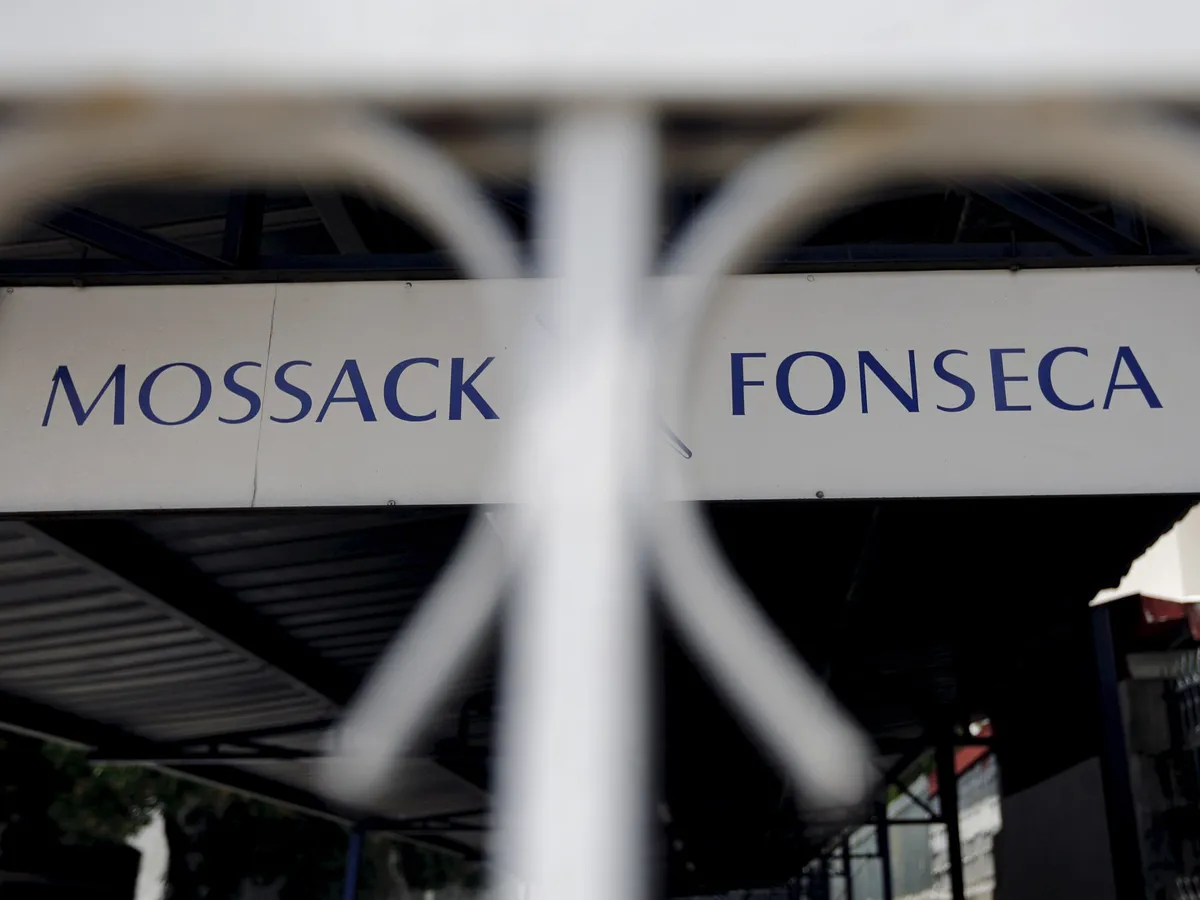
EXPLAINERMore than 11.5 million documents were released in what was considered one of the biggest data leaks ever.Mossack Fonseca, the law firm at the centre of the Panama-papers" class="entity-link entity-event" data-entity-id="89139" data-entity-type="event">Panama Papers scandal, closed its doors in 2018, two years after the files were leaked [File: Carlos Jasso/Reuters]Published On 3 Apr 2026The Panama-papers" class="entity-link entity-event" data-entity-id="89139" data-entity-type="event">Panama Papers, one of the biggest ever data leaks, revealed the vast scale of offshore financial networks used by the global elite.On April 3, 2016, the International Consortium of Investigative Journalists (ICIJ) and the German newspaper Suddeutsche Zeitung released more than 11.5 million documents from the Panama-based law firm Mossack Fonseca. It exposed a network of offshore shell companies linked to the global financial elite, including current and former government leaders.More than 350 journalists from over 80 countries worked in secrecy for more than a year to analyse 2.6 terabytes of leaked data then published their findings.Here’s what we know about the Panama-papers" class="entity-link entity-event" data-entity-id="89139" data-entity-type="event">Panama Papers ten years on, and whether the leak led to any changes.What was the Panama-papers" class="entity-link entity-event" data-entity-id="89139" data-entity-type="event">Panama Papers scandal about?The 2016 Panama-papers" class="entity-link entity-event" data-entity-id="89139" data-entity-type="event">Panama Papers scandal was about the leak of 11.5 million confidential documents including emails, contracts and banking statements from the law firm Mossack Fonseca.The papers revealed a massive global network of offshore shell companies linked to some of the world’s richest people including politicians, business leaders and public figures, spanning countries from the United Kingdom to Russia, Australia to Brazil. They were using companies based in tax havens such as the British Virgin Islands, the Bahamas and Panama to move and store wealth away from the scrutiny of tax authorities.About 214,000 entities were linked to individuals and companies in over 200 countries and territories. The documents covered from the 1970s up to 2016.Who leaked the Panama-papers" class="entity-link entity-event" data-entity-id="89139" data-entity-type="event">Panama Papers?The Panama-papers" class="entity-link entity-event" data-entity-id="89139" data-entity-type="event">Panama Papers were leaked by an anonymous whistleblower using the pseudonym John Doe, who initially shared the documents with Suddeutsche Zeitung, which then collaborated with journalists worldwide on reporting and releasing the findings.P Vaidyanathan Iyer, managing editor at The Indian Express and one of the hundreds of journalists who worked on the Panama-papers" class="entity-link entity-event" data-entity-id="89139" data-entity-type="event">Panama Papers, said that the process of identifying the information was like “looking for a needle in a haystack”.“We were continuously, for about six to eight months, just reading data,” he told Al Jazeera.“My team of three and I had a small cubicle to ourselves in the office, and we were cut off from the rest. Day and night, we were going through data, downloading documents onto our laptops and computers, which were all very secure, with restricted access. It was arduous work,” he added.Who was exposed?Hundreds of people, including more than 140 politicians, were identified as directors, shareholders or beneficiaries of offshore shell companies revealed in the Panama-papers" class="entity-link entity-event" data-entity-id="89139" data-entity-type="event">Panama Papers. Among them were Mauricio Macri, then president of Argentina, and Petro Poroshenko, who was Ukraine’s fifth president from 2014 to 2019.Other leaders, including former Pakistani Prime Minister Nawaz Sharif and former Icelandic Prime Minister Sigmundur Gunnlaugsson, were also named – all linked to ownership of shell companies in offshore tax havens.What are offshore shell companies?Offshore companies are legal entities incorporated in a jurisdiction outside the owner’s country of residence.Shell companies, on the other hand, are entities that have “no real substantial business or operations in its place of incorporation or registered office,” Kehinde Olaoye, a professor of commercial law and business law associations at Hamad bin Khalifa University in Qatar, told Al Jazeera.Shell companies are often used to create legal paperwork to cover for fraudulent or dodgy financial transactions. If they’re based in a country other than the owner’s, they’re offshore shell companies.Are offshore shell companies illegal?No. Offshore shell companies are not automatically illegal. The purpose of such companies is to create trusts, which then can be used to protect wealth or create estate planning.However, “there is always a thin line between legitimate and illegitimate purposes” in using offshore shell companies, Olaoye noted.“Usually, individuals and companies receive advice from financial advisers and legal advisers on how they can structure their business to take advantage of ‘favourable’ tax benefits,” she said.Did anyone get in trouble for the Panama-papers" class="entity-link entity-event" data-entity-id="89139" data-entity-type="event">Panama Papers?A month after the Panama-papers" class="entity-link entity-event" data-entity-id="89139" data-entity-type="event">Panama Papers were leaked, Iceland’s Gunnlaugsson resigned as prime minister following mass protests. According to the leaked documents, Gunnlaugsson and his wife allegedly established a company, Wintris, in the British Virgin Islands with the assistance of the Panamanian law firm. His resignation led to the fall of the Icelandic government at the time.In 2017, Pakistan’s Supreme Court also disqualified then prime minister Sharif from office following the leaks, despite an earlier ruling that found insufficient evidence of corruption. The Panama-papers" class="entity-link entity-event" data-entity-id="89139" data-entity-type="event">Panama Papers revealed that his children held several companies in the British Virgin Islands. In 2018, Sharif was banned from politics for life.Mossack Fonseca, which had over 40 offices worldwide, also faced significant operational impacts following the leaks, including staff reductions, and ultimately shut down in 2018. Its co-founders, Jurgen Mossack and the late Ramon Fonseca, were acquitted by a Panamanian court, along with 26 others accused of setting up shell companies implicated in scandals in Brazil and Germany.How much tax revenue has been recovered since 2016?Between 2016 and 2026, governments worldwide recovered around $2bn in taxes, penalties and levies, according to the ICIJ. Countries such as the UK, Sweden and France each recovered between $200-250m, while others, including Japan, Mexico and Denmark, recovered around $30m each.However, the amount that remains unaccounted for is significantly higher.In India alone, the government brought forward close to 425 tax cases, according to Iyer.“But the amount realised in taxes, which the government got back into its treasury was just about 150 crore rupees, which is around $16m. Whereas the total tax which was brought under investigation was about $1.5bn,” he noted.Other countries, including Austria, Slovenia and New Zealand recovered between $1m and $8m.Panama, the country where the leak was revealed, recovered about $14.1m.Did the Panama-papers" class="entity-link entity-event" data-entity-id="89139" data-entity-type="event">Panama Papers lead to changes in the legal system?Since the release of the Panama-papers" class="entity-link entity-event" data-entity-id="89139" data-entity-type="event">Panama Papers, governments have taken steps to curb the misuse of shell companies by introducing new laws and regulations. They include the Corporate Transparency Act in the US, which requires the disclosure of “beneficial owners”—individuals who ultimately profit from offshore entities — as well as measures to improve information sharing between tax authorities.The United Nations is also considering draft proposals for a Convention on Taxation. In addition, several nations have signed bilateral double-taxation treaties to reduce tax avoidance and prevent income from being taxed in multiple jurisdictions.But gaps remain in the global tax system. There’s no one overarching international taxation principle that everyone needs to follow — and often there are overlapping treaties and agreements that allow those with the shrewdest financial advisors to choose, or shop, from among those pacts, based on whatever works best for them.“The main challenge in international tax law is that there is no multilateral tax convention, which creates problems of tax competition and ‘treaty shopping’,” Olaoye said.
SRCAl Jazeera
LANGEN
LEANCenter
WORDS1 146
ENT12
FRI · 2026-04-03 · 09:46 GMTBRIEF NSR-2026-0403-50827
NSR-2026-0403-50827News Report·EN·Economic Impact
Ten years since Panama Papers: What did they reveal, did anything change?
In April 2016, the Panama Papers, a leak of 11.5 million documents from law firm Mossack Fonseca, exposed a vast global network of offshore shell companies used by the world's elite to hide wealth. The documents, analyzed by over 350 journalists from 80 countries, revealed the financial dealings of politicians, business leaders, and public figures across more than 200 countries, dating back to the 1970s.
Alma MilisicAl JazeeraFiled 2026-04-03 · 09:46 GMTLean · CenterRead · 5 min
Al JazeeraFIG 01
Reading time
5min
Word count
1 146words
Sources cited
1cited
Entities identified
12entities
Quality score
100%
§ 01
Briefing Summary
AI-generatedNEWSAR · AI
In April 2016, the Panama Papers, a leak of 11.5 million documents from law firm Mossack Fonseca, exposed a vast global network of offshore shell companies used by the world's elite to hide wealth. The documents, analyzed by over 350 journalists from 80 countries, revealed the financial dealings of politicians, business leaders, and public figures across more than 200 countries, dating back to the 1970s. These individuals and entities used tax havens like Panama and the British Virgin Islands to avoid scrutiny from tax authorities. The leak, initiated by an anonymous whistleblower, highlighted the scale of offshore finance and led to Mossack Fonseca closing in 2018.
Confidence 0.90Sources 1Claims 5Entities 12
§ 02
Article analysis
Model · rule-basedFraming
Economic Impact
Political Strategy
Tone
Measured
AI-assessed
CalmNeutralAlarmist
Factuality
0.80 / 1.00
Factual
LowHigh
Sources cited
1
Limited
FewMany
§ 03
Key claims
5 extracted01
Hundreds of people, including more than 140 politicians, were identified.
factual
Confidence
1.00
02
About 214,000 entities were linked to individuals and companies in over 200 countries and territories.
statistic
Confidence
1.00
03
Mossack Fonseca closed its doors in 2018, two years after the files were leaked.
factual
Confidence
1.00
04
More than 11.5 million documents from Mossack Fonseca were leaked.
factual
Confidence
1.00
05
The Panama Papers revealed a vast scale of offshore financial networks used by the global elite.
factual
Confidence
1.00
§ 04
Full report
5 min read · 1 146 words§ 05
Entities
12 identifiedKey playerOppositionContextPositiveNeutralNegative
Organizations4
Locations5
§ 06
Keywords & salience
9 termspanama papers
1.00
data leak
0.80
offshore financial networks
0.70
mossack fonseca
0.70
tax havens
0.60
shell companies
0.60
financial elite
0.50
icij
0.40
whistleblower
0.40
§ 07
Topic connections
Interactive graph No topic relationship data available yet. This graph will appear once topic relationships have been computed.