Harvard’s faculty is set to vote next week on a faculty committee proposal to cap the number of A grades per course in an effort to curb grade inflation.The proposal, which was first reported earlier this year by the Harvard Crimson, Harvard’s student newspaper, would cap A grades to 20% of students in a course, with an allowance for four additional As. It also would introduce a new internal “average percentile rank” system, which would rely on raw scores rather than grade point average (GPA) to determine honors and awards.If approved, the policy would take effect in fall 2027, according to the Wall Street Journal.The proposed cap has faced criticism from students, including those on the Crimson’s editorial board, which claimed it “falls flat” in trying to resolve concerns over grading.A document drafted by the university’s subcommittee on grading of the undergraduate educational policy committee states that in November 2024, Amanda Claybaugh, the dean of undergraduate education, appointed a committee to investigate grading policies and alternatives.“The underlying problems with grading ramify in high levels of grade inflation,” the proposal states, adding that over the last few years, “what was a merely quantitative increase in average course grade has become a qualitative failure of the grading process as a whole”.“The increase in average grade has generated a compression of grades so pronounced that two-thirds of letter grades issued are straight As and almost 85% are A-range grades,” the proposal document states.In its proposal, the committee adds: “By encouraging faculty to use a wider spectrum of grades, we invite colleagues to design systems of assessment that align with their learning objectives and provide more frequent and better opportunities for detailed feedback on a student’s mastery of skills or knowledge.”An internal report last fall from Harvard’s dean of undergraduate education, reported by the Wall Street Journal, found that about 60% of grades during the 2024-25 academic year were As, up from about 25% in 2005-06.The Journal also reported that a survey conducted by the undergraduate student government found that about 94% of students said they oppose the A cap, with some students worried that it would heighten stress and intensify competition.The Harvard Crimson’s editorial board wrote in an editorial in February that while the school has an issue with “grade inflation”, it argued that “in its search for a cure, Harvard has missed the mark”.“When it comes to fixing our failing grading system, this proposed cap falls flat: The point of tackling grade inflation isn’t to reshape the curve, it’s to restore rigor to the classroom,” the editorial board wrote.The editorial board argued that the proposed cap would “hinder Harvard’s attempts to recenter academics by placing disproportionate emphasis on how students perform in relation to their peers”.The editorial board pointed out that Princeton University implemented a similar policy in 2004 that capped the number of As, but that it discontinued the practice in 2014.“Princeton’s experience suggests that even the perception of a cap harms the collective pursuit of learning – and it’s not enough to design ‘collaboration-friendly assignments’ to fix the problem, as Harvard’s committee suggests,” it wrote. “Instead of comparative markers feeding competition on campus, grades should form an incentive structure to push as many students as possible to achieve the highest bar of mastery.”Faculty opinion appears more mixed. In February, the Crimson reported that faculty voiced “cautious support” for the proposal and that more than a dozen faculty members interviewed welcomed the attempt to impose a systematic check on grade inflation. But some faculty worried that the cap could discourage students from enrolling in demanding courses and cautioned that the proposal could pose a danger to faculty autonomy.The Guardian has reached out to Harvard University for comment about the proposal.
SRCThe Guardian - World News
LANGEN
LEANCenter-Left
WORDS619
ENT4
FRI · 2026-04-03 · 15:07 GMTBRIEF NSR-2026-0403-51129
NSR-2026-0403-51129News Report·EN·Political Strategy
Harvard faculty to vote on proposal to limit number of A grades in each course
Harvard faculty will vote next week on a proposal to limit A grades in each course to address grade inflation. The proposal, capping As at 20% with a small allowance, also introduces a new internal ranking system based on raw scores instead of GPA for honors.
Anna BettsThe Guardian - World NewsFiled 2026-04-03 · 15:07 GMTLean · Center-LeftRead · 3 min
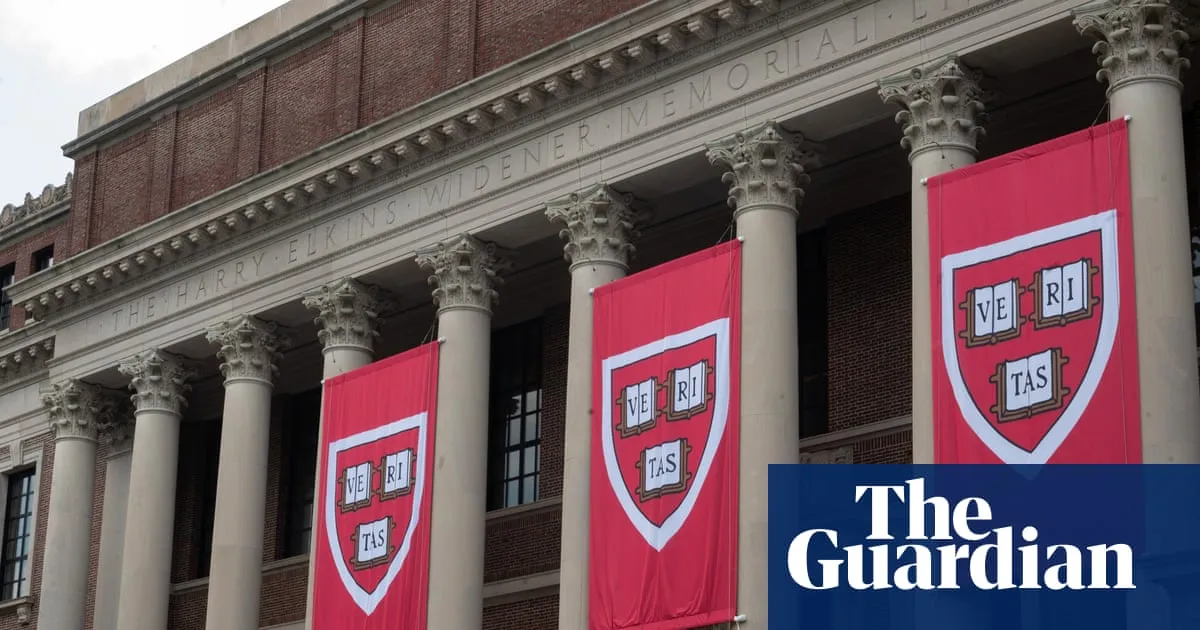
The Guardian - World NewsFIG 01
Reading time
3min
Word count
619words
Sources cited
4cited
Entities identified
4entities
Quality score
100%
§ 01
Briefing Summary
AI-generatedNEWSAR · AI
Harvard faculty will vote next week on a proposal to limit A grades in each course to address grade inflation. The proposal, capping As at 20% with a small allowance, also introduces a new internal ranking system based on raw scores instead of GPA for honors. If approved, the policy would take effect in Fall 2027. A university committee appointed by the dean of undergraduate education found that A grades have significantly increased, with roughly 60% of grades being As in 2024-25 compared to 25% in 2005-06. The committee hopes the cap will encourage faculty to use a wider range of grades and provide better feedback. However, the proposal faces student opposition, with a student government survey indicating that 94% of students oppose the A cap, fearing increased stress and competition.
Confidence 0.90Sources 4Claims 5Entities 4
§ 02
Article analysis
Model · rule-basedFraming
Political Strategy
Economic Impact
Tone
Measured
AI-assessed
CalmNeutralAlarmist
Factuality
0.70 / 1.00
Factual
LowHigh
Sources cited
4
Well sourced
FewMany
§ 03
Key claims
5 extracted01
About 94% of students said they oppose the A cap.
statisticundergraduate student government
Confidence
1.00
02
About 60% of grades during the 2024-25 academic year were As, up from about 25% in 2005-06.
statisticHarvard’s dean of undergraduate education
Confidence
1.00
03
The policy would take effect in fall 2027, according to the Wall Street Journal.
factualWall Street Journal
Confidence
1.00
04
The proposal would cap A grades to 20% of students in a course, with an allowance for four additional As.
factual
Confidence
1.00
05
Harvard faculty to vote on proposal to limit number of A grades in each course.
factual
Confidence
1.00
§ 04
Full report
3 min read · 619 words§ 05
Entities
4 identifiedKey playerOppositionContextPositiveNeutralNegative
People1
§ 06
Keywords & salience
9 termsgrade inflation
1.00
grading policies
0.80
a grades
0.80
grade cap
0.70
harvard
0.70
undergraduate education
0.50
average percentile rank
0.50
learning objectives
0.40
student government
0.40
§ 07
Topic connections
Interactive graph Network visualization showing 18 related topics
View Full Graph Person Organization Location Event|Click node to navigate|Edge numbers = shared articles