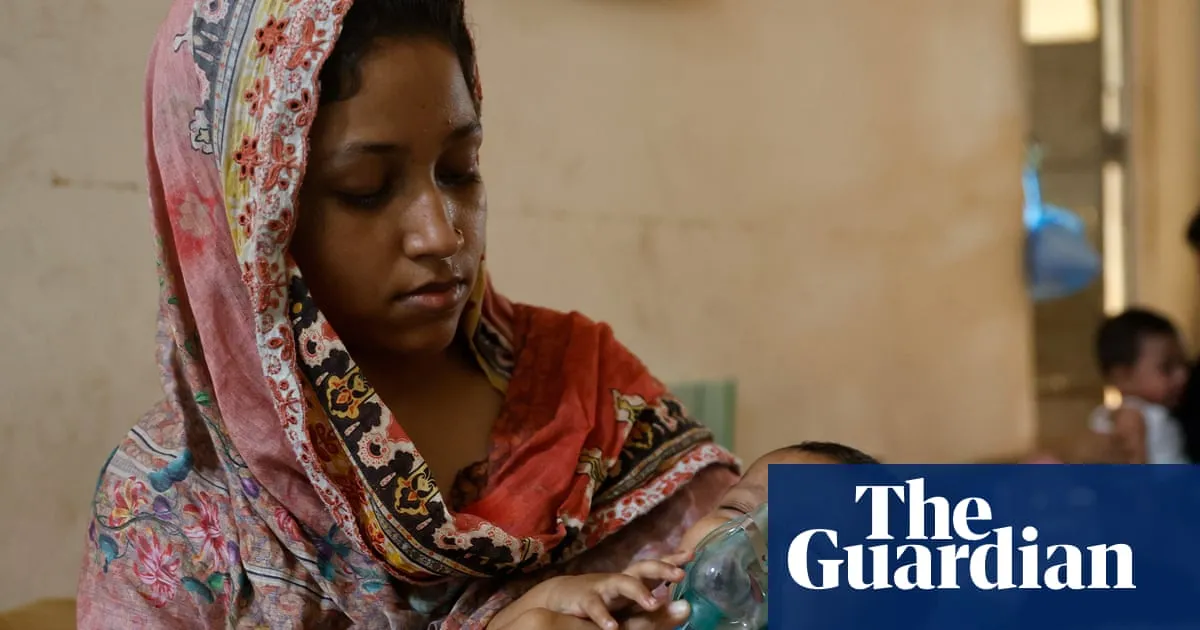
Bangladesh is battling its worse Measles outbreak in years, with more than 100 children dead amid a rise in unvaccinated infants.The government, in partnership with the United Nations, has begun conducting an emergency Measles-rubella vaccination drive for children across the country, after more than 900 cases were confirmed since March.Measles is a highly contagious airborne disease causing fever, respiratory symptoms and a characteristic rash and can sometimes have severe or fatal complications, especially in young children.While vast gains have been made in mass immunisation against Measles, there has been a recent resurgence, attributed to falling vaccine rates, with more than 11m cases recorded globally in 2024. There was a fatal outbreak in the UK this year, which killed two people, and states across the US have also been grappling with a deadly spread, with more than 2,000 cases registered in 2025, the worst in three decades.In Bangladesh, the rise in cases that began in March is the worst the south Asian country has experienced for years. While Bangladesh has a child immunisation programme for Measles, the newly elected government said mismanagement by the previous regimes had led to programme gaps in vulnerable areas and a shortage of the vaccine stockpiles. According to the UN, 95% of the population has to be vaccinated in order to stop the disease from spreading.This month’s emergency drive will focus on children aged six months to five years old in high-risk districts and will then be expanded out across the country.A patient is treated at the Infectious Diseases hospital in Dhaka, Bangladesh, amid a widespread Measles outbreak. Photograph: Drik/GettyOne-third of those affected are below the age of nine months, which is when they would usually be eligible for a Measles vaccine, which experts said showed a concerning gap in the programme.“This resurgence highlights critical immunity gaps, particularly among zero-dose and under-vaccinated children, while infections among infants under nine months, who are not yet eligible for routine vaccination, are especially alarming,” said Rana Flowers, the representative for UNICEF in Bangladesh.Bangladesh’s newly appointed health minister, Sardar Mohammed Sakhawat Husain, told parliament on Monday that the political turmoil of Bangladesh over the past two years, after the toppling of prime minister Sheikh Hasina in an uprising in 2024, had led to disrupted vaccine procurement and a failure to conduct the usual Measles vaccinations campaigns. The current government only came to power in elections in February.Authorities are advising parents to go to hospitals whenever someone is suspected to have Measles or even just has a high temperature, rather than relying on local pharmacies.Since the launch of a massive immunisation campaign in 1979, Bangladesh has raised the coverage of fully immunised children from just 2% to 81.6%. However, experts have continued to warn that there are still stark discrepancies in Measles vaccine coverage in the country of 170 million people.In a statement, UNICEF said the current Measles surge was caused by multiple factors. “Bangladesh has a strong history of high immunisation coverage, but even small disruptions can lead to the gradual accumulation of immunity gaps over time,” said the organisation.
SRCThe Guardian - World News
LANGEN
LEANCenter-Left
WORDS510
ENT10
TUE · 2026-04-07 · 06:08 GMTBRIEF NSR-2026-0407-55729
NSR-2026-0407-55729News Report·EN·Public Health
Bangladesh launches measles vaccination drive as child death toll passes 100
Bangladesh is experiencing a severe measles outbreak, resulting in over 100 child deaths and more than 900 confirmed cases since March. The government, in partnership with the UN, has launched an emergency measles-rubella vaccination campaign targeting children aged six months to five years, prioritizing high-risk districts.
Hannah Ellis-Petersen South Asia correspondentThe Guardian - World NewsFiled 2026-04-07 · 06:08 GMTLean · Center-LeftRead · 3 min
The Guardian - World NewsFIG 01
Reading time
3min
Word count
510words
Sources cited
3cited
Entities identified
10entities
Quality score
100%
§ 01
Briefing Summary
AI-generatedNEWSAR · AI
Bangladesh is experiencing a severe measles outbreak, resulting in over 100 child deaths and more than 900 confirmed cases since March. The government, in partnership with the UN, has launched an emergency measles-rubella vaccination campaign targeting children aged six months to five years, prioritizing high-risk districts. This resurgence is attributed to falling vaccination rates, program gaps in vulnerable areas, and vaccine shortages, exacerbated by political turmoil in recent years. A concerning number of affected children are under nine months old, the typical age for vaccination, highlighting critical immunity gaps. The outbreak reflects a global trend of rising measles cases due to decreased immunization coverage, with similar outbreaks reported in the UK and the US.
Confidence 0.90Sources 3Claims 5Entities 10
§ 02
Article analysis
Model · rule-basedFraming
Public Health
Political Strategy
Tone
Measured
AI-assessed
CalmNeutralAlarmist
Factuality
0.80 / 1.00
Factual
LowHigh
Sources cited
3
Well sourced
FewMany
§ 03
Key claims
5 extracted01
One-third of those affected are below the age of nine months.
statisticExperts
Confidence
1.00
02
More than 900 measles cases have been confirmed in Bangladesh since March.
statisticArticle's own claim
Confidence
1.00
03
More than 100 children have died in Bangladesh amid a measles outbreak.
factualArticle's own claim
Confidence
1.00
04
Political turmoil disrupted vaccine procurement and measles vaccination campaigns.
quoteSardar Mohammed Sakhawat Husain, health minister
Confidence
0.90
05
Mismanagement by previous regimes led to program gaps and vaccine shortages.
factualNewly elected government
Confidence
0.80
§ 04
Full report
3 min read · 510 words§ 05
Entities
10 identifiedKey playerOppositionContextPositiveNeutralNegative
People3
Organizations2
Locations4
Events1
§ 06
Keywords & salience
9 termsmeasles outbreak
1.00
vaccination drive
0.90
bangladesh
0.90
child mortality
0.80
unvaccinated children
0.70
vaccine rates
0.70
immunization programme
0.60
public health
0.60
rubella
0.50
§ 07
Topic connections
Interactive graph Network visualization showing 51 related topics
View Full Graph Person Organization Location Event|Click node to navigate|Edge numbers = shared articles