Up to 6,500 people are at risk of being displaced in the Democratic Republic of the Congo by a multi-billion-dollar infrastructure project funded by the EU and the US, amid a global race to secure supplies of copper, cobalt and other “critical minerals”, according to a report by campaign group Global Witness.The project, labelled the Lobito Corridor, aims to upgrade the colonial-era Benguela railway from the DRC to Lobito on Angola’s coast and improve port infrastructure, as well as building a railway line to Zambia and supporting agriculture and solar power installations along the route. Angola has said it needs $4.5bn (£3.4bn) for its stretch of the line.The project is designed to facilitate the export of minerals used in green energy technologies, such as electric car batteries. It comes as western countries, China and Gulf states vie to control the critical minerals trade.Up to 1,200 buildings are at risk of demolition due to the planned rehabilitation of the stretch of railway from the Congolese mining city of Kolwezi to the Angolan border, most in Kolwezi itself, Global Witness estimated, based on analysis of satellite data.Many poorer residents of the Kolwezi neighbourhood Bel Air have built houses and businesses close to the railway line. A buffer zone where construction is not allowed was previously rarely enforced, according to Global Witness.The line has mostly been out of use since the 1980s, until recently when the line started to be rehabilitated. Lobito Atlantic Railway – a consortium of companies including Portuguese construction company Mota-Engil, Singapore-headquartered commodity trader Trafigura and Belgian railway operator Vecturis – won a 30-year concession to operate the Benguela Railway in 2023.Some residents bought land from vendors who may not have owned it, a community leader named only as Emmanuel told Global Witness.Others said they had bought plots from workers who had been given land by their employer, Société Nationale des Chemins de Fer du Congo (SNCC), the DRC state railway company.Jean-Pierre Kalenga, the minister for land affairs in Lualaba province, where Kolwezi is located, said people living inside the buffer zone were “illegals”, according to Global Witness. The Guardian has approached the DRC national communications ministry for comment.“You can’t say [the residents] are ‘illegal’. No one has prevented them from building. They’ve been left to live there for 10, 20, 30 years,” Donat Kambola, the president of a local non-profit organisation, Initiative pour la Bonne Gouvernance et les Droits Humains (IBGDH), told Global Witness.There was also disagreement over the size of the buffer zone where construction is not allowed. Lobito Atlantic Railway (LAR) said it was 10 metres either side of the tracks. However, Congolese officials and a member of the SNCC union told Global Witness it was 25 metres either side.A LAR spokesperson said: “Lobito Atlantic Railway consortium is providing financing for the existing railway in the DRC, in exchange for use of the line. SNCC retains full responsibility for the line’s maintenance and operation within the DRC.“LAR Consortium is not aware of, and has not been presented with, any evidence to support the claim that 6,500 people residing in the informal settlement of Bel Air in Kolwezi could be displaced by the ongoing project to rehabilitate the existing railway in the DRC.”Kolwezi residents interviewed by Global Witness said they feared being forcibly evicted without compensation, claiming they knew of houses that were demolished without payment to make way for new roads and mines.When it secured the concession, LAR committed to spending $455m on the 835-mile Angola section of the railway and $100m on the 249-mile DRC segment. Western financing pledges include a $553m loan from the US government’s development finance corporation for Lobito port and the Angola railway and €50m (£44m) from the EU to upgrade Zambian rail infrastructure.An EU commission spokesperson said: “The project is still at an early stage. Any possible impacts linked to the planned rehabilitation of the Lobito railway line in the DRC will be assessed through a full feasibility study and detailed technical design, which also includes an independent environmental and social impact assessment study. These are still under way.“What we can confirm is that the EU applies the highest social and environmental standards in all the projects it finances.“These foresee, among others, thorough consultations with relevant communities and, where needed, a resettlement action plan to ensure fair compensation and support.“The EU is not involved in the rehabilitation works currently carried out by SNCC or the LAR consortium. We therefore have no additional information to provide at this stage.”
SRCThe Guardian - World News
LANGEN
LEANCenter-Left
WORDS747
ENT5
THU · 2025-12-04 · 09:00 GMTBRIEF NSR-2025-1204-883
NSR-2025-1204-883News Report·EN·Human Rights
US and EU critical minerals project could displace thousands in DR Congo – report
A US and EU-backed infrastructure project, the Lobito Corridor, intended to facilitate the export of critical minerals from the Democratic Republic of Congo (DRC) and Zambia, risks displacing up to 6,500 people in the DRC. The project aims to upgrade the Benguela railway and related infrastructure to transport minerals like copper and cobalt, crucial for green energy technologies, to Angola's coast.
Rachel Savage Africa correspondentThe Guardian - World NewsFiled 2025-12-04 · 09:00 GMTLean · Center-LeftRead · 3 min
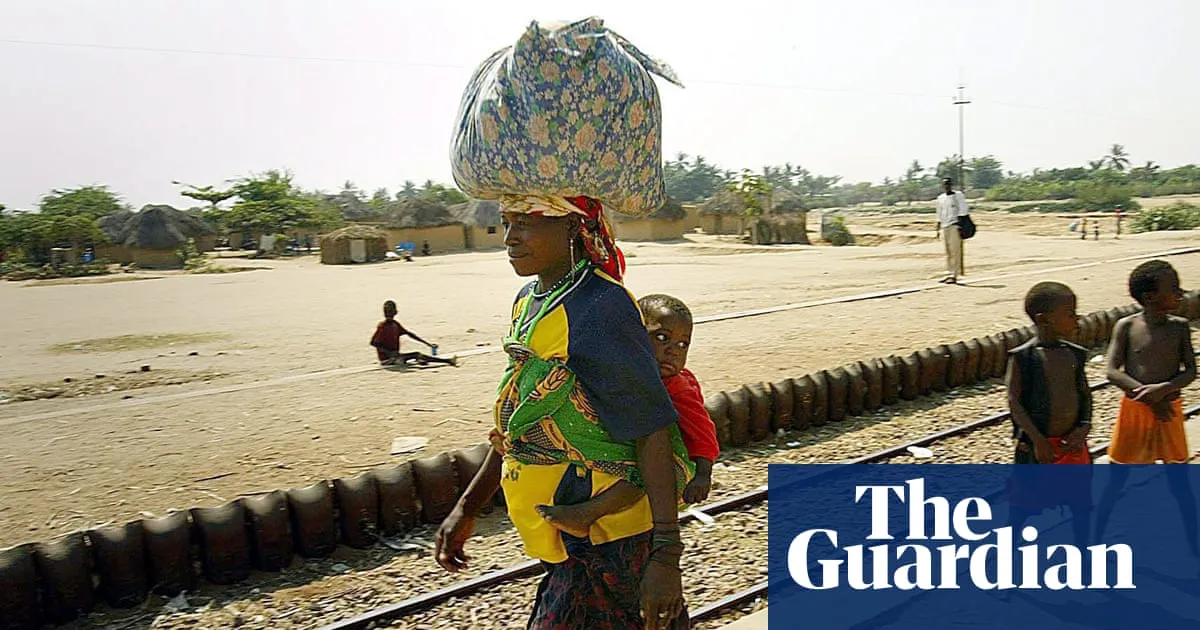
The Guardian - World NewsFIG 01
Reading time
3min
Word count
747words
Sources cited
6cited
Entities identified
5entities
Quality score
100%
§ 01
Briefing Summary
AI-generatedNEWSAR · AI
A US and EU-backed infrastructure project, the Lobito Corridor, intended to facilitate the export of critical minerals from the Democratic Republic of Congo (DRC) and Zambia, risks displacing up to 6,500 people in the DRC. The project aims to upgrade the Benguela railway and related infrastructure to transport minerals like copper and cobalt, crucial for green energy technologies, to Angola's coast. Global Witness reports that the railway rehabilitation from Kolwezi to the Angolan border could lead to the demolition of up to 1,200 buildings, primarily in the Bel Air neighborhood of Kolwezi, where many residents have built homes and businesses near the long-unused railway line. The project is being developed by Lobito Atlantic Railway, a consortium that won a 30-year concession in 2023. While the government considers residents within the railway buffer zone "illegals," local leaders dispute this characterization, noting the long-term presence of these communities.
Confidence 0.90Sources 6Claims 5Entities 5
§ 02
Article analysis
Model · rule-basedFraming
Human Rights
Economic Impact
Tone
Measured
AI-assessed
CalmNeutralAlarmist
Factuality
0.80 / 1.00
Factual
LowHigh
Sources cited
6
Well sourced
FewMany
§ 03
Key claims
5 extracted01
Lobito Atlantic Railway said the buffer zone was 10 metres either side of the tracks.
factualLAR spokesperson
Confidence
1.00
02
People living inside the buffer zone were “illegals”.
quoteJean-Pierre Kalenga, the minister for land affairs
Confidence
1.00
03
The Lobito Corridor aims to upgrade the Benguela railway and improve port infrastructure.
factualArticle's own claim
Confidence
1.00
04
Up to 6,500 people are at risk of being displaced by the Lobito Corridor project.
statisticGlobal Witness report
Confidence
0.80
05
Up to 1,200 buildings are at risk of demolition due to the railway rehabilitation.
statisticGlobal Witness estimated
Confidence
0.70
§ 04
Full report
3 min read · 747 words§ 05
Entities
5 identifiedKey playerOppositionContextPositiveNeutralNegative
Organizations1
Locations3
§ 06
Keywords & salience
9 termscritical minerals
1.00
displacement
0.90
lobito corridor
0.80
infrastructure project
0.70
democratic republic of congo
0.70
benguela railway
0.60
land rights
0.50
green energy technologies
0.50
kolwezi
0.40
§ 07
Topic connections
Interactive graph Network visualization showing 51 related topics
View Full Graph Person Organization Location Event|Click node to navigate|Edge numbers = shared articles