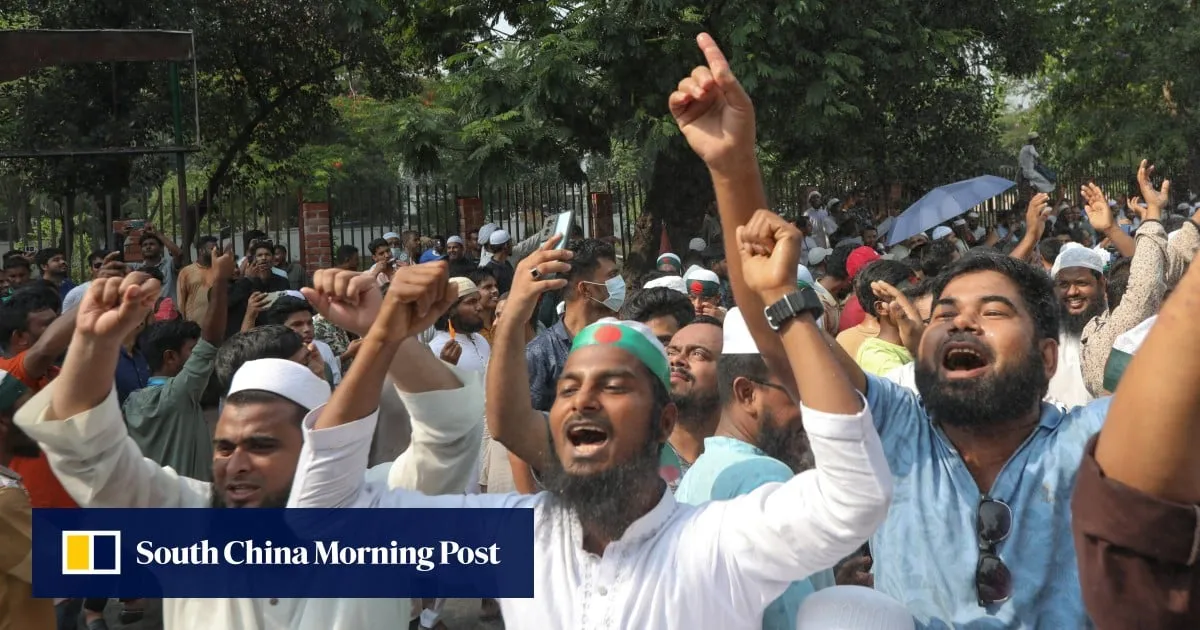
Bangladesh’s student leaders, one of the main driving forces behind the mass protests that brought down former prime minister Sheikh Hasina in 2024, now face an uncertain political future.Despite their central role in the uprising, the youth movement has been granted only a small share of parliamentary seats under a new electoral alliance led by Jamaat-e-Islami – an Islamist party that was long politically marginalised but has re-emerged as a central player.Under the agreement, the student-led National Citizen Party (NCP) will contest just 30 of the 253 constituencies fielded by the bloc, compared with 179 reserved for Jamaat.Analysts say the arrangement raises doubts about how much influence the youth movement will wield in governing the nation after the election on February 12.Leaders of the National Citizen Party chat during an event in Dhaka, Bangladesh, in November. The party will contest only 30 seats in the February 12 election. Photo: ReutersThe small number of seats has raised concerns that those who once embodied the promise of political change are now being edged out just as the youth vote emerges as a decisive force, with nearly 40 per cent of the electorate aged between 18 and 37.
SRCSouth China Morning Post
LANGEN
LEANCenter-Right
WORDS195
ENT6
TUE · 2026-01-20 · 04:00 GMTBRIEF NSR-2026-0120-8858
NSR-2026-0120-8858News Report·EN·Political Strategy
Bangladesh’s student leaders ‘sidelined’ by Islamist allies in poll pact
In Bangladesh, student leaders who spearheaded the 2024 protests that ousted former Prime Minister Sheikh Hasina are facing political marginalization. Despite their key role in the uprising, the student-led National Citizen Party (NCP) has been allocated only 30 of 253 parliamentary seats in a new electoral alliance for the February 12 election.
Biman MukherjiSouth China Morning PostFiled 2026-01-20 · 04:00 GMTLean · Center-RightRead · 1 min
South China Morning PostFIG 01
Reading time
1min
Word count
195words
Sources cited
1cited
Entities identified
6entities
Quality score
100%
§ 01
Briefing Summary
AI-generatedNEWSAR · AI
In Bangladesh, student leaders who spearheaded the 2024 protests that ousted former Prime Minister Sheikh Hasina are facing political marginalization. Despite their key role in the uprising, the student-led National Citizen Party (NCP) has been allocated only 30 of 253 parliamentary seats in a new electoral alliance for the February 12 election. The alliance is led by Jamaat-e-Islami, an Islamist party that will contest 179 seats. This arrangement raises concerns about the youth movement's future influence in governing the country. With nearly 40% of the electorate aged 18-37, the limited seat allocation suggests the student leaders may be sidelined despite the youth vote's potential impact.
Confidence 0.90Sources 1Claims 5Entities 6
§ 02
Article analysis
Model · rule-basedFraming
Political Strategy
Human Interest
Tone
Measured
AI-assessed
CalmNeutralAlarmist
Factuality
0.70 / 1.00
Factual
LowHigh
Sources cited
1
Limited
FewMany
§ 03
Key claims
5 extracted01
179 seats are reserved for Jamaat.
factualnull
Confidence
1.00
02
The student-led National Citizen Party (NCP) will contest just 30 of the 253 constituencies fielded by the bloc.
factualnull
Confidence
1.00
03
The youth vote emerges as a decisive force, with nearly 40 per cent of the electorate aged between 18 and 37.
statisticnull
Confidence
0.90
04
Student leaders were a main driving force behind the mass protests that brought down former prime minister Sheikh Hasina in 2024.
factualnull
Confidence
0.90
05
The arrangement raises doubts about how much influence the youth movement will wield in governing the nation after the election.
predictionAnalysts
Confidence
0.70
§ 04
Full report
1 min read · 195 words§ 05
Entities
6 identifiedKey playerOppositionContextPositiveNeutralNegative
Organizations3
§ 06
Keywords & salience
10 termsstudent leaders
0.90
election
0.80
islamist party
0.80
youth vote
0.70
youth movement
0.70
electoral alliance
0.70
jamaat-e-islami
0.70
parliamentary seats
0.60
political future
0.60
political change
0.50
§ 07
Topic connections
Interactive graph Network visualization showing 51 related topics
View Full Graph Person Organization Location Event|Click node to navigate|Edge numbers = shared articles