ProPublica
Recent Articles

The Number of Families Being Held at Dilley Detention Center Has Plummeted
The number of parents and children booked into the country’s only immigrant family detention center, in Dilley, Texas, plummeted in February by more than 75% compared with a month earlier, according to Immigration and Customs Enforcement data obtained by ProPublica. Between April 2025, when President Donald Trump started sending families there, and January of this year, the number of people sent into detention with their families averaged around 600 per month. In February, those so-called books-ins fell to 133. As of mid-March, they dropped again to just 54. This week there were only around 100 people in family detention at Dilley, compared with an average daily population in January of over 900, the data shows. Current and former ICE officials and lawyers with clients in Dilley said they were unable to explain the reason for the sharp decline. However, they said the shift followed weeks of mounting public pressure generated in part by the widespread publication of letters written by several of the detained children in which they described the conditions inside Dilley and their despair at being ripped from their homes and schools. ProPublica published several of those letters on Feb. 9 after visiting the facility — about an hour south of San Antonio — in mid-January. The letters set off a storm of outrage in Washington and across the country. They were raised in congressional hearings and pasted on posters in anti-ICE demonstrations. Rep. James Walkinshaw, a Democrat from Virginia , read the letters aloud to ICE’s acting director, Todd Lyons, during a congressional hearing on Feb. 10, pressing him for answers about whether the children’s detention could cause adverse psychological effects. He pointed to one drawing by a 5-year-old Venezuelan girl named Luisanney Toloza of her family. “My son’s 5. He can’t write many words, but he can communicate through drawings like this,” Walkinshaw said, making special note of the expressions on the family’s faces. “None of the faces are smiling.” It was another 5-year-old who first triggered public attention to children being detained at Dilley. Liam Conejo Ramos was picked up on Jan. 20 in Minnesota and sent to the facility with his father. A photograph of him at the time of his detention, wearing a blue bunny hat, went viral. Detainees, emboldened by the attention, organized a protest in a yard at the facility that was captured in an aerial photograph and widely published on social media. Lawmakers demanded multiple visits to push for the release of Ramos and others. Nearly 4,000 doctors, nurses and health professionals sent a letter to the Trump administration calling for the immediate release of all children currently in immigration detention. This month, social media personality Rachel Accurso, an educator better known as Ms. Rachel, who makes popular children’s programming, posted a video conversation with one of the kids detained at Dilley to her 4.9 million Instagram followers, garnering more than 3,700 comments. Rep. Joaquin Castro, a Democrat from Texas, has been at the forefront of a push by legislators from his party to shut down Dilley and for the administration to find alternatives to family detentions. When told about the drop in the number of families being held at Dilley, he said, “That trailer prison is no place for children, and I’m glad to hear that the numbers continue to decline,” adding, “It’s a reminder that people can make a difference by speaking up.” The Department of Homeland Security, which oversees ICE, said in a statement that custody decisions are made “daily, on a case-by-case basis,” adding that the “administration does not make immigration decisions based on public opinion. We follow the rule of law.” In the past, the agency has said that Dilley offers families a safe environment equipped with access to educational materials, child care necessities and round-the-clock medical and mental health care. Meanwhile, CoreCivic, the private prison company operating the facility, said in a statement it does not have “any say whatsoever” in whether detainees are deported or released.” In previous statements, it has said that the health and safety of detainees is its “top priority.” Dilley first opened as a family detention facility under former President Barack Obama in 2014, mostly for recent border crossers. Trump kept the facility running during his first term, but President Joe Biden stopped holding families in 2021, arguing the United States shouldn’t be in the business of detaining children. Soon after taking office a second time, Trump resumed family detentions at Dilley. As border crossings have dropped to record lows, more of the families being held there have been arrested inside the United States and have been in the country long enough to lay down roots and build networks of relatives and friends. The children detained there have ranged in age from newborns to older teenagers. The vast majority of adults held at Dilley had no U.S. criminal record. Following the protests and the publication of children’s letters, detainees and attorneys interviewed by ProPublica said guards took away crayons, colored pencils and drawing paper during recent room searches. This week, ProPublica learned the facility had cut off access to video calls in common areas. The Trump administration said in a recent court filing that personal property had not been destroyed at Dilley and items confiscated during searches were “limited to materials identified as protest-related and not authorized under facility rules.” CoreCivic “vehemently” denied staff confiscated or destroyed children’s personal artwork or supplies. DHS said the restrictions were put in place on video calls following the livestreaming of recorded calls online “that resulted in the unauthorized dissemination of law enforcement sensitive information.” The agency added the video calls are still available in private rooms, as is access to in-person visitation and phones. While a long-standing legal settlement, known as the Flores agreement, holds that children should generally not be detained for more than 20 days, the data ProPublica obtained showed the average days in custody was longer than that for every month since family detentions resumed at the facility last year. In each month between November and February, the average stay in family detention was over 50 days. DHS has said in the past that the Flores agreement, in place since the 1990s, is outdated and should be terminated because newer regulations address the needs of children in detention. One Egyptian family, Hayam El Gamal and her five children ranging in age from 18 to 5-year-old twins , has been at Dilley for nine months. They were taken into custody after the father, Mohamed Soliman, was charged over an alleged antisemitic attack in Boulder, Colorado, that killed one person and injured 13 others. The family said it had no knowledge of his plans. DHS said it is still investigating. One 13-year-old Guatemalan boy named Edison was released from Dilley with his mom this week. During his 92-day detention, Edison had cried in video calls to his father back in Chicago, saying he felt like he was being treated like a criminal. (His father asked that his son’s last name not be used.) Then in the early hours of Wednesday morning, a guard came to their bunk room and told him and his mom to start packing their belongings. By that night, they were on a plane to Chicago to be reunited with Edison’s dad. “We don’t understand why they were released,” his dad said. “All I can tell you is it was a miracle from God.” As soon as they landed, the family went home to enjoy a seafood dinner, one of Edison’s favorites. The post The Number of Families Being Held at Dilley Detention Center Has Plummeted appeared first on ProPublica .

DOGE Goes Nuclear: How Trump Invited Silicon Valley Into America’s Nuclear Power Regulator
Last summer, a group of officials from the Department of Energy gathered at the Idaho National Laboratory, a sprawling 890-square-mile complex in the eastern desert of Idaho where the U.S. government built its first rudimentary nuclear power plant in 1951 and continues to test cutting-edge technology. On the agenda that day: the future of nuclear energy in the Trump era. The meeting was convened by 31-year-old lawyer Seth Cohen. Just five years out of law school, Cohen brought no significant experience in nuclear law or policy; he had just entered government through Elon Musk’s Department of Government Efficiency team. As Cohen led the group through a technical conversation about licensing nuclear reactor designs, he repeatedly downplayed health and safety concerns. When staff brought up the topic of radiation exposure from nuclear test sites, Cohen broke in. “They are testing in Utah. … I don’t know, like 70 people live there,” he said. “But … there’s lots of babies,” one staffer pushed back. Babies, pregnant women and other vulnerable groups are thought to be potentially more susceptible to cancers brought on by low-level radiation exposure, and they are usually afforded greater protections. “They’ve been downwind before,” another staffer joked. “This is why we don’t use AI transcription in meetings,” another added. ProPublica reviewed records of that meeting, providing a rare look at a dramatic shift underway in one of the most sensitive domains of public policy. The Trump administration is upending the way nuclear energy is regulated, driven by a desire to dramatically increase the amount of energy available to power artificial intelligence. Career experts have been forced out and thousands of pages of regulations are being rewritten at a sprint. A new generation of nuclear energy companies — flush with Silicon Valley cash and boasting strong political connections — wield increasing influence over policy. Figures like Cohen are forcing a “move fast and break things” Silicon Valley ethos on one of the country’s most important regulators. The Trump administration has been particularly aggressive in its attacks on the Nuclear Regulatory Commission, the bipartisan independent regulator that approves commercial nuclear power plants and monitors their safety. The agency is not a household name. But it’s considered the international gold standard, often influencing safety rules around the world. The NRC has critics, especially in Silicon Valley, where the often-cautious commission is portrayed as an impediment to innovation. In an early salvo, President Donald Trump fired NRC Commissioner Christopher Hanson last June after Hanson spoke out about the importance of agency independence. It was the first time an NRC commissioner had been fired. During that Idaho meeting, Cohen shot down any notion of NRC independence in the new era. “Assume the NRC is going to do whatever we tell the NRC to do,” he said, records reviewed by ProPublica show. In November, Cohen was made chief counsel for nuclear policy at the Department of Energy, where he oversees a broad nuclear portfolio. Hundreds of Staff Who Do Work Related to Nuclear Reactors and Their Safety Have Left and Not Been Replaced Source: Weekly Information Reports from the Nuclear Regulatory Commission. Note: The data is from the week ending Jan. 24, 2025, through Feb. 13, 2026. The aggressive moves have sent shock waves through the nuclear energy world. Many longtime promoters of the industry say they worry recklessness from the Trump administration could discredit responsible nuclear energy initiatives. “The regulator is no longer an independent regulator — we do not know whose interests it is serving,” warned Allison Macfarlane, who served as NRC chair during the Obama administration. “The safety culture is under threat.” A ProPublica analysis of staffing data from the NRC and the Office of Personnel Management shows a rush to the exits: Over 400 people have left the agency since Trump took office. The losses are particularly pronounced in the teams that handle reactor and nuclear materials safety and among veteran staffers with 10 or more years of experience. Meanwhile, hiring of new staff has proceeded at a snail’s pace, with nearly 60 new arrivals in the first year of the Trump administration compared with nearly 350 in the last year of the Biden administration. Some nuclear power supporters say the administration is providing a needed level of urgency given the energy demands of AI. They also contend the sweeping changes underway aren’t as dangerous or dire as some experts suggest. “I think the NRC has been frozen in time,” said Brett Rampal, the senior director of nuclear and power strategy at the investment and strategy consultancy Veriten. “It’s a great time to get unfrozen and aim to work quickly.” The White House referred most of ProPublica’s questions to the Department of Energy, where spokesperson Olivia Tinari said the agency is committed to helping build more safe, high-quality nuclear energy facilities. “Thanks to President Trump’s leadership, America’s nuclear industry is entering a new era that will provide reliable, abundant power for generations to come,” she wrote. The DOE is “committed to the highest standards of safety for American workers and communities.” Cohen did not respond to multiple requests for comment. The NRC declined to comment. Blindsided by DOGE The U.S. has not had a serious nuclear incident since the Three Mile Island partial meltdown in 1979, a track record many experts attribute to a rigorous regulatory environment and an intense safety culture. Major nuclear incidents around the world have only strengthened the resolve of past regulators to stay independent from industry and from political winds. A chief cause of Japan’s Fukushima accident, investigators found, was the cozy relationship between the country’s industry and oversight body, which opened the door for thin safety assessments and inaccurate projections overlooking the possible impact of a major tsunami. “We knew regulatory capture led directly to Fukushima and to Chernobyl,” said Kathryn Huff, who was assistant secretary for the Office of Nuclear Energy during the Biden administration. The U.S. has not had a serious nuclear incident since the Three Mile Island partial meltdown in 1979. Leif Skoogfors/Getty Images The U.S. has barely built any nuclear power plants in recent decades. Only three new reactors have been completed in the last 25 years, and since 1990 the U.S has barely added any net new nuclear electricity to its grid. Though about 20% of U.S. energy is supplied by nuclear power plants, the fleet is aging. Some experts blame the slow build-out on the challenging economics of financing a multibillion-dollar project and the uncertainty of accessing and disposing of nuclear fuels. But an increasingly vocal group of industry voices and deregulation advocates have blamed the slow build-out on overly cautious and inefficient regulators. Among the most powerful exponents of this view are billionaires Peter Thiel and Marc Andreessen; both venture capitalists have their own investments in the nuclear energy sector and are influential Trump supporters. Andreessen camped out at Mar-a-Lago, Trump’s private club in Florida, after Trump won the 2024 election, helping pick staff for the new administration. In late 2024, Thiel personally vetted at least one candidate for the Office of Nuclear Energy, according to people familiar with the conversations. Neither responded to requests for comment. Four months into his second term, Trump signed a series of executive orders designed to supercharge nuclear power build-out. “It’s a hot industry, it’s a brilliant industry,” said Trump, flanked by nuclear energy CEOs in the Oval Office. He added: “And it’s become very safe.” Under those orders, the NRC was directed to reduce its workforce, speed up the timeline for approving nuclear reactors and rewrite many of its safety rules. The DOE — which has a vast nuclear portfolio, including waste cleanup sites and government research labs — was tasked with creating a pathway for so-called advanced nuclear companies to test their designs. The goal, Trump said, was to quadruple nuclear energy output and provide new power to the data centers behind the AI boom. As DOGE gutted agencies , departures mounted in the nuclear sector. Career experts in nuclear regulations and safety departed or were forced out. When Trump fired Hanson, a Democratic NRC commissioner, the president’s team explained the move by saying, “All organizations are more effective when leaders are rowing in the same direction.” In an unsigned email to ProPublica, the White House press office wrote: “All commissioners are presidential appointees and can be fired just like any other appointee.” In August, the NRC’s top attorney resigned and was replaced by oil and gas lawyer David Taggart, who had been working on DOGE cuts at the DOE. In all, the nuclear office at the DOE had lost about a third of its staff, according to a January 2026 count by the Federation of American Scientists, a nonprofit focused on science and technology policy. That summer, Cohen and a team of DOGE operatives touched down at the NRC offices, a series of nondescript towers across from a Dunkin’ in suburban Maryland. He was joined by Adam Blake, an investor who had recently founded an AI medical startup and has a background in real estate and solar energy, and Ankur Bansal, president of a company that created software for real estate agents. Neither would comment for this story. Many career officials who spoke with ProPublica were blindsided: The new Trump officials at the NRC seemed to have no experience with the intricacies of nuclear energy policy or law, they said. One NRC lawyer who briefed some of the new arrivals decided to resign. “They were talking about quickly approving all these new reactors, and they didn’t seem to care that much about the rules — they wanted to carry out the wishes of the White House,” the official said. At one point, Cohen began passing out hats from nuclear energy startup Valar Atomics, one of the companies vying to build a new reactor, according to sources familiar with the matter and records seen by ProPublica. NRC staffers balked; they were supposed to monitor companies like Valar for safety violations, not wear its swag. NRC ethics officials warned Cohen that the hat handout was a likely violation of conflict rules. It betrayed a misunderstanding of the safety regulator’s role, said a former official familiar with the exchange. “Imagine you live near a nuclear power plant, and you find out a supposedly independent safety regulator — the watchdog — is going around wearing the power plant’s branded hats,” the official said. “Would that make you feel safe?” The NRC and Cohen did not respond to requests for comment about the hat incident. Valar counts Trump’s Silicon Valley allies as angel investors. They include Palmer Luckey, a technology executive and founder of the defense contractor Anduril, and Shyam Sankar, chief technology officer of Palantir, the software company helping power Immigration and Customs Enforcement’s deportation raids. It was among three nuclear reactor companies that sued the NRC last year in an attempt to strip it of its authority to regulate its reactors and replace it with a state-level regulator. Before the Trump administration came into office, lawyers watching the case were confident the courts would quickly dismiss the suit, as the NRC’s authority to regulate reactors is widely acknowledged. But new Trump appointees pushed for a compromise settlement — which is still being negotiated. The career NRC lawyer working on the case quietly left the agency. Valar and its executives did not reply to requests for comment. “Going So Fast” The deregulatory push is the culmination of mounting pressure — both political and economic — to make it easier to build nuclear power in the U.S. Over the years, a bipartisan coalition supporting nuclear expansion brought together environmentalists who favor zero-carbon power and defense hawks focused on abundant domestic energy production. Anti-nuclear activists still argue that renewable energy like wind and solar are safer and more economical. But streamlining the NRC has been a bipartisan priority as well. The latest major reform came in 2024, when President Joe Biden signed into law the ADVANCE Act, which went as far as changing the mission statement of the NRC to ensure it “does not unnecessarily limit” nuclear energy development. Some nuclear power supporters say the Trump administration is merely accelerating these changes. They cite instances in which the current regulations appear out of sync with the times. The NRC’s byzantine rules are designed for so-called large light-water reactors — massive facilities that can power entire cities — and not the increasingly in vogue smaller advanced reactor designs popular among Silicon Valley-backed firms. Rules that require fences of certain heights might make little sense for new reactors buried in the earth; and rules that require a certain number of operators per reactor could be a bad fit for a cluster of smaller reactors with modern controls. Advances in sensors, modeling and safety technologies, they say, should be taken into account across the board. The NRC has said it expects over two dozen new license requests from small modular and advanced reactor companies in coming years. Many of those requests are likely to come from new, Silicon Valley-based nuclear firms. “There was a missing link in the innovation cycle, and it was very difficult to build something and test it in the U.S. because of mostly licensing and site availability constraints in the past,” said Adam Stein of the pro-nuclear nonprofit Breakthrough Institute. The regulatory changes are in flux: This spring, the NRC is starting to release thousands of pages of new rules governing everything from the safety and emergency preparedness plans reactor companies are required to submit to the procedures for objecting to a reactor license. “It’s hard to know if they are getting rid of unnecessary processes or if it’s actually reducing public safety,” said one official working on reactor licensing, who, like others, spoke on the condition of anonymity for fear of retaliation from the Trump administration. “And that’s just the problem with going so fast — everything just kind of gets lost in a mush.” Lawyers from the Executive Office of the President have been sent to the NRC to keep an eye on the new rules, a move that further raised alarms about the agency’s independence. Nicholas Gallagher — a relatively recent New York University law school graduate and conservative writer whom ProPublica previously identified as a DOGE operative at the General Services Administration — has been involved in conversations about overhauling environmental rules. He’s working alongside Sydney Volanski, a 30-year-old recent law school graduate who rose to national attention while she was in high school for her campaign against the Girl Scouts of America, which she accused of promoting “Marxists, socialists and advocates of same-sex lifestyle.” NRC lawyers working on the rules were told last October that Gallagher and Volanski would be joining them, and they both appear on the regular NRC rulemaking calendar invite. The White House maintains, however, that “zero lawyers from the Executive Office of the President have been dispatched to work on rulemaking.” Neither Gallagher nor Volanski replied to requests for comment. The administration is routing the new rules through an office overseen by Trump’s cost-cutting guru Russell Vought, a move that was previously unheard of for an independent regulator like the NRC. The White House spokesperson noted that, under a recent executive order, this process is now required for all agencies. Political operatives have been “inserted into the senior leadership team to the point where they could significantly influence decision-making,” said Scott Morris, who worked at the NRC for more than 32 years, most recently as the No. 2 career operations official. “I just think that would be a dangerous proposition.” Morris voted for Trump twice and broadly supports the goals of deregulating and expanding nuclear energy, but he has begun speaking out against the administration’s interference at the NRC. He retired in May 2025 as part of a wave of retirements and firings. At a recent hearing before the Atomic Safety and Licensing Board — an independent body that helps adjudicate nuclear licensing — NRC lawyers withdrew from the proceedings, citing “limited resources.” The judge remarked that it was the first time in over 20 years the NRC had done so. Meanwhile, some staff members, other career officials say, are afraid to voice dissenting views for fear of being fired. “It feels like being a lobster in a slowly boiling pot,” one NRC official who has been working on the rule changes told ProPublica, describing the erosion of independence. The official was one of three who compared their recent experience at NRC to being in a pot of slowly boiling water. “If somebody is raising something that they think that the industry or the White House would have a problem with, they think twice,” the official said. Inside the NRC, the steering committee overseeing the changes includes Cohen, Taggart and Mike King, a career NRC official who is the newly installed executive director for operations. The former director, Mirela Gavrilas, a 21-year veteran of the agency, retired after getting boxed out of decision-making, according to a person familiar with her departure. Gavrilas did not respond to a request for comment. Any final changes will be approved by the NRC’s five commissioners, three of whom are Republicans. In September, the two Democratic commissioners told a Senate committee they might be fired at any time if they get crosswise with Trump — including over revisions to safety rules . Draft rules being circulated inside the NRC propose drastic rollbacks of security and safety inspections at nuclear facilities. Those include a proposed 56% cut in emergency preparedness inspection time, CNN reported in March. Even some pro-nuclear groups are troubled by the emerging order. Some have tried to backchannel to their contacts in the Trump administration to explain the importance of an independent regulator to help maintain public support for nuclear power. Without it, they risk losing credibility. “You have to make sure you don’t throw out the baby with the bathwater,” said Judi Greenwald, president and CEO of the Nuclear Innovation Alliance, a nonprofit that promotes nuclear energy and supports many of the regulatory changes being proposed by the Trump administration. Greenwald’s group favors faster timelines for approving nuclear reactors, but she worries that the agency’s fundamental independence has been undermined. “We would prefer that they yield back more of NRC independence,” she said. The Vogtle nuclear power plant in Waynesboro, Georgia, is the largest nuclear power station in the U.S. Kendrick Brinson/The New York Times/Redux “Nuke Bros” in Silicon Valley One Trump administration priority has been making it easier for so-called advanced reactor companies to navigate the regulatory process. These firms, mostly backed by Silicon Valley tech and venture money, are often working on designs for much smaller reactors that they hope to mass produce in factories. “There are two nuclear industries,” said Macfarlane, the former NRC chair. “There are the actual people who use nuclear reactors to produce power and put it on the grid … and then there are the ‘nuke bros’” in Silicon Valley. Trump’s Silicon Valley allies have loomed large over his nuclear policy. One prospective political appointee for a top DOE nuclear job got a Christmas Eve call from Thiel, the rare Silicon Valley leader to back Trump in 2016. Thiel, whose Founders Fund invested in a nuclear fuel startup and an advanced reactor company, quizzed the would-be official about deregulation and how to rapidly build more nuclear energy capacity, said sources familiar with the conversation. Nuclear energy startups jockeyed to spend time at Mar-a-Lago in the months before the start of Trump’s second term. Balerion Space Ventures, a venture capital firm that has invested in multiple companies, convened an investor summit there in January 2025, according to an invitation viewed by ProPublica. Balerion did not reply to a request for comment. A few months later, when Trump was drawing up the executive orders, leaders at many of those nuclear companies were given advanced access to drafts of the text — and the opportunity to provide suggested edits, documents viewed by ProPublica show. Those orders created a new program to test out experimental reactor designs, addressing a common complaint that companies are not given opportunities to experiment. There are currently about a dozen advanced reactor companies planning to participate. Each has a concierge team within the DOE to help navigate bureaucracy. As NPR reported in January , the DOE quietly overhauled a series of safety rules that would apply to these new reactors and shared the new regulations with these companies before making them public. Secretary of Energy Chris Wright — who served on the board of one of those companies, Oklo — has said fast nuclear build-out is a priority: “We are moving as quickly as we can to permit, build and enable the rapid construction of as much nuke capacity as possible,” he told CNBC last fall. Oklo noted that Wright stepped down from the board when he was confirmed. The Trump administration hopes some of the companies would have their reactors “go critical” — a key first step on the way to building a functioning power plant — by July 2026. Then the NRC, which signs off on the safety designs of commercial nuclear power plants, could be expected to quickly OK these new reactors to get to market. According to people familiar with the conversations, at least one nuclear energy startup CEO personally recruited potential members of the DOGE nuclear team, though it’s not clear if Cohen was brought aboard this way. Cohen has told colleagues and industry contacts that he reports to Emily Underwood, one of Trump adviser Stephen Miller’s top aides for economic policy. He is perceived inside government as a key avatar of the White House’s nuclear agenda. In its email to ProPublica, the White House said, “Seth Cohen is a Department of Energy employee and does not report to Emily Underwood or Stephen Miller in any capacity.” The DOE spokesperson added, “Seth’s role at the Department of Energy is to support the Trump administration’s mission to unleash American Energy Dominance.” Cohen has been pushing to raise the legal limit of radiation that nuclear energy companies are allowed to emit from their facilities. One nuclear industry insider, who spoke on the condition of anonymity, said many firms are fixating on changing these radiation rules: Their business model requires moving nuclear reactors around the country, often near workers or the general public. Building thick, expensive shielding walls can be prohibitively expensive, they said. Valar CEO Isaiah Taylor has called limits on exposure to radiation a top barrier to industry growth. A recent DOE memo seen by ProPublica cites cost savings on shielding for Valar’s reactor to justify changing those limits. “Shielding-related cost reductions,” the memo said, “could range from $1-2 million per reactor.” The debate over the precise rule change is ongoing. The DOE has been considering a fivefold increase to the limit for public exposure to radiation, which will allow some nuclear reactor companies to cut costs on these expensive safety shields, internal DOE documents seen by ProPublica show. A presentation prepared by DOE staffers in their Idaho offices that has circulated inside the department makes the “business case” for changing the radiation dose rules: It could cut the cost of some new reactors by as much as 5%. These more relaxed standards are likely to be adopted by the NRC and apply to reactors nationwide, documents show. In February, Wright accompanied Valar’s executive team on a first-of-its-kind flight, as a U.S. military plane was conscripted to fly the company’s reactor from Los Angeles to Utah. Valar does not yet have a working nuclear reactor, and a number of industry sources told ProPublica they viewed the airlift as a PR exercise. Internal government memos justified the airlift by designating it as “critical” to the U.S. “national security interests.” Cohen posted smiling pictures of himself from the cargo bay of the military plane. Cohen told an audience at the American Nuclear Society that the rapid build-out was essential to powering Silicon Valley’s AI data centers. He framed the policy in existential terms: “I can’t emphasize this strongly enough that losing the AI war is an outcome akin to the Nazis developing the bomb before the United States.” As it deliberated rule changes, the DOE has cut out its internal team of health experts who work on radiation safety at the Office of Environment, Health, Safety and Security, said sources familiar with the decision. The advice of outside experts on radiation protection has been largely cast aside. The DOE spokesperson said its radiation standards “are aligned with Gold Standard Science … with a focus on protecting people and the environment while avoiding unnecessary bureaucracy.” The department has already decided to abandon the long-standing radiation protection principle known as “ALARA” — the “As Low As Reasonably Achievable” standard — which directs anyone dealing with radioactive materials to minimize exposure. It often pushes exposure well below legal thresholds. Many experts agreed that the ALARA principle was sometimes applied too strictly, but the move to entirely throw it out was opposed by many prominent radiation health experts. Whether the agencies will actually change the legal thresholds for radiation exposure is an open question, said sources familiar with the deliberations. Internal DOE documents arguing for changing dose rules cite a report produced at the Idaho National Laboratory, which was compiled with the help of the AI assistant Claude. “It’s really strange,” said Kathryn Higley, president of the National Council on Radiation Protection and Measurements, a congressionally chartered group studying radiation safety. “They fundamentally mistake the science.” John Wagner, the head of the Idaho National Laboratory and the report’s lead author, acknowledged to ProPublica that the science over changing radiation exposure rules is hotly contested. “We recognize that respected experts interpret aspects of this literature differently,” he wrote. His analysis was not meant to be the final word, he said, but was “intended to inform debate.” The impact of radiation levels at very low doses is hard to measure, so the U.S. has historically struck a cautious note. Raising dose limits could put the U.S. out of step with international standards. For his part, Cohen has told the nuclear industry that he sees his job as making sure the government “is no longer a barrier” to them. In June, he shot down the notion of companies putting money into a fund for workplace accidents. “Put yourself in the shoes of one of these startups,” he said. “They’re raising hundreds of millions of dollars to do this. And then they would have to go to their VCs and their board and say, listen, guys, we actually need a few hundred million dollars more to put into a trust fund?” He also suggested that regulators should not fret about preparing for so-called 100-year events — disasters that have roughly a 1% chance of taking place but can be catastrophic for nuclear facilities. “When SpaceX started building rockets, they sort of expected the first ones to blow up,” he said. The post DOGE Goes Nuclear: How Trump Invited Silicon Valley Into America’s Nuclear Power Regulator appeared first on ProPublica .

As Trump Demands Voter Data, This Fiercely Independent Red State Says No
States were on notice from the U.S. Department of Justice that if they didn’t fall in line, the federal government would force them into compliance. It wasn’t President Donald Trump’s administration applying pressure. It was the early 1990s, and President Bill Clinton had signed the “motor voter” law requiring states to offer voter registration when someone applies for a driver’s license. Idaho, with its fiercely independent streak, didn’t want to participate. So instead of going along with the federal government’s new National Voter Registration Act, state legislators followed the recommendation of Idaho’s top election officials and scrambled for a way out. Because the federal voter law said states with same-day voter registration could be exempt, Idaho lawmakers passed a bill almost unanimously, with full support from Republicans, to adopt same-day registration. Idaho’s chief deputy secretary of state at the time, Ben Ysursa, described the move as an almost existential response to “an insidious federal intrusion into state election procedures.” The Clinton Justice Department eventually sued three states for not complying with its demands. By then, Idaho’s had a shield against litigation due to its exemption. Three decades later, the exemption and the philosophy that led to it are at the heart of Idaho’s refusal to comply with a very different demand by the Trump Justice Department. The state’s top election official cites the exemption as one reason he will not sign a deal to give the Trump administration all the voter data his office holds, including sensitive personal information like partial Social Security and driver’s license numbers. Idaho Secretary of State Phil McGrane is one of about a dozen Republicans nationally to resist the administration’s efforts to gather sensitive voter data ahead of the 2026 midterm elections, in the face of litigation threats from the Justice Department. In a state that Trump won in 2024 by one of the largest margins in the country, an effort that the administration touts as essential to weeding out noncitizen voters has tested the limits of what a committed Trump stronghold will tolerate when it comes to privacy and federal power. Lists of voter addresses and party affiliations are often available to the public through an open records request. McGrane provided the government with this version. But state election administrators also keep more sensitive information such as a person’s exact date of birth and partial Social Security number. In Idaho, the law says this information can’t be given out — and that’s what the Trump administration is still after. Among the other five states exempt from the law , three have refused to give up their voters’ sensitive information and have since been sued by the Justice Department. Wyoming handed over its data without a lawsuit. Other states that are not exempt have also been sued. McGrane, who is an attorney, told the Justice Department in letters that he doesn’t see any legal reason why he should honor the government’s request — and that, given the administration’s recent admissions over its handling of sensitive data, he couldn’t be sure the department would keep it safe, which is his duty under state law. The trimmed-down version of voter info he’d already handed over should be enough for “any legitimate inquiry” by the government into how effectively Idaho maintains its voter lists, McCrane wrote. Through a spokesperson, McGrane declined an interview request from ProPublica, citing the possibility of an impending lawsuit from the Justice Department. A spokesperson for the Justice Department also declined to comment. Idaho’s Republican secretary of state, Phil McGrane, is one of about a dozen Republicans nationally to resist the administration’s efforts to gather sensitive voter data ahead of the 2026 midterm elections. Kyle Green/AP Photo A Justice Department attorney threatened to sue Idaho in December, in a halting voicemail with McGrane’s office that was obtained by ProPublica and previously reported on by the Idaho Capital Sun . “I need to get some clarification as to what you’re going to be doing. Or not doing. So, again, I need a response from you,” the lawyer says in the recording. “You may have seen in the news that we have sued six states earlier this week for refusing to provide their voter registration lists, and we’re preparing additional lawsuits.” The lawyer then tells the secretary of state’s office he would “like to keep everyone out of that as possible — as much as possible, but I haven’t heard anything back from you.” Ysursa, who served three terms as secretary of state until 2015, said McGrane is “in a much more politically volatile situation than I ever was.” “Going against Trump in Idaho on certain things, that’s a fine line,” Ysursa said. “And I think he’s doing a good job. He’s doing the right thing.” Public policy surveys in Idaho conducted since the 1990s have surfaced a current of “distrust or wariness towards federal control or national control,” said Matthew May, survey research director at the Boise State University School of Public Service. The polling over time has revealed Idahoans’ strong belief in independence, May said. In the months since McGrane’s refusal, more than 130 constituents have called, emailed and sent handwritten cards and letters to his office. Of those, just one person said they wanted McGrane to provide information to the Trump administration. The others were supportive, appreciative or, in some cases, seemingly panicked by the prospect of their private information being released. Although the senders skewed more Democratic than Idaho’s electorate, just over half the messages came from Republicans and unaffiliated voters, based on a review of voter registration data for commenters who left their names. “Mr McGrane has done a masterful job of dancing around the US Justice Dept request for the full voter records of Idaho voters,” wrote one registered Republican. “When the dancing no longer works, I expect Mr McGrane to give them a big fat NO! “Voting is our one sacred right in this country,” the person continued. “DOJ has no legitimate business receiving our PRIVATE voter information. They may threaten to sue, but so will the voters of Idaho if you grant their request. Do not give them our personal voter information. Thank you.” Ysursa told ProPublica that he has urged McGrane to “hold the line,” even amid threats of repercussions. Ysursa is one of nine former secretaries of state who filed an amicus brief in federal court, arguing against the administration’s demands for full voter information. The Trump administration’s creep toward nationalizing elections runs counter to the ethos of “keep your federal hands off Idaho,” Ysursa said. McGrane is a self-described election nerd who worked his way up through elections offices, as opposed to cultivating a resume as a professional politician. He served as a county elections chief and gained a reputation for approaching voting day with a Super Bowl level of enthusiasm. He also became known for his ability to resist the political winds. McGrane was one of seven people featured on the cover of Time magazine in 2022 as “the defenders” of America’s elections. That year, McGrane was the only Idaho Republican candidate for secretary of state who did not back the false claim that fraud was responsible for Trump’s loss in the 2020 election. In perhaps the strongest sign that Trump’s base in Idaho has not been inflamed by McGrane’s pushback on the administration’s demand for voter rolls — which received plenty of media attention locally — he drew no challenger by last month’s deadline to enter the Idaho Republican primary for his position. Voters across Idaho have sent McGrane thank-you notes for not sharing their data. Audrey Dutton/ProPublica While the Constitution gives states the authority to run elections, the National Voter Registration Act gives the federal government an oversight role when it comes to ensuring voter lists are properly maintained. The law says election officials must make a “reasonable effort” to keep ineligible voters off of the rolls, and typical oversight comes in the form of lawsuits claiming that states aren’t doing a good enough job. Under Trump, the Justice Department has gone a step further. The department claims it has the right to seize states’ unredacted voter rolls without proving its case in court, citing in lawsuits the powers that agency officials say they have under the National Voter Registration Act, the Help America Vote Act and the Civil Rights Act. The Justice Department has privately told states more about its intentions, according to emails obtained by ProPublica through public records requests. In Montana, a federal lawyer told the secretary of state’s legal counsel that the department was requesting voter rolls to “facilitate a review for noncitizens and dead voters,” adding that federal officials would be able to assess whether there are duplicate registrations as well. The demands come as part of the Trump administration’s focus on hunting down noncitizens on the voter rolls, a long-standing preoccupation for the president. He has long claimed, without evidence, that noncitizens have infiltrated the rolls to influence elections. Three judges who have considered the government’s lawsuits fully so far have dismissed them, saying that the federal laws the Trump administration cites as the basis for its demands do not apply — especially not where voters’ private information is concerned. In Oregon, U.S. District Judge Mustafa Kasubhai wrote that the Justice Department’s claims were “troubling,” representing federal overreach. In California, U.S. District Judge David Carter said the centralization of the information would have a chilling effect on voter registration, leading to decreased turnout as people worry their data could be used for an “inappropriate or unlawful purpose.” “This risk threatens the right to vote which is the cornerstone of American democracy,” Carter wrote. In Michigan, U.S. District Judge Hala Y. Jarbou echoed that interpretation, writing that “the risk of having one’s personal information misused will deter people from registering to vote.” The Justice Department has appealed all of the courts’ decisions. Leaders in Republican-led states that have held back their voter rolls, meanwhile, have taken pains to show they are making other efforts to keep noncitizens from voting. Idaho started looking for evidence of problems well before the Trump administration’s request. McGrane said in a letter to the Justice Department that his office worked with federal agencies to check the citizenship status of all registered Idaho voters in the lead-up to the 2024 general election. Given what Idaho has already done and the processes already in place, the federal government has “no legal or practical rationale for duplicative review,” McGrane wrote. The tools Idaho employed, he said, included a Department of Homeland Security program known as the Systematic Alien Verification for Entitlements. Idaho’s search found 11 cases of noncitizens registered to vote — none of whom actually cast votes in 2024 — and state police referred those cases to the Justice Department’s chief prosecutor in Idaho for review. McGrane told the Justice Department that he hadn’t heard anything about those cases since. The post As Trump Demands Voter Data, This Fiercely Independent Red State Says No appeared first on ProPublica .

She Was in Labor at a Florida Hospital. Then She Was in Zoom Court for Refusing a C-Section.
It’s difficult to put yourself in the place of Cherise Doyley, a pregnant mother of three who found herself facing a judge while in labor at the University of Florida Health hospital in downtown Jacksonville. She had arrived at the facility with a plan for her birth. She wanted to try for a vaginal delivery, but she understood from years of experience as a professional birthing doula that things don’t always go as planned. She arrived overnight at the hospital after her water broke. Doctors told her they were concerned about the risk of uterine rupture, a potentially deadly complication for her and her baby. She understood the risk to be less than 2% and repeatedly told doctors she wouldn’t consent to a cesarean without trying to have a vaginal delivery first. The doctors appeared to relent, leaving her to labor for several more hours. Then a nursing supervisor wheeled a tablet up to her bed and informed her she was in court. The reason? Failing to agree to a C-section. Read More They Didn’t Want to Have C-Sections. A Judge Would Decide How They Gave Birth. When advocates for pregnant women say that you shouldn’t lose your constitutional rights just because you conceived, this is the kind of situation they’re talking about. I’m a reporter based in Alabama, and throughout my career, I’ve focused on women facing the consequences of the state’s fetal personhood policy. That’s the idea that fetuses should have the same legal status as children. My investigation shows how a similar theory played into the cases of two women: Cherise Doyley and Brianna Bennett, who experienced eerily similar situations in Florida. In both cases, they found themselves fighting for their rights to make medical decisions because they were pregnant . I obtained a video recording of Doyley’s court hearing. Watching her argue her case from her hospital bed shocked me. Even though courts have found time and time again that you can’t force someone to undergo medical treatment — even if it could save someone else’s life — the video underscored for me how pregnant women are the rare exception. In several states, judges have ruled pregnant patients can be forced to receive blood transfusions or remain on bed rest if it is in the best interest of the fetus. In Doyley’s case, a court would force her to undergo surgery. ProPublica has already investigated how abortion restrictions can lead to pregnant women being denied lifesaving care . Experts worry that the opposite problem, forced treatment, could also become more common in states like Florida that have fetal personhood policies. Doyley signed a waiver allowing the hospital to discuss her case with ProPublica, but a spokesperson for University of Florida Health in Jacksonville would not comment, citing patient privacy. By sharing and examining Doyley’s case with her consent, we aim to show you what forced medical treatment can look like. And, while we encourage you to read the full investigation , we wanted to offer you a look inside the Zoom court hearing so you can see for yourself what happened. The Hearing Convenes Nurses wheel in a tablet for a virtual hearing, and Cherise Doyley realizes she is facing a court hearing about her birth choices. Obtained by ProPublica You can see the confusion on Doyley’s face as she realizes she’s being taken to court over her medical decisions. She asked for a lawyer, or at least a patient advocate. Florida courts don’t require lawyers for pregnant women in hearings about their medical decisions and the hospital didn’t provide an advocate, so Doyley had to go it alone. Judge Michael Kalil was on the call in his black robe and explained how the hearing would work. Doyley, a Black woman, was lying in a hospital bed, hooked up to IVs and monitors and covered by a sheet. She was surrounded on the screen by nearly a dozen doctors and lawyers, most of them white, who offered a lot of testimony about what could happen to Doyley’s baby if she continued to refuse a C-section. The Judge Explains the Proceedings Judge Michael Kalil explains that the state attorney’s office, at the request of the hospital, has asked him to grant an order for an emergency C-section. Obtained by ProPublica Dr. Erin Burnett said during the hearing that she did not think Doyley could successfully give birth vaginally. A long labor could increase the risk of uterine rupture, which could kill Doyley and the child, she said. Dr. John Davis, the chair of the obstetrics and gynecology department, said in the hearing the hospital had been recognized for its low C-section rate and did not perform unnecessary surgeries. Doyley’s condition required intervention, he said. “Everybody was very concerned about the baby’s welfare,” Jenny Van Ravestein, director of women’s services at the hospital, said during the hearing. Burnett and Davis did not respond to requests for comment, and the hospital declined ProPublica’s requests to interview them and others involved in Doyley’s care. The research on the risks of uterine rupture after prior C-sections is unclear. Studies have found that 0.15% to 2.3% of these labors resulted in a rupture, depending on a number of factors such as body mass, a history of successful vaginal births and whether the labor began spontaneously or had to be induced. Either number felt pretty low to Doyley. What the testimony doesn’t include, though, is much about the downsides Doyley faced from having another C-section, which could entail a long recovery, infection and other complications, along with the risk of death. But she couldn’t explain her reasoning until the judge decided to unmute her. Doyley Testifies When Doyley is unmuted, she testifies that a C-section could put her life in danger. Obtained by ProPublica Doyley had her reasons to want to avoid major abdominal surgery: She had difficult recoveries from her previous C-sections. A hemorrhage after a prior C-section had sent her back to the hospital for almost a week. She worried that she wouldn’t be able to care for her children if she was struggling with recovery from the surgery itself and potentially also with complications. And she was concerned that if she were to die, her children could fall into the foster care system. Doyley said she didn’t see surgery as a low-risk option. She wondered aloud in the hearing if her other children’s lives — and her own — mattered to the hospital and doctors. Kimberly Mutcherson, a law professor at Rutgers University, said that women who want to opt for care that seems risky to doctors often face accusations of not caring about their babies. “You’re somebody who is a bad mother, right?” Mutcherson said. “Which is a huge part of what the thought process is here. This is not what mothers do. Mothers sacrifice, including allowing somebody to cut you open.” Obstetricians care for two interconnected patients — the mother and her fetus. Sometimes their needs conflict. When that happens, the ethical guidelines for the American College of Obstetricians and Gynecologists say the doctor should prioritize the well-being of the mother. However, these cases show that doctors sometimes elevate the welfare of the fetus over the mother, said Elizabeth Kukura, a law professor at Drexel University. “It reflects a deep understanding of women as the incubators,” Kukura said. “Women in their role as childbearers.” The hearing dragged on for more than two hours. At one point, Doyley asked for a transfer to another hospital because she did not want anyone involved in the hearing to operate on her if she needed a C-section. Hospital officials said that wasn’t likely to happen since another hospital would have to accept her as a patient first. Doyley agreed to stay at University of Florida Health but asked if the hospital could assign a Black nurse or doctor to her care. She wondered aloud in the hearing what would happen in the morning, after the 6 a.m. deadline imposed by the court had passed. “They’re going to tie me up and go give me a C-section against my will?” A Deadline Is Set Doyley says she doesn’t like her care being determined by nurses and doctors, most of whom were white, who have been involved in her court hearing. Obtained by ProPublica The judge did not order an immediate C-section, but he said the hospital could perform one in an emergency without her consent. Doyley later said she did her best to maintain her poise and composure. And at the end, she even thanked the judge and highlighted how absurd the whole thing felt to her. “I appreciate you spending two hours on a Sunday going through my medical history and fighting for my vagina and my baby,” she said. The Judge Rules Doyley thanks the judge at the end of the hearing, trying to keep her composure. Obtained by ProPublica Overnight, doctors said the baby’s heart rate dropped for several minutes. They rushed Doyley into surgery, and she, once again, gave birth via C-section. The next morning at 8 a.m., nurses again put Doyley in front of a tablet for a final hearing. Doyley said the baby was born at 2 a.m., and she still hadn’t been taken to the neonatal intensive care unit to see her daughter. “Tell them I don’t want to be on,” she said. “Y’all can have your own meeting. I want to see my child.” Once Kalil heard the baby had been born, he wished Doyley well and closed the case. The Case Is Closed Hours after her C-section delivery, Doyley finds herself back in a hearing before she even gets to see her baby. Obtained by ProPublica In response to questions from ProPublica, Kalil wrote in an email that the judicial code of conduct prohibits judges from commenting on cases. “These ethical standards exist to protect the integrity of the judicial process, ensure fairness to all parties, and preserve the Court’s neutrality,” he wrote. For a year, Doyley and her family tried to forget about the case and move on. But she couldn’t shake the feeling of violation. She said if the hospital could force her to undergo surgery, it could happen to anyone. “When we use the courts to basically strong-arm, bully someone into an unnecessary medical procedure against their will, it’s akin to torture, in my eyes,” Doyley said. The post She Was in Labor at a Florida Hospital. Then She Was in Zoom Court for Refusing a C-Section. appeared first on ProPublica .

How Robert F. Kennedy Jr.’s Vaccine Agenda Risks a Resurgence of Deadly Childhood Plagues
Dr. Adam Ratner hovered over a gravely ill infant in a New York City intensive care unit on a grim day in 2022. The 3-month-old girl spiked a fever two days earlier and had become lethargic. Soon she was having seizures and struggling to breathe. She didn’t register Ratner’s towering frame or the bright hospital lights. Her eyes stared up and to the right, eerily frozen. He ran his hand over the soft spot on her head, which should have been flat. Instead, it bulged, a sign that too much fluid was building up inside her skull. The baby’s life was in danger, and Ratner needed to figure out why. He worried the culprit was bacterial meningitis, an infection of the membranes that protect the brain. What came back on her lab tests was something out of the history books. The infant’s meningitis was caused by invasive Haemophilus influenzae type b, or Hib, a type of bacteria that used to kill nearly 1,000 children a year in the U.S. A shot introduced in the late 1980s was so effective that Ratner, a veteran pediatric infectious disease doctor, was among the generations of physicians who had never seen a case. But the baby’s parents, Ratner learned, had chosen not to vaccinate her. Disheartened, he told his colleagues, “This should be a never event.” It wasn’t. The following year, Ratner treated another infant with Hib, then another, each of them unvaccinated. Two went home, but one had to be discharged to a rehabilitation facility. That 5-month-old boy had huge black pupils that didn’t respond to light, and he needed a ventilator to breathe. Ratner and his colleagues noted an “ absence of brain stem reflexes ,” indicating severe damage. The U.S. government took a half century to build a vaccination system that shielded children from such a fate. Its success depended on two fundamental pillars: parents trusting in vaccines and children having access to them. Both are now in peril, thanks in no small part to the man steering America’s health policy. Health and Human Services Secretary Robert F. Kennedy Jr., who founded an antivaccine group and once likened the immunization of children to a holocaust , is transforming a government that long championed the lifesaving benefits of shots into one that spreads doubts about their safety here and abroad. Kennedy is also considering changes that could prompt the few companies that make vaccines for American kids to abandon the U.S. market, leaving parents who want the shots unable to get them. The threat to vaccine access reaches across the globe after Kennedy yanked the government’s $1.6 billion pledge to the aid group that provides shots for the world’s poorest children. For decades, the U.S. had funded such work not just as a humanitarian mission but as a way to keep Americans safe from unchecked contagions. Kennedy’s efforts to reshape vaccine policies have been well chronicled, but ProPublica wanted to take a broader look at how the changes might affect Americans’ health in the years to come. We found that long-forgotten plagues have roared back, killing and maiming children in parts of the world where access to vaccines or trust in them faltered. What seemed like subtle changes to a country’s vaccine policies had disastrous consequences years later. Even in places that offer highly advanced health care, doctors have felt impotent trying to undo the damage when these horrors return. Modern medicine can’t reverse paralysis from polio. Surgeons can intervene when a baby is born blind, deaf and with heart defects after being exposed to rubella in the womb, but the child is still likely to face a life shaped by disability. ProPublica reviewed hundreds of studies on vaccines and outbreaks of the diseases they prevent and interviewed more than three dozen people who have worked on U.S. immunization programs here and abroad, dating back to the days of smallpox. Some had never spoken publicly about their experiences. They shared a pit-of-the-stomach dread that American children will end up fighting for their lives against infections that have long been preventable. “I think there always was a worst-case scenario,” said Dr. Melinda Wharton, who retired last September after more than three decades leading immunization programs at the Centers for Disease Control and Prevention. “I don’t think I imagined it could or would be this bad.” This week, Kennedy’s agency indicated it planned to appeal a federal court ruling that halted, at least temporarily, some of his changes. Among those was the decision to drop six diseases from the routine childhood immunization schedule. HHS declined to make Kennedy available for an interview. In an emailed response to detailed questions, HHS spokesperson Andrew Nixon said that the agency has not limited access to or insurance coverage for vaccines. During the prior administration, federal health agencies “told the public that questioning vaccine policy was off limits,” Nixon said. “That posture contributed to a collapse in trust in U.S. health care.” “Secretary Kennedy believes that trust is rebuilt through an open review of safety data, the willingness to ask the hard questions, and ensuring the American people have all emerging information as soon as we know it,” he said. Vaccination rates have fallen in large swaths of the country. Resentful of how government institutions responded to the COVID-19 pandemic, many Americans lost trust in public health leaders . Antivaccine activists spread misinformation and recast the once-fringe practice of refusing shots as an exercise in “medical freedom.” A medical team assesses an infant for measles in Spartanburg, South Carolina, this year. The Washington Post via Getty Images Now the U.S. is experiencing a surge in measles not seen in three decades. There have been more than 3,600 cases across 46 states and three deaths since January last year. The virus spread so fast in South Carolina this year that some medical teams had to examine infected patients in their cars to protect vulnerable people in their waiting rooms, like they did during the worst days of COVID-19. Measles, among the most contagious diseases, is typically the first to infect undervaccinated communities and serves as a warning that other scourges will follow. That’s what happened in New York City where antivaccine forces distributed illustrated handouts that seeded fear in Orthodox Jewish communities. Ratner saw a direct line between a loss of trust and the sick children in his ICU — first with measles in 2018 and 2019 , then with Hib a few years later. Now the villainization of vaccines isn’t coming from pamphlets passed out on a Brooklyn street corner. It’s coming from the highest health offices in the U.S. government. “I’m worried,” Ratner said, “that we’re going back to a time where people die in childhood.” The U.S. has been a leader on vaccination since the nation’s founding. During the Revolutionary War, George Washington ordered troops to be inoculated against smallpox, which had ravaged the Continental Army and was scaring away recruits . Washington knew the perils of the disease: His face was pocked with scars from his own teenage infection. The inoculation, the country’s first immunization mandate, took a primitive form. A sore from a smallpox patient was lanced, then the pus was inserted under a healthy person’s skin. Though some people died, the resulting infection was, for the vast majority, milder than the type caught in a bunkhouse or on a battlefield. Washington gave the order in February 1777, “ keeping the matter as secret as possible ” so that the British wouldn’t attack his bedridden troops during their monthlong recovery. Had he not carried out the inoculation, many historians have concluded, the British may have won . Nearly two centuries later, in the throes of the Cold War, CDC scientists teamed up with their counterparts from America’s archenemy, the Soviet Union, to wipe smallpox from the planet. They worked through the World Health Organization to track the virus in cities, rainforests and war zones, vaccinating those at risk. Four U.S. presidents, Democrats and Republicans, backed the work until the disease that had haunted humans since the days of the pharaohs was gone. Vaccines, for decades, weren’t politically divisive. They were so uncontroversial that McDonald’s restaurants in the 1990s put the childhood immunization schedule on their tray liners. When the nation’s immunization program was in trouble in the 1980s, Republicans and Democrats stepped in to save it. Vaccine makers were abandoning the U.S. market after a flood of lawsuits alleged that the shot used at the time to protect children from diphtheria, tetanus and whooping cough caused profoundly disabling seizures. Scientists later discovered genetic causes of some of the most devastating forms of epilepsy, but parents who sued back then won big verdicts and settlements. At one point pediatricians could only buy that shot from a single company , and there were shortages. The U.S. also was down to just one manufacturer for the measles-mumps-rubella shot and one for the polio vaccine. “If there is a fire tomorrow in the plant where the polio vaccine is manufactured, what would happen?” Rep. Henry Waxman asked the CDC director during a 1984 House subcommittee hearing. “We would have a shortage,” the director answered. An exasperated Waxman shot back: “Are we going to then start putting money into iron lungs for polio victims?” A liberal Democrat from California, Waxman for years worked with Sen. Paula Hawkins, a conservative Florida Republican, on legislation that stopped the exodus of vaccine makers by limiting their liability. Launched in 1988, the federal Vaccine Injury Compensation Program pays people who suffer rare but serious side effects, using money from a special tax on certain shots. The program maintains a table of injuries that are eligible for quicker payouts, and a dedicated vaccine court rules on cases involving health problems not listed on the table. Those who don’t like what they are offered can still sue vaccine makers in traditional civil courts, but a Supreme Court ruling significantly limited the types of cases that can win there. Just as the compensation program was getting off the ground, measles laid bare a different weakness in the immunization system. The disease tore through American cities, hitting Black and Hispanic preschoolers especially hard. Between 1989 and 1991, there were more than 55,000 cases and 123 deaths . In June 1991, President George H.W. Bush, a Republican, stepped into the White House Rose Garden with a message for “ every parent everywhere in America ”: “Please, make sure your child is immunized.” He announced that a special team of health officials was investigating why so many kids were missing their shots. “While some say each generation repeats the mistakes of the last, no generation in America should suffer the plagues of the past,” Bush said. The problem was access. Parents couldn’t afford the vaccines given at pediatricians’ offices. Bush’s successor, President Bill Clinton, a Democrat, ushered in a program that to this day offers free shots through local doctors to more than half of American kids. Vaccination rates climbed, and measles cases dropped precipitously. By 2000, the U.S. had stopped local spread of the virus so well that global health authorities declared it eliminated here. Having made progress at home, the U.S. government championed the use of vaccines abroad. Dr. Susan Reef, who had trained in the CDC disease-detective program made famous by Kate Winslet’s character in the movie “Contagion,” crisscrossed the globe showing health officials how they could save babies from birth defects and early death by introducing the rubella vaccine. The cloudy eye of this 3-year-old is from glaucoma caused by congenital rubella syndrome, a constellation of problems resulting from exposure to rubella while in utero. Centers for Disease Control and Prevention/Dr. Andre J. Lebrun Also known as German measles, rubella is usually mild in kids and adults. When people get infected very early in pregnancy, though, they face up to a 90% chance of giving birth to a baby with congenital rubella syndrome. About a third of those infants die before their first birthday. Most survivors have deafness, blindness, heart defects or intellectual disabilities. Before the vaccine, a U.S. epidemic in the mid-1960s led to 20,000 babies born with the syndrome. Reef and her CDC colleagues helped foreign health authorities set up surveillance systems that identified newborns with congenital rubella syndrome. During a 2011 rubella epidemic in Vietnam, Reef spotted a cluster of tiny bassinets in a Ho Chi Minh City intensive care unit. The babies’ eyes had cataracts, a sign of vision loss. She knew that most would have trouble hearing, if they could hear at all. A collaborator from the WHO told Reef that at least one of the infants had been abandoned by his family. Doctors had isolated the contagious newborns to prevent the spread of rubella, a sign the country’s surveillance system was working. But the scene of this preventable suffering, Reef said, “broke my heart.” Vietnam launched a national rubella immunization program a few years later. When Reef’s work began, less than half the world’s countries had introduced a rubella shot. When she retired in 2022 after a 30-year career at the CDC, all but 19 had. For half a century, one idea lay at the core of all U.S. immunization programs: Let down your guard and the diseases will return. Dr. Chuck Vitek saw this happen as he walked the worn linoleum floors of Russian infectious disease hospitals in the mid-1990s. Throughout that decade, a massive epidemic of diphtheria raged across the countries of the former Soviet Union. The CDC repeatedly deployed Vitek to help health authorities contain this ancient contagion, once widely known as the “strangling angel of children.” Tissue destroyed by the diphtheria toxin can build up in the back of a child’s throat, sealing off the swollen airway and suffocating them. Photo By BSIP/UIG via Getty Images Diphtheria’s name is drawn from the Greek word for leather because tissue destroyed by the diphtheria toxin builds up in the back of the throat like a piece of hide, sealing off a swollen airway. Many parents had to watch their children suffocate. For those who escape asphyxiation, the toxin can damage the heart and nerves. Patients who seem better can drop dead weeks later. At one hospital, Vitek peered into the mouth of a sick Russian teenager and saw the thick greyish-white membrane covering a third of his throat. Doctors had administered antitoxin promptly, so his windpipe wasn’t blocked. But, pale and weak, the boy faced a terrible wait. Had diphtheria ruined his heart? Vitek had to leave before it was clear whether the child would survive. But one detail from his medical history stood out above all others: The teen had not been vaccinated. “It was sad because it was something that would have easily been prevented with vaccination,” Vitek recalled. Vitek was another graduate of the CDC’s disease-detective program. A big part of his assignment was to investigate why diphtheria had come back. One obvious problem was access; the collapse of the Soviet Union in 1991 disrupted vaccine supplies. But that wasn’t the whole answer. The unvaccinated Russian boy offered a clue to the rest. The Soviets had been big believers in immunization. Diphtheria shots for kids had been free — and mandatory — since the 1950s. When diphtheria seemed like a problem of the past, though, the Soviet Union eased up. Concerns about fevers and other possible side effects from the shot used back then overshadowed fears of the disease. In the 1980s, Soviet health authorities created alternative immunization schedules with lower-dose diphtheria shots and fewer total injections, and they directed pediatricians to put off vaccination if a child had one of a long list of health issues. “If a kid had a runny nose, a stomachache, almost anything,” Vitek said, doctors would skip the shot that day. “They wouldn’t make an effort to catch them up.” Antivaccine activists tapped into the deep mistrust of government institutions in the years leading up to the collapse of the Soviet Union. One 1988 column in a Moscow newspaper suggested that Soviet officials knew the shot could be harmful — even deadly — but kept this secret. (In focus groups held years later, parents vividly recalled how news stories made them afraid of immunizations , Vitek and a colleague found.) By 1990, only 60% of infants in Soviet Russia had received all three full-strength diphtheria shots before their first birthday. The disease found a foothold. Before the epidemic was over, more than 157,000 people were infected and 5,000 died , mostly in Russia. Health officials in Russia ended the policies that left their people vulnerable and held mandatory mass vaccination campaigns. “It was an extra dose across the entire population,” Vitek recalled. It took years to end the epidemic. Japan had a similar struggle with rubella. A rash from rubella, also known as German measles Centers for Disease Control and Prevention When health authorities introduced a rubella shot in the 1970s, they took an approach that weighed who was most at risk, targeting future mothers by giving the shot only to junior high girls. The boys of this era were passed over and remained susceptible as they grew up. Rubella researchers refer to them as “the lost generation.” In 1989, Japan changed course and began vaccinating young boys and girls with a shot that combined protection for rubella, measles and mumps. But doctors quickly discovered that the mumps component — different from the U.S. version — sometimes caused a type of meningitis. Mistrust spread as health officials downplayed the risk at first, then yanked the combined vaccines in favor of standalone shots. Japan in 1994 dropped its strict immunization mandates. Health authorities continued to recommend shots, but vaccination became a matter of personal choice , and a lack of trust shadowed the immunization program for years. One study showed Japan’s confidence in vaccines was among the lowest in the world . Time and again, rubella circulated in the men who were never offered the shots as boys, then spread to pregnant women who hadn’t been fully vaccinated. Babies were born with the type of devastating birth defects that Reef saw in the ICU in Vietnam. Japan’s epidemic from 2012 to 2014 was so bad that researchers discovered a temporary drop in the country’s fertility rates that coincided with a spike in Google searches for the Japanese word for rubella. Serious misgivings about vaccination in one part of the world can have far-reaching consequences. Twenty countries that thought their days of paralytic polio were behind them saw the dreaded disease return in the 2000s. The virus was traced to Nigeria, where religious and political leaders in some areas had boycotted polio immunization campaigns amid false rumors that the shots had been tainted to make Muslim girls infertile. Organizers of the boycott feared the vaccine more than the disease. The governor of one northern Nigerian state told the Associated Press in 2004: “It is a lesser of two evils to sacrifice two, three, four, five, even 10 children [to polio] than allow hundreds or thousands or possibly millions of girl-children likely to be rendered infertile.” Polio roared back in Nigeria, leaving more than 2,500 children disabled. It spread around the world for years, paralyzing kids as far away as Indonesia. When Kennedy became America’s top health official last year, no other leader at the CDC had more experience preventing death and disability with vaccines than Dr. Melinda Wharton. It was Wharton who had sent Vitek to Russia to figure out why diphtheria returned . And it was Wharton who started Reef on her quest to vanquish congenital rubella syndrome . Like them, she had trained as a disease detective. In her 39 years at the CDC, Wharton had seen activists try to persuade Americans that the shots they were giving their babies were scarier than the diseases those shots prevented. In 2021, Kennedy had written in a book that measles — a virus the CDC says kills nearly 1 to 3 of every 1,000 children who contract it — wasn’t the menace that the government proclaimed. “Measles outbreaks have been fabricated to create fear that in turn forces government officials to ‘do something,’” he wrote. “They then inflict unnecessary and risky vaccines on millions of children for the sole purpose of fattening industry profits.” During his confirmation hearings, Kennedy told senators he isn’t antivaccine. “I am pro-safety,” he said. “I worked for years to raise awareness about the mercury and toxic chemicals in fish, and nobody called me anti-fish .” In his early days as the nation’s top health leader, HHS dismissed thousands of Wharton’s colleagues , ended vaccine promotions during an especially deadly flu season and buried a CDC measles forecast that stressed the need for immunization. A measles rash covers a child’s torso. Centers for Disease Control and Prevention/Dr. Philip Nader Wharton set five empty cardboard boxes on her filing cabinet in case she needed to pack up quickly. In recent years she managed the committee of outside experts that recommends which shots Americans should get and when. Few people had ever heard of her obscure corner of the federal health bureaucracy. But Kennedy knew it well. He understood that Congress had given these advisers the power to determine which shots were free for more than half of American kids and which ones insurers must pay for. Many states used the committee’s recommendations to set vaccine mandates for kids attending school. Kennedy for years complained the panel had been captured by Big Pharma. On June 9, his chief of staff at the CDC removed Wharton from her role managing the committee. Just as that news was sinking in, Wharton’s phone lit up with messages from the committee’s members. Kennedy had announced in a Wall Street Journal column that he was replacing all of them . “A clean sweep is needed to re-establish public confidence in vaccine science,” he wrote. Health and Human Services Secretary Robert F. Kennedy Jr. Kayla Bartkowski/Bloomberg via Getty Images Kennedy stacked the new committee with many vaccine skeptics who quickly delved into his longstanding grievances about America’s immunization system. Webcasts of the meetings became a megaphone for mistrust. Some devolved into shouting matches as doctors from medical societies pushed back against misinformation. One of Kennedy’s new appointees, Retsef Levi, a professor of operations management at the MIT Sloan School of Management, suggested that vaccinating a baby was like flying on an airplane that hadn’t been rigorously tested. “I suggest to parents to be very, very suspicious when people tell them that something is safe, especially a vaccine,” he said. In an emailed response to questions from ProPublica, Levi said that vaccines have benefits and risks “often personalized to the individual’s health status, risk factors, and preferences.” Being transparent about those benefits and risks, including being honest about what is known and not known, increases public confidence in vaccination programs, he said. The chair of the committee, Dr. Kirk Milhoan, told the “Why Should I Trust You?” podcast he wasn’t afraid to reconsider whether the polio shot is needed any longer. In an email to ProPublica, Milhoan, a pediatric cardiologist, said that the committee is required to review vaccines every seven years “to optimize effectiveness and to reevaluate possible long term risks.” Like Kennedy, Milhoan doesn’t think vaccines have been appropriately tested for safety. In the podcast, he said American parents deserve to know the risks so they can decide whether they’re more concerned about the disease or the potential for side effects from the shot. “What we are doing is returning individual autonomy to the first order, not public health,” he added. Since she retired last year, Wharton has tuned in to the meetings she used to run, but at times they were too painful to watch. The new committee at one point sought advice from a former president of the antivaccination group Kennedy founded, while a CDC compilation of evidence that ran counter to her presentation was quietly removed from the panel’s website. For insight on the childhood schedule, the panel listened to a 90-minute talk by a Kennedy ally, a vaccine-injury attorney who once petitioned the government to withdraw approval of the polio shot for infants and toddlers. In January, the acting CDC director trimmed the childhood immunization schedule so that it recommended routine protection for 11 diseases rather than 17. Six shots that had been universal would now fall into a category that essentially means “talk to your doctor and decide for yourself,” with guidance for certain shots based on risk. “The idea that it’s increasingly acceptable to put children at risk for these kinds of things is really just terrible,” Wharton said. “To have it be the official position of the federal government, it’s very frightening.” Nixon, the HHS spokesperson, defended the slimmed-down schedule, saying it would “maintain robust protection against diseases that cause serious morbidity or mortality to children while aligning the U.S. with peer nations.” As for the committee, Nixon said Kennedy’s appointees are “committed to rigorous review and independent thinking.” “Restoring confidence requires advisory bodies that are willing to ask hard questions, not simply reaffirm prior consensus and rubber stamp recommendations,” he said. “Disagreement at public meetings is a healthy scientific debate and the way to overcome groupthink.” The American Academy of Pediatrics, which for decades had collaborated with the committee on the childhood vaccine schedule, boycotted the panel’s meetings and sued to block many of Kennedy’s moves. On Monday, a federal judge sided with the academy , finding that for an advisory committee dedicated to using vaccines to control preventable diseases, more than half of the new members “appear distinctly unqualified.” While he considers the case, the judge, for now, put on hold Kennedy’s appointments to the panel as well as the CDC’s changes to the childhood vaccine schedule. The ruling is a setback for Kennedy, but the Trump administration has foreshadowed other changes that could affect Americans’ access to shots. President Donald Trump, with Robert F. Kennedy Jr., addresses reporters during a press conference in the White House. Francis Chung/Politico/Bloomberg via Getty Images In September, President Donald Trump stepped up to the microphone in the White House’s Roosevelt Room with a major announcement about his administration’s efforts to counter the rise of autism. Flanked by Kennedy and other top health officials, the president urged pregnant women not to take acetaminophen, the pain reliever often sold as Tylenol. This news ricocheted around the globe. But less attention was given to other bombshells dropped about vaccines that day. The president complained that pediatricians were giving so many shots, they were treating America’s children like horses. “They pump so much stuff into those beautiful little babies, it’s a disgrace,” he said. Without explaining how, Trump said his administration was going to get aluminum removed from vaccines. “Who the hell wants that pumped into a body?” he said. Aluminum has been used in shots since the 1930s to boost immune response. It is an essential ingredient in vaccines for nine diseases, including diphtheria, tetanus, whooping cough, human papillomavirus (a cause of cervical cancer), one version of the Hib vaccine, and many of the combination shots babies receive. Kennedy has long questioned its safety. A CDC-sponsored study found an association between aluminum in shots and asthma in young kids. But the researchers, citing limitations in their analysis, wrote that “these findings do not constitute strong evidence for questioning the safety of aluminum in vaccines.” A larger study by Danish government researchers subsequently found aluminum in shots did not increase the risk of autism, asthma, autoimmune diseases or dozens of other conditions. Kennedy criticized the methodology and tried unsuccessfully to get the Danish study retracted. If the federal government were to ban aluminum in vaccines, companies would have to reformulate them and, possibly, launch costly clinical trials. Nearly all the shots American kids get are made by a handful of pharmaceutical giants. The market is fragile enough that if any were to balk and stop making these vaccines, families could face shortages or lose access altogether. The fate of the measles-mumps-rubella shot, which does not contain aluminum, is also up in the air. At the White House autism press conference, Trump, without offering evidence, said he had heard bad things about that shot, which has been used here since 1971. Researchers around the world repeatedly have found it does not cause autism. Nevertheless, the president implored parents to insist on separate shots for measles, mumps and rubella — “separate, separate, separate,” he repeated. But there are no FDA-approved standalone shots for measles, mumps or rubella. Facing a year with the most American measles cases in a generation, the president had suggested that there’s a problem with the only surefire prevention available and told parents to demand shots that don’t exist here. In an X post, the acting CDC director at that time called on manufacturers to develop them. A measles rash covers the face and shoulders of a young boy. Centers for Disease Control and Prevention A White House spokesperson did not answer questions about the president’s plans. “The Trump administration is committed to a nuanced, nimble, and multi-faceted approach to restore Gold Standard Science as the guiding principle of our health policymaking without compromising access to or coverage of any lifesaving treatment, including vaccines,” Kush Desai wrote in an email. “Until unveiled by the Administration, discussion about potential new policies or their second order effects is pointless speculation.” The federal court ruling that paused January’s revisions to the childhood vaccination schedule doesn’t stop Kennedy from making similar changes in the future, as long as he follows the proper procedures. While moving shots to the talk-to-your-doctor category may seem harmless, it could affect access down the line. The injury compensation program that Congress created to prevent manufacturers from fleeing the U.S. market in the 1980s only covers immunizations the CDC recommends for “routine administration” to children or pregnant women. That leaves shots in other categories open to legal challenges by vaccine injury lawyers, renewing the specter of big legal verdicts that previously prompted vaccine makers to bolt. Kennedy has long railed against the Vaccine Injury Compensation Program, arguing it’s a gift to the pharmaceutical industry that removes any incentive to make safe products. Before he became HHS secretary, Kennedy referred plaintiffs to a law firm suing a vaccine maker in exchange for a cut of its fees if they won, federal financial disclosures show. Last year, he hired a vaccine injury lawyer to help him overhaul the compensation program and expand who can receive payments. In September, that attorney said he and Kennedy were considering ways to add symptoms of autism to the program’s injury table for quick payouts. So many studies — performed in different parts of the world and involving more than a million people — have found no link between vaccines and autism that this has become scientific consensus . (Scientists have found serious methodological flaws in papers that have claimed such a link.) The compensation program’s vaccine court spent years in the 2000s trying cases that alleged shots caused autism and found they didn’t . ProPublica asked HHS whether Kennedy planned to add symptoms of autism to the program’s injury table, but the agency did not answer. Given how prevalent autism is, a change like this could exhaust the compensation fund. If the program collapses and the legal protections go away, manufacturers may stop selling shots here like they did in the 1980s. Then, even Americans who still trust vaccines couldn’t get them. A child suffering from Haemophilus influenzae type B, or Hib American Association of Pediatrics Diseases that have been wiped out in the U.S. are still found in other parts of the world. Polio is endemic in Pakistan and Afghanistan, and this month the CDC warned American travelers that the virus has been circulating in 28 additional countries , including Israel and the United Kingdom. In 2022, a young unvaccinated man in New York was paralyzed by the virus . That same year, an outbreak of diphtheria began in Western Europe, its largest rise in cases in 70 years. Health authorities investigating the infection of an unvaccinated German boy in 2024 discovered that the toxic strain of the diphtheria bacteria had spread over two years from newly arrived migrants to homeless Germans, then to the child and his mother, who had no known contact with either group. The 10-year-old was admitted to a hospital in the historic city of Potsdam. Like Ratner encountering his first patient with Hib, the German doctors had never seen diphtheria before. “It was taught as history,” said Dr. Bernhard Kosak, head of pediatric emergency medicine and critical care there. Treated with antitoxin and antibiotics, the child was transferred to the big teaching hospital in Berlin where a ventilator helped him breathe . But the marvels of modern intensive-care medicine couldn’t undo the damage from this ancient toxin. The boy died in January last year. Diseases can follow the contours of global travel. In just the first few months of last year, the CDC found , people infected with measles arrived in the U.S. from Canada, Vietnam, Mexico, Pakistan, the Philippines, Saudi Arabia, Afghanistan, Australia, Guinea, the Netherlands, Somalia, Spain and Uganda. The Trump administration has walked away from long-standing international alliances that helped the U.S. beat back scourges in other countries. The president withdrew the U.S. from the WHO. And Kennedy backed out of the government’s promise to give $1.6 billion to Gavi, the global vaccine aid group the U.S. has funded for decades. He accused the organization of neglecting vaccine safety. “Secretary Kennedy has made clear that American public health dollars going abroad must be spent wisely,” Nixon, the HHS spokesperson, said. “That means reviewing funding commitments and ensuring programs meet safety and effectiveness standards. Protecting Americans at home remains our first obligation.” Reef, the former CDC doctor who had witnessed newborns suffering from congenital rubella syndrome in Vietnam, is devastated by the pullback. “It makes me very very sad,” she said, then paused for a long time. “Very very sad. I can’t explain to you what it feels like to see all your hard work going by the wayside.” In retirement, she remains part of the group of experts that helps governments decide when to introduce the rubella vaccine and also serves on four WHO committees that determine whether nations have eliminated rubella or measles. When countries launch rubella vaccination campaigns for the first time, they can’t just target babies or the virus shifts to older groups and can infect those who are pregnant. To avoid this, Gavi for many years supported immunizing all children from 9 months old up to age 15 when countries first introduce the shot, which offers protection not just for rubella but also for measles. But facing a massive hole in its budget, Gavi’s board in December decided in the future to save money by only guaranteeing that vaccine up to age 10 when a country first debuts it. Modeling predicts the change could result in 72,000 additional deaths from measles and congenital rubella syndrome, according to the Gavi board’s records. A Gavi spokesperson acknowledged that the shift creates a greater risk of congenital rubella but said that the organization had to figure out how to protect as many people as it could with far less money. Countries that want to offer the vaccine to older kids, she noted, can draw from a different pot of Gavi money, but that will leave those places with less funding for other shots. Fallout from the budget cuts goes well beyond rubella. “The bottom line is that, over the next five years, we expect to be able to prevent 600,000 future deaths less than if we were fully funded,” the spokesperson said. Addressing Kennedy’s criticism, the spokesperson added, “Gavi’s utmost concern is the health and safety of children. Our approach to vaccine safety is guided entirely by global scientific consensus.” Cataracts caused by congenital rubella syndrome Centers for Disease Control and Prevention The spread of measles in the U.S. warns of future rubella outbreaks. Since the rubella shot here is given in combination with the vaccine for measles and mumps, parents who turn down measles vaccines leave their kids vulnerable to rubella, too. It could take 20 years before birth defects from rubella become common again. Unvaccinated children have to grow old enough to become pregnant. The long lag time can give a false sense of security. But, Reef warned, “when it comes back, it will come back with a vengeance. We will see babies being born who are blind, deaf and have heart disease.” The world is ill prepared for a major resurgence in diphtheria. Antitoxin, made from the blood of horses , has to be given immediately. Yet supplies are scarce, and not many companies sell it. Dozens of kids in Pakistan died in 2024 because doctors there couldn’t get it in time. Vitek, the CDC doctor who fought diphtheria in Russia, helped obtain permission for the CDC to keep an emergency stash of antitoxin for Americans after the only manufacturer with FDA approval stopped making it. The U.S. medical system still relies on an emergency supply controlled by the CDC. ProPublica asked the CDC and HHS how many diphtheria patients the government’s current supply could treat, but neither agency would say. (“The CDC vigilantly monitors disease trends, maintains emergency stockpiles, and supports outbreak response at home and abroad,” Nixon said.) Vitek retired in July after 33 years with the CDC, but he still worries how diseases that seem vanquished can reappear if people can’t or won’t get shots. The unvaccinated parts of America could find themselves, like Germany, one unwitting traveler away from an outbreak of a horror from the history books. “Once it gets reintroduced, your kid could get sick or die, even with modern medicine,” Vitek warned. And diphtheria, he noted, “it’s a terrible way to die.” Do You Have a Tip for ProPublica? Help Us Do Journalism. Got a story we should hear? Are you down to be a background source on a story about your community, your schools or your workplace? Get in touch. Send Us Your Tip The post How Robert F. Kennedy Jr.’s Vaccine Agenda Risks a Resurgence of Deadly Childhood Plagues appeared first on ProPublica .
Transportation Lobbyists Have Donated Thousands to Sean Duffy’s Son-in-Law as He Runs for Congress
The $16 billion Hudson Tunnel Project, under construction between Manhattan and New Jersey, will improve passenger rail service, an important issue for New York City commuters. It would seem to have nothing to do with what’s happening in northern Wisconsin. But after the White House froze federal grant funding for the project in the fall, citing concerns about diversity and equity measures, lobbyists with an interest in the tunnel donated $2,500 to a political novice running in the Republican primary in Wisconsin’s 7th Congressional District. The young candidate, Michael Alfonso, has no sway over the matter. However, his father-in-law does: Sean Duffy is secretary of the U.S. Department of Transportation. The contributions are among dozens to Alfonso’s campaign from lobbyists, business executives and political action committees tied to industries — from rails and highways to shipping and air travel — that Duffy’s department funds and regulates. His department also oversees the Federal Aviation Administration. Duffy held the 7th Congressional District seat for nearly a decade before resigning in 2019. He was succeeded by Tom Tiffany, who is now running for Wisconsin governor, leaving the seat open again. Alfonso, 26, who has worked in construction and podcasting, has been endorsed by President Donald Trump. A ProPublica analysis found that many of the Alfonso donors with transportation interests had never given to Duffy or Tiffany. While legal, such donations set up the appearance that helping Alfonso might assist the donors with issues influenced by Duffy. (Politico has reported on some of these contributions.) “The law, as it stands, provides very little constraint,” said Daniel Weiner, director of the Elections and Government Program at the Brennan Center for Justice, a law and policy institute based in New York. “There’s a very large gulf between what is legal and what is ethical. Obviously, this raises numerous ethical questions.” This is not the first time a Cabinet secretary’s relative has created thorny ethical issues. During the first Trump administration, Transportation Secretary Elaine Chao made headlines for appearing to give preferential treatment to Kentucky officials for millions of dollars in infrastructure grants. Kentucky is the home state of her husband, Mitch McConnell, then Senate majority leader. At the time, Chao’s office denied showing any favoritism, saying that Kentucky’s share was not out of the ordinary. And in 2012, under President Barack Obama, Agriculture Secretary Tom Vilsack, an Iowa Democrat, fielded questions about the separation between U.S. Department of Agriculture business and the campaign of his wife, Christie, who was running for Congress. Christie Vilsack told ProPublica in an interview that the couple was careful about making sure her husband was not involved in the campaign, other than to support her at some debates and on election night. He “never did any fundraising at all,” she said. An influential member of Trump’s Cabinet, Duffy has been openly assisting his son-in-law’s campaign. The notice for a November “meet and greet” with Alfonso in Wausau, Wisconsin, mentioned that Duffy would be a special guest, as did an invitation for another December fundraiser. Among the sponsors for the December event was the political action committee for Delta Air Lines. The invitation included a caveat: “Sean Duffy is not soliciting funds in connection with this event.” Alfonso’s campaign did not respond to requests from ProPublica for an interview or for comment. A spokesperson for Duffy, Nathaniel Sizemore, provided a written statement saying: “The Secretary attends fundraising events in his personal capacity. Regulatory decisions are guided by career safety professionals, the law, and the facts.” Nothing in law bars Duffy from campaigning for his son-in-law, so long as he goes about it on his personal time, does not use government resources and does not promise to take some official action in exchange for a contribution. Alfonso is using the same fundraising consultant, Kirstin Hopkins, that Duffy employed, Federal Election Commission records show. In addition, Alfonso has received help with ads and mailers from a super PAC, the Northwoods Future PAC, that is funded with $1 million from Duffy’s former campaign committee. Alfonso’s familial advantage has irked some Wisconsin Republicans who don’t want the newcomer to glide into such an important position. Through his own campaign committee, Alfonso had raised a little over $305,000 as of the end of 2025, the latest filing available. By law, contributions for each election are limited to $3,500 from individuals and $5,000 from political action committees. Donors can contribute to more than one election at the same time, such as a primary race and a general. Alfonso’s donors include lobbyist Jeffrey Miller, a finance chair of Trump’s most recent inaugural committee. In December, Miller and his company’s chief operating officer donated separately to Alfonso, for a combined $8,500. No one listing their firm, Miller Strategies, as an employer had donated to either Duffy or Tiffany in the past, according to FEC records. Lobbyist disclosure reports show that Miller lobbied the Transportation Department in 2025 on behalf of at least nine companies, one New York county and one Native American tribe. The issues included airport signage regulation, aviation permitting for the developer of a supersonic airliner and advancements in GPS technology. Miller reported advocating for Archer Aviation regarding electric vertical takeoff and landing aircraft technology, known as eVTOL — the basis for future flying cars. Earlier this month, Duffy announced a first-of-its-kind FAA pilot program to test eVTOL technology in eight demonstration projects across 26 states. Archer was among the companies selected to participate, according to the Transportation Department. In a video accompanying the announcement, Duffy spoke enthusiastically about the technology, envisioning “Ubers in the air” taking people from one airport to the next and beyond. He said, “eVTOLs are going to make the airspace far more interesting and far more fun, and we have to be prepared for that.” Miller did not return calls or emails seeking comment. Alfonso graduated in 2022 from the University of Wisconsin with a math degree. He moved to Florida for a time to help produce a popular podcast hosted by Dan Bongino, a Trump supporter who later served a brief stint as deputy director of the FBI. (Bongino is back podcasting again.) By Alfonso’s account, he and Trump first met in 2022 at Alfonso’s wedding to Duffy’s daughter, Evita. The reception took place at one of Trump’s New Jersey golf courses. Alfonso has said that in an Oval Office meeting after he decided to run for Congress, he pledged loyalty to the president. “I promised him that I would always be America first, I would always fight for his agenda and that nobody would ever outwork me,” Alfonso told Mark Halperin, another podcaster. On social media in November, Alfonso thanked Duffy for coming to his first campaign event in Wausau, the city where the candidate met his future wife while they were in middle school. In a post on X, Alfonso thanked his father-in-law for joining him on the campaign trail in Wisconsin last November. X The following month, the transportation secretary appeared at a campaign fundraiser for Alfonso at a hotel in Green Bay, near the storied Lambeau Field. The donors in attendance included Sharad Tak of Bethesda, Maryland, the CEO of ST LNG, a company seeking a DOT-issued license to construct and operate a deep-water port offshore of Matagorda, Texas, to load liquefied natural gas onto carriers. Tak gave $500 to the campaign, and his wife, Mahinder, who did not attend the function, gave $7,000. Neither had donated to Duffy or Tiffany. Tak did not reply to ProPublica’s request for an interview but asked a longtime friend of his, Ann Murphy of Green Bay, who works as a consultant for him, to respond. Tak owns a paper mill in Oconto Falls, north of Green Bay. It is not in the 7th Congressional District. But Murphy said Tak was visiting the state and agreed, at her request, to attend the fundraiser for Alfonso. She said in an interview that the Texas liquefied natural gas project had no bearing on Tak’s campaign contribution. “Absolutely not.” It’s typical, she said, for Tak and his wife to support causes, both political and philanthropic, that Murphy and her husband find worthwhile — and vice versa. “We were very excited about Michael,” Murphy said of Alfonso, likening him to Charlie Kirk, the founder of Turning Point USA who inspired many young people before being killed last year. “And he does have the endorsement of President Trump.” Others donating to Alfonso’s candidacy include political action committees for employees of the military jetmaker Lockheed Martin, which is subject to FAA safety regulations and has lucrative government contracts, and for T-Mobile, which is working on a DOT project to enhance the resilience of critical 5G infrastructure. PACs for unions and trade associations for heavy equipment operators, engineers, aeronautical services and the travel industry have also pitched in. The PAC for Brightline, a high-speed train service in Florida, also donated, giving $2,500 in December. Brightline trains have struck and killed more than 180 pedestrians or drivers at crossings since 2017, according to an investigation by the Miami Herald and WLRN . Duffy promised at a congressional committee hearing in July to work to “drive down the number of deaths.” In September, he announced t hat his department would distribute $42 million to improve safety along the line. In a statement to the Florida news organizations, Brightline officials blamed the deaths on suicides and the “reckless” behavior of people who put themselves in harm’s way. Brightline, T-Mobile and Lockheed Martin did not respond to ProPublica’s requests for comment. On its website, Lockheed notes that it complies with all applicable laws and regulations with regard to its political and public policy activities. Alfonso’s campaign has drawn donations from others in the heavily regulated railroad sector. They include Peter Bartek, founder of FTS Rail, which manufactures battery-powered railroad repair tools and sensors that detect rail breaks caused by extreme heat or cold. He gave $3,644 in November. Duffy appointed Bartek last July to serve on a DOT advisory committee. Bartek had never given to a candidate in the district before. In an interview, he said he read a news article about Alfonso’s campaign and decided to donate. “I like Secretary Duffy very much,” he said, “and I thought very simply, boy, if he’s anything like his father-in-law, it would be nice to support him as well.” He said in a text that he didn’t know Duffy personally and was not involved in Alfonso’s campaign or fundraising. In New York, construction on the Hudson Tunnel Project to improve commuter rail service came to a screeching halt in early February after the federal government cut off funds . A court intervened, ordering the money released, and work resumed. A bistate commission overseeing the project warned this month that it could face disruptions again in upcoming months if federal disbursements do not continue. In response to outreach from ProPublica, an executive at Venture Government Strategies, whose lobbyists for the tunnel project gave a combined $2,500 to Alfonso, said in an email the company had no comment. On his campaign website, Alfonso lists a dozen issues “that matter to us” — ranging from education and health care to immigration. He wants to “make farms and families strong,” “give Gen Z a voice” and work against access to abortion. Transportation issues are not among those priorities, but he still is getting support from General Motors, which regularly lobbies DOT on various issues, including fuel economy, vehicle safety and emissions standards, and other mandates. The giant car manufacturer also gave to Duffy when he was running for the congressional seat, and the transportation secretary has become a booster. (GM did not respond to ProPublica’s request for comment.) In mid-December, viewers of social media saw Duffy slide behind the wheel of a sleek, black, limited-edition Corvette, imbued with patriotic insignia to celebrate the nation’s upcoming 250th birthday. “Over 1,000 horsepower,” Duffy said in a promotional video , emphasizing the dynamic features of the $200,000 supercar. “We’re going to take this bad boy on a little test drive to the Army-Navy game.” Off he went. The video, uploaded to the social media platform X, highlighted a travel app the carmaker made in partnership with the Department of Transportation, while also showcasing Chevrolet’s automotive series dubbed Stars and Steel. The post received over 130,000 views: valuable advertisement for the storied carmaker, General Motors. A couple of weeks later, GM’s political action committee donated $1,000 to Alfonso. The post Transportation Lobbyists Have Donated Thousands to Sean Duffy’s Son-in-Law as He Runs for Congress appeared first on ProPublica .

Federal Cyber Experts Thought Microsoft’s Cloud Was “a Pile of Shit.” They Approved It Anyway.
In late 2024, the federal government’s cybersecurity evaluators rendered a troubling verdict on one of Microsoft’s biggest cloud computing offerings. The tech giant’s “lack of proper detailed security documentation” left reviewers with a “lack of confidence in assessing the system’s overall security posture,” according to an internal government report reviewed by ProPublica. Or, as one member of the team put it: “The package is a pile of shit.” For years, reviewers said, Microsoft had tried and failed to fully explain how it protects sensitive information in the cloud as it hops from server to server across the digital terrain. Given that and other unknowns, government experts couldn’t vouch for the technology’s security. Such judgments would be damning for any company seeking to sell its wares to the U.S. government, but it should have been particularly devastating for Microsoft. The tech giant’s products had been at the heart of two major cybersecurity attacks against the U.S. in three years. In one, Russian hackers exploited a weakness to steal sensitive data from a number of federal agencies, including the National Nuclear Security Administration. In the other, Chinese hackers infiltrated the email accounts of a Cabinet member and other senior government officials. The federal government could be further exposed if it couldn’t verify the cybersecurity of Microsoft’s Government Community Cloud High, a suite of cloud-based services intended to safeguard some of the nation’s most sensitive information. Yet, in a highly unusual move that still reverberates across Washington, the Federal Risk and Authorization Management Program, or FedRAMP, authorized the product anyway, bestowing what amounts to the federal government’s cybersecurity seal of approval. FedRAMP’s ruling — which included a kind of “buyer beware” notice to any federal agency considering GCC High — helped Microsoft expand a government business empire worth billions of dollars. “BOOM SHAKA LAKA,” Richard Wakeman, one of the company’s chief security architects, boasted in an online forum, celebrating the milestone with a meme of Leonardo DiCaprio in “The Wolf of Wall Street.” Wakeman did not respond to requests for comment. It was not the type of outcome that federal policymakers envisioned a decade and a half ago when they embraced the cloud revolution and created FedRAMP to help safeguard the government’s cybersecurity. The program’s layers of review, which included an assessment by outside experts, were supposed to ensure that service providers like Microsoft could be entrusted with the government’s secrets. But ProPublica’s investigation — drawn from internal FedRAMP memos, logs, emails, meeting minutes, and interviews with seven former and current government employees and contractors — found breakdowns at every juncture of that process. It also found a remarkable deference to Microsoft, even as the company’s products and practices were central to two of the most damaging cyberattacks ever carried out against the government. This is not security. This is security theater. Tony Sager, former NSA computer scientist FedRAMP first raised questions about GCC High’s security in 2020 and asked Microsoft to provide detailed diagrams explaining its encryption practices. But when the company produced what FedRAMP considered to be only partial information in fits and starts, program officials did not reject Microsoft’s application. Instead, they repeatedly pulled punches and allowed the review to drag out for the better part of five years. And because federal agencies were allowed to deploy the product during the review, GCC High spread across the government as well as the defense industry. By late 2024, FedRAMP reviewers concluded that they had little choice but to authorize the technology — not because their questions had been answered or their review was complete, but largely on the grounds that Microsoft’s product was already being used across Washington. Today, key parts of the federal government, including the Justice and Energy departments, and the defense sector rely on this technology to protect highly sensitive information that, if leaked, “could be expected to have a severe or catastrophic adverse effect” on operations, assets and individuals, the government has said. “This is not a happy story in terms of the security of the U.S.,” said Tony Sager , who spent more than three decades as a computer scientist at the National Security Agency and now is an executive at the nonprofit Center for Internet Security. For years, the FedRAMP process has been equated with actual security, Sager said. ProPublica’s findings, he said, shatter that facade. “This is not security,” he said. “This is security theater.” Despite a “lack of confidence in assessing” the security of Microsoft’s GCC High, FedRAMP authorized the product anyway. Alex Wong/Getty Images ProPublica is exposing the government’s reservations about this popular product for the first time. We are also revealing Microsoft’s yearslong inability to provide the encryption documentation and evidence the federal reviewers sought. The revelations come as the Justice Department ramps up scrutiny of the government’s technology contractors. In December, the department announced the indictment of a former employee of Accenture who allegedly misled federal agencies about the security of the company’s cloud platform and its compliance with FedRAMP’s standards. She has pleaded not guilty. Accenture, which was not charged with wrongdoing, has said that it “proactively brought this matter to the government’s attention” and that it is “dedicated to operating with the highest ethical standards.” Microsoft has also faced questions about its disclosures to the government. As ProPublica reported last year, the company failed to inform the Defense Department about its use of China-based engineers to maintain the government’s cloud systems, despite Pentagon rules stipulating that “No Foreign persons may have” access to its most sensitive data. The department is investigating the practice , which officials say could have compromised national security. Microsoft has defended its program as “tightly monitored and supplemented by layers of security mitigations,” but after ProPublica’s story published last July, the company announced that it would stop using China-based engineers for Defense Department work. In response to written questions for this story and in an interview, Microsoft acknowledged the yearslong confrontation with FedRAMP but also said it provided “comprehensive documentation” throughout the review process and “remediated findings where possible.” “We stand by our products and the comprehensive steps we’ve taken to ensure all FedRAMP-authorized products meet the security and compliance requirements necessary,” a spokesperson said in a statement, adding that the company would “continue to work with FedRAMP to continuously review and evaluate our services for continued compliance.” But these days, ProPublica found, there aren’t many people left at FedRAMP to work with. The program was an early target of the Trump administration’s Department of Government Efficiency, which slashed its staff and budget. Even FedRAMP acknowledges it is operating “with an absolute minimum of support staff” and “limited customer service.” The roughly two dozen employees who remain are “entirely focused on” delivering authorizations at a record pace, FedRAMP’s director has said . Today, its annual budget is just $10 million, its lowest in a decade, even as it has boasted record numbers of new authorizations for cloud products. The consequence of all this, people who have worked for FedRAMP told ProPublica, is that the program now is little more than a rubber stamp for industry. The implications of such a downsizing for federal cybersecurity are far-reaching, especially as the administration encourages agencies to adopt cloud-based artificial intelligence tools , which draw upon reams of sensitive information. The General Services Administration, which houses FedRAMP, defended the program, saying it has undergone “significant reforms to strengthen governance” since GCC High arrived in 2020. “FedRAMP’s role is to assess if cloud services have provided sufficient information and materials to be adequate for agency use, and the program today operates with strengthened oversight and accountability mechanisms to do exactly that,” a GSA spokesperson said in an emailed statement. The agency did not respond to written questions regarding GCC High. A “Cloud First” World About two decades ago, federal officials predicted that the cloud revolution, providing on-demand access to shared computing via the internet, would usher in an era of cheaper, more secure and more efficient information technology. Moving to the cloud meant shifting away from on-premises servers owned and operated by the government to those in massive data centers maintained by tech companies. Some agency leaders were reluctant to relinquish control, while others couldn’t wait to. In an effort to accelerate the transition, the Obama administration issued its “Cloud First” policy in 2011, requiring all agencies to implement cloud-based tools “whenever a secure, reliable, cost-effective” option existed. To facilitate adoption, the administration created FedRAMP, whose job was to ensure the security of those tools . FedRAMP’s “do once, use many times” system was intended to streamline and strengthen the government procurement process. Previously, each agency using a cloud service vetted it separately, sometimes applying different interpretations of federal security requirements. Under the new program, agencies would be able to skip redundant security reviews because FedRAMP authorization indicated that the product had already met standardized requirements. Authorized products would be listed on a government website known as the FedRAMP Marketplace. On paper, the program was an exercise in efficiency. But in practice, the small FedRAMP team could not keep up with the flood of demand from tech companies that wanted their products authorized. The slow approval process frustrated both the tech industry, eager for a share in the billions of federal dollars up for grabs, and government agencies that were under pressure to migrate to the cloud. These dynamics sometimes pitted the cloud industry and agency officials together against FedRAMP. The backlog also prompted many agencies to take an alternative path: performing their own reviews of the products they wanted to adopt, using FedRAMP’s standards. It was through this “agency path” that GCC High entered the federal bloodstream, with the Justice Department paving the way. Initially, some Justice officials were nervous about the cloud and who might have access to its information, which includes highly sensitive court and law enforcement records, a Justice Department official involved in the decision told ProPublica. The department’s cybersecurity program required it to ensure that only U.S. citizens “access or assist in the development, operation, management, or maintenance” of its IT systems, unless a waiver was granted. Justice’s IT specialists recommended pursuing GCC High, believing it could meet the elevated security needs, according to the official, who spoke on condition of anonymity because they were not authorized to discuss internal matters. Pursuant to FedRAMP’s rules, Microsoft had GCC High evaluated by a so-called third-party assessment organization, which is supposed to provide an independent review of whether the product has met federal standards. The Justice Department then performed its own evaluation of GCC High using those standards and ruled the offering acceptable. Melinda Rogers, former chief information officer for the Department of Justice U.S. Department of Justice archives By early 2020, Melinda Rogers, Justice’s deputy chief information officer, made the decision official and soon deployed GCC High across the department. It was a milestone for all involved. Rogers had ushered the Justice Department into the cloud, and Microsoft had gained a significant foothold in the cutthroat market for the federal government’s cloud computing business. Moreover, Rogers’ decision placed GCC High on the FedRAMP Marketplace, the government’s influential online clearinghouse of all the cloud providers that are under review or already authorized. Its mere mention as “in process” was a boon for Microsoft, amounting to free advertising on a website used by organizations seeking to purchase cloud services bearing what is widely seen as the government’s cybersecurity seal of approval. That April, GCC High landed at FedRAMP’s office for review, the final stop on its bureaucratic journey to full authorization. Microsoft’s Missing Information In theory, there shouldn’t have been much for FedRAMP’s team to do after the third-party assessor and Justice reviewed GCC High, because all parties were supposed to be following the same requirements. But it was around this time that the Government Accountability Office, which investigates federal programs, discovered breakdowns in the process , finding that agency reviews sometimes were lacking in quality. Despite missing details, FedRAMP went on to authorize many of these packages. Acknowledging these shortcomings, FedRAMP began to take a harder look at new packages, a former reviewer said. This was the environment in which Microsoft’s GCC High application entered the pipeline. The name GCC High was an umbrella covering many services and features within Office 365 that all needed to be reviewed. FedRAMP reviewers quickly noticed key material was missing. The team homed in on what it viewed as a fundamental document called a “data flow diagram,” former members told ProPublica. The illustration is supposed to show how data travels from Point A to Point B — and, more importantly, how it’s protected as it hops from server to server. FedRAMP requires data to be encrypted while in transit to ensure that sensitive materials are protected even if they’re intercepted by hackers. But when the FedRAMP team asked Microsoft to produce the diagrams showing how such encryption would happen for each service in GCC High, the company balked, saying the request was too challenging. So the reviewers suggested starting with just Exchange Online, the popular email platform. “This was our litmus test to say, ‘This isn’t the only thing that’s required, but if you’re not doing this, we are not even close yet,’” said one reviewer who spoke on condition of anonymity because they were not authorized to discuss internal matters. Once they reached the appropriate level of detail, they would move from Exchange to other services within GCC High. It was the kind of detail that other major cloud providers such as Amazon and Google routinely provided, members of the FedRAMP team told ProPublica. Yet Microsoft took months to respond. When it did, the former reviewer said, it submitted a white paper that discussed GCC High’s encryption strategy but left out the details of where on the journey data actually becomes encrypted and decrypted — so FedRAMP couldn’t assess that it was being done properly. A Microsoft spokesperson acknowledged that the company had “articulated a challenge related to illustrating the volume of information being requested in diagram form” but “found alternate ways to share that information.” Rogers, who was hired by Microsoft in 2025, declined to be interviewed. In response to emailed questions, the company provided a statement saying that she “stands by the rigorous evaluation that contributed to” her authorization of GCC High. A spokesperson said there was “absolutely no connection” between her hiring and the decisions in the GCC High process, and that she and the company complied with “all rules, regulations, and ethical standards.” The Justice Department declined to respond to written questions from ProPublica. A Fight Over “Spaghetti Pies” As 2020 came to a close, a national security crisis hit Washington that underscored the consequences of cyber weakness. Russian state-sponsored hackers had been quietly working their way through federal computer systems for much of the year and vacuuming up sensitive data and emails from U.S. agencies — including the Justice Department . At the time, most of the blame fell on a Texas-based company called SolarWinds, whose software provided hackers their initial opening and whose name became synonymous with the attack. But, as ProPublica has reported , the Russians leveraged that opening to exploit a long-standing weakness in a Microsoft product — one that the company had refused to fix for years, despite repeated warnings from one of its engineers. Microsoft has defended its decision not to address the flaw, saying that it received “multiple reviews” and that the company weighs a variety of factors when making security decisions. In the aftermath, the Biden administration took steps to bolster the nation’s cybersecurity. Among them, the Justice Department announced a cyber-fraud initiative in 2021 to crack down on companies and individuals that “put U.S. information or systems at risk by knowingly providing deficient cybersecurity products or services, knowingly misrepresenting their cybersecurity practices or protocols, or knowingly violating obligations to monitor and report cybersecurity incidents and breaches.” Deputy Attorney General Lisa Monaco said the department would use the False Claims Act to pursue government contractors “when they fail to follow required cybersecurity standards — because we know that puts all of us at risk.” Former Deputy Attorney General Lisa Monaco. After Russian state-sponsored hackers stole sensitive data from U.S. agencies, Monaco said the Department of Justice would hold government contractors accountable for failing to uphold cybersecurity standards. Stefani Reynolds/AFP via Getty Images But if Microsoft felt any pressure from the SolarWinds attack or from the Justice Department’s announcement, it didn’t manifest in the FedRAMP talks, according to former members of the FedRAMP team. The discourse between FedRAMP and Microsoft fell into a pattern. The parties would meet. Months would go by. Microsoft would return with a response that FedRAMP deemed incomplete or irrelevant. To bolster the chances of getting the information it wanted, the FedRAMP team provided Microsoft with a template, describing the level of detail it expected. But the diagrams Microsoft returned never met those expectations. “We never got past Exchange,” one former reviewer said. “We never got that level of detail. We had no visibility inside.” In an interview with ProPublica, John Bergin, the Microsoft official who became the government’s main contact, acknowledged the prolonged back-and-forth but blamed FedRAMP, equating its requests for diagrams to a “rock fetching exercise.” “We were maybe incompetent in how we drew drawings because there was no standard to draw them to,” he said. “Did we not do it exactly how they wanted? Absolutely. There was always something missing because there was no standard.” A Microsoft spokesperson said without such a standard, “cloud providers were left to interpret the level of abstraction and representation on their own,” creating “inconsistency and confusion, not an unwillingness to be transparent.” But even Microsoft’s own engineers had struggled over the years to map the architecture of its products, according to two people involved in building cloud services used by federal customers. At issue, according to people familiar with Microsoft’s technology, was the decades-old code of its legacy software, which the company used in building its cloud services. One FedRAMP reviewer compared it to a “pile of spaghetti pies.” The data’s path from Point A to Point B, the person said, was like traveling from Washington to New York with detours by bus, ferry and airplane rather than just taking a quick ride on Amtrak. And each one of those detours represents an opportunity for a hijacking if the data isn’t properly encrypted. Other major cloud providers such as Amazon and Google built their systems from the ground up, said Sager, the former NSA computer scientist, who worked with all three companies during his time in government. Microsoft’s system is “not designed for this kind of isolation of ‘secure’ from ‘not secure,’” Sager said. A Microsoft spokesperson acknowledged the company faces a unique challenge but maintained that its cloud products meet federal security requirements. “Unlike providers that started later with a narrower product scope, Microsoft operates one of the broadest enterprise and government platforms in the world, supporting continuity for millions of customers while simultaneously modernizing at scale,” the spokesperson said in emailed responses. “That complexity is not ‘spaghetti,’ but it does mean the work of disentangling, isolating, and hardening systems is continuous.” The spokesperson said that since 2023, Microsoft has made “security‑first architectural redesign, legacy risk reduction, and stronger isolation guarantees a top, company‑wide priority.” Assessors Back-Channel Cyber Concerns The FedRAMP team was not the only party with reservations about GCC High. Microsoft’s third-party assessment organizations also expressed concerns. The firms are supposed to be independent but are hired and paid by the company being assessed. Acknowledging the potential for conflicts of interest , FedRAMP has encouraged the assessment firms to confidentially back-channel to its reviewers any negative feedback that they were unwilling to bring directly to their clients or reflect in official reports. In 2020, two third-party assessors hired by Microsoft, Coalfire and Kratos, did just that. They told FedRAMP that they were unable to get the full picture of GCC High, a former FedRAMP reviewer told ProPublica. “Coalfire and Kratos both readily admitted that it was difficult to impossible to get the information required out of Microsoft to properly do a sufficient assessment,” the reviewer told ProPublica. The back channel helped surface cybersecurity issues that otherwise might never have been known to the government, people who have worked with and for FedRAMP told ProPublica. At the same time, they acknowledged its existence undermined the very spirit and intent of having independent assessors. A spokesperson for Coalfire, the firm that initially handled the GCC High assessment, requested written questions from ProPublica, then declined to respond. A spokesperson for Kratos, which replaced Coalfire as the GCC High assessor, declined an interview request. In an emailed response to written questions, the spokesperson said the company stands by its official assessment and recommendation of GCC High and “absolutely refutes” that it “ever would sign off on a product we were unable to fully vet.” The company “has open and frank conversations” with all customers, including Microsoft, which “submitted all requisite diagrams to meet FedRAMP-defined requirements,” the spokesperson said. Kratos said it “spent extensive time working collaboratively with FedRAMP in their review” and does not consider such discussions to be “backchanneling.” FedRAMP, however, was dissatisfied with Kratos’ ongoing work and believed the firm “should be pushing back” on Microsoft more, the former reviewer said. It placed Kratos on a “corrective action plan,” which could eventually result in loss of accreditation. The company said it did not agree with FedRAMP’s action but provided “additional trainings for some internal assessors” in response to it. The Microsoft spokesperson told ProPublica the company has “always been responsive to requests” from Kratos and FedRAMP. “We are not aware of any backchanneling, nor do we believe that backchanneling would have been necessary given our transparency and cooperation with auditor requests,” the spokesperson said. In response to questions from ProPublica about the process, the GSA said in an email that FedRAMP’s system “does not create an inherent conflict of interest for professional auditors who meet ethical and contractual performance expectations.” GSA did not respond to questions about back-channeling but said the “correct process” is for a third-party assessor to “state these problems formally in a finding during the security assessment so that the cloud service provider has an opportunity to fix the issue.” FedRAMP Ends Talks FedRAMP is housed under the General Services Administration within the federal government. Al Drago/Bloomberg via Getty Images The back-and-forth between the FedRAMP reviewers and Microsoft’s team went on for years with little progress. Then, in the summer of 2023, the program’s interim director, Brian Conrad, got a call from the White House that would alter the course of the review. Chinese state-sponsored hackers had infiltrated GCC, the lower-cost version of Microsoft’s government cloud, and stolen data and emails from the commerce secretary, the U.S. ambassador to China and other high-ranking government officials. In the aftermath, Chris DeRusha, the White House’s chief information security officer, wanted a briefing from FedRAMP, which had authorized GCC. The decision predated Conrad’s tenure, but he told ProPublica that he left the conversation with several takeaways. First, FedRAMP must hold all cloud providers — including Microsoft — to the same standards. Second, he had the backing of the White House in standing firm. Finally, FedRAMP would feel the political heat if any cloud service with a FedRAMP authorization were hacked. DeRusha confirmed Conrad’s account of the phone call but declined to comment further. Within months, Conrad informed Microsoft that FedRAMP was ending the engagement on GCC High. We can’t even quantify the unknowns, which makes us very uncomfortable. FedRAMP reviewer of GCC High “After three years of collaboration with the Microsoft team, we still lack visibility into the security gaps because there are unknowns that Microsoft has failed to address,” Conrad wrote in an October 2023 email. This, he added, was not for FedRAMP’s lack of trying. Staffers had spent 480 hours of review time, had conducted 18 “technical deep dive” sessions and had numerous email exchanges with the company over the years. Yet they still lacked the data flow diagrams, crucial information “since visibility into the encryption status of all data flows and stores is so important,” he wrote. If Microsoft still wanted FedRAMP authorization, Conrad wrote, it would need to start over. A FedRAMP reviewer, explaining the decision to the Justice Department, said the team was “not asking for anything above and beyond what we’ve asked from every other” cloud service provider, according to meeting minutes reviewed by ProPublica. But the request was particularly justified in Microsoft’s case, the reviewer told the Justice officials, because “each time we’ve actually been able to get visibility into a black box, we’ve uncovered an issue.” “We can’t even quantify the unknowns, which makes us very uncomfortable,” the reviewer said, according to the minutes. Microsoft and the Justice Department Push Back Microsoft was furious. Failing to obtain authorization and starting the process over would signal to the market that something was wrong with GCC High. Customers were already confused and concerned about the drawn-out review, which had become a hot topic in an online forum used by government and technology insiders. There, Wakeman, the Microsoft cybersecurity architect, deflected blame, saying the government had been “dragging their feet on it for years now.” Meanwhile, to build support for Microsoft’s case, Bergin, the company’s point person for FedRAMP and a former Army official, reached out to government leaders, including one from the Justice Department. The Justice official, who spoke on condition of anonymity because they were not authorized to discuss the matter, said Bergin complained that the delay was hampering Microsoft’s ability “to get this out into the market full sail.” Bergin then pushed the Justice Department to “throw around our weight” to help secure FedRAMP authorization, the official said. John Bergin in 2019, while serving as deputy assistant secretary of the Army for financial information management. He was later hired by Microsoft and served as the company’s liaison with FedRAMP during the GCC High debate. Defense Visual Information Distribution Service That December, as the parties gathered to hash things out at GSA’s Washington headquarters, Justice did just that. Rogers, who by then had been promoted to the department’s chief information officer, sat beside Bergin — on the opposite side of the table from Conrad, the FedRAMP director. Rogers and her Justice colleagues had a stake in the outcome. Since authorizing and deploying GCC High, she had received accolades for her work modernizing the department’s IT and cybersecurity. But without FedRAMP’s stamp of approval, she would be the government official left holding the bag if GCC High were involved in a serious hack. At the same time, the Justice Department couldn’t easily back out of using GCC High because once a technology is widely deployed, pulling the plug can be costly and technically challenging . And from its perspective, the cloud was an improvement over the old government-run data centers. Shortly after the meeting kicked off, Bergin interrupted a FedRAMP reviewer who had been presenting PowerPoint slides. He said the Justice Department and third-party assessor had already reviewed GCC High, according to meeting minutes. FedRAMP “should essentially just accept” their findings, he said. Then, in a shock to the FedRAMP team, Rogers backed him up and went on to criticize FedRAMP’s work, according to two attendees. In its statement, Microsoft said Rogers maintains that FedRAMP’s approach “was misguided and improperly dismissed the extensive evaluations performed by DOJ personnel.” Bergin did not dispute the account, telling ProPublica that he had been trying to argue that it is the purview of third-party assessors such as Kratos — not FedRAMP — to evaluate the security of cloud products. And because FedRAMP must approve the third-party assessment firms , the program should have taken its issues up with Kratos. “When you are the regulatory agency who determines who the auditors are and you refuse to accept your auditors’ answers, that’s not a ‘me’ problem,” Bergin told ProPublica. The GSA did not respond to questions about the meeting. The Justice Department declined to comment. Pressure Mounts on FedRAMP If there was any doubt about the role of FedRAMP, the White House issued a memorandum in the summer of 2024 that outlined its views. FedRAMP, it said, “must be capable of conducting rigorous reviews” and requiring cloud providers to “rapidly mitigate weaknesses in their security architecture.” The office should “consistently assess and validate cloud providers’ complex architectures and encryption schemes.” But by that point, GCC High had spread to other federal agencies, with the Justice Department’s authorization serving as a signal that the technology met federal standards. It also spread to the defense sector, since the Pentagon required that cloud products used by its contractors meet FedRAMP standards. While it did not have FedRAMP authorization, Microsoft marketed GCC High as meeting the requirements, selling it to companies such as Boeing that research, develop and maintain military weapons systems. But with the FedRAMP authorization up in the air, some contractors began to worry that by using GCC High, they were out of compliance. That could threaten their contracts, which, in turn, could impact Defense Department operations. Pentagon officials called FedRAMP to inquire about the authorization stalemate. The Defense Department acknowledged but did not respond to written questions from ProPublica. Rogers also kept pressing FedRAMP to “get this thing over the line,” former employees of the GSA and FedRAMP said. It was the “opinion of the staff and the contractors that she simply was not willing to put heat to Microsoft on this” and that the Justice Department “was too sympathetic to Microsoft’s claims,” Eric Mill, then GSA’s executive director for cloud strategy , told ProPublica. Authorization Despite a “Damning” Assessment In the summer of 2024, FedRAMP hired a new permanent director, government technology insider Pete Waterman . Within about a month of taking the job, he restarted the office’s review of GCC High with a new team, which put aside the debate over data flow diagrams and instead attempted to examine evidence from Microsoft. But these reviewers soon arrived at the same conclusion, with the team’s leader complaining about “getting stiff-armed” by Microsoft. “He came back and said, ‘Yeah, this thing sucks,’” Mill recalled. Pete Waterman, FedRAMP director hired in 2024 FedRAMP While the team was able to work through only two of the many services included in GCC High, Exchange Online and Teams, that was enough for it to identify “issues that are fundamental” to risk management, including “timely remediation of vulnerabilities and vulnerability scanning,” according to a summary of the team’s findings reviewed by ProPublica. Those issues, as well as a lack of “proper detailed security documentation” from Microsoft, limit “visibility and understanding of the system” and “impair the ability to make informed risk decisions.” The team concluded, “There is a lack of confidence in assessing the system’s overall security posture.” A Microsoft spokesperson said in a statement that the company “never received this feedback in any of its communications with FedRAMP.” When ProPublica read the findings to Bergin, the Microsoft liaison, he said he was surprised. “That’s pretty damning,” Bergin said, adding that it sounded like language that “would’ve generally been associated with a finding of ‘not worthy.’ If an assessor wrote that, I would be nervous.” Despite the findings, to the FedRAMP team, turning Microsoft down didn’t seem like an option. “Not issuing an authorization would impact multiple agencies that are already using GCC-H,” the summary document said. The team determined that it was a “better value” to issue an authorization with conditions for continued government oversight. While authorizations with oversight conditions weren’t unusual, arriving at one under these circumstances was. GCC High reviewers saw problems everywhere, both in what they were able to evaluate and what they weren’t. To them, most of the package remained a vast wilderness of untold risk. Nevertheless, FedRAMP and Microsoft reached an agreement, and the day after Christmas 2024, GCC High received its FedRAMP authorization. FedRAMP appended a cover report to the package laying out its deficiencies and noting it carried unknown risks, according to people familiar with the report. It emphasized that agencies should carefully review the package and engage directly with Microsoft on any questions. “Unknown Unknowns” Persist Microsoft told ProPublica that it has met the conditions of the agreement and has “stayed within the performance metrics required by FedRAMP” to ensure that “risks are identified, tracked, remediated, and transparently communicated.” But under the Trump administration, there aren’t many people left at FedRAMP to check. While the Biden-era guidance said FedRAMP “must be an expert program that can analyze and validate the security claims” of cloud providers, the GSA told ProPublica that the program’s role is “not to determine if a cloud service is secure enough.” Rather, it is “to ensure agencies have sufficient information to make these risk decisions.” The problem is that agencies often lack the staff and resources to do thorough reviews, which means the whole system is leaning on the claims of the cloud companies and the assessments of the third-party firms they pay to evaluate them. Under the current vision, critics say, FedRAMP has lost the plot. “FedRAMP’s job is to watch the American people’s back when it comes to sharing their data with cloud companies,” said Mill, the former GSA official, who also co-authored the 2024 White House memo. “When there’s a security issue, the public doesn’t expect FedRAMP to say they’re just a paper-pusher.” When there’s a security issue, the public doesn’t expect FedRAMP to say they’re just a paper-pusher. Eric Mill, former GSA executive director for cloud strategy Meanwhile, at the Justice Department, officials are finding out what FedRAMP meant by the “unknown unknowns” in GCC High. Last year, for example, they discovered that Microsoft relied on China-based engineers to service their sensitive cloud systems despite the department’s prohibition against non-U.S. citizens assisting with IT maintenance. Officials learned about this arrangement — which was also used in GCC High — not from FedRAMP or from Microsoft but from a ProPublica investigation into the practice , according to the Justice employee who spoke with us. A Microsoft spokesperson acknowledged that the written security plan for GCC High that the company submitted to the Justice Department did not mention foreign engineers, though he said Microsoft did communicate that information to Justice officials before 2020. Nevertheless, Microsoft has since ended its use of China-based engineers in government systems. Former and current government officials worry about what other risks may be lurking in GCC High and beyond. The GSA told ProPublica that, in general, “if there is credible evidence that a cloud service provider has made materially false representations, that matter is then appropriately referred to investigative authorities.” Ironically, the ultimate arbiter of whether cloud providers or their third-party assessors are living up to their claims is the Justice Department itself. The recent indictment of the former Accenture employee suggests it is willing to use this power. In a court document, the Justice Department alleges that the ex-employee made “false and misleading representations” about the cloud platform’s security to help the company “obtain and maintain lucrative federal contracts.” She is also accused of trying to “influence and obstruct” Accenture’s third-party assessors by hiding the product’s deficiencies and telling others to conceal the “true state of the system” during demonstrations, the department said. She has pleaded not guilty. There is no public indication that such a case has been brought against Microsoft or anyone involved in the GCC High authorization. The Justice Department declined to comment. Monaco, the deputy attorney general who launched the department’s initiative to pursue cybersecurity fraud cases, did not respond to requests for comment. She left her government position in January 2025. Microsoft hired her to become its president of global affairs. A company spokesperson said Monaco’s hiring complied with “all rules, regulations, and ethical standards” and that she “does not work on any federal government contracts or have oversight over or involvement with any of our dealings with the federal government.” The post Federal Cyber Experts Thought Microsoft’s Cloud Was “a Pile of Shit.” They Approved It Anyway. appeared first on ProPublica .

An Open Letter to the Inspectors General Community
Dear current and former members of the inspectors general community, Last year, in a highly unusual move, President Donald Trump fired more than 18 inspectors general without specific justifications, as the law requires, and replaced several of them with political loyalists. Over the past weeks, we have spoken with dozens of people who have experience in this field. They have given us important context on how these offices work. Some have expressed concerns that these new federal government watchdogs may be unable to independently carry out their critical oversight duties. We recognize the longstanding reluctance of inspectors general and their staffs to speak with the media. But this is an extraordinary moment. As ProPublica journalists , we share a common purpose with inspectors general: to hold our government accountable by identifying any waste, fraud or abuse — and to be thorough, fair and accurate. For these reasons, we are asking for your help understanding and presenting a comprehensive picture of what’s happening, or not happening, in these offices as they face unprecedented change. To do this work, it is critical that we speak to as many people as possible. If you work in or have recently left the office of a federal inspector general, we want to hear about your experience. Have important projects been halted? Have staff been asked to do work that wouldn’t have typically been done by an inspector general’s office in the past? What is working well, or better than it has previously? Are you facing obstacles that impact your ability to do your work? We welcome general as well as specific tips and take confidentiality seriously. Both of us have extensive experience covering sensitive topics and government agencies. We are happy to answer questions you may have about ourselves and our project. Please reach out to us on Signal or email, and share this letter with anyone who should see it. Signed, Sharon Lerner Signal: sharLerner.76 Email: sharon.lerner@propublica.org Raquel Rutledge Signal: 202-886-9630 Email: raquel.rutledge@propublica.org The post An Open Letter to the Inspectors General Community appeared first on ProPublica .

Oil Regulators Found Hundreds of Wells Violating Oklahoma Rules. Then They Ignored Their Findings.
Five years ago, Oklahoma oil regulators took on a project with an impressive name: the Source of Truth. State officials wanted a comprehensive database capturing all vital information about the more than 11,000 wells in Oklahoma that shoot the toxic byproduct of oil production back underground. I’d heard about this project from several people during the 18 months I had spent reporting on the growing number of cases where oilfield wastewater blasted out of old wells, known as purges, after being injected underground at high pressures. State employees also referenced the project in internal communications that I received after filing nearly a dozen public records requests to the Oklahoma Corporation Commission, which regulates the oil and gas industry. Just before the new year, the Source of Truth itself landed in my inbox in response to an unrelated records request. And it was explosive, revealing a pattern of rule violations by oil and gas companies that state regulators allowed to continue. The project was supposed to clean up or fix state data regarding how much wastewater was being injected and the pressures at which it was being pushed underground. The agency’s databases, many of which were based on decades-old paper records, were riddled with contradictory or missing information. In many cases, the agency failed to update its records. More than 1,300 errors were identified. But the Source of Truth found more than just messy data. It also allowed regulators to pinpoint nearly 600 wells that were operating illegally: injecting wastewater above their permitted pressures or volumes. Excessively high injection pressures and volumes can lead to purges and groundwater pollution. That wasn’t all. The report also showed that regulators had allowed more than 1,400 other older injection wells to operate for decades without any limits whatsoever on injection pressures or volumes — grandfathered in from an earlier era of permissive oversight. In the course of my reporting on oil and gas pollution in Oklahoma, I’ve uncovered systemic underregulation by the state — as well as a few crucial fork-in-the-road moments, instances when state regulators could have taken action to bring the industry into compliance with their own rules. The completion of the Source of Truth was one of them. With this report, the agency had in hand an extensive list of potentially problematic wells that were either injecting above legal limits — or lacked limits entirely. These wells accounted for nearly a fifth of the active injection wells in the state. They warranted scrutiny, my agency sources told me. But after the report was completed, in 2021, regulators did not act on its findings. They did not make oil and gas operators comply with the injection limits on their permits or establish limits on older wells to bring them up to modern standards, agency employees said. They never made the report accessible to the wider agency staff, according to my agency sources and internal documents. In the meantime, the number of oilfield purges grew steadily, from about a dozen in 2020 to more than 150 over the next five years, according to a Frontier and ProPublica analysis of pollution complaints submitted to the agency. As agency employees investigated these pollution events, they identified plenty of problematic wells that, unbeknownst to many of them, had already been flagged in the Source of Truth. “The Oklahoma Corporation Commission looked into using the Source of Truth database in the past and elected not to use this form of data collection,” said Jack Money, an agency spokesperson, without saying why. Money did not say why regulators did not force oil companies to comply with the limits they had agreed to, why the agency chose not to establish limits on the older wells or why it did not share the Source of Truth widely. He did not respond to follow-up questions. Injecting Without Limits The core problem identified by the Source of Truth dates back to 1981, when Oklahoma applied to take over regulation of oil and gas injection operations from the U.S. Environmental Protection Agency. Purges often occur at abandoned, unplugged oil wells as a result of high-pressure injection. Obtained by ProPublica and The Frontier Before the feds would agree to hand over control, the state had to prove that its regulations would protect groundwater as required by the federal Safe Drinking Water Act. The 1974 law created basic standards for regulating underground injection. This meant big changes in Oklahoma. For decades, the state had routinely approved parcels of land for drilling, along with groups of injection wells that help produce oil. This type of injection well takes wastewater after it has been separated from oil and shoots it back underground to push more petroleum to the surface — a technique known as waterflooding. The state proposed approving every injection well individually, setting a maximum pressure and volume for each one to “prevent contamination of freshwater,” according to Oklahoma’s application to the EPA. Setting such limits would help ensure that the injected wastewater would not fracture the rock surrounding the well and pollute groundwater. Oklahoma won the EPA’s approval, becoming one of the first states to gain direct control of underground oil and gas injection. Today, more than 30 states have authority over regulation of underground injection for oil and gas. Oklahoma did not retroactively apply its new standards. And the EPA never forced it to. Thousands of existing wells were allowed to continue injecting with no volume or pressure limits. Federal regulators’ hands appear to be tied by the language of the Safe Drinking Water Act, which allows injection without limits to continue for “the life of the well,” according to Joseph Robledo, a spokesperson for the EPA regional office that oversees Oklahoma. “EPA acknowledges that because oil and gas activity began in Oklahoma long before the establishment of federal [underground injection] regulations, many wells in Oklahoma do not meet modern standards,” Robledo wrote in an email. He said Oklahoma has taken steps to modernize its oil and gas inventory and submits regular reports to the EPA. But my reporting shows that state regulators have not directly addressed the issue of wells without injection limits. I consulted more than a half dozen experts in oil and gas injection, including lawyers, about these wells operating under outdated standards. None had any idea that so many of Oklahoma’s injection wells had been grandfathered in and were not abiding by volume and pressure limits. Several noted, though, that the federal law is unclear on what state regulators were allowed — or required — to do; the Safe Drinking Water Act prohibited states from interfering with oil and gas operations that existed prior to the law’s passage — unless the operations endangered drinking water. Because the state never investigated these wells, no one can say for certain whether they do, in fact, threaten drinking water. But my reporting shows that excessively high injection pressures and volumes have caused mass pollution in Oklahoma. The most recent state data indicates that 88% of the 1,400 wells found by the Source of Truth to have no pressure or volume limits are listed as active, injecting over a hundred million gallons of wastewater beneath the ground last year. Establishing pressure and volume limits for each of these wells would’ve been a huge task, requiring regulators to approve new permits for each one. Nevertheless, experts say that responsible regulation of underground injection requires, at a basic level, knowing how much — and with how much force — water is being pushed underground. “Pressure and volume limits are key to ensure that injection wells aren’t, first and foremost, endangering groundwater, but also to prevent bad outcomes like earthquakes and purges,” Adam Peltz, an attorney who directs the energy office for the Environmental Defense Fund, an advocacy nonprofit, told me. Problematic Wells Near Purges In the years since the Source of Truth was completed, purges multiplied across the state, with toxic wastewater gushing to the surface, polluting farmland and water sources. One especially bad series of purges occurred in a rural stretch of Carter County in south central Oklahoma. Huge volumes of wastewater poured from the ground for months at a time starting in 2021. In an August 2022 internal email chain discussing the response to the ongoing wastewater eruptions, one environmental supervisor pointed out that the Source of Truth could have been “a tremendous help” to his team as they evaluated the injection wells near the purges — but they did not have access to it. After I got the Source of Truth documents, I checked to see if wells that it flagged as problematic were later identified by the agency to be located near purges in recent years. There were at least 30 matches. If the agency had proactively investigated the problem wells to see if wastewater was spreading widely belowground, it may have been able to identify several oilfields where overpressurized injection would later cause purges. In theory, the EPA could still force Oklahoma to improve its regulation of oil and gas injection, if federal officials found that its wells were systematically threatening groundwater. There is some precedent for this, but it’s rare. In California, federal officials helped conduct an audit of the state’s oilfield wastewater injection policies in 2011 and found that it had failed to properly protect aquifers. State and federal officials subsequently created a plan to overhaul California’s underground injection regulations. No state has ever had its oversight of oil and gas injection revoked. Similar scrutiny is unlikely in Oklahoma under President Donald Trump, whose EPA is radically loosening regulations on industry. Robledo, the EPA spokesperson, noted in an email that there are some circumstances that would require Oklahoma to place limits on these old wells, including when they are contaminating drinking water or violating other state rules. But state regulators would not know if these wells are contaminating drinking water if they do not investigate them. I asked state regulators whether they would address the many wells still injecting under outdated regulations, a situation created four decades ago and highlighted by the Source of Truth. They did not answer. Help Us Report on the Impact of Oil Field Waste in Oklahoma Toxic wastewater from oil fields keeps pouring out of the ground in Oklahoma. For years, residents have filed complaints and struggled to find solutions. We need your help to understand the full scale of the problem. Share Your Experience The post Oil Regulators Found Hundreds of Wells Violating Oklahoma Rules. Then They Ignored Their Findings. appeared first on ProPublica .

The Trump Administration’s “Disturbing” New Legal Strategy to Prosecute Border Crossers Is Taxing Courts and Testing the Law
Jose Omar Flores-Penaloza was willing to admit that he had entered the United States illegally. He was ready to be deported, according to his attorneys. But federal prosecutors would not let him go last spring without making him answer for another crime — one he had never heard of. Weeks earlier, President Donald Trump, to address what he called a national emergency, ordered a stretch of borderland transferred to the military so that troops could help apprehend unauthorized migrants. Because prosecutors believed Flores-Penaloza had crossed through that zone, now called a national defense area, they charged him with trespassing on military property under statutes including one enacted in 1909 to keep spies away from arsenals. The added misdemeanors were unlikely to lengthen his sentence; they typically result in time served and deportation. But Flores-Penaloza maintained his innocence in the face of the allegation that could cast him as a national security threat. So he awaited trial in a New Mexico jail. One year into the second Trump administration, federal courts are facing a surge of immigration-related litigation, including a record number of habeas petitions from detainees who say they are being unlawfully held . In Minnesota last month, after a frustrated judge asked why defendants he had ordered released were still in custody, a government attorney blurted out: “What do you want me to do? The system sucks. This job sucks.” ProPublica and The Texas Tribune spent four months investigating a persistent source of pressure in border districts — one experts say is taxing the courts and challenging long-standing principles of criminal law. Since last April, at least 4,700 immigrants already charged with entering the country illegally have faced additional misdemeanor counts accusing them of trespassing on military property. Court records reviewed by the news organizations show that more than 90% of cases have been resolved, and that most did not end in convictions on the trespass charges: About 60% were dropped or dismissed. At least nine judges in West Texas and New Mexico have found the prosecutions legally deficient. Citing the basic requirement of mens rea — a guilty mind — many ruled that defendants could not be found guilty because they did not know they were trespassing on military land. Yet prosecutors have continued filing the charges and appealing adverse rulings, arguing that knowingly crossing the border is sufficient to prove criminal intent. More than 20 legal scholars and former prosecutors told reporters they could not identify a conventional law-enforcement or military goal that would justify their persistence. A sign warning people that they are entering a military area is posted next to a stretch of border wall in Texas. The strain has been visible in crowded federal dockets. “We would do jury selection and trial on a misdemeanor case that would have no bearing on the sentence whatsoever?” West Texas District Judge Leon Schydlower asked a prosecutor in June. He noted that there were about 40 similar cases on his docket and asked the prosecutor what she would do if he scheduled all the trials on the same day. “We would have to be prepared to move to go forward on all 40, Your Honor,” Assistant U.S. Attorney Patricia “Patti” Aguayo replied, prefacing her position by saying she had no choice in the matter. “We have not been allowed to do anything but move forward.” Prosecutors were operating under a directive issued by Attorney General Pam Bondi mandating “zealous advocacy” of the administration’s priorities and warning that attorneys who declined to advance them could face discipline or termination. Military Trespass Cases Under Trump Administration Skyrocket Note: Counts are of unique cases in which charges were filed under 50:797 (“Penalty for violation of security regulations and orders”) and 18:1382 (“Entering military, naval, or Coast Guard property”). Source: Federal Justice Center’s Integrated Database. Agnel Philip/ProPublica Senior officials in the U.S. attorney’s offices handling trespass cases declined repeated interview requests, and a spokesperson in the West Texas office asked reporters to stop contacting prosecutors directly. A Justice Department spokesperson noted that one of the charges carries a longer sentence and claimed the prosecutions have “proven to be a significant deterrent to both illegal crossings and cartel activity along the border,” though the department did not provide supporting documentation. Had prosecutors accepted his offer to plead guilty to illegal entry in exchange for dropping the trespass charge, Flores-Penaloza would have been processed for deportation to Mexico, his public defenders Amanda Skinner and Victoria Trull said. Instead, he remained in custody for more than a month, in a county jail where guards have been accused of threatening to use Tasers on inmates’ genitals and bursting into sleeping areas with flash-bangs . (In a court filing, attorneys for Doña Ana County denied the first allegation and wrote, about the second, that guards used “specialized equipment during operations” but disputed they were “terrorizing vulnerable detainees.”) Hours into Flores-Penaloza’s June 17 bench trial before Chief Magistrate Judge Gregory Wormuth, prosecutors could not pinpoint exactly where he had crossed the border or produce a clear map showing the boundaries of the military zone. “I also don’t dispute,” Assistant U.S. Attorney Randy Castellano conceded, “that we don’t meet the mens rea requirement the court has indicated in a prior opinion.” Wormuth, who had dismissed dozens of similar charges, grew frustrated. He noted that Flores-Penaloza had been in custody for 40 days largely because of the unproven allegation. “The United States has come in here and put not a single bit of evidence that would allow me to find that he even entered the national defense area,” Wormuth said. “It is very, very disturbing.” He acquitted Flores-Penaloza on the trespass counts while finding him guilty of illegal entry. The young man was deported. But more cases were coming. Detained migrants have said they didn’t see the posted signs and had no way of knowing they had crossed military land. Federal law generally bars the military from detaining civilians on domestic soil. But there was a workaround: Troops could capture intruders on their own bases. Under orders from Trump last April, federal agencies including the Department of the Interior transferred more than 200 miles of riverbank and desert scrub in West Texas and New Mexico to the armed forces, converting the terrain into extensions of Army installations. Speaking to troops deployed to one of the new national defense areas, Defense Secretary Pete Hegseth suggested that anyone entering them would be on notice . “You’ve got signs like this one all across the border wall facing into Mexico,” he said — “clear English, clear Spanish.” The plan appeared straightforward. But once cases reached courtrooms, that clarity evaporated. Detained migrants said they hadn’t seen signs and had no way of knowing they had crossed military land. Prosecutors often couldn’t prove otherwise. ProPublica and the Tribune identified 1,300 New Mexico district court records in which the government stated how far from these signs migrants crossed the border or were apprehended. The news organizations found that some were arrested more than 20 miles away from a sign, and that most didn’t come within 1,000 feet of any posting. In at least one Texas case , defense attorneys demonstrated how difficult it was to read the 12-by-18-inch sign from about 10 feet away. A spokesperson for the U.S. attorney’s office in New Mexico said what matters is not where a defendant was apprehended but where they entered the country. In some cases, such as Flores-Penaloza’s, prosecutors lacked evidence of that as well. These evidentiary gaps snagged most of the cases that reached judges, underscoring an existential question: “What is your evidence that he knew he was accessing a restricted national defense area?” a federal magistrate judge, Miguel Torres, asked during an El Paso, Texas, jury trial . Adequate notice was essential, he said, “so that we don’t ensnare innocent people that do not know they are violating this specific law.” Torres ruled against the government at trial, but many cases didn’t make it that far. Two U.S. Army vehicles, seen from Ciudad Juarez, Mexico, park along the border. In Texas, many defendants pleaded guilty. To fight the trespass charges meant waiting in jail possibly for weeks or months. They chose to go home instead. But in New Mexico, within weeks of the first cases, judges began throwing out the trespass charges as soon as they were filed for lack of probable cause. Prosecutors responded with an unusual maneuver. Rather than abandon the cases, they refiled them using a charging document called an information — a tool commonly used for misdemeanors but, according to the legal experts consulted by ProPublica and the Tribune, rarely deployed to revive cases judges had already deemed unsupported. Prosecutors used informations to resurrect more than 1,600 military trespass cases, the news organizations found. “If there is no probable cause, the case is supposed to end,” said Meghan Skelton, a former assistant federal public defender and prosecutor. “They are trying to circumvent that in a way that has not been done in the 30 years I’ve been practicing law.” In a criminal complaint issued in New Mexico and reviewed by ProPublica, a judge crossed out two of the three counts, noting they did not have “PC,” or probable cause. Obtained and highlighted by ProPublica and The Texas Tribune The tactic kicked off what one defense attorney called a “ridiculous dance.” Judges would separate the immigration and trespass charges, accept guilty pleas on illegal entry and reiterate that there was no probable cause to detain defendants on the military counts. With deportation imminent, prosecutors would then move to dismiss the trespass charges themselves. Prosecutors who left the U.S. attorney’s offices in the early months of the second Trump administration told reporters they were alarmed to see the lengths their former colleagues were going to pursue dubious cases. “You’re just losing credibility with the court, and on a bigger picture, credibility with the public,” said Marisa Ong, a former assistant U.S. attorney in Las Cruces. It was the kind of outcome Matilda “Tilli” Villalobos sought to avoid when she saw the zealous advocacy mandate last February and left the district for private practice. “I don’t want to be the one standing up in court in front of a judge advocating for something that I don’t believe is even legal,” said the decorated former sex crimes prosecutor, who now defends immigrants charged with criminal offenses. Alex Uballez, who served as U.S. attorney in New Mexico before being fired by Trump last year, called the prosecutions a “flustering attempt to create fear and chaos by whatever means necessary.” “It would be laughable if it wasn’t so cruel and chaotic and dangerous,” he added, “both for the people involved and for the justice system as a whole.” Matilda “Tilli” Villalobos left her position in the U.S. attorney’s office in Las Cruces, New Mexico, last February. The national defense areas were supposed to allow active-duty troops to apprehend unlawful border crossers for the first time. So far, that outcome has largely failed to materialize. According to a spokesperson for Joint Task Force-Southern Border, about 1,500 deployed troops had made just 68 apprehensions as of last week, leaving the Border Patrol still responsible for the vast majority of detentions. Even so, the administration has continued expanding the zones from California to Texas. Prosecutors began filing military trespass charges in South Texas last month, starting with a man caught crossing the Rio Grande, in an area now designated an extension of the Joint Base San Antonio. Along the river, warnings of prosecution are written across floating buoys and blared in Spanish from loudspeakers that can be heard in Mexico . Border Patrol agents ask migrants detained in national defense areas to sign a form acknowledging they entered without permission, placing the documents in their immigration files, then-interim El Paso Border Patrol Sector Chief Walter Slosar said in a news conference last June. “And so the next time they cross the border unlawfully, there’s going to be no issue” about notice. In New Mexico, prosecutors have used that written notice and previous military trespass charges to help secure 20 guilty pleas from defendants who reentered. Still, the news organizations’ analysis of court records found that nearly every trespassing charge in the state has been dismissed or dropped. The Justice Department continues to press its legal theory in appellate court. In May, prosecutors filed trespass charges against Komiljon Toirov , a man from Uzbekistan detained in New Mexico. Toirov does not speak English or Spanish and could not have understood posted warnings. Prosecutors maintain that does not matter. They wanted him held in jail for trial, but a judge released him. For months since then, prosecutors have fought that decision. As the case bounced between the district court and the 10th U.S. Circuit Court of Appeals, judges openly bristled at the government’s persistence. A bus used to transport migrants to their federal court hearings parked near the U.S. district court in Las Cruces. The federal courthouse in downtown El Paso, Texas, with the border and Ciudad Juarez in the distance. “The defense bar and every judge in the Las Cruces district courthouse disagrees with the government,” U.S. District Judge Sarah Davenport wrote in October. A three-judge appellate panel in December noted that prosecutors had produced “little to no evidence” to support their case for jailing Toirov. The government has now filed notice that it plans to appeal again, indicating that it will seek a higher court ruling supporting its argument that Toirov didn’t need to know about the military zone in order to trespass onto it. “We remain confident that our interpretation is consistent with the law and U.S. Supreme Court precedent,” a Justice Department spokesperson said in an email. Ryan Goodman, a national security law professor at New York University, said the government’s persistence was “jaw-dropping.” “It appears to be prosecutorial abuse by continuing to bring fatally flawed cases,” he said in an email. “This kind of abuse of the Justice Department’s powers has very significant repercussions for the ability of our democracy to survive.” Meanwhile, the El Paso courthouse has eased into a new normal. On many mornings, shackled migrants plead guilty to military trespass charges rather than remain jailed awaiting trial. Occasionally, the routine falters. On Nov. 3, a young man named Brandon David Munoz-Luna spoke up during his plea hearing. “In my case, I did not know that I was entering a military reservation,” he said through an interpreter. Federal Magistrate Judge Robert Castañeda turned to Assistant U.S. Attorney Adrian Gallegos. He asked, “Does the government insist on making this a charge you’re pursuing?” “Yes, Judge,” the prosecutor replied. “Pursuant to DOJ policy.” Minutes later, Munoz-Luna pleaded no contest , and the court moved on. The vast expanse of land along the southern border makes proving migrants knowingly trespassed through the new national defense area difficult to prosecute in federal court. The post The Trump Administration’s “Disturbing” New Legal Strategy to Prosecute Border Crossers Is Taxing Courts and Testing the Law appeared first on ProPublica .
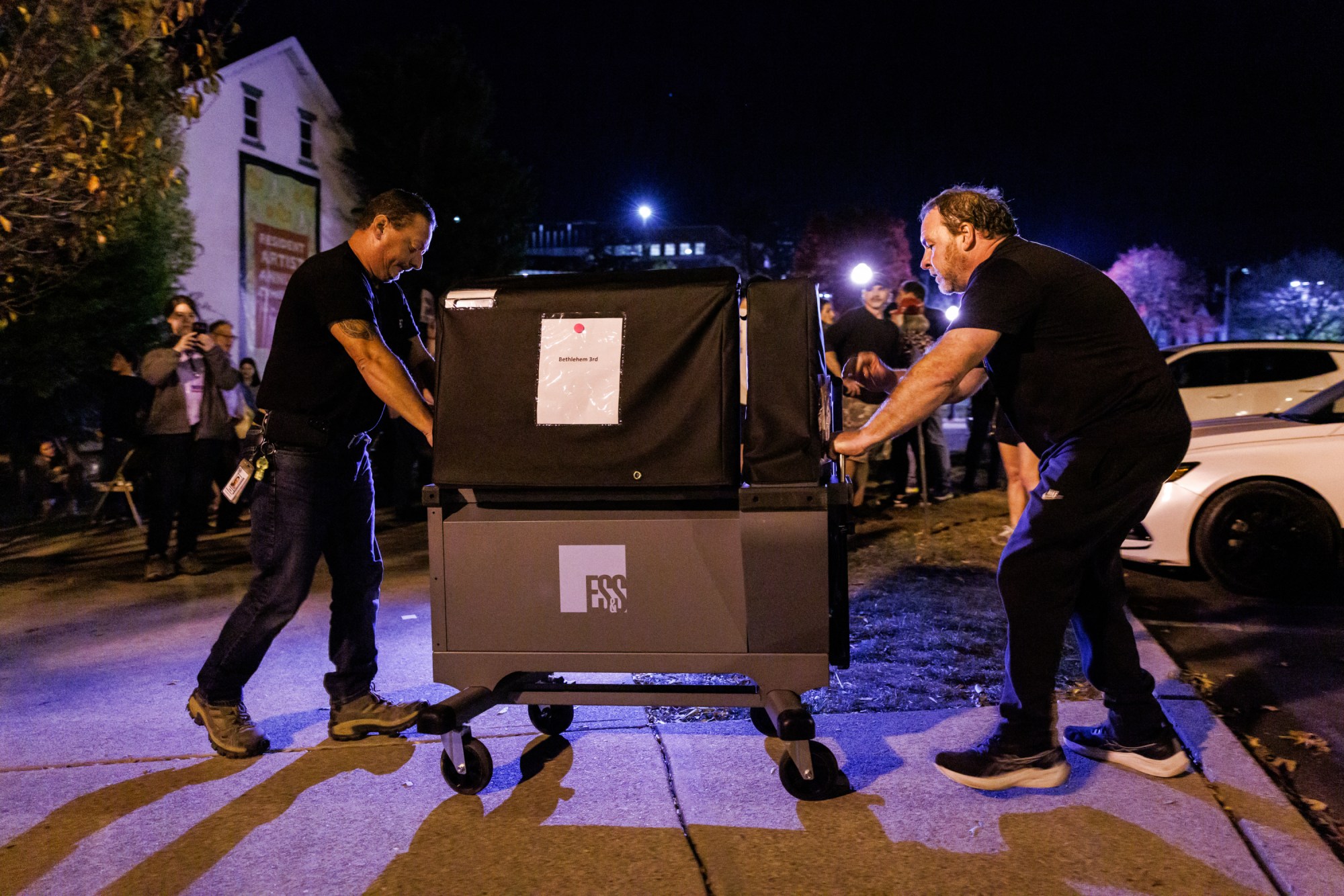
This DHS Official Oversees the Security of Federal Elections. He Wants to Ban Voting Machines.
In his top post at the Department of Homeland Security, David Harvilicz sets policy on protecting the nation’s elections infrastructure, including voting machines. He’s also the co-founder of a company with James Penrose, who helped hatch debunked conspiracy theories blaming hacked voting machines for Donald Trump’s loss in the 2020 presidential election. Penrose assisted in a push to seize voting machines to overturn Trump’s defeat. On social media , Harvilicz has called for doing away with voting machines , saying they are “eminently vulnerable to exploitation.” In a March post , he wrote that “DHS needs to ban voting machines for all federal elections. The time is now.” He also has repeatedly questioned the validity of Democratic electoral victories and pushed for Republicans to overhaul electoral systems to their advantage . David Harvilicz in 2015 Sam Comen/The New York Times/Redux Election experts as well as current and former DHS officials say Harvilicz’s central role in overseeing the security of electoral systems and voting machines is especially concerning at a time when the administration is taking unprecedented steps to relitigate Trump’s baseless claims that the 2020 election was stolen. That includes the FBI’s seizure of 2020 voting records from Fulton County, Georgia, and having a team working for Tulsi Gabbard, the director of national intelligence, take custody of voting machines used in Puerto Rico in 2020. “The security of our election infrastructure depends on leadership that is trusted, impartial and grounded in evidence — not individuals who have promoted conspiracy theories about the very systems they are now responsible for protecting,” said Danielle Lang, vice president for voting rights and the rule of law at the Campaign Legal Center, a nonpartisan pro-democracy organization. “Placing someone with that background in charge of policies affecting election security can undermine public confidence in our elections at a time when trust is already fragile.” DHS didn’t answer detailed questions about Harvilicz or his team, providing a more general statement about the work done by the agency. “DHS and its employees are focused on keeping our elections safe, secure, and free,” it said. “Every single day appointees at the Department of Homeland Security work to implement the President’s policies and keep our Homeland safe.” Harvilicz didn’t respond to questions about his DHS role. Harvilicz’s X account notes his post as DHS’ assistant secretary for cyber, infrastructure, risk and resilience policy but says he’s been detailed to the Defense Department. (Such temporary assignments are typically done in 120-day increments .) Get Involved Do you have information you can share about David Harvilicz or other federal officials working on elections or any of the other individuals named in this article? Contact reporter Doug Bock Clark at doug.clark@propublica.org or on Signal at 678-243-0784. If you’re concerned about confidentiality, check out our advice on the most secure ways to share tips . Harvilicz was appointed to the DHS job around July , taking on a role that in the past has largely focused on shaping policy to protect the nation’s critical infrastructure , including its election systems. But current and former DHS officials say Harvilicz and his team have transformed their functions to become more hands-on. They’ve been deeply engaged with facilitating multiple administration data-gathering efforts aimed at scouring voter rolls for noncitizens, the officials said. ProPublica has reported on one such effort, which has led to hundreds of citizens being incorrectly flagged as potential noncitizens. Harvilicz’s team includes Heather Honey, the deputy assistant secretary of election integrity. ProPublica has reported that Honey was previously a leader in the Election Integrity Network , a conservative group that has challenged the legitimacy of American election systems. Honey worked closely with Cleta Mitchell, the network’s leader, who played a prominent role in helping Trump try to overturn his 2020 loss. Also reporting directly to Harvilicz is Samantha Anderson , a data specialist who previously worked to elect Trump through the advocacy arm of the America First Policy Institute , a think tank closely associated with the president. Multiple officials and elections experts said they were worried that Harvilicz and Honey would have prominent parts in assessing and describing the cybersecurity of the coming election, both to the public and to administration leaders. They also expressed concern that if Trump again wanted to get control of voting machines after the election, perhaps if Republicans lose seats in the midterms, that Harvilicz is ideally positioned to help them do so. “It would be super easy for them to get the voting machines,” a current DHS official said, adding they can “describe it as they want, if they don’t like the results.” Harvilicz co-founded Tranquility AI , which has developed an artificial intelligence tool for law enforcement, with Penrose, and they are listed on its 2025 patents as developing its systems together . Penrose, a former intelligence officer, played a leading role in the campaign to help Trump in his failed bid to overturn the 2020 election, ProPublica has reported . Penrose also participated in multiple attempts to clandestinely seize voting machines, including in Michigan , where prosecutors accused him of breaking into some of the machines. (Penrose wasn’t charged in the case.) He appeared to be an unindicted co-conspirator in the failed Georgia prosecution in which Trump was accused of conspiring to overturn the election results, according to The Washington Post . Penrose didn’t respond to a request for comment for this article. One of the purported uses of Tranquility AI’s product is for “ election integrity ,” according to the company’s website. It didn’t provide more details in response to a question from ProPublica. Tranquility AI’s tools, which help law enforcement agents process data and assemble cases, have been employed by New Orleans’ district attorney, and the company says it has partnered with dozens of law enforcement agencies nationwide. In July 2025, a large government IT contractor announced a partnership with Tranquility AI. Harvilicz started his career working at law firms on Wall Street and in tech. Then, in 2004, when he was 29, he launched a losing bid for a Maryland congressional seat. After that, he helped lead a crowdfunding company , a movie marketing business , a film production business that worked with former intelligence officers and several cyber security ventures (including one at which he worked with Penrose). He also did a stint in the first Trump administration , serving as cybersecurity official in the Department of Energy. In advance of Harvilicz getting the DHS position, Tranquility AI made a $100,000 donation to Trump’s inaugural fund through a newly created nonprofit based at Harvilicz’s home address, according to The Intercept . In response to questions from The Intercept, Harvilicz said the donation was designed to help them meet administration policymakers. The Intercept first reported his ties to Penrose in connection with the donation. Harvilicz has posted prolifically to social media, sharing hundreds of posts of conservative content. After Trump won a second presidential term, he wrote : “We will now dismantle the near communist takeover of America and return her to greatness.” In 2020, Harvilicz purchased a $3.3 million home outside of Los Angeles. After the Palisades Fire destroyed it around the beginning of Trump’s second term, Harvilicz stood on a roadside to greet the president’s tour of the disaster area with his young son on his shoulders. His son held aloft a picture of a bloodied Trump punching the air after surviving an assassin’s bullet. Even then, elections were not far from his mind. He told a reporter for the Los Angeles Times that he supported Trump making disaster aid conditional on the Democratic state implementing voter ID. “I hope he saw us,” Harvilicz told the Times reporter. The post This DHS Official Oversees the Security of Federal Elections. He Wants to Ban Voting Machines. appeared first on ProPublica .
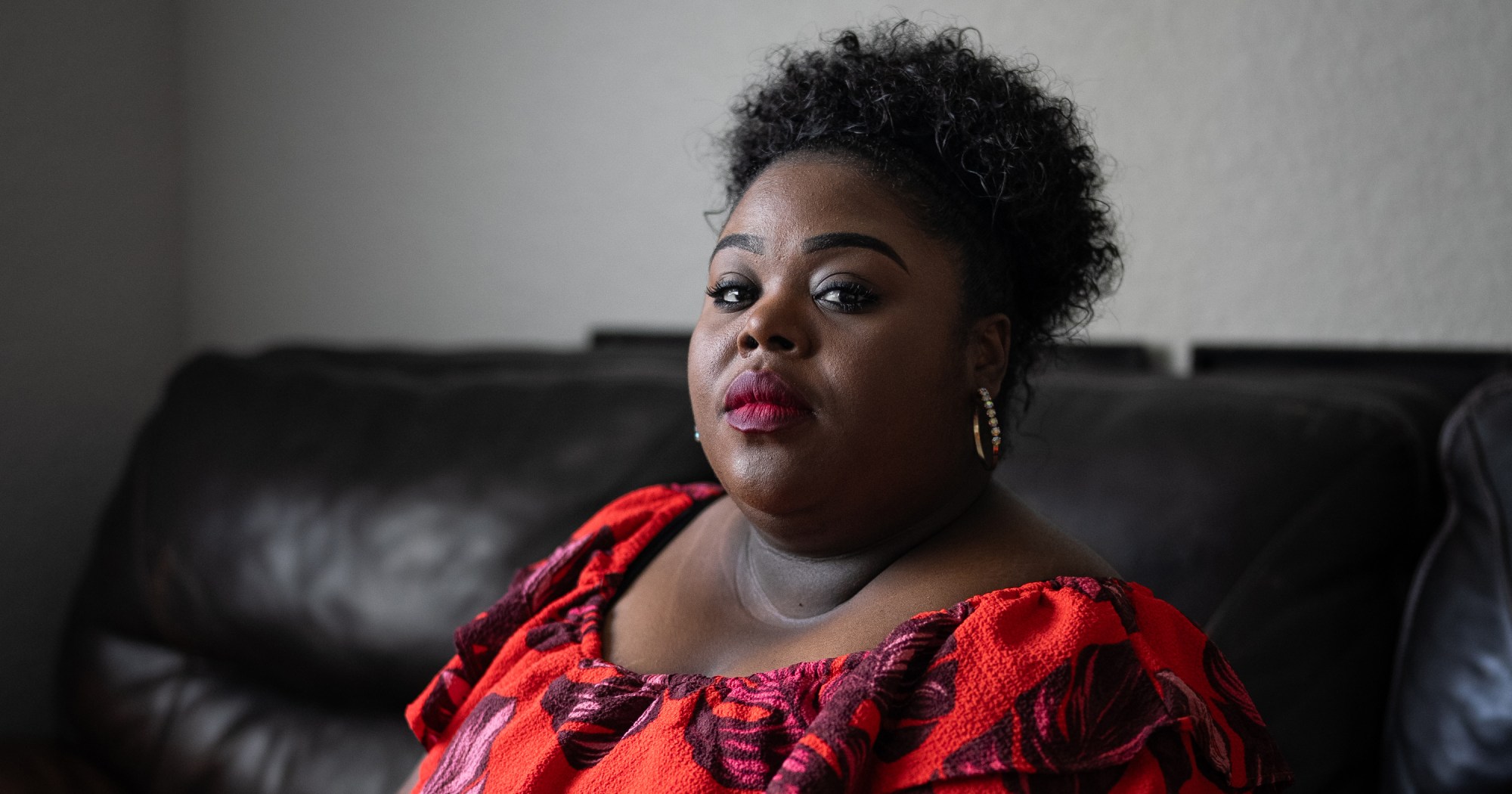
They Didn’t Want to Have C-Sections. A Judge Would Decide How They Gave Birth.
On the afternoon of Sept. 9, 2024, Cherise Doyley was in her 12th hour of contractions at University of Florida Health in downtown Jacksonville when a nurse came in with a bedsheet and told her to cover up. A supervisor brought a tablet to Doyley’s bedside. Gathered on the screen were a judge in a black robe and several lawyers, doctors and hospital staff. “It’s a real judge in there?” Doyley asked the nurse at the beginning of what would be a three-hour hearing. “Now this is the craziest thing I’ve ever seen.” Doyley hadn’t asked for the hearing. The hospital had sought it. Doyley had mere minutes to prepare. She had no lawyer and no advocate — no one to explain to her what, exactly, was going on. Judge Michael Kalil informed her that the state had filed an emergency petition at the hospital’s behest — not out of concern for Doyley, per se, but in the interest of her unborn child. He described the circumstances as “extraordinary.” The hospital and state attorney’s office wanted to force Doyley to undergo a cesarean section. Doyley, a professional birthing doula, didn’t want that and had been firm about it. She’d had three prior C-sections, one that resulted in a hemorrhage, and hoped to avoid another serious complication and lengthy recovery. She was aware that doctors were concerned about the risk of uterine rupture, a potentially deadly complication for her and her baby. She would say during the hearing that she understood the risk to be less than 2% and didn’t want to agree to a C-section unless there was an emergency. But the choice would not be hers. The judge would decide how she would give birth. Watch How a Court Hearing Was Convened in Cherise Doyley’s Hospital Room Obtained by ProPublica Mentally competent patients typically have the right to choose their medical care — or refuse it. But there is one notable exception: pregnant patients. That inconsistency is particularly striking in Florida, a state that has pushed to expand medical freedom for those who wish to avoid vaccines or fluoridated water, while constricting the rights of people in various stages of pregnancy. “There aren’t any other instances where you would invade the body of one person in order to save the life of another,” said Lois Shepherd, a bioethics expert at the University of Virginia School of Law. In Florida and many other states, court-ordered medical procedures are just one of the ways pregnant patients’ rights are restricted. The effort to chip away at those rights is rooted in the concept of fetal personhood — that a fetus has equal and, in some cases, more rights than the woman sustaining it. The link between fetal personhood and court-ordered C-sections dates back to the 1980s, when courts started ruling that hospitals can override patients’ decisions in favor of the health of unborn children. In the years since, proponents of fetal personhood began to push for even broader legal protections. In 1986, Minnesota was the first state to recognize fetuses as victims in homicide cases. Some states have imprisoned pregnant women for exposing their fetuses to drugs. Nearly 30 states have passed laws that allow hospitals to invalidate pregnant patients’ advance directives, which outline the kinds of life-sustaining treatment a person wants after a catastrophic illness or accident. At least one, Alabama, extended the concept of personhood all the way to the earliest stages of fertilization and conception by giving frozen embryos the same legal status as children, though the Legislature later said the law couldn’t be enforced. And the fetal personhood movement has accelerated in the past several years, supercharged by the U.S. Supreme Court decision to reverse the abortion rights that had been protected by Roe v. Wade. Florida has long been at the forefront of fetal personhood policies. The state was one of the first in the country to prosecute a woman for “delivering” drugs to her fetus during pregnancy in 1989, although the Florida Supreme Court later overturned her conviction. And after advocates twice failed to get a fetal personhood amendment on the state ballot, the Legislature is now considering a bill that would enshrine the concept in state law by giving embryos and fetuses the same legal status as people in wrongful death suits. For women in labor, the potential impact of the bill is clear: Experts anticipate their medical needs could be further diminished in favor of the fetuses’. Several legal experts told ProPublica they are alarmed by Doyley’s case and the legislation’s potential to allow for more court interventions during childbirth. Lawyers who represent women in fetal personhood cases already have identified a higher number of forced C-sections in Florida than other states. The state attorney’s office for the 4th Judicial Circuit declined to comment on Doyley’s case, saying a response would violate her medical privacy. But in an email, a spokesperson noted why, in general, the office would intervene: “The courts have held that the State has a compelling interest in the preservation of the life of an unborn child and the protection of innocent third parties who may be harmed by the parental refusal to allow or consent to life-saving medical treatment.” C-sections account for nearly a third of all deliveries in the United States. They can be necessary when babies are breech, or in the wrong position for birth, as well as in cases of maternal or fetal emergency. But in other cases, such as slow laboring or prior C-sections, the need for the surgery is less clear. Surveys have found that more than 10% of women feel pressured into C-sections and other procedures by doctors worried about injuries to the baby. Patients generally don’t challenge doctors who say they’re necessary, and it is uncommon for someone to hold out and for the hospital to turn to the courts. It is so rare, in fact, that advocates for the rights of pregnant women were shocked to discover that the same thing that happened to Doyley had happened to another Florida woman just a year and a half earlier. The similarities in their cases were striking. Both women had three prior C-sections. They had questioned the need for their previous surgeries and arrived prepared to fight for vaginal births. And both women are Black. They had argued that compelling them to have C-sections violated their rights to make medical decisions. Hospital staff said their medical decisions threatened the health of the fetus. It would be up to the courts to decide which one mattered more. Doyley enjoys time with her 1-year-old daughter, Arewa, on their porch. Brianna Bennett with her 2-year-old daughter, Aubree. Like Doyley, Bennett was forced to have a court-ordered C-section. Asked to consider the constitutionality of court-ordered C-sections, the U.S. Supreme Court declined in 1994, leaving a patchwork of decisions that vary by state. In the early 1980s, a hospital in Georgia won a court order to force a woman with a dangerous pregnancy complication to have a C-section. Then, in 1987, a judge in Washington, D.C., approved a request to perform surgery on a pregnant woman dying from cancer without her consent. Later, a higher court reversed that ruling and held that hospitals should not override medical decisions. An Illinois appellate court in 1993 refused to order a woman to undergo a C-section. Not long after, a patient named Laura Pemberton, who did not want a C-section, left a hospital in Tallahassee, Florida, against medical advice. A local judge sent law enforcement to her house to bring her back. Once she returned to the hospital, the judge ordered her to have a C-section, which doctors carried out. She later sued in federal court and lost. The 1999 decision by a federal district judge found that the state had a right to override her wishes. “Whatever the scope of Ms. Pemberton’s personal Constitutional rights in this situation, they clearly did not outweigh the interests of the State of Florida in preserving the life of the unborn child,” the decision said. The decision marked a legal turning point in prioritizing fetal rights over the religious freedom and bodily autonomy of the mother. In 2009, Samantha Burton arrived at the same hospital at 25 weeks pregnant, after going into premature labor. Doctors told her she needed to remain on bed rest, but she wanted to leave and go home to her children. The hospital got a court order for her to remain in the hospital and undergo any treatment doctors deemed necessary to save the fetus. She had an emergency C-section, and the baby was stillborn. She appealed the ruling granting the emergency order, and a Florida appeals court ruled in her favor. They said the circuit judge should have required the hospital to prove the baby was viable before imposing unwanted treatment, but the court stopped short of saying it was unacceptable to override the medical decisions of pregnant women in all situations. Pregnancy is the only condition where Florida courts have ruled that a patient can be forced to undergo unwanted treatment. Even a state prisoner on a hunger strike has more rights to make medical decisions. Those rulings give the state vast control over pregnant women. “All of it essentially is about the state’s ability to decide that a fetus, at any point during a pregnancy, is more important than the person who’s pregnant,” said Rutgers University law professor Kimberly Mutcherson. Doyley decorates her home with decals of butterflies. She says she likes how they represent transformation. One-year-old Arewa plays on the family porch. Bennett’s 2-year-old daughter, Aubree, pretends the floor is lava. In March 2023, more than a year before Doyley’s court-ordered C-section, Brianna Bennett arrived in labor at Tallahassee Memorial Hospital — the same hospital where the women in the 1999 and 2009 lawsuits had given birth. Over the preceding years, Bennett had come to question the medical reasoning behind her three prior C-sections. Each recovery had been harder than the last, leaving her so incapacitated after the third that for two weeks she couldn’t even go to the bathroom without help. At the time Bennett went into labor with her fourth, her mother’s hip problems had gotten so bad that she needed a wheelchair and required some help from Bennett to function. Bennett did not think she could care for all her family members while in recovery from abdominal surgery, so she insisted on trying for a vaginal birth. Bennett researched and weighed birthing options before going into labor. Tallahassee Memorial Hospital had specialists on staff and a neonatal intensive care unit equipped to serve critically ill babies. Bennett believed it offered the kind of support she needed to be able to follow her birth plan. The hospital has handled a lot of high-risk pregnancies. As Bennett’s labor stretched past 24 hours, a doctor confronted her about agreeing to a C-section, Bennett said. She continued to refuse, so the hospital reached out to the state attorney. In an email, Jack Campbell, state attorney for the 2nd Judicial Circuit, responded that the court needed to act quickly. “I plan to file an emergency motion with the Court to allow TMH to take whatever steps medically necessary to protect the life of the child and mother,” he wrote. Bennett, in the red dress, prepares lunch with her children, from left, Alannah, 16, Aubree, 2, Ayden, 11, and Ava, 7. After her three prior C-sections, she was worried about recovering from a fourth while taking care of a newborn and other family members. During the hearing, 15 to 20 people squeezed into Bennett’s hospital room. As would later happen with Doyley, she found herself in front of a tablet with a judge on the screen. Bennett said she found it offensive that so many people were concerned about the method of her delivery without taking into consideration how difficult it would be to take care of both herself and her baby while recovering from a C-section. “Are any of you gonna help me bathe or shower? Are you gonna help change my pad? Are you gonna help lift the baby out of the bed and put me in the bed because I can’t lift my legs? Is anyone going to help me?” Campbell told ProPublica that he felt the hearing was necessary to save two lives, Bennett’s and her baby’s. “I’m real comfortable with what we did here,” Campbell said. “I hate the fact that she’s upset about it.” A spokesperson for Tallahassee Memorial Hospital declined to comment on Bennett’s case, even though she signed a waiver allowing the hospital to do so. “We will not be able to discuss specific patients or cases,” the spokesperson wrote in an email. The hospital did not respond to questions about its history of seeking court intervention in multiple women’s medical decisions while giving birth. Bennett said she tried to remain calm, but inside she was panicking. During the hearing, her baby’s heart rate spiked. The judge ordered her to have a C-section, and doctors wheeled her into surgery. The operation lasted two and a half hours and the surgical team had to cut around existing scar tissue and avoid her bladder. Her incision looked like an upside-down T and required a wound vac, a portable machine that helps incisions close more quickly. She said a doctor who visited her room during recovery told her she should never get pregnant again, according to a civil rights complaint filed with federal regulators.The complaint is still under investigation, but lawyers for Bennett said they haven’t heard from investigators in more than a year. The U.S. Department of Health and Human Services did not comment on the complaint. “I cried every single day,” Bennett said. “I felt like I was supposed to be happy. I’m supposed to be thankful that I have a new life and that the Lord has blessed me to see this new baby. And I’m not even happy.” Bennett’s daughters Aubree and Ava play on a swing set. Aubree looks at a photo of her mother holding her after a court-ordered C-section. A year and a half later in Jacksonville, Doyley faced a situation eerily similar to Bennett’s. She noted as her hearing began that she was the only Black person on the screen. About a dozen faces, most of them white, had gathered to challenge her medical decisions. She said it made her feel as if her race had something to do with the fact that she was thrust into the intrusive hearing. “I have 20 white people against me, and because I am informed and I am making an informed decision, they are trying to take my rights away from me by force,” Doyley told the people on the screen, requesting a Black nurse or doctor. “I don’t find that race really has much to do with this, ma’am,” the judge responded. Dr. Erin Burnett said during the hearing that she did not think Doyley could successfully give birth vaginally because she had a history of stalled labors. A long labor after prior C-sections could increase the risk of uterine rupture, which could kill Doyley and the child, she said. She said the baby’s heart rate showed some signs of distress and told Doyley it would be better to have a C-section before it became an emergency. If the baby’s heart stopped or if she lost oxygen during delivery, the baby could suffer a brain injury or death. Dr. John Davis, the chair of the obstetrics and gynecology department, testified that the hospital had been recognized for its low C-section rate and did not perform unnecessary surgeries. Doyley’s condition required intervention, he said. Burnett and Davis did not respond to requests for comment, and the hospital declined ProPublica’s requests to interview them and others involved in Doyley’s care. Doyley signed a waiver allowing the hospital to discuss her case with ProPublica, but a spokesperson for University of Florida Health in Jacksonville would not comment, citing patient privacy. Nor did the hospital respond to questions about Doyley’s claim that race played a role in the decision to involve the court. The research on the risks of uterine rupture after prior C-sections is unclear. Studies have found that 0.15% to 2.3% of these labors resulted in a rupture, depending on a number of factors such as body mass, a history of successful vaginal births and whether the labor was spontaneous or had to be induced. Doyley, who felt comfortable with her odds and wanted to continue laboring, argued during the hearing that C-sections carry their own dangers — including a risk of death. “A lot of that comes from medical negligence and medical racism, where we have a group of white doctors that think that they know what is best for Black bodies and Black babies,” Doyley said in the hearing. Doyley’s children — from left, Aganju, 7, Akilah, 11, and Arewa, 1 — sit on the porch at their home. Both the doctors and Doyley mentioned recommendations from the American College of Obstetricians and Gynecologists. However, neither one cited the organization’s stance on court-ordered C-sections, which the group has deemed to be “ethically impermissible.” After three hours of testimony — all while Doyley lay in her hospital bed — the judge ruled that she could keep laboring unless there was an emergency. If that happened, the hospital could operate, whether she wanted it or not. The judge would reconvene the hearing in the morning. In response to questions from ProPublica, Kalil wrote in an email that the judicial code of conduct prohibits judges from commenting on cases. “These ethical standards exist to protect the integrity of the judicial process, ensure fairness to all parties, and preserve the Court’s neutrality,” he wrote. Overnight, doctors said the baby’s heart rate dropped for seven minutes. Doyley woke to her hospital bed being wheeled into surgery. She called out to her sister who was asleep in the hospital room. “I had to tell her, ‘Hey, wake up,’” Doyley said. “‘Something is going on.’ She’s trying to put on her shoes. I’m like, ‘Girl, leave the shoes. Let’s go.’” Doyley recalled reciting a short prayer as her sister scrambled into the operating room. The baby was delivered by C-section. Although Doyley’s daughter was initially limp, she perked up and became responsive within a few minutes. Doctors took her to the NICU while Doyley went to recover. And to get ready to face the judge again. At the 8 a.m. hearing, Doyley looked pained and groggy. She told the judge she still hadn’t been allowed to see her daughter and asked if he could help. A doctor testified that the baby had been brought to the NICU in respiratory distress and placed on a continuous positive airway pressure machine to help with her breathing. Kalil said he couldn’t order the hospital to do anything. The matter he had been appointed to hear involved only her unborn baby. He had no authority over the child in the nursery. Kalil wished her well and quickly closed the case. Doyley in her home. In Florida and many other states, court-ordered C-sections are just one way in which pregnant women’s rights are eroded. The post They Didn’t Want to Have C-Sections. A Judge Would Decide How They Gave Birth. appeared first on ProPublica .

Oregon Voters Overwhelmingly Said Yes to Limiting Money in Politics. Then Politicians Had Their Say.
Back in 2019, it looked like Oregon lawmakers might finally commit to ending the state’s outlier status on campaign finance. I had just authored an investigative series for The Oregonian/OregonLive , my previous newsroom, revealing how Oregon’s lack of limits on campaign donations had allowed corporate America to give more to sitting lawmakers, per capita, than anywhere else in the country and led to some of the weakest environmental protections on the West Coast. The state Supreme Court had allowed it to happen by saying campaign donations were protected free speech under the Oregon Constitution. Lawmakers in Oregon, one of five states without any limits at all, seemed willing to do something about what we’d revealed. They asked Oregonians to change the constitution and explicitly allow contribution limits, something legislators had repeatedly tried and failed to do before. At the ballot in 2020, 78% of voters said yes, one of the widest margins for any ballot measure in decades. All lawmakers needed to do was to write legislation limiting donations. But for the next four years, no limits were adopted. When lawmakers eventually set caps in 2024, individual donations were restricted to $3,300 per election, well short of caps in the $1,000 to $2,000 range that good-government groups had sought previously. Lawmakers left other avenues for donors to give their time and money. They allowed corporate donations, which many states ban, to continue. They made it so the limits wouldn’t take effect until 2027, after the current race for governor is over. And now, lawmakers have voted to ratchet the spigot open further — and perhaps, campaign reform advocates say, all the way. On March 5, Oregon’s Democratic-controlled Legislature approved a bill that supporters described as containing little more than technical fixes to what they’d written two years ago. Groups that seek to limit the influence of money in politics said the changes are far more serious than housekeeping. They said the new bill inserted loopholes that, among other things, will allow companies to bypass the limits by giving through corporate affiliates. Dan Meek, an attorney who for years has been at the center of efforts to curtail money in Oregon politics, labeled it “the bill to destroy campaign finance reform in Oregon.” Oregon elections haven’t had contribution limits since briefly in the 1990s. Phil Keisling, a former secretary of state who advocated for those caps only to see them overturned in court, described the Legislature’s track record on campaign finance as “one of the most profound public policy failures” in Oregon’s recent history. “Limits should have been in place decades ago,” he said. “The base problem is that there are powerful forces within both political parties who prefer the system as it is.” Legislative leaders defended their work. In a floor speech, House Majority Leader Ben Bowman described the contribution limits the Legislature adopted as delivering on “elections where the voices of everyday people are not drowned out by wealthy and powerful interests making unlimited political contributions.” He described this year’s changes as necessary for the new system to work. The investigation I worked on seven years ago found that campaign donations in Oregon did more than just help politicians get elected. They sometimes spent campaign money in ways that benefited themselves, including on luxury hotel rooms, dry cleaning, car washes — even picking up the tabs during dozens of visits to sports bars. One lawmaker used campaign money to buy a new computer three weeks before she left office; another spent it on an Amazon Prime membership, 11 days before resigning. The money shaped public policy. As a reporter covering Oregon’s environment, I watched the Legislature weaken or stall efforts on climate change, logging practices, industrial air pollution, herbicide spraying, oil spill preparedness and other issues over a decade. One retired regulator told me all it took was a single phone call from a well-connected lobbyist to kill one clean air initiative. What’s happened since my investigation was published reveals how hard it can be to eliminate this kind of influence when the people expected to rein in donations are the ones whose campaigns have long benefited from them. After Oregonians overwhelmingly voted to hand lawmakers the power to regulate election money in 2020, lawmakers failed to put restrictions in place in 2020 , 2021 , 2022 and 2023 . Tired of waiting, advocates for tight constraints on campaign money gathered tens of thousands of signatures to put a measure limiting donations on the ballot in 2024. Labor unions, a major source of giving to Democrats, responded by threatening to put up their own competing initiative. A backer of the union measure said recently that it would have encouraged grassroots participation through small donor committees and included public financing for candidates. Meek, the campaign reform advocate, described the union measure as an effort to create far looser limits, with less disclosure and major loopholes. Lawmakers stepped in, brokering a deal that was hailed as a historic breakthrough. Unions, the campaign reform advocates and big business produced a bill that Meek described as at least a starting point for controlling Oregon’s political money — albeit with fewer constraints and bigger dollar limits than he and others wanted. Kate Titus, Oregon director of Common Cause, an advocacy group that was involved in the negotiations alongside Meek, said everyone agreed that some technical fixes to the bill’s language would be needed before the system took effect in 2027. But she said the group, which included House Speaker Julie Fahey, agreed that no substantive changes would be made without everyone’s agreement. Then came this year’s short, monthlong legislative session — and a surprise. Titus described seeing Fahey in a state Capitol hallway in early February and asking whether any bills were coming on campaign finance. Fahey’s expression changed to what Titus described as “pure panic.” “I can’t talk,” Titus said the speaker told her, before hurrying away. (Fahey’s spokesperson, Jill Bakken, said the speaker was on her way from a floor session to a meeting and didn’t have time for an impromptu hallway conversation, telling Titus she could schedule time through her staff.) Hours later, Titus said, an 85-page bill was introduced with Fahey’s name on it and a public hearing scheduled early the next morning. It would push back the deadline that the 2024 legislation set for launching a new website for tracking campaign money, from 2028 to 2032. The bill would make the $5,000 limit on donations to one type of political committee apply per year, not per two-year election cycle — effectively doubling the amount allowed. A spokesperson for Fahey called the 2024 provision a “typo” that needed correcting because it was inconsistent with limits on other donation types. The 2024 law prohibited multiple businesses controlled by the same person from each giving as much as the law allows. The 2026 bill would allow it as long as the businesses weren’t created solely to evade limits, a change Fahey’s spokesperson said was needed to avoid a “chilling effect on community-based organizations’ participation in elections.” The Campaign Legal Center, a nonpartisan Washington, D.C.-based watchdog group, called it a loophole that renders Oregon’s contribution limits “illusory.” On top of all that, the bill would remove a long-standing provision in state law that says that money someone spends in coordination with a candidate is a campaign contribution. A spokesperson for Secretary of State Tobias Read said the provision was “redundant” because the law also says “any other thing of value,” beyond money, is a campaign contribution. But the Campaign Legal Center said the change could leave Oregon functionally with “no contribution limits.” A representative of the League of Women Voters of Oregon, which was involved in the 2024 negotiations, called the bill “a complete betrayal.” Bakken, Fahey’s spokesperson, told ProPublica that groups including the league “have been part of this conversation for many years” and that they will have opportunities for input as lawmakers consider future changes. As for why the Legislature hasn’t done more to stem the flow of money into the system, Bakken said that constraining donors too greatly could push them to divert cash from campaign donations into commercials and mailers in support of candidates, something candidates legally can’t control. These “independent expenditures” have no dollar limit under federal law. Unhappy as Meek and others were with the proposal, they couldn’t do much. They threatened to go back to the ballot, but without the signatures they’d gathered to do so in 2024, they’d lost their leverage. The bill sailed through the Oregon House by a 39-19 vote and the Senate 20-9. Sen. Jeff Golden, a Southern Oregon Democrat who opposed the bill, called its passage the biggest surprise of his eight-year tenure. Given the potentially huge loopholes, he said in an interview: “I thought my colleagues wouldn’t pass it. And I was wrong.” The measure sits on the desk of Gov. Tina Kotek, a Portland Democrat. She has until April 17 to decide on it. The post Oregon Voters Overwhelmingly Said Yes to Limiting Money in Politics. Then Politicians Had Their Say. appeared first on ProPublica .

Nevada Regulators Fine Peptide Providers at Anti-Aging Festival Where Two Women Became Critically Ill
Nevada regulators have fined three people who played a role in offering peptide injections last year at a Las Vegas anti-aging conference where two women became critically ill following treatment. Last month, the Nevada Pharmacy Board levied $10,000 fines against a doctor and a pharmacist who are licensed in California but who don’t have permission to practice in Nevada. It imposed a $5,000 fine against a third man who describes himself as an “ integrative health coach ” but who doesn’t appear to be a licensed health care practitioner. The pharmacy board also imposed a $10,000 fine against a Texas-based private membership association, which authorities accused of mailing the peptides to Nevada. The group, Forgotten Formula, claims a constitutional right to conduct private transactions with its members and contends those transactions occur “outside the scope” of state commercial regulations. The citations stem from an incident in July at the Revolution Against Aging and Death Festival, which is put on by an Arizona-based organization that promises pathways to an “unlimited lifespan.” Dr. Kent Holtorf, whose anti-aging medical practice is based in El Segundo, California, operated a booth at the festival offering alternative health therapies, including peptide injections. Peptides are short amino acid chains that have exploded in popularity thanks to claims they can fight aging and chronic disease. The board alleged that Forgotten Formula mailed the peptides to the casino resort hosting RAADFest, marking the package “to the attention of Dr. Kent Holtorf.” That shipment constituted “unlicensed wholesaling of drugs,” according to the board’s citation. A trustee of Forgotten Formula told ProPublica his association was not present at the festival and did not provide peptides to be offered for public use. After being injected with peptides at Holtorf’s booth, two women left the conference in ambulances, so ill they had to be intubated to assist them in breathing. They have since recovered. The pharmacy board was unable to determine why the women became ill — including whether the injections were contaminated or the women reacted to the peptides themselves. Investigators were unable to test the serums. “We were not able to obtain the product, although attempts were made,” said David Wuest, the board’s executive secretary. Although the Food and Drug Administration has approved many peptide-based medications to treat serious diseases such as diabetes and cancer, peptide therapies used for anti-aging and regenerative health are largely unregulated. (Health and Human Services Secretary Robert F. Kennedy Jr. has been a strong proponent of peptides.) The FDA allows compounding pharmacies to dispense some peptides, but has listed 19 of some of the most popular peptides as posing “significant safety risks.” Compounding pharmacies are prohibited from dispensing those on the list. As a result, many unsafe peptides are sold on a booming gray market, including directly to consumers by entities in the U.S. and abroad that are skirting FDA rules. The injections administered to both women at the Las Vegas convention included at least one peptide that the FDA warns poses a safety risk , according to the pharmacy board’s citations. Kennedy said recently that the FDA plans to reclassify 14 of the peptides currently listed as unsafe, which could allow compounding pharmacies to begin dispensing them. Holtorf, who did not respond to repeated attempts to contact him, was fined for practicing in Nevada without a state license. Han Bao Nguyen, the pharmacist accused of mixing the peptides for both women and administering the serums to one of them , also was cited for the same violation. Nguyen works at Holtorf’s practice, according to its website. He did not respond to requests for comment. Michael McNeal, the “integrative health coach” and director of education at Integrative Peptides, a company founded by Holtorf, was accused of prescribing or recommending a peptide cocktail to one of the women. Wuest said McNeal does not appear to hold any health care licenses. McNeal did not respond to requests for comment. In July, Holtorf told ProPublica he didn’t believe the peptides caused the women’s illnesses, saying he’d asked an artificial intelligence app to analyze the incident. He wouldn’t share what the app had concluded was the cause. He also apologized for the situation and said he was “reassessing everything we are doing” to keep patients safe. Wuest said the board notified the California boards that license Holtorf and Nguyen of the fines so they may consider additional discipline. The FDA also has been notified, he said. Michael Blake Fiveash is co-founder and first trustee of Forgotten Formula, which the board accused of unlicensed wholesaling of pharmaceuticals. He said pharmacy board regulations, while necessary for regulating public commerce, don’t apply to his association because it offers services only to members who have signed a contract. He said such member-to-member activity is protected by the First and 14th amendments. In a letter to ProPublica, he said Holtorf, whose peptide company is listed as a partner on Forgotten Formula’s website, was operating at RAADFest under his public medical practice, not as an association member. Nor were the women who became ill members of the association, Fiveash said. “Dr. Holtorf’s booth at RAADFest was a public commercial activity,” Fiveash said in a letter. The Forgotten Formula Private Member Association “did not supply materials for public commercial use or public distribution. If Dr. Holtorf utilized any materials in his public professional practice, that would represent his individual choice to apply private member resources to his separate public professional activities, which is beyond FFPMA’s control or responsibility.” Fiveash did not directly answer questions about whether the association mailed the peptides to Holtorf. He also shared a video of testimonials from Forgotten Formula members, including children and adults, suffering serious illnesses such as cancer, Lyme disease, diabetes and cirrhosis who said they were helped by the association’s products. Read More A Las Vegas Festival Promised Ways to Cheat Death. Two Attendees Left Fighting for Their Lives. He challenged the premise that the women became ill from the peptides. “Without comprehensive toxicology, full medical histories, and analysis of all substances and treatments administered that day, attributing causation to peptides is speculation masquerading as reporting,” he said. “Any adverse event is concerning, and we hope both patients have fully recovered.” Laura Tucker, the pharmacy board’s lawyer, said this is the board’s first encounter with a private membership association making such legal claims, but emphasized that mailing drugs to the state without a Nevada license is against state law. She added that any of the parties can appeal their citations to the board. “Of course anyone is free to make any sort of legal argument they would like to try to make in front of the board,” she said. The post Nevada Regulators Fine Peptide Providers at Anti-Aging Festival Where Two Women Became Critically Ill appeared first on ProPublica .

Election Records Handed Over to the FBI in Maricopa County, Arizona, Could Be Fatally Flawed, Experts Say
This week, when 2020 voting information from Maricopa County, Arizona, was handed over to the FBI, it might have seemed like a replay of the agency’s late January raid in Fulton County, Georgia. Both are large counties in swing states that voted for Joe Biden in 2020, and both have long been targets of President Donald Trump’s claims that that year’s presidential election was stolen from him. But the evidence collected from Maricopa County is fundamentally different, in ways that election experts say threaten the accuracy and integrity of the federal government’s investigation. In Fulton, the FBI took the actual ballots cast in the county’s 2020 election, which had been kept in secure court storage facilities. In Maricopa, a federal grand jury subpoenaed digital data related to a partisan audit of the county’s vote, according to Arizona Senate President Warren Petersen , the subpoena’s recipient. This material — which may have included scans and photos of ballots — was stored by the Senate, not the county. Maricopa County destroyed the original ballots after two years, as state law requires. The firm hired by Senate Republican leaders to run the audit, the Cyber Ninjas, was funded by and took direction from Trump allies . Its leader, Doug Logan, privately admitted in text messages obtained by journalists via public records requests that its ballot recounts were “screwy.” County leaders, both Republicans and Democrats, and nonpartisan outside observers documented several ways Logan’s team had failed to follow procedures to prevent tampering. (Logan didn’t respond to a request for comment.) Several election experts, including some who watched the Arizona audit in person in 2021, said any investigation based on the Cyber Ninja data would be fatally flawed. “Accessing invalid data will only draw inaccurate conclusions and risk further degradation of public confidence,” said Ryan Macias, a national elections technology consultant who observed the audit on behalf of the Arizona secretary of state’s office. The Department of Justice and White House did not answer questions from ProPublica on experts’ concerns about the quality of the data and records produced under the subpoena. A spokesperson for the Arizona U.S. attorney’s office declined to respond to questions about whether it was involved in the case, saying it was against policy to comment on grand jury subpoenas or proceedings. Petersen, a Republican who helped launch the audit in 2021 and handed over the records to the FBI, didn’t say under which court’s authority the grand jury subpoena was issued or respond to a question on its basis. Neither Petersen nor a spokesperson for the Arizona Senate gave details on what exactly the FBI collected. The Senate has not released the subpoena. The subpoena is the latest salvo in the Trump administration’s unprecedented attempt to reinvestigate purported problems in the 2020 election. The White House has tasked Kurt Olsen, a lawyer who tried to assist Trump in overturning his loss , with helping to lead the criminal inquiry. Olsen helped initiate the Fulton County case, which is being overseen by Thomas Albus , the U.S. attorney for the Eastern District of Missouri, according to the supporting affidavit. It’s not yet clear whether Olsen or Albus is involved in the Maricopa County investigation. The Arizona audit began in April 2021, after the Senate’s Republican leadership subpoenaed Maricopa County for scans of all 2.1 million ballots, the county’s voter rolls and other voting system data, such as logs showing who accessed the system. The Senate also had material that the Cyber Ninjas shared from the audit, such as sheets used to tally votes and track anomalies as well as data from the county’s election management system and ballot tabulators. Cyber Ninjas pulled data from the Dominion Voting Systems machines the county used in 2020, so the FBI presumably has that material. Trump falsely claimed after the election that Dominion voting machines had been hacked, switching votes for him to register as votes for Biden. The Trump administration has been trying to access Dominion machines from other locations since he took office. Fox News and Newsmax settled defamation lawsuits with Dominion after making similar claims, agreeing to pay the company millions. Arizona Gov. Katie Hobbs, a Democrat who was secretary of state during the 2021 audit, said in an interview with ProPublica that it’s unclear what has happened to the records in the five years they have been out of the county’s hands. “I don’t think anyone should have confidence in whatever comes out of whatever was turned over to the FBI,” Hobbs said. Maricopa County’s 2020 election results have been confirmed repeatedly, both by the county’s postelection hand-count and by multiple audits conducted by independent firms commissioned by the county . Courts tossed out several cases filed by lawyers for Trump alleging fraud. The Cyber Ninjas’ review, which also concluded that Biden won, drew intense criticism from the get-go, both for its methodology and its partisanship. One of the audit managers was Heather Honey, who now holds a key post in the Trump administration as the Department of Homeland Security’s deputy assistant secretary for election integrity. The contractor conducted its review without county or Senate employees present and only allowed in observers from Hobbs’ office after a court demanded more transparency. The firm’s workers made errors recounting votes cast in the presidential race, keeping three separate tally sheets for each batch of ballots that often reflected different totals, a secretary of state’s office report found. They also had black and blue pens out as they took photos of ballots, causing concern among observers about the potential for tampering. The contractor sent data collected from ballot tabulators to a Montana cabin for analysis and wouldn’t say how — or if — it had protected the data from hacking. Arizona Secretary of State Adrian Fontes, a Democrat, said in an interview that the contractor’s sloppy procedures would make it unlikely a court would accept the records handed over to the FBI as evidence proving irregularities in the 2020 vote. “You can easily poke holes in any of this stuff,” Fontes said. Cyber Ninjas sometimes mistook routine aspects of the election process as signs of wrongdoing. It announced that 74,000 more mail-in ballots had been cast in Maricopa County than had been sent out . There was a simple explanation for the discrepancy, however: The ballots hadn’t been sent out; they’d been given to the voters by hand at early voting locations. Ken Bennett, a Republican who was the Arizona Senate’s liaison to the audit and is a former Arizona secretary of state, said in an interview that he thinks the county’s original election results were correct. “The only evidence I could find of mistakes made by the county were minor errors that had nothing to do with whether or not they came up with the accurate results,” Bennett said. The post Election Records Handed Over to the FBI in Maricopa County, Arizona, Could Be Fatally Flawed, Experts Say appeared first on ProPublica .
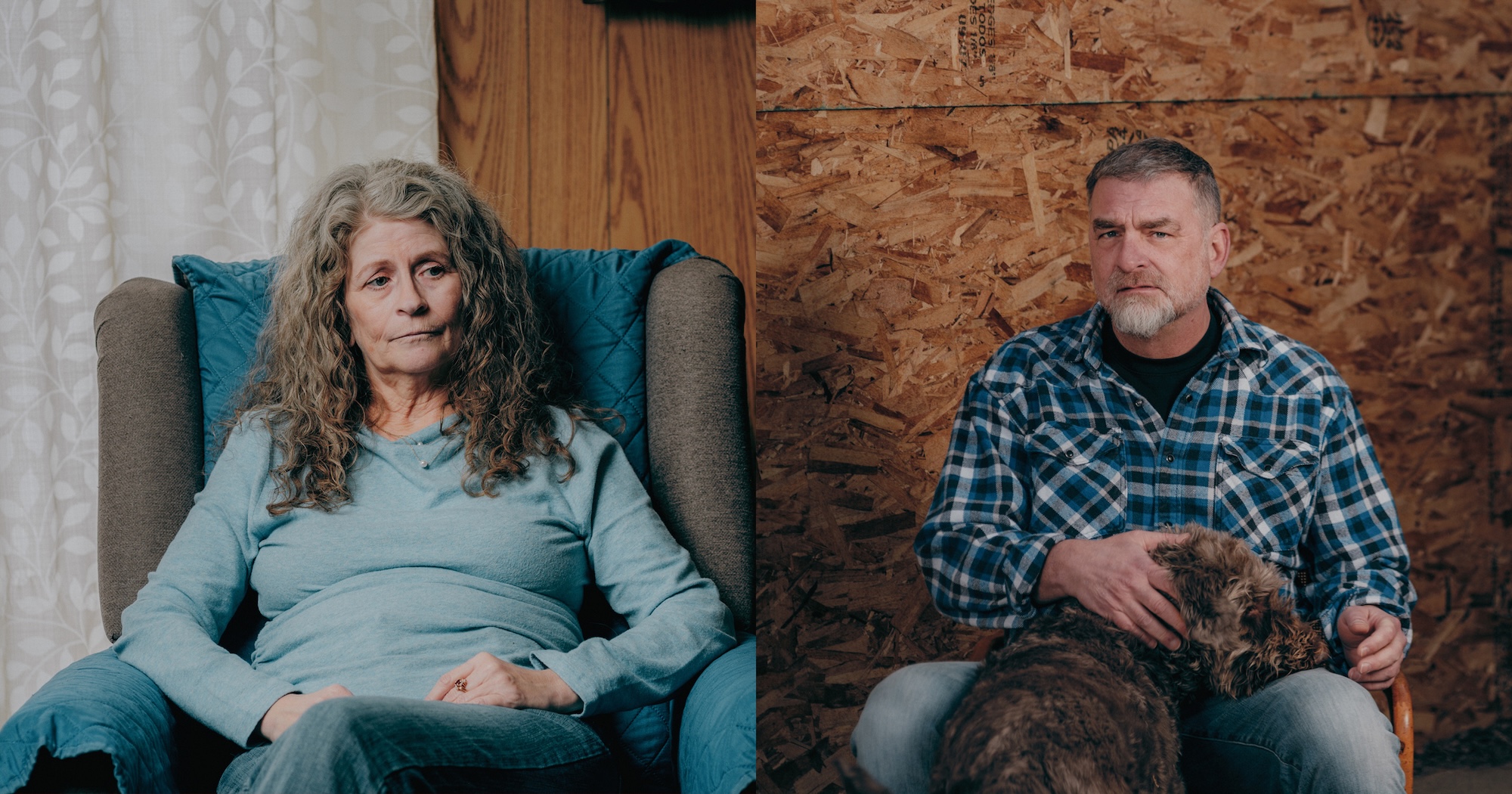
Veterans Who Depend on Mental Health Care Keep Losing Their Therapists Under Trump
As Jason Beaman recounts his long slog searching for mental health therapy last year, he sounds defeated. The first therapist assigned to him by the Department of Veterans Affairs told him at their initial meeting that she was leaving the agency. A few months later, his second therapist told him she was also leaving. An appointment with a third counselor was canceled with no explanation. These were huge setbacks for the 54-year-old veteran of the Navy and Army Reserve. Nearly a decade ago, a spiral of depression and anxiety left him homeless and living on the streets of Spokane, Washington. A VA social worker threw him a lifeline, helping him apply for benefits, find housing and get into therapy. He still needs mental health care, he and his physician say. But bouncing from therapist to therapist has left him exhausted. “I just quit. I don’t want to mess with the therapist anymore,” Beaman said. He spends much of his time now alone playing video games or walking with his dogs. Beaman, a veteran of two military branches, gave up searching for a new therapist after attempting to meet regularly with several different providers after his move to Nebreska. He eventually met with a therapist in January, after months of false starts. After President Donald Trump returned to office last year, his administration announced plans to overhaul the VA, one of the largest health care systems in the country, to deliver “ the highest quality care .” “This administration is finally going to give the veterans what they want,” VA Secretary Doug Collins said last March, as the department announced tens of thousands of job cuts. But in interview after interview, veterans across the country told ProPublica that one year into the second Trump administration it’s become more difficult to get treatment, as hundreds of therapists and social workers have left the VA. Many of them have not been replaced. While front-line mental health care workers were largely exempted from the job cuts, hundreds chose to leave anyway. Some cited disagreements with new administration policies, including several targeting the LGBTQ+ community, while others, facing diminished ranks, said they simply could no longer provide proper care. In January, the department had around 500 fewer psychologists and psychiatrists than it had at the same time last year, ProPublica found. Although the losses represent a relatively small number — about 4% of psychologists and 6% of psychiatrists — they are notable for an agency that has long struggled with inadequate mental health staffing . For years, administrators have listed psychologists in particular among their most “ severe staffing shortages .” Mental health is not the only area where the VA has lost medical staff. The agency has eliminated more than 14,000 vacant health care positions across the system, according to data first reported by The New York Times. Data published by the VA going back to May 2023 shows that the agency was adding psychologists every quarter until Trump’s return to the White House. Then, the trend flipped, with departures outpacing hires in all four quarters of last year. Compounding the losses, the agency’s cohort of social workers, some of whom are licensed therapists who provide mental health counseling, declined by nearly 700 staffers over the year. To better understand the departures and their impact on veterans’ care, ProPublica interviewed dozens of former and current VA staffers as well as patients. ProPublica also examined a previously unreported internal employee exit survey, which included hundreds of responses from mental health care workers. “Mental Health is understaffed, burned out, and there is not enough mental health care for the Veterans who need the services,” wrote one New York-based former employee, according to the records. “Support is no longer there to provide ethical and good care for these Veterans,” wrote a second, based in Indiana. “Scheduling issues are incredibly high due to poor staff hiring and retainment.” Yet another wrote that the number of new patients seeking help at their Kansas facility was far too high, making it “unethical to accept more veterans in our clinics.” Many of those vacated positions have gone unfilled due to a yearlong hiring freeze, which was only lifted in January. After Hiring Spree Under Biden, VA Lost Mental Health Staff When Trump Returned to Office The losses under the new administration amount to 4% of the agency’s psychologists, 6% of psychiatrists and 3% of social workers. Note: Quarters are labeled by calendar, not fiscal, year. Source: VA workforce dashboard, internal data. Echoing the exit survey, many who remain on staff describe crushing workloads as they struggle to fill the gaps. Those reached by ProPublica, who agreed to speak only under the condition of anonymity for fear of retaliation, said that as staffing losses mount, they’ve seen their patient loads increase, while administrators shorten their appointments and pack more and more clients into group therapy sessions. “It was always bad,” said one VA psychologist, referring to staffing at a facility in Arizona. “And now it’s at a breaking point.” The therapist described being stretched so thin that schedulers replaced some one-on-one sessions with online group sessions that included as many as 35 veterans. The therapist said despite that they were still overloaded with individual sessions and had to limit each one to as little as 16 minutes. The VA declined ProPublica’s request to interview an official familiar with its mental health programs. In an email, VA spokesperson Peter Kasperowicz accused ProPublica of attempting to mislead the public by “cherry picking issues that are limited to a handful of sites and in many cases were worse under the Biden Administration.” He argued that the agency’s performance around mental health has improved since Trump took office, citing more than 15.5 million direct mental health care appointments in the most recent fiscal year (Oct. 1, 2024, to Sept. 30, 2025), a 4% increase from the previous fiscal year. He did not say whether those additional appointments were for individual therapy. Kasperowicz also noted that the administration has opened 25 new health care clinics. After ProPublica shared its findings and the names of veterans who would appear in this story, the agency reached out to several to inquire about their care and offer help. The veterans told ProPublica they remained skeptical that the VA would consistently respond to their mental health needs. As the ranks of mental health care providers at the VA have shrunk, the department has proposed shifting billions of dollars into community care, a program in which veterans obtain health care via private physicians and other providers. But the program has been stretched thin amid the loss of administrative staff and ongoing issues finding private therapists, ProPublica found, with veterans encountering longer delays as they seek help. In December, patients waited an average of around 25 days just to receive a confirmed appointment date, nearly four times the VA’s stated goal for scheduling community care. Collins has disputed assertions that there’s a systemwide problem with access to mental health care. “And if you need emergency care, or are in a crisis situation, you have immediate care,” he told a Senate committee in January. He said the VA’s average wait time for new patients seeking mental health care appointments was less than 20 days, the number it has set as its goal. But other VA officials have acknowledged problems with access. “There are wait times at some facilities that are beyond what our expectations and standards would be,” Dr. Ilse Wiechers, assistant undersecretary for health for patient care services, told senators at a separate hearing. ProPublica’s analysis found that wait times fluctuate dramatically, and fast access to care can depend on location. For example, the small clinic near Beaman’s home in rural Nebraska, with its comparatively small staff, saw appointment wait times for new mental health clients climb as high as 60 days in December and drop to 20 days in February, according to the VA figures. But a closer look at the entire VA system reveals that a large number of facilities are struggling. In early February, more than half of its hospitals and clinics reported one-on-one mental health appointment wait times for new patients that were longer, and in some cases far longer, than the VA’s 20-day goal, according to a ProPublica analysis of data published on the agency’s website. In late December, Beaman said he received an email from the VA saying he’d been approved for additional therapy. He was able to meet with a therapist in January — after about six months of waiting and going more than a year without a session. In the interim, he said, he relied on prescription medications, video games and his therapy dogs to keep him steady. Still, his anxiety worsened, he said, and now he often feels so uncomfortable around others that he rarely leaves his home except to walk his dogs while wearing headphones so no one speaks to him. Kasperowicz, the VA spokesperson, wrote in his email to ProPublica that Beaman had “more than a dozen mental health visits at VA between late 2024 to mid-2025 through the Cheyenne VA clinic” in Wyoming, which is about an hour-and-a-half trip for Beaman. Kasperowicz declined, however, to say whether those appointments involved the one-on-one mental health counseling Beaman had requested. Beaman said he only had two sessions for one-on-one therapy in 2025 — meetings that were truncated because of the therapists’ impending departures. Kasperowicz also said that one of Beaman’s appointments didn’t occur because he had “moved.” Beaman, however, said he has lived at only one address in Nebraska. Experts warn that the exodus of mental health care providers from the VA has hurt the agency’s ability to meet veterans’ unique needs. “VA psychologists are best in class,” said Russell Lemle, former chief psychologist for the San Francisco VA Health Care System and a senior policy analyst at the Veterans Healthcare Policy Institute. “They have research and training and decades-long experience” working with veterans. “When you lose them, the veterans are the ones who pay the price,” he said. Michelle Phillips, a Navy veteran, received a pink toy soldier at a Department of Veterans Affairs event. “It Could Mean Life or Death” Michelle Phillips, 56, a Navy veteran from Ohio, saw her therapist in remote sessions once a week for two years for her PTSD. Then, in December, Phillips’ therapist told her that she was quitting the VA because of Trump’s policies. The change, Phillips said, “could mean life or death.” Years of depression have led Phillips to isolate. Inside her small home about an hour outside of Columbus, the city where she enlisted in 1988, the walls are filled with reminders of brighter times — photos of family members and military paraphernalia from her time in the service. Her only real company is an aging dog, and she almost never leaves. Her virtual therapy sessions were “the only contact that I had coming in my home to talk to me every week,” she said. “And I would sit and just wait for that appointment.” Phillips said the counselor requested that the VA continue her one-on-one remote counseling with a new therapist — which totaled about four hours per month. The agency initially offered her virtual group therapy, an option that her previous therapist dismissed as inappropriate. In the third week of January, the VA told Phillips she could have an appointment for one-on-one sessions in March. She later declined the appointment because she didn’t want to face starting over with a new therapist. Phillips, who is disabled and doesn’t work, said she will try to pay for one-on-one therapy out of pocket with the same therapist who left the VA but will likely only be able to afford one, possibly two, sessions a month. Phillips was sent an iPad by the VA for her remote therapy sessions. It sits unused since Phillips’ VA therapist told her that she was quitting. James Jones said his close connection to his VA therapist, who was trained in combat trauma, helped him control his PTSD-fueled episodes of anger and alcohol abuse. Now the 54-year-old Gulf War veteran, who lives in the Blue Ridge Mountains of North Carolina, has seen his care cut in half after his therapist told him colleagues had quit and he had to pick up the load. His sessions went from an hour every week to half an hour every two weeks. “I can tell it’s rushed,” said Jones, a maintenance mechanic with the National Park Service. “I’m not able to work through something.” Others have found it difficult to establish care in the first place. Last summer, George Retes, 26, who left the Army in 2022 after serving for four years, was driving to work in Camarillo, California, when he was suddenly caught between immigration agents and protesters. Retes said the agents broke his car window, pepper-sprayed him and detained him for days. The incident, which ProPublica detailed last fall , left him shaken and exacerbated the PTSD that was first sparked after he faced missile attacks in Iraq, Retes said. (The Department of Homeland Security has not responded to ProPublica’s questions about Retes.) Following his release, Retes found himself withdrawing from the world. “I wasn’t texting anyone or talking to anyone,” he said. “Not even my kids.” A few weeks after being arrested, Retes sought help from the VA clinic in Ventura, California, where staffers told him they’d be in touch for an appointment. But Retes said he never heard back, even after he called to follow up. His incident with Immigration and Customs Enforcement was in July. Retes is still waiting. According to data on the VA’s website, new patients seeking individual therapy at the Ventura clinic had to wait an average of two and a half months in early February. The VA said it could not discuss Jones’ or Retes’ accounts because the veterans declined to waive their privacy rights. Strains on the System The VA overhaul has also taken a toll on mental health providers, many of whom quit after spending years at the agency. Natalie McCarthy worked as a social worker and mental health therapist for a decade before quitting the VA in May. Like many others working in mental health, she did all of her work remotely; from her Ohio home she saw vets mostly from the Washington, D.C., area. But McCarthy and her colleagues faced pressure to return to agency offices after the VA issued new restrictions on telehealth workers. She was uneasy about the prospect of having to conduct sessions in makeshift spaces like conference rooms filled with other counselors — a situation that raised widespread ethical concerns over the legally mandated privacy for medical conversations. Complicating matters, McCarthy said, were Trump’s orders eliminating diversity and equity initiatives within the federal government. She said she began to worry that therapists would no longer be able to discuss the subject of race with their patients or document patients’ thoughts on the topic in their session notes. So she quit. “I was angry that veterans were in that position,” said McCarthy, who started her own practice. “I was angry that I was in that position. It just felt like an unnecessary thing to have to navigate.” Psychologist Mary Brinkmeyer quit working with the VA last February after her superiors began enforcing the Trump administration’s anti-diversity agenda. Psychologist Mary Brinkmeyer found herself in a similar situation. She started at a VA facility in metropolitan Norfolk, Virginia, in 2022 after seeing a posting for an LGBTQ+ care coordinator, which oversees support programs for LGBTQ+ veterans and helps navigate their care. She quit last February after her superiors began enforcing Trump’s anti-diversity orders. Brinkmeyer said she was told to stop conducting training for physicians and other staff on best practices for caring for LGBTQ+ patients. Then, she said, staff members were ordered to remove all LGBTQ+ paraphernalia from the facility such as rainbow flags, identity-affirming literature and program brochures. Also, an edict was issued directing people to use the bathroom of their gender assigned at birth, Brinkmeyer said. That’s when the VA stopped feeling like a welcoming place. “There was a failure of empathy,” she said. The VA did not respond directly to either Brinkmeyer’s or McCarthy’s accounts of how the administration’s policies had impacted the quality of mental health care. Much like those seeking mental health care directly from the VA, veterans referred to community care are also struggling to secure appointments. Gwyn Bourlakov, 58, enlisted in the Army National Guard in 1998 and over the following 21 years she was awarded a Bronze Star for her service in the invasion of Iraq, climbed the ranks to become a major and won a Fulbright scholarship to study Russian history. Today, after a series of professional setbacks, Bourlakov works as a museum security guard. Lingering PTSD from her time in the service, coupled with deep bouts of depression over her current circumstances, have kept her seeking the VA’s help despite long-standing frustrations with its services. After she began looking for a new therapist last year following a move to Colorado, officials at her local VA clinic in Golden said at her intake appointment that its in-house providers were swamped and could not see new patients for at least six months. She asked if she could get help through community care, but staffers told her that the system was so overwhelmed that it would be a “nightmare,” she recalled. Veterans living in eastern Colorado waited 57 days on average to get a community care appointment scheduled in December, VA figures show. Bourlakov said she tried to get help through a separate VA clinic, but when her phone calls went unanswered, she finally gave up. “I don’t have time for all of that,” she explained. “It’s just like shouting into the wind.” Gwyn Bourlakov gave up looking for care through the VA after a series of unanswered calls and attempts to find help went nowhere. After inquiries by ProPublica, VA authorities reached back out to offer her assistance. Following inquiries from ProPublica, VA officials reached out to Bourlakov and other veterans interviewed for this story to offer additional assistance with their mental health care. The calls left several frustrated, saying it shouldn’t take questions from the media for them to get help from the VA. Though skeptical, Bourlakov decided to move forward. She was contacted by three separate VA representatives in February asking about her health and if she needed help scheduling a therapy appointment. The earliest telehealth appointment they offered was not until June, she said. The next available in-person slot was not until July. Bourlakov opted for June. The post Veterans Who Depend on Mental Health Care Keep Losing Their Therapists Under Trump appeared first on ProPublica .

Amid Crowded Skies, FAA Kills Rule Aimed at Regulating Space Junk
The Trump administration is backing off a rule aimed at stopping commercial space companies from leaving rocket bodies in Earth’s orbit, a practice that experts say could threaten public safety and telecommunications. The Federal Aviation Administration first proposed the measure in 2023 , under the Biden administration, in hopes of curbing the growing junkyard of debris circling the planet. It would have required companies like Elon Musk’s SpaceX to safely remove such spacecraft within 25 years of launch, saying they “pose a significant risk to people on the ground due to their mass and the uncertainty of where they will land.” Officials cited examples such as a SpaceX Falcon 9 rocket reentering Earth’s atmosphere over the Pacific Northwest in March 2021, which created streaks of lights across the night sky and dropped a tank on a farm in Washington state . SpaceX and other companies, however, criticized the proposal, citing concerns that included its cost, and in January, the FAA nixed the rule, saying the agency needs more time to research it. “FAA intends to review the space launch industry cost inputs and expectations with respect to debris mitigation activities,” the FAA said, adding it would also look at the agency’s authority to enact such regulations. In response to questions for this story, an agency spokesperson reiterated that rationale. The White House did not respond to requests for comment about the withdrawal. The action is a concession to the commercial space industry and follows moves by President Donald Trump’s administration last year to roll back regulations meant to protect the environment and the public during rocket launches. “The Trump administration is committed to cementing America’s dominance in space without compromising public safety or national security,” a White House spokesperson said last summer. Critics, however, said the government was missing an opportunity to control debris — and endangering the public in the process. Rockets can be hundreds of feet tall and typically are made up of multiple parts, known as stages. After any lower stages fall away, the upper stage continues on into space to deploy payloads such as satellites or to perform other missions. “Instead of requiring companies to responsibly dispose of these upper stages, the U.S. has decided to roll the dice on a person or a plane getting hit by falling debris,” said Ewan Wright, a Ph.D. candidate at the University of British Columbia and junior fellow at the Outer Space Institute, a nonprofit that supported the rule. Wright’s research with colleagues found a 20% to 29% chance that debris from a reentering rocket would kill at least one bystander sometime in the next decade. No deaths have occurred from falling space debris yet. But minor injuries have been documented, including a boy in China whose toe was broken and a woman who was hit on the shoulder in Tulsa , Oklahoma. In 2024, a piece of metal from the International Space Station crashed through the roof of a home in Naples, Florida. The explosions of two SpaceX Starship megarockets last year that rained debris over the Caribbean brought new attention to the danger to airplanes as spacecraft reenter the atmosphere — sometimes in an uncontrolled way. After ProPublica wrote about the Starship mishaps, the FAA issued a new warning to airlines , saying that rocket launches could “significantly reduce safety” and that pilots should prepare for the possibility that “catastrophic failures” could create dangerous debris. Space junk also adds to the threat, experts said, for both the space program and daily life on Earth. If the growing debris field above the planet is left unchecked, the FAA said in 2023, it could clutter orbits used for human spaceflight and increase the chance of collisions causing damage to satellites that support communications, weather forecasting and global positioning systems. The FAA said at the time that the rule was an attempt to bring the evolving commercial space industry in line with national practices that are followed by NASA and with international guidelines. Wright said that about half of all launches leave the rocket’s upper stage in orbit. There, it can pose a risk to crewed space stations and interfere with astronomers’ research before crashing to earth. In the last three years, U.S. rocket companies, including SpaceX and United Launch Alliance, have abandoned 41 upper stage rockets in orbit, Wright said. Thirty-three are still there now. “Abandoning truck-sized upper stages in orbit is an irresponsible act,” he said. In response, SpaceX pointed to a statement posted on its website , saying it has been working to reduce — and ultimately eliminate — space debris left behind by Falcon, which regularly deploys new Starlink satellites. “In 2024, 13 out of 134 upper Falcon 9 stages remained on-orbit after successful payload deploys,” the company said. “In 2025, we reduced this number to three out of a total of 165 launches.” United Launch Alliance, a joint venture of Lockheed Martin and Boeing, said through a spokesperson that it disposes of its upper stage rockets safely “by placing them in a graveyard orbit or conducting a controlled reentry where most of the stage disintegrates over the remote, deep ocean.” A piece of space debris has fallen to Earth every day on average for the last 50 years, the FAA said when it proposed the rule. Last year, an eight-foot, 1,100-pound ring from a rocket fell on a remote Kenyan village , and fragments of a Falcon 9 were found in a forest, warehouse and field in Poland . The FAA’s proposal would have required launch companies to submit a plan for how they would remove debris prior to launch and would apply to any pieces of debris larger than five millimeters. Acceptable options for disposing of used rockets that couldn’t burn up in the atmosphere would include pushing them out to a higher “disposal” orbit or navigating them to splashdown in a “broad ocean area,” the FAA wrote. Read More “We’re Too Close to the Debris” In comments responding to the proposal, commercial space companies challenged the FAA’s authority to implement the rule and said they were concerned about issues including cost. SpaceX said the proposal “grossly underestimates the costs and impacts of the proposed rule and overstates the benefits.” Experts worry that a debris collision could create a chain reaction that would be hard to stop, rendering large areas unnavigable — a phenomenon known as Kessler syndrome. In 2009, a U.S. satellite and a defunct Russian satellite collided above northern Siberia, generating more than 2,300 pieces of debris large enough to be tracked. The problem complicates SpaceX’s work, too. As the New Scientist reported in January, the company’s Starlink satellites regularly maneuver to avoid colliding with objects such as other satellites or space debris — performing about 300,000 such actions last year alone. The post Amid Crowded Skies, FAA Kills Rule Aimed at Regulating Space Junk appeared first on ProPublica .

Report Confirms Columbia Ignored Decades of Doctor’s Sexual Abuse
Decades after patients first warned Columbia University that one of its doctors sexually abused them, some university administrators have finally faced consequences. On Tuesday, Columbia released a long-awaited report that details a culture of silence that allowed OB-GYN Robert Hadden to abuse more than 1,000 patients during his nearly 25-year career at Columbia. In unveiling the report, the university also announced that two long-time administrators are leaving their positions. Dr. Mary D’Alton, chair of the OB-GYN department and Hadden’s former boss, has stepped down. D’Alton will maintain her clinical practice. Dr. Lee Goldman, the former dean of the medical school, will retire. The two were administrators above Hadden. They were also among those cc’d on a 2012 letter that let Hadden continue seeing patients even after he was arrested when one woman reported he’d assaulted her. Yesterday’s report was prompted by a ProPublica investigation that revealed how Columbia had dismissed women and ultimately protected a predator . Amid outrage in the wake of the 2023 story, Columbia announced it would set up a $100 million fund for survivors and initiate an independent review . More than two years after the review was announced, the 156-page report was published days after the New York attorney general said it was investigating Columbia’s response to the Hadden case. The report outlines how more than a dozen patients’ complaints had gone nowhere, in part because of the lack of clear reporting procedures. The report also found a “hierarchal institutional culture” in which physicians occupied an “exalted” or “god-like” status that made it difficult for staff to report concerns. One patient, Eva Santos Veloz, was 18 years old when she saw Hadden for an emergency delivery in 2008. At the time, she and her mother reported that Hadden had touched her in ways that made her uncomfortable, sometimes without gloves. Nothing happened after she filed the complaint. At the time, she said, she came to believe she was making the whole thing up because no one seemed to believe her. Santos said that while the report confirms that she was right all along, it doesn’t tell her anything new. “The only peace it gives me is that they are publicly saying, ‘We knew about this and we did nothing,’” she said. The report also lists five different complaints that were reported to leadership but resulted in no action against Hadden. Investigators note that the university’s record-keeping practices were insufficient and that higher-ups failed to conduct a full investigation into his misconduct. Andrew Toth/Getty Images Patrick McMullan/Getty Images As a result of the report, both Dr. Mary D’Alton, first image, chair of the OB-GYN department, and Dr. Lee Goldman, former dean of the medical school, are leaving their administrative positions at the school. In an internal email sent Tuesday to the OB-GYN department and obtained by ProPublica, D’Alton announced that she will remain on the faculty “to continue our department’s work of advancing women’s health.” “I cannot adequately express the sorrow that I feel for the suffering Robert Hadden inflicted on his patients,” D’Alton wrote in the email. “That these acts were committed by a doctor in our department, including while I was chair, pains me deeply and always will.” A similar statement posted to the Columbia website does not note her continued employment. D’Alton did not respond to a request for comment. In a statement, Goldman said his “heart breaks for the victims of Robert Hadden.” He continued: “Throughout my tenure we focused on prioritizing a culture of ethics and patient safety at the medical school, and to reassess and enhance its policies and procedures on an ongoing basis.” The report also confirms that executives at the top of the organizations — including former Columbia President Lee Bollinger, as well as one of the trustees at both Columbia and NewYork-Presbyterian Hospital, the Columbia-affiliated system where Hadden was an attending physician — had been alerted to Hadden’s arrest the evening it occurred. Bollinger, who retired from his post in the summer of 2023, did not respond to a request for comment. A letter accompanying the report’s release said, “The University remains steadfast in our commitment to our ongoing responsibilities. We must continue to operate with transparency and confront systemic failures when they occur.” Columbia did not provide an additional comment. In a statement , a group of survivors, including Marissa Hoechstetter and Evelyn Yang, criticized the report for failing to examine what happened in the years after Hadden left Columbia — including the university’s documented efforts to destroy evidence , fight former patients in court and discredit those survivors. The statement also points out that Claire Shipman, the current acting president of the university and who signed Tuesday’s announcement, has been on the board of trustees since 2013, amid the fallout from the Hadden case. She did not respond to a request for comment. Read More How Columbia Ignored Women, Undermined Prosecutors and Protected a Predator for More Than 20 Years “What Columbia has released today offers the bare minimum accountability for failures that should have been addressed years ago,” the survivors’ statement said. “It confirms the systemic breakdown that allowed Hadden to operate. But it stops short of examining the cover-up culture that survivors experienced firsthand once the abuse came to light.” The deadline to submit a claim for compensation to Columbia’s survivor fund , which was established for former patients who do not want to file a lawsuit, was extended to June 15. The post Report Confirms Columbia Ignored Decades of Doctor’s Sexual Abuse appeared first on ProPublica .

DHS Seeks Access to Massive Employment, Salary and Family Database Legally Restricted to Use in Child Support Cases
The Trump administration’s immigration enforcement arm is requesting unfettered access to what is considered to be the most comprehensive government database of people in the United States and their most private information, including sensitive details about individual children, according to six current and former federal officials. It is called the Federal Parent Locator Service, and it’s meant for finding people who owe child support. Granting access to the Department of Homeland Security, the officials said, would violate a federal law that explicitly limits its use to determining and collecting child support payments and a handful of other narrow purposes. But DHS’ ask is being seriously considered within the Department of Health and Human Services, which maintains the database. The database contains the name, address, Social Security number, employer, and salary or wages of every employed person in the country, as well as the equivalent details for anyone listed in state unemployment systems. It exists so that if someone owes child support, the government can pursue them for it even if they’ve changed jobs or moved to another state. The repository includes these personal details and employment records, updated throughout the year, for all types of people — even those who don’t have any children. Only some who work exclusively in the gig or cash economy, or who are entirely self-employed, might not be listed. The database also names every child in the U.S. who is the subject of a state child support case, including each child’s sex, birthday and Social Security number, as well as family members’ names and relationships. And it identifies when single mothers and kids who receive child support are domestic violence victims — alongside their address. “This is the most powerful people-finder system that the U.S. government has, and possibly that exists,” said Bethanne Barnes, who from 2019 through October of last year was a data director for the Administration for Children and Families, the subdivision of HHS that oversees the database. Turning the child support data over to Homeland Security “would be disastrous for child support enforcement” and “would ruin the foundation of the child support program,” said Vicki Turetsky, who was commissioner of HHS’ office of child support enforcement from 2009 to 2016. Turetsky said that if this were to happen, many employers, fearful of ICE arrests of their employees or workplace raids, would consider no longer reporting new hires to the government. This in turn would degrade the ability of the system to find parents who owe payments to their kids, she said. State child support agency leaders have been nervously messaging one another about this prospect recently, said Kate Cooper Richardson, the longtime head of Oregon’s child support program who retired in January. State officials have spent decades building trust with employers, Cooper Richardson said, reminding them that submitting their new-hire data to child support authorities is required and that sensitive information about their workers will be used only for child support enforcement and otherwise kept confidential. Some business leaders have already reached out to state administrators, she said, concerned about rumors of President Donald Trump’s administration seeking to use this data for immigration enforcement. “And if we’re not learning from employers when a parent who owes child support gets a new job, who loses in that situation?” Cooper Richardson said. “The 1 in 5 U.S. children who rely on consistent and regular child support.” A White House spokesperson said in a statement that “the entire Trump administration is working to lawfully implement the President’s agenda to put Americans first. Any sensitive information required to do so will be obtained and handled properly.” A DHS representative requested additional time to respond to detailed questions sent by email, which ProPublica agreed to, but DHS did not provide any responses. Last year, Department of Government Efficiency appointees sought and for a brief period gained access to the National Directory of New Hires, the part of the child support database that contains people’s employment information. It is unclear what, if anything, the DOGE team did with this data; the federal courts temporarily blocked it from continuing to access Social Security, IRS and other sensitive records, and then DOGE disbanded last summer before final rulings on the legality of its efforts had been made. Over the past month, though, three officials said, DHS has separately and expressly requested both the new-hire data and also the Federal Case Registry, the other half of the database where the catalog of all child support cases is housed. This has the much more sensitive specifics on families and children, including information on paternity, domestic violence and more. It is unclear why DHS would want this, given that locating undocumented immigrants at their places of work or targeting those businesses for raids would be possible using just the employment data, without all of the case registry’s additional personal details. Whatever DHS’ intentions might be, multiple officials and privacy experts interviewed for this story expressed concern that abusers in the ranks of law enforcement would soon be able to see their victims’ case information and addresses, and that a manifest of vulnerable children would become widely available in the government. Read More The Untold Saga of What Happened When DOGE Stormed Social Security The Department of Health and Human Services general counsel’s office, which is run by a Trump political official, must now decide whether it believes federal law allows the agency to provide DHS with the full child support database. Child support staff strongly oppose doing this, but the request is now with the lawyers, people familiar with the situation said. HHS Secretary Robert F. Kennedy Jr. may also have to approve the data sharing. If it’s approved, the department is likely to be sued by legal advocacy groups almost immediately, lawyers and experts said. HHS did not respond to a request for comment. Internal emails show that HHS’ Administration for Children and Families last year was also directed to cross-check all of its other datasets — on families who interact with child care, foster care , Head Start and other systems — against DHS immigration records. The Trump administration has expanded a DHS tool called SAVE to allow federal and state agencies to check the citizenship of millions of people at once, including those who rely on public assistance programs like these. (Also using this tool, the administration has consistently inaccurately flagged citizens as noncitizens on state voter rolls, ProPublica has reported.) In DHS’ efforts to gather data from other agencies, the department has argued that several U.S. statutes allow federal law enforcement to obtain information without a warrant from any government agency pertaining to the identity and location of people living in the country illegally, especially if national security is at stake. In DHS’ view, these statutes should overrule all others, even a law that would seem to bar the department from obtaining an entire database of sensitive information about children unrelated to immigration. Congress has previously permitted a handful of exceptions that allow certain agencies to access parts of the child support data archive. That includes using it in limited ways to help manage custody and visitation cases, to pursue people who have federal student loan debt and to check the incomes of those who apply for means-tested government programs, like housing assistance. Maya Bernstein has overseen federal data privacy policies for over three decades, starting during the first Bush administration. In the 1990s, she helped lead the work on the creation of the Health Insurance Portability and Accountability Act, the medical records privacy law, before serving 20 years as the senior adviser for privacy policy at HHS. “I know a lot about a lot of different databases,” she said, and the child support database is “the one that I’m most worried about.” “It is very unusual for them to want the Federal Case Registry,” Bernstein added, referring to the part of the database with children’s case information. “In my career, no one has asked for access to that. Most people have never even heard of it.” The post DHS Seeks Access to Massive Employment, Salary and Family Database Legally Restricted to Use in Child Support Cases appeared first on ProPublica .

The U.S. Built a Blueprint to Avoid Civilian War Casualties. Trump Officials Scrapped It.
Images from the missile strike in southern Iran were more horrifying than any of the case studies Air Force combat veteran Wes J. Bryant had pored over in his mission to overhaul how the U.S. military safeguards civilian life. Parents wept over their children’s bodies. Crushed desks and blood-stained backpacks poked through the rubble. The death toll from the attack on an elementary school in Minab climbed past 165, most of them under age 12, with nearly 100 others wounded, according to Iranian health officials. Photos of small coffins and rows of fresh graves went viral, a devastating emblem of Day 1 in the open-ended U.S.-Israeli war in Iran. Bryant, a former special operations targeting specialist, said he couldn’t help but think of what-ifs as he monitored fallout from the Feb. 28 attack. Just over a year ago, he had been a senior adviser in an ambitious new Defense Department program aimed at reducing civilian harm during operations. Finally, Bryant said, the military was getting serious about reforms. He worked out of a newly opened Civilian Protection Center of Excellence, where his supervisor was a veteran strike-team targeter who had served as a United Nations war crimes investigator. Today, that momentum is gone. Bryant was forced out of government in cuts last spring. The civilian protection mission was dissolved as Defense Secretary Pete Hegseth made “lethality” a top priority. And the world has witnessed a tragedy in Minab that, if U.S. responsibility is confirmed, would be the most civilians killed by the military in a single attack in decades. Dismantling the fledgling harm-reduction effort, defense analysts say, is among several ways the Trump administration has reorganized national security around two principles: more aggression, less accountability. Trump and his aides lowered the authorization level for lethal force, broadened target categories, inflated threat assessments and fired inspectors general, according to more than a dozen current and former national security personnel. Nearly all spoke on condition of anonymity for fear of retaliation. “We’re departing from the rules and norms that we’ve tried to establish as a global community since at least World War II,” Bryant said. “There’s zero accountability.” Citing open-source intelligence and government officials, several news outlets have concluded that the strike in Minab most likely was carried out by the United States. President Donald Trump, without providing evidence, told reporters March 7 that it was “done by Iran.” Hegseth, standing next to the president aboard Air Force One, said the matter was under investigation. The next day, the open-source research outfit Bellingcat said it had authenticated a video showing a Tomahawk missile strike next to the school in Minab. Iranian state media later showed fragments of a U.S.-made Tomahawk, as identified by Bellingcat and others, at the site. The United States is the only party to the conflict known to possess Tomahawks. U.N. human rights experts have called for an investigation into whether the attack violated international law. The Department of Defense and White House did not respond to requests for comment. Since the post-9/11 invasions of Afghanistan and Iraq, successive U.S. administrations have faced controversies over civilian deaths . Defense officials eager to shed the legacy of the “forever wars” have periodically called for better protections for civilians, but there was no standardized framework until 2022, when Biden-era leaders adopted a strategy rooted in work that had begun under the first Trump presidency. Formalized in a 2022 action plan and in a Defense Department instruction , the initiatives are known collectively as Civilian Harm Mitigation and Response, a clunky name often shortened to CHMR and pronounced “chimmer.” Around 200 personnel were assigned to the mission, including roughly 30 at the Civilian Protection Center of Excellence, a coordination hub near the Pentagon. The CHMR strategy calls for more in-depth planning before an attack, such as real-time mapping of the civilian presence in an area and in-depth analysis of the risks. After an operation, reports of harm to noncombatants would prompt an assessment or investigation to figure out what went wrong and then incorporate those lessons into training. By the time Trump returned to power, harm-mitigation teams were embedded with regional commands and special operations leadership. During Senate confirmation hearings, several Trump nominees for top defense posts voiced support for the mission. Once in office, however, they stood by as the program was gutted, current and former national security officials said. Around 90% of the CHMR mission is gone, former personnel said, with no more than a single adviser now at most commands. At Central Command, where a 10-person team was cut to one, “a handful” of the eliminated positions were backfilled to help with the Iran campaign. Defense officials can’t formally close the Civilian Protection Center of Excellence without congressional approval, but Bryant and others say it now exists mostly on paper. “It has no mission or mandate or budget,” Bryant said. Spike in Strikes Global conflict monitors have since recorded a dramatic increase in deadly U.S. military operations. Even before the Iran campaign, the number of strikes worldwide since Trump returned to office had surpassed the total from all four years of Joe Biden’s presidency. Had the Defense Department’s harm-reduction mission continued apace, current and former officials say, the policies almost certainly would’ve reduced the number of noncombatants harmed over the past year. Beyond the moral considerations, they added, civilian casualties fuel militant recruiting and hinder intelligence-gathering. Retired Gen. Stanley McChrystal, who commanded U.S. and NATO forces in Afghanistan, explains the risk in an equation he calls “ insurgent math ”: For every innocent killed, at least 10 new enemies are created. U.S.-Israeli strikes have already killed more than 1,200 civilians in Iran, including nearly 200 children, according to Human Rights Activists News Agency , a U.S.-based group that verifies casualties through a network in Iran. The group says hundreds more deaths are under review, a difficult process given Iran’s internet blackout and dangerous conditions. A mourner holds a portrait of students during a funeral held after a school in Iran’s Hormozgan province was bombed. Thousands attended the ceremony. Stringer/Anadolu via Getty Images Defense analysts say the civilian toll of the Iran campaign, on top of dozens of recent noncombatant casualties in Yemen and Somalia, reopens dark chapters from the “war on terror” that had prompted reforms in the first place. “It’s a recipe for disaster,” a senior counterterrorism official who left the government a few months ago said of the Trump administration’s yearlong bombing spree. “It’s ‘Groundhog Day’ — every day we’re just killing people and making more enemies.” In 2015, two dozen patients and 14 staff members were killed when a heavily armed U.S. gunship fired for over an hour on a Doctors Without Borders hospital in northern Afghanistan, a disaster that has become a cautionary tale for military planners. “Our patients burned in their beds, our medical staff were decapitated or lost limbs. Others were shot from the air while they fled the burning building,” the international aid group said in a report about the destruction of its trauma center in Kunduz. A U.S. military investigation found that multiple human and systems errors had resulted in the strike team mistaking the building for a Taliban target. The Obama administration apologized and offered payouts of $6,000 to families of the dead. Human rights advocates had hoped the Kunduz debacle would force the U.S. military into taking concrete steps to protect civilians during U.S. combat operations. Within a couple years, however, the issue came roaring back with high civilian casualties in U.S.-led efforts to dislodge Islamic State extremists from strongholds in Syria and Iraq. The aftermath of the U.S. airstrike on the Doctors Without Borders hospital in Kunduz, Afghanistan, that killed 42 people. Najim Rahim/AP Images In a single week in March 2017, U.S. operations resulted in three incidents of mass civilian casualties: A drone attack on a mosque in Syria killed around 50; a strike in another part of Syria killed 40 in a school filled with displaced families; and bombing in the Iraqi city of Mosul led to a building collapse that killed more than 100 people taking shelter inside. In heavy U.S. fighting to break Islamic State control over the Syrian city of Raqqa, “military leaders too often lacked a complete picture of conditions on the ground; too often waved off reports of civilian casualties; and too rarely learned any lessons from strikes gone wrong,” according to an analysis by the Pentagon-adjacent Rand Corp. think tank. “Do It Right Now” Under pressure from lawmakers, Trump’s then-Defense Secretary James Mattis ordered a review of civilian casualty protocols . Released in 2019, the review Mattis launched was seen by some advocacy groups as narrow in scope but still a step in the right direction. Yet the issue soon dropped from national discourse, overshadowed by the coronavirus pandemic and landmark racial justice protests. During the Biden administration’s chaotic withdrawal of U.S. forces from Afghanistan in August 2021, a missile strike in Kabul killed an aid worker and nine of his relatives, including seven children. Then-Defense Secretary Lloyd Austin apologized and said the department would “endeavor to learn from this horrible mistake.” That incident, along with a New York Times investigative series into deaths from U.S. airstrikes, spurred the adoption of the Civilian Harm Mitigation and Response action plan in 2022. When they established the new Civilian Protection Center of Excellence the next year, defense officials tapped Michael McNerney — the lead author of the blunt RAND report — to be its director. “The strike against the aid worker and his family in Kabul pushed Austin to say, ‘Do it right now,’” Bryant said. The first harm-mitigation teams were assigned to leaders in charge of some of the military’s most sensitive counterterrorism and intelligence-gathering operations: Central Command at MacDill Air Force Base in Tampa, Florida; the Joint Special Operations Command at Fort Bragg, North Carolina; and Africa Command in Stuttgart, Germany. A former CHMR adviser who joined in 2024 after a career in international conflict work said he was reassured to find a serious campaign with a $7 million budget and deep expertise. The adviser spoke on condition of anonymity for fear of retaliation. Only a few years before, he recalled, he’d had to plead with the Pentagon to pay attention. “It was like a back-of-the-envelope thing — the cost of a Hellfire missile and the cost of hiring people to work on this.” Bryant became the de facto liaison between the harm-mitigation team and special operations commanders. In December, he described the experience in detail in a private briefing for aides of Sen. Chris Van Hollen, D-Md., who had sought information on civilian casualty protocols involving boat strikes in the Caribbean Sea. Bryant’s notes from the briefing, reviewed by ProPublica, describe an embrace of the CHMR mission by Adm. Frank Bradley, who at the time was head of the Joint Special Operations Command. In October, Bradley was promoted to lead Special Operations Command. At the end of 2024 and into early 2025, Bryant worked closely with the commander’s staff. The notes describe Bradley as “incredibly supportive” of the three-person CHMR team embedded in his command. Bradley, Bryant wrote, directed “comprehensive lookbacks” on civilian casualties in errant strikes and used the findings to mandate changes. He also introduced training on how to integrate harm prevention and international law into operations against high-value targets. “We viewed Bradley as a model,” Bryant said. Still, the military remained slow to offer compensation to victims and some of the new policies were difficult to independently monitor, according to a report by the Stimson Center , a foreign policy think tank. The CHMR program also faced opposition from critics who say civilian protections are already baked into laws of war and targeting protocols; the argument is that extra oversight “could have a chilling effect” on commanders’ abilities to quickly tailor operations. To keep reforms on track, Bryant said, CHMR advisers would have to break through a culture of denial among leaders who pride themselves on precision and moral authority. “The initial gut response of all commands,” Bryant said, “is: ‘No, we didn’t kill civilians.’” Reforms Unraveled As the Trump administration returned to the White House pledging deep cuts across the federal government, military and political leaders scrambled to preserve the Civilian Harm Mitigation and Response framework. At first, CHMR advisers were heartened by Senate confirmation hearings where Trump’s nominees for senior defense posts affirmed support for civilian protections. Gen. Dan Caine, chairman of the Joint Chiefs of Staff, wrote during his confirmation that commanders “see positive impacts from the program.” Elbridge Colby, undersecretary of defense for policy, wrote that it’s in the national interest to “seek to reduce civilian harm to the degree possible.” When questioned about cuts to the CHMR mission at a hearing last summer, U.S. Navy Vice Adm. Brad Cooper, head of Central Command, said he was committed to integrating the ideas as “part of our culture.” Despite the top-level support , current and former officials say, the CHMR mission didn’t stand a chance under Hegseth’s signature lethality doctrine. The former Fox News personality, who served as an Army National Guard infantry officer in Iraq and Afghanistan, disdains rules of engagement and other guardrails as constraining to the “warrior ethos.” He has defended U.S. troops accused of war crimes , including a Navy SEAL charged with stabbing an imprisoned teenage militant to death and then posing for a photo with the corpse. A month after taking charge, Hegseth fired the military’s top judge advocate generals, known as JAGs, who provide guidance to keep operations in line with U.S. or international law. Hegseth has described the attorneys as “roadblocks” and used the term “jagoff.” At the Civilian Protection Center of Excellence, the staff tried in vain to save the program. At one point, Bryant said, he even floated the idea of renaming it the “Center for Precision Warfare” to put the mission in terms Hegseth wouldn’t consider “woke.” By late February 2025, the CHMR mission was imploding, say current and former defense personnel. Shortly before his job was eliminated, Bryant openly spoke out against the cuts in The Washington Post and Boston Globe , which he said landed him in deep trouble at the Pentagon. He was placed on leave in March, his security clearance at risk of revocation. Bryant formally resigned in September and has since become a vocal critic of the administration’s defense policies. In columns and on TV, he warns that Hegseth’s cavalier attitude toward the rule of law and civilian protections is corroding military professionalism. Bryant said it was hard to watch Bradley, the special operations commander and enthusiastic adopter of CHMR, defending a controversial “double-tap” on an alleged drug boat in which survivors of a first strike were killed in a follow-up hit. Legal experts have said such strikes could violate laws of warfare. Bradley did not respond to a request for comment. “Everything else starts slipping when you have this culture of higher tolerance for civilian casualties,” Bryant said. Concerns were renewed in early 2025 with the Trump administration’s revived counterterrorism campaign against Islamist militants regrouping in parts of Africa and the Middle East. Last April, a U.S. air strike hit a migrant detention center in northwestern Yemen, killing at least 61 African migrants and injuring dozens of others in what Amnesty International says “qualifies as an indiscriminate attack and should be investigated as a war crime.” Operations in Somalia also have become more lethal. In 2024, Biden’s last year in office, conflict monitors recorded 21 strikes in Somalia, with a combined death toll of 189. In year one of Trump’s second term, the U.S. carried out at least 125 strikes, with reported fatalities as high as 359, according to the New America think tank , which monitors counterterrorism operations. “It is a strategy focused primarily on killing people,” said Alexander Palmer, a terrorism researcher at the Washington-based Center for Strategic and International Studies. Last September, the U.S. military announced an attack in northeastern Somalia targeting a weapons dealer for the Islamist militia Al-Shabaab, a U.S.-designated terrorist group. On the ground, however, villagers said the missile strike incinerated Omar Abdullahi, a respected elder nicknamed “Omar Peacemaker” for his role as a clan mediator. After the death, the U.S. military released no details, citing operational security. “The U.S. killed an innocent man without proof or remorse,” Abdullahi’s brother, Ali, told Somali news outlets. “He preached peace, not war. Now his blood stains our soil.” In Iran, former personnel say, the CHMR mission could have made a difference. Under the scrapped harm-prevention framework, they said, plans for civilian protection would’ve begun months ago, when orders to draw up a potential Iran campaign likely came down from the White House and Pentagon. CHMR personnel across commands would immediately begin a detailed mapping of what planners call “the civilian environment,” in this case a picture of the infrastructure and movements of ordinary Iranians. They would also check and update the “no-strike list,” which names civilian targets such as schools and hospitals that are strictly off-limits. One key question is whether the school was on the no-strike list. It sits a few yards from a naval base for the Iranian Revolutionary Guard. The building was formerly part of the base, though it has been marked on maps as a school since at least 2013, according to visual forensics investigations. “Whoever ‘hits the button’ on a Tomahawk — they’re part of a system,” the former adviser said. “What you want is for that person to feel really confident that when they hit that button, they’re not going to hit schoolchildren.” If the guardrails failed and the Defense Department faced a disaster like the school strike, Bryant said, CHMR advisers would’ve jumped in to help with transparent public statements and an immediate inquiry. Instead, he called the Trump administration’s response to the attack “shameful.” “It’s back to where we were years ago,” Bryant said. If confirmed, “this will go down as one of the most egregious failures in targeting and civilian harm-mitigation in modern U.S. history.” The post The U.S. Built a Blueprint to Avoid Civilian War Casualties. Trump Officials Scrapped It. appeared first on ProPublica .

Credit Bureaus Are Leaving More Mistakes on Frustrated Consumers’ Reports Under Trump’s CFPB
Rebecca Sheppard specializes in untangling other people’s financial messes. But for nearly a year, the Colorado accountant has been unable to fix a glaring error on her own credit report. Her credit score plunged roughly 85 points because of a $240,000 student loan debt she does not owe. She repeatedly asked the nation’s big three credit reporting companies to correct the mistake, submitting documentation showing the debt belonged to her ex-husband. Even the loan’s account manager confirmed she wasn’t responsible. Still, the credit bureaus refused to remove it, jeopardizing her plans to move with her disabled father into a more accessible home. “There’s no way in the world I could qualify for the purchase,” she said. Sheppard should have been able to count on the federal government to pressure the credit bureaus to take her dispute seriously. For years, the Consumer Financial Protection Bureau wielded the threat of fines and lawsuits to make companies fix errors and engage with consumers. Under the Biden administration, a rigorous supporter of the agency, consumers’ rates of relief for such complaints rose to about 10 times as high as in 2020. But Sheppard needed help under the Trump administration, which has drastically curtailed the CFPB’s mission, including its policing of credit bureaus. With the agency weakened, two of the three major credit bureaus, TransUnion and Experian, have sharply reduced the share of consumer complaints they resolved in customers’ favor, according to a ProPublica analysis of federal complaint data. TransUnion’s relief rate, which had remained relatively steady for several years, began plunging in the summer of 2025. By October it was providing relief roughly half as often. Note: Credit reporting agencies can close complaints in customers’ favor by providing financial or nonmonetary relief, such as changing information on a credit report. Otherwise, complaints are generally closed with an explanation. Complaints are shown in the month the CFPB received the complaint. Companies have up to 60 days to provide a final response. Data as of Feb. 23, 2026. Source: Consumer Financial Protection Bureau. Joel Jacobs/ProPublica Experian’s drop was even more dramatic. The company resolved nearly 20% of complaints in consumers’ favor in 2024. Last year, that figure fell to less than 1%. Joel Jacobs/ProPublica The third major bureau, Equifax, did not show a similar decline. Just days before President Donald Trump was inaugurated, the company entered into a consent order with the CFPB over deficient dispute and investigation practices. Under the agreement, the company committed to reforms and ongoing oversight. Equifax’s consumer relief mostly kept up with complaints. Joel Jacobs/ProPublica The timing of the drops at TransUnion and Experian coincides with the Trump administration’s dismantling of the CFPB. In February 2025, Russell Vought, a White House official who oversaw sweeping cuts across federal agencies , took control of the CFPB as acting director. He quickly ordered a stop to nearly all agency work. Under his leadership, the CFPB has attempted to fire most of its staff, frozen investigations and dropped enforcement actions, including against TransUnion. One of the CFPB’s new lawyers leading the pullback on enforcement represented Experian for years before joining the administration. The credit bureaus “want to do as little as possible,” said Chi Chi Wu, director of consumer reporting at the National Consumer Law Center, which is a plaintiff in a lawsuit that has so far blocked some of the administration’s dismantling efforts. “The thing that is making them do any kind of effort is a lawsuit or a regulator, and now we don’t have the regulator,” Wu said. In statements to ProPublica, the credit bureaus said that many complaints are illegitimate, including a large volume filed by credit repair organizations that charge customers to challenge negative information on their reports. Experian said in a statement that some of those companies “mislead consumers into believing they can remove accurate information,” adding that it investigates “all legitimate” complaints. The company did not respond to specific questions about its decline in relief. Third parties are allowed to submit complaints on behalf of consumers if they disclose their involvement and get permission. Federal regulators have acknowledged that bad actors exist, but the CFPB and a House subcommittee found that the credit bureaus’ systems for identifying third-party involvement were overly broad and dismissed legitimate concerns. Asked about the decline in relief, TransUnion said it recently changed its processes to handle third-party complaints and now redirects those with insufficient documentation to “a more appropriate” internal channel for review. For years, the CFPB’s complaint system has served as a public middleman: forwarding consumer issues to the bureaus, requiring responses and publishing data showing how companies handled them. But the companies have successfully lobbied the Trump administration to start steering some consumers away from the transparent process and toward their internal systems. A CFPB spokesperson said the complaint system was inundated with submissions from bots and third-party credit repair firms, and the agency was working to address that so legitimate consumers can more effectively get help. The agency did not respond to written questions about the decline in relief or enforcement. How many consumers get help — or don’t — when using the credit bureaus’ internal systems is not public. But CFPB data shows that since Trump’s inauguration in January 2025, more than 2.7 million credit reporting complaints submitted to the CFPB have gone without relief, leaving some people at risk of being denied loans, housing or employment and subject to higher rates from insurers and lenders. One anonymized complaint came from a Texan who said a fraudulent account remained on their credit report despite their disputes. “I have an important deal that I need to complete that is important for the safety and survival of my family,” the person wrote. CFPB records show that Equifax provided relief, while TransUnion and Experian did not. Also among those who complained was an Air Force veteran and elections organizer in Arkansas who said the bureaus refused to restore his erroneously deleted mortgage history. ProPublica interviewed the man, Kwami Abdul-Bey, who said the error left him unable to refinance his home or car even after going to multiple lenders. “Each time they tell me that I do not have enough years of credit. I was paying on that mortgage for a decade before that trade line disappeared,” he said. After ProPublica contacted his mortgage servicer, Wells Fargo, the company reached out to Abdul-Bey to apologize for his situation and said it would investigate. Equifax and Experian did not reply to questions about individual consumers who filed complaints. TransUnion declined to comment on individual situations but said in a statement that the company “has multiple resources available to consumers to help with every step of the dispute process.” Everyday Americans cannot opt out of having their financial data collected and sold by credit bureaus. Congress passed the Fair Credit Reporting Act in 1970, giving consumers the right to flag errors. But more recently, the credit bureaus have employed a limited number of workers — often overseas — to handle enormous volumes of investigations. TransUnion, for example, had 171 workers responding to consumer disputes covering 38 million line items in 2021. A TransUnion spokesperson said in an email that the company has since added staffing but would not provide a number. “These ‘investigators,’ they have a stack of disputes like a mile high that they have to go through every day,” said Liam Hayden, a Chicago attorney who has represented consumers in credit reporting cases. “A real, authentic investigation costs money.” After the 2008 financial crisis, Congress created the CFPB to protect Americans from unfair and abusive practices. By 2015, the big three credit bureaus had become the most complained about firms in the agency’s complaint system. Credit Reporting Complaints About the Three Major Credit Bureaus Have Surged in Recent Years Complaints about Equifax, TransUnion and Experian vastly outnumber all other complaints, for matters such as credit cards, loans or debt collection. Source: Consumer Financial Protection Bureau Joel Jacobs/ProPublica In 2022, identifying a lack of responsiveness by the credit bureaus to consumer issues, the CFPB released a critical report , alongside guidance on how the companies should address “shoddy investigation practices.” Over the next few years, relief rates rose as the companies provided more individualized responses to complaints filed through the agency. Announcements on the CFPB’s website show the agency has brought a dozen enforcement actions against consumer reporting companies since 2015. Just days before Trump took office, the CFPB announced an enforcement action against Equifax. The company settled , agreeing to pay $15 million and operate under a legally binding consent order designed to fix its dispute process. Among the reforms, the company agreed to improve its web interface for submitting disputes, avoid relying on faulty information from creditors and not automatically dismiss repeated concerns from the same consumer. The agreement did not specifically mention the company’s handling of CFPB complaints. Equifax was given about a year to put many of the changes in place and has to remain compliant for five years after. ProPublica found that the agency had approved a similar action against TransUnion in July 2024, but it was never brought. Settlement talks ended shortly after the change in administration. “Given recent changes in CFPB leadership, our engagement with the agency on this matter has paused,” TransUnion wrote in a February 2025 Securities and Exchange Commission filing. “We cannot provide an estimate of when, or if, such engagement will resume.” That month, the CFPB dropped a lawsuit against TransUnion and a former company executive over alleged deceptive practices. TransUnion denied the allegations, calling them “meritless.” The CFPB later ended an agreement meant to fix the company’s failure to promptly place and remove credit freezes. The CFPB sued Experian shortly before the administration changed, alleging failures in its dispute handling processes. Experian has denied the allegations in court, called the suit “completely without merit” and said the company investigates “every consumer dispute thoroughly.” The Experian case remains active. A CFPB spokesperson said that Victoria Dorfman, the new senior legal adviser who previously represented Experian, has recused herself from the case. In a July public comment letter, Experian argued it should not be required to respond to individual CFPB complaints and that the vast majority of those filed recently are illegitimate. The industry’s lobbying arm, the Consumer Data Industry Association, has urged the CFPB to route more consumers away from the complaint system and make the remaining complaints private. This year, just a week after receiving a letter from the lobbying group, the CFPB added three notices for consumers to click through before filing a public complaint, warning them that their requests might be ignored if they have not already disputed issues directly with credit bureaus — a standard the agency previously said companies cannot reliably verify. In a statement to ProPublica, the CDIA highlighted that a notice instructing consumers to first dispute directly had been present in the CFPB complaint portal briefly around 2012. The new changes are “necessary to address the widespread misuse of the portal” that divert resources away from legitimate concerns, the group said. Sheppard Theo Stroomer for ProPublica But consumer advocates contend that the industry-friendly changes present even more obstacles for consumers like Sheppard who are trying to get their issues resolved. She twice disputed the student loan error directly with the bureaus. Then in June, she turned to the CFPB. All three responded that they had verified that the debt was hers without addressing documentation she provided to the contrary. In December, she sent another dispute by certified mail, but TransUnion replied with a postcard stating it believed the submission had not come from her. In response to Sheppard’s fourth attempt to get TransUnion to fix an error on her credit report, the company sent her a postcard saying that it did not believe the request came from her. Rebecca Sheppard “They didn’t even try,” Sheppard said. “The fact that they sent that little postcard was just ridiculous.” TransUnion did not provide a response regarding Sheppard’s situation but said in a statement that it “cannot change information furnished to us absent sufficient documentation and clear instruction from the consumer.” In her mailed dispute, Sheppard included a letter she received from the loan account manager stating that she was not responsible for the debt. With no other options, Sheppard sued the three credit bureaus in January. The companies have not yet responded in court. Without a functioning CFPB, enforcement may fall to state attorneys general and private lawsuits. The Federal Trade Commission can bring cases but lacks the authority to conduct routine supervision. A future without a CFPB will leave consumers increasingly trapped, said Hayden, the Chicago attorney. “In five years, the resolution of consumer disputes is going to be worse, credit reports are going to be worse and it’s going to be harder for folks to fix them, guaranteed.” The post Credit Bureaus Are Leaving More Mistakes on Frustrated Consumers’ Reports Under Trump’s CFPB appeared first on ProPublica .
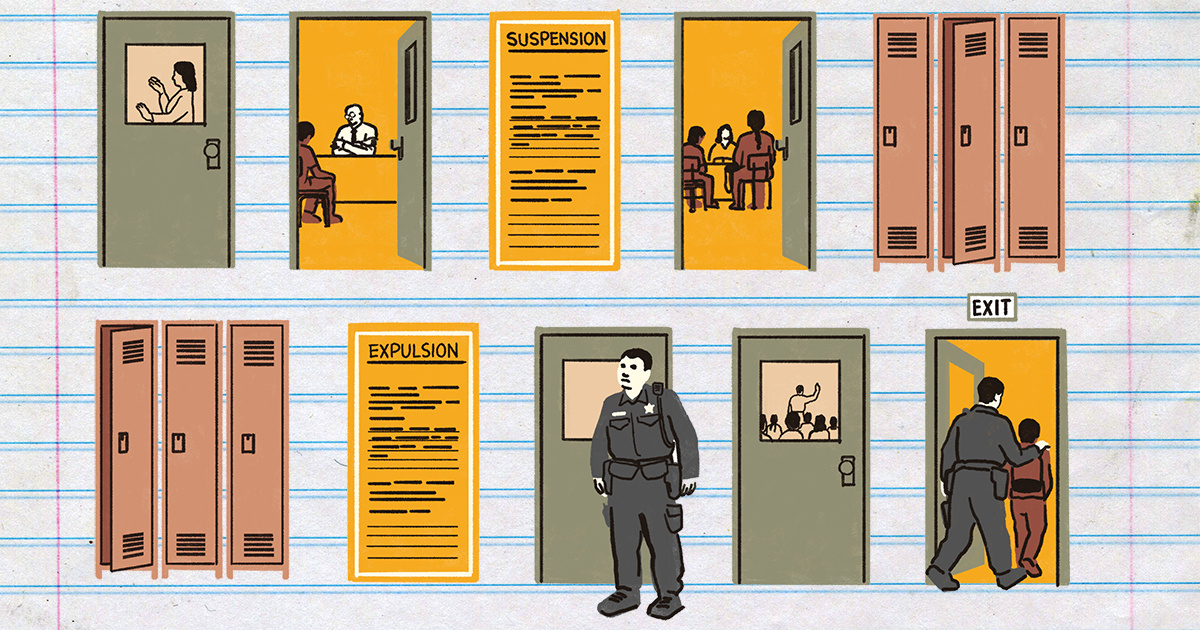
Native Students Receive Excessive Discipline in This New Mexico School District, Report Finds
One of the largest school districts in New Mexico subjects Navajo students to pervasive discrimination and a climate of fear, according to a report released last week by the Navajo Nation Human Rights Commission. The 25-page report draws on testimony from parents and community members at four public hearings in Navajo Nation communities within the school district. It urges the New Mexico attorney general’s office to release findings from a two-and-a-half-year investigation into the district’s discipline of Indigenous students. The Navajo Nation Human Rights Commission’s report cited an investigation published in December 2022 by New Mexico In Depth and ProPublica that found Indigenous students were punished more harshly than other students in New Mexico during the four years ending in 2020. The Gallup-McKinley district, which has the largest Indigenous student body of any local school district in the country, was largely responsible for that disparity, an analysis of student discipline records from across the state showed. Attorney General Raúl Torrez opened an investigation into the district’s disciplinary practices in 2023. On Wednesday, Torrez’s chief of staff, Lauren Rodriguez, said the office’s long-running investigation is complete and has found “troubling disciplinary practices.” She added that the agency’s “exhaustive” investigation calls for the state Public Education Department to enforce student discipline data reporting requirements and better track that information. Previously, the district’s former longtime Superintendent Mike Hyatt, had downplayed the amount of discipline Native students receive and pointed to poor data collection as an issue. “It’s our kids, our students, who are suffering the consequences of entrenched racism,” Wendy Greyeyes, the chair of the commission that released the new report and an associate professor of Native American studies at the University of New Mexico, said in an interview. The Public Education Department should have caught the discipline disparities in the data it collects from districts, Greyeyes said. “There’s obviously not a clear auditing of data that’s being collected,” she said. The attorney general’s office told New Mexico In Depth that, despite its findings, it’s not clear under state law that the office can “pursue formal legal action against the district for this particular conduct.” That lack of legal clarity, the spokesperson said, is why Torrez has pushed for comprehensive state civil rights legislation since 2023. Under the New Mexico Civil Rights Act, private individuals can sue public bodies for violations of the state constitution, but law does not explicitly authorize the attorney general to investigate and prosecute public bodies for systemic inequities, the way the federal Department of Justice can. In 2023, New Mexico lawmakers passed a bill that would have given the attorney general broad authority to investigate state or local agencies for civil rights violations. The bill had bipartisan support, but Gov. Michelle Lujan Grisham killed it with a pocket veto. (Lujan Grisham did not issue a formal statement about the veto but said at the time that the bill was well-intentioned but would “create confusion” and that “much of the work outlined in the legislation can be undertaken by the AG regardless of whether or not the bill is signed.”) At the time, Torrez told New Mexico In Depth that his office has an implied authority to pursue such cases , but that having it enshrined in law would have made it “crystal clear.” Torrez’s spokesperson said he remains committed to seeing such legislation pass. At the four meetings held by the Navajo Nation Human Rights Commission in September and October, parents, students and community members described harsh discipline, language barriers, discriminatory hiring practices, problems with special education plans and inadequate classroom heating systems. Greyeyes described a pervasive fear of retaliation. Some witnesses cried at hearings, she said — afraid their words would get back to the district — and parents spoke on behalf of children too afraid to testify themselves. Transcripts of their testimony were not publicly released. The commission’s report recommends a formal agreement between the Navajo Nation and Gallup-McKinley for the district to adopt a discipline policy based on restorative justice , a strategy that seeks to rebuild relationships, not simply punish the student who caused the harm. Such a policy could be modeled on existing talking-circles programs at New Mexico’s Cuba Independent School District and the STAR School east of Flagstaff, Arizona, on the Navajo Nation, Greyeyes said. The report also recommends a comprehensive state financial audit of the district’s spending on Native education compared to that of other students, and it calls for the state education department to better manage and track districts’ student discipline data. The school district did not respond to voice messages and emails seeking comment about the Navajo Nation Human Rights Commission report. The problems identified in the commission’s report are “rooted in colonization,” Greyeyes said. “It’s rooted in institutional racism. A lot of these things are accepted sometimes even by our own Navajo people, and we need to bring this information out and figure out a way to address these issues.” The report’s recommendations “begin that conversation,” she said. The post Native Students Receive Excessive Discipline in This New Mexico School District, Report Finds appeared first on ProPublica .

He Promised His Dying Mother He’d Protect the Family’s Health. In This Georgia Town, It Isn’t Easy.
Clifford Thomas and his family lost four relatives during the COVID-19 pandemic, including his beloved mother, Beverly. A middle school teacher, Beverly had struggled with chronic health problems all her life, and when they forced her to leave her job due to disability, she was unable to afford regular medical care. Her final request to her son was that he keep the family healthy. But in Albany, Georgia, achieving that promise is a battle. The city is served by a single, dominant hospital system, Phoebe Putney Memorial. Its control of the market and Georgia’s strict limits on Medicaid have left nearly one-third of people in Albany, one of the poorest cities in the state, uninsured. Poor access to quality, affordable care has contributed to deep distrust of the system. Residents like Thomas see Phoebe as more of a barrier to good health than a safety net. He gave up on trying to find medical insurance or a doctor who would care for him without it. Then, he began to get sick. There are millions like Thomas across the United States and dozens of places like Albany — places with populations suffering high rates of chronic but treatable conditions, where the dominant institution is a hospital. ProPublica examines the country’s health care crisis in a five-part series called “Sick in a Hospital Town.” Read or listen to the full series here . Watch this short documentary for a close-up of one man’s effort to overcome the obstacles to care. Read More Sick in a Hospital Town The post He Promised His Dying Mother He’d Protect the Family’s Health. In This Georgia Town, It Isn’t Easy. appeared first on ProPublica .
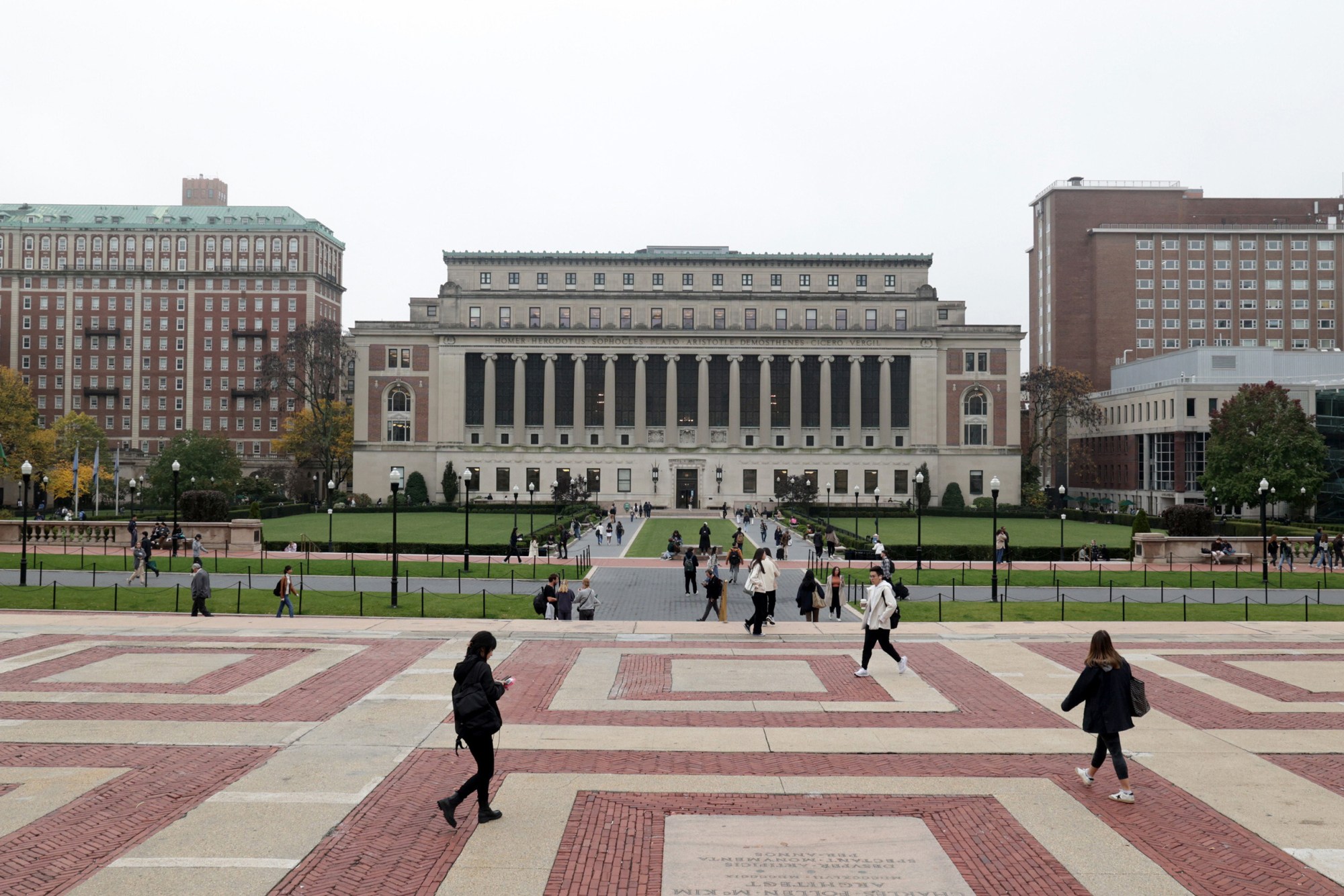
New York Attorney General is Investigating Columbia for Allowing Predatory Doctor to See Patients Despite Warnings
The New York State attorney general’s office has begun investigating how Columbia University let a predatory doctor continue to see patients despite decades of warnings. “The Office of the Attorney General is conducting a thorough investigation into the institutional response to Robert Hadden’s misconduct,” a spokesperson said in a statement to ProPublica. The agency did not give further details. A ProPublica investigation from the fall of 2023 revealed how Columbia ignored women and ultimately protected Robert Hadden , a longtime OB-GYN at the university. In 2012, Columbia allowed Hadden to continue seeing patients just days after one of them called 911 to report Hadden had sexually assaulted her. In early 2023, Hadden was convicted in federal court of sexually abusing patients. He is currently serving a 20-year sentence. Columbia has paid out more than $1 billion for over 1,000 claims of sexual abuse. After our investigation, Columbia committed to a variety of reforms, including improved patient safety , a $100 million fund for victims and an independent investigation. But advocates, students and survivors say Columbia needs to do far more to grapple with its role in Hadden’s conduct. Four hundred Columbia medical students recently wrote to university officials demanding disciplinary reviews for administrators who failed to heed warnings about Hadden. Unlike at other universities that have dealt with serially abusive doctors, no higher-ups at Columbia appear to have lost their jobs or been disciplined. Dr. Mary D’Alton, who was cc’d on a letter that authorized Hadden’s return to work , remains the chair of the obstetrics and gynecology department. D’Alton did not respond to a request for comment. Columbia declined to comment for this story. The attorney general’s office has significant powers over New York’s nonprofits, including Columbia. A few years ago, it forced the Trump Foundation to shut down . More recently it sued the National Rife Association, which then had to enact a series of reforms . Survivors told ProPublica they were heartened that New York is looking into Columbia. “Accountability is overdue, particularly in light of the Epstein files,” said Evelyn Yang, pointing to recent revelations that several Columbia affiliates had ties to the financier. Read more How Columbia Ignored Women, Undermined Prosecutors and Protected a Predator for More Than 20 Years Yang was among at least 8 patients who were assaulted by Hadden after he returned to work. She was seven months pregnant at the time. Shortly after our story was published more than two years ago, Columbia promised to “thoroughly examine the circumstances that allowed Hadden’s abuse to continue.” No report detailing those findings has yet been published. Last week, Columbia acknowledged in an announcement that there “are many questions” about the timing of the investigation it commissioned. It said that the report is expected to be released “soon.” New York State Assemblymember Grace Lee blasted the university’s failure to issue the report, telling ProPublica the university has not taken responsibility for what happened. “To me, it’s just outrageous that we are here now in 2026 and we still have no report and no one has been held accountable,” she said. By comparison, the external investigation into the University of Michigan’s response to the crimes committed by its former physician Robert Anderson took about 15 months. Another Hadden survivor, Marissa Hoechstetter, said the attorney general’s decision to examine Columbia provides some relief because the institution has repeatedly failed to do so itself. “I do believe institutional accountability is a missing part of making a bigger change in the fight of gender-based violence,” Hoechstetter said. “I don’t know what will come of this investigation” — referring to New York’s probe — “but it shows that institutions that protect and cover up abusers in order to protect their own people and reputation will be held accountable.” Hoechstetter and Yang both advocated for the passage of the Adult Survivors Act, a New York State law that in 2022 opened a one-year window in which survivors of sexual assault could file civil suits against their abusers or the institutions that protected them, even after the statute of limitations had passed. For years, the university had failed to notify Hadden’s former patients of his misconduct. Finally, in November 2023, just 10 days before the law’s extended window closed, Columbia announced it would send letters to almost 6,500 patients. A closed town hall meeting at the medical school this January gave a window into who was behind that lack of notification. “It actually is a Board of Trustee decision” because of the potential cost of litigation, Monica Lypson, the vice dean for medical education, told students in a recording that ProPublica obtained. Lypson did not respond to a request for comment. Separately, the deadline to submit a claim to Columbia’s survivors’ settlement fund, which was established for survivors who do not want to file lawsuits, has been extended to April 15 . The post New York Attorney General is Investigating Columbia for Allowing Predatory Doctor to See Patients Despite Warnings appeared first on ProPublica .

ProPublica Wins Lawsuit Over Access to Court Records in U.S. Navy Cases
The Navy is no longer allowed to shroud its criminal trials in secrecy and must provide public access to hearings and records, a federal judge ruled last month. The order, the result of a yearslong lawsuit filed by ProPublica , forces the service for the first time to more closely mirror the transparency required in civilian courts. The judge agreed with ProPublica that the Navy was violating the First Amendment with its policies. “This is a landmark victory for transparency,” Sarah Matthews, ProPublica’s deputy general counsel, said. “It’s the first time a civilian court has held that the First Amendment right of public access applies to military courts and records. The Navy was allowed to prosecute our service members in secret for far too long, but that ends now.” ProPublica sued the Navy in 2022 after the service refused to release almost all court documents in a high-profile arson case, in which a sailor faced life imprisonment for a fire that destroyed a Navy assault ship. A ProPublica investigation found that the service decided to prosecute Ryan Mays despite little evidence connecting him to the fire — or that the fire was a result of arson in the first place — and a military judge’s recommendation to drop the charges. The Navy’s long-standing policy was to withhold all records from preliminary hearings, which consider whether there is probable cause to move forward with a case. In those that did go to trial, the Navy would only provide scant records long after the proceedings were over — and only if they ended in guilty findings. Records weren’t released if the charges were dropped or a defendant was acquitted. As a result, the public was unable to assess whether the court-martial system was fair or whether important issues, such as sexual assault, were being handled properly. Now the Navy must provide more timely access to all nonclassified records from trials regardless of outcome as well as from preliminary hearings. This includes the report from a crucial milestone in a criminal case, what the military calls an Article 32 hearing, in which a hearing officer, in a role much like a judge, recommends whether criminal charges should proceed. The Navy had argued to the court that it shouldn’t be required to release these reports because they are “non-binding, internal advisory documents.” The judge, Barry Ted Moskowitz of the U.S. District Court for the Southern District of California, disagreed, saying earlier in the case that these hearings are “strikingly similar” to those in civilian courts that are open to the public. Access to the reports is a big win for the public, according to Frank Rosenblatt, president of the National Institute of Military Justice, a nonprofit advocacy group. “Congress intended for the military justice process to be a public window into what is happening with the military, and Article 32 reports in many cases end up being highly newsworthy,” he said. “These proceedings often reveal scapegoats, investigative flaws and command influence on matters of public concern not long after incidents happen.” The ruling imposed deadlines on the Navy for when records must be made public. Transcripts from hearings and trials must be turned over as soon as possible but no later than 30 days after a request, and other court records must be provided as soon as possible but no later than 60 days. The Navy is also required to give advanced notice of preliminary hearings, listing the full names of defendants and providing their charge sheets. After ProPublica sued, the Pentagon issued guidance early last year requiring the military to give at least three days’ notice of these hearings. But Moskwotiz said that wasn’t enough time and bumped up the requirement to 10 days. “While the judge did not require the Navy to provide contemporaneous access to records like in civilian courts, we’re thrilled that the Navy can no longer withhold more than 99% of the court records,” Matthews said. The Navy said in a brief to the judge that complying with the order “will require substantial amendments to multiple Navy policies, instructions and standards, including revisions to guidance for preliminary hearing officers, and the development and delivery of comprehensive training across the Navy.” Moskowitz stopped shy of ordering the secretary of defense to issue similar rules across the services, as requested by ProPublica and required by a federal law passed in 2016. (The Pentagon’s policy addressing the law , which wasn’t issued until 2023, fell far short of the “timely” release of documents “at all stages of the military justice system” that Congress called for.) Moskowitz said he could not make such a ruling because the secretary’s duties are “imprecise and subject to discretion.” The Navy did not respond to requests for comment about the judge’s order. During the last court hearing, the government lawyers told the court that “the Navy has an interest in complying with the law in general.” ProPublica is represented in the suit by Matthews and by pro bono attorneys at Gibson, Dunn & Crutcher LLP (Ted Boutrous, Michael Dore, Marissa Mulligan and Mckenzie Robinson, plus former Gibson Dunn attorneys Eric Richardson, Dan Willey and Sasha Dudding when they were at the firm) and at Sheppard, Mullin, Richter & Hampton LLP (Tenaya Rodewald and Matthew Halgren). The post ProPublica Wins Lawsuit Over Access to Court Records in U.S. Navy Cases appeared first on ProPublica .

Documents Reveal a Web of Financial Ties Between Trump Officials and the Industries They Help Regulate
Thousands of companies are jockeying for billions of dollars in Defense Department contracts to build a shield designed to intercept and destroy missiles launched against the United States. But amid the intense competition, a handful of firms have an important inside connection. At least four of the companies awarded contracts so far are owned by Cerberus Capital Management, a private equity firm founded by billionaire Steve Feinberg, who until last year ran the company and is now the deputy secretary of defense — the second-highest-ranking official in the Pentagon. Feinberg oversees the office in charge of the Golden Dome for America project, which is modeled on Israel’s Iron Dome missile defense system. Feinberg filed paperwork saying he divested from Cerberus and its related businesses. But his government ethics records contain an unusual clause: He is allowed to continue contracting with the company for tax compliance and accounting services as well as health care coverage, a financial relationship that documents show could continue indefinitely. Feinberg’s financial statements and ethics agreement are part of a trove of nearly 3,200 disclosure records that ProPublica is making public today. The disclosures, which can be viewed in a searchable online tool, detail the finances of more than 1,500 federal officials appointed by President Donald Trump. Records for Trump and Vice President JD Vance are also included. The documents reveal a web of financial ties between senior government officials and the industries they help regulate — relationships that have drawn scrutiny as Trump has dismantled ethics safeguards designed to prevent conflicts of interest. On his first day back in office, Trump rescinded an executive order signed by President Joe Biden that required his appointees to comply with an ethics pledge. The pledge barred them from working on issues related to their former lobbying topics or clients for two years. Weeks later, Trump fired 17 inspectors general charged with investigating fraud, corruption and conflicts of interest across the federal government. Around the same time, he removed the head of the Office of Government Ethics, the agency that oversees ethics compliance throughout the executive branch. The office is currently without a head or a chief of staff. Read More Explore Financial Disclosures From President Trump and 1,500 of His Appointees Against that backdrop, ProPublica has, over the past year, used the disclosure records to investigate how personal financial interests have intersected with government decision-making inside the Trump administration. The documents helped show that senior executive branch officials, including Attorney General Pam Bondi , made well-timed securities trades, at times selling stocks just before markets plunged because Trump announced new tariffs. (The officials either did not respond to requests for comment or said they had no insider information before they made their trades.) Other disclosures revealed that two high-ranking scientists at the Environmental Protection Agency who recently helped downgrade the agency’s assessment of the health risks of formaldehyde had previously held senior positions at the chemical industry’s leading trade group. (The EPA said the scientists had obtained ethics advice approving their work on the project.) In December, ProPublica reported that Trump has appointed more than 200 people who collectively owned — either by themselves or with their spouses — between $175 million and $340 million in cryptocurrency investments at the time they filed their disclosures. Some of those appointees now hold positions overseeing or influencing regulation of the crypto industry . Among them are Todd Blanche, Trump’s former criminal defense attorney and now the second-highest-ranking official in the Justice Department. Blanche’s disclosure records show that he owned at least $159,000 in crypto-related assets last year when he shut down investigations into crypto companies, dealers and exchanges. After ProPublica reported on Blanche’s actions, six Democratic senators accused him of a “glaring” conflict of interest , and a watchdog group asked the Justice Department’s inspector general to investigate . A Justice Department spokesperson has said Blanche upholds the highest ethical standards and that his crypto orders were “appropriately flagged, addressed and cleared in advance,” but she did not respond to questions asking who had cleared his actions. Conflicts of interest have long plagued both Democratic and Republican administrations. But ethics experts say Trump’s second term marks a sharp break from modern norms. Trump has openly defended his family’s financial enrichment while he is in office, including through cryptocurrency deals that critics say allow investors, including foreign entities, to curry favor by boosting the president’s personal wealth. “I found out nobody cared, and I’m allowed to,” Trump told The New York Times , referring to his family’s business dealings. Trump also remains unapologetic about accepting a Boeing 747 worth about $400 million from the Qatari government and transferring nearly $1 billion from a nuclear weapons program to retrofit it. Virginia Canter, chief counsel for ethics and corruption at Democracy Defenders Fund, a nonprofit governmental watchdog group, cited Trump’s new plane as a brazen example of self-dealing. “Ethics is in the toilet,” said Canter, who served as an ethics lawyer at the White House, Treasury Department and Securities and Exchange Commission during the presidencies of George H.W. Bush, Bill Clinton, George W. Bush and Barack Obama. White House spokesperson Anna Kelly defended the president and his appointees. “President Trump is leading the most transparent administration in history,” Kelly said. “He has also nominated highly-qualified individuals across the Executive Branch who have a wide range of public and private sector backgrounds.” The idea of a space-based missile defense shield has persisted ever since President Ronald Reagan proposed his own version nicknamed “Star Wars.” Trump rekindled the idea on the campaign trail. His Golden Dome for America imagines a battery of weapons, deployed from land, sea and space, able to destroy missiles launched at the U.S. We are continuing our reporting on conflicts of interest in the Trump administration. Do you have information you can share about any of the people in our database? Or about current officials not found in our online tool who might have conflicts? You can reach our tip line on Signal at 917-512-0201. Please be as specific, detailed and clear as you can. In December, the Defense Department started selecting companies for the project, for which it has allocated as much as $151 billion. So far, the agency has granted awards to more than 2,000 firms. Cerberus owns or is a majority investor in at least four of them: North Wind, Stratolaunch, Red River Technology and NetCentrics Corp. Citing national security concerns, defense officials have not publicized the amounts of each contract or the products or services the companies are providing. (The Defense Department is required by law to publicly announce only contracts worth more than $9 million.) Feinberg, who co-founded Cerberus in 1992, listed assets worth at least $2 billion when he was nominated by Trump last year. In his ethics agreement, Feinberg said he would divest his stake in the firm, potentially giving assets to irrevocable trusts benefiting his adult children — a maneuver that is legal under federal conflict-of-interest law but one that ethics experts say undermines its intent. Feinberg also told ethics officials that he needed to contract with Cerberus for accounting, tax and health care services in the short term but would find other providers by April 2026. However, at Feinberg’s request, Defense Department officials approved an extension earlier this year, allowing the financial relationship to continue without an end date. In an amendment to his ethics agreement, he said he would “pay customary and reasonable fees” for Cerberus’ services but did not say how much those would be. Deputy Secretary of Defense Steve Feinberg, center, with Defense Secretary Pete Hegseth, right, at the Pentagon in 2025 Jonathan Ernst/Reuters It’s unclear what role Feinberg has played — or will play — in deciding which firms receive Golden Dome contracts. In response to questions from ProPublica, the Defense Department said Feinberg does not “have direct responsibility for any Golden Dome acquisitions” but did not elaborate. The department would not comment on whether Feinberg or anyone in his office had met with any contractor representatives. What is not disputed is Feinberg’s oversight of the Golden Dome initiative. Space Force Gen. Michael Guetlein, who heads the project, reports directly to him . Richard Painter, a former White House ethics lawyer under President George W. Bush, said Feinberg’s ongoing relationship with Cerberus creates at least a perception of a conflict of interest that could undermine confidence in the fairness of the contracting process. “This is what President Eisenhower worried about in the 1960s” when he railed against the military-industrial complex, Painter said of Eisenhower’s farewell address warning of the risks of a too-close relationship between the military and private defense businesses. In response to questions from ProPublica, a Cerberus spokesperson said in an email: “Mr. Feinberg divested his stake in Cerberus and any funds that it manages, and is not involved with the operations of Cerberus or any of its portfolio companies in any way.” The spokesperson added that the administrative services provided to Feinberg “are unrelated to any investment activities or operations of Cerberus or its funds and were pre-approved by the Department of War’s Ethics Office and the Office of Government Ethics.” Another top official in the department is Marc Berkowitz , who was confirmed in December as assistant secretary of defense for space policy. During his confirmation, Berkowitz described the Golden Dome project as one of his top priorities . Berkowitz previously worked as a space industry consultant and vice president for strategic planning at Lockheed Martin. The giant defense and aerospace company was among the firms awarded Golden Dome contracts days before Berkowitz’s confirmation. Lockheed is likely to compete for a large role in the project. The company has set up a webpage dedicated to the Golden Dome , and Reuters reported that Lockheed is one of several firms that received contracts to build competing prototypes of the missile defense system. In his financial disclosure documents, Berkowitz reported receiving two monthly pensions from Lockheed and owning between $1 million and $5 million worth of stock in the firm. Berkowitz agreed to divest by March 18, documents show. During his confirmation hearing, he downplayed any potential role he would have in Golden Dome contract decisions , noting that his position was more about policy. A senior Defense Department official told ProPublica that Berkowitz is recusing himself from matters involving Lockheed until his remaining shares are sold. Pentagon spokesperson Sean Parnell said the department’s ethics framework is “rigorous” and that Feinberg and Berkowitz are in full compliance with the law. “Any claims to the contrary are fake news,” Parnell said. Other agencies have similar industry links. Across the administration, former lobbyists and corporate executives now occupy influential positions, including Bondi , White House Chief of Staff Susie Wiles and Transportation Secretary Sean Duffy . Their ties to former clients have made national headlines, but ProPublica’s searchable online tool provides the public an important glimpse into the financial relationships of a powerful and often hidden cadre of presidential appointees within the federal bureaucracy. Reports show that after being nominated to head the National Highway Traffic Safety Administration, Jonathan Morrison revealed he served for two years as a director of the Autonomous Vehicle Industry Association, the trade group that represents companies that make and use self-driving cars. He left the position in February 2024. At his confirmation hearing last year , Morrison said he wanted the NHTSA to set national standards and play a leading role in the industry’s development of self-driving vehicles. Sean Rushton, an NHTSA spokesperson, said Morrison doesn’t have to recuse himself from matters involving the autonomous vehicle group because he left the organization long before the presidential election and his nomination as highway traffic safety administrator. Most political appointees and senior officials in the executive branch are required by law to file public financial disclosure reports. These documents detail their financial assets, the positions they hold outside government, their spouse’s holdings, their liabilities and their recent financial transactions (such as buying or selling stock) during a defined reporting period. For the most part, the law does not require appointees to provide exact financial values but instead a range. At least a dozen appointees withheld the identities of previous clients, ProPublica found. Appointees are allowed to keep the name of former clients confidential under exceptional circumstances, such as when the identity is protected by a court order or revealing the name would violate the rules of a professional licensing organization. In New York and Washington, D.C., for example, the organizations that license attorneys prohibit them from revealing confidential information about a client in most situations, including if doing so would be embarrassing or is likely to be detrimental to the client. While the relationship between a client and an attorney is often made public, in some cases — if, for instance, an appointee had conducted legal defense work for a client during a nonpublic criminal investigation — the client’s identity could be withheld from the financial disclosure. Guidelines issued by the Office of Government Ethics say that such situations are unusual and “it is extremely rare for a filer to rely on this exception for more than a few clients.” But at the Office of the U.S. Trade Representative, which is responsible for tariff policy, the head of the agency, Jamieson Greer, withheld the names of more than 50 former clients from his time at King & Spalding , one of the nation’s most influential law firms. In his disclosure, Greer cited the New York and D.C. bar rules for not identifying the clients. Greer’s senior adviser in the federal agency, Kwan Kim, previously worked as an international trade lawyer for Covington & Burling. From October 2020 to February 2025, Kim helped businesses win federal exemptions from steel and aluminum tariffs and defended companies accused by investigators of import-related crimes, according to a Covington biography that has since been taken down. Kim kept the names of 52 companies he represented secret , citing the D.C. Bar rules, the disclosure documents show. The U.S. Trade Representative office did not respond to ProPublica’s request for comment. When the names of former clients are withheld, it becomes virtually impossible for the public to know if an official’s actions in government benefit a former client. Kedric Payne, ethics director at the nonpartisan watchdog group Campaign Legal Center, said the lack of disclosure is concerning. “When you see these types of close connections between the regulated community and the new regulators, it raises a yellow flag,” Payne said. “Because these officials are walking an ethical tightrope where any meeting or communication with their former employer and client could become a serious conflict of interest.” ProPublica’s journalists have been gathering these records for more than a year. We obtained all of the disclosures that were available from the Office of Government Ethics. Those consist of the top appointees who require Senate confirmation. To get records for people working in lower-level positions, we made requests to individual federal agencies. Some didn’t respond or responded partially; records we requested for about 1,200 people weren’t provided. Still, ProPublica’s online tool is the most comprehensive public source of financial disclosures from across the executive branch. The post Documents Reveal a Web of Financial Ties Between Trump Officials and the Industries They Help Regulate appeared first on ProPublica .
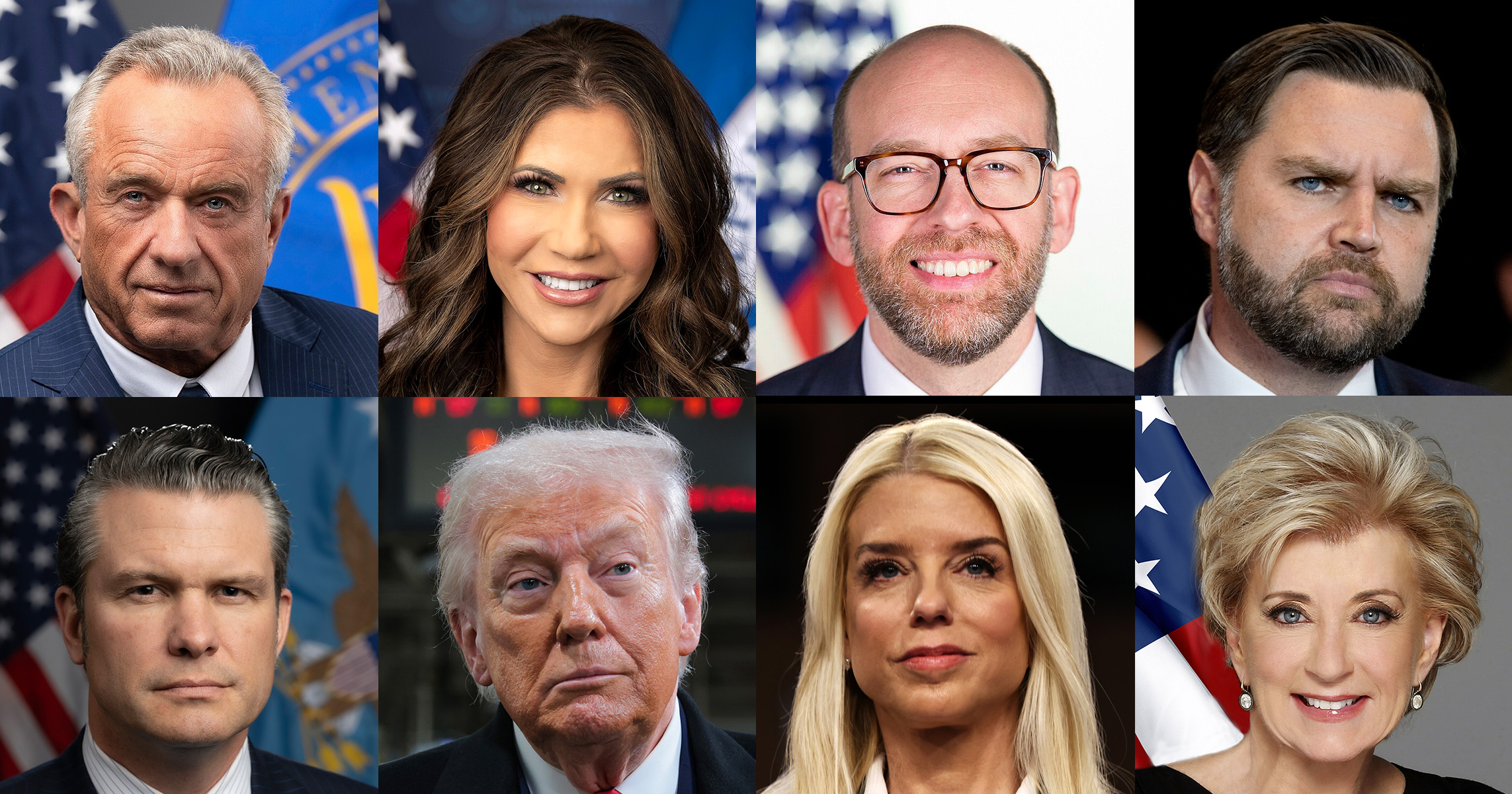
Explore Financial Disclosures From President Trump and 1,500 of His Appointees
See the full financial disclosures app at ProPublica.org . The post Explore Financial Disclosures From President Trump and 1,500 of His Appointees appeared first on ProPublica .
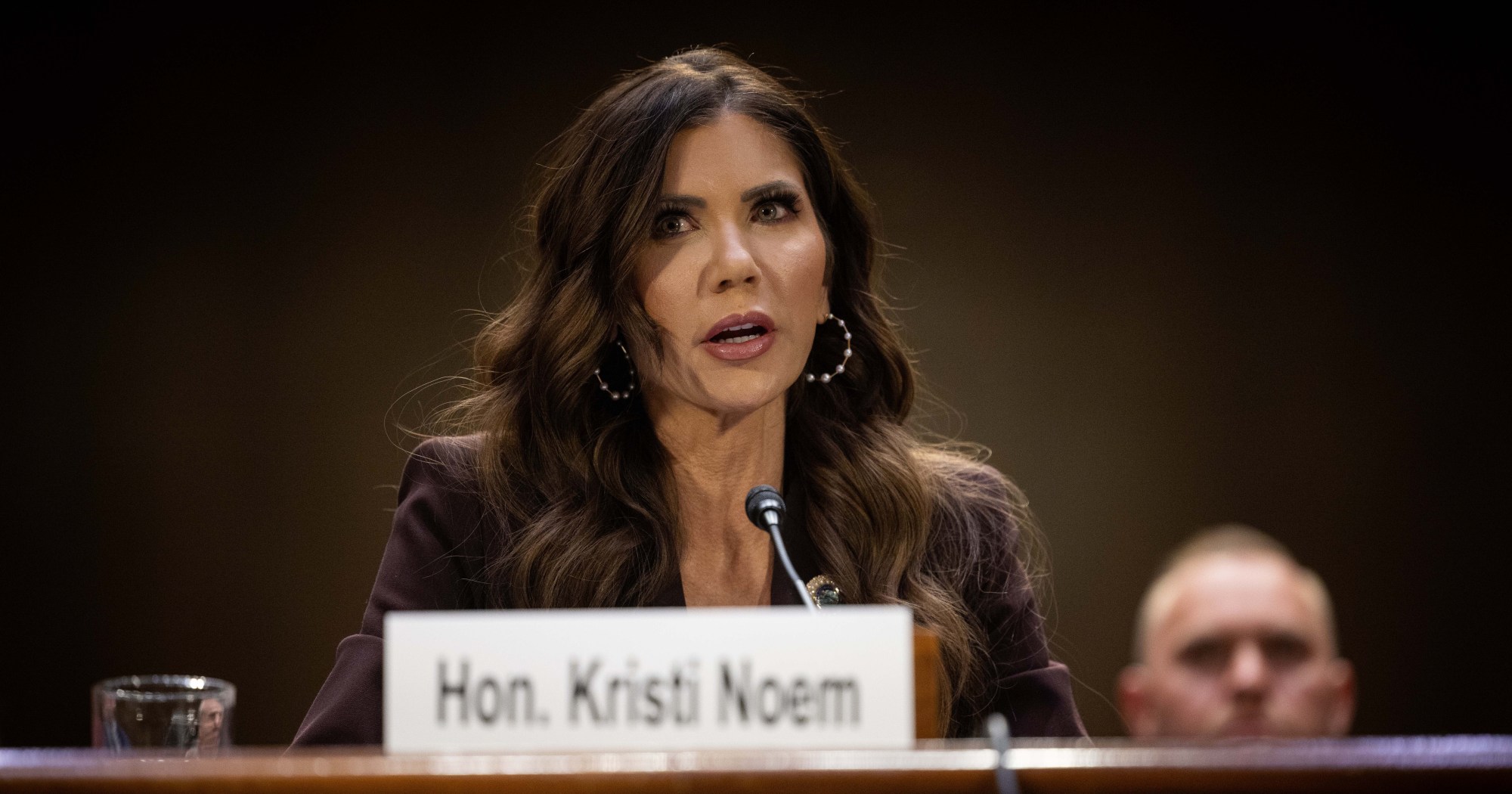
Kristi Noem Misled Congress About Top Aide’s Role in DHS Contracts
Homeland Security Secretary Kristi Noem misled Congress on Tuesday about the powers of her controversial top aide Corey Lewandowski, according to records reviewed by ProPublica and four current and former DHS officials. Lewandowski has an unusual role at DHS, where he is not a paid government employee but is nonetheless acting as a top official, helping Noem run the sprawling agency. For months, members of Congress have asked the agency to detail the scope of his work and authority. At a Senate Judiciary Committee hearing on Tuesday , Sen. Richard Blumenthal, D-Conn., asked Noem whether Lewandowski has “a role in approving contracts” at DHS. Noem responded with a flat denial: “No.” But internal DHS records reviewed by ProPublica contradict Noem’s Senate testimony. The records show Lewandowski personally approved a multimillion-dollar equipment contract at the agency last summer. That was not a one-off. Lewandowski has approved numerous contracts at DHS and often needs to sign off on large ones before any money goes out the door, the current and former department employees said. Last year, Noem imposed a new policy that consolidated her and her top aides’ power over all spending at DHS, requiring that she personally review and approve all contracts above $100,000. Before the contracts reach Noem, they must be approved by a series of political appointees, who each sign or initial a checklist sometimes referred to internally as a routing sheet. Typically, the last name on the checklist before Noem’s is Lewandowski’s, the DHS officials said. Noem Denies That Lewandowski Has “a Role in Approving Contracts” at DHS Via C-Span Under federal law , it is a crime to “knowingly and willfully” make a false statement to Congress. But in practice, it is rarely prosecuted. In a statement, a DHS spokesperson reiterated Noem’s claim. “Mr. Lewandowski does NOT play a role in approving contracts,” the spokesperson said. “Mr. Lewandowski does not receive a salary or any federal government benefits. He volunteers his time to serve the American people.” Lewandowski did not respond to a request for comment. Several news outlets , including Politico , have previously reported on aspects of Lewandowski’s involvement in contracting at DHS. There have been widespread reports of delays caused by the new contract approval process at the agency, which has responsibilities spanning from immigration enforcement to disaster relief to airport security. DHS has asserted that the review process saved taxpayers billions of dollars. A similar sign-off process exists for other policy decisions at DHS. One of the checklists, about rolling back protections for Haitians in the U.S., emerged in litigation last year. It featured the signatures of several top DHS advisers. Under them was Lewandowski’s signature, and then Noem’s. An internal Department of Homeland Security policy document from February 2025 shows agency officials, including top aide Corey Lewandowski and Noem — referred to as “S1,” signing off on a policy change. U.S. District Court for the District of Maryland Lewandowski is what’s known as a “special government employee,” a designation historically used to let experts serve in government for limited periods without having to give up their outside jobs. (At the beginning of the Trump administration, Elon Musk was one , too.) Special government employees have to abide by only some of the same ethics rules as normal officials and are permitted to have sources of outside income. Lewandowski has declined to disclose whether he is being paid by any outside companies and, if so, who. The post Kristi Noem Misled Congress About Top Aide’s Role in DHS Contracts appeared first on ProPublica .
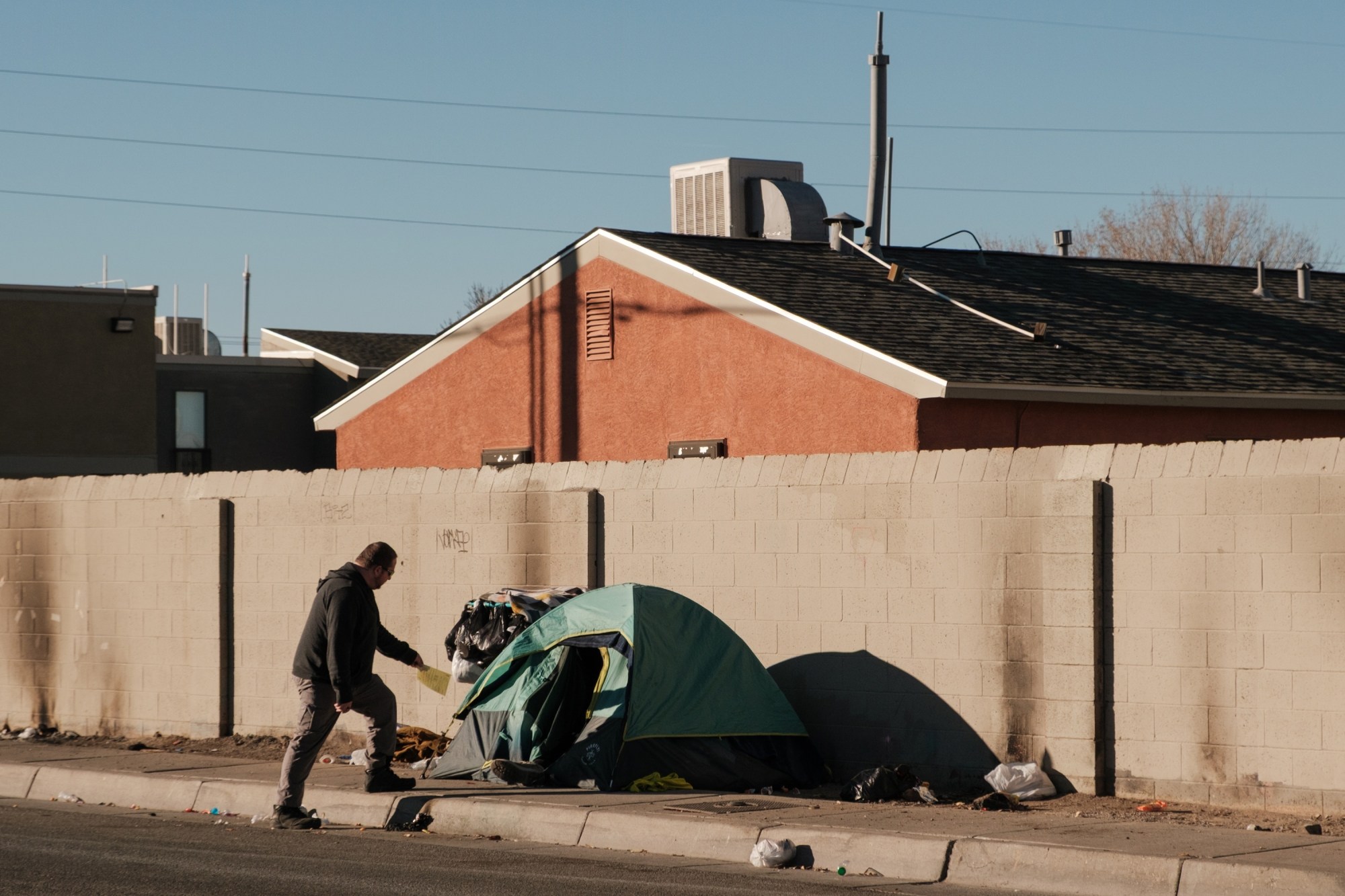
Albuquerque’s Mayor Said Arrests Were “Not the Solution” to Homelessness. Yet Jail Bookings Have Skyrocketed.
During his reelection campaign last fall, the mayor of Albuquerque, New Mexico, criticized his challenger for suggesting the city should get tougher on the homeless population. Such an approach would be cruel, Tim Keller said during a televised debate with former County Sheriff Darren White. The city clears encampments and gives people citations “all the time,” said Keller, who defeated White to win a third term. But “this problem is complex and you cannot dumb it down to arresting people,” he said. “You simply cannot arrest your way out of this problem whether you want to or not.” Despite his rhetoric, a ProPublica analysis found that under Keller’s leadership, Albuquerque has increasingly criminalized conduct associated with homelessness, causing a growing number of people on the streets to be arrested and jailed. In 2025, people were charged 1,256 times for obstructing sidewalks, nearly six times the number of cases in the previous eight years combined. More than 3,000 trespassing charges were handed out last year, the highest for any year since 2017. And cases of unlawful camping increased to 704 from 113 the year before, according to previously unreported county data provided to ProPublica by the New Mexico Administrative Office of the Courts. Charges Associated With Homelessness Surged in 2025 Cases involving sidewalk obstruction, camping and trespassing have risen in recent years. People were charged nearly six times more often for sidewalk obstruction in 2025 than the previous eight years combined. Source: New Mexico Administrative Office of the Courts In recent years, a majority of these cases, once they were adjudicated, were dismissed. But not without consequences: Each citation lists a court date, which, if missed, can lead to a bench warrant and arrest. And that’s often what has happened. Over the past four years, the number of bookings in Bernalillo County’s jail classified as homeless or “transient” has skyrocketed — to nearly 12,000 in 2025, from 3,670 in 2022. In recent months, the share of people booked who are transient made up about 49% of the jail’s population, according to a ProPublica analysis. This has occurred as the average daily population at the jail from July 2024 through June 2025 reached its highest point in a decade. On some days last year, the Bernalillo County Metropolitan Detention Center held more homeless people than the largest local shelter . Homeless Inmates Drive Increases in County Jail Admissions Over the past three years, the number of jail bookings marked as homeless or “transient” has skyrocketed. Admissions marked as transient made up nearly 50% of the county jail bookings at the end of 2025. Source: Bernalillo County The city’s homeless population has more than doubled from 2022 to 2025, while the increase in homeless people jailed by the county has more than tripled during the same time period. Police and court records and interviews with homeless people show the increase in their incarceration is primarily driven by the cascading effects of repeatedly citing people who are experiencing homelessness. In an interview with ProPublica, Keller echoed his contention from the debate that citations and arrests are not a solution to homelessness. Still, he defended the actions police have taken. “What we’re doing is following the letter of the law. There are much more punitive things that I’m sure a lot of people would want, that we don’t do because they’re inappropriate,” he said. In a statement, a spokesperson for Keller noted that other cities “rely on immediate arrests, blanket sweeps without service connection or criminal penalties without offering alternatives.” The city issues three citations before an arrest is made, the spokesperson said. (People living outside told ProPublica they’ve been taken to jail without first receiving three citations.) When ProPublica pointed out that citations can lead to arrests and jail time, Keller acknowledged that jail “is not the solution.” But, he said, people call the city and ask that laws be enforced. A city of Albuquerque worker empties a shopping cart filled with belongings collected during a sweep into a garbage truck along Commercial Street. Sweeps can lead to citations, which can lead to an arrest. A Christian outreach group from Texas distributes food and clothing and prays with people who are homeless in Albuquerque on Sept. 13. In recent years, U.S. cities, facing record numbers of people on the street , have adopted more laws targeting them. In 2024, after the U.S. Supreme Court ruled that cities may enforce bans against sleeping outside, more than 150 municipalities nationwide, including Albuquerque , either passed new laws prohibiting public camping or ramped up enforcement of existing laws. President Donald Trump has endorsed this approach, calling for federal grants to be prioritized for cities that enforce bans on “urban camping and loitering.” The emphasis on enforcement has come despite evidence that such citations and arrests are costly. For example, Bernalillo County spends about $169 per night to jail inmates without significant medical or mental health needs, according to a county spokesperson. The cost increases for people with severe medical ($250 a day) and mental health (about $450 a day) needs, a spokesperson said. By comparison, housing an individual in the city’s year-round emergency shelter costs $44 a night. Tony Robinson, a political science professor at the University of Colorado who has studied camping bans, said the share of homeless inmates in Bernalillo County’s jail is “unusually high” — even at a time when cities are ramping up enforcement. ProPublica found that jails in similarly sized counties, including San Francisco and Pasco County, Florida, have lower rates of incarceration for people who are marked homeless. Citing people who are homeless can land them in jail because some lack cellphones or an address where they can receive notices by mail. This is a barrier to appearing in court, leading to a warrant for their arrest, he said. “Simple citations lead to jail time and arrest by a predictable path.” ProPublica reviewed more than 100 cases and interviewed two dozen people experiencing homelessness in Albuquerque about their encounters with police. Nearly everyone ProPublica spoke to had been charged for a crime associated with homelessness. They said they feel singled out by the police: Officers contact them frequently and issue citations, which can lead to warrants. When officers see they have warrants, they can take them to jail. Natalie Rankin, a 45-year-old homeless woman in Albuquerque, was charged 12 times over the last year for a variety of crimes, including blocking the sidewalk, public camping and criminal trespassing. She spent a night in jail in August after an officer noticed that she had a warrant for her arrest. “I don’t do anything more than get little warrants for not showing up in court,” she said in August. Rankin has already been charged at least seven times in 2026 and spent at least one day in jail. Gateway West provides shelter and resources for homeless people in the Albuquerque area. The shelter has served more people since Mayor Tim Keller took office. Since Keller took office nine years ago, Albuquerque has spent at least $100 million to expand the city’s Gateway system , which includes shelter for families and adults, a 50-person treatment program, and a place where people are supervised by medical professionals as they withdraw from drugs or alcohol. “We’re one of the few cities who really has been proactive about building a new system,” Keller said. “It needs tons of work and tons of help, but we’ve at least built something that has gotten 1,000 people off the street.” Meanwhile, the city’s homeless population, which was at least 2,960 last year, exceeds the shelters’ capacity even with the expansions. Keller has also become less tolerant of encampments in public spaces like parks and sidewalks, vowing to not allow “ tent cities .” In text messages reported in 2024 by the news organization City Desk ABQ , Keller asked then-police Chief Harold Medina to develop a plan to address the “growing crisis.” Medina texted back a plan to “hammer the unhoused.” (After the texts were published, a spokesperson for Keller said, “We continue to balance enforcing laws against illegal activity to keep our communities safe, and providing resources for people experiencing homelessness to both get them connected to services.”) The city has been accused of breaking the law as it carries out the crackdown. In 2022, current and former homeless people sued Albuquerque in state district court over its targeting of encampments, alleging the city “ criminalizes their status as homeless ,” according to court documents. The class-action lawsuit is pending. A 2024 ProPublica investigation found city workers routinely discarded the belongings of homeless people as they cleared encampments, violating a court order and city policy. Some people told ProPublica in recent interviews that city workers continue to throw away their belongings, and police are issuing citations more frequently. Officers have not targeted people who are homeless, Medina said in an interview in December. The increase in citations and arrests for crimes associated with homelessness are the result of a broader crime-fighting surge, he said. Last April, Gov. Michelle Lujan Grisham deployed the National Guard to assist Albuquerque police, citing the “fentanyl epidemic and rising violent juvenile crime.” The National Guard was also to provide humanitarian and medical assistance in parts of the city frequented by people who are homeless. “It’s important that we don’t categorize this as, ‘We’re doing an initiative on the unhoused,’” said Medina, who retired at the end of last year. “We’re doing an initiative across the board.” City statistics show, however, that the biggest jump in arrests from 2024 to 2025 was for misdemeanor warrants, the kinds described by many of the people ProPublica interviewed. Arrests associated with misdemeanor warrants were up 72%. Priscilla Montano, 67, sometimes stays under a bridge near downtown Albuquerque. She said city workers, who are occasionally accompanied by police, visit the spot at least five days a week to tell people to move their belongings. In July, Montano was charged three times for unlawful camping and obstructing sidewalks. In September, she was incarcerated for a day on the same charges. There is a warrant for her arrest related to a separate violation from September. Montano said each time she goes to jail her belongings are thrown away. She’s lost her wedding ring and property she needs to survive. People pack their belongings in anticipation of city enforcement on Rhode Island Street. Lisandra Tonkin, who leads a team at the New Mexico Coalition to End Homelessness that helps people find housing, said the crackdown has made it more difficult to stay in touch with the people they’re trying to help because they’re “constantly moved” by sweeps and jail stays. City officials say they first offer resources, including a spot in a shelter. Tonkin said some people are reluctant to accept because they have been traumatized by their experiences in shelters, like being assaulted or having their belongings stolen. The offer sometimes comes with requirements they won’t accept, like giving up a pet or separating from a companion. “So what is the solution of where to move them? I think a lot of times the choice is shelter or jail,” she said. The result, according to Medina, the former chief, is that the Metropolitan Detention Center has become the state’s largest “mental health facility.” “I don’t think it’s ideal for these individuals to always end up in jail, 100%, but there’s limited resources and ability to get people to those resources under our current system,” he said. People who have received citations or who have been arrested told ProPublica that the city’s offer is either a bed in a shelter that used to be the county jail or nothing at all. One evening in December, Tiffany Leger sat on a sidewalk in northwest Albuquerque listening to a virtual meeting through headphones. Leger, who spent two years on the streets but now has a home, still visits friends who live outside and shares phone numbers for local organizations where they can seek help. As she listened to the virtual meeting, police approached and told her she was being detained for camping, noting there was a tent nearby. The officers issued a citation. Over the years, Leger has heard from friends that if police offer resources, it’s usually a card with outdated information on shelters in the city or a bed in the shelter on the outskirts of town, she said. Leger said that usually police approach people who look homeless and check for warrants, sometimes leading to an arrest. Janus Herrera, a local advocate and volunteer, helps people who are homeless find resources, including housing. For decades, Peter Cubra has monitored the city’s treatment of homeless people. Cubra was involved in a 1995 lawsuit in which Jimmy McClendon, an inmate at the Bernalillo County Detention Center, sued Albuquerque and the county over conditions there, including overcrowding. The lawsuit also alleged that police were jailing people, including those who were homeless, for nonviolent misdemeanors. A city settlement in the lawsuit directed police to issue citations for nonviolent misdemeanors, when possible, instead of making arrests on the spot. Cubra said that in 2020, he started noticing “slow-motion arrests,” where police issue citations understanding that a person experiencing homelessness won’t get the notices from court. Police, he said, would revisit the same location, demand identification and run warrant checks, eventually picking people up on warrants from the previous citations or charges. Janus Herrera, a local advocate and volunteer, said people have told her they miss court dates because they lost paperwork stating where and when to appear in court that they received during an encampment sweep. “People are already strained to a breaking point,” she said. “You keep adding more and more on top of that.” ProPublica’s review of 100 randomly selected cases for criminal trespassing from 2025 showed 67% of people had missed their court dates, leading to an arrest warrant. Most of the people ProPublica interviewed who had gone to jail said they were held overnight and released back to the streets with a pending case. A recent study supports their claims: From 2024 to 2025, the number of people jailed for less than a day increased by 131%, according to a data analysis by the Center for Applied Research and Analysis at the University of New Mexico. If a person doesn’t attend subsequent court dates, their case can result in additional warrants. The next time they encounter police, they can be arrested again. Cubra said instead of repeatedly citing and arresting people, some communities designate places for people to “informally but deliberately” sleep outdoors without harassment. (A church opened such a space in Albuquerque last year with capacity for 10 tents.) But in Albuquerque, Cubra said, the arrests “have persisted and accelerated” over the past year, which he called “shameful.” “Our city is knowingly saying, ‘We won’t let you sleep outdoors,” Cubra said. “We know there is no place for you to sleep indoors, and we’re going to keep arresting you and harassing you for something that is unavoidable and intrinsic to just existing.’” Methodology ProPublica obtained court data on three charges frequently associated with homelessness: criminal trespassing, unlawful obstruction of sidewalks and unlawful camping. In some circumstances, a single charge appeared multiple times in the data. In these cases, we included only the most recent outcome associated with the charges. We also excluded cases marked as transferred within the court system, to avoid double-counting. As much as possible, we excluded cases where it was clear the charges were not directly associated with homelessness — for example, domestic violence and driving under the influence. The court data did not include housing status. The county jail tracks whether a person has permanent housing during booking and marks a person “transient.” The court data did not list the law enforcement agency that issued the charge. But jail data shows the Albuquerque Police Department was responsible for 75% of the homeless bookings from 2020 to 2025. ProPublica interviewed 24 people who are homeless about being charged with crimes associated with their housing status. We independently verified their cases through court records. The post Albuquerque’s Mayor Said Arrests Were “Not the Solution” to Homelessness. Yet Jail Bookings Have Skyrocketed. appeared first on ProPublica .
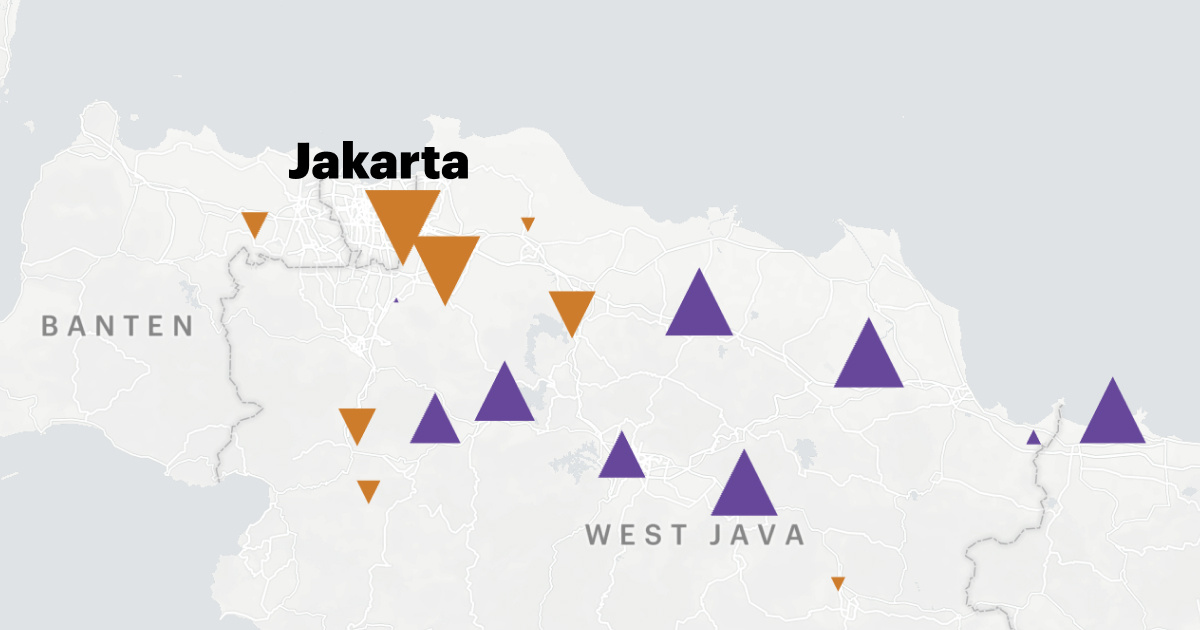
Nike Wants Factory Workers to Earn a Decent Living. In Indonesia, It’s Moved Into Areas Where Workers Don’t.
If you’re among the more than 1 million people who make Nike’s sneakers and apparel around the world, the company says you should be able to support your family. You should earn enough to pay your living expenses and have some discretionary money left over. If your factory wages don’t cut it, your employer should have a plan to get you there. But Nike’s expansion in Indonesia over the last decade has directly undermined these goals, an analysis by ProPublica and The Oregonian/OregonLive found. Over the last decade, employment at factories supplying the world’s largest athletic apparel brand expanded dramatically in regions of Indonesia where, according to one leading estimate, the minimum wage is less than the amount workers need to live on. Meanwhile, Nike’s supply chain shrank overall in places that pay this estimated living wage, our analysis found. The trend shows how the movement of multinational corporations to countries with ever-lower labor costs is being replaced, in some cases, by movements within a country that can achieve major savings and improve the bottom line. Nike’s suppliers employ 280,000 people in Indonesia, the company’s second-largest production center. From 2015 through last year, these suppliers shed around 36,000 jobs in places where the monthly minimum wage exceeds or comes close to a living wage. In these high-wage areas, which include the capital of Jakarta, the minimum typically equates to about $300 a month. By contrast, the company’s supplier workforce grew by nearly 112,000 in parts of Central and West Java with local minimum wages that are typically about $165 a month — far from what’s considered enough to live on. Dozens of workers employed by Nike suppliers in Indonesia told the news organizations the minimum is about all they make . “If it’s very labor intensive, then you go where labor is cheapest,” said Nurina Merdikawati, a lecturer in the Indonesia Project at Australian National University. In Indonesia, she said, “that’s going to be Central Java.” Other brands have also moved to Central Java and other low-wage regions of Indonesia in recent years and continue expanding there, local news organizations have reported. For Nike, the trend threatens the jobs of the existing factory workforce elsewhere in the country. Last October, more than 2,000 workers were laid off by Victory Chingluh, one of Nike’s longtime suppliers near Jakarta. In 2024, another 1,500 workers were cut by a Nike shoe supplier nearby, Adis Dimension, according to local news reports. Labor advocates say the geographic shift is concerning because the Jakarta area has a stronger union presence that ensures working conditions and wages get closer attention than in less-developed places like Central Java. At Victory Chingluh, three employees told the news organizations that the fear of more job cuts hangs over their work. They said the company is building a new factory in Cirebon, in West Java, where the minimum wage is 45% lower. Over the Past Decade, Nike’s Workforce Ballooned in Areas Where Workers Do Not Make a Living Wage Factory employment shrank in the areas near Jakarta where the minimum wage is considered enough to meet basic needs. Lucas Waldron/ProPublica Employees said when they were offered a choice between keeping their jobs and accepting severance packages during layoffs last year, workers were willing to take the buyout, fearing that they wouldn’t get anything if the factory closed altogether. That happened in 2018 when one Nike supplier near Jakarta, Kahoindah Citragarment, shut down without paying workers their full severance after Nike pulled its orders, an investigation by the Worker Rights Consortium found. The factory’s South Korean parent company, Hojeon, eventually agreed to pay workers $4.5 million after labor advocates argued they were legally owed separation pay. Hojeon did not respond to requests for comment. At Victory Chingluh, two union leaders said in December that they anticipated another 5,000 layoffs at a company that once employed about 15,000. “Almost all employees here are worried about that,” one of them said, speaking on the condition of anonymity because they feared repercussions from talking to reporters. The leaders said they’ve been told the factory being built in Cirebon could be ready by 2027. They said they’ve been told it’s for an expansion — even though their factory recently lost thousands of jobs. Victory Chingluh did not respond to questions. Nike said in a statement that it works closely with suppliers during layoffs to minimize disruptions. “We mandate that suppliers pay all statutory severance, social security, and other separation benefits required by local law and often assemble working groups — which may include civil society, unions, and local governments — to aid in proper execution,” the company said. Business leaders near Jakarta have voiced concern about the wage disparity between their region and Central Java, more than 150 miles away, saying that mandated pay increases around Jakarta could lead to mass layoffs and cause manufacturers to shift production. “There is a real possibility that many labor-intensive industries will move to other regions,” Herry Rumawatine, the head of a local employers association, told the Jakarta Globe in January. Asked whether the geographic shifts in Nike’s Indonesian supply chain were aimed at improving the bottom line, the company said that creating “operational efficiencies” is part of doing business in a competitive environment. However, the company said treating Nike’s geographic shift primarily as a move to save money “creates an incomplete picture” and cited “other plausible drivers” such as automation or changing production needs. Less-developed regions shouldn’t be excluded from opportunities for economic growth, Nike said, and it expects its suppliers everywhere to meet its code of conduct. “Growth and progress go hand in hand,” Nike wrote, “and we remain committed to investing in ways that expand opportunity while strengthening labor standards and worker protections where we operate worldwide.” Nike suggests that people who work for its foreign suppliers are well paid. In particular, the company says most workers for which it has data earn nearly double the local minimum wage. As The Oregonian/OregonLive reported in partnership with ProPublica in January, Nike does not pay workers anywhere close to this amount in Indonesia. In interviews across three regions of the country, roughly 100 workers said they made the minimum wage or a little bit more. Nike told the news organizations that its figure is a global average and variations naturally exist. But the company also told the news organizations that it’s important not just to compare what its suppliers pay relative to the minimum wage. Nike’s focus, one company official said, is on whether workers make a living wage and, if not, whether their employers are trying to get there. Although Nike does not explicitly require its suppliers to pay this amount, it says every worker “has a right to compensation for a regular work week that is sufficient to meet workers’ basic needs and provide some discretionary income.” The company reported that two-thirds of its key suppliers — it did not say which ones — paid above living wage benchmarks in 2022. Jason Judd, executive director of the Global Labor Institute at Cornell University, said living wage pledges from companies like Nike are so flexible that they’re almost meaningless. Only asking factories to be working toward living wages, as Nike does, “could go on for 20 years,” Judd said, “until you’ve found yet another lower-wage province.” Nike’s recent move to Central Java is notable because while wages are far lower there than in urban Jakarta, food and housing are not dramatically cheaper, according to estimates from the WageIndicator Foundation, a Dutch nonprofit. The foundation says a living wage in Central Java starts around $245 a month; in the parts of the province that are home to Nike suppliers, the local minimum wage ranges from only $136 to $215. Workers in Central Java said second jobs are common, including selling fish and gasoline. One said workers covertly sold snacks inside the factory, out of sight of managers who might fire them if caught. “At its core, this is about cost reduction and power,” Wiranta Ginting, deputy international coordinator for the Asia Floor Wage Alliance, a labor group, said in an email. It isn’t clear exactly how much Nike may have saved on labor by growing aggressively in low-wage regions. But some rough calculations are possible, based on addresses Nike has published for its suppliers, the numbers it says they employ and the minimum wage they must pay in each municipality. If each factory worker made exactly the minimum wage and worked only on Nike products, then the company’s shift into lower-cost areas would have saved about $200 million on labor in 2025 alone. The estimate is based on what Nike’s suppliers paid last year versus what they would have paid in labor costs had the company expanded uniformly across regions where it had factories in 2015. It’s only a broad indicator of potential savings. Nike said the analysis “rests on a series of oversimplified assumptions that limit the reliability of its conclusions.” For example, the company said that to assume the workforce could have grown where suppliers were located in 2015 “does not reflect the realities of manufacturing operations, which are constrained by factors such as facility capacity, workforce availability, skills, technology, and changes in product mix.” The geographic shift into lower-wage regions of Indonesia shows one way Nike can try to wring more profit from its vast supply chain. The company, which reported $46.3 billion in revenue last year, is struggling with declining annual sales and profits, problems compounded by uncertainty around President Donald Trump’s tariffs, which Nike had estimated would cost $1.5 billion a year before a recent Supreme Court decision struck them down. Its stock has dropped more than 60% from a 2021 peak. “Margin expansion is a top priority for me and my leadership team,” CEO Elliott Hill told Wall Street analysts in a December earnings call. Nike CEO Elliott Hill in February Francesca Volpi/Bloomberg via Getty Images Officials in low-wage Central Java have welcomed the industrial expansion. The province’s then-governor said in 2022 that 97 factories had opened there. Another 10 garment and footwear factories were under construction last year, according to local news reports, with 17 more expected to be built this year. Nike’s explanation of its move into the region was in keeping with assertions decades ago by its co-founder, Phil Knight, that Nike’s arrival was a positive force for local economies and workers in developing countries. “Increased manufacturing in Central Java is not an accident and, in many ways, is something to be celebrated,” Nike told The Oregonian/OregonLive and ProPublica. “The Indonesian government has taken meaningful, intentional steps to transform Central Java into an industrial hub, with an eye toward extending the economic growth that has benefited other regions of the country for more than 30 years.” The company added that “manufacturing growth in regions with lower prevailing wages can lead to raised standards, increased worker skills, and positive contributions to local communities.” Nike’s move has ripple effects around relatively high-wage Jakarta, Indonesia’s biggest city, where the company has sourced sneakers since 1988. Factory workers and union officials there said they’re reluctant to demand wage increases. They said they fear better pay will mean fewer jobs. “It’s clear that every company will expand where it’s cheaper,” a union official at a Nike supplier near Jakarta said. The differences between Indonesia’s well-established urban production centers and the less-developed areas where Nike has expanded employment go beyond wages. “Greater Jakarta is an older industrial region with a long history of unionization and collective bargaining, reflected in higher minimum wages won through years of worker organizing and mass mobilization,” Ginting, the Asia Floor Wage Alliance representative, said in his email. By contrast, he said, factories in the new apparel hot spots of Central Java often recruit younger workers, have less union representation and face less scrutiny from labor inspectors. Scott Nova, executive director of the Worker Rights Consortium, said problems on the factory floor are more prevalent in this region. Nova’s international watchdog group has conducted investigations at the region’s apparel factories for the past five years. Despite some recent progress, Nova said by email, workers at many factories “suffer gender-based violence and other abuses at higher rates than in the country’s older production centers.” “Because unions have a tenuous foothold in the region and face harsh employer resistance,” he added, “workers often cannot fight back.” An investigation by Nova’s group found that women at a Central Javanese factory producing Nike-licensed goods for Fanatics, a privately owned brand, had been sexually harassed for years. The labor rights group told Fanatics in 2022 it had heard from women who said they had to endure unwanted touching and verbal harassment by supervisors. After the factory owner pledged to fix the problems, the consortium found even more egregious abuse in 2023 at another Central Java factory owned by the same company, South Korea-based Ontide. The company struck a binding deal with labor unions in 2024 called the Central Java Agreement for Gender Justice, which mandates harassment training and monitoring. Ontide did not respond to a request for comment. However, Ontide sustainability director John Yoon said in a press release announcing the gender justice agreement that it would protect workers. “As part of our commitment to our workers’ safety and well-being, we are pleased to be seeing initial results,” the release said. Fanatics said in a statement to The Oregonian/OregonLive and ProPublica that there has been “excellent progress” in implementing the agreement. “We are proud of this work, which has been recognized by the Agreement signatories, and which will continue into 2026,” the company said. Nova, of the Worker Rights Consortium, called the outcome at Ontide “a ray of hope.” But workers told the news organizations that problems have persisted at other factories in Central Java. Ten workers at one supplier said many women’s toilets hadn’t been working for months. Two workers at other factories said they received written reprimands after they told their employers they were injured on the job. Asked about these workers’ accounts, Nike said that a “safe and healthy work environment is a fundamental human right” and that it audits factories annually for compliance with its code of conduct. It said it has not found more problems at suppliers in Central Java than in other parts of Indonesia. The company added that it works quickly with its suppliers when needed to put improvement plans in place. At Selalu Cinta, a Central Java factory that employs 18,000 people and has made Nike Burrow slippers, Blazer Mid ’77 sneakers and other shoes, hundreds of workers signed petitions asking the factory to remove a manager they said repeatedly screamed at and intimidated workers. Leaders at the factory have failed to remove him, 10 workers told the news organizations. Nike said it required Selalu Cinta to engage in an independent third-party investigation and is overseeing corrective actions in consultation with unions. Nike said it plans follow-up verification. Selalu Cinta officials did not respond to requests for comment. A woman who worked for the manager said in an interview last summer that her parents depended on her wages, forcing her to keep her job despite what she described as her boss’ frequent tantrums. “Working like that,” she said, “feels like you’re in hell.” How We Tracked Nike’s Factories Overall employment at Nike suppliers in Indonesia grew by 39% from 2015 to 2025. To see where in Indonesia that growth occurred, we used factory-level data self-reported by Nike in November 2015 and November 2025. Because Nike said it began working to increase its disclosure of materials and components factories in 2021, we excluded any factories of this kind that appeared on Nike’s list in 2025 but not in 2015, to avoid counting Nike’s expanded disclosure as employment growth. This eliminated 12 materials factories from 2025, removing about 3,500 workers from the analysis. ProPublica and The Oregonian/OregonLive assigned minimum and living wages to each factory based on their locations. Wage and location data was manually reviewed, and when information was incomplete or inconsistent, classification was based on the data that appeared to be the most reliable. The city or regency of each factory was identified using factory addresses and verified against Google Maps, factory websites, shipping records and other public disclosures. We assigned minimum wages at the municipal level based on 2025 government decrees. Some municipalities specify a single minimum wage across all sectors. Others specify wages by sector (in which case we used the sectoral wage that best matched what each factory produces) and/or by nature of the work and employer (in which case we used the rate for labor-intensive multinational companies). Unlike minimum wages, which are defined by law, living wage estimates can vary. We used estimates from the WageIndicator Foundation, an independent Dutch nonprofit. While the group calculates living wages as a range, we used the group’s lowest estimate for 2025 of what a worker would need to provide a decent standard of living for a typical family. Factories were classified as “at or above living wage” if the applicable minimum wage was at least 95% of WageIndicator Foundation’s lowest living wage estimate for the province. Wages were converted from Indonesian rupiah to U.S. dollars using the mean of monthly average daily USD/IDR exchange rates for 2025 from the Federal Reserve . For the graphic, factory coordinates were manually reviewed, then grouped when multiple factories were close to one another. Factories were grouped when located within 15 kilometers of at least one other factory, forming density-based clusters that were represented on the map as the geometric center of those points. We verified that factories in different wage classifications were not lumped together. For municipalities without a Nike factory, we assigned the highest 2025 minimum wage that could apply if a Nike factory was located there. To estimate potential savings based on where Nike expanded production between 2015 and 2025, we compared actual 2025 supplier payroll (based on reported number of factory workers and municipal minimum wages) to a counterfactual scenario in which employment grew proportionally across the same municipalities where Nike had factories in 2015. The calculation reflects what Nike’s suppliers would have paid in labor costs under each scenario if all workers earned the applicable minimum wage and factory employment were dedicated to Nike production. Because suppliers can produce for multiple brands and some workers earn above minimum wage, the estimate merely provides a broad sense of potential savings rather than a precise measure of how much the company and its suppliers actually saved in labor costs. The post Nike Wants Factory Workers to Earn a Decent Living. In Indonesia, It’s Moved Into Areas Where Workers Don’t. appeared first on ProPublica .
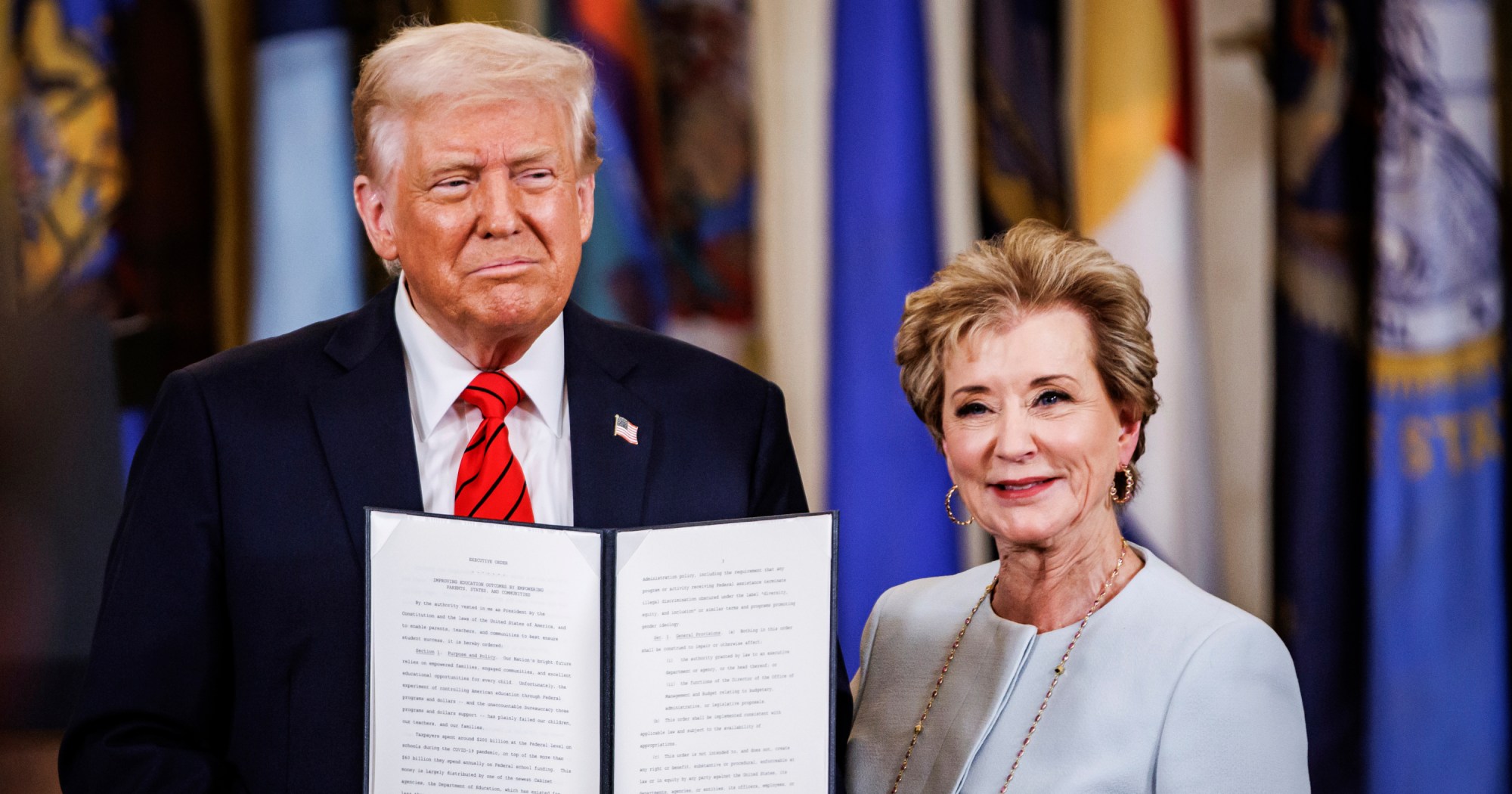
ProPublica Sues Education Department for Withholding Records About Discrimination in Schools
ProPublica has sued the U.S. Department of Education in federal court in New York, accusing it of withholding public records about how it’s enforcing civil rights protections for millions of American students. The Education Department has failed to provide public records related to its investigations, communications and other work that ProPublica sought through four Freedom of Information Act requests filed last year. The Education Department’s civil rights arm for decades has investigated allegations of discrimination in schools. It historically has kept an online list of its open investigations and posted the findings of completed inquiries. But under Education Secretary Linda McMahon, who was appointed by President Donald Trump, the Office for Civil Rights has been decimated and the work of its remaining investigators is largely cloaked in secrecy. ProPublica submitted three FOIA requests — the first of them more than a year ago — seeking records about civil rights investigations that have been opened or closed, notices sent to institutions being investigated and previous findings of discrimination that have been reversed under the Trump administration. A fourth request sought communication between top Education Department officials and conservative groups that have criticized public schools. Some of the groups have urged the OCR to investigate specific school districts and have met often with McMahon. The department has not responded to the requests other than to acknowledge that it received them. “Actions by the Department of Education have real consequences for millions of students and families,” said Alexandra Perloff-Giles of the law firm Davis Wright Tremaine, which is representing ProPublica. “The public deserves to understand how executive authority is being exercised so that it can hold government accountable,” she said. “Congress enacted FOIA to offer the public that necessary transparency, and we’re asking the court to enforce it.” Spokespeople for the department did not respond to a request for comment about the lawsuit. The department has not yet responded to the complaint in court. The lawsuit, filed Wednesday, argues that since Trump took office, the work of the OCR — once one of the federal government’s largest enforcers of the Civil Rights Act of 1964 — has become significantly more opaque. Though each presidential administration has its priorities, OCR has consistently worked to uphold constitutional rights against discrimination based on disability, race and gender. But the focus of the OCR under Trump has shifted to investigations relating to curbing antisemitism, ending participation of transgender athletes in women’s sports and combating alleged discrimination against white students. Complaints about transgender students playing sports and using girls’ bathrooms at school have been fast-tracked while cases of racial harassment of Black students last year were ignored. And although some documents that detail how cases were resolved are being posted online, some older resolution agreements have been terminated . Those terminations have not been disclosed to the public. “The public interest in this information is substantial and ongoing. Since there are approximately 49.6 million students in the U.S., changes to the ED and its policies affect millions of families,” the lawsuit says. Trump has been working to shutter the department. Hundreds of department workers have been laid off and official employee counts at the OCR went from 568 in 2024 to 403 as of December 2025. McMahon closed seven of the 12 regional OCR offices that handled discrimination complaints across the country. Amid the staffing difficulties and the shift in priorities at the OCR, families’ discrimination complaints have piled up. When President Joe Biden left office, about 12,000 investigations were open; by December 2025, there were nearly 24,000. ProPublica reporting has found that new complaints as well as older ones included in the backlog often are dismissed without investigation. OCR workers have said they feel as if they’re working in a “dismissal factory.” In the past year, ProPublica has filed several other lawsuits seeking to force transparency in courts and the federal government. That includes a lawsuit filed in May against the State Department. ProPublica also has joined other media organizations in lawsuits. Help Us Report on How the Department of Education Is Handling Civil Rights Cases Have you recently filed a civil rights complaint or do you have a pending case? We need your help to get a full picture of how the dismantling of the Office for Civil Rights is affecting students, parents, school employees and their communities. Share Your Experience The post ProPublica Sues Education Department for Withholding Records About Discrimination in Schools appeared first on ProPublica .
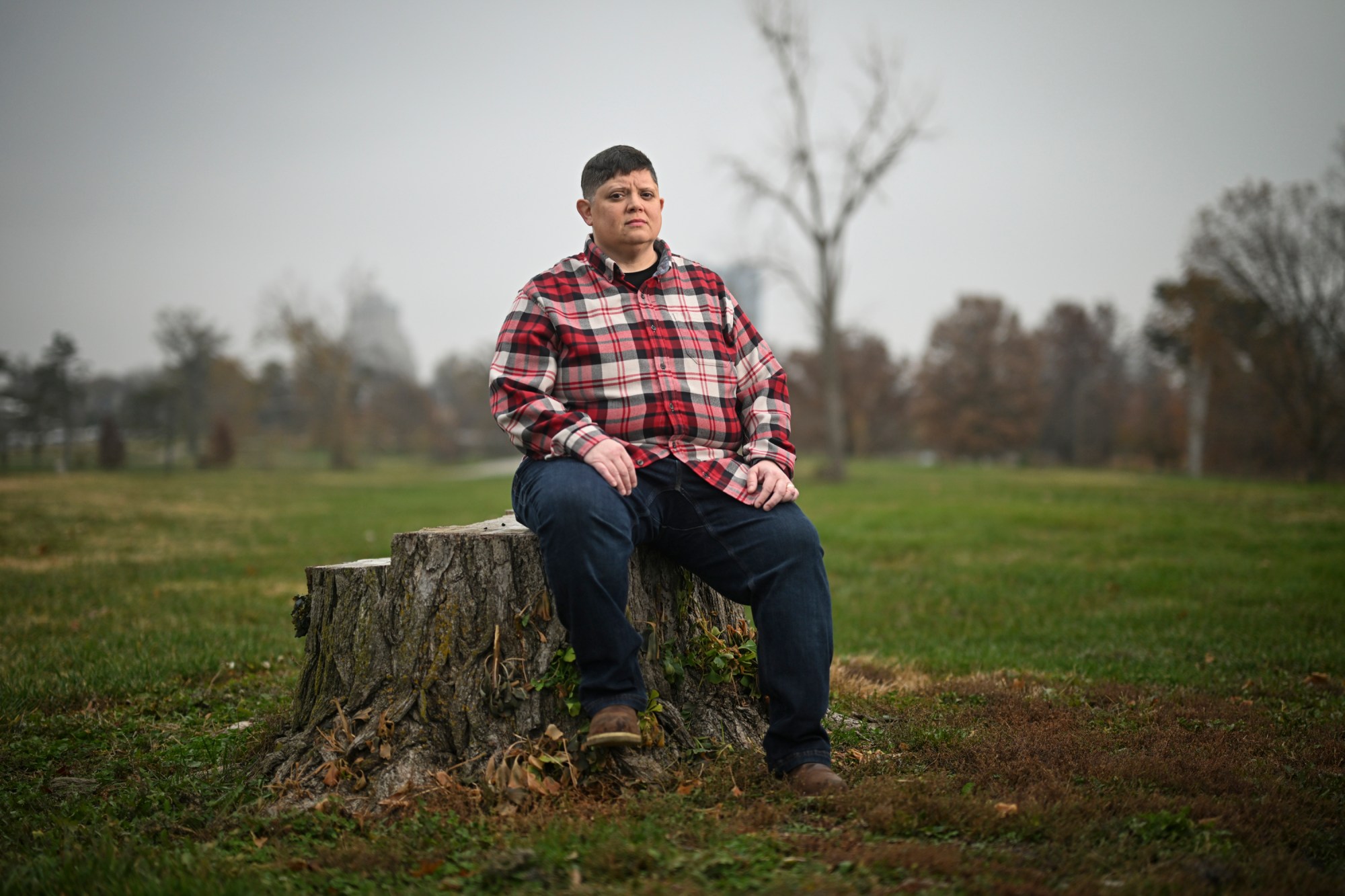
What Emergency Managers Say They Need More Than Ever
Local emergency managers, the behind-the-scenes coordinators who mobilize help during disasters, have raised the same point time and again: We need adequate resources to protect people in harm’s way — before the harm arrives. In some notable cases, resources didn’t come soon enough. It wasn’t until after Hurricane Helene devastated Yancey County, North Carolina, in 2024 that commissioners there hired additional emergency management staff, which the former emergency manager said he’d requested for years. City officials in St. Louis, Missouri, were in the process of upgrading their faulty outdoor warning system when a tornado killed four people and injured dozens of others in May 2025. We wanted to know more about the cracks in the systems meant to keep communities safe when disasters strike. To do that, we reached out to dozens of emergency management agencies and wound up hearing from more than 40 current and former emergency managers in 11 states. They described common concerns. Some said their agencies have been saddled with an ever-growing list of responsibilities. In Saluda County, South Carolina, the emergency management director said his team of six is responsible for everything from the county’s IT department to a spay and neuter program. In San Bernardino County, California, the emergency manager said that she has had to help respond to new challenges like a lithium battery fire and, at a previous agency, was tasked with responding to busloads of immigrants arriving from other states. Funding for additional staff was the most pressing issue they cited. One North Carolina emergency management director said an internal study from about three years ago recommended their agency have more than 20 staffers, but they still only have 10. Across the country, more than half of the 1,689 local emergency management agencies that responded to Argonne National Laboratory’s July 2025 emergency management survey have either one or no permanent full-time employees, and a “notable percentage” of local emergency managers who responded are volunteers. Get Involved We know disasters are a matter of where and when, not if. And our reporting team at ProPublica wants to be prepared well in advance. If you are a local or state emergency manager, sign up to be a part of our long-term source network to help fuel ProPublica’s investigative journalism. Get Involved Given the wide-ranging responsibilities and increasing risk due to climate change, part-time or volunteer emergency management positions shouldn’t exist, said Samantha Montano, an emergency management associate professor and researcher at the Massachusetts Maritime Academy. “To expect somebody to understand how to mitigate cyber risks and also recover from a tornado, I mean, these are different skill sets,” Montano said. “So to think that one person is going to be capable of doing all of those things, especially working part time or as a volunteer, is ludicrous.” Meanwhile, President Donald Trump’s administration has caused delays in emergency management funding to state and local agencies and issued an executive order to shift more of the weight of disaster preparedness to state and local governments. Kelly McKinney, the vice president of emergency management at NYU Langone Health and a former deputy commissioner at the New York City Emergency Management office, said that over the years states have become “overly dependent” on funding administered by the Federal Emergency Management Agency. But there is no clear plan for alternative funding streams, according to McKinney. “This crisis-management system in the United States is itself in crisis,” he said. “There’s Only So Much You Can Do” Several emergency managers we heard from said one of the only times they’re able to draw attention to their agency’s needs is in the aftermath of a wide-scale disaster. Wike Graham, the emergency management director for the Charlotte-Mecklenberg area of North Carolina, said the first question the media typically asks following such a disaster is: “Did emergency management do what they were supposed to do?” According to Graham, that’s almost always the wrong question. He instead asks: “Did you properly fund emergency management staff? And did you provide them with the resources that they need? Did you make emergency management a priority for your community?” Unlike firefighters, EMTs or law enforcement, emergency managers face a “public identity issue” that can result in agencies receiving smaller budgets, Montano said. Several emergency managers told ProPublica that because people in their field operate mostly behind the scenes or as part of larger departments, they often find themselves competing for funding with better-recognized agencies, and they say elected officials frequently don’t have a clear understanding of their role. Some said it’s simply difficult to get people to care about a disaster that hasn’t happened yet. Several others told ProPublica they are also seeing an uptick in the frequency and intensity of disasters, which makes it difficult to manage recovery (which can take years) while preparing for the next storm or fire. In St. Louis, for example, emergency management commissioner Sarah Russell was still in the midst of managing recovery efforts from 2022 flash flooding when the 2025 tornado hit. Josh Morton, president of the International Association of Emergency Managers USA Council and emergency management director for Saluda County in South Carolina, says local emergency management is “where the rubber meets the road,” but local governments are often “the most limited when it comes to resources.” Donaven Doughty for ProPublica At the Saluda County emergency management office where Morton works, a memorial, first image, honors the two volunteer firefighters who lost their lives while responding to Hurricane Helene. Donaven Doughty for ProPublica During the St. Louis tornado, the sirens — which the city was in the early process of upgrading — weren’t activated, in part due to a miscommunication between Russell and a fire alarm dispatcher, according to an external investigation commissioned by the city. Russell, who is nonbinary and uses they/them pronouns, told ProPublica that the fire department was responsible for sounding the sirens. But even if the activation button had been pressed, more than a third of the sirens weren’t working, and a later test showed that the button at the fire alarm office wasn’t either. Russell was terminated in August 2025, in part due to their management of the tornado response, according to their termination letter. But Russell, who is appealing the termination, said the incident highlights the need to proactively invest in emergency management. Russell had made several requests for additional staff who specialize in emergency management to help with core responsibilities, like updating the city’s outdated plan for responding to emergencies. “There’s always things that you would do different with hindsight,” Russell said. “But there’s only so much you can do with so little resources and support.” St. Louis Mayor Cara Spencer, who had been in office for a month at the time of the tornado and who was an alderwoman for the decade prior, told ProPublica that she was aware of the agency’s requests for additional funding, but that most city departments make such requests. After the tragedy, the city fully automated the tornado sirens and issued an executive order declaring that the fire department would have primary authority over the sirens, replacing an unclear protocol. A city spokesperson said the new emergency management commissioner has “implemented several improvements” to the emergency operations plan. “Recognizing that budget restraints are unfortunately the reality across many aspects of government,” Spencer said via email, “I’m incredibly proud of the improvements this team has been able to implement with almost no additional funding.” “This Isn’t a Quick Fix” Strained budgets for local emergency management agencies aren’t a new issue. But in recent months, federal funding has become uncertain. In April 2025, the Trump administration cut federal grants that pay for local disaster-preparedness projects — but a judge later halted the administration’s efforts to shutter the grant program. In May 2025, federal officials delayed grants that help fund local and state emergency managers’ salaries . In December, the FEMA Review Council, which Trump created to advise on ways to reform the agency, was expected to vote on a long-awaited report that would outline the agency’s future. But after a draft was leaked to CNN , the meeting was abruptly canceled. The work of the review council has been extended until late March. Several emergency managers told ProPublica they would welcome change at FEMA. But many voiced concerns about the federal government shuttering grant programs — which fund salaries, upgrades to equipment and disaster-mitigation efforts — or drastically reducing reimbursement for local agencies responding to large-scale disasters without alternative funding in place. They said such actions would be detrimental, especially in small, rural regions with limited local budgets. In North Carolina, one emergency manager said that without federal emergency management performance grants, which can be used to pay 50% of an emergency manager’s salary, “we are looking at the loss of preparedness and response capabilities.” Another called the grant “vital” to daily operations. FEMA did not respond to requests for comment. Claire Connolly Knox, who directs the University of Central Florida’s master’s program for emergency and crisis management, has been studying what a “decentralized FEMA” could mean for state agencies. She said it could take several legislative cycles before states are prepared to fill in the gaps that changes to FEMA might create. Many states, Knox said, are not closely tracking spending across multiple departments and multiple phases of emergency management, meaning “we don’t know the true cost” of mitigating, preparing for, responding to and recovering from disasters. “When you start breaking that down,” Knox said. “You start seeing that this isn’t a quick fix.” The post What Emergency Managers Say They Need More Than Ever appeared first on ProPublica .
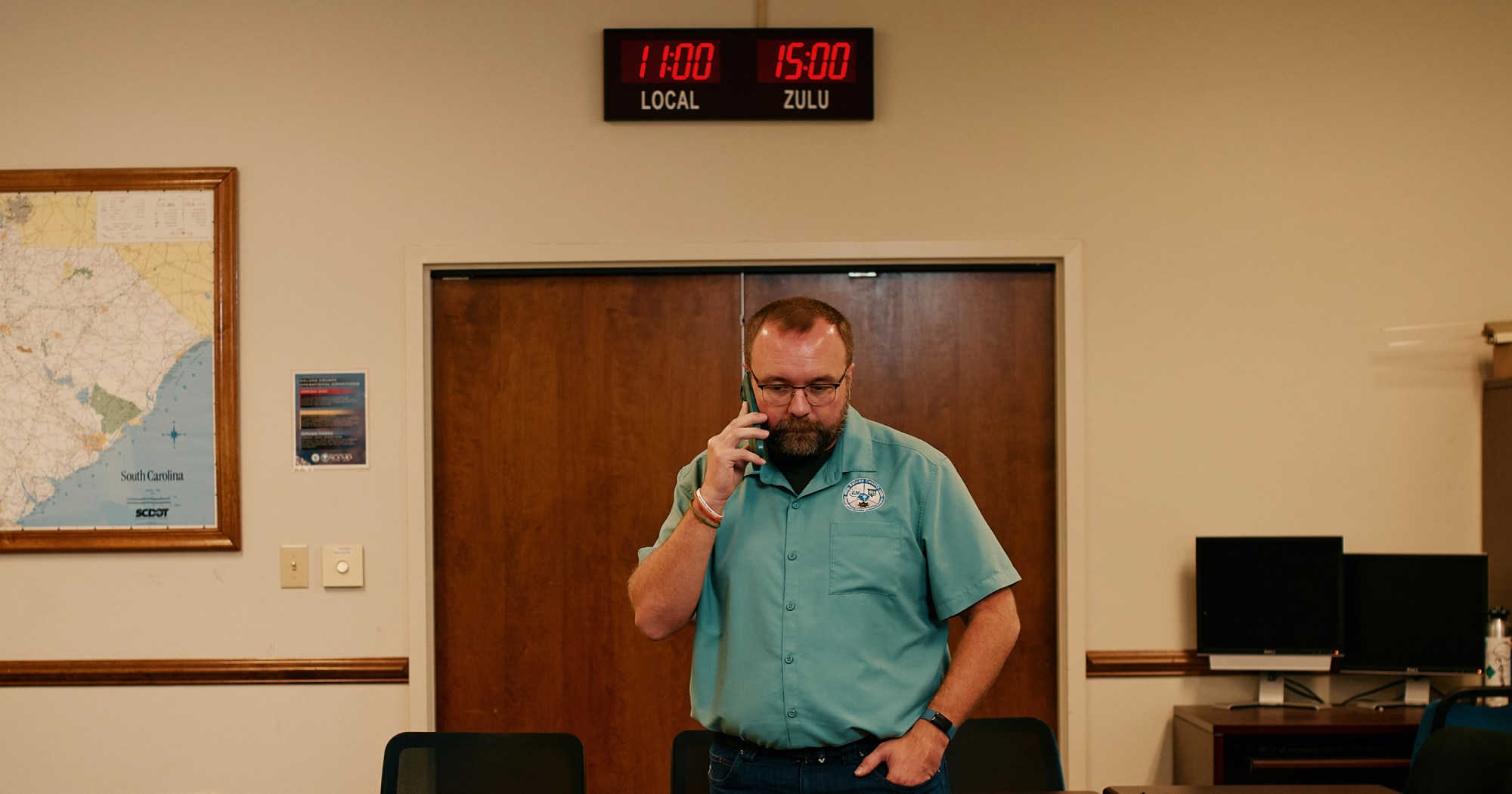
Emergency Managers: Help ProPublica Prepare to Report on the Next Disaster
We know disasters are a matter of where and when, not if. And just like you, our reporting team at ProPublica wants to be prepared well in advance. If you are a local, state or federal emergency manager, former emergency manager, emergency management researcher, or a part of the broader network of disaster response and recovery partners, we want to hear your concerns. Dozens of current and former emergency managers working everywhere from large cities to rural counties have already told us about the growing challenges they face amid more frequent disasters and uncertain federal funding . Now we need your help to build a comprehensive picture of the real conditions across the country. What resources do you need to feel prepared for the next gray-sky day? How have or will changes to the Federal Emergency Management Agency impact the work you’re doing? How are alerts and warning systems working in your region? Have you been hit by multiple large-scale disasters in recent years? What new hazards are on your radar? We know that emergency managers are critically important but aren’t often thought about until after tragedy strikes. We are building this source network to fuel in-depth coverage of the nation’s emergency preparedness and disaster response and recovery infrastructure that goes far beyond breaking news and brings attention to important issues across the country. As with all ProPublica journalism, our goal is impact . Fill out the brief form below to tell us what we should be covering, or to stay in touch as changes unfold. You may hear from our team as we report on major overhauls to the emergency management system, develop emergency preparedness guides or provide crucial information to communities that have just experienced their worst day. The post Emergency Managers: Help ProPublica Prepare to Report on the Next Disaster appeared first on ProPublica .

Applications Open for 2026 ProPublica Investigative Editor Training Program
For the fourth year, ProPublica will invite up to 10 news editors from media companies across the country to participate in a yearlong investigative editing training program, led by the newsroom’s award-winning staff. Applications are now open for the ProPublica Investigative Editor Training Program. Submissions are due Monday, March 30, at 9 a.m. Eastern time. As the nation’s premier nonprofit investigative newsroom, ProPublica is dedicated to journalism that changes laws and lives and to advancing the careers of the people who produce it. The goal of this program is to address our industry’s critical need to broaden the ranks of investigative editors. Building a pipeline of talent is a priority that serves us and our industry. “Journalism is vital to a healthy democracy, and it is clear that our world needs more investigative journalism at this moment, not less,” Managing Editor Ginger Thompson said. “We see the Editor Training Program as an indispensable training ground to ensure the future of investigative journalism. Where others are contracting, we are investing in the future of our industry, and that of talented journalists across the country.” This year’s program will begin with a weeklong boot camp in New York that will include courses and panel discussions on how to conceive of and produce investigative projects that expose harm and have impact. The editors will also get training in how to manage reporters who are working with data, documents and sensitive sources, including whistleblowers, agency insiders and people who have suffered trauma. The program also includes virtual continuing education sessions and support from a ProPublica mentor. Frequently Asked Questions What is this? The ProPublica Investigative Editor Training Program is designed to help expand the ranks of editors with investigative experience in newsrooms across the country, to help better reflect the nation as a whole. What kind of experience can you expect? The program kicks off with a five-day intensive editing boot camp in New York, which includes a series of courses and panel discussions led by ProPublica’s senior editors, veteran reporters and other newsroom leaders. The boot camp will include hands-on editing exercises and opportunities for participants to workshop projects underway in their own newsrooms. Afterward, participants will gather virtually for seminars and career development discussions with their cohort and ProPublica journalists. Each of the participants will also be assigned a ProPublica senior editor as a mentor for advice on story and management challenges or on how to most effectively pursue their own professional aspirations. What skills should I expect to learn? How to evaluate story ideas and determine the right scope, length and time for getting the work done. How to manage a reporter through a complicated accountability story and communicate feedback in ways that build trust and confidence. How to edit investigative drafts, spot holes in reporting logic, organize a narrative and guide the reporter through the fact-checking process. How to work collaboratively with research, data and multimedia teams to elevate an investigative project. When is the boot camp? The five-day, all-expenses-paid boot camp will be held May 31 to June 4, 2026, in New York, with remote sessions via Google Meet throughout the year. Is there a virtual option for the boot camp? This boot camp will be held in person and will not have a virtual option. Will I be responsible for my expenses in New York? ProPublica will cover participants’ expenses for meals, travel and lodging during the boot camp. How many participants will be selected each year? Up to 10 journalists. Who is eligible? The program is open to all. The aim is to help broaden our industry’s investigative editing ranks to include journalists from a wide array of backgrounds. We encourage everyone to apply, including those from socioeconomically disadvantaged backgrounds and rural news organizations, as well as women, people of color, veterans, LGBTQ+ people and people with disabilities. Past participants have come from a wide range of news outlets across the country. The ideal participants will have: A minimum of five years of journalism experience, either as an editor or as a reporter primarily doing work with an investigative or accountability focus. A strong grasp of the basics of editing, storytelling, structure and framing. Experience managing a team of journalists or a complicated multipronged reporting project. An accountability mindset: You don’t have to have been on the investigative team, but we are looking for people with an eye for watchdog reporting and editing. Am I eligible if I live outside of the United States? No. How do I apply? The application period is now open and closes Monday, March 30, at 9 a.m. Eastern time. You can find the posting to apply at propublica.org/jobs . What if I have other questions? Send an email to Assistant Managing Editor Talia Buford at talent@propublica.org . The post Applications Open for 2026 ProPublica Investigative Editor Training Program appeared first on ProPublica .

Trump Officials Attended a Summit of Election Deniers Who Want the President to Take Over the Midterms
Several high-ranking federal election officials attended a summit last week at which prominent figures who worked to overturn Donald Trump’s loss in the 2020 election pressed the president to declare a national emergency to take over this year’s midterms. According to videos, photos and social media posts reviewed by ProPublica, the meeting’s participants included Kurt Olsen, a White House lawyer charged with reinvestigating the 2020 election , and Heather Honey, the Department of Homeland Security official in charge of election integrity. The event was convened by Michael Flynn, Trump’s former national security adviser , and attended by Cleta Mitchell, who directs the Election Integrity Network, a group that has spread false claims about election fraud and noncitizen voting . Election experts say that the meeting reflects an intensifying push to persuade Trump to take unprecedented actions to affect the vote in November. Courts have largely blocked his efforts to reshape elections through an executive order, and legislation has stalled in Congress that would mandate strict voter ID requirements across the country. The Washington Post reported Thursday that activists associated with those at the summit have been circulating a draft of an executive order that would ban mail-in ballots and get rid of voting machines as part of a federal takeover. Peter Ticktin, a lawyer who worked on the executive order and had a client at the summit, told ProPublica these actions were “all part of the same effort.” The summit followed other meetings and discussions between administration officials and activists — many not previously reported — stretching back to at least last fall, according to emails and recordings obtained by ProPublica. The coordination between those inside and outside the government represents a breakdown of crucial guardrails, experts on U.S. elections said. “The meeting shows that the same people who tried to overturn the 2020 election have only grown better organized and are now embedded in the machinery of government,” said Brendan Fischer, a director at the Campaign Legal Center, a nonpartisan pro-democracy organization. “This creates substantial risk that the administration is laying the groundwork to improperly reshape elections ahead of the midterms or even go against the will of the voters.” Five of six federal officials who attended the summit didn’t answer questions about the event from ProPublica. A White House official, speaking on the condition of anonymity, said federal officials’ attendance at the gathering shouldn’t be construed as support for a national emergency declaration and that it was “common practice” for staffers to communicate with outside advocates who want to share policy ideas. The official pointed to comments Trump made to PBS News denying he was considering a national emergency or had read the draft executive order. “Any speculation about policies the administration may or may not undertake is just that — speculation,” the official said. In the past, Trump has expressed an openness to a federal takeover as a way to stem projected Republican losses in November . This month, he said in an interview with conservative podcaster Dan Bongino that Republicans need “to take over” elections and “to nationalize the voting.” Mitchell did not respond to questions from ProPublica about the summit. A spokesperson for Flynn responded to detailed questions from ProPublica by disparaging experts who expressed concerns, texting, “LOL ‘EXPERTS.’” The 30-person roundtable discussion on Feb. 19, at an office building in downtown Washington, D.C., was sponsored by the Gold Institute for International Strategy, a conservative think tank. Afterward, activists and government officials dined together, photos reviewed by ProPublica showed. Flynn, the institute’s chair, told a social media personality why he’d arranged the event. “I wanted to bring this group together physically, because most of us have met online” while “fighting battles” in swing states from Arizona to Georgia, Flynn said to Tommy Robinson on the gathering’s sidelines. Robinson posted videos of these interactions online . “The overall theme of this event was to make sure that all of us aren’t operating in our own little bubbles.” Flynn has repeatedly advocated for Trump to declare a national emergency and posted on social media after the event addressing Trump, “We The People want fair elections and we know there is only one office in the land that can make that happen given the current political environment in the United States.” Get Involved Do you have information you can share about conservative activists engaging with federal officials about elections or any of the individuals named in this article? Contact reporter Doug Bock Clark at doug.clark@propublica.org or on Signal at 678-243-0784. If you’re concerned about confidentiality, check out our advice on the most secure ways to share tips . In addition to Olsen and Honey, four other federal officials from agencies that will shape the upcoming elections attended the event. At least four of the six attended the dinner. One is Clay Parikh, a special government employee at the Office of the Director of National Intelligence who’s helping Olsen with the 2020 inquiry . A spokesperson at ODNI said Parikh had attended the summit “in his personal capacity.” Another, Mac Warner, handled election litigation at the Justice Department . A department spokesperson said that Warner had resigned the day after the event and had not received the required approval from agency ethics officials to participate. The department “remains committed to upholding the integrity of our electoral system and will continue to prioritize efforts to ensure all elections remain free, fair, and transparent,” the spokesperson said in an email. A third administration official who attended the summit, Marci McCarthy, directs communications for the nation’s cyber defense agency, which oversees the security of elections infrastructure like voting machines. Kari Lake, whom Trump appointed as senior adviser to the U.S. Agency for Global Media, was a featured speaker. Lake worked with Olsen and Parikh in her unsuccessful bid to overturn her loss in the 2022 Arizona gubernatorial election. Lake said in an email that she “showed up to the event, spoke for about 20 minutes about the overall importance of election integrity, a non-partisan issue that matters to all citizens — both in the United States and abroad. I left without listening to any other speeches.” “Elections should be free from fraud or any other malfeasance that subverts the will of the people,” she added. At the meeting, activists presented on ways to transform American elections that would help conservatives, according to social media posts and interviews they gave on conservative media, such as LindellTV, a streaming platform created by the pillow mogul Mike Lindell. They said the group broke down into two camps: those who wanted to pursue a more incremental legal and legislative strategy and those who wanted Trump to declare a national emergency. Multiple activists left the meeting convinced Trump should do the latter, a step they believe would allow the president to get around the Constitution’s directive that elections should be run by states. Former Overstock.com CEO Patrick Byrne, a prominent funder of efforts to overturn the 2020 election, told LindellTV that Trump has “played nice” so far in not seizing control of American elections. “But at some point,” Byrne said, “he’s got to do something, the muscular thing: declare a national emergency.” Byrne responded to questions from ProPublica by sending a screenshot of a poll that he said suggested “2/3 of Americans correctly do not trust” voting machines, which the proposed national emergency declaration aims to do away with. Will Huff, who has advocated for doing away with voting machines, told a conservative vlogger that Olsen, the White House lawyer, and other administration representatives would take the “consensus” from the gathering back to Trump. “It’s got to be a national emergency,” said Huff, the campaign manager for a Republican candidate for Arkansas secretary of state. In response to questions from ProPublica, Huff said in an email that Olsen and Trump would use their judgment to decide whether to declare a national emergency. “The President has been briefed on findings of shortcomings in election infrastructure,” Huff wrote. “I believe there are steady hands around the President wanting to ensure that any action taken is, first, constitutional and legal, but also backed by evidence.” McCarthy, the cybersecurity official, expressed more general solidarity with fellow attendees in a post on social media about the summit . “Grateful for friendships forged through years of standing shoulder-to-shoulder, united by purpose and conviction,” she wrote. “The mission continues… and so does the fellowship.” Marci McCarthy, second from left, Heather Honey, fourth from right, and Cleta Mitchell, third from right, were among the conservative activists and officials who attended the summit. McCarthy posted about the event on LinkedIn. Screenshot by ProPublica. Redactions by ProPublica. Last week’s gathering was the latest in a string of private interactions between conservative election activists and administration officials, according to emails, documents and recordings obtained by ProPublica. Many have involved Mitchell’s Election Integrity Network . Before taking her government post, Honey was a leader in the Election Integrity Network, ProPublica has reported , as was McCarthy . Previously unreported emails obtained by ProPublica show that just weeks after Honey started at the Department of Homeland Security, she briefed election activists, a Republican secretary of state and another federal official on a conference call arranged by her former boss , Mitchell. “We are excited to welcome her on our call this morning to hear about her work for election integrity inside DHS,” Mitchell wrote in an email introducing presenters on the call. Honey didn’t respond to questions from ProPublica about the call. Experts said Honey’s briefing gave her former employer access that likely would have violated ethics rules in place under previous administrations, including the first Trump administration — though not this one. The prior “ethics guardrails would have prevented some of the revolving door issues we’re seeing between the election denial movement and the government officials,” said Fischer, the Campaign Legal Center director. Those prior rules “were supposed to prevent former employers and clients from receiving privileged access.” The post Trump Officials Attended a Summit of Election Deniers Who Want the President to Take Over the Midterms appeared first on ProPublica .

A Secret Survey From Inside a Women’s Prison Tells Stories of Domestic Abuse Untold in Court
Last summer, I traveled to McLoud, Oklahoma, home to the state’s largest women’s prison. McLoud — a town of fewer than 5,000 residents — lies 30 miles east of Oklahoma City on a wide expanse of prairie. At the edge of town, off a rutted road, stands Mabel Bassett Correctional Center, a sprawl of concrete and razor wire. I went there to meet April Wilkens, who has spent more than a quarter century at Mabel Bassett for the 1998 shooting death of her ex-fiancé, Terry Carlton. Wilkens had repeatedly sought help from law enforcement after Carlton beat, raped and stalked her — pleas that, according to trial testimony, were met with indifference. She was convicted of first-degree murder and handed a life sentence. More than two decades later, her case drew renewed attention. Wilkens became a central figure in the push for new legislation that would allow survivors of domestic violence to seek reduced sentences when their crimes stemmed from their abuse. Read More The Victims Who Fought Back The state’s high incarceration rate — and the mounting human and financial costs of keeping so many people behind bars — had created an opening, one that a Tulsa lawyer named Colleen McCarty recognized. Troubled by Oklahoma’s dual distinction as a state that consistently has one of the highest rates of female imprisonment and of domestic abuse, she and another Tulsa attorney, Leslie Briggs, visited Wilkens in prison in 2022. In that meeting, the lawyers explained that they wanted to pass legislation that could reduce the long sentences that survivors of domestic abuse faced, even when their crimes were a direct result of their abuse. After two years of advocacy, the Oklahoma Survivors’ Act was passed into law in 2024. The law did not automatically reduce survivors’ sentences. Instead, it created a mechanism for them to petition for relief — requiring them to demonstrate that domestic abuse was a “substantial contributing factor” in their offense and leaving the ultimate decision to a judge. When I first heard about the Oklahoma Survivors’ Act, I was floored. I live in Texas and cover criminal justice, so I spend a lot of time tracking where change is — and isn’t — politically possible. I knew how unusual it was for ambitious sentencing reform to emerge from a deep red state where lawmakers have long favored harsh punishment. Oklahoma, which has put to death 130 people since capital punishment resumed in 1976, has the most executions per capita of any state in the nation. I wanted to understand how that law came to be, and, just as importantly, if it was working as intended. As I chronicle in my story, “ The Victims Who Fought Back ,” the path to the Oklahoma Survivors’ Act began with that meeting in 2022 between the two lawyers and Wilkens. McCarty and Briggs wanted a sense of how many women were imprisoned for crimes tied to their own abuse. After their meeting, Wilkens came up with a solution; she decided to draft a questionnaire asking other prisoners about the abuse they had endured. She wanted to know: How many other women at Mabel Bassett had cases like hers? Wilkens distributed the questionnaire one weekend that fall. She chatted up anyone she saw in the rec yard, the library, the chow hall. Conducting an unauthorized survey could’ve earned her a disciplinary write-up, but Wilkens, who had a nearly spotless record, decided it was a risk worth taking. For years, she had listened to women describe the violence they had endured — stories that had barely surfaced in courtrooms, if at all. She could see the intersection between their abuse and the crimes they went on to commit. Some had been prosecuted for failing to protect their children from their abusive partners; others had committed crimes alongside their abusers under threat of further harm — offenses that, like Wilkens’, could not be understood apart from the abuse that preceded them. Among Mabel Bassett’s lifers, Wilkens stood out as a leader; she was well-liked and respected, and as she moved through the prison with her questionnaire, women stopped to hear what she had to say. There was no incentive to fill it out, because no law yet existed to help survivors. There was only Wilkens’ force of personality and a simple request: “If you’ve experienced domestic violence, and that’s connected to why you’re here, will you fill this out?” One hundred and fifty-six women filled out the survey. McCarty, who would go on to become Wilkens’ attorney, told me she read them in a single sitting, so unmoored by the women’s stories that she had to lie down when she finished. When I went to talk to her last year in Tulsa, she told me that I could read them, too. I’m sharing brief excerpts of them here because they do more than document individual suffering. They also expose something broader: the systemic blind spots that allowed so many of these women’s histories to go unheard in police reports, courtrooms and sentencing decisions. Fear and terror are the predominant themes. “The abuse graduated from emotional to verbal to physical to sexual,” wrote one woman. “He said he was going to kill me and hide the body,” wrote another. “His wife before me had her nose broken twice.” “I kept begging for a divorce and he’d threaten to kill my children.” “From the beating I received, my left ear I don’t hear well.” “My children’s father he beat me barely made it out alive.” A fraction of the respondents had, like Wilkens, gone on to kill their abusers. “I didn’t realize I shot him until the gun went off,” wrote one woman. Another wrote, “One night just snapped, shot & killed my husband.” Many described a system that had failed them. “My lawyer was arrested during my trial,” wrote one woman whose children were put in foster care after her arrest. “I never even got a chance.” “Am ready to tell my story,” wrote a woman who was convicted when Ronald Reagan was president. “Have been for a long time.” The questionnaires became part of the foundation for a legislative push, helping lawmakers grasp how often abuse and criminal charges intersected, and how rarely that history was fully considered in court. When the Oklahoma Survivors’ Act passed in 2024, there was hope that it would offer women like Wilkens and others at Mabel Bassett a meaningful second look at their sentences. What I learned through my reporting, though, is just how resistant that system can be to change. Wilkens, along with many other women with similar stories, still waits behind bars. With her, inside Mabel Bassett, is another prisoner whose response to the questionnaire has stayed with me: “I was in a very abusive, sick relationship,” she wrote. “I am FREE now.” The post A Secret Survey From Inside a Women’s Prison Tells Stories of Domestic Abuse Untold in Court appeared first on ProPublica .
5 Investigations Sparking Change This Month
You know what we do here at ProPublica: investigative reporting that sparks change and holds power to account. As we near the end of February, we wanted to share five examples of how our investigations have already done that this year. From Colorado to Massachusetts to Texas, ProPublica investigations, many of them published in collaboration with local partners, led to proposed changes to laws and practices. And while we report on the details of how these changes happen, we aim to never lose sight of how these changes could affect actual people. This may mean, for example, people under New York’s guardianship system receiving better care, or survivors of rape in Massachusetts being able to pursue justice without a deadline. Read on to learn more about our recent reporting that’s making an impact. Colorado Marijuana Regulators Consider Major Changes to How Labs Test for Contaminants More than a decade ago, Colorado created the first regulated recreational marijuana market in the nation. Lawmakers promised the state’s voters that the move to legalize marijuana would drive out the black market and create a safer environment through regulation. But, as Denver Gazette reporters Christopher Osher and Evan Wyloge revealed in a January investigation in partnership with ProPublica, hemp derivatives have jeopardized that promise. For years, hemp, which is a close cousin of marijuana and is cheaper to produce, seeped into the Colorado marijuana market. While Colorado allows the use of hemp in some items such as clothing and rope, the state banned companies from using it to make intoxicating products sold in the state. Our investigation found that despite the ban, the Colorado legislature and regulators failed to adopt critical regulations that other states have employed to keep harmful hemp products off the shelves. One result, some marijuana manufacturers say, is that some companies are sending samples and products that they know will pass mandatory testing to labs; dispensaries, meanwhile, might receive products that could be contaminated with chemical solvents, fungus or pesticides. But, as Osher and Wyloge reported this month, Colorado’s Marijuana Enforcement Division may now require independent labs or outside vendors to collect product samples for testing before they can be sold. That would remove marijuana manufacturers’ ability to choose which products they send in. Read the full story . The Clear Labels Act Would Change What You Know About Your Prescription Medication U.S. senators introduced legislation this month that would require prescription drug labels to identify where the medication was made, adding momentum to a yearslong campaign to bring more transparency to the often elusive generic drug industry. Current labels often list only a distributor or repackager of a medication and sometimes provide no information at all. The Clear Labels Act, introduced by Sens. Rick Scott, R-Fla., and Kirsten Gillibrand, D-N.Y., calls for labels to disclose the original manufacturer as well as the suppliers that produced key ingredients. A spokesperson for the trade group for brand-name drugmakers told ProPublica that the industry would “welcome conversations about how to strengthen the biopharmaceutical supply chain.” The generic drug lobbying group said that additional labeling requirements would impose “significant costs in exchange for limited returns,” adding that drug manufacturers already disclose country of origin information under U.S. Customs and Border Protection rules. Our reporters had to file public records requests and sue the FDA in federal court to obtain information about where generic drugs are made and whether government inspectors had flagged those factories for safety or quality concerns. We ultimately created a first-of-its-kind tool that allows consumers to find the information themselves. Read the full story . Mass. Governor Proposes Eliminating Statute of Limitations for Rape When DNA Evidence Exists Last year, WBUR and ProPublica told the story of a woman who, according to a police report, had been raped and stabbed after accepting a ride in 2005 from a man who said he recognized her from college. DNA testing later connected a man accused of multiple assaults to her case, but prosecutors had to drop charges under Massachusetts’ statute of limitations. Under Massachusetts law, prosecutors have only 15 years to file charges after an alleged rape — and it’s nearly impossible to bring charges past that statute of limitations even if new evidence emerges. That places Massachusetts behind almost every other state in the country . Attempts to expand that window have failed every year since 2011 in part because defense attorneys have opposed changes, arguing a longer deadline risks violating the rights of the accused. WBUR’s Willoughby Mariano reported that Massachusetts Gov. Maura Healey wants to eliminate that deadline for rape cases when DNA evidence exists. The provision, which is included in Healey’s budget proposal for the 2027 fiscal year, needs to pass both chambers of the state Legislature. If enacted, it would affect cases where the statute of limitations has not yet expired and future cases, but not older cases. Read the full story . We Found New York’s Guardianship System in Shambles. Now State Lawmakers Say They Have a Plan to Help Fix It. Two years after ProPublica’s Jake Pearson first documented New York’s dire shortage of guardians — and the substandard care some provide — state lawmakers introduced legislation to boost spending on the system by $15 million a year. It would be an unprecedented cash infusion for a bureaucracy that has long struggled to care for the tens of thousands of disabled or elderly New Yorkers who cannot care for themselves. The new bill, called the Good Guardianship Act, aims to help the most vulnerable segment of this population: those who are too poor to pay for a private guardian and who have no family or friends willing to serve. Advocates say the Good Guardianship Act is the most promising step to date in improving the system — if it can get the support of Gov. Kathy Hochul. The proposal follows a 2024 ProPublica investigation that revealed how the state’s guardianship system was failing this group in particular by conducting little to no oversight of guardians, some of whom provided substandard care and exploited those they were charged with looking after. The stories also prompted the state attorney general to open an investigation into several guardianship providers and spurred the court system to appoint a special counsel to enact reforms. Read the full story . After Years of Silence, Texas Medical Board Issues Training for Doctors on How to Legally Provide Abortions For the first time since Texas criminalized abortion, the state’s medical regulator is instructing doctors on when they can legally terminate a pregnancy to protect the life of the patient — guidance physicians have long sought as women died and doctors feared imprisonment for intervening. The new mandated training for any doctor providing obstetric care goes over nine case studies for physicians where abortion is considered legal to protect the life of the patient. Some of the scenarios in the training are similar to instances ProPublica investigated, such as miscarriages where a patient’s water breaks before term but there is still a fetal heartbeat or when someone is experiencing complications from an incomplete abortion. ProPublica’s reporting has shown that pregnancy became far more dangerous in the state after the law took effect: Sepsis rates spiked for women suffering a pregnancy loss, as did emergency room visits in which miscarrying patients needed a blood transfusion ; at least four women in the state died after they didn’t receive timely reproductive care. More than a hundred OB-GYNs said the state’s abortion ban was to blame. Read the full story . The post 5 Investigations Sparking Change This Month appeared first on ProPublica .

Seized Art, Eavesdropping Guards: Parents Describe a Clampdown at Dilley Detention Center as Kids Shared Their Stories
When guards appeared earlier this month outside the room Christian Hinojosa shared with her son and other women and children at the immigrant detention center in Dilley, Texas, she guessed what they might be after. She quickly donned her puffy winter jacket, then slipped a manila envelope inside it. “Thank God the weather was cool,” she said — the jacket didn’t raise suspicions. Then, she said, she was instructed to leave the room while eight to 10 guards lifted up mattresses, opened drawers and rifled through papers. In the envelope were kids’ writings and artwork about life in America’s only detention facility for immigrant families, a collection of trailers and dormitories in the brush country south of San Antonio. She planned to share their letters with the outside world. Guards have taken away crayons, colored pencils and drawing paper during recent room searches at Dilley, according to Hinojosa and three other former detainees, along with lawyers and advocates in contact with the families inside. Guards have taken artwork, too, they said — even one child’s drawing of Bratz fashion dolls. They said detainees have lost access to Gmail and other Google services in the Dilley library amid stepped up searches, seizures and restrictions on communications, making it more difficult for them to contact lawyers and advocates. They and family members said guards sometimes hover within earshot during detainees’ video calls to relatives and reporters. “We Are Kidnapped Help!” Seven-year-old Mathias Bermeo, a detainee at Dilley wrote: “I’m writing this letter so that you can hear my story. I need you to help us I have been detained for 23 days with my mom and my 3-year-old sister. I cry a lot I want to get out of here go back to my school they don’t treat us Well here there are many children we are kidnapped help!” Obtained by ProPublica. Alien Registration Number redacted by ProPublica. The detainees and others interviewed for this story said these measures increased after the Jan. 22 arrival of Liam Conejo Ramos, a 5-year-old in a blue bunny hat, sparked protests and congressional visits. They said the clampdown intensified as children and parents at Dilley wrote letters to share with the public and reporters and relatives recorded video calls with the detainees , including those published by ProPublica this month. The children’s stories, many told in their own words, fueled an outcry over the scope of the Trump administration’s deportation campaign, which the president had promised would focus on criminals. The detainees said the more they tried to make their voices heard, the more difficult it became. One mother, who asked to remain anonymous because her immigration case is still pending, told ProPublica that she and her three kids watched through a window as guards swept through their room in late January, removing drawings from the walls and placing colored pencils and crayons in plastic bags before taking them away. With little schooling available at Dilley and weather too chilly for kids to want to play outdoors, drawing had been the children’s main diversion, the former detainee said. “What were they going to do now?” she said. “They were so bored.” After the room inspection, the woman said, the children just “cried and cried and cried.” “I Can’t See My Pet Willi” A detainee at Dilley wrote, “I feel bad being here! Bad because I can’t because I can’t see my pet willi and I can’t eat what I want and I can’t see my friends from school and at home.” Obtained by ProPublica CoreCivic, the private prison company that runs the Dilley facility for U.S. Immigration and Customs Enforcement, said in a written statement that routine inspections of living facilities are a common practice and that detainees are informed of what items they are allowed to have in their rooms. “We vehemently deny any claims that our staff have confiscated or destroyed children’s personal artwork or their related supplies,” the statement reads, adding that there are examples of kids’ artwork “proudly displayed” throughout the facility. The Department of Homeland Security, which oversees ICE, said in a statement that “ICE is not destroying children’s letters,” but the agency acknowledged that in one case “all the written items in the cell were seized” as part of an investigation of a mother who DHS said refused to comply with a search and pushed a detention center employee. CoreCivic referred questions to DHS when asked about this incident. ProPublica was unable to reach the mother for comment. This week, DHS issued press releases that it said were “ correcting the record” about Dilley, saying “adults with children are housed in facilities that provide for their safety, security, and medical needs.” DHS’ and CoreCivic’s statements to ProPublica did not answer questions about Google services being blocked or whether guards listen in on Dilley detainees’ calls. U.S. Rep. Joaquin Castro, a Texas Democrat, visited Dilley after Liam and his father, both originally from Ecuador, were picked up in Minnesota and transferred in January. He went again last week and was asked at a Friday news conference about reports of children’s letters and drawings being suppressed. “I believe those stories, because I’ve heard similar stories myself,” Castro said. He said he’d been told repeatedly that guards had warned detainees not to talk to him. “Yes, I think there’s a lot of secrecy there,” Castro said. DHS did not respond when asked to comment on Castro’s assertion about the guards. A CoreCivic spokesperson said, “We are not aware of any staff member warning residents not to speak with Rep. Castro.” “I Feel Bored Here” Justin Lopez created what appears to be a floorplan of a room inside Dilley, with labels for windows, couch, television and phone. Obtained by ProPublica The Dilley Immigration Processing Center first opened during the Obama administration primarily to hold families that had just crossed the border. Then Biden ended the practice of detaining families in 2021. President Donald Trump restarted it even as border crossings in his second term hit record lows. Now ICE is ramping up immigration arrests inside the country, and Dilley holds many families who have been living in the United States for years. The families spend their days behind a metal fence, sleeping in rooms that hold six bunk beds and a common area with a few small tables and desks. More than 3,500 people have cycled through the detention center since the Trump administration began sending families here last spring. Hear Christian Hinojosa in Her Own Words: “It’s Not Only About Me. It’s About My Kid.” Christian Hinojosa and her son Gustavo speak with ProPublica reporter Mica Rosenberg from inside Dilley on Feb. 2. Mica Rosenberg/ProPublica A ProPublica reporter who had been speaking with families at Dilley since late last year went to the center for an in-person visit in mid-January and asked families whether their children would want to write about their experiences. On Jan. 22, we received a packet of colorful drawings and handwritten letters from a detainee who had been recently released, which we later published. Then on Jan. 24 , dozens of detainees staged a mass protest in the yard, which was photographed from above, where they yelled “libertad” and held up hand-drawn signs. The signs were made using the detention center’s art supplies, former detainees said. That protest and Liam’s detention triggered widespread media coverage and a visit by Castro, who arrived on Jan 28. Supporters gathered outside Dilley, and some clashed with state troopers. At the beginning of February, Liam and his father were released, and ProPublica published the letters it had received. By that time, it had become clear to detainees that their voices — especially children’s voices — had gotten broad public attention. They kept writing. “We were looking for help,” said Hinojosa, who collected letters at ProPublica’s request. “We were looking to be heard.” Hinojosa, along with her 13-year-old son, Gustavo, both originally from Mexico, were released in early February after four months at Dilley to return home to San Antonio. (Although a 1990s legal settlement holds that children should generally not be detained for more than 20 days, DHS has said the settlement should be terminated because newer regulations have addressed the needs of child detainees.) “My parents say it’s been 4 months but for me and my little sister,” a 9-year-old wrote in one of the letters Hinojosa gathered. “It feels like a year I just want to go to the United States to be with my grandparents and finally end this nightmare.” “I’m writing this letter so that you can hear my story,” a 7-year-old wrote in another of the letters. “I need you to help us … I cry a lot. I want to get out of here go back to my school.” “I see how they treat us like criminals,” wrote Edison, a seventh grader from Chicago who was born in Guatemala, “and we’re not.” “We Are Not Criminals” While detained at Dilley, 7-year old Diana wrote: “I lived in oregon We were detained in a hospital parking lot I feel bad because I miss my stuffed animals I don’t want to be here and I miss my friends and also miss my teacher and my house and my bed. we are not criminals I’m a very pretty girl.” Obtained by ProPublica. Alien Registration Number redacted by ProPublica. CoreCivic said that Dilley residents are given a written description of property they’re allowed to have in their living areas, and that decorating rooms with personal items is permitted “provided they do not present a health or safety hazard.” Former detainees told ProPublica they experienced room searches before January but that they typically were carried out by just two employees at a time, not eight or more. After guards searched Hinojosa’s room following the protest, she said, she and the other residents were unable to locate their colored pencils, which were purchased at the commissary and stored in a little cup atop the writing table where the kids liked to doodle. “Even knowing that we had paid for those ourselves,” she said, “they removed them.” “There were many, many families whose children had their pencils and paper thrown away,” said a third mother, who also asked to remain anonymous because of her immigration status. “I Just Want to … Finally End This Nightmare” Nine-year-old Valentina wrote: “I have been detained for a long time. My parents say it’s been 4 months but for me and my little sister Jireth it feels like a year I just want to go to the United States to be with my grandparents and finally end this nightmare that my family has had to live through, I feel like I’ve had the worst days of my life I want God to help us get out of here so we can be happy again and study together as a family. Please help us and our parents get out of here thank you.” Obtained by ProPublica. Alien Registration Number redacted by ProPublica. Former detainees and their family members described close attention by guards during calls home, some of which happened via tablet computers in a common area. Edison, the 13-year-old Chicago seventh grader, cried during a recent video call home that his father shared with ProPublica, saying he felt locked up. Seventh Grader Edison Shares His Struggles in Dilley with His Father Obtained by ProPublica The father, who asked that his son’s last name not be used, recalled the boy saying before the recording began, “Dad, there’s an agent here and he’s watching us.” He said his son sounded panicked. The mother who said she watched guards sweep her room told ProPublica that after the January protest inside Dilley, a half-dozen guards were posted in a room where calls took place. “Every time someone came in to make a call,” she said, “they practically stood behind you.” As families held at Dilley continue to try to make themselves heard, Hinojosa and other recently released detainees are determined to help. Hinojosa carefully protected her fellow residents’ letters and drawings before her release. Every time she left her room, she wore the CoreCivic-issued puffy gray jacket and tucked the drawings and letters inside. “I carried them around with me all day to prevent anyone from taking them,” she told ProPublica. “I knew they were valuable.” Many of the pieces she carried were different from the vibrant paper drawings ProPublica received in January. With paper in short supply, Hinojosa said, children drew pictures on the backs of old artworks. With crayons and colored pencils now scarce, some drew in plain pencil. Hinojosa walked out of Dilley earlier this month with her son Gustavo and with 34 pages of drawings and letters. They capture the names and lives of dozens of people. Along with long notes from moms who remain inside are simple sketches by the kids detained with them: a teddy bear. A bus going home. A pet cat named Willi. A family of three stick figures trapped behind a wire fence. A family of six stick figures trapped behind a wire fence. A single small stick figure trapped behind a wire fence. Many of the drawings show faces, and most of the faces are frowning. “I Want to Leave” A handwritten drawing from detained child Elian Ysai Brenes Chávez says, “I want to leave.” Obtained by ProPublica. Alien Registration Number redacted by ProPublica. The post Seized Art, Eavesdropping Guards: Parents Describe a Clampdown at Dilley Detention Center as Kids Shared Their Stories appeared first on ProPublica .

Senate Leaders Warn Defense Department About Procuring Generic Drugs Overseas
Senate leaders are urging the Department of Defense to prioritize the purchase of generic drugs manufactured in the United States, warning that the country’s overreliance on foreign factories poses an “existential risk” to the military. In a letter last week , Sens. Rick Scott, R-Fla., and Kirsten Gillibrand, D-N.Y., asked Defense Department Secretary Pete Hegseth to provide information about drugs or key ingredients purchased from foreign sources and how long the department’s inventory would last if China restricted exports. They also sought details about whether the Food and Drug Administration had imposed any import bans on the department’s suppliers. The letter cited ProPublica reporting last year that found the FDA allowed dozens of foreign drugmakers, mostly in India and China, to continue sending generic medication to the U.S. even after the factories were banned because of serious safety and quality-control failures. Since 2013, ProPublica found, the FDA allowed more than 150 drugs or their ingredients into the United States from banned factories, including antibiotics, anti-seizure drugs and chemotherapy treatments. The agency has said that the exemptions helped prevent drug shortages and that factories were required to conduct extra quality testing with third-party oversight. “Exempting these drugs or facilities allows for substandard and potentially unsafe drugs to enter the U.S. market,” the senators wrote in their letter. “These exemptions can pose a threat to drug safety for American consumers.” Scott and Gillibrand also noted they are worried about instability in global trade and politics, which they said can create “profound ramifications for the availability of medications” and pose public health and national security risks. Nine in 10 prescriptions in the United States are for generics, many of them made overseas. Last year, the senators, who lead the Senate Special Committee on Aging, released an investigative report demanding changes in the FDA’s oversight of the generic drug industry. Among other things, they asked the FDA to alert hospitals and other group purchasers when troubled foreign drugmakers are given a special pass to continue sending their products to the United States. This month, Scott and Gillibrand introduced legislation known as the Clear Labels Act to help patients, doctors and pharmacists know more about the drugs they use and prescribe. The proposal calls for prescription labels to disclose the original manufacturer as well as the suppliers of key ingredients. The generic drug lobbying group has said that the labeling requirements would be costly and that drug manufacturers already disclose country of origin information under U.S. Customs and Border Protection rules. The trade group for brand-name drugmakers said the industry would “welcome conversations” about strengthening the supply chain. ProPublica had to sue the FDA in federal court last year to learn more about where generic drugs were made and whether the agency’s inspectors had ever flagged those factories for safety and quality lapses. ProPublica ultimately created a first-of-its-kind tool that empowers consumers to find the information themselves. Now, Scott and Gillibrand are turning their attention to the medications used by millions of U.S. servicemembers, veterans and their families. They requested a briefing by the Pentagon to explore whether officials are prioritizing the purchase of American-made drugs. Drug safety experts said the push could ultimately help shore up a vulnerable supply chain. “Before you can be deployed, you have to be stable on your medications,” said David Light, president of the independent testing lab Valisure, which is conducting drug-quality testing for the Defense Department. “If you purposely add more variability to your drugs, you could prevent the deployment of thousands of troops without a single shot.” Last year, ProPublica engaged Valisure to test several widely used generic drugs and found several samples had irregularities that experts say could compromise their effectiveness. Vic Suarez, a retired Army medical supply-chain commander, said he hopes the effort in the Senate will lead to stronger drug acquisition policies. “This is a national security issue. It is an economic security issue. And it is a patient safety issue,” he said. The Department of Defense did not respond to a request for comment. The post Senate Leaders Warn Defense Department About Procuring Generic Drugs Overseas appeared first on ProPublica .
Democrats Demand Answers for Federal Prison Staffing Shortage After Corrections Officers Flee for ICE Jobs
Four House Democrats demanded the top Federal Bureau of Prisons official explain how he plans to address the agency’s “persistent, unsafe conditions” and “pervasive shortage of critical staff,” driven in part by corrections officers fleeing the bureau for more lucrative jobs at Immigration and Customs Enforcement. Outlined in a six-page letter sent Friday to BOP Director William Marshall III, the lawmakers’ questions come after a ProPublica investigation found that workers at federal lockups from Florida to California had been lured away by the $50,000 starting bonus and higher pay at ICE, which more than doubled its number of officers and agents last year during the Trump administration’s monthslong recruiting blitz. The prisons bureau, meanwhile, lost a net of more than 1,800 workers last year. “We are deeply concerned that these developments compromise the safety and security of both inmates and staff,” Reps. Jamie Raskin of Maryland, Lucy McBath of Georgia, Jasmine Crockett of Texas and Joe Neguse of Colorado wrote in their letter. “The shrinking existing workforce has been left to contend with an ever-growing use of overtime, which leads to fatigue, burnout, and increased attrition.” The representatives said that short staffing, in turn, has led to more lockdowns, more violence and less access to recidivism-reducing programs for prisoners. Their letter also raised questions about the cancellation of the union contract, which they noted critics have said “appears retaliatory,” and the ongoing reliance on “augmentation” — the practice of forcing nurses, teachers and plumbers who work in the prisons to fill in as corrections officers — to plug staffing gaps. “We believe these deeply troubling issues require concrete answers,” the lawmakers wrote. They set a 30-day deadline for the bureau to respond in writing. Prison union officials have also pressed the case, urging lawmakers to insist that Marshall and his deputy, Josh Smith, testify before Congress on the issue. The prison agency declined to answer questions from ProPublica about the lawmakers’ letter, saying it would respond directly to Congress. In a statement, a spokesperson said that the BOP “continues to prioritize efforts” to increase staffing, adding that some staff will always have to step in as corrections officers “for the safety and security of staff, inmates and the public.” The BOP has long struggled to hire and retain enough workers to staff its facilities, where roughly 34,700 employees are responsible for more than 138,000 prisoners . As of 2023, union officials said some 40% of corrections officer jobs remained vacant. That same year, the lack of staff helped land the prison system on a government list of high-risk agencies with serious vulnerabilities . As part of a long-term hiring push, the bureau turned to signing bonuses , retention pay and a fast-tracked hiring process. Although those efforts drew in a net of more than 1,200 people in 2024 — the bureau’s largest workforce increase in a decade — the cost of hiring incentives, along with raises, overtime and inflation, strained an already-stagnant budget. Early last year, the agency paused hiring and retention incentives to save money, a move that threatened to undermine the prior year’s staffing gains. Still, the financial strain continued and, by the fall, dozens of staff and prisoners were telling ProPublica about unusual scarcities in facilities across the country . Some prisons fell behind on utility and trash bills, while others ran out of staple foods including eggs and beef. At one point, a prison in Louisiana came within days of running out of food for inmates before union officials intervened and urged agency leaders to fix the problem. In their letter last week, the representatives said they were “alarmed” by the financial shortfalls ProPublica reported, as well as by the worsening staffing figures. Last year, the bureau’s net loss of employees was larger than in any other year since 2017, according to data ProPublica obtained through an open records request . With a dwindling workforce, the bureau’s overtime costs have soared. According to a recent Congressional Research Service report, in 2025 the federal prison system spent more than $387 million on overtime, a number surpassed only once in the past decade. Several prison officials who asked to remain anonymous told ProPublica this month that officers at some facilities are often forced to work two to four double shifts per week, sometimes putting in so many overtime hours that prisoners have expressed concern. “The only ones who like it are the predatory inmates,” one corrections officer told ProPublica. “Inmates don’t like super cops, but they at least want to feel like if they are attacked, someone will see it and stop it as quickly as they can. You ain’t getting that with a CO on a double who can barely keep his eyes open.” Meanwhile, the lawmakers said they were “gravely concerned” about some of the ways BOP leaders have tried to save money and minimize the use of overtime, including by locking down facilities and skimping on staff, which, lawmakers said, the bureau then attempted to cover up. When the Office of Inspector General visited one facility last year, the housing units were all well staffed, “a trick” the lawmakers said was accomplished only by extreme use of augmentation. “Reportedly, after the visit, the facility immediately resumed short-staffing units,” the lawmakers wrote. “Committee staff have reviewed housing unit staffing and augmentation rosters documenting this apparent effort to mislead the OIG.” Read more “We’re Broken”: As Federal Prisons Run Low on Food and Toilet Paper, Corrections Officers Are Leaving in Droves for ICE Last year, prison employees worked more than 700,000 augmentation hours , the most in any single year for at least a decade, according to the Congressional Research Service report. “That’s why I left,” one former prison official told ProPublica last year, explaining that he chose to retire instead of being forced to abandon his duties resolving discrimination complaints to instead work as an officer on a housing unit two days a week. The post Democrats Demand Answers for Federal Prison Staffing Shortage After Corrections Officers Flee for ICE Jobs appeared first on ProPublica .

Trump Administration Moves to Allow Intelligence Agencies Easier Access to Law Enforcement Files
The Trump administration is loosening restrictions on the sharing of law enforcement information with the CIA and other intelligence agencies, officials said, overriding controls that have been in place for decades to protect the privacy of U.S. citizens. Government officials said the changes could give the intelligence agencies access to a database containing hundreds of millions of documents — from FBI case files and banking records to criminal investigations of labor unions — that touch on the activities of law-abiding Americans. Administration officials said they are providing the intelligence agencies with more information from investigations by the FBI, Drug Enforcement Administration and other agencies to combat drug gangs and other transnational criminal groups that the administration has classified as terrorists. But they have taken these steps with almost no public acknowledgement or notification to Congress. Inside the government, officials said, the process has been marked by a similar lack of transparency, with scant high-level discussion and little debate among government lawyers. “None of this has been thought through very carefully — which is shocking,” one intelligence official said of the moves to expand information sharing. “There are a lot of privacy concerns out there, and nobody really wants to deal with them.” A spokesperson for the Office of the Director of National Intelligence, Olivia Coleman, declined to answer specific questions about the expanded information sharing or the legal basis for it. Instead, she cited some recent public statements by senior administration officials, including one in which the national intelligence director, Tulsi Gabbard, emphasized the importance of “making sure that we have seamless two-way push communications with our law enforcement partners to facilitate that bi-directional sharing of information.” In the aftermath of the Watergate scandal, revelations that Presidents Lyndon Johnson and Richard Nixon had used the CIA to spy on American anti-war and civil rights activists outraged Americans who feared the specter of a secret police. The congressional reforms that followed reinforced the long-standing ban on intelligence agencies gathering information about the domestic activities of U.S. citizens. Compared with the FBI and other federal law enforcement organizations, the intelligence agencies operate with far greater secrecy and less scrutiny from Congress and the courts. They are generally allowed to collect information on Americans only as part of foreign intelligence investigations. Exemptions must be approved by the U.S. attorney general and the director of national intelligence. The National Security Agency, for example, can intercept communications between people inside the United States and terror suspects abroad without the probable cause or judicial warrants that are generally required of law enforcement agencies. Since the terror attacks of Sept. 11, 2001, the expansion of that surveillance authority in the fight against Islamist terrorism has been the subject of often intense debates among the three branches of government. Word of the Trump administration’s efforts to expand the sharing of law enforcement information with the intelligence agencies was met with alarm by advocates for civil liberties protections. “The Intelligence Community operates with broad authorities, constant secrecy and little-to-no judicial oversight because it is meant to focus on foreign threats,” Sen. Ron Wyden of Oregon, a senior Democrat on the Senate Select Committee on Intelligence, said in a statement to ProPublica. Giving the intelligence agencies wider access to information on the activities of U.S. citizens not suspected of any crime “puts Americans’ freedoms at risk,” the senator added. “The potential for abuse of that information is staggering.” Most of the current and former officials interviewed for this story would speak only on condition of anonymity because of the secrecy of the matter and because they feared retaliation for criticizing the administration’s approach. Virtually all those officials said they supported the goal of sharing law enforcement information more effectively, so long as sensitive investigations and citizens’ privacy were protected. But after years in which Republican and Democratic administrations weighed those considerations deliberately — and made little headway with proposed reforms — officials said the Trump administration has pushed ahead with little regard for those concerns. “There will always be those who simply want to turn on a spigot and comingle all available information, but you can’t just flip a switch — at least not if you want the government to uphold the rule of law,” said Russell Travers, a former acting director of the National Counterterrorism Center who served in senior intelligence roles under both Republican and Democratic administrations. The 9/11 attacks — which exposed the CIA’s failure to share intelligence with the FBI even as Al Qaida moved its operatives into the United States — led to a series of reforms intended to transform how the government managed terrorism information. A centerpiece of that effort was the establishment of the NCTC, as the counterterrorism center is known, to collect and analyze intelligence on foreign terrorist groups. The statutes that established the NCTC explicitly prohibit it from collecting information on domestic terror threats. National security officials have spent much less time trying to remedy what they have acknowledged are serious deficiencies in the government’s management of intelligence on organized crime groups. In 2011, President Barack Obama noted those problems in issuing a new national strategy to “build, balance and integrate the tools of American power to combat transnational organized crime.” Although the Obama plan stressed the need for improved information-sharing, it led to only minimal changes. President Donald Trump has seized on the issue with greater urgency. He has also declared his intention to improve information-sharing across the government, signing an executive order to eliminate “information silos” of unclassified information. More consequentially, he went on to brand more than a dozen Latin American drug mafias and criminal gangs as terrorist organizations. The administration has used those designations to justify more extreme measures against the criminal groups. Since last year, it has killed at least 148 suspected drug smugglers with missile strikes in the Caribbean and the eastern Pacific, steps that many legal experts have denounced as violations of international law. Some administration officials have argued that the terror designations entitle intelligence agencies to access all law enforcement case files related to the Sinaloa Cartel, the Jalisco New Generation Cartel and other gangs designated by the State Department as foreign terrorist organizations. The first criterion for those designations is that a group must “be a foreign organization.” Yet unlike Islamist terror groups such as al-Qaida or al-Shabab, Latin drug mafias and criminal gangs like MS-13 have a large and complex presence inside the United States. Their members are much more likely to be U.S. citizens and to live and operate here. On Sept. 22, the Trump administration also designated the loosely organized antifascist political movement antifa as a terrorist group, despite the lack of any federal law authorizing it to do so. Weeks later, the administration named four European militant groups said to be aligned with antifa to the government’s list of foreign terrorist organizations. Those steps were seen by some intelligence experts as potentially opening the door for the CIA and other agencies to monitor Americans who support antifa in violation of their free speech rights. The approach also echoed justifications that both Johnson and Nixon used for domestic spying by the CIA: that such investigations were needed to determine whether government critics were being supported by foreign governments. The wider sharing of law enforcement case files is also being driven by the administration’s abrupt decision to disband the Justice Department office that for decades coordinated the work of different agencies on major drug trafficking and organized crime cases. That office, the Organized Crime Drug Enforcement Task Force, was abruptly shut down on Sept. 30 as the Trump administration was setting up a new network of Homeland Security Task Forces designed by the White House homeland security adviser, Stephen Miller. The new task forces, which were first described in detail by ProPublica last year, are designed to refocus federal law enforcement agencies on what Miller and other officials have portrayed as an alarming nexus of immigration and transnational crime. The reorganization also gives the White House and the Department of Homeland Security new authority to oversee transnational crime investigations, subordinating the DEA and federal prosecutors, who were central to the previous system. That reorganization has set off a struggle over the control of OCDETF’s crown jewel, a database of some 770 million records that is the only central, searchable repository of drug trafficking and organized crime case files in the federal government. Until now, the records of that database, which is called Compass, have only been accessible to investigators under elaborate rules agreed to by the more than 20 agencies that shared their information. The system was widely viewed as cumbersome, but officials said it also encouraged cooperation among the agencies while protecting sensitive case files and U.S. citizens’ privacy. Although the Homeland Security Task Forces took possession of the Compass system when their leadership moved into OCDETF’s headquarters in suburban Virginia, the administration is still deciding how it will operate that database, officials said. However, officials said, intelligence agencies and the Defense Department have already taken a series of technical steps to connect their networks to Compass so they can access its information if they are permitted to do so. The White House press office did not respond to questions about how the government will manage the Compass database and whether it will remain under the control of the Homeland Security Task Forces. The National Counterterrorism Center, under its new director, Joe Kent, has been notably forceful in seeking to manage the Compass system, several officials said. Kent, a former Army Special Forces and CIA paramilitary officer who twice ran unsuccessfully for Congress in Washington state, was previously a top aide to the national intelligence director, Tulsi Gabbard. Joe Kent, director of the National Counterterrorism Center Tom Williams/CQ-Roll Call, Inc/Getty Images The FBI, DEA and other law enforcement agencies have strongly opposed the NCTC effort, the officials said. In internal discussions, they added, the law enforcement agencies have argued that it makes no sense for an intelligence agency to manage sensitive information that comes almost entirely from law enforcement. “The NCTC has taken a very aggressive stance,” one official said. “They think the agencies should be sharing everything with them, and it should be up to them to decide what is relevant and what U.S. citizen information they shouldn’t keep.” The FBI declined to comment in response to questions from ProPublica. A DEA spokesperson also would not discuss the agency’s actions or views on the wider sharing of its information with the intelligence community. But in a statement the spokesman added, “DEA is committed to working with our IC and law enforcement partners to ensure reliable information-sharing and strong coordination to most effectively target the designated cartels.” Even with the Trump administration’s expanded definition of what might constitute terrorist activity, the information on terror groups accounts for only a small fraction of the records in the Compass system, current and former officials said. The records include State Department visa records, some files of U.S. Postal Service inspectors, years of suspicious transaction reports from the Treasury Department and call records from the Bureau of Prisons. Investigative files of the FBI, DEA and other law enforcement agencies often include information about witnesses, associates of suspects and others who have never committed any crimes, officials said. “You have witness information, target information, bank account information,” the former OCDETF director, Thomas Padden, said in an interview. “I can’t think of a dataset that would not be a concern if it were shared without some controls. You need checks and balances, and it’s not clear to me that those are in place.” Officials familiar with the interagency discussions said NCTC and other intelligence officials have insisted they are interested only in terror-related information and that they have electronic systems that can appropriately filter out information on U.S. persons. But FBI and other law enforcement agencies have challenged those arguments, officials said, contending that the NCTC proposal would almost inevitably breach privacy laws and imperil sensitive case information without necessarily strengthening the fight against transnational criminals. Already, NCTC officials have been pressing the FBI and DEA to share all the information they have on the criminal groups that have been designated as terrorist organizations, officials said. The DEA, which had previously earned a reputation for jealously guarding its case files, authorized the transfer of at least some of those files, officials said, adding to pressure on the FBI to do the same. Administration lawyers have argued that such information sharing is authorized by the Intelligence Reform and Terrorism Prevention Act of 2004, the law that reorganized intelligence activities after 9/11. Officials have also cited the 2001 Patriot Act, which gives law enforcement agencies power to obtain financial, communications and other information on a subject they certify as having ties to terrorism. The central role of the NCTC in collecting and analyzing terrorism information specifically excludes “intelligence pertaining exclusively to domestic terrorists and domestic counterterrorism.” But that has not stopped Kent or his boss, intelligence director Gabbard, from stepping over red lines that their predecessors carefully avoided. In October, Kent drew sharp criticism from the FBI after he examined files from the bureau’s ongoing investigation of the assassination of Charlie Kirk, the right-wing activist. That episode was first reported by The New York Times . Last month, Gabbard appeared to lead a raid at which the FBI seized truckloads of 2020 presidential voting records from an election center in Fulton County, Georgia. Officials later said she was sent by Trump but did not oversee the operation. In years past, officials said, the possibility of crossing long-settled legal boundaries on citizens’ privacy would have precipitated a flurry of high-level meetings, legal opinions and policy memos. But almost none of that internal discussion has taken place, they said. “We had lengthy interagency meetings that involved lawyers, civil liberties, privacy and operational security types to ensure that we were being good stewards of information and not trampling all over U.S. persons’ privacy rights,” said Travers, the former NCTC director. When administration officials abruptly moved to close down OCDEFT and supplant it with the Homeland Security Task Forces network, they seemed to have little grasp of the complexities of such a transition, several people involved in the process said. The agencies that contributed records to OCDETF were ordered to sign over their information to the task forces, but they did so without knowing if the system’s new custodians would observe the conditions under which the files were shared. Nor were they encouraged to ask, officials said. While both the FBI and DEA have objected to a change in the protocols, officials said smaller agencies that contributed some of their records to the OCDETF system have been “reluctant to push back too hard,” as one of them put it. The NCTC, which faced budget cuts during the Biden administration, has been among those most eager to service the new Homeland Security Task Forces. To that end, it set up a new fusion center to promote “two-way intelligence sharing of actionable information between the intelligence community and law enforcement,” as Gabbard described it. The expanded sharing of law enforcement and intelligence information on trafficking groups is also a key goal of the Pentagon’s new Tucson, Arizona-based Joint Interagency Task Force-Counter Cartel. In announcing the task force’s creation last month, the U.S. Northern Command said it would work with the Homeland Security Task Forces “to ensure we are sharing all intelligence between our Department of War, law enforcement and Intelligence Community partners.” In the last months of the Biden administration, a somewhat similar proposal was put forward by the then-DEA administrator, Anne Milgram. That plan involved setting up a pair of centers where DEA, CIA and other agencies would pool information on major Mexican drug trafficking groups. At the time, one particularly strong objection came from the Defense Department’s counternarcotics and stabilization office, officials said. The sharing of such law enforcement information with the intelligence community, an official there noted, could violate laws prohibiting the CIA from gathering intelligence on Americans inside the United States. The Pentagon, he warned, would want no part of such a plan. The post Trump Administration Moves to Allow Intelligence Agencies Easier Access to Law Enforcement Files appeared first on ProPublica .
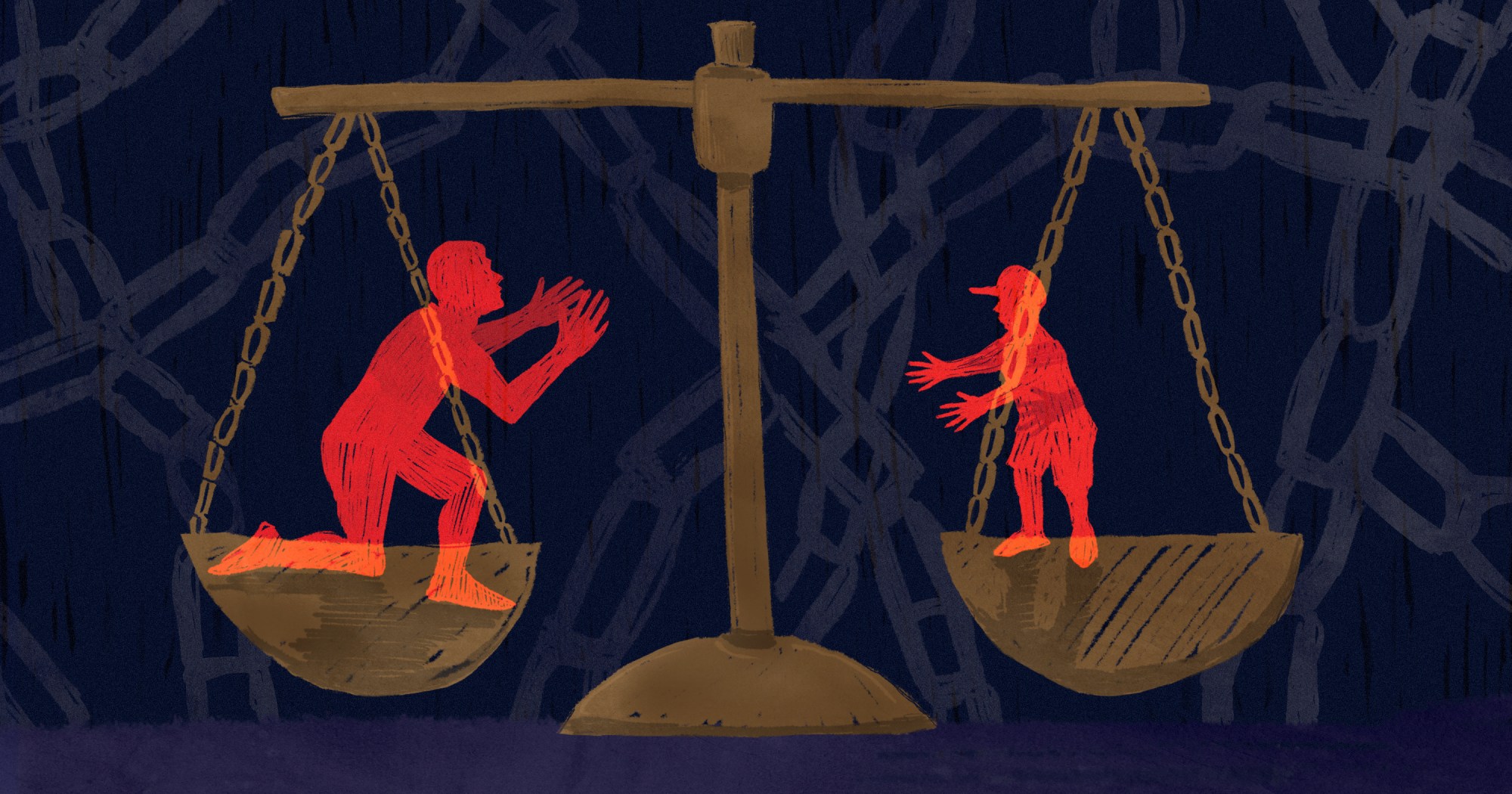
Trump’s Latest Deportation Tactic: Targeting Immigrants With Minor Family Court Cases
Should a person be deported because once, a decade and a half ago, they left their toddlers home alone for a half hour to buy them pajamas at Walmart? That’s what the Trump administration is arguing in a little-noticed federal appeals court case being decided in California, with sweeping implications for both the immigration and child welfare systems. A ruling is expected in the coming months. In 2010, Sotero Mendoza-Rivera, an undocumented farmworker who’d immigrated from Mexico 10 years earlier, made a fateful decision. He drove with his girlfriend, Angelica Ortega-Vasquez, to their local Walmart in McMinnville, Oregon, according to a police report. The store was seven minutes from their apartment. In addition to the pajamas, they purchased motor oil and brake fluid for their car. When they got back to the apartment, their 2-year-old son, who’d been in bed asleep when they’d left, had woken up and somehow gotten out the door. A bystander found him by the street outside the complex, baby bottle in hand, and called the police. The responding officer issued Mendoza-Rivera and Ortega-Vasquez a misdemeanor citation, which they resolved with a guilty plea, a fine and probation. The officer stated in his report that the little boy and his 3-year-old sister were healthy and clean, that the apartment was well-kept and stocked with food, and that a neighbor said that the mother was usually home with the kids. The Obama administration then opened deportation proceedings against Mendoza-Rivera, but did not keep him in detention. He appealed, and the case wound its way slowly through the legal system before hitting a backlog at the 9th U.S. Circuit Court of Appeals, where some immigration matters from nearly a decade ago are still being decided. But in August, amid the Trump administration’s campaign of mass deportations, Immigration and Customs Enforcement detained Mendoza-Rivera and locked him up in another state. And the Department of Justice is now arguing that what he did in 2010 (the current case is against him only) is a crime deserving of immediate removal from the country. A DOJ lawyer argued before a panel of the 9th Circuit in Pasadena, California, last month that it doesn’t matter if no harm to children occurred, saying an immigrant parent should still get deported if their parenting decision involved a “substantial” deviation from a “normal” standard of care for kids. Child welfare officials and experts told ProPublica they are deeply concerned by the case, as well as several others like it that have been making their way through the courts and are now reaching a decisive point. “Imagine what a weapon it would be in ICE’s hands if child welfare is added to all the other areas where a conviction for the most minor offense means deportation,” said Richard Wexler, executive director of the National Coalition for Child Protection Reform, an advocacy group. Indeed, if Attorney General Pam Bondi’s team wins this case, thousands of immigrant moms and dads could be exposed to deportation for minor involvement in the juvenile court system, a new realm for President Donald Trump’s deportation regime. There aren’t exact numbers as to how many immigrants are accused of low-level parental negligence in juvenile courts. But as ProPublica has previously reported, millions of parents are accused of child neglect every year in this country, in many instances for reasons stemming from poverty like a lack of child care or food in the fridge, rather than physical or sexual abuse. Immigrant parents are no more likely than U.S.-born parents to abuse children. But undocumented parents may be more likely to be accused of certain low-level forms of neglect, according to legal aid attorneys. For one thing, due to their lack of legal status, they sometimes avoid interactions with officials at schools and hospitals, leading to potential allegations against them for neglecting their kids’ health or education. They also disproportionately work long and unpredictable hours, sometimes having their older children look after their younger ones, which in the U.S. can be deemed inadequate supervision. Differing cultural norms regarding how much hands-on supervision is necessary also play a role. There is no evidence yet that ICE has been actively looking for cases like these to identify parents to deport, according to interviews with over a dozen federal and state child welfare officials. But data on specific child welfare cases is reported from states to the federal government annually, via the National Child Abuse and Neglect Data System. (The data contain identifiers for children but not their names, though state agencies have those.) “The million or so reports in NCANDS would be a gold mine for Noem and Miller,” said Andy Barclay, a longtime child welfare statistician, referring to Homeland Security Secretary Kristi Noem and top Trump adviser Stephen Miller. The first Trump administration did not seek to use such data for deportations, according to Jerry Milner, who was appointed to oversee the U.S. child welfare system as head of the federal Children’s Bureau from 2017 to 2021. “I never had any of those discussions around the data,” Milner told ProPublica. “I can’t guarantee that others did not, but they never made it to me.” But, he said, “things are different now.” “I would have strong concerns if any of the data are used for purposes other than what they were intended for,” Milner said. Medicaid data, for instance, is now reportedly being shared with the Department of Homeland Security, and those files can have more identifying information than NCANDS does on families with child welfare cases. DHS has also accessed Office of Refugee Resettlement data on migrant children, which can be used to identify young people’s locations and the (sometimes undocumented) adults taking care of them. Indeed, DHS and FBI agents have visited migrant kids at the homes of their caretakers, ostensibly to perform “welfare checks.” The White House declined to answer questions for this article. The Department of Homeland Security did not respond to a request for comment. A Justice Department spokesperson in an email accused the Biden administration of letting Mendoza-Rivera’s case languish and said that “as part of this Administration’s commitment to making America safe again, the Attorney General will continue to defend efforts to remove criminal illegal aliens, especially those convicted of offenses which place children in situations likely to endanger their health or welfare.” The Trump administration’s view, according to the Justice Department’s filings in Mendoza-Rivera’s case, is that undocumented parents convicted of even the most minor forms of parental negligence should be ineligible for a type of legal relief called “cancellation of removal.” (Mendoza-Rivera sought this relief during his initial deportation proceedings, which is part of what spurred the current appeals case.) It’s an off-ramp from deportation that until now has been available to such moms and dads if they’ve been in the U.S. for 10 or more years, they have “good moral character,” and their deportation would cause extreme hardship to their U.S. citizen children. This would apply to Mendoza-Rivera and Ortega-Vasquez’s kids, who are American citizens. One of the main federal laws that the Trump administration has been relying on in its effort to deport millions of people comes from the Bill Clinton era. In 1996, the Illegal Immigration Reform and Immigrant Responsibility Act overhauled immigration enforcement in part by stating that noncitizens, even lawful permanent residents, must be expeditiously deported if they’ve been convicted of certain offenses, including aggravated felonies, crimes of “moral turpitude,” drug crimes or domestic violence, or a “crime of child abuse, child neglect, or child abandonment.” The motivation for including this sort of language, at the time, was clear. Amid the violent crime wave of the ’90s, the law’s co-author, Bob Dole, said on the Senate floor that the crimes he wanted to make deportable included “vicious acts of stalking, child abuse and sexual abuse.” Yet over the three decades since, societal norms around what constitutes bad — and even criminal — parenting have come to include all sorts of nonviolent and even harmless behavior. A range of parenting practices that were considered normal for most of the 20th century are now investigated and prosecuted as child maltreatment in many states; letting your kids play at the park and walk home alone could be “neglect ,” especially if you’re poor and a person of color . So could leaving them in their car seats briefly with the windows cracked and the car alarm on while you run into a store to buy diapers, or failing to properly secure their bedroom windows at night. Some rulings by other courts have blocked deportations for people with these sorts of alleged parenting lapses, while the federal Board of Immigration Appeals has offered changing guidance on the issue. Immigration advocates fear that the current appeals court proceeding, which groups together several similar cases including Mendoza-Rivera’s, could become hugely influential across the legal system — and with much higher stakes now given the present administration’s enforcement focus. Although the Obama and Biden administrations took similar positions to the Trump administration on this point, in general they didn’t pursue deportations as aggressively. “There was some discretion being exercised,” said David Zimmer, Mendoza-Rivera’s appellate attorney. “So it was at least possible, in a given case, that they might have decided not to pursue removal if the parent hadn’t done anything meaningfully wrong.” That’s no longer the case in a regime that is seeking any reason to expel an immigrant, Zimmer said. This case could be heard by the full 9th Circuit next and then head to the U.S. Supreme Court, if the justices choose to take it up. Much of the debate rests on the question of whether it matters if immigrant parents meant to harm their children, given that intention is part of the definition of most crimes. If the parent both didn’t harm and wasn’t aware they might harm their child, advocates argue, it shouldn’t qualify as a “crime” worthy of deportation. The Oregon misdemeanor negligence statute under which Mendoza-Rivera was convicted doesn’t require proving any intent to harm a child, any actual harm to a child or even exposure of a child to any harm, acknowledged Justice Department lawyer Imran Zaidi at a 9th Circuit hearing in January. But negligence is still a “culpable mental state” deserving of deportation, he said, because it is “incompatible with a proper regard for consequences.” Jed Rakoff, a New York federal district judge serving as a visiting member of the 9th Circuit panel, responded that he’s been hearing this argument since “my first year of torts class.” Negligence, he said, is by definition unconscious; otherwise it would be “recklessness,” which is a different, more serious act involving consciously disregarding potential harm. In the context of these family court cases, it is often just conduct that’s a small deviation from some middle-class “reasonable person’s” — a neighbor’s, a caseworker’s — subjective opinion of what “good” parenting looks like. “I’m talking about the term ‘crime’: What did Congress mean by that single word?” Rakoff said, referring to the 1996 law’s description of a “crime” of “child abuse, child neglect, or child abandonment.” Lawmakers clearly meant something more serious than briefly leaving kids unattended, Rakoff continued. After all, the consequence they were prescribing — deportation — was so much more severe than any other possible consequence for any similar misdemeanor. Zaidi, the Justice Department lawyer, responded that if many state laws say that something is a crime of child neglect, then it is a crime of child neglect, and Congress said that a crime of child neglect is deportable. The two judges other than Rakoff seemed more open to this argument. The fundamental question that the appeals court is considering, then, is whether these essentially harmless parental “crimes” alleged by increasingly hands-on local child welfare authorities are the same category of crime that the U.S. Congress was talking about when it passed a law on immigrants committing violent crime, domestic violence and terrorism. Josh Gupta-Kagan, founder and director of the Columbia Law School Family Defense Clinic, said that it appears Mendoza-Rivera and Ortega-Vasquez “were not a safety threat to their children, let alone to anyone else,” even if they showed bad judgment by leaving toddlers alone for a half hour. So it is “fair to question,” he said, how pursuing either of their deportations serves the Trump administration’s “stated interest in public safety.” McMinnville, Oregon, where Mendoza-Rivera and Ortega-Vasquez bought those pajamas at Walmart, is where they’ve lived for nearly a quarter century and where they had their two children, who are now teenagers. It’s also where Mendoza-Rivera spent all those years picking and packaging produce. But he has now been locked up for months in a detention center in Tacoma, Washington, and his family has in turn lost much of its income. His kids are without him. And if the Trump administration gets to use a law against him that was intended to protect children, they will lose their dad to a foreign country for good. The post Trump’s Latest Deportation Tactic: Targeting Immigrants With Minor Family Court Cases appeared first on ProPublica .

U.S. Forest Service Stops Issuing Firefighter Pants That Contain PFAS, Following ProPublica’s Reporting
Following a ProPublica article revealing that the U.S. Forest Service had for years issued clothing to wildland firefighters that it knew contained potentially dangerous “forever chemicals,” the agency has stopped distributing those garments. It also says that it will instruct its equipment manufacturers to avoid using PFAS in the future. This month, ProPublica reported that until at least 2023 one of the Forest Service’s suppliers, TenCate, used finishing products made with a PFAS compound on a Kevlar-blend pant fabric. According to emails from the supplier, the finishes were used to repel gasoline and water. Despite knowing about the use of PFAS, officials with the Forest Service had not previously informed wildland firefighters about it. Per- and polyfluoroalkyl substances, or PFAS, have long been used in protective gear to repel substances like fuels. But many municipal fire departments have moved away from the chemicals as researchers revealed more about health risks associated with them. Firefighters in multiple states have filed class-action lawsuits against manufacturers alleging they were harmed by PFAS in the gear they wore. Research specific to wildland firefighters has lagged, and wildland firefighting agencies have been slower to publicly address the issue. On Feb. 11, one day after ProPublica published its article, a Forest Service cache manager — an official who oversees a gear repository — wrote in an email that he asked colleagues to distribute widely, “I received notice from the Washington Office Cache Management staff late last night that we are to place a hold on issuing” the pants. But the agency didn’t immediately clarify further. A wildland firefighter who spoke on the condition of anonymity to protect their employment said last week that incident management teams had been asking the agency for advice about the pants. “As of right now, our logistics folks haven’t gotten any guidance at all from higher-ups,” the firefighter said. On Friday, the Forest Service issued a statement to ProPublica: “PFAS in protective gear is a complex, industry-wide issue and any suggestion that the agency has sought to obscure information does not reflect the extensive work to expand testing and improve long-term occupational health protections for firefighters. Firefighter pants manufactured with PFAS water repellent fabric treatments have been removed from available stock in the National Interagency Support Caches.” TenCate has not responded to repeated inquiries, but in an email reviewed by ProPublica, it told the Forest Service that a PFAS-free finish was available in January 2023. On Friday, the Forest Service sent an email to its staff saying that its supplier had switched to a PFAS-free finish that year. In the same email, the Forest Service wrote that anyone with the older pants “should discontinue use and replace” them. The agency also said that it was updating its requirements “to specify that fabric treatments and fabrics will not contain PFAS.” Read More Firefighters Wore Gear Containing “Forever Chemicals.” The Forest Service Knew and Stayed Silent for Years. Fire departments typically adhere to safety standards set by the National Fire Protection Association, a nonprofit that gathers input from expert committees including firefighters and representatives from companies that supply them with equipment. While the association is not a certifying body, its standards are used by government agencies including the Forest Service. Last year, an NFPA technical committee updated its standards for municipal firefighters to restrict levels of certain PFAS chemicals in protective gear. But the organization has not yet made a parallel update to its standard for wildland firefighters. Rick Swan, an NFPA committee member, said the lag reflects a long and deliberative process for developing standards, but he added that a restriction on PFAS chemicals in wildland gear is all but inevitable. “I think it’s a no-brainer,” Swan said. In an email, a spokesperson for the NFPA wrote that the committee overseeing the wildland firefighting standard “will likely consider this issue again.” Experts can’t say for certain what risks PFAS in gear pose to the health of wildland firefighters and agree more research is needed. Jeff Burgess, a professor and researcher at the University of Arizona who is leading a series of long-term studies of firefighter health, said smoke inhalation and the accumulation of soot on gear are primary ways wildland firefighters encounter carcinogens. Understanding of wildland firefighters’ exposures to PFAS has lagged behind understanding of exposure in municipal fire departments. Historically, researchers have had less access to wildland crews, and in recent years they have focused on studying risks related to smoke. The post U.S. Forest Service Stops Issuing Firefighter Pants That Contain PFAS, Following ProPublica’s Reporting appeared first on ProPublica .
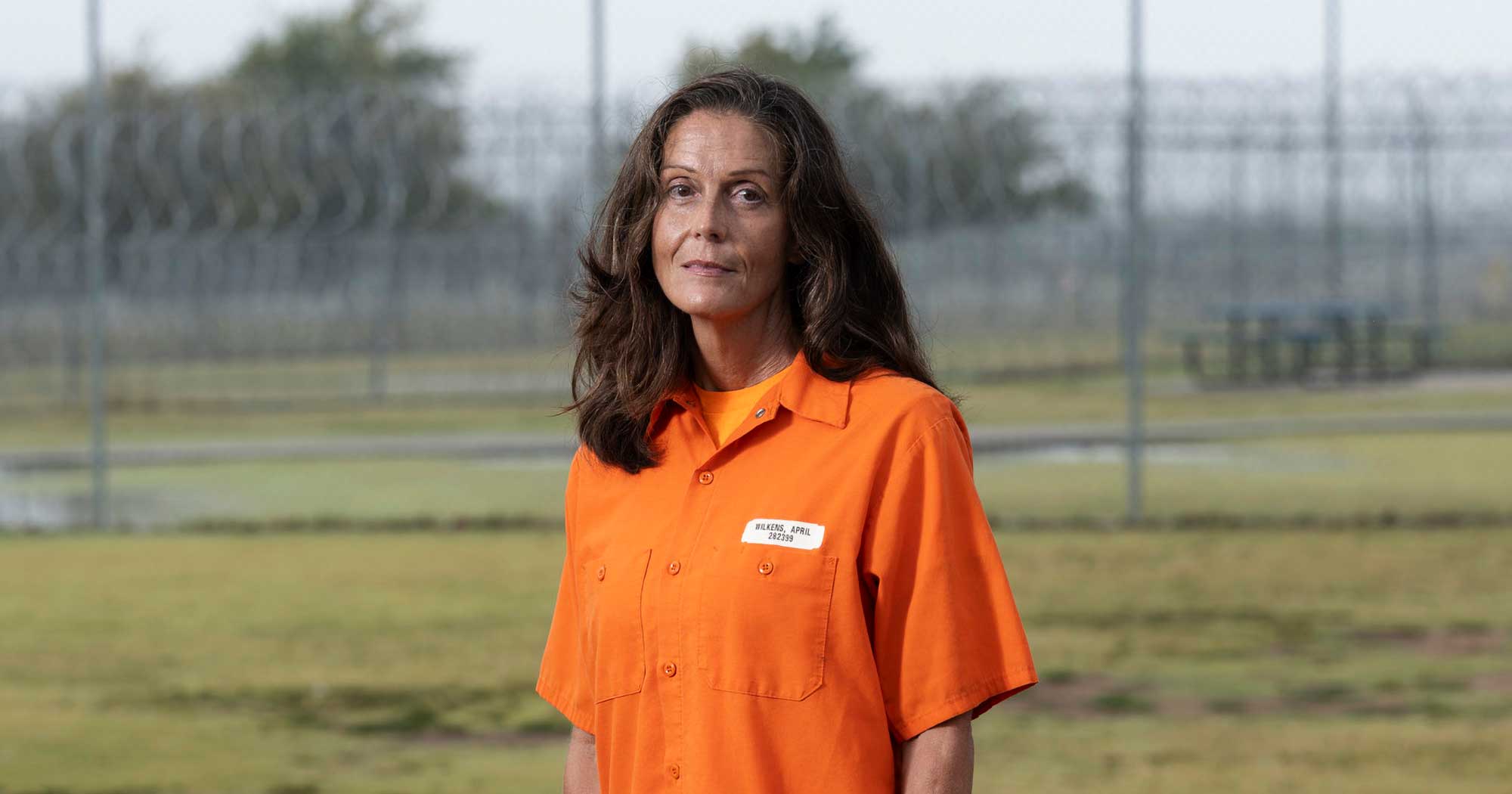
The Victims Who Fought Back
Lisa Rae Moss — serving a life sentence for her involvement in the 1990 murder of her husband, Mike Moss — sat in the witness box in a courtroom in Seminole, Oklahoma, on a frigid January morning in 2025, her hands knotted in her lap. Moss, who is 60, was asked to recount what she endured in her 20s, during her marriage to a volatile man a dozen years her senior. Her long silver hair and prison-issued glasses accentuated the years between her and the younger self she was describing. “Did Mike ever use a gun on you in the bedroom?” her lawyer, Colleen McCarty, asked. “He had a gun that usually lay on top of the chest of drawers at night,” Moss said quietly. She explained that her husband would place it there before they went to bed. “There were a number of occasions where he took the gun — and I wasn’t in the mood to have sex and I didn’t want to have sex — and he would move the gun up and down my inner thigh and then lay it on the pillow next to the bed.” She stopped to correct herself: “Next to my head, I’m sorry.” Under her lawyer’s questioning, Moss described a pattern of abuse that began six months after their wedding, when her husband grabbed her by the throat and threw her against the fireplace. She recalled how, during an argument, he tried to shove a tennis ball into her mouth. How she was knocked unconscious when he once slammed her head against their refrigerator so hard that it left a dent. How he repeatedly punched her in the stomach when she was pregnant with their son. How he raped her multiple times, once with a curling iron — an assault that caused lasting injuries. “I bled every day for five years until I finally had a hysterectomy,” she said. When her 4-year-old daughter from a previous marriage complained that Mike had done something to make her bottom hurt, Moss feared he was sexually abusing her little girl, too. “Were you afraid for your life?” McCarty said. Moss nodded. “Absolutely.” Her testimony put her at the center of an extraordinary legal experiment unfolding in Oklahoma, where a new state law, the Oklahoma Survivors’ Act, passed in 2024, offers prisoners like her a chance at freedom. Under the law, a domestic-violence victim who is serving time can petition for a reduced sentence, which the law mandates if a judge decides that the abuse she endured was a “substantial contributing factor” to her crime. Moss was the first to get her day in court and test whether the law could deliver on its promise. Unlike most other defendants in cases the statute was intended to remedy, Moss did not carry out the violence herself. She was not present when her older brother, Richard Wright, shot her husband. But at her 1990 trial, prosecutors argued that she had solicited and helped orchestrate the killing, introducing testimony that she once asked an acquaintance to “get rid of” her husband in exchange for an initial payment of $500. She was convicted of first-degree murder and lesser charges and was sentenced to life without the possibility of parole. (Her brother is currently serving a life sentence without the possibility of parole.) Lisa Wright, formerly Lisa Moss, was released from prison last year under the Oklahoma Survivors’ Act. She had been serving a life sentence for first-degree murder. Carolyn Drake/Magnum, for The New York Times The question before the court that morning in Seminole was not one of guilt or innocence; it was whether Moss’ punishment failed to account for the role that years of physical and sexual abuse played in her crime. McCarty called Margaret Black, a licensed counselor specializing in domestic violence, to the stand. Black, who had evaluated Moss, explained that each time Moss tried to leave her husband, the violence escalated. Black described a lethality assessment she had conducted to measure the risk Moss faced of being killed or seriously injured. “Eighteen and above is what’s called extreme danger,” Black said. In Moss’ case, her review of the evidence led her to assign a score of 24. “This was a very, very dangerous situation for Lisa and her children.” That afternoon, District Judge C. Steven Kessinger announced that he had reached a decision. “The court finds that the defendant has provided clear and convincing evidence that she was a survivor of domestic violence, having endured physical, sexual and psychological abuse,” he told the crowded courtroom. “The court further finds that such violence and abuse was a substantial contributing factor in causing the defendant to commit the offenses for which she is presently incarcerated.” Under the statute, this finding made her eligible for a sentence of 30 years or fewer — and because she had already served more than that, the judge ordered her to be freed that day. The exultation that broke out inside the courtroom as Moss embraced her grown daughter, who was 5 when Moss was incarcerated, soon reached Mabel Bassett Correctional Center. The prison, a low sprawl of concrete and razor wire that sits on the outskirts of the small town McLoud, was where Moss had spent virtually all her adult life. One of Moss’ oldest friends there, April Wilkens, was bent over the tablet that connected her with the outside world when she received a text message with the news of the judge’s ruling. She leaped off her bunk and ran out of her cell, shouting, “Lisa’s going home!” The prison’s day room erupted at the news of Moss’ release. The outpouring of joy was about more than one woman’s walking free. Moss’ lawyer, McCarty, had identified dozens of other prisoners at Mabel Bassett, including Wilkens, who she believed would qualify for relief under the new law, and the hearing suggested they had reason to hope. “The feeling was electric — pure elation,” Wilkens told me. “Our survivor exodus had begun.” When Wilkens returned to her tablet, she saw a text from McCarty: “You’re next!” Wilkens first met McCarty when the lawyer came to visit her at Mabel Bassett, Oklahoma’s largest women’s prison, in the summer of 2022. Wilkens was serving a life sentence for shooting and killing her ex-fiancé after years of abuse and stalking and indifference from the police. She had already spent 24 years behind bars. McCarty had just founded the Oklahoma Appleseed Center for Law and Justice, and in Wilkens’ case, she saw an opportunity to compel the justice system to do what it rarely did: revisit harsh punishments that the criminal-justice system had long treated as final. For years, only a handful of states had tried to grapple with cases like Moss’ and Wilkens’, and even then, survivors faced steep barriers to having their sentences reconsidered. That began to change in 2019, when New York passed a law empowering judges to reduce sentences when they found that abuse had been a “significant contributing factor” to a defendant’s crime. Accompanying McCarty that day was Leslie Briggs, another lawyer who would later become the center’s legal director. Briggs had learned of Wilkens’ case from Wilkens’ niece, who had collected boxes and boxes of records related to her aunt’s conviction. The two lawyers had reviewed the transcripts of the long-forgotten case and saw Wilkens’ prosecution as a stark example of a justice system that often fails to stop abusers but proves swift to punish those who fight back. The case had particular resonance for McCarty. One of her earliest memories was of her teenage sister sitting at the kitchen table one morning with a bruised eye and split lip, having been thrown down a flight of stairs by a boyfriend. McCarty’s mother had escaped an abusive relationship only to be victimized again by a different partner before McCarty graduated from high school. The lawyers wanted to pass legislation modeled on New York’s law, the Domestic Violence Survivors Justice Act. They thought that calling attention to Wilkens’ case, in which the abuse was both extensive and thoroughly documented, might be the way to do it. But first McCarty needed a sense of how many women were imprisoned at Mabel Bassett for crimes tied to their own abuse — a phenomenon that sentencing-reform advocates call criminalized survivorship. Though there was no system to identify these women within the prison, Wilkens came up with a solution: She wrote an informal questionnaire aimed at survivors of domestic violence. A friend of hers inside the penitentiary managed to type up and print hundreds of copies, and that September, Wilkens and her contacts in other parts of the prison began circulating them. (“It certainly helps to have friends in low places,” Wilkens told me.) The questionnaire asked each respondent to provide the length of her sentence, the county of her conviction and an account of her crime, and to mail the responses to Appleseed’s office in Tulsa. One hundred and fifty-six questionnaires arrived over the course of several weeks in the fall of 2022. Each envelope held a harrowing narrative, some in polite, looping script, some in block letters. The respondents were Black and white, Native American and Hispanic, young and old, from big cities and small towns. “I kept begging for a divorce, and he’d threaten to kill my children.” “His wife before me had her nose broken twice.” “Whenever I didn’t want to have sex with him, he would twist my wrists as far as he could until I gave in to him.” Another woman recounted the feeling of liberation she felt behind bars, where her partner could no longer hurt her: “I was in a very abusive, sick relationship,” she wrote. “I am FREE now.” A few were vague about their crimes. Others were blunt: “One night just snapped, shot & killed husband.” Oklahoma consistently ranks among the states with the highest rates of domestic violence; it also has one of the highest rates of female imprisonment. McCarty believed the two were connected, and the surveys seemed to bear that out. Some respondents claimed to have participated in robberies or other crimes under the threat of violence from their abusers. More had been convicted under Oklahoma’s “failure to protect” law, punished for not doing enough to shield their children from the brutality of their partners, often while enduring that violence themselves. But the women serving the longest sentences were typically those who had struck back at their abusers. McCarty began talking to lawmakers about these findings, and in 2023, an early version of a domestic violence survivors’ bill was introduced. The lawyer Colleen McCarty advocated for the passage of the Survivors’ Act. She saw it as a corrective to a justice system that punishes domestic-violence survivors who fight back. Carolyn Drake/Magnum, for The New York Times Nothing might seem to have longer odds in deep-red Oklahoma than an effort to lessen punishments for violent crimes, but overcrowded prisons and rising costs were already forcing a rethinking of harsh, decades-old sentencing laws. In 2016, voters approved a landmark ballot initiative reducing penalties for certain low-level drug and property crimes; three years later, lawmakers made those changes retroactive, leading to one of the largest single-day prisoner releases in American history. McCarty hoped to build on that momentum. Wilkens advocated for the bill from prison, writing an opinion piece in The Oklahoman and telling her story on a local TV-news program, and she became the focus of a social media campaign, #FreeAprilWilkens. Not everyone in Oklahoma supported the proposed law for domestic-abuse survivors. Prosecutors warned that the statute encouraged exaggerated or bad-faith claims that would be difficult to disprove years after the fact. The law, they argued, opened a Pandora’s box — one in which potentially anyone who had suffered violence could seek a lesser punishment. Arguing that the bill took too broad a view of who should be eligible for resentencing, the Tulsa County district attorney, Steve Kunzweiler, wrote in a 2024 email to a lawmaker that the legislation “presents a risk to public safety.” He went on to cite an infamous case, which he had prosecuted, to make his point: “The Bever brothers, who slaughtered their family in Broken Arrow, would be eligible for sentence modification under this bill in its present form.” The case, from 2015, fell well outside the law’s scope. Robert and Michael Bever had killed their parents, who a surviving sister testified were not physically abusive, and three younger siblings. The proposed legislation required that any claims of abuse be corroborated with some kind of documentary evidence — evidence that case did not have. Kunzweiler had given voice to a broader concern among prosecutors: that undeserving and dangerous defendants could exploit the law to seek reduced sentences. Pushback from elected district attorneys led to changes in the bill; cases involving death sentences were excluded. It would take two legislative sessions and a sustained effort by a bipartisan coalition to pass a version lawmakers could agree on. The Oklahoma Survivors’ Act was signed into law in May 2024. But its passage did not quiet criticism from the state’s district attorneys. They would play a central role in how the law was applied, because they had the authority to oppose any applications they believed were unfounded. Prosecutors could challenge a survivor’s account of abuse or argue that it played no meaningful role in the crime. A judge would make the final determination, but the law’s promise of sentence reduction would depend, in part, on the discretion of prosecutors. New York’s Domestic Violence Survivors Justice Act offered a glimpse of the challenges that lay ahead in Oklahoma. The act had produced sharply different results from county to county. In a 2025 article for The Journal of Criminal Law and Criminology, Alexandra Harrington, a law professor at the University at Buffalo, found that whether a defendant had her sentence reduced or not largely depended on the local district attorney. When prosecutors supported an application for resentencing, judges frequently granted relief. When prosecutors opposed an application, only a fraction succeeded. Opposition from district attorneys was most common when the crime was seen as too egregious; or when the defendant had a criminal history or a substance abuse problem, or was perceived as aggressive or otherwise viewed as unsympathetic; or when the applicant had previously received a plea deal in the case. “In some jurisdictions, the D.A.’s office has served almost entirely to obstruct the path to relief,” Harrington wrote. Tulsa County’s district attorney, Steve Kunzweiler, opposed Wilkens’ application for resentencing. He and other Oklahoma prosecutors have expressed concern that bad-faith applicants can exploit the Survivors’ Act. Carolyn Drake/Magnum, for The New York Times McCarty was clear-eyed when we first spoke last spring about the challenges ahead. Many of the resentencing cases she was working on — including Wilkens’ — were in Tulsa, where Kunzweiler was the top prosecutor, and they had very different visions of what justice looked like. McCarty, animated and intense, with large brown eyes that widened as she talked, spoke passionately about the possibility of second chances for those the system had failed. Kunzweiler, a phlegmatic, gray-haired career prosecutor a generation older, prized the finality of a jury verdict — and the punishment that went with it. Signaling just how seriously he took Wilkens’ request for resentencing, he had chosen to represent the state along with one of his best prosecutors, and he had repeatedly asked for more time to prepare. After numerous delays, there was still no hearing set, and McCarty was growing impatient. “We wrote this law with April in mind,” she said. Wilkens had filed her application for resentencing on Aug. 29, 2024 — the day the law took effect — and she had expected to lead the way. But Moss was the first to receive a hearing, and in the wake of her release, four other women at Mabel Bassett were given court dates, the first of which was in July 2025. Wilkens would have to wait. Wilkens grew up in the 1970s and early ’80s in Kellyville, a no-stoplight town, where her father’s moodiness and brute discipline dominated the household. Wilkens says he whipped her with a belt or switch for minor infractions and once punched her square in the mouth. Wilkens cultivated a sunny, high-energy persona: cheerleader, honor student, the kind of girl untouched by turmoil. She propelled herself out of Kellyville by excelling academically, graduating from high school two years early. She attended Oklahoma State University and completed a graduate program in prosthetics at Northwestern University’s medical school in Chicago. An early marriage to her college sweetheart produced a little boy, Hunter, but ended after four years. In 1995, when she was 25, she was newly divorced, running her own prosthetics business in Tulsa and ready for a new chapter. She began dating again. Tall and willowy, with long chestnut hair and a bright smile, she drew attention. That fall, she met Terry Carlton, who was 12 years older and the son of a prominent auto dealer. Handsome and magnetic, with an impulsive streak, he flew them first class to Dallas and hired a chauffeured limousine for their first date. He proposed two months later, on Christmas Eve, when he slipped a $25,000 engagement ring onto her finger. She did not yet know that he had both a drug problem and a history of violence with women. Two of his previous romantic partners had gone to the police to report abuse; one of them, citing repeated chokings and “severe emotional trauma,” secured a protective order against him. Four months into Wilkens’ engagement to Carlton, he grabbed her by the throat during an argument. Afterward, he swore to her that he would never hurt her again. But over the next two years, during their on-again-off-again relationship, Wilkens called 911 at least 10 times to plead for help. She was granted three emergency protective orders and sought medical attention for injuries sustained during a rape and multiple beatings. Police reports, medical records and trial testimony document what Wilkens endured — sometimes in full view of witnesses. A neighbor once watched as Carlton chased her down the driveway, grabbed her by the hair and dragged her, screaming, back toward her house. The same neighbor also saw him, on another occasion, pounding on Wilkens’ back door with what looked like a metal pipe. A doctor who lived across the street from Carlton discovered Wilkens in her car, bleeding, after Carlton smashed her driver-side window and grabbed her keys so she couldn’t leave. Yet Carlton — whose family wielded influence in Tulsa — seemed untouchable. “When the police were called, his timing was impeccable,” a neighbor, Glenda McCarley, testified at Wilkens’ 1999 trial. “He could be in his car and gone just as they rounded the corner.” Officers responded but rarely intervened. Their attitude toward Wilkens was typified by one officer whom McCarley remembered as “put out, impatient, in a hurry.” Carlton, whose sports car was often seen idling outside Wilkens’ house at odd hours of the night, was arrested only once, after the police found him at her home in February 1998, with a loaded 9-millimeter pistol and a stun gun. He faced no meaningful consequences: Rather than pursue assault or stalking charges — both felonies — the authorities cited him for a misdemeanor weapons violation. When he skipped his court date, a warrant was issued for his arrest, but the Tulsa police never enforced it. His relentless harassment left Wilkens in a fragile state of mind; twice that spring, she was involuntarily committed to psychiatric hospitals. Her unraveling was further accelerated by a growing dependence on drugs. She would later testify that Carlton had introduced her first to cocaine, then to meth, taken intravenously. As his erratic behavior intensified, so did her drug abuse. By the time she appeared on his doorstep at around 3 a.m. on April 28 — on the day that she killed him — she was a shadow of the vibrant young woman she was when they first met. April Wilkens’ case was the impetus for the passage of the Survivors’ Act. Tulsa prosecutors have advocated to keep her in prison. Carolyn Drake/Magnum, for The New York Times In less than three years, she had lost everything: her business, which went under as her focus drifted; her family and friends, from whom Carlton kept her isolated; and her son, now in her ex-husband’s sole custody. She would later testify that she went to Carlton’s house in the middle of the night with a singular, desperate purpose: to beg him to leave her alone for good. Facing him directly, she would later say, seemed like the only way she could reclaim some measure of control. But the encounter quickly turned violent. She said that after she refused to have sex with him, he raped her and threatened to kill her. Eventually, she managed to grab his .22 handgun, and when he came toward her, enraged, she fired. She kept firing — eight shots in all. After undergoing questioning and a sexual-assault exam that documented vaginal tearing, Wilkens was jailed and charged with first-degree murder. “When in trouble, cry rape,” District Attorney Tim Harris said in closing arguments at her 1999 trial, in which prosecutors cast her as a manipulative, mentally unstable, meth-crazed fabulist who went to Carlton’s home looking for drugs and revenge. Though Wilkens’ attorney argued that she acted in self-defense because she feared for her life, Harris suggested that she and Carlton had a mutually destructive relationship, in which Wilkens — who weighed 107 pounds at the time of the murder — met Carlton’s abuse with her own aggression. “There is no doubt he physically abused her,” Harris told the jury. “But is there not some doubt that she also abused him? He abused her, she abused him, I file a protective order, I cry rape, now I’m back, let’s get high, I hate you, I love you, you owe me money. Man, what a dysfunctional life.” Harris blamed her for resorting to violence: “If April Wilkens had really been serious about her fear of Terry Carlton, she could have allowed the system to come to her aid.” Wilkens was found guilty and sentenced to life with the possibility of parole. Wilkens being brought to the Tulsa Police Department in 1998, for questioning in the killing of her former fiancé Mike Simons/Tulsa World Harris was succeeded 16 years later, in 2015, by Kunzweiler, who had been one of his top lieutenants. As district attorney, Kunzweiler took the same hard line on Wilkens’ case, repeatedly opposing her bids for parole. In 2022, the district attorney’s office stated in a letter to the parole board that her sentence reflected the gravity of her crime and that she should remain in prison. “She presents a risk to the safety of the public,” the letter read. Wilkens was denied parole once again. McCarty emphasized this to lawmakers when she fought for passage of the Survivors’ Act; without a new law, Wilkens faced the prospect of remaining locked up for the rest of her life. In June, after nearly a year of delays, a Tulsa judge scheduled Wilkens’ resentencing hearing for September. She, and the three other women who would have their hearings first, were part of the loose-knit group at Mabel Bassett that Wilkens called the “survivor sisterhood.” Erica Harrison, the unofficial den mother to the young women in her housing unit, was serving a 20-year sentence for having shot and killed a family friend after he raped her in 2013. Norma Jane Lumpkin, whose long hair hung past her waist, was four decades into a life sentence for her role in the 1981 bludgeoning death of her husband. Tyesha Long, who is 27 — the youngest of the group and a former rodeo competitor in barrel racing — had a 27-year sentence for shooting her abusive on-again-off-again boyfriend to death in 2020. “Jane and I have both been locked up longer than Tyesha has been alive,” Wilkens told me. Aside from minor driving infractions, none of the women had been in trouble with the law before their arrests, and Wilkens saw their crimes, like hers, as aberrations, acts she believed were inseparable from the abuse each woman had endured. Before they were led out of Mabel Bassett in handcuffs and leg irons, to face their resentencing hearings in the county courts where they were convicted, Wilkens tried to prepare them. She quoted her favorite passage from Ecclesiastes, reminding them that there is power in numbers. She urged them to listen carefully to each question when they were on the stand and to take a breath before responding. And she advised them on how to prepare for their processing photos. Don’t grimace, she told them. Your mug shot is going to be all over the local news. Moss, the only woman who had been freed under the Survivors’ Act, attended the hearings that summer. She deliberately positioned herself where she could be seen by whichever woman from Mabel Bassett was sitting at the defense table, and she met the defendant’s gaze, offering reassurance that she was there and that she remembered exactly what this moment felt like. She made a point of looking her best, knowing that she embodied the promise of the freedom that might lie ahead. Wearing bright colors and simple but elegant jewelry, she looked polished, with her hair blown out, her nails lacquered, her lipstick fresh. After 35 years behind bars, she was not going to keep her head down. “Freedom looks good on her,” Wilkens later told me. But it soon became clear that not everyone’s resentencing hearing would unfold the way Moss’ did in Seminole, under a different district attorney. Harrison, the first in the sisterhood to go before a judge that summer, testified in a Tulsa court in July. “I was going through a terrible divorce,” Harrison said, recalling a period when she was on her own with three children and a totaled car. “I had just left the domestic-violence shelter and moved into a little, small, no-name apartment.” Harrison had a drink with a family friend, Calvin Anderson, and passed out. She woke to find him on top of her, and after he sodomized her, she managed to fight him off. In the hours that followed, he loitered around her apartment complex, and when her eventual calls to 911 did not bring a timely response, she shot him in the parking lot. Prosecutors challenged her account, emphasizing that elements of her story had changed since she was first questioned by the police in 2013; they capitalized on the fact that she did not call 911 right after the assault, suggesting the danger she claimed to feel afterward was invented. “At what point did he magically become a threat?” Assistant District Attorney Meghan Hilborn asked. The judge in Harrison’s case said she would hand down a ruling later that summer. The oldest of the group, Lumpkin, appeared in court the following week. Her crime — committed with a neighbor who was also charged in connection with the killing — had been particularly gruesome. Her husband was beaten to death, his body later found in the trunk of her car. Yet it did not seem inconceivable that she might be granted some measure of leniency, because she was 75 and had been incarcerated for the past 44 years. But as Lumpkin sat at the defense table, the victim’s family delivered searing statements that undercut her long-standing claims of abuse, portraying her instead as a calculating, coldblooded killer. Lumpkin’s daughter, Alisha Keeney, who was 12 when her father was bludgeoned to death, told the court her mother had not served enough time for the brutal slaying. “That’s the only resentencing she deserves, is jail forever,” Keeney said. Norma Jane Lumpkin is serving a life sentence in connection with the murder of her husband, who she says abused her. She has been behind bars since 1981. Carolyn Drake/Magnum, for The New York Times Again, no immediate ruling came down from the bench. Eleven days later, Tyesha Long settled into the witness box in an Oklahoma City courtroom and recounted how a local businessman named Ray Brown began pursuing her when she was 17. Brown, who was in his early 50s, had been the subject of protective orders obtained by multiple women. The first time he was violent with her, she testified, he sucker-punched her in the mouth. He went on to stalk her, choke her, threaten her life and push her down a flight of stairs, causing her to have a miscarriage, she said. After he chased her in his car and rammed her vehicle, she received a protective order against him. But their relationship never completely ended. During one heated argument, she said, he reached for her throat — and Long, who said Brown had strangled her before, thought she was going to die. “I pulled out my gun and I shot him,” she testified. The problem Long faced at her trial, when she argued that she acted in self-defense, was that she shot Brown in the back. This was at odds with how she remembered it, with Brown advancing toward her. Experts on domestic violence say that cases in which survivors kill their abusers often look different from typical self-defense cases, which hinge on an obvious, imminent danger, like a drawn weapon. For a survivor who has been repeatedly and continuously terrorized, the perception of being in mortal danger does not come into focus in a single, dramatic moment. She may be moved to fight back not when being attacked but in the lull between violent episodes, when the abuser is momentarily disengaged. To a jury, it may be hard to see the imminent threat in such a scenario — as when Brown turned and walked away from Long. That gap, between how the law traditionally understands self-defense and how domestic-violence victims experience danger, is one the Survivors’ Act sought to address. Violence within intimate relationships is understood to be part of what researchers call “coercive control”: a sustained pattern of domination enforced through intimidation, threats, surveillance and social isolation. Research has shown that living under such conditions can alter threat perception and decision-making, narrowing a survivor’s perceived options when danger feels imminent. To a victim who has learned that such a moment of calm could be the prelude to the next round of violence, it may feel like her last opportunity to act before she is assaulted again. Long had another challenge, which was that her descriptions of Brown’s abuse had varied over her police interview, her trial and now the hearing. Trauma “impacts the way our brain stores memory,” the defense’s expert witness Angela Beatty, a social worker and vice president at YWCA Oklahoma City whose work focuses on survivors of domestic violence, explained at the hearing. Such experiences, Beatty said, can fracture memory, leaving recollections fragmented rather than organized and chronological. Tyesha Long is serving a 27-year sentence for killing a man she had a protective order against. The Oklahoma County district attorney’s office opposed her application for resentencing. Carolyn Drake/Magnum, for The New York Times But Assistant District Attorney Madeline Coffey seized on those inconsistencies to argue that Long wasn’t credible. Long seemed to fold in on herself, her shoulders drawn tight and her voice barely audible, as Coffey dissected each claim: How many times, exactly, was Long strangled to the point of unconsciousness? Wasn’t the sex sometimes consensual? What was the precise number of punches Brown dealt her? “Is that testimony at trial — that he only punched you one time — different than your testimony today, that he punched you probably two times?” Coffey pressed. Again, there was no ruling from the bench, but the mood among Long’s supporters was grim. She had remained on the stand for nearly five hours. Word of the grueling cross-examinations quickly got back to Wilkens, who was busy preparing for her upcoming hearing. Prosecutors had warned that these hearings could retraumatize victims’ families, but she could see that the hearings had also traumatized the defendants themselves. Testifying at her own trial had been an excruciating exercise, Wilkens told me, not only because describing the abuse meant reliving it. Her cross-examination — with its rapid-fire accusations, caustic tone and presumption of dishonesty — had felt eerily familiar after years of verbal abuse. It had also proved to be an impossible test. “I would challenge anyone to sit on the stand and just be berated and asked the same question 20 different times in 20 different ways,” she said. “On top of that, you’ve got an audience. It’s very public. Your whole life is laid bare for everyone to see.” Every seat in the courtroom was taken when Wilkens’ resentencing hearing got underway in Tulsa one morning in September. Members of her family sat shoulder to shoulder with women Wilkens once served time with. Next to a group of law students who had come to observe the proceedings was Wilkens’ niece, Amanda Ross, who years earlier had first brought her aunt’s case to McCarty’s attention. Ross, who was 7 when Wilkens was arrested, had corresponded with her aunt since elementary school. Growing up, she knew only the vague outlines of Wilkens’ case; the crime had never squared with the woman she knew. After college, Ross became a librarian and put her skills to work, trying to understand, as she traced her aunt’s odyssey through the courts, how Wilkens ended up with a life sentence. By the time of the hearing, Ross had spent nearly a decade trying to chase down every relevant document and public record. Having long since run out of space to store her growing archive, she stashed boxes of legal papers in the trunk of her Toyota Corolla. Wilkens sat at the defense table, taking in the room; she wore no makeup, and her hair, streaked with gray, hung loose past her shoulders. She had been warned by a sheriff’s deputy not to speak to anyone, but when she spotted Lisa Rae Moss sitting in the gallery, she caught Moss’ eye and smiled. Kunzweiler was representing the state that day alongside Meghan Hilborn, the assistant district attorney who had conducted the bruising cross-examination of Erica Harrison in July. The judge in that case announced five days earlier that she was denying Harrison relief. Though Lumpkin and Long were still awaiting rulings, there was little reason to believe they would fare differently. Amanda Ross was 7 when her aunt April Wilkens was arrested. Her research helped bring attention to Wilkens’ case. Carolyn Drake/Magnum, for The New York Times In Kunzweiler’s brief opening statement, he made clear that he saw no reason for a renewed debate over Wilkens’ punishment. “Twelve men and women sat in a courtroom very much like this,” Kunzweiler said. “They saw all the evidence.” It was a pointed reminder that a jury had already weighed much of what the court was now being asked to reconsider. Invoking her “extreme methamphetamine use,” he emphasized that Wilkens sought out Terry Carlton on the morning she shot him, arriving at his house unannounced. Kunzweiler gestured toward the defense table, where Wilkens sat in a striped orange jail jumpsuit, her handcuffs padlocked to a heavy chain at her waist, her ankles shackled together in leg irons. “She sits here as a convicted murderer,” Kunzweiler said. Despite Kunzweiler’s initial comments to the court, there was a piece of evidence that jurors at her 1999 trial had not been given to consider — a tape recording Wilkens made of a phone call between her and Carlton, in which he angrily admitted to raping, beating and choking her, while blaming her for provoking him. Now, at the hearing, it was entered into the record when the defense called a federal judge, Judge Claire Eagan of the Northern District of Oklahoma, to the stand. Eagan had an unexpected personal connection to the case; as a lawyer in private practice in 1996, she helped Wilkens obtain an emergency protective order. She testified that when Wilkens came to her office, she had injuries that included black eyes and bruises on her face and arms. A few days later, Wilkens brought the tape recording with her and played it for Eagan. Wilkens later failed to come to court to extend the protective order, too frightened to see Carlton in person. Because she did not appear, the order was dismissed — a moment Eagan said she still remembered. “Mr. Carlton was there with his attorney,” she said. “He looked at me when it was dismissed and smiled.” The recording was given to the court — along with police reports, protective orders and medical records — to show that Wilkens was abused by the man she killed. Wilkens, however, would not be taking the stand. After the summer’s punishing cross-examinations of the other women, Wilkens’ lawyers — Colleen McCarty and a veteran of the public defender’s office, Abby Gore — had made the difficult decision, along with Wilkens, that she should not testify. Their appraisal underscored the challenges the Survivors’ Act was encountering in the courtroom. Its most visible and articulate champion in Mabel Bassett would go unheard. The strategic calculation was made to ensure that an aggressive cross-examination did not overshadow the well-documented evidence of abuse at the heart of Wilkens’ case. The remaining question was whether Carlton’s abuse was a substantial contributing factor, under the statute, when Wilkens killed him — a point the defense sought to establish through Angela Beatty, the social worker who previously testified at Tyesha Long’s hearing. Beatty, who had interviewed Wilkens and reviewed her medical records, said that the “coercive control” exerted by abusers like Carlton can impair survivors’ ability to weigh options and make reasoned decisions, narrowing their focus to survival. “Ms. Wilkens shared that Mr. Carlton did threaten her life that night,” Beatty said, adding that Wilkens believed she was going to die. “He told her he would kill her.” On cross-examination, Assistant District Attorney Hilborn pressed Beatty. “Can you ever tell if you’re being deceived by a victim?” she asked. “Would you agree that April Wilkens has a good reason to say certain things to you for a sentence modification?” Having cast doubt on Beatty’s objectivity, Hilborn then made the case that Wilkens’ fear may have stemmed from something other than abuse. She returned again and again to Wilkens’ substance use, emphasizing that Wilkens had used meth intravenously. “When you’re talking about her being paranoid that somebody is stalking her, are you able to tell the court that is definitively from domestic violence?” Hilborn asked. “Or can it also be caused by methamphetamine use?” On the second day of the hearing, the state called its own witness, Jarrod Steffan, a forensic psychologist it had hired. Steffan had evaluated Wilkens and found her to be psychologically well adjusted. But her decades-old medical records, he testified, showed “she was experiencing severe mental-health issues, such as hallucinations and delusions, leading up to Mr. Carlton’s death.” He played down the impact that ongoing physical and sexual abuse may have had on her mental state: “Her actions in Mr. Carlton’s death were not due to domestic violence,” he said. “It was her mental illness and heavy meth use that led to Mr. Carlton’s death.” A rebuttal witness called by Wilkens’ lawyers, Dr. Reagan Gill, a forensic psychiatrist, questioned Steffan’s methodology, saying that his characterization of Wilkens’ past behavior — which Steffan described in a written report as “nefarious” and “irrational” — had no place in a clinical assessment. “These are not words we use,” Gill said. Judge David Guten did not wait to hand down a ruling. “There was more than sufficient evidence that there was violence in this relationship,” he said from the bench that afternoon. But he concluded that the defense had failed to meet the second requirement of the Oklahoma Survivor’s Act: to show, “by clear and convincing evidence,” that the abuse substantially contributed to the crime itself. Guten singled out the defense’s witness, Beatty, as too biased to render an impartial assessment, characterizing the social worker’s testimony as advocacy, not an expert opinion. “I could not give her testimony any weight,” he said. Moments later, Guten pronounced the proceedings over: “I am going to deny the request for a sentence modification.” The morning after the hearing, I met Lisa Rae Moss in a downtown Tulsa coffee shop. Eight months had passed since she walked out of the Seminole County Courthouse. In that time, she had met her grandchildren and relearned how to drive. She had found joy in walking barefoot, and picking out produce at the grocery store, and sitting alone in silence. She had legally changed her name back to her maiden name, Wright. She was living with Vicki Thorp, a lay pastor who visited her throughout her years in prison, and Thorp’s husband in their spacious home outside Oklahoma City, which afforded her the kind of privacy she never had at Mabel Bassett. Most mornings, she listened to the birds outside her bedroom window, sometimes studying them through a pair of binoculars. Evenings, she went out to the Thorps’ deck to stare up at the stars. Now Moss looked tired and uncertain. Those small freedoms were shadowed by what had happened to Wilkens. “I feel such, such — guilt,” she said, almost choking on the word. “How can I be sitting here and April has to go back to prison?” More losses followed. In October, Lumpkin and Long were each denied relief, and in early December, a judge declined to reduce the life sentence of another woman at Mabel Bassett, Kimberley Perigo, who shot and killed her ex-husband in 2001. Perigo, who had taken the stand to recount years of physical and sexual abuse and stalking, was the fifth applicant to be denied since Moss’ release. The string of denials gave rise to questions inside Mabel Bassett: Had Moss been the only one to walk free in Oklahoma because she wasn’t at the scene of the crime? Was it because her case originated in a county where the district attorney did not try to discredit her accounts of abuse? Or was it simply the luck of having the first hearing at a time when the law was animated by rare bipartisan support? Among advocates for domestic-violence victims, much of their anger was directed at the district attorney’s office, which had spent more than $16,000 on expert witness testimony in Wilkens’ case alone. Kunzweiler, who is up for reelection this year, made clear to me that he believed he had a duty to rigorously probe applicants’ claims, including through cross-examination. “Aren’t we all trying to get to the truth?” he said. “That’s our obligation: to find the truth and then seek justice.” When I asked what he thought justice looked like in Wilkens’ case, he said that the system had worked as it should; she had been afforded a trial and the opportunity to challenge her conviction through her appeals. The jury’s verdict had been upheld each time, Kunzweiler noted, and when Guten later considered her request for resentencing, he saw no reason to modify her punishment. “She has the right to appeal the finding of this judge,” Kunzweiler said. “But the process is here for a reason.” McCarty asked Guten to reconsider his decision in the Wilkens case on the grounds that he misinterpreted the Survivors’ Act by relying so heavily on expert testimony. The facts of the case alone should guide him, she argued, and those facts — which included police reports, medical records, protective orders and witness testimony — pointed to only one conclusion. In late November, Guten denied the motion to reconsider. Wilkens and her lawyers, he stated in a written order, “are requesting this court to accept evidence of abuse while completely discarding all other factors surrounding the homicide.” Guten continued, “This court declines to view the evidence with tunnel vision.” He lauded the jury in Wilkens’ trial, which “appropriately weighed evidence of substance abuse and mental health.” He dismissed the claim “with prejudice,” foreclosing any further reconsideration of it in his court. McCarty believed institutional resistance had stacked the deck against Wilkens. As evidence, she pointed to text messages of Kunzweiler’s she obtained through a public records request, including one he sent to several state employees after Wilkens’ hearing. “Sorry about just now getting back with you,” it read. “I was busy keeping April Wilkens in prison.” More text messages McCarty uncovered showed that Guten texted the district attorney in September asking if he had seen a letter The Tulsa World had just published, written by one of the jurors at Wilkens’ 1990 trial; the juror claimed Wilkens’ sentence had been fair and her claims of self-defense were “a fabrication.” To McCarty, the texts reflected just how determined the system’s gatekeepers were to preserve the status quo, despite the new law. On Jan. 29, she announced that she would be running for district attorney, challenging Kunzweiler in the Republican primary. Wilkens is appealing her case to the Oklahoma Court of Criminal Appeals, where the court’s review of Guten’s ruling will help determine how judges will apply the Survivors’ Act moving forward. As more states — most recently Georgia — enact survivor-justice laws, it remains to be seen if the criminal-justice system is capable of perceiving someone like Wilkens not just as a perpetrator who must be punished but also as a victim deserving of mercy. The Oklahoma Court of Appeals will wrestle with what the Survivors’ Act means when it asks judges to evaluate whether domestic abuse was a substantial contributing factor in a crime. That appeal will be led not by McCarty but by a lawyer whom she asked to take the case: Garrard Beeney, at the white-shoe law firm Sullivan & Cromwell, who won the first appellate court ruling under New York’s Domestic Violence Survivors Justice Act in 2021. Appellate courts move slowly, however, and it may be years before the court hands down a ruling. All Wilkens can do in the meantime is wait. After I visited her at Mabel Bassett last summer, she wrote to me about a tree that she planted when she first arrived there. “It was just a scrawny little thing back then, barely waist-high,” Wilkens said. It now towers over her, its branches reaching toward the sky. The post The Victims Who Fought Back appeared first on ProPublica .

South Carolina Hospitals Aren’t Required to Disclose Measles-Related Admissions. That Leaves Doctors in the Dark.
In mid-January, an unassuming man in khakis and a button-down shirt walked to a wooden lectern at a school board meeting in Spartanburg County, South Carolina. Most chairs in the audience were empty. The man, Tim Smith, was the only person signed up to speak during public comments. He had five minutes. “I trust that each one of you had a good Christmas and New Year’s,” he began. “Unfortunately, I can’t say the same thing.” His wife is an assistant teacher at a public elementary school in the county, epicenter of the state’s historic measles outbreak, and shortly before winter break she’d received a notice that a child in her classroom had measles. Given his wife is fully vaccinated, he wasn’t worried. Then, she began to get sick. And sicker. She got a measles test and, to their shock, it came back positive. She was apparently among the very rare breakthrough infections. Frightened, they took her to the hospital that night. “My wife was throwing up,” Smith said at the meeting. “She had diarrhea. She couldn’t breathe. All for what? This is — it’s absolute insanity.” Dr. Leigh Bragg, a pediatrician working a county away, wasn’t even aware that anyone in South Carolina had been hospitalized with measles-related illnesses until a short time later when she logged on to Facebook and saw someone relay the distraught husband’s comments. Part of the reason Bragg didn’t know is that South Carolina doesn’t require hospitals to report admissions for measles, potentially obscuring the disease’s severity. In the absence of mandatory reporting rules, she and other doctors are often left to rely on rumors, their grapevines of colleagues, and the fragments of information the state public health agency is able to gather and willing to share. With 973 reported cases , South Carolina’s measles outbreak has ballooned into the nation’s largest since the virus was declared eliminated in the U.S. 25 years ago. Yet, since state health officials first confirmed the outbreak on Oct. 2, the state’s hospitals have reported only 20 measles-related admissions, or about 2% of cases. Some infectious disease experts say that the true number is likely much higher. Hospitalization rates can vary greatly by a measles outbreak’s location and who is getting infected. But the Centers for Disease Control and Prevention estimates about 20% of measles cases will result in admissions. “A hospitalization rate at 2% is ludicrous,” said Dr. Paul Offit, director of the Vaccine Education Center and an infectious disease physician at Children’s Hospital of Philadelphia who served on the Centers for Disease Control and Prevention’s immunization advisory committee. “It’s vast underreporting,” Offit said. “Measles makes you sick.” Measles is among the most contagious of viruses. In 2026 so far, almost half of states have reported cases. Yet it’s left largely to each state to decide how much infectious disease reporting to require about it. “We don’t think we are getting an accurate picture at all of how these illnesses are impacting our community,” Linda Bell, the South Carolina state epidemiologist, said at a briefing last month. “We’re just not getting a picture of that now with the small number of hospitalizations that are known to us.” Bell said the state Department of Public Health is urging hospitals to report their measles-related admissions, and seven hospitals have done so. (There are at least a dozen acute care hospitals in the Upstate alone.) But the state cannot force them to do so. Bell also said that the agency, which sets infectious disease reporting requirements, hasn’t considered adding hospitalizations to the list because the primary purpose of public health surveillance is to understand disease transmission, frequency and distribution — not to track complications. That leaves doctors like Bragg advising patients, including vaccine-resistant parents, without the benefit of confirmed, real-time data about how many South Carolinians have been hospitalized with measles. Severe complications include pneumonia, dehydration and a potentially life-threatening brain swelling called encephalitis. “It’s a very big disservice to the public not reporting complications we are seeing in hospitals or even ERs,” Bragg said. “Measles isn’t just a cold.” ProPublica contacted state health agencies across the South and found most do not require hospitals to report measles-related admissions. Alabama does. So does Virginia, although it doesn’t release that data to the public. Like South Carolina, North Carolina and Texas don’t require reporting of hospitalizations, but epidemiologists can identify them during case investigations. During the Texas measles outbreak last year, 99 people were hospitalized out of 762 cases. That’s a rate of about 13%. In South Carolina, the reported rate is 2%. Real-time hospitalization data can show where to target resources and help hospitals prepare for an influx of patients. “As vaccine rates decrease, it could also really help us understand the changing epidemiology of measles in this current context,” said Gabriel Benavidez, an epidemiology professor at Baylor University in Texas. When ProPublica asked hospitals across the Upstate, the northwest quadrant of South Carolina where the outbreak is concentrated, if they are reporting their measles-related admissions to the state and how many patients they had treated, few responded. Only Spartanburg Regional Healthcare System shared its total. (As of mid-February, the number was four.) A spokesperson for Prisma Health, a Greenville-based nonprofit that owns eight acute-care hospitals in the Upstate, said its hospitals are “reporting everything we are supposed to report.” She wouldn’t say how many measles patients have been hospitalized at Prisma hospitals or how many the system has reported to the state. Doctors in the Dark Bragg, who is board certified in pediatrics and pediatric infectious disease, works in the region of South Carolina where the outbreak is concentrated. It’s a highly religious expanse with the state’s lowest student vaccination rates. She recently met with a parent questioning the recommended vaccines for a 1-year-old child, which includes a first dose of measles vaccine . “We’re in the middle of a measles outbreak,” Bragg thought. Then she began a 30-minute discussion of the vaccine’s extreme safety and 97% lifetime effectiveness when two doses are given. She explained that 95% of people in South Carolina who have gotten measles were unvaccinated. She rattled off historic risks of measles complications. Yet Bragg couldn’t tell the parent just how severely ill their fellow South Carolinians were getting from the outbreak sickening people around them. She had heard about pneumonia, ICU admissions — and even a case of encephalitis. But she hadn’t been able to confirm it, or find out if it was a child, much less how the patient fared. (Shortly after, Bell announced that the state health agency had learned of encephalitis cases in children, but she didn’t provide the numbers of patients or their outcomes.) As president of the South Carolina chapter of the American Academy of Pediatrics, Dr. Martha Edwards is connected to physicians across the state. “All I’m hearing about are ‘complications of measles,’” which can mean a lot of different things, she said. Communicating the risks of severe illness is all the more important because few of today’s parents have seen measles up close. Neither have most practicing doctors. Early in his career, Dr. William Schaffner, a professor at Vanderbilt University who focuses on the prevention of infectious diseases, worked with the CDC to implement the measles vaccine. When he tells medical students today that in the 1960s, before the measles vaccine, 400 to 500 kids died of measles and its complications each year, “They’re stunned.” “If the severity of the illness cannot be ascertained — if it can’t be determined — it can’t be appropriately communicated to the public,” Schaffner said. “And the public might get the false impression that measles is milder than it really is.” At a briefing, Dr. Robin LaCroix, a Prisma pediatric infectious disease physician, said the organization’s physicians “have seen the whole gamut of acute and post-measles infections that have afflicted these children. They are sick.” Children have become listless and suffered blotchy rashes, coughing and coughing spasms, dehydration and secondary infections including pneumonias. Measles infections are particularly dangerous for babies who cannot get vaccinated yet and young children who haven’t gotten the second dose. Infections during pregnancy also pose severe risks for mothers who are not vaccinated or immune, including miscarriage and a tenfold increase in death due to pneumonia. Mothers can pass on the virus to their babies, “which can be catastrophic,” said Dr. Kendreia Dickens-Carr, a Prisma OB-GYN. More than 900 confirmed measles cases have been reported across the country already in 2026, compared with 2,281 in all of 2025. Most of this year’s cases are in South Carolina, but Florida has reported 63 cases and neighboring North Carolina 15, including one hospitalization. “We really do need to think about the way in which we report these things, because viruses and bacteria don’t respect state lines,” said Dr. Annie Andrews, a pediatrician running as a Democrat for the U.S. Senate in South Carolina. “Public health professionals from one state to another should be comparing apples to apples and oranges to oranges.” The most advanced pediatric care in the state is provided at the Medical University of South Carolina’s campus in Charleston, several hours away from the Upstate on the coast. So far, its children’s hospital hasn’t admitted any measles patients, doctors said. Dr. Danielle Scheurer, the chief quality officer at MUSC, celebrated the state’s low hospitalization rate and said she doubted hospitals would object to required reporting of measles-related admissions if the state health agency were to change its rules. “Transparency here is going to help other states,” Scheurer said. “The more transparent we are about all of our statistics, the better off any other state is going to be in preparing.” Political Pressures Across South Carolina, large health care systems have bought up local hospitals and doctors’ practices. With that control, they can exert influence over what those doctors and hospital employees say publicly, especially when it comes to potentially controversial topics like vaccines. At the same time, they face pressure from Republican lawmakers and a growing segment of vaccine-wary patients. The result is often highly controlled information sharing, or a lack thereof. “There’s this level of caution that wasn’t there before,” Edwards said. She understands that hospitals don’t want to offend patients who are dubious of vaccines. Bragg agreed but said given that 93% of the state’s students are vaccinated, she worries the hospitals are “pandering to a small group.” A pending bill , sponsored by several of Spartanburg County’s state representatives, seeks to prevent hospitals and doctors from questioning or interfering “in any manner” with a patient’s right to refuse treatments or vaccines. During COVID-19, the bill contends, federal agencies collaborated with medical organizations and others “to orchestrate a coordinated and coercive propaganda campaign” to shame people who declined COVID-19 vaccines. Doctors and hospitals argue they must balance public health risks with individuals who decline to take vaccines. The state’s Republican governor, Henry McMaster , and major GOP candidates to replace him have largely framed their responses to the measles outbreak around the concept of medical freedom , particularly when discussing vaccine mandates. Andrews, the pediatrician running for the U.S. Senate, said she’s experienced the “chilling effect” the GOP’s “anti-science movements” have had on health care systems and individual physicians. “If you speak up, you are at risk of being censored,” Andrews said. “If you speak up, you are at risk of losing your job. So everyone is just trying to keep their head down and do what’s best for their patients.” Bragg is among the declining ranks of doctors who run their own independent practices. She has the freedom to post what she wants to on social media and to wear pro-vaccine T-shirts that say things like, “Got polio? Me neither because I got the vaccine.” But one recent day, her 10-year-old son asked why she insisted on wearing the T-shirts. “Even a 10-year-old can tell you how polarizing vaccines have become,” Bragg said. Despite that, she has continued to wear them. The post South Carolina Hospitals Aren’t Required to Disclose Measles-Related Admissions. That Leaves Doctors in the Dark. appeared first on ProPublica .
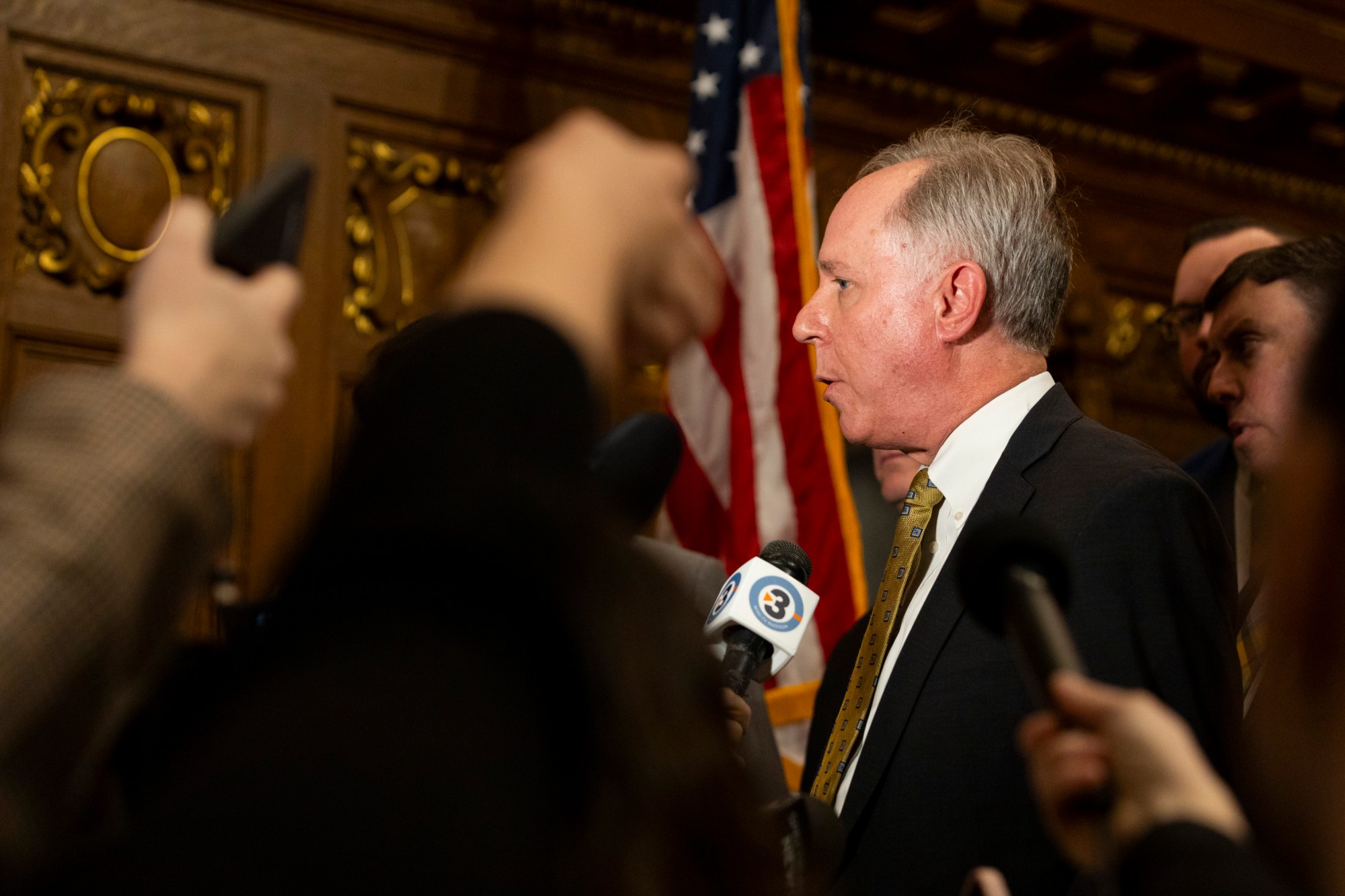
New Moms in Wisconsin to Get Extension of Vital Benefits After GOP Powerbroker Ends Holdout
For years, Wisconsin’s powerful Assembly speaker refused to allow a bipartisan bill to come to a vote that extends postpartum Medicaid coverage for new moms. Finally, this week, he relented. “Go out and take your victory lap,” Republican Robin Vos told caucus members late Wednesday, according to one lawmaker. “You won,” Vos added. On Thursday, the Assembly agreed 95-1 to opt in to a federal program that provides free health insurance to low-income mothers for a year after giving birth, up from 60 days. Vos was among those voting yes. The legislation, which had already been adopted by the Senate, now goes to Gov. Tony Evers, a Democrat. He has openly supported such legislation for years and is expected to sign it. Every other state in the nation, except Arkansas, has already taken the step. The vote represented a rare capitulation for Wisconsin’s longest-serving Assembly speaker — a man who controls the legislative agenda, provides campaign cash to those he favors and punishes those who antagonize him. ProPublica wrote about Vos’ opposition to the bill last fall. The turnaround came on a day of surprises involving Vos. Earlier, at the start of the session, he announced that he would retire at year’s end, revealing that he’d had a slight heart attack in the fall and needed to reduce his stress. “To my leadership team and my caucus colleagues, thank you for your trust, thank you for your candor and your willingness to carry responsibility when it is heavy,” he said. Rep. Patrick Snyder, a Republican and the lead sponsor on the postpartum bill, threatened to not pursue reelection if he did not succeed in getting the measure passed — a legislative goal he had promised constituents he would deliver. That would have left an open GOP seat in a swing district. Typically, incumbents have an advantage in elections. “I just said if we can’t get this thing passed, I just don’t feel I can come back,” Snyder said he told the speaker. “It was that important of a bill.” Vos has long opposed extending Medicaid coverage for new moms, explaining that he opposes spending more money on welfare in Wisconsin. The state’s Legislative Fiscal Bureau estimated that, once fully phased in, the 12-month policy would cost the state about $9.4 million, with the federal government paying an additional $14.1 million. All sides have felt a sense of urgency as the Legislature, controlled by Republicans, intends to wrap up the session soon to hit the campaign trail for the remainder of the year. On Wednesday, Democrats moved aggressively on the postpartum extension issue, proposing amendments that attached the Medicaid change to bill after bill, creating a bit of legislative havoc as Republicans repeatedly ruled the matter not germane to the legislation under consideration. (Democrats did the same for another stalled bipartisan bill on insurance coverage for breast cancer screenings, a measure that also passed Thursday.) Snyder said the Democrats’ tactic nearly derailed GOP efforts to convince Vos to let both bills advance. In a press conference, a dismayed Snyder likened it to someone tripping him as he made a dash for the finish line. “I guess maybe they just didn’t think I could get it done,” he later told ProPublica. “And now we did.” In recent weeks, seven other GOP members joined Snyder to push Vos to reconsider his stance. In a letter to Vos dated Feb. 3, the group told the speaker the legislation aligns with core Republican priorities, including safeguarding infants by ensuring they have healthy mothers. The eight lawmakers are all in competitive districts. This week, despite whatever conflict they had with Vos, they still were careful to pay him homage, with one calling the speaker “a tough negotiator” and another publicly thanking Vos for “his understanding.” Read More He Vowed to “Protect the Unborn.” Now He’s Blocking a Bill to Expand Medicaid for Wisconsin’s New Moms. The legislation was backed by hospitals and medical groups as well as anti-abortion advocates, who favor robust support for pregnant women and new moms. Research has shown that the year after birth can be a dangerous time for women, who can face postpartum depression, blood clots, hypertension, cardiovascular ailments and other long-term health issues. Kate Duffy, a Wisconsin mom who amplifies political issues on social media under the moniker Motherhood for Good, has fought for the extended postpartum coverage and challenged Vos on the topic for about a year. She’s grown a sizable audience, especially among Wisconsin women, many of whom responded to the call to urge lawmakers to act. She credited the bill’s passage to “good old-fashioned organizing and relentless persistence.” Said Duffy: “We just would not shut up about this.” The post New Moms in Wisconsin to Get Extension of Vital Benefits After GOP Powerbroker Ends Holdout appeared first on ProPublica .
Insurer Agrees to Pay Millions for Failing to Fix Errors That Made It Harder for Customers to Get Mental Health Care
One of New York’s largest health insurers is set to pay a multimillion-dollar fine for failing to fix a series of errors that made it harder for its customers to get mental health care. EmblemHealth this week agreed to a $2.5 million settlement with the New York attorney general’s office because of the large number of inaccuracies in its listings of in-network mental health providers, a problem that has persisted for years. The fine is the biggest secured by the state attorney general’s office in its yearslong quest to clamp down on the chronic problem of provider directory errors, also known as ghost networks. It’s an issue that has led customers to postpone treatment, forgo care and pay for more expensive out-of-network providers. The office found that EmblemHealth overstated the availability of in-network mental health providers and failed to comply with state and federal laws requiring that insurers make mental health care as available as other kinds of medical care. “Health insurers cannot mislead consumers with inaccurate provider directories while families are left without care,” Letitia James, the state’s attorney general, said in a statement. EmblemHealth did not answer ProPublica’s questions. In a statement, a spokesperson said the insurer does “not admit” to the state attorney general’s findings but agreed to the settlement “to avoid time-consuming litigation.” The spokesperson added that the insurer has “focused on taking immediate steps to further support our members’ access to care.” ProPublica’s 2024 series “ America’s Mental Barrier ” examined the ways that ghost networks can limit patients’ access to mental health care. Our reporting showed that the investigation by the state attorney general’s office into the ghost networks was one of the rare instances nationwide where health insurers faced consequences from elected officials . Between 2018 and 2024, more than 360 EmblemHealth customers complained to either the insurer, a subcontractor that administered mental health benefits for the insurer or the attorney general’s office about such errors, the settlement said. But EmblemHealth failed to address the issue, the settlement said, even though the insurer had promised to do so as part of a settlement agreement reached in 2011. A report from the office published in 2023 found that EmblemHealth and another dozen insurers had failed to keep their listings of mental health providers free of extensive errors. The office had contacted a sample of providers — nearly 400 listed in the 13 insurers’ directories — and most of them were “unreachable, not in-network, or not accepting new patients,” according to the report. The report found that 82% of the providers in EmblemHealth’s directory that were called were not available for an appointment. This week’s settlement noted that EmblemHealth’s own investigations into the accuracy of its directory listings “have produced results similar to” those found by James’ office. Read More They Couldn’t Access Mental Health Care When They Needed It. Now They’re Suing Their Insurer. The insurer, which covers more than 3 million people in New York and in surrounding states, has now agreed to compensate customers who paid out of pocket for mental health care because they couldn’t secure an appointment with a provider listed as being in-network. EmblemHealth also has pledged as part of the settlement to take additional steps to fix the errors in its listings. The insurer promised to correct inaccurate listings within two business days of being made aware of an error and to check every 90 days that each listing is accurate. The settlement further calls for an independent monitor to oversee EmblemHealth’s progress to ensure that it complies with the settlement’s terms. EmblemHealth is also the subject of a lawsuit filed in December by employees of the city of New York , who alleged that the errors in the insurer’s directory left them with a “deceptive” and “misleading” impression about the size of the company’s provider network. A spokesperson for EmblemHealth recently told ProPublica that the insurer does not comment on pending litigation. The post Insurer Agrees to Pay Millions for Failing to Fix Errors That Made It Harder for Customers to Get Mental Health Care appeared first on ProPublica .

Amid Mass ICE Arrests, Trump Pardon Recipient Juan Orlando Hernández Given Special Treatment
For months, President Donald Trump has railed against Latin American narcoterrorists flooding the United States with “lethal poison.” He has used the scourge of drug trafficking as a rationale for dozens of military strikes on alleged drug boats in the Caribbean and eastern Pacific Ocean, which have left more than 140 people dead . Last month, Trump cheered a military assault by U.S. forces that captured Venezuelan President Nicolás Maduro and his wife, Cilia Flores, and brought them to the U.S. to face charges related to cocaine trafficking. Maduro, Trump said , led a “vicious cartel” that “flooded our nation with lethal poison responsible for the deaths of countless Americans.” But when it comes to former Honduran President Juan Orlando Hernández, who was tried and convicted in the U.S. in 2024 and sentenced to 45 years in prison for taking bribes and allowing traffickers to export more than 400 tons of cocaine to the U.S., Trump has taken a decidedly softer tone. Hernández, he said, has been “treated very harshly and unfairly” — so unfairly that on Dec. 1, Trump pardoned the former president after he served less than four of those 45 years. But the federal government’s magnanimity did not end there. On the day he was to be released, records show, Hernández had an immigration detainer — a request for law enforcement agencies to hold noncitizens for pickup by Immigration and Customs Enforcement — in place. Here, too, the Trump’s administration’s treatment of Hernández differed from its public objectives. Other noncitizens caught up in recent immigration sweeps — the vast majority of whom do not have criminal records — have faced swift efforts to deport them, even to countries where they may face threats. But in Hernández’s case, the Federal Bureau of Prisons scrambled to get his detainer removed so he could walk free. And Hernández did not just walk out of the prison. Despite persistent budget and staffing shortages , prison officials paid a specialized tactical team overtime to drive Hernández from a high-security facility in West Virginia to the famed five-star Waldorf Astoria hotel in New York City, according to records and three people familiar with the situation. Before he left, Hernández was allowed to use the captain’s government phone to talk to the federal prison system’s deputy director, Joshua Smith, who was convicted in a drug trafficking conspiracy before Trump pardoned him in 2021. “The [prisons bureau] administration rolled out the red carpet for him,” said Joe Rojas, a retired prison worker and former union leader who has been speaking to the media on behalf of staff who fear reprisals for doing so since bureau leaders stopped recognizing the union last year. “The staff are disgusted.” Renato Stabile, the court-appointed lawyer representing Hernández — who has long maintained his innocence — said his client’s treatment was appropriate. “It would be particularly cruel to grant somebody a pardon and have them released from prison — only to have them immediately shipped back to a place like Honduras where they would’ve immediately arrested him or he would’ve been killed on site by criminal elements that wanted to do him harm,” Stabile told ProPublica. Through his attorney, Hernández declined to comment. ICE referred all questions to the White House, which responded with a link to a November social media post announcing the President’s intent to pardon Hernández. Smith didn’t respond to an emailed request for comment. A BOP spokesperson said in an emailed statement that the bureau does not discuss conditions of confinement or security procedures and that employee standards of conduct prohibit staff from giving any prisoners preferential treatment. “Violators may be subject to disciplinary actions, including removal from federal service and criminal prosecution,” the statement said. The investigation that ultimately ensnared Hernández stretched across several U.S. presidencies. Despite looming legal trouble stateside and widespread allegations of corruption in his country, Hernández — often known by his initials, JOH — was seen as a key U.S. ally under the Obama and first Trump administrations, ostensibly because of his apparent willingness to help tackle drug trafficking and migration issues. In 2012, as president of Honduras’ National Congress, he famously pushed through a legal change allowing for the extradition of accused criminals to the U.S. — a reform that his attorney pointed out was ironically later used to extradite him. But in 2018, less than halfway through Hernández’s second term as president, the Drug Enforcement Administration arrested his younger brother , former Honduran congressman Tony Hernández, in Miami for a series of weapons and drug trafficking charges. A jury found him guilty the following year at a Manhattan federal trial in which Emil Bove — the federal prosecutor who would later become Trump’s personal defense lawyer — gave a closing argument replete with allegations implicating the Honduran president in criminal schemes. (Bove could not be reached for comment.) Although the sprawling criminal case focused on narcotrafficking concerns, Juan Orlando Hernández’s political career was fraught in other ways. Dana Frank, a University of California, Santa Cruz history professor who studies Honduras , described him as a “repressive criminal on multiple fronts.” While in congress in 2012, he led a “technical coup” in overthrowing the supreme court , she said. Then, he ran for reelection to the presidency in 2017 “in complete violation of the constitution ,” she said. Amid the resulting protests, security forces shot and killed at least 16 people, including two children, among other human rights abuses, a United Nations report found . Hernández has said little publicly, but his government told the U.N. it would look into those cases. His party has tweeted that it has an “unwavering commitment to democracy and freedom.” Weeks after Hernández left office in 2022, he was arrested at his home in Honduras and extradited to the U.S. to face drug trafficking and weapons charges. Prosecutors said he funded his political career with millions of dollars he received from “violent drug-trafficking organizations” in exchange for allowing them to “move mountains of cocaine” out of the country. Stabile told ProPublica the case against his client was always a weak one, relying heavily on the word of unreliable drug traffickers with outlandish stories and little in the way of hard evidence. Still, the government’s case was enough to convince a jury to convict Hernández after just over eight hours of deliberations , and in June 2024 he was sentenced to 45 years in federal prison. Afterward, Stabile and his client began working on an appeal , which at that point appeared to be Hernández’s only shot at freedom. Early last year, prison officials transferred Hernández out of the federal detention center in Brooklyn, which largely holds pretrial detainees , and sent him to the high-security Hazelton penitentiary in West Virginia. Dubbed “Misery Mountain,” the notoriously violent prison is the same facility where mob boss James “Whitey” Bulger was beaten to death in his cell hours after his arrival in 2018. Yet prison sources said Hernández seemed to do his time quietly, eventually landing in the coveted housing unit set aside for a therapeutic program used to treat drug addiction, mental illness and “criminal thinking errors.” But after Trump returned to office last year, a much quicker route to freedom suddenly seemed possible: a pardon. Like Trump, Hernández was a member of his country’s right-wing party. And, like Trump, he believed he’d been targeted by leftist forces. He also had other reasons to be hopeful. During his time in office, Hernández had championed the creation of special economic zones that could set their own taxes and regulations, a move that benefitted the Trump-aligned Silicon Valley titans who invested in them, including Peter Thiel and Marc Andreessen . But the law was repealed by his successor, center-left party Libre member Xiomara Castro, putting plans for the zones in jeopardy. (Andreessen responded to a request for comment with a link to a social media post disavowing any involvement in the pardon. Thiel could not be reached for comment, though he has previously said he was not involved either .) Longtime political operative Roger Stone also suggested in a blog post co-authored with conservative activist Shane Trejo in January 2025 that pardoning Hernández could have political benefits for Trump. In the post, Trejo and Stone — who was pardoned by Trump five years ago after he was convicted of obstructing a congressional investigation into Russian election interference — urged the president to “crush socialism and save a freedom city in Honduras” with a “well-timed pardon” that “could be the final death blow to [Xiomara] Castro” in the 2025 elections. Eventually, Stone took on a more direct role in advocating for clemency when he gave Trump a four-page letter Hernández had written to the U.S. president, asking for a pardon and making the case that his conviction was a “political persecution” by the Biden administration. In a text message with ProPublica, Stone said he had received the letter from a journalist who’d gotten it from the family. He emphasized repeatedly that he was not compensated for his involvement. “I read the letter and then did my own research and elected to send the letter to President Trump,” Stone wrote. “I actually had no contact with JOH or anyone in his family until after the pardon.” On Nov. 28, two days before the Honduran presidential election, Trump announced his intent to pardon Hernández. Stabile said he didn’t learn the news until Ana García Carías, the former president’s wife, called him in tears: “He’s letting him out! Trump’s pardoning Juan Orlando!” She sent Stabile a screenshot from Truth Social , where Trump had written that he would grant him a “Full and Complete Pardon.” The decision met with bipartisan backlash from lawmakers. Sen. Tim Kaine, a Democrat from Virginia, called the unexpected reprieve “disgusting and incomprehensible,” while Sen. Thom Tillis, a North Carolina Republican, described it as “horrible optics.” In his post, Trump also urged Hondurans to vote for the National Party candidate, Nasry “Tito” Asfura, who was trailing in multiple polls , adding what to observers of Latin American politics was a thinly veiled threat: If Asfura did not win, Trump said, the U.S. would “not be throwing good money after bad” in support of Honduras. The message was obvious, experts said. “That pardon was a clear green light for the National Party to manipulate the vote,” one former high-ranking U.S. diplomat told ProPublica. In the end, Asfura narrowly edged out center-right candidate Salvador Nasralla and handily defeated the incumbent Libre party. But the count was plagued by delays, reports of voter intimidation and allegations of fraud , and Nasralla later formally challenged the outcome . On Dec. 1 — while the votes were still being counted in Honduras — Trump posted again on Truth Social in support of Asfura. “Looks like Honduras is trying to change the results of their Presidential Election. If they do, there will be hell to pay!” The former president’s pardon officially went through that same day. That evening at Hazelton, after the prisoners had already been fed dinner, corrections officers showed up at the housing unit to get Hernández. Smith, the bureau’s deputy director, wanted to speak with him. The newly pardoned inmate was escorted to the captain’s office, where he used the captain’s phone to talk to Smith, his fellow pardon recipient, according to a source familiar with the situation. The move shocked current and former prison staff. Hernández was also allowed to talk with his family, who then phoned Stabile and told him the good news. Within the hour, Stabile said, he got a call from Smith, inquiring about a release plan. “I’m in Manhattan and he’s in West Virginia,” Stabile told Smith. “It would take me six hours to come pick him up. Can you transport him?” Because most inmate releases are done during the daytime, prison staff had to be called back in to handle the paperwork and logistics of freeing an inmate. But there was a problem: Hernández had an immigration hold. When noncitizens are convicted of crimes in the U.S., immigration officials routinely sign detainers asking prisons and jails to turn them over to ICE for possible deportation proceedings following their release date. In Hernández’s case, records show immigration agents sent the prison notice of a detainer in February 2025, two months after he was sentenced in court. For several hours on the night of his release, prison officials scrambled to get the detainer removed so he could walk free, according to several sources familiar with the situation. “It’s definitely special treatment. That’s not normally the way it goes,” said Lena Graber, a senior staff attorney at the Immigrant Legal Resource Center. “Most people with drug convictions would never get their ICE detainer removed just because the conviction was pardoned.” Records show immigration officials lifted the detainer on Hernández just after 11 p.m. Typically, according to a source familiar with the situation, prisoners who are released from Hazelton when there’s inclement weather or when it’s too late in the day to catch a plane or bus home are put up at the Microtel Inn and Suites at the bottom of the hill. It’s a two-star hotel where a room costs $69 per night. In the morning, they’re given a ticket and sent on their way. But for Hernández, prison officials activated a four-man tactical team, paying at least three of them overtime to drive him to the luxury hotel in Manhattan, according to government records and law enforcement sources. A standard room there costs more than $1,000 per night. Stabile declined to comment on where Hernández stayed but said the government did not pay for it. It was another move that stunned prisons bureau staff. One official called it “absolutely fucking nuts,” adding, “I don’t even think that’s ever been done, not just for a pardoned inmate but for anyone who’s been released.” Another agreed that it was unprecedented: “Usually, they get a shitty bus ride or a cheap plane ticket. They don’t get the carpet rolled out for them.” As of now, the former president’s whereabouts are unknown. A few days after his release, Hernández said in Spanish in a social media post that he had “no intention of returning to Honduras” immediately because he and his family would be in “grave danger given the evident persecution and the weaponization of justice against me.” If Hernández is in the U.S., it’s unclear what his immigration status is. Meanwhile, Honduran officials have issued a warrant for Hernández’s arrest over years-old fraud allegations and, in a social media post, asked Interpol and other international allies to honor it. But a law enforcement official familiar with the situation told ProPublica there is currently no pending Interpol red notice asking for law enforcement to detain him. The only request the network received to issue such a notice, the official said, was declined while Hernández was still in prison. The post Amid Mass ICE Arrests, Trump Pardon Recipient Juan Orlando Hernández Given Special Treatment appeared first on ProPublica .
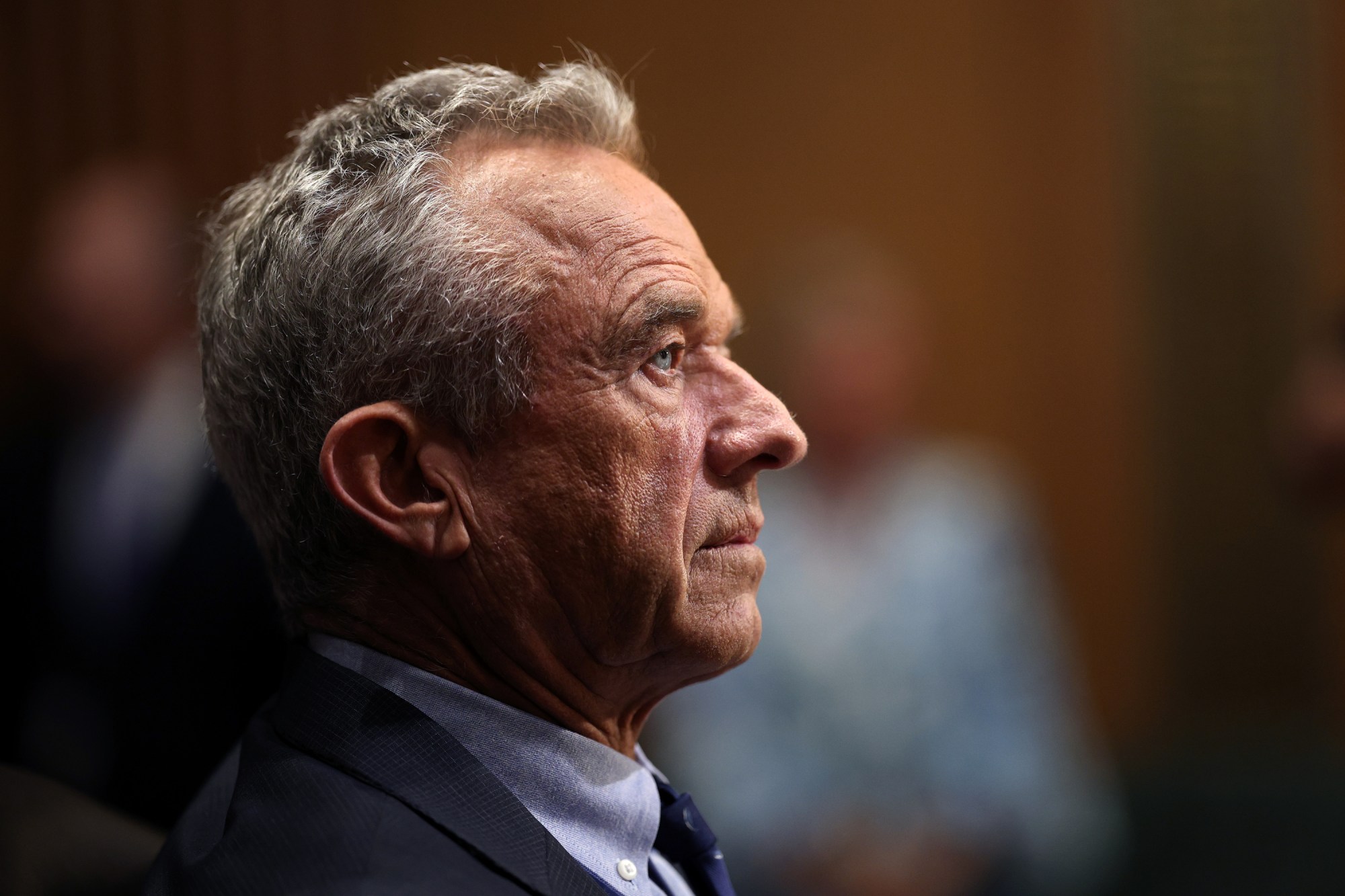
Chlorine Dioxide, Raw Camel Milk: The FDA No Longer Warns Against These and Other Ineffective Autism Treatments
The warning on the government website was stark. Some products and remedies claiming to treat or cure autism are being marketed deceptively and can be harmful. Among them: chelating agents, hyperbaric oxygen therapies, chlorine dioxide and raw camel milk. Now that advisory is gone. The Food and Drug Administration pulled the page down late last year . The federal Department of Health and Human Services told ProPublica in a statement that it retired the webpage “during a routine clean up of dated content at the end of 2025,” noting the page had not been updated since 2019. (An archived version of the page is still available online.) Some advocates for people with autism don’t understand that decision. “It may be an older page, but those warnings are still necessary,” said Zoe Gross, a director at the Autistic Self Advocacy Network, a nonprofit policy organization run by and for autistic people. “People are still being preyed on by these alternative treatments like chelation and chlorine dioxide. Those can both kill people.” Chlorine dioxide is a chemical compound that has been used as an industrial disinfectant, a bleaching agent and an ingredient in mouthwash, though with the warning it shouldn’t be swallowed. A ProPublica story examined Sen. Ron Johnson’s endorsement of a new book by Dr. Pierre Kory, which describes the chemical as a “remarkable molecule” that, when diluted and ingested, “works to treat everything from cancer and malaria to autism and COVID.” Johnson, a Wisconsin Republican who has amplified anti-scientific claims around COVID-19, supplied a blurb for the cover of the book, “The War on Chlorine Dioxide.” He called it “a gripping tale of corruption and courage that will open eyes and prompt serious questions.” A page recently pulled from the Food and Drug Administration’s website gave examples of “false claims” about treatments for autism and its symptoms. Internet Archive The lack of clear warning from the government on questionable autism treatments is in line with HHS Secretary Robert F. Kennedy Jr.’s rejection of conventional science on autism and vaccine safety. Last spring, Kennedy brought into the agency a vaccine critic who’d promoted treating autistic children with the puberty-blocking drug Lupron. And in January, Kennedy recast an advisory panel on autism, appointing people who have championed the use of pressurized chambers to deliver pure oxygen to children, as well as some who support infusions to draw out heavy metals, a process known as chelation. Kennedy has embraced various unconventional measures in his fight against what he views as a government system corrupted by special interests. In October 2024, shortly before Donald Trump won the presidency again, Kennedy vowed on social media that the FDA’s “war on public health” was about to end. “This includes its aggressive suppression of psychedelics, peptides, stem cells, raw milk, hyperbaric therapies, chelating compounds, ivermectin, hydroxychloroquine, vitamins, clean foods, sunshine, exercise, nutraceuticals and anything else that advances human health and can’t be patented by Pharma,” he wrote. At his confirmation hearing, Kennedy praised Trump for his wide search for a COVID-19 remedy in his first term, which Kennedy said included vaccines, various drugs and “even chlorine dioxide.” The FDA, dating back to at least 2010, has urged consumers not to purchase or drink chlorine dioxide, frequently marketed as a Miracle Mineral Solution, because “the solution, when mixed, develops into a dangerous bleach which has caused serious and potentially life-threatening side effects.” The BMJ (formerly the British Medical Journal) has previously reported on the removal of the FDA warnings page. The lack of a warning has also received attention in the Telegram channel Chlorine Dioxide Testimonies. “Don’t forget the FDA quietly removed warnings about Chlorine Dioxide on their website earlier this year,” read a forwarded post in late December, to which over 100 people reacted with an applauding emoji. The contributor added a wish for the future: that Kennedy and the FDA commissioner undertake official studies exploring chlorine dioxide’s effects in battling cancer. There currently are no warnings about chlorine dioxide on a consumer page on the FDA website. And HHS did not answer ProPublica’s questions about whether the agency endorses chlorine dioxide as a treatment for autism. In his book, Kory also expresses optimism about what Kennedy will do. “What I really want is for the FDA to lift its restrictions on studying chlorine dioxide as a therapeutic,” he wrote. “That’s something I’m hoping might finally be possible under this new administration, especially with RFK Jr. as head of Health and Human Services.” Many autism researchers and advocates have been wary of Kennedy due to his long-held stance that vaccines cause autism. Peer-reviewed studies conducted worldwide, published over decades in leading scientific journals, have rejected such a link. Under Kennedy, however, the Centers for Disease Control and Prevention overhauled its website on vaccines and autism to assert that studies supporting a link have been ignored by health authorities. The CDC page retained the headline “Vaccines do not cause Autism” but added an asterisk noting that the phrase remained “due to an agreement with the chair of the U.S. Senate Health, Education, Labor, and Pensions Committee.” In order to win confirmation to his post, Kennedy had promised Sen. Bill Cassidy, a physician, that he would not remove the statement. Kennedy’s replacement of 21 members who were part of an interagency coordinating committee on autism provides another glimpse into where he wants to take federal policy. The committee provides advice and recommendations on policies, research and services. It now includes people who have promoted unproven remedies for autism, including suramin, a drug developed to treat sleeping sickness in Africa caused by bites from a tsetse fly; hyperbaric oxygen therapy, typically used for decompression sickness and tissue damage; controversial language techniques ; and chelation therapy. A 5-year-old autistic boy died in Pennsylvania in 2005 after a chelation session. Another 5-year-old boy died in Michigan last year in a hyperbaric chamber fire; his parents wanted him treated for an attention disorder. The Autistic Self Advocacy Network published a statement on its website saying that the newly reconfigured HHS autism panel is now “overwhelmingly made up of anti-vaccine advocates and peddlers of dangerous quack autism ‘treatments.’” HHS told ProPublica in an emailed statement that such claims are “false” and that the new members are experienced in research and clinical care. “They are committed to advancing innovation in autism research, diagnosis, treatment, and prevention to align federal policy with current gold-standard science,” HHS said. Dr. Paul Offit, a pediatrician and director of the Vaccine Education Center at Children’s Hospital of Philadelphia, told ProPublica that Kennedy’s removal of committee members with solid expertise in favor of people who support alternative medicine shows that the secretary is “perfectly willing to embrace bogus therapies.” Another leading expert, Yale University professor emeritus Dr. Fred Volkmar, who edited the “Handbook of Autism and Pervasive Developmental Disorders,” a definitive guide, said early diagnosis and proven treatments have led to dramatic improvements for people with autism. “These days, probably 70% to 75% of children on the autism spectrum will grow up to be fully independent or semi-independent adults.” Sadly, however, he said, some parents fall prey to promises of easy and fast cures, when there are none. One of the dangers, he said, is that children are drawn away from treatments that are shown to be beneficial. “It’s a shame that the federal government is not being more helpful to parents in understanding what does and doesn’t work,” Volkmar said. The post Chlorine Dioxide, Raw Camel Milk: The FDA No Longer Warns Against These and Other Ineffective Autism Treatments appeared first on ProPublica .

How a Planned Disney World Vacation Turned Into Four Months in Immigration Detention
This week, ProPublica published a story I wrote based in part on interviews with parents and children being held at the nation’s only operating detention center for immigrant families in Dilley, Texas. I had asked some of the parents to see if their children would be willing to write to me about their experiences inside. More than three dozen did. One of those letters came from 9-year-old Maria Antonia Guerra Montoya from Colombia. Her letter was written on a piece of notebook paper. She decorated it with rainbows and hearts. And she drew a portrait of herself and her mom wearing their detention uniforms and government-issued ID badges. I had initially met Maria a few weeks earlier, when I managed to get inside the Dilley Immigration Processing Center. It’s just south of San Antonio. Maria Antonia, her mother and more than 3,500 people, half of them minors, had cycled through there since the Trump administration reopened it early last year. I went in mid-January, before the facility burst into public view when Liam Conejo Ramos — the 5-year-old in a blue bunny hat detained with his father in Minneapolis — was sent there, with the aim of hearing about the conditions in which children were being held, from the children themselves. After signing in, I passed through a metal detector and a series of locked doors to get to the visitation room. Maria Antonia and another girl her age were quietly playing fast-moving hand games, when her mother, Maria Alejandra Montoya, called her over to introduce me. Maria Antonia, wearing her long brown hair in a ponytail, didn’t hesitate. She scooted forward to the front edge of her chair, pushed her thick white-framed glasses up on her nose and dove right in. I asked her how she and her mom had ended up there. Well, she said, we had a plan to go to “Disneylandia” but instead ended up in “Dilleylandia.” Then she told me the story. She lived in Colombia with her grandmother and regularly traveled back and forth to the United States to visit her mother, who had been in the U.S. since 2018. (Maria Alejandra had overstayed a visa but since married a U.S. citizen and was applying for a green card.) In August, the whole family had vacationed together in Disney World. It was so fun, Maria Antonia said, that she begged her mom to go back for the park’s annual Halloween celebration. They booked tickets for a 10-day vacation during her school holidays. She lit up telling me about how she had planned out a “101 Dalmatians” costume — she would be Cruella de Vil and her mom and stepdad the spotted dogs. The whole getup was so bulky it basically filled her entire suitcase. But everything started going wrong as soon as she arrived at the Miami International Airport on Oct. 2. She was supposed to be dropped off with her mom by the flight attendant accompanying her. But she said was intercepted by immigration officers who took her into a room to be interrogated while her mother was taken to be questioned in a separate room. They were asking me all kinds of questions I had absolutely no idea how to answer , I recall her telling me (I was not allowed any notebooks or voice recorders inside the detention facility). I kept just saying over and over again: “I can tell you my name and my birthday and my mom’s name and her birthday and that I am from Colombia. That’s about it.” I didn’t know what else to tell them . After what they both said were hours of questioning, they were put in a cold room together. Maria Alejandra’s phone was confiscated. They had no way to contact her stepdad, who was waiting for them in the airport. Maria Antonia said they had no idea why they were being detained if her mother was applying for a green card and she had a valid tourist visa. Maria Antonia had learned English at her private school in Medellin. She overheard one immigration officer tell another that if she had been 10 years old, they would have been able to keep her separated from her mom. That, she said, is when the real fear set in. Then it was 42 hours of waiting in the airport holding rooms. Eventually they were put on a plane — then a minivan — to the facility in Texas. Maria Antonia said she didn’t really understand where they were going until they saw the center out the window. A page from Maria Antonia’s letter to reporter Mica Rosenberg: “They don’t give me my diet I am vegetarian, I don’t eat well, there is no good education and I miss my best friend julieta and my grandmother and my school I already want to get to my house. Me in dilei [Dilley] am not happy please get me out of here to colombia.” Obtained by ProPublica By the time I met them, they had been detained for nearly four months. I asked Maria Antonia what being stuck in Dilley was like. She told me she had fainted two times since she got there; she is vegetarian and said she ate mostly beans. She felt like she had nothing to do all day and she missed her school, echoing concerns of many of the other kids I spoke with over the course of my reporting. She said she had made some new friends inside Dilley, but it was hard. She and her mom had been detained for so long that new people she met would often leave when they were released or deported. Her mother, Maria Alejandra, had told me in long, vivid emails about some of more serious concerns about her and her daughter’s deteriorating mental and physical health during their prolonged detention. She said Maria Antonia would wake up in the middle of the night crying, fearful she would never leave detention or alternatively that she would be separated from her mom. Read More The Children of Dilley I asked the Department of Homeland Security and U.S. Immigration and Customs Enforcement, which DHS oversees, about what Maria Alejandra and Maria Antonia told me. In an email, they said Maria Alejandra overstayed her tourist visa and had been previously arrested for theft, a charge that according to court documents was dismissed. DHS said that during her time in detention, Maria Antonia was seen by medical professionals twice and also had weekly check-ins with mental health professionals, “where she stated she was calm and well-nourished.” DHS said everyone held at the facility is “provided with 3 meals a day, clean water, clothing, bedding, showers, soap, and toiletries” and “certified dieticians evaluate meals.” DHS also said “children have access to teachers, classrooms, and curriculum booklets for math, reading, and spelling” and no one is denied medical care. CoreCivic, which operates the facility, said it is subject to multiple layers of oversight and that health and safety are top priorities. Soon we all said goodbye. But I remained in touch with her mother and stepdad and attorneys following the case. They shared documentation about what happened to them and their legal pleas to be released. I learned an immigration judge had granted them “voluntary departure” on Jan. 6, allowing Maria Alejandra to pay their own way back to Colombia, avoid having a formal deportation order on her record and continue her green card application from abroad. But it wasn’t until Feb. 6 that they were finally sent back to Colombia. A few days after they returned, her mother told me the first thing Maria Antonia wanted to do was throw out the government-issued sweatsuit she had been wearing for months. Then I received a video. It showed Maria Antonia, wearing pink leggings and a T-shirt with a teddy bear on it, running to embrace her teachers one by one outside her school. One of the teachers leads her by the hand into her classroom: “Look who I brought you!” the teacher says. Another young girl, Maria Antonia’s best friend, leaps out of her desk to wrap her arms around her. Another friend rushes to join the hug. She was finally home. The post How a Planned Disney World Vacation Turned Into Four Months in Immigration Detention appeared first on ProPublica .