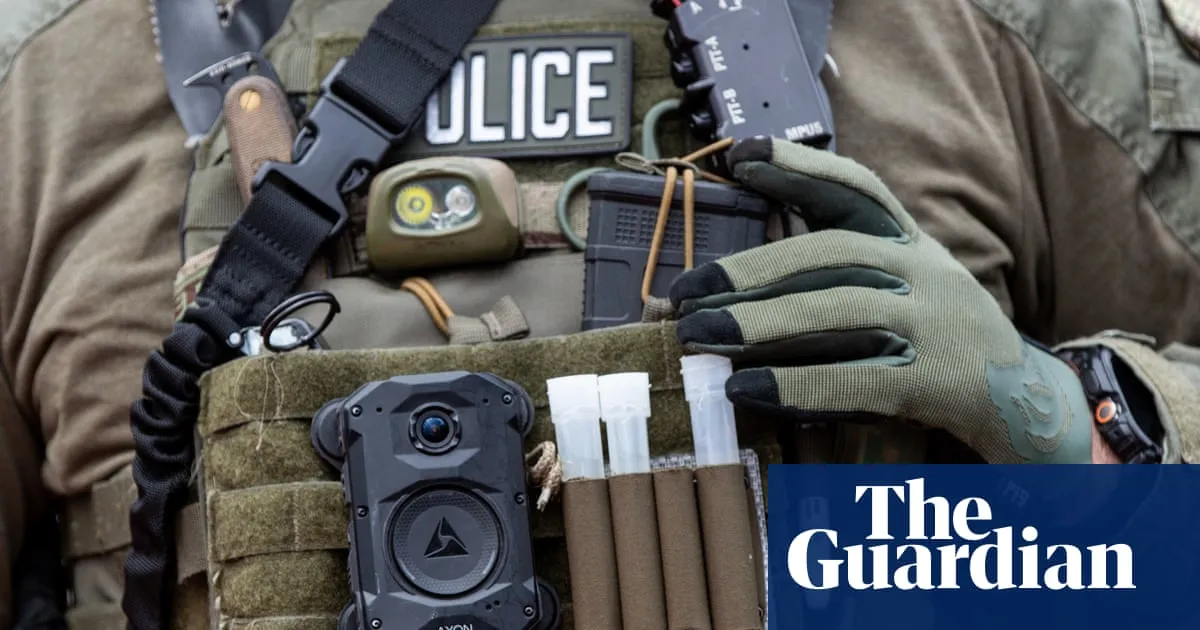
Officers for immigration-and-customs-enforcement" class="entity-link entity-organization" data-entity-id="142597" data-entity-type="organization">immigration and Customs Enforcement (ICE) will be equipped with much-delayed body cameras by the end of next month, it was reported on Friday. But experts have questioned the transparency of a policy that allows the ICE director to restrict the public release of footage unless “it is in the best interests of the agency”.Pressure has mounted on the Trump administration to provide body cameras after people caught up in encounters with federal immigration personnel suffered death or serious injuries.Two men were shot and killed by ICE agents, in Texas and Maine, last month in circumstances similar to the death of another man during a traffic stop in Illinois last September. None of the officers involved was wearing a camera.Tom Homan, Trump’s so-called border czar, said last month that ICE officers would be required to have at least one body camera recording during future vehicle stops. Policy for body-worn cameras was first established in a February 2025 ICE directive, but funding for their provision was held up by this year’s partial government shutdown, Homan said.The intention of using such cameras, according to David Venturella, the ICE acting director, is to increase transparency and accountability.One analyst, however, told the Associated Press that an accompanying “selective release” policy of footage meant taxpayers who put up more than $30m for the cameras may still be kept in the dark about some high-profile confrontations, at least in their immediate aftermath.Christopher Schneider, a sociology professor at Canada’s Brandon University, and co-author of Police Body-Worn Cameras: Media and the New Discourse of Police Reform, said the ICE director would have discretion to release recordings that reflect well on the agency’s image while working to keep others secret.“In some ways, ICE is saying the quiet part out loud,” he said. “Body-worn cameras are being used as contemporary image-work tools to present the police to the public in the most favorable way possible.”The policy says ICE will promptly release video of shootings and other encounters in which its agents cause death or serious injury only after determining “it is in the best interests of the agency” to do so.It requires officers to activate cameras during routine enforcement activities, including while making arrests, executing search warrants and responding to emergencies.After shootings or other serious confrontations, a committee that includes top ICE officials and lawyers will review footage and recommend whether to release it promptly, according to the February 2025 policy.If the ICE director finds that “specific and compelling circumstances” justify withholding the video, they have the authority to block or indefinitely delay the release, the policy says.The Trump administration slow-walked a pilot program last year to provide cameras to ICE personnel, it was reported in January, and moved to cut funding.Civilian cellphone footage of the deaths of protesters Renee Good and Alex Pretti at the hands of federal immigration officers in separate January incidents in Minneapolis allowed their families and supporters to challenge authorities’ accounts of the encounters.Homan, in a TV appearance on Fox & Friends last month, said he welcomed the imminent rollout of the cameras.“They exonerate more law enforcement than they convict, and I want officers to wear body cameras because I want the American people to see what the officers saw when they took that action,” he said.The Associated Press contributed to this report
SRCThe Guardian - World News
LANGEN
LEANCenter-Left
WORDS549
ENT12
FRI · 2026-08-07 · 15:08 GMTBRIEF NSR-2026-0807-100156
NSR-2026-0807-100156News Report·EN·Legal & Judicial
ICE will not reveal body-camera footage unless in agency’s ‘best interests’
Immigration and Customs Enforcement (ICE) officers will begin using body cameras by the end of next month, following pressure from incidents involving death or serious injury during encounters with federal immigration personnel. However, a policy allows the ICE director to withhold footage if its release is not deemed "in the best interests of the agency." This discretion has raised concerns about transparency, as experts suggest the agency may selectively release footage that presents a favorable image.
Richard Luscombe and agencyThe Guardian - World NewsFiled 2026-08-07 · 15:08 GMTLean · Center-LeftRead · 3 min
The Guardian - World NewsFIG 01
Reading time
3min
Word count
549words
Sources cited
3cited
Entities identified
12entities
Quality score
100%
§ 01
Briefing Summary
AI-generatedNEWSAR · AI
Immigration and Customs Enforcement (ICE) officers will begin using body cameras by the end of next month, following pressure from incidents involving death or serious injury during encounters with federal immigration personnel. However, a policy allows the ICE director to withhold footage if its release is not deemed "in the best interests of the agency." This discretion has raised concerns about transparency, as experts suggest the agency may selectively release footage that presents a favorable image. While cameras are intended to increase accountability, a review committee will recommend release after serious incidents, with the director having the final authority to block or delay footage under specific circumstances. The rollout follows a delayed pilot program and funding issues.
Confidence 0.90Sources 3Claims 5Entities 12
§ 02
Article analysis
Model · rule-basedFraming
Legal & Judicial
Political Strategy
Tone
Mixed Tone
AI-assessed
CalmNeutralAlarmist
Factuality
0.70 / 1.00
Factual
LowHigh
Sources cited
3
Well sourced
FewMany
§ 03
Key claims
5 extracted01
Body-worn cameras are being used as contemporary image-work tools to present the police to the public in the most favorable way possible.
quoteChristopher Schneider
Confidence
1.00
02
Two men were shot and killed by ICE agents last month in circumstances similar to another death last September.
factualArticle
Confidence
0.90
03
ICE will not reveal body-camera footage unless it is in the agency’s best interests.
factualICE
Confidence
0.90
04
Taxpayers who put up more than $30m for the cameras may still be kept in the dark about some high-profile confrontations.
factualAnalyst (Associated Press)
Confidence
0.80
05
ICE officers will be equipped with body cameras by the end of next month.
factualReported on Friday
Confidence
0.80
§ 04
Full report
3 min read · 549 words§ 05
Entities
12 identifiedKey playerOppositionContextPositiveNeutralNegative
Organizations3
§ 06
Keywords & salience
9 termsbody cameras
1.00
transparency
0.90
ice
0.80
footage release policy
0.80
accountability
0.70
immigration enforcement
0.60
public release
0.50
agency interests
0.50
police reform
0.40
§ 07
Topic connections
Interactive graph No topic relationship data available yet. This graph will appear once topic relationships have been computed.