Moscow also often uses a "double-tap" tactic, when they target the same location twice within a short period of time. Many believe that the second attack is deliberately aimed at first responders who arrive at the scene of the initial strike to rescue survivors.During a recent massive Russian air attack on Kyiv, seven people were killed, including a police officer and a volunteer, after a second strike on the same location.And lately Russian forces have been also targeting warehouses of humanitarian organisations. Last month alone, warehouses of three UN agencies, including the WHO, were damaged during air strikes. According to Habicht, the organisation shares coordinates of its facilities with both Moscow and Kyiv specifically in order to protect them from strikes.While missile and drone strikes can be indiscriminate, first-person view (FPV) drone strikes are almost always intentional. A drone pilot can see the target in a live feed from the drone's camera. So when it hits an ambulance, it has to be on purpose, says Robin Meldrum, MSF country coordinator in Ukraine.Dr Inna Lytvynenko says that she was wearing a uniform identifying her as a medical worker. The ambulance was also clearly marked. So, she believes the drone operator consciously chose to target them.Provided by a third partyA first drone hit Inna's ambulance in Kherson, while a second targeted her directlyAccording to the WHO, strikes on ambulances make up 20% of all attacks on Ukraine's healthcare system, which suggests these are part of a calculated strategy.The result of such sustained attacks is that the civilian population close to the frontline are getting increasingly cut off from health services.
SRCBBC News - World
LANGEN
LEANCenter
WORDS268
ENT12
SAT · 2026-08-08 · 00:02 GMTBRIEF NSR-2026-0808-100300
NSR-2026-0808-100300News Report·EN·Conflict
'I ran because I knew I would die': Russian drones target medics in Ukraine
Ukrainian emergency workers report an increase in Russian attacks targeting hospitals, ambulances, and humanitarian aid warehouses. Russia is accused of employing a "double-tap" tactic, where a second strike targets first responders arriving at an initial attack site.
6 hours agoShareSaveAdd as preferred on GoogleAbdujalil Abdurasulovin KyivBBC News - WorldFiled 2026-08-08 · 00:02 GMTLean · CenterRead · 2 min
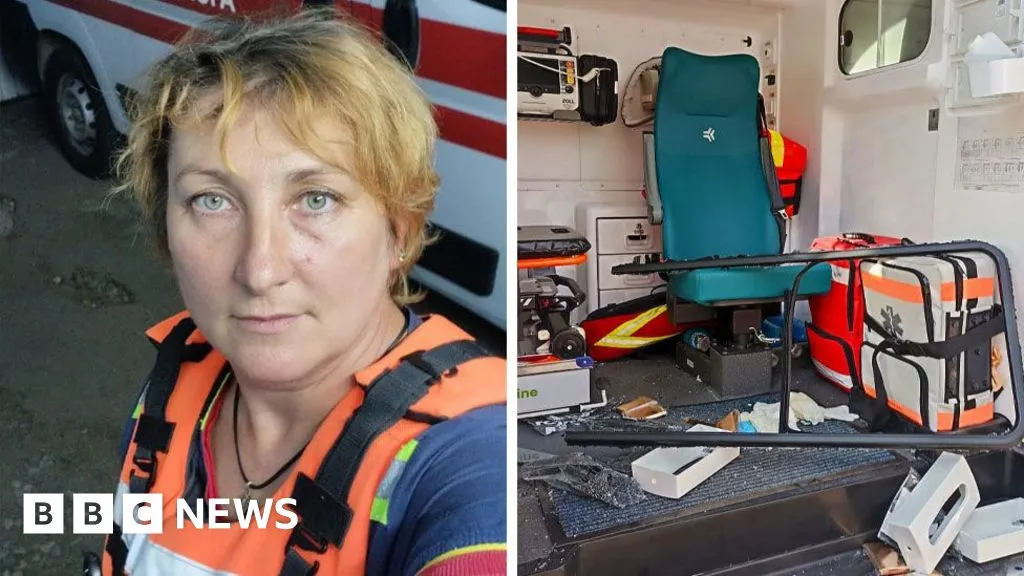
BBC News - WorldFIG 01
Reading time
2min
Word count
268words
Sources cited
3cited
Entities identified
12entities
Quality score
100%
§ 01
Briefing Summary
AI-generatedNEWSAR · AI
Ukrainian emergency workers report an increase in Russian attacks targeting hospitals, ambulances, and humanitarian aid warehouses. Russia is accused of employing a "double-tap" tactic, where a second strike targets first responders arriving at an initial attack site. This strategy has resulted in casualties, including medics and police officers. First-person view (FPV) drones, which allow pilots to see targets in real-time, are often used in these attacks, suggesting deliberate targeting of clearly marked medical vehicles and personnel. The World Health Organization states that strikes on ambulances constitute 20% of attacks on Ukraine's healthcare system, indicating a calculated strategy that increasingly isolates frontline populations from medical services.
Confidence 0.90Sources 3Claims 5Entities 12
§ 02
Article analysis
Model · rule-basedFraming
Conflict
Human Rights
Tone
Mixed Tone
AI-assessed
CalmNeutralAlarmist
Factuality
0.70 / 1.00
Factual
LowHigh
Sources cited
3
Well sourced
FewMany
§ 03
Key claims
5 extracted01
First-person view (FPV) drone strikes are almost always intentional due to the pilot's live feed.
factualRobin Meldrum, MSF country coordinator in Ukraine
Confidence
0.95
02
Dr. Inna Lytvynenko believes she was consciously targeted by a drone operator while in a clearly marked ambulance and uniform.
quoteDr Inna Lytvynenko
Confidence
0.90
03
Russian forces are targeting warehouses of humanitarian organizations, including UN agencies like the WHO.
factualarticle
Confidence
0.90
04
Strikes on ambulances constitute 20% of all attacks on Ukraine's healthcare system.
statisticWHO
Confidence
0.85
05
The 'double-tap' tactic, where a second strike targets first responders, is often used by Moscow.
factualarticle
Confidence
0.80
§ 04
Full report
2 min read · 268 words§ 05
Entities
12 identifiedKey playerOppositionContextPositiveNeutralNegative
Organizations3
Locations4
§ 06
Keywords & salience
10 termstargeting medics
1.00
russian drones
1.00
double-tap tactic
0.90
first responders
0.80
fpv drone strikes
0.80
attacks on healthcare
0.70
humanitarian organisations
0.60
ukraine
0.50
who
0.40
calculated strategy
0.40
§ 07
Topic connections
Interactive graph Network visualization showing 51 related topics
View Full Graph Person Organization Location Event|Click node to navigate|Edge numbers = shared articles