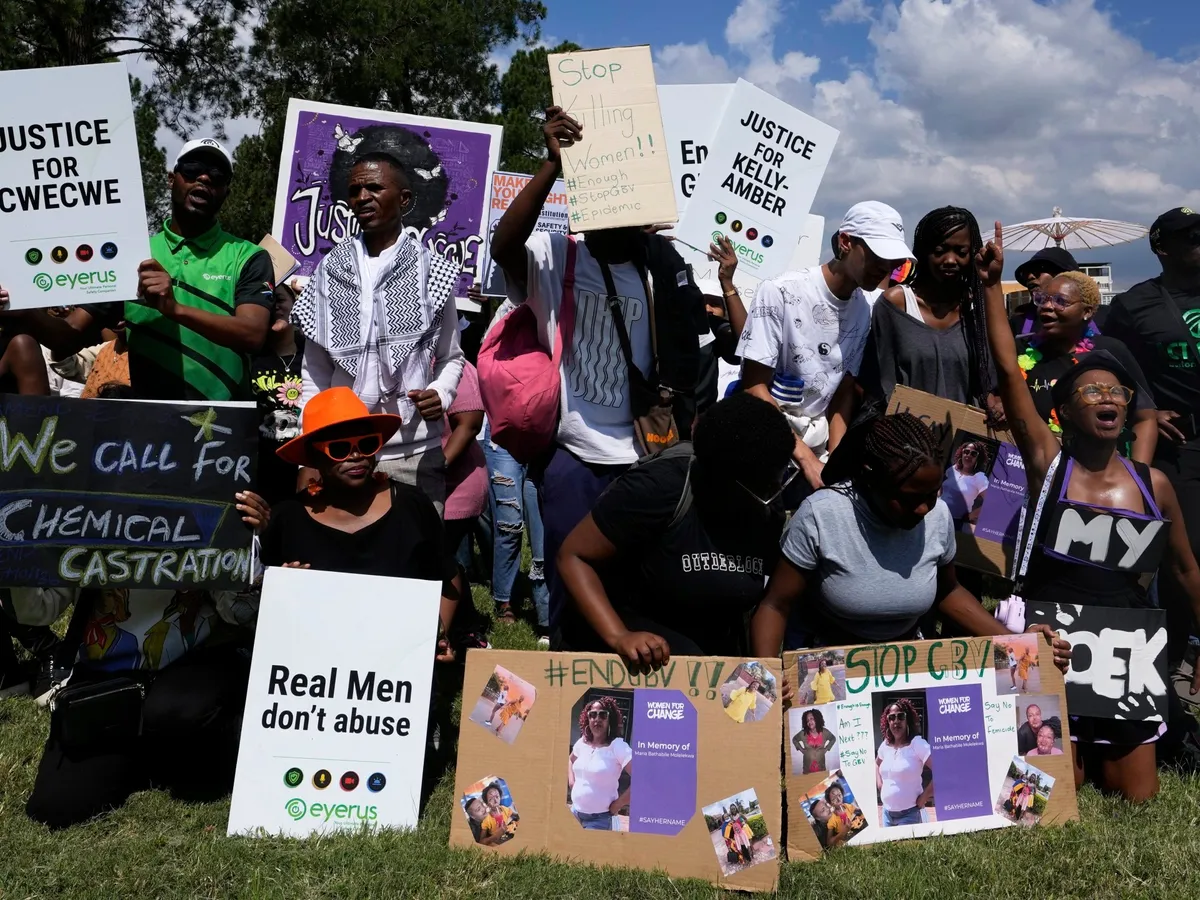
The 1956 march transformed women’s rights and political power, but millions still cannot fully enjoy those gains.Sisonke Msimang is a South African writer and political commentator who focuses on race, gender and democracy.Published On 9 Aug 2026One of my favourite protest songs rings out every year on August 9, which is Women’s Day in South Africa. The song works as a call and response: one set of voices cries out, “You have struck a woman,” while another set responds, “so, you have struck a rock!”The chant dates back to the historic protest that gave South Africa’s Women’s Day its date and meaning. In 1956, 20,000 women marched on the Union Buildings in Pretoria in opposition to “pass laws” that the Apartheid regime was seeking to extend to African women. African men were already subject to the indignity of carrying passes, and with this latest move, thousands of domestic workers across the country immediately understood that they too would be subjected to random stops and searches by police. What little freedom of mobility they enjoyed would be snatched away.Led by the multiracial Federation of South African Women (FEDSAW) and the Women’s League of the African National Congress (ANC), a group of politically engaged women organised a petition and a march to oppose the incoming laws.After months of hard work, thousands of women, most of them Black, woke up at the crack of dawn and began to make their way to the Union Buildings, the seat of power of the Afrikaner government. By nine that morning, they had gathered in front of the office of the Minister for Native Affairs.It was no accident that the rally took place on a Thursday, which was also known as “Sheila’s Day.” In the 1950s and 1960s, Sheila was a generic name used to describe Black women who were domestic workers; a casual way for white women employers to refer to the African women who worked in their homes without having to remember their actual individual names. Most madams gave their staff Thursdays off and so it came to be known as Sheila’s Day.
SRCAl Jazeera
LANGEN
LEANCenter
WORDS348
ENT10
SUN · 2026-08-09 · 08:37 GMTBRIEF NSR-2026-0809-100563
NSR-2026-0809-100563Opinion·EN·Social Justice
Women’s Day in South Africa turns 70 with equality still out of reach
South Africa's Women's Day, celebrated on August 9th, commemorates the historic 1956 march where 20,000 women protested the apartheid government's attempt to extend "pass laws" to African women. Organized by the Federation of South African Women and the Women's League of the ANC, the protest aimed to prevent the restriction of mobility for domestic workers.
Sisonke MsimangAl JazeeraFiled 2026-08-09 · 08:37 GMTLean · CenterRead · 2 min
Al JazeeraFIG 01
Reading time
2min
Word count
348words
Sources cited
0cited
Entities identified
10entities
Quality score
100%
§ 01
Briefing Summary
AI-generatedNEWSAR · AI
South Africa's Women's Day, celebrated on August 9th, commemorates the historic 1956 march where 20,000 women protested the apartheid government's attempt to extend "pass laws" to African women. Organized by the Federation of South African Women and the Women's League of the ANC, the protest aimed to prevent the restriction of mobility for domestic workers. Despite this pivotal event, which significantly impacted women's rights and political power, millions of South African women still cannot fully realize the gains from this struggle. The march took place at the Union Buildings in Pretoria, and the date was chosen partly because it was "Sheila's Day," a day off for many domestic workers.
Confidence 0.90Claims 5Entities 10
§ 02
Article analysis
Model · rule-basedFraming
Social Justice
Human Rights
Tone
Measured
AI-assessed
CalmNeutralAlarmist
Factuality
0.40 / 1.00
Mixed
LowHigh
Sources cited
0
No named sources
FewMany
§ 03
Key claims
5 extracted01
Women's Day in South Africa is celebrated on August 9th.
factual
Confidence
1.00
02
In the 1950s and 1960s, 'Sheila' was a generic name used to describe Black women who were domestic workers.
factual
Confidence
1.00
03
The protest song 'You have struck a woman, so you have struck a rock!' dates back to the historic 1956 march.
factual
Confidence
1.00
04
20,000 women marched on the Union Buildings in 1956.
factual
Confidence
1.00
05
The 1956 march on the Union Buildings was in opposition to 'pass laws' that the apartheid regime was seeking to extend to African women.
factual
Confidence
1.00
§ 04
Full report
2 min read · 348 words§ 05
Entities
10 identifiedKey playerOppositionContextPositiveNeutralNegative
Organizations3
Locations3
§ 06
Keywords & salience
10 termswomen's day south africa
1.00
women's rights
0.90
equality
0.80
protest
0.70
pass laws
0.70
apartheid regime
0.60
domestic workers
0.50
political power
0.50
federation of south african women
0.40
african national congress
0.40
§ 07
Topic connections
Interactive graph Network visualization showing 51 related topics
View Full Graph Person Organization Location Event|Click node to navigate|Edge numbers = shared articles