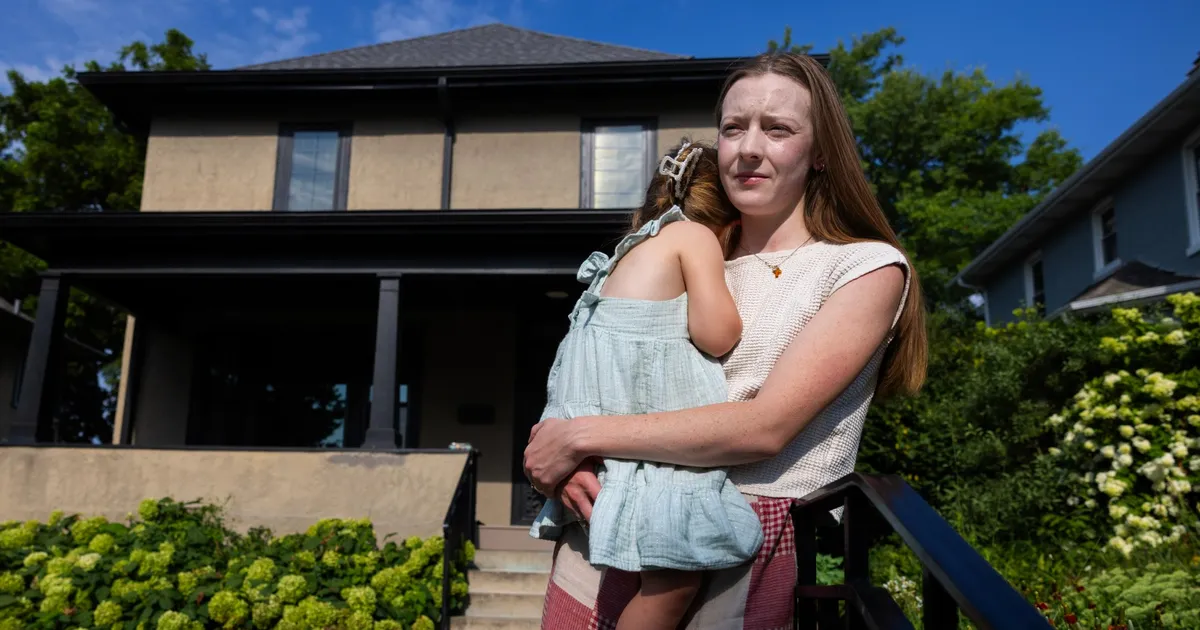
Despite hundreds of millions of dollars spent on environmental cleanup, more than half the yards in a section of Omaha, Nebraska, that used to surround a lead smelter still have enough contamination to cause high blood-lead levels in kids, according to tests by the Flatwater Free Press and ProPublica. The findings were consistent across the city’s older urban core — in the historically Black neighborhoods north of downtown, the predominantly Hispanic areas to the south and the more white and affluent areas in midtown. However, homes closest to where a lead smelter and other downtown factories operated tended to have slightly higher concentrations than those farther out. As part of the Environmental Protection Agency’s Superfund program, the federal government and the city of Omaha have been attempting to remove lead from Omaha’s yards since the late 1990s. The EPA’s cleanup standard for Omaha was set in 2009 and is based on health recommendations from 1994. Since then, research has shown that lower exposures can cause IQ loss in kids and heart attacks in adults. Twice in the last 15 years, the Centers for Disease Control and Prevention lowered what it considers a high blood-lead level. An EPA risk model found that to protect most kids according to those new health guidelines, soil levels would have to be below 100 parts per million — about 10 grains of rice in a 10-pound bucket of dirt. The Flatwater Free Press and ProPublica tested 388 homes in the Omaha Superfund site and found that 208 had levels over 100 parts per million. But the EPA has never required that level of cleanup in Omaha or as a national remediation standard. Current EPA policy for the Omaha cleanup site directs contractors to dig up and replace yards if tests show they contain more than 400 parts per million of lead — about a marble’s worth of the metal dispersed across a 10-gallon bucket of dirt. Last week, the Flatwater Free Press and ProPublica reported that 1 in 10 of the homes we tested that were remediated still has a lead concentration over that threshold. The risk worries Natalie Thorpe, whose 3-year-old daughter tested high for lead as a baby. When the history and English teacher bought a house in Omaha, she knew about the Superfund site, but friends assured her the EPA had taken care of any problems with the dirt. Instead, her yard has enough lead to be risky but not enough to qualify for government cleanup. “It feels a little bit like being a sitting duck,” Thorpe said. Thorpe’s 3-year-old picks a tomato from their garden. Rebecca S. Gratz for ProPublica EPA spokesperson Kellen Ashford said removing lead in soil is only one factor in protecting communities. Because no level of lead in the body is safe and it would be impossible to remove all lead from a site, the agency works with local health officials to protect the community from lead risks in other ways, he said. Those include establishing the Omaha Lead Registry, a website where people can search for the highest lead level and remediation status of any property in the site. The EPA also funds the Douglas County Health Department’s lead poisoning prevention program, which performs home visits when a child tests high for exposure to the toxic metal. Cleanup, combined with these other layers of protection, has led to a dramatic decline in elevated blood-lead levels in Omaha, Ashford said. (While the percentage of kids testing high for lead has dropped significantly, as it has nationally, kids in the Omaha site still test high for lead at rates above the national average.) Series Timeline Oct. 20, 2025 The Trump administration issued guidance tripling the amount of lead that has to be in soil to warrant potential cleanup. Before that, the EPA had been discussing expanding the Omaha cleanup, which could have included nearly 27,000 properties.December 2015 The EPA finished the cleanup of more than 13,000 residential properties and passed the remaining work to the city of Omaha.March 1999 The Environmental Protection Agency began testing soil from Omaha yards after concerns about elevated blood lead levels in children. The contamination was eventually tied to a smelter and factories that spewed lead dust for over a century. Work on lead has historically been focused on protecting people from extreme poisonings, often caused by paint, said Tom Neltner, who heads the lead poisoning prevention nonprofit Unleaded Kids. As more public health experts have acknowledged the risks of smaller exposures, they’ve had to examine soil more closely. Confronting that will require new research and renewed advocacy, he said. But even with updated science, politics have complicated potential cleanups. The first step in any cleanup is to identify which properties deserve attention. So the EPA typically tests soil to screen for potential problem areas. If results hit a certain level of lead concentration, it kicks off a more in-depth process of monitoring that site and discussing cleanup options. In 2024, President Joe Biden’s EPA lowered that recommended screening level to as little as 100 parts per million. Cleaning up to 100 parts per million would have carried enormous costs. About 40% of U.S. homes exceed those levels, according to a 2024 study by some of the country’s top researchers of lead-contaminated soil, and it could cost $500 billion to $1.4 trillion to clean up all of them. The authors argued the government could take a more cost-effective approach by covering lead-laced soil with clean soil or mulch rather than digging it out. Last year, the Trump administration rolled back Biden’s standards in what it said was an effort to speed up cleanups of the highest-risk areas, raising the lowest screening level from 100 parts per million to 200 parts per million. Thorpe and her daughter pick vegetables from their raised garden bed. Zinnias, basil, golden beets, squash and other plants grow in store-bought soil. Rebecca S. Gratz for ProPublica However, some local and state governments, as well as other countries, have committed to standards of 100 parts per million or lower. Norway recommends risk assessments for any dirt that children have regular access to that has more than 100 parts per million of lead in it. In 2006, the country required all playgrounds and daycares be remediated to that level. Even in the United States, some areas have lower limits. Minnesota requires replacing any soil that has more than 100 parts per million of lead around the home of a child with a high blood level, said Minnesota Department of Health spokesperson Scott Smith. In April, New Orleans announced plans to clean up its parks after an investigation by Verite News and KFF Health News found more than half of the 80 sites the organizations tested had levels above 100 parts per million. California has cleaned up properties to 80 parts per million of lead, its screening level for potentially risky soil, though residents of properties exceeding that threshold more often receive safety education rather than a new lawn, said Seth John, a University of Southern California earth sciences professor. This summer the EPA is testing soil around Omaha as part of an investigation that may help the agency determine if it should expand the site’s boundaries or lower the amount of lead that would qualify for cleanup. The agency expects to share its findings by October 2027, Ashford said. Earlier research suggests there may be more homes with lead-soil concentrations over 100 parts per million than the Flatwater Free Press and ProPublica identified: EPA testing found 84% of the Superfund site in Omaha — more than 36,000 properties — had areas with lead concentrations above 100 parts per million, according to a March 2024 email sent by an EPA manager to a Nebraska Department of Environment and Energy official. But trying to determine what the agency might do in Omaha is difficult because the EPA has applied its new guidance in different ways, setting higher lead levels for cleanup at some Superfund sites and lower levels at others. Without cleanup, there are several things Omaha residents can do to lower their risk, said Neltner of Unleaded Kids. Maintaining ground cover like grass reduces the amount of lead dust that can spread from the dirt to kids’ hands and bodies, he said. The EPA also recommends washing hands and taking shoes off inside. Those are easy things that lower risk, Neltner said, but he noted that they’re not a long-term solution. “We have to keep doing what we can,” he said. “We need our leadership at local, state and federal levels to support people in finding solutions.” Thorpe’s 3-year-old daughter stands barefoot in her family’s garden. Rebecca S. Gratz for ProPublica
SRCProPublica
LANGEN
LEANCenter-Left
WORDS1 449
ENT10
MON · 2026-08-10 · 09:00 GMTBRIEF NSR-2026-0810-100783
NSR-2026-0810-100783News Report·EN·Public Health
More Than Half the Homes in East Omaha Have Unsafe Lead Levels. That Doesn’t Mean the EPA Will Clean Them Up.
Tests by the Flatwater Free Press and ProPublica reveal that over half of Omaha yards within a former lead smelter Superfund site have lead contamination levels that could pose health risks, particularly to children. Despite millions spent on cleanup since the late 1990s, the EPA's current cleanup standard of 400 parts per million is based on outdated health recommendations.
Chris BowlingProPublicaFiled 2026-08-10 · 09:00 GMTLean · Center-LeftRead · 6 min
ProPublicaFIG 01
Reading time
6min
Word count
1 449words
Sources cited
3cited
Entities identified
10entities
Quality score
100%
§ 01
Briefing Summary
AI-generatedNEWSAR · AI
Tests by the Flatwater Free Press and ProPublica reveal that over half of Omaha yards within a former lead smelter Superfund site have lead contamination levels that could pose health risks, particularly to children. Despite millions spent on cleanup since the late 1990s, the EPA's current cleanup standard of 400 parts per million is based on outdated health recommendations. Newer research indicates lower levels are harmful, yet the EPA's standard for Omaha remains significantly higher than recommended by its own risk models and lower standards adopted by other regions. While the EPA acknowledges the risks and implements other protective measures like a lead registry and prevention programs, many residents like Natalie Thorpe find their homes contaminated but not eligible for government cleanup. The EPA is currently investigating potential boundary expansions and lower cleanup thresholds for the Omaha site, with findings expected by October 2027.
Confidence 0.90Sources 3Claims 5Entities 10
§ 02
Article analysis
Model · rule-basedFraming
Public Health
Environmental
Tone
Mixed Tone
AI-assessed
CalmNeutralAlarmist
Factuality
0.80 / 1.00
Factual
LowHigh
Sources cited
3
Well sourced
FewMany
§ 03
Key claims
5 extracted01
208 out of 388 tested homes in the Omaha Superfund site had lead levels over 100 parts per million.
statisticFlatwater Free Press and ProPublica
Confidence
1.00
02
Current EPA policy requires digging up and replacing yards only if they contain more than 400 parts per million of lead.
factualEPA
Confidence
1.00
03
The EPA's cleanup standard for Omaha yards is based on 1994 health recommendations, which are now considered outdated.
factualArticle
Confidence
1.00
04
More than half the yards in a section of East Omaha have enough lead contamination to cause high blood-lead levels in kids, according to tests.
statisticFlatwater Free Press and ProPublica
Confidence
1.00
05
Natalie Thorpe's yard has enough lead to be risky but does not qualify for government cleanup.
quoteNatalie Thorpe
Confidence
1.00
§ 04
Full report
6 min read · 1 449 words§ 05
Entities
10 identifiedKey playerOppositionContextPositiveNeutralNegative
Organizations4
§ 06
Keywords & salience
10 termslead contamination
1.00
epa superfund program
0.90
blood-lead levels
0.80
environmental cleanup
0.70
omaha
0.60
cleanup standards
0.60
soil levels
0.50
health guidelines
0.50
lead smelter
0.40
remediation
0.40
§ 07
Topic connections
Interactive graph No topic relationship data available yet. This graph will appear once topic relationships have been computed.