EPA/ShutterstockBenjamin Netanyahu is facing an uphill contest in a general election scheduled for OctoberIsrael's Prime Minister Benjamin Netanyahu may have categorically rejected the new Board of Peace roadmap to disarm Hamas in Gaza, but that is unlikely to be the final word.The White House has not officially commented. However, it is reportedly "not bothered" by Netanyahu's statement and views it as campaign rhetoric in the run-up to a heated general election."We understand Bibi's political needs" the Israeli journalist, Barak Ravid, quotes a senior US official as saying – using a nickname to refer to the Israeli leader. "We have no problem with it as long as he continues to do what we ask – especially regarding restraining attacks in Gaza."Recent days have seen an apparent pause in Israel's strikes on Gaza – something Hamas had demanded when signing on to the US-backed, 15-point roadmap.And there is another suggestion that Israel is ready to advance US President Donald Trump's peace plan for Gaza – getting ready for the deployment of the International Stabilization Force (ISF). The force is made up of international troops, with the plan being for them to work with a new Palestinian police force to secure the territory.The expected construction of the first ISF base is still scheduled to begin amid the ruins of Rafah in southern Gaza at the end of this month, according to Israeli public radio, Kan News, which would allow reconstruction to begin at last.In July, after months of delicate negotiations, Trump announced a "major milestone" in the implementation of his plan to end Israel's war in Gaza. Writing on his Truth Social platform, Trump said that the Board of Peace had reached an agreement for the complete disarmament of Hamas and other Palestinian armed groups in the territory.The deal is meant to be carried out in phases, with all weapons decommissioned and stored by a new Palestinian administration in Gaza – which reports to the Board of Peace - and Israeli forces withdrawing from the more than 60% of Gaza they currently control.Senior Hamas officials confirmed that they had agreed to the new framework, conditioning it on mutual compliance by Israel. This was widely viewed as a major potential breakthrough in the conflict. The UK welcomed it and the European Union hailed it as a "crucial step".However, for more than a week, Israel did not give its formal response. An Israeli spokesman said only that the roadmap did not "reflect Israel's positions." A far-right member of the government, Itamar Ben-Gvir, wrote on X that the deal was "unacceptable."Increasingly, mainstream Israeli opposition politicians also raised doubts. They questioned whether all small arms would be decommissioned and the sequencing of the plan.Finally on Sunday, Netanyahu told his cabinet, "I wish to be precise here: Israel does not accept the 15-point document."He added: "The IDF [Israel Defense Forces] will not carry out any withdrawal until Hamas is disarmed. And when I say the disarming of Hamas, it means heavy weaponry, lighter weaponry, all weaponry. And we are talking about genuine disarmament, not fictitious disarmament."In the same statement, the prime minister described President Trump as "the greatest of our friends in the White House" but said that Israel knew "how to stand firm" against unacceptable ideas.In Israel, there is widespread scepticism that Hamas intends to follow through on its commitments. The Islamist movement has long seen "armed struggle" as a core precept, its legitimate response to Israeli occupation of Palestinian lands. In recent months, there had been signs of it reasserting its authority in Gaza."Israel can certainly never agree to retreating anywhere where the terrorist group that caused the worst massacres since the Holocaust is still there and is still ruling the Strip," Fleur Hassan-Nahoum, an Israeli commentator and former deputy mayor of Jerusalem told the BBC.She stressed that the "trauma of the Israeli people" from the deadly Hamas-led attacks on 7 October 2023, which ignited the devastating Gaza war, should not be underestimated.EPA/ShutterstockMuch of Gaza has been left in ruins after Israel's war in the territoryAny potential concessions for Netanyahu would come at a politically sensitive moment. He is facing an uphill contest in the upcoming general election, scheduled for 27 October. It will be Israel's first since the 7 October assault and three years on, Netanyahu has failed to secure what he vowed: "absolute victory" over Hamas.The former American diplomat and veteran Middle East negotiator, Aaron David Miller, said the Israeli leader is facing "the most consequential election" of his political life. "He's navigating a very fine line between keeping his constituents happy and not angering or alienating President Trump," he told the BBC.For now, he believes the White House recognises the situation and is giving Netanyahu "a pass." Miller added: "It's hard to believe that you're going to see any serious movement before you have another Israeli government."In the meantime, the Board of Peace has been trying to reassure the Israeli public about the roadmap.The High Commissioner for Gaza, Nickolay Mladenov – who led months of delicate negotiations with Hamas – gave an interview to Israel's Channel 12 just hours after Netanyahu's formal rejection of the roadmap."Its goal is to make sure that Gaza is never again a threat to Israeli security and that what happened before, [on] October 7, never happens again," he said.He said the deal takes "a step-by-step approach" meaning: "If there is verified decommissioning of weapons, that they are taken away from the factions and stored and ultimately rendered unusable, Israel then withdraws from Gaza."Ultimately, Mladenov said that nothing was being built "on the basis of trust" but on "verification."Hamas has since indicated that it still remains committed to the roadmap. It called on mediators and the Board of Peace to push for Israel to stick to the terms agreed.The Israeli prime minister has confirmed that talks with the Americans are continuing.Meanwhile heavy pressure from Washington is likely to increase.Trump is also looking at an important election this year – November's midterm elections for the US Congress. His Republican party faces the prospect of heavy losses, with petrol and grocery prices pushed up, in part due to Washington's unpopular five-month-long war in Iran.The US president's own approval rating has tumbled, and he may well demand positive developments in his peace plan for Gaza in an effort to score a much-needed foreign policy win.
SRCBBC News - World
LANGEN
LEANCenter
WORDS1 053
ENT12
MON · 2026-08-10 · 14:43 GMTBRIEF NSR-2026-0810-100907
NSR-2026-0810-100907News Report·EN·Political Strategy
Netanyahu's rejection of Trump's 15-point Gaza plan unlikely to be final word
Israeli Prime Minister Benjamin Netanyahu has rejected a 15-point Gaza plan proposed by the Trump administration, which aimed for Hamas disarmament and Israeli withdrawal. Despite Netanyahu's public refusal, the White House reportedly views his statement as campaign rhetoric ahead of Israel's upcoming general election.
1 hour agoShareSaveAdd as preferred on GoogleYolande KnellMiddle East correspondent, JerusalemBBC News - WorldFiled 2026-08-10 · 14:43 GMTLean · CenterRead · 5 min
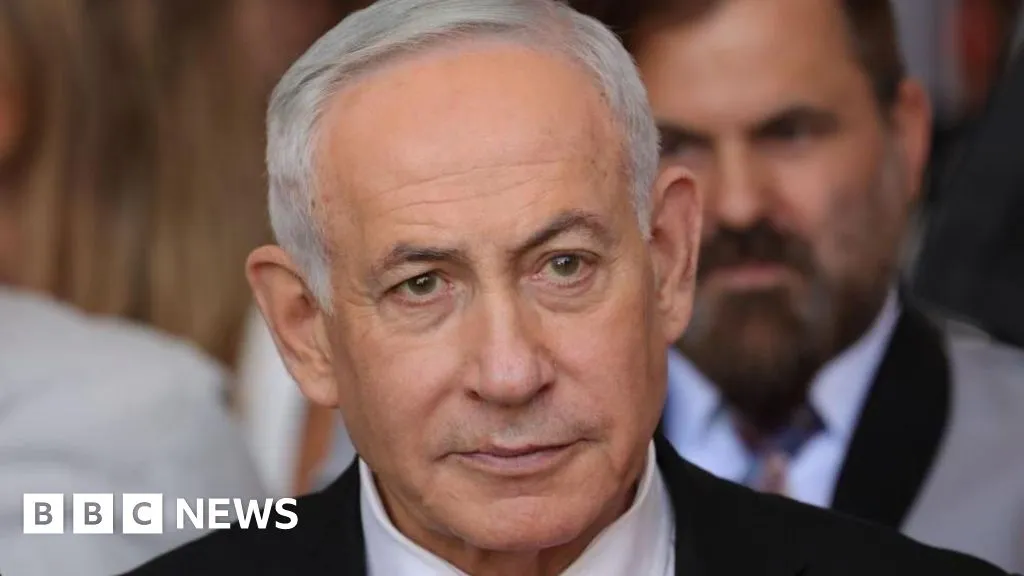
BBC News - WorldFIG 01
Reading time
5min
Word count
1 053words
Sources cited
5cited
Entities identified
12entities
Quality score
100%
§ 01
Briefing Summary
AI-generatedNEWSAR · AI
Israeli Prime Minister Benjamin Netanyahu has rejected a 15-point Gaza plan proposed by the Trump administration, which aimed for Hamas disarmament and Israeli withdrawal. Despite Netanyahu's public refusal, the White House reportedly views his statement as campaign rhetoric ahead of Israel's upcoming general election. A senior US official indicated understanding of Netanyahu's political needs, provided Israel continues to restrain attacks in Gaza. The plan, which Hamas had agreed to conditionally, includes the deployment of an International Stabilization Force and the establishment of a new Palestinian administration. Netanyahu stated Israel will not withdraw until Hamas is genuinely disarmed, emphasizing the need for heavy and light weaponry to be decommissioned.
Confidence 0.90Sources 5Claims 5Entities 12
§ 02
Article analysis
Model · rule-basedFraming
Political Strategy
Conflict
Tone
Measured
AI-assessed
CalmNeutralAlarmist
Factuality
0.70 / 1.00
Factual
LowHigh
Sources cited
5
Well sourced
FewMany
§ 03
Key claims
5 extracted01
Netanyahu told his cabinet that 'Israel does not accept the 15-point document' and the IDF will not withdraw until Hamas is disarmed.
quoteBenjamin Netanyahu
Confidence
0.95
02
The UK welcomed the agreement for the complete disarmament of Hamas, and the European Union hailed it as a 'crucial step'.
factualarticle
Confidence
0.90
03
Benjamin Netanyahu has categorically rejected the new Board of Peace roadmap to disarm Hamas in Gaza.
factualarticle
Confidence
0.90
04
Hamas had demanded a pause in Israel's strikes on Gaza when signing on to the US-backed, 15-point roadmap.
factualarticle
Confidence
0.85
05
A senior US official reportedly stated that the White House is 'not bothered' by Netanyahu's statement and views it as campaign rhetoric.
quoteBarak Ravid (quoting senior US official)
Confidence
0.80
§ 04
Full report
5 min read · 1 053 words§ 05
Entities
12 identifiedKey playerOppositionContextPositiveNeutralNegative
People3
Organizations4
§ 06
Keywords & salience
10 termsgaza plan
1.00
benjamin netanyahu
0.90
hamas disarmament
0.90
international stabilization force
0.80
israeli election
0.70
us-backed roadmap
0.70
trump peace plan
0.60
palestinian police force
0.60
gaza reconstruction
0.50
campaign rhetoric
0.40
§ 07
Topic connections
Interactive graph Network visualization showing 51 related topics
View Full Graph Person Organization Location Event|Click node to navigate|Edge numbers = shared articles