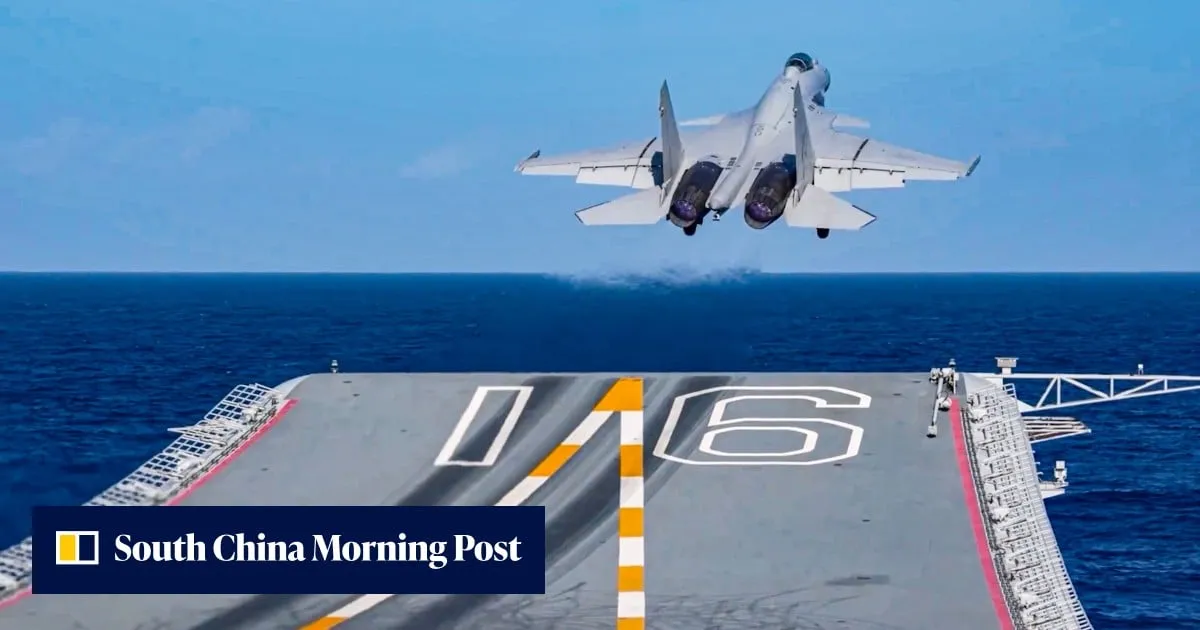
China’s rapidly expanding Aircraft carrier fleet may be vulnerable to attack from Submarines – an area where its defensive capacity lags behind that of the United States – according to a new report.A recent report from the Washington-based Centre for Strategic and International Studies outlined a “cost-imposition” strategy that could help the US and its allies threaten China’s carriers.It included the use of land-based strike networks, long-range air strikes supported by satellites, cyber and electromagnetic attacks, and drone swarms.However, the fifth element of this strategy – submarine ambushes – is where many analysts believe the Chinese navy is most vulnerable.Specifically, the report identified US Submarines" class="entity-link entity-topic" data-entity-id="182647" data-entity-type="topic">Attack Submarines operating in the western Pacific as one of the most potent threats to Chinese carrier groups, arguing that gaps in the navy’s undersea detection and tracking capabilities could leave the high-value ships exposed.
SRCSouth China Morning Post
LANGEN
LEANCenter-Right
WORDS139
ENT10
TUE · 2026-08-11 · 02:00 GMTBRIEF NSR-2026-0811-101069
NSR-2026-0811-101069News Report·EN·National Security
Why submarine attacks may prove to be the Achilles’ heel for China’s new carrier fleet
A new report from the Centre for Strategic and International Studies suggests China's expanding aircraft carrier fleet could be vulnerable to submarine attacks. This vulnerability stems from the People's Liberation Army Navy's (PLAN) lagging defensive capabilities in the undersea domain compared to the United States.
Gabriel DominguezSouth China Morning PostFiled 2026-08-11 · 02:00 GMTLean · Center-RightRead · 1 min
South China Morning PostFIG 01
Reading time
1min
Word count
139words
Sources cited
1cited
Entities identified
10entities
Quality score
100%
§ 01
Briefing Summary
AI-generatedNEWSAR · AI
A new report from the Centre for Strategic and International Studies suggests China's expanding aircraft carrier fleet could be vulnerable to submarine attacks. This vulnerability stems from the People's Liberation Army Navy's (PLAN) lagging defensive capabilities in the undersea domain compared to the United States. The report outlines a "cost-imposition" strategy for the US and its allies, which includes submarine ambushes as a particularly potent threat to Chinese carrier groups operating in the western Pacific. Analysts believe gaps in the PLAN's undersea detection and tracking abilities could expose these high-value ships to attack submarines.
Confidence 0.85Sources 1Claims 5Entities 10
§ 02
Article analysis
Model · rule-basedFraming
National Security
Conflict
Tone
Measured
AI-assessed
CalmNeutralAlarmist
Factuality
0.70 / 1.00
Factual
LowHigh
Sources cited
1
Limited
FewMany
§ 03
Key claims
5 extracted01
Gaps in China's undersea detection and tracking capabilities could leave carriers exposed.
factualCentre for Strategic and International Studies report
Confidence
0.80
02
US attack submarines in the western Pacific pose a potent threat to Chinese carrier groups.
factualCentre for Strategic and International Studies report
Confidence
0.80
03
The US and its allies can threaten China's carriers using a 'cost-imposition' strategy.
factualCentre for Strategic and International Studies report
Confidence
0.80
04
China's aircraft carrier fleet may be vulnerable to submarine attacks.
factualCentre for Strategic and International Studies report
Confidence
0.80
05
Submarine ambushes are considered the area where the Chinese navy is most vulnerable.
factualanalysts
Confidence
0.70
§ 04
Full report
1 min read · 139 words§ 05
Entities
10 identifiedKey playerOppositionContextPositiveNeutralNegative
Organizations3
§ 06
Keywords & salience
9 termschina's carrier fleet
1.00
submarine attacks
1.00
cost-imposition strategy
0.80
undersea detection
0.70
us attack submarines
0.70
vulnerability
0.60
defensive capacity
0.50
drone swarms
0.40
western pacific
0.40
§ 07
Topic connections
Interactive graph Network visualization showing 51 related topics
View Full Graph Person Organization Location Event|Click node to navigate|Edge numbers = shared articles