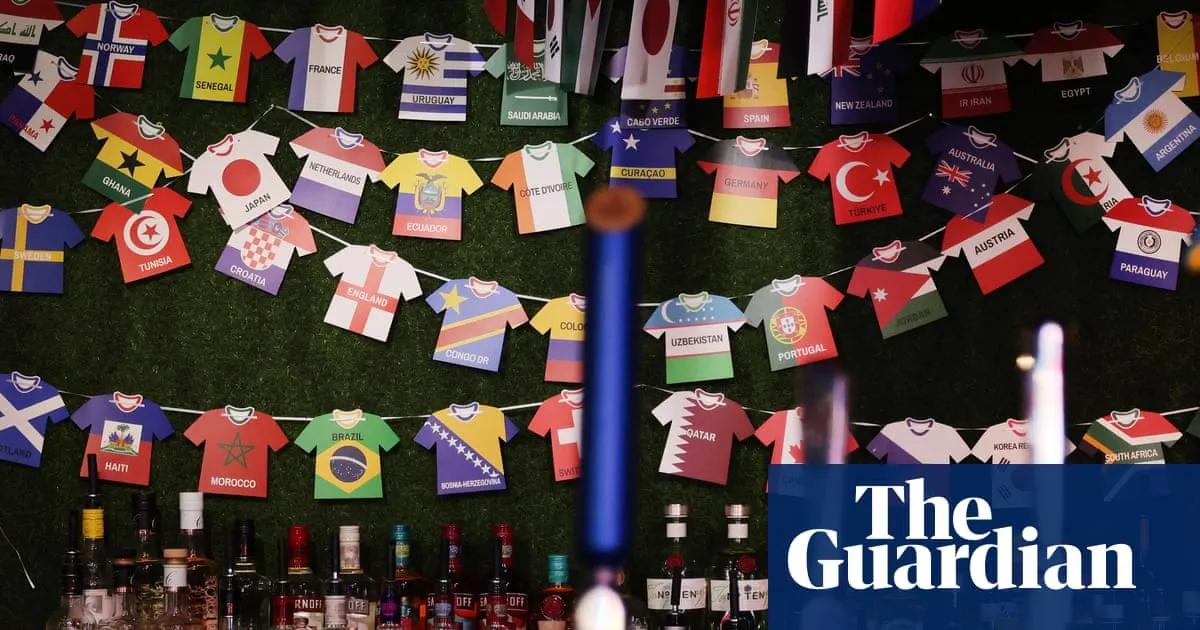
consumer confidence hit its highest level in almost two years in July, according to research that indicated the closing stages of the men’s football World Cup and more people holidaying in the UK lifted summer spending.A truce in the Middle East conflict in June and the arrival of a new prime minister in No 10 also gave a lift to consumers after a long period of heightened uncertainty.A long-running monthly consumer spending survey by Barclays showed that 30% of those surveyed felt confident about the strength of the UK economy in July – representing a 21-month high and a six-percentage-point improvement on June.Consumer card spending grew by 2% year on year last month, after a 1.9% increase in June, Barclays said.The bank said the study showed people felt more secure in their jobs and had more leeway to spend on non-essentials, with discretionary spending up 1.6%.Among the biggest beneficiaries were pubs, which enjoyed a 10% increase in transactions “thanks to England’s World Cup run”. It had been estimated that the tournament had brought in £150m in added sales for British pubs.Card spending at cinemas rose 2.6%, helped by the popularity of Toy Story 5 and The Odyssey – the highest grossing movie of the film-maker Christopher Nolan’s career.In line with other surveys of economic activity, the report found that the succession of heatwaves had depressed spending on airline tickets in favour of domestic holidays, which pushed up spending on UK accommodation by 2.6%.Barclays said confidence in the European economy had also climbed, by six percentage points to 35% – the highest level recorded since the bank started tracking this measure in 2015.H&M, along with John Lewis and Zara, has reported tough trading conditions and a squeeze on sales. Photograph: Murdo MacLeod/The GuardianA separate report by the British Retail Consortium found that while many shops were lifted by the rise in consumer confidence, others were left behind.It said food sales were buoyant, increasing by 3.8% year on year in July, broadly in line with growth of 3.9% in July 2025. Clothing retailers also benefited from a summer bounce, though the heat forced many people to shop online rather than visit town and city high streets.Consumers snubbed big-ticket items such as furniture and computers last month, the BRC said. Helen Dickinson, the organisation’s chief executive, said shoppers prioritised “smaller indulgences” such as beauty products and fashion jewellery.Retailers have reported significant variations in their experience of the summer heat.John Lewis, H&M and Zara have reported tough trading conditions and a squeeze on sales, while HMV, which has 114 stores in the UK, said the number of visitors to its shops was up 12% in the first half of this year compared with the same period last year.skip past newsletter promotionafter newsletter promotionHMV said much of the rise in sales came from children buying toys. The rival chain The Works also said it was getting a boost from children coming to shops with pocket money to spend.Last week, Next, which has become a bellwether of high street sentiment, upgraded its profit guidance for the third time this year, saying it had benefited from the sunny weather and a calmer global economic outlook.HMV reported a 12% rise in visitors to its shops in the first half of the year, with much of its sales boost coming from children buying toys. Photograph: Martin Godwin/The GuardianThe prime minister, Andy Burnham, has made a succession of pledges to help with the cost of living crisis since arriving in Downing Street.A study by the Recruitment and Employment Confederation and the accountancy firm KPMG on Monday found that employers were also more confident about the next year, judging that many of the problems stemming from the Middle East conflict – including higher energy prices and supply chain blockages – had stabilised or reduced.The REC permanent placements balance rose to 50.0 in July, up from 44.1 in May. It was the first time the survey had reached this level since September 2022. A reading above 50 indicates a period of expansion.Rob Wood, the chief UK economist at Pantheon Macroeconomics, said: “There may be an element of a “Burnham bounce” in the survey, as the drop in temporary hiring and rise in permanent in July – usually a sign of falling uncertainty – sits oddly with the resumption of hostilities in the Middle East in July. So sentiment could easily drop back somewhat.”
SRCThe Guardian - World News
LANGEN
LEANCenter-Left
WORDS731
ENT12
TUE · 2026-08-11 · 06:00 GMTBRIEF NSR-2026-0811-101121
NSR-2026-0811-101121News Report·EN·Economic Impact
Consumer confidence at near two-year high as World Cup and UK holidaying lift summer spending
Consumer confidence in the UK reached a near two-year high in July, according to Barclays research. This surge was attributed to factors including the closing stages of the men's football World Cup, increased domestic holidaying, a Middle East conflict truce, and the arrival of a new prime minister.
Phillip InmanThe Guardian - World NewsFiled 2026-08-11 · 06:00 GMTLean · Center-LeftRead · 3 min
The Guardian - World NewsFIG 01
Reading time
3min
Word count
731words
Sources cited
3cited
Entities identified
12entities
Quality score
100%
§ 01
Briefing Summary
AI-generatedNEWSAR · AI
Consumer confidence in the UK reached a near two-year high in July, according to Barclays research. This surge was attributed to factors including the closing stages of the men's football World Cup, increased domestic holidaying, a Middle East conflict truce, and the arrival of a new prime minister. The survey indicated that people felt more secure in their jobs and had greater capacity for non-essential spending, with discretionary spending up 1.6%. Card spending saw a 2% year-on-year increase, with pubs benefiting significantly from the World Cup. While food and clothing sales were buoyant, some retailers experienced tough trading conditions, with consumers prioritizing smaller indulgences over big-ticket items. Employers also reported increased confidence for the coming year.
Confidence 0.90Sources 3Claims 5Entities 12
§ 02
Article analysis
Model · rule-basedFraming
Economic Impact
Human Interest
Tone
Measured
AI-assessed
CalmNeutralAlarmist
Factuality
0.80 / 1.00
Factual
LowHigh
Sources cited
3
Well sourced
FewMany
§ 03
Key claims
5 extracted01
Consumer card spending grew by 2% year on year last month.
statisticBarclays
Confidence
0.95
02
30% of those surveyed felt confident about the strength of the UK economy in July, a six-percentage-point improvement on June.
statisticBarclays
Confidence
0.95
03
Food sales increased by 3.8% year on year in July.
statisticBritish Retail Consortium
Confidence
0.90
04
Consumer confidence hit its highest level in almost two years in July.
statisticresearch
Confidence
0.90
05
Pubs enjoyed a 10% increase in transactions thanks to England’s World Cup run.
statisticarticle
Confidence
0.85
§ 04
Full report
3 min read · 731 words§ 05
Entities
12 identifiedKey playerOppositionContextPositiveNeutralNegative
Organizations5
§ 06
Keywords & salience
9 termsconsumer confidence
1.00
summer spending
0.90
uk economy
0.80
world cup
0.70
uk holidaying
0.70
consumer spending
0.60
discretionary spending
0.50
heatwaves
0.40
retail sales
0.40
§ 07
Topic connections
Interactive graph Network visualization showing 5 related topics
View Full Graph Person Organization Location Event|Click node to navigate|Edge numbers = shared articles