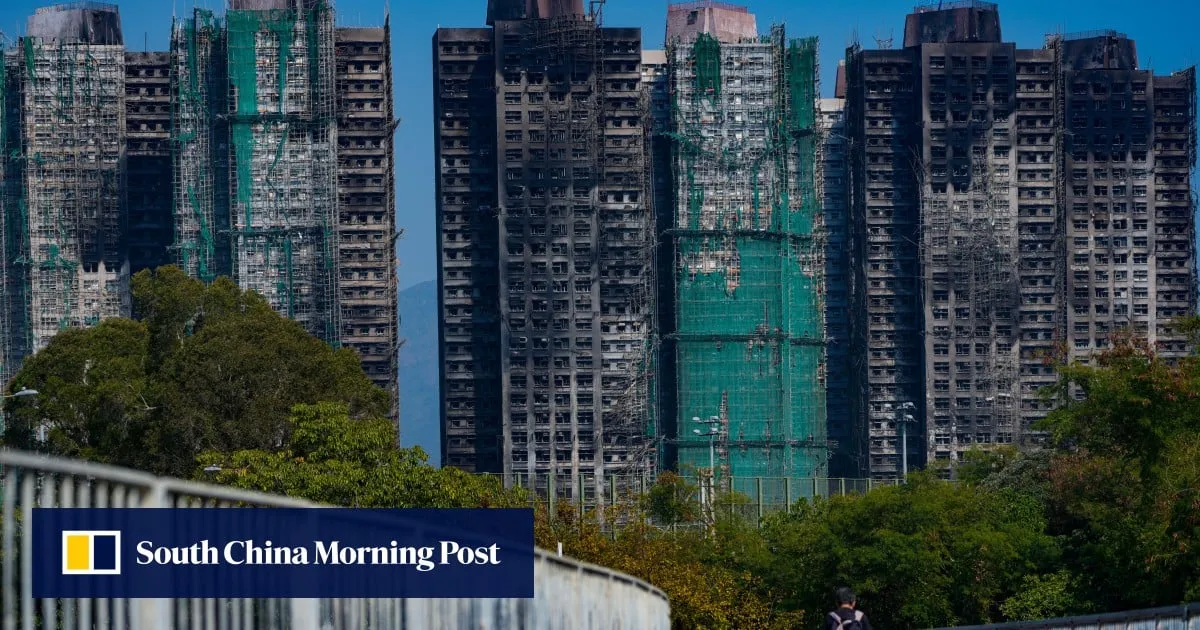
Residents of Hong Kong’s Wang Fuk Court have vowed to collectively fight for justice in the aftermath of the city’s deadliest inferno in seven decades, as legal experts call for authorities to press ahead with a long-stalled proposal to introduce a class-action mechanism for multiparty litigation.Last November’s fire prompted some residents to question whether the time had come for a better way to take collective legal action against those responsible for the tragedy in Tai Po, which claimed 168 lives and left nearly 5,000 others displaced.Patrick Lau, 45, was among those who lost their homes and were forced to rebuild their lives, as he struggled to sort out claims for his flat at Wang Shing House – one of the estate’s residential blocks.He voiced support for the creation of a mechanism that would allow for class-action lawsuits.“If possible, we hope to see a class-action mechanism introduced. If it could help prevent such a tragedy from happening again, we would certainly support it,” Lau said.A retiree in his seventies surnamed Lee said his mother died in the tragedy and that he intended to pursue legal action and hoped to obtain legal aid to fund his case.
SRCSouth China Morning Post
LANGEN
LEANCenter-Right
WORDS195
ENT4
SAT · 2026-01-24 · 01:00 GMTBRIEF NSR-2026-0124-10136
NSR-2026-0124-10136News Report·EN·Legal & Judicial
Why delayed reform stands in the way of class-action lawsuit over Hong Kong fire
Following a deadly fire in Hong Kong's Wang Fuk Court that killed 168 people in November, residents are seeking legal action. They are advocating for a class-action lawsuit mechanism to collectively pursue justice against those responsible for the Tai Po tragedy.
Vivian AuSouth China Morning PostFiled 2026-01-24 · 01:00 GMTLean · Center-RightRead · 1 min
South China Morning PostFIG 01
Reading time
1min
Word count
195words
Sources cited
3cited
Entities identified
4entities
Quality score
100%
§ 01
Briefing Summary
AI-generatedNEWSAR · AI
Following a deadly fire in Hong Kong's Wang Fuk Court that killed 168 people in November, residents are seeking legal action. They are advocating for a class-action lawsuit mechanism to collectively pursue justice against those responsible for the Tai Po tragedy. Residents like Patrick Lau, who lost his home, believe this mechanism could prevent future disasters. Legal experts are also urging authorities to implement the long-delayed class-action proposal to facilitate multiparty litigation. A retiree, Mr. Lee, whose mother died in the fire, intends to pursue legal action and is seeking legal aid.
Confidence 0.90Sources 3Claims 5Entities 4
§ 02
Article analysis
Model · rule-basedFraming
Legal & Judicial
Human Interest
Tone
Measured
AI-assessed
CalmNeutralAlarmist
Factuality
0.70 / 1.00
Factual
LowHigh
Sources cited
3
Well sourced
FewMany
§ 03
Key claims
5 extracted01
A retiree surnamed Lee said his mother died in the tragedy and that he intended to pursue legal action.
quoteLee
Confidence
1.00
02
Patrick Lau voiced support for the creation of a mechanism that would allow for class-action lawsuits.
quotePatrick Lau
Confidence
1.00
03
The fire in Tai Po claimed 168 lives and left nearly 5,000 others displaced.
statisticArticle
Confidence
1.00
04
Legal experts call for authorities to press ahead with a long-stalled proposal to introduce a class-action mechanism.
factualArticle
Confidence
0.90
05
Residents of Hong Kong’s Wang Fuk Court vow to collectively fight for justice after a deadly fire.
factualArticle
Confidence
0.90
§ 04
Full report
1 min read · 195 words§ 05
Entities
4 identifiedKey playerOppositionContextPositiveNeutralNegative
People1
§ 06
Keywords & salience
7 termsclass-action lawsuit
1.00
hong kong fire
0.90
legal reform
0.70
multiparty litigation
0.60
legal action
0.50
tai po
0.40
legal aid
0.40
§ 07
Topic connections
Interactive graph Network visualization showing 51 related topics
View Full Graph Person Organization Location Event|Click node to navigate|Edge numbers = shared articles