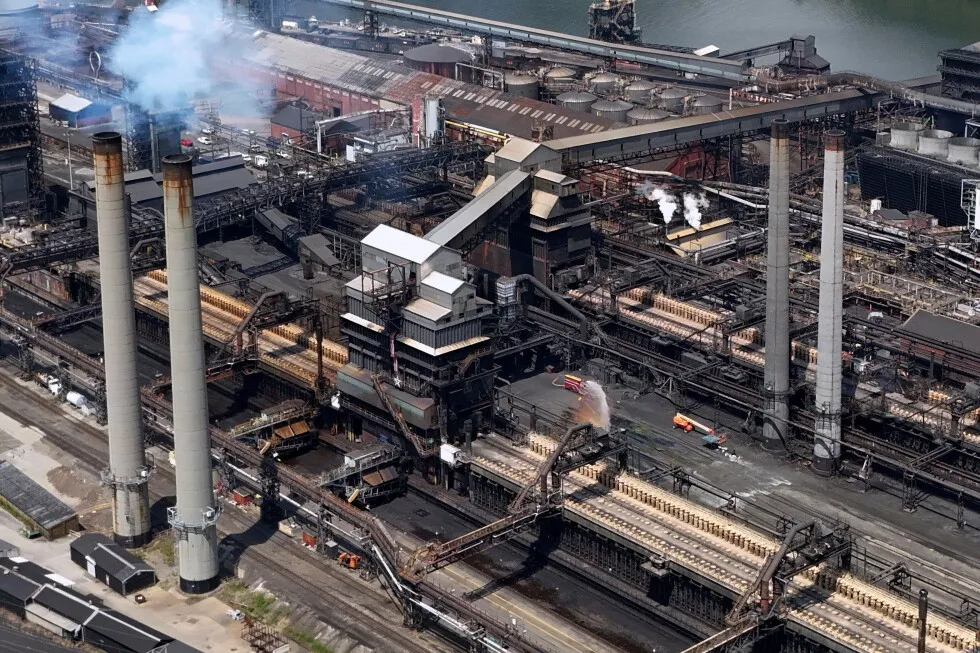
A portion of the Clairton-coke-works" class="entity-link entity-location" data-entity-id="157339" data-entity-type="location">Clairton Coke Works, a U.S. Steel plant, is seen Aug. 11, 2025 in Clairton, Pa. (AP Photo/Gene J. Puskar, File) By JOHN RABY Updated 10:30 PM MESZ, August 11, 2026 Add AP News on Google Add AP News as your preferred source to see more of our stories on Google. Share Share Facebook Copy Link copied Print Email X LinkedIn Bluesky Flipboard Pinterest Reddit A federal safety agency recommended the development of written policies and procedures for flushing gas valves a year after a blast at a U.S. Steel plant near Pittsburgh killed two workers. The U.S. Chemical Safety and Hazard Investigation Board issued a final report into the August 2025 Clairton-coke-works" class="entity-link entity-event" data-entity-id="183250" data-entity-type="event">Blast at Clairton-coke-works" class="entity-link entity-location" data-entity-id="157339" data-entity-type="location">Clairton Coke Works, which also injured 11 others, including contractors. U.S. Steel has said the explosion happened when workers were flushing a gas valve with pressurized water in preparation for routine planned maintenance at the sprawling riverside industrial facility, the largest of its kind in the Western Hemisphere. The valve ruptured under intense pressure and released combustible coke oven gas. The Occupational Safety and Health Administration previously fined the company a total of $118,214 and issued 10 citations. OSHA had said that U.S. Steel’s written procedures, practices and training to safely maintain equipment and flush the gas valve were incomplete, outdated or inadequate. The Chemical Safety Board report recommended that U.S. Steel develop a written procedure for washing valves with pressurized water in order to minimize the operation’s hazards. It also recommended that an industrial cleaning contractor which used a pump truck to apply pressurized water to the valve develop written policies and procedures for cleaning piping systems containing flammable or toxic gas, and train its workers in such operations. The Chemical Safety Board report found that when a valve would not close fully, U.S. Steel had a practice of injecting steam or high-pressure water into the cleanout port in an attempt to remove residue. Chinese company demands compensation from the UK over British Steel nationalization 2 MIN READ “U.S. Steel had no procedure for how to safely conduct this operation, but for at least three years before the incident, U.S. Steel employees had utilized pressurized water to clean valve seats on an ad hoc basis despite the lack of a formal procedure prescribing it,” according to the report’s executive summary. Chemical Safety Board member Sylvia Johnson said the blast “was the result of workers routinely performing a task incorrectly over a period of years until it ultimately led to a catastrophic explosion.” The valve that failed was more than 70 years old and made from cast iron, which the report said is widely recognized as a brittle material. Numerous safety publications either ban or warn against using cast iron equipment in certain hazardous applications, including for flammable substances such as coke oven gas. The report also said the two workers who died and two of the five seriously injured workers were located around buildings directly above the coke oven gas piping. If these buildings were located in a different area of the facility away from coke ovens, “this incident could have been far less severe,” said Drew Sahli, the Chemical Safety Board investigator in charge. Before the blast, Clairton-coke-works" class="entity-link entity-location" data-entity-id="157339" data-entity-type="location">Clairton Coke Works had a history of accidents and explosions, and some current and former workers there say poor management and underinvestment have exacerbated air pollution and undermined workplace safety, Pittsburgh’s Public Source and The Associated Press have found. The blast came on top of a string of other accidents at the Clairton plant over time, as well as a long history of legal battles between U.S. Steel and Allegheny County regulators, who regularly accuse the company of flouting environmental rules at the facility. The report noted that a similar gas oven explosion occurred at the Clairton plant in July 2010, injuring 14 U.S. Steel employees and six contractors. The report criticized U.S. Steel for failing to conduct a subsequent facility siting evaluation after that incident.
SRCAssociated Press (AP)
LANGEN
LEANCenter
WORDS662
ENT12
TUE · 2026-08-11 · 20:53 GMTBRIEF NSR-2026-0811-101367
NSR-2026-0811-101367News Report·EN·Public Health
Federal safety agency issues final report into 2025 blast that killed 2 at Pennsylvania steel plant
A federal safety agency has issued a final report into a fatal August 2025 blast at U.S. Steel's Clairton Coke Works plant near Pittsburgh, which killed two workers and injured eleven others.
Associated Press (AP)Filed 2026-08-11 · 20:53 GMTLean · CenterRead · 3 min
Associated Press (AP)FIG 01
Reading time
3min
Word count
662words
Sources cited
3cited
Entities identified
12entities
Quality score
100%
§ 01
Briefing Summary
AI-generatedNEWSAR · AI
A federal safety agency has issued a final report into a fatal August 2025 blast at U.S. Steel's Clairton Coke Works plant near Pittsburgh, which killed two workers and injured eleven others. The U.S. Chemical Safety and Hazard Investigation Board recommended that U.S. Steel develop written policies for flushing gas valves, a procedure that led to the explosion when a valve ruptured under pressure, releasing combustible coke oven gas. The report found that U.S. Steel had no formal procedure for this task, which workers had performed on an ad hoc basis for years. The investigation also highlighted that the 70-year-old cast iron valve was a brittle material, and the location of the workers above the gas piping contributed to the severity of the incident. The plant has a history of accidents, and the report criticized U.S. Steel for not conducting a facility siting evaluation after a similar 2010 explosion.
Confidence 0.90Sources 3Claims 5Entities 12
§ 02
Article analysis
Model · rule-basedFraming
Public Health
Legal & Judicial
Tone
Measured
AI-assessed
CalmNeutralAlarmist
Factuality
0.90 / 1.00
Factual
LowHigh
Sources cited
3
Well sourced
FewMany
§ 03
Key claims
5 extracted01
The blast was the result of workers routinely performing a task incorrectly over years until it led to a catastrophic explosion.
quoteSylvia Johnson (Chemical Safety Board member)
Confidence
1.00
02
The valve that failed was over 70 years old and made from cast iron, a material recognized as brittle and warned against in hazardous applications.
factualU.S. Chemical Safety and Hazard Investigation Board
Confidence
1.00
03
OSHA previously fined U.S. Steel $118,214 and issued 10 citations, stating procedures were incomplete, outdated, or inadequate.
factualOccupational Safety and Health Administration
Confidence
1.00
04
The blast at Clairton Coke Works killed two workers and injured 11 others, including contractors.
factualU.S. Chemical Safety and Hazard Investigation Board
Confidence
1.00
05
A federal safety agency recommended the development of written policies and procedures for flushing gas valves a year after a blast at a U.S. Steel plant near Pittsburgh killed two workers.
factualU.S. Chemical Safety and Hazard Investigation Board
Confidence
1.00
§ 04
Full report
3 min read · 662 words§ 05
Entities
12 identifiedKey playerOppositionContextPositiveNeutralNegative
People1
Organizations5
Locations5
§ 06
Keywords & salience
10 termsindustrial accident
1.00
safety investigation
0.90
gas valve
0.80
clairton coke works
0.70
coke oven gas
0.70
safety procedures
0.60
u.s. steel
0.60
occupational safety and health administration
0.50
plant maintenance
0.40
federal safety agency
0.40
§ 07
Topic connections
Interactive graph No topic relationship data available yet. This graph will appear once topic relationships have been computed.