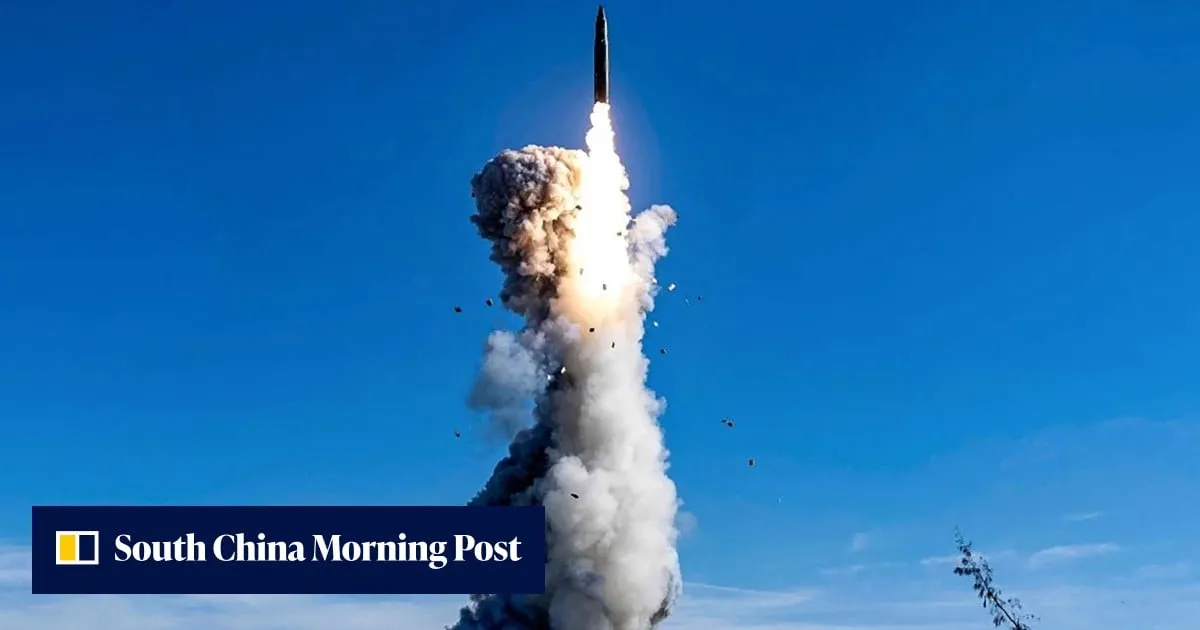
The United States and 40 other nations have called for at least 24 hours’ notice before long-range ballistic missile launches, following a rare Chinese missile test in the Pacific last month that they said raised concerns over accidents and military miscalculation.In a joint statement released by the US State Department on Tuesday, the governments called on countries – particularly nuclear-weapon states – to provide advance warning for launches of intercontinental ballistic missiles (ICBMs), submarine-launched ballistic missiles (SLBMs) and space launch vehicles.While the statement did not name China, it criticised “recent missile testing activity in the Pacific area” that it said had failed to follow standard notification practices adopted by most states.
SRCSouth China Morning Post
LANGEN
LEANCenter-Right
WORDS111
ENT10
WED · 2026-08-12 · 07:01 GMTBRIEF NSR-2026-0812-101472
NSR-2026-0812-101472News Report·EN·National Security
After China’s missile test, US and allies demand 24-hour warning next time
The United States and 40 other nations are requesting at least 24 hours' advance notice for long-range ballistic missile launches. This call follows a recent Chinese missile test in the Pacific that raised concerns about potential accidents and military miscalculation.
Gabriel DominguezSouth China Morning PostFiled 2026-08-12 · 07:01 GMTLean · Center-RightRead · 1 min
South China Morning PostFIG 01
Reading time
1min
Word count
111words
Sources cited
1cited
Entities identified
10entities
Quality score
100%
§ 01
Briefing Summary
AI-generatedNEWSAR · AI
The United States and 40 other nations are requesting at least 24 hours' advance notice for long-range ballistic missile launches. This call follows a recent Chinese missile test in the Pacific that raised concerns about potential accidents and military miscalculation. In a joint statement released by the US State Department, these countries urged nations, especially nuclear-weapon states, to provide this warning for intercontinental ballistic missiles (ICBMs), submarine-launched ballistic missiles (SLBMs), and space launch vehicles. While China was not explicitly named, the statement criticized recent missile testing in the Pacific for not adhering to established notification practices.
Confidence 0.85Sources 1Claims 4Entities 10
§ 02
Article analysis
Model · rule-basedFraming
National Security
Diplomatic
Tone
Measured
AI-assessed
CalmNeutralAlarmist
Factuality
0.90 / 1.00
Factual
LowHigh
Sources cited
1
Limited
FewMany
§ 03
Key claims
4 extracted01
The statement called on countries, particularly nuclear-weapon states, to provide advance warning for launches of ICBMs, SLBMs, and space launch vehicles.
factualUS and 40 other nations
Confidence
1.00
02
The joint statement criticized "recent missile testing activity in the Pacific area" that failed to follow standard notification practices.
quoteUS State Department
Confidence
1.00
03
The demand follows a rare Chinese missile test in the Pacific last month.
factualarticle
Confidence
1.00
04
The United States and 40 other nations have called for at least 24 hours’ notice before long-range ballistic missile launches.
factualUS and 40 other nations
Confidence
1.00
§ 04
Full report
1 min read · 111 words§ 05
Entities
10 identifiedKey playerOppositionContextPositiveNeutralNegative
Organizations1
§ 06
Keywords & salience
10 termsadvance warning
1.00
missile test
1.00
ballistic missile
0.90
nuclear-weapon states
0.80
china
0.70
united states
0.70
pacific
0.60
military miscalculation
0.50
notification practices
0.50
intercontinental ballistic missiles
0.40
§ 07
Topic connections
Interactive graph Network visualization showing 51 related topics
View Full Graph Person Organization Location Event|Click node to navigate|Edge numbers = shared articles