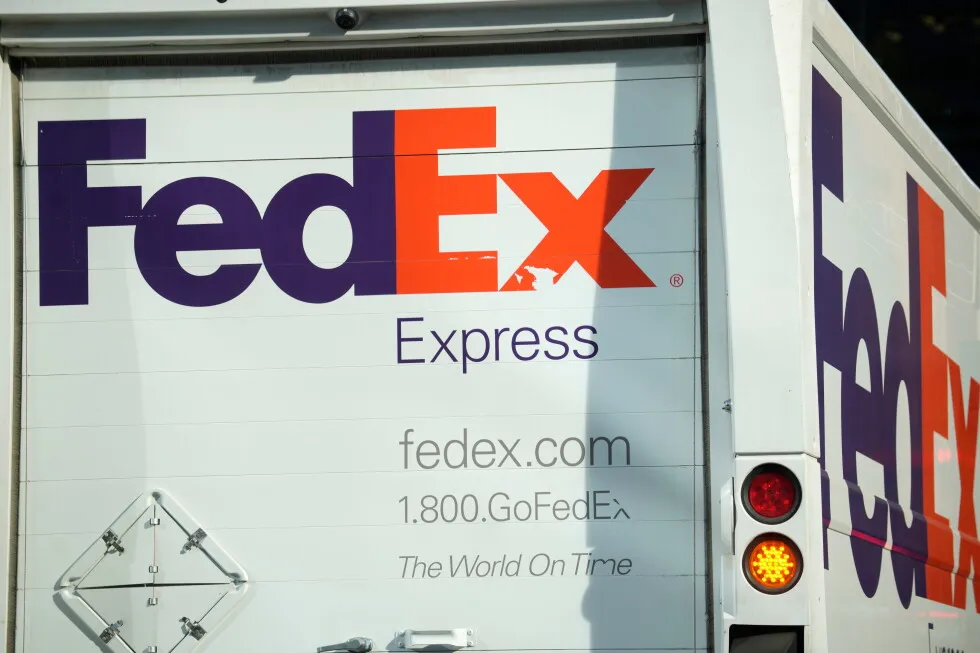
The company logo is shown on a FedEx delivery van, Sept. 13, 2023, in downtown Denver. (AP Photo/David Zalubowski, File) By MAE ANDERSON Updated 6:02 AM MESZ, August 13, 2026 Leer en español Add AP News on Google Add AP News as your preferred source to see more of our stories on Google. Share Share Facebook Copy Link copied Print Email X LinkedIn Bluesky Flipboard Pinterest Reddit NEW YORK (AP) — If you bought something from an overseas vendor last year, it might be time to check your bank account. Shippers including FedEx and UPS that acted as customs brokers for imported packages and received tariff refunds from the U.S. government have started to pass on those refunds to the customers that originally paid the tariffs. The refunds to consumers are the last step in a monthslong process that kicked off in February when the Supreme Court struck down sweeping tariffs implemented by President Donald Trumpin March 2025 under the 1977 International Emergency Economic Powers Act on goods from almost every country. The court ordered the government to return the tariffs it collected. So far, about $100 billion in tariffs have been refunded to companies who paid them under a system set up by U.S. Customs and Border Protection. That doesn’t mean Americans will get anywhere close to what they paid in tariffs, since most were paid indirectly. In 2025, the Trump tariffs amounted to an average tax increase of $1,000 per U.S. household, according to the Tax Foundation, a Washington, D.C., group that studies taxes. But some consumers are getting some of what they paid directly back from shippers including UPS, DHL and FedEx. The refunds are being rolled out in phases based on what date they were paid. Shippers have said they’ll return the refunds on a rolling basis as they receive them. tariff refunds from shippers will be directly refunded to credit cards or bank accounts FedEx said it has begun the process of issuing $800 million in tariff refunds it received from the government back to the customers that paid them. Customers don’t need to apply to receive their refund, but they can enter tracking numbers for purchased items into a portal on the FedEx website to see whether or not they are due a refund. 25 states sue over Trump’s new tariffs, calling them ‘pretext’ to replace his old ones 4 MIN READ 13 Small businesses file lawsuits against Trump’s new sweeping tariffs 4 MIN READ Government fights trade judge’s order for tariff refunds to all importers 4 MIN READ UPS said in April it had paid $5 billion in tariffs on behalf of clients and would begin the process of applying to the government for refunds. In the first phase, it applied for $500 million in refunds and said customers should get refunds one to three months after it receives reimbursement from the Treasury. DHL similarly said that it has filed claims for almost all eligible shipments where it served as the importer of record and is returning the refunds it has received. “The volume and pace of refunds continue to depend on CBP’s processing of claims,” DHL said in a statement. Major retailers say they could give back some refunds but mostly will use them to lower prices Unlike shippers who collected tariffs directly from customers, most big retailers passed on tariffs in indirect ways, changing their product lineups or partly absorbing higher costs, making a consumer refund unlikely. Amazon executives said last week the company received $600 million in tariff refunds in the second quarter. In a call with investors, Amazon CFO Brian Olsavsky said the company isn’t the importer of record on most of the goods it sells and that it has absorbed some tariff costs. But he said the company has “identified a limited set of circumstances where we can trace that we pass specific import charges on to customers.” In those circumstances, he added, “we will proactively contact affected customers and automatically issue refunds to them.” Otherwise, he said, Amazon will use tariff refunds to lower prices for customers. That echoes what other large retailers have said. In May, Cori Barrie, outgoing CEO of Best Buy, the nation’s largest consumer electronics chain, said the retailer is an importer of record of only about 2% to 3% of what it sells and that the company would use any refund it gets to “deliver value back to our customers.” And Costco CEO Ron Vachris said the company planned to return “in some form” the tariffs that were passed on to consumers. “How much we return and when depends on a variety of factors, including how much refund money we receive and when it arrives as well as developments in the lawsuit filed against the company regarding the return process,” he said in a quarterly earnings call in May. Some shoppers are suing to get the tariffs they paid in the form of higher prices back from companies. More than 80 class-action lawsuits have been filed by customers across the country against retailers including Costco, Nike, Amazon, Walmart and others. The lawsuits will face difficulty because plaintiffs will have to prove they paid for price increases that were specifically tied to the tariffs, according to Lori Leskin, partner and co-chair of law firm Arnold & Porter’s Consumer Products Practice Group. None of the lawsuits have yet been certified as class action, which would mean they apply to all customers. “It’s going to be very hard for anyone to establish that the price increase they paid was due to tariffs and not some other market force,” she said. “Most of them are just talking about price increases, and to be able to trace a price increase due to a single factor is going to be really difficult given the multifactorial approach that most companies take.” MAE ANDERSON Anderson reports for The Associated Press on a wide range of issues that small businesses face. She is based in New York. twitter mailto
SRCAssociated Press (AP)
LANGEN
LEANCenter
WORDS998
ENT10
THU · 2026-08-13 · 04:23 GMTBRIEF NSR-2026-0813-101821
NSR-2026-0813-101821News Report·EN·Economic Impact
A surprise credit after an overseas purchase: The tariff refunds now flowing through shippers
Shippers like FedEx, UPS, and DHL are beginning to refund customers for tariffs previously paid on overseas purchases. This follows a Supreme Court decision in February that ordered the U.S.
Associated Press (AP)Filed 2026-08-13 · 04:23 GMTLean · CenterRead · 4 min
Associated Press (AP)FIG 01
Reading time
4min
Word count
998words
Sources cited
3cited
Entities identified
10entities
Quality score
100%
§ 01
Briefing Summary
AI-generatedNEWSAR · AI
Shippers like FedEx, UPS, and DHL are beginning to refund customers for tariffs previously paid on overseas purchases. This follows a Supreme Court decision in February that ordered the U.S. government to return tariffs collected under President Trump's 2025 International Emergency Economic Powers Act. While approximately $100 billion has been refunded to companies, consumers are now receiving direct reimbursements from shippers who acted as customs brokers. FedEx is issuing $800 million, UPS has applied for $500 million in initial refunds, and DHL is returning refunds as received. Major retailers, however, are less likely to offer direct refunds, with many planning to use tariff refunds to lower prices for consumers, though some may issue refunds in specific traceable circumstances.
Confidence 0.90Sources 3Claims 5Entities 10
§ 02
Article analysis
Model · rule-basedFraming
Economic Impact
Legal & Judicial
Tone
Measured
AI-assessed
CalmNeutralAlarmist
Factuality
0.80 / 1.00
Factual
LowHigh
Sources cited
3
Well sourced
FewMany
§ 03
Key claims
5 extracted01
UPS said it had paid $5 billion in tariffs on behalf of clients and is applying for refunds.
factualUPS
Confidence
1.00
02
In 2025, Trump tariffs amounted to an average tax increase of $1,000 per U.S. household.
statisticTax Foundation
Confidence
1.00
03
FedEx has begun issuing $800 million in tariff refunds to customers.
factualFedEx
Confidence
1.00
04
The Supreme Court struck down sweeping tariffs implemented by President Donald Trump in March 2025, ordering the government to return collected tariffs.
factual
Confidence
1.00
05
Shippers including FedEx and UPS are passing on tariff refunds from the U.S. government to customers who originally paid the tariffs.
factual
Confidence
1.00
§ 04
Full report
4 min read · 998 words§ 05
Entities
10 identifiedKey playerOppositionContextPositiveNeutralNegative
Organizations6
Locations1
§ 06
Keywords & salience
10 termstariff refunds
1.00
customs brokers
0.90
u.s. government
0.80
supreme court
0.70
donald trump
0.60
shippers
0.50
international emergency economic powers act
0.50
tax increase
0.40
u.s. customs and border protection
0.40
imported packages
0.40
§ 07
Topic connections
Interactive graph Network visualization showing 4 related topics
View Full Graph Person Organization Location Event|Click node to navigate|Edge numbers = shared articles